Author: admin

  • HVAC System Design: Equipment Selection, and Energy Efficiency

    HVAC System Design: Equipment Selection, and Energy Efficiency

    1.1 HVAC SYSTEM

    Air conditioning study is one of the most complicated studies and is done in various stages. Heat load calculation takes into account the heat developed due to occupancies as well as the equipment present inside, and also the environmental factors affecting the same. During heating installation, only the heat load calculation has to be performed. But when it comes to HVAC, heat load calculation is accompanied by cooling load calculation, sharing equal importance required for designing the system.

    An engineer thus has to have perfect knowledge of the construction, the surrounding environment, occupancies, etc., concerning the system before actually installing the AC system. The next step will be the selection of appropriate equipment according to the observations obtained through the above analysis. By selecting the proper size and load-taking capacity equipment, the main motto of comfort, along with energy saving, will be attained. If we select an air conditioning system of a larger size than the required size, then it will lead to high initial as well as high running cost. On the contrary, if the air conditioning system of a smaller size is fitted than the required size, then there will be undercooling and the very purpose of the installation of a system will not be accomplished.

    The aim of this paper is to develop or explain the steps required for designing an AC system with proper heat load calculations. The HVAC designer specifies the size of the system which gives maximum efficiency at the lowest running cost. This aim of this paper is accomplished in a few stages. Each stage is explained in detail further. Today, A/C equipment represents close to a $100 billion, 100 million-unit per year global market, and accounts for 4.5 exa-joules (4.26 Quadrillion Btu) of site energy consumption per year, comprising just over 4% of global building site-energy consumption. While adoption of A/C in developed countries increased rapidly in the 20th century, the 21st century will see greater adoption in developing countries, especially those in hot and (possibly) humid climates with large and growing populations, such as India, China, Brazil, and Middle Eastern nations.

    The International Energy Agency (IEA) projects that A/C energy consumption by 2050 will increase 4.5 times over 2010 levels for non-Organization of Economic Coordination and Development (OECD) countries versus 1.3 times for OECD countries. Rising income and greater access to A/C equipment in many of these nations opens the door to building cooling for billions of people, which will provide significant benefits in increased human health and comfort. Therefore, we move towards designing an HVAC system for minimizing energy utilization and energy conservation. Heating, Ventilation, and Air-Conditioning system is an indoor system designed by WILLIAM HAVILLAND CARRIER in 1902 at Sackett-Wilhelms Lithographing and Publishing Company in Brooklyn, New York. An air-conditioning system provides cooling and humidity control for all the parts of the system. An air-conditioned system is air-sealed in order to maintain constant environmental conditions. Ventilation plays an important role when it comes to the AC system. It is the process of replacing or exchanging air within the system in order to provide high air quality and removal of odours, smoke, heat, and dust that gets accumulated in the system with time.

    1.2 BASIC REFRIGERATION CYCLE

    The basic refrigeration cycle consists of condenser, compressor, evaporator, and expansion valve. A compressor is a mechanical device that increases the pressure of gas at the expense of the volume of gas. These are similar to pumps as both can transport fluids through pipes. Basically, a condenser is a device which condenses a substance from its gaseous state to its liquid state by cooling it. It works on the principle of transfer of latent heat to the surroundings, leading to a change in state.
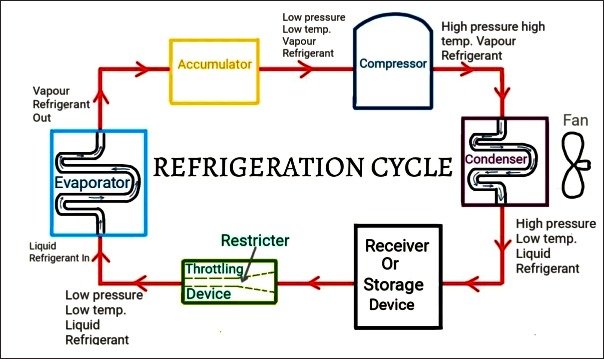
    Figure 1.2.1 – Refrigeration Cycle

    An evaporator is a device used to evaporate the liquid form of a substance into its gaseous form. An expansion valve is one of the most important components of the refrigeration cycle as it controls the amount of refrigerant flowing into the system.

    3.1 PROBLEM DEFINITION

    The average summer temperatures experienced by most countries are increasing every year, and consequently, the energy needed to provide air-conditioning is also increasing annually. The HVAC industry has a challenging task of providing energy-efficient technologies to satisfy this growing demand with a minimum impact on global warming and ozone depletion. The chilled water types of central air conditioning plants are installed in places where whole large buildings, shopping malls, airports, hotels, etc., comprising several floors, are to be air-conditioned.

    The project consists of how the proposed centralized air conditioning is designed and its criterion for a new building in Hyderabad. It consists of 6 floors having an area of 4,000 sqft. per floor. The main objective is to create a thermally controlled environment within the space of a building envelope such as kitchen room, master bedroom, dining room, etc. The tentative air conditioning load for the system shall be 290 TR approx. Air-cooled chillers with pumping systems are proposed to make the system energy efficient. The proposed air conditioning plant shall be located on the building terrace.

    Keywords: Humidification, Dehumidification, Infiltration, Ventilation, Dry Bulb Temperature, Wet Bulb Temperature, Dew Point Temperature, Relative Humidity, Specific Humidity, Indoor-Air-Quality, British Thermal Unit, Ton of Refrigeration.

    THE VARIOUS MODULES USED AND THEIR FUNCTIONALITIES ARE DISCUSSED AS FOLLOWS:

    Four requirements are the bases for any HVAC systems [4]. They need primary equipment, space requirement, air distribution, and piping, as shown in Figure.
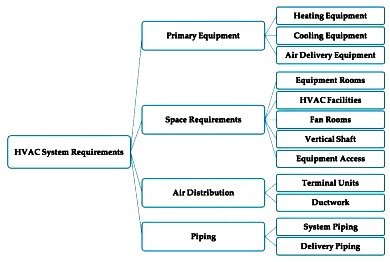
     Figure: 3.1.1 HVAC System Requirement

    Primary equipment includes heating equipment such as steam boilers and hot water boilers to heat buildings or spaces, air delivery equipment as packaged equipment to deliver conditioned ventilation air by using centrifugal fans, axial fans, and plug or plenum fans, and refrigeration equipment that delivers cooled or conditioned air into space. It includes cooling coils based on water from water chillers or refrigerants from a refrigeration process.

    Space requirement is essential in shaping an HVAC system to be central or local. It requires five facilities as the following:

    1.      Equipment rooms: since the total mechanical and electrical space requirements range between 4 and 9% of the gross building area. It is preferable to be centrally located in the building to reduce the long duct, pipe, and conduit runs and sizes, to simplify shaft layouts, and to centralize maintenance and operation.

    2.      HVAC facilities: heating equipment and refrigeration equipment require many facilities to perform their primary tasks of heating and cooling the building. The heating equipment requires boiler units, pumps, heat exchangers, pressure-reducing equipment, control air compressors, and miscellaneous equipment, while the refrigeration equipment requires water chillers or cooling water towers for large buildings, condenser water pumps, heat exchangers, air-conditioning equipment, control air compressors, and miscellaneous equipment. The design of equipment rooms to host both pieces of equipment should consider the size and the weight of equipment, the installation and maintenance of equipment, and the applicable regulations to combustion air and ventilation air criteria.

    3.      Fan rooms contain the HVAC fan equipment and other miscellaneous equipment. The rooms should consider the size for the installation and removal of fan shafts and coils, the replacement, and maintenance. The size of fans depends on the required airflow rate to condition the building, and it can be centralized or localized based on the availability, location, and cost. It is preferable to have easy access to outdoor air.

    4.      Vertical shaft: provides space for air distribution and water and steam pipe distribution. The air distribution contains HVAC supply air, exhaust air, and return air ductwork. Pipe distribution includes hot water, chilled water, condenser water, and steam supply, and condenser return. The vertical shaft includes other mechanical and electrical distribution to serve the entire building, including plumbing pipes, fire protection pipes, and electric conduits/closets.

    5.      Equipment access: the equipment room must allow the movement of large, heavy equipment during installation, replacement, and maintenance.

  • HAJJ – STEP BY STEP

    HAJJ – STEP BY STEP

    By Muhammad Tariq

    For the performance of Hajj and its sacred rituals   
    — Pilgrims from all over gather as individuals  
     
    All in white apparel, dressed identical   
    — From Mecca to Mina, together they travel  
     
    They shun worldly pleasures, and do not quarrel   
    — Piety is their best capital  
     
    The main event begins after the morning’s ritual   
    — In the plains of Arafat, each would assemble  
     
    Hands raised in prayer, tears visible   
    — They repent, hearts soft and humble  
     
    Muzdalfa is next; as the night envelops   
    — Combining Maghreb and Isha, a deed exceptional  
     
    They pray through the night, sleep only a little   
    — And gather the pebbles for the stoning ritual  
    After morning prayers, to Jamarat they hustle   
    — For stoning the pillar, the devil’s symbol  
     
    Then they sacrifice an animal, as is traditional   
    — A goat, sheep, cow, or a camel—each permissible  
     
    This is followed by clipping the hair, an act admissible   
    — Shaving the head, however, is more preferable  
     
    Ihram is replaced with clothes more usual   
    — For Tawaf e Ziarah, towards Mecca they travel  
     
    Then between Safa and Marwah, they shuttle   
    — Honoring a desperate mother in deep trouble  
     
    They stay in Mina, two days—three, if desirable   
    — And stone the Satan, most despicable  
     
    The farewell Tawaf is the last of the ritual   
    — Like the newly born, they return from the holy festival  

  • Empowering Pakistan’s HVAC Industry with World-Class Brands

    Empowering Pakistan’s HVAC Industry with World-Class Brands

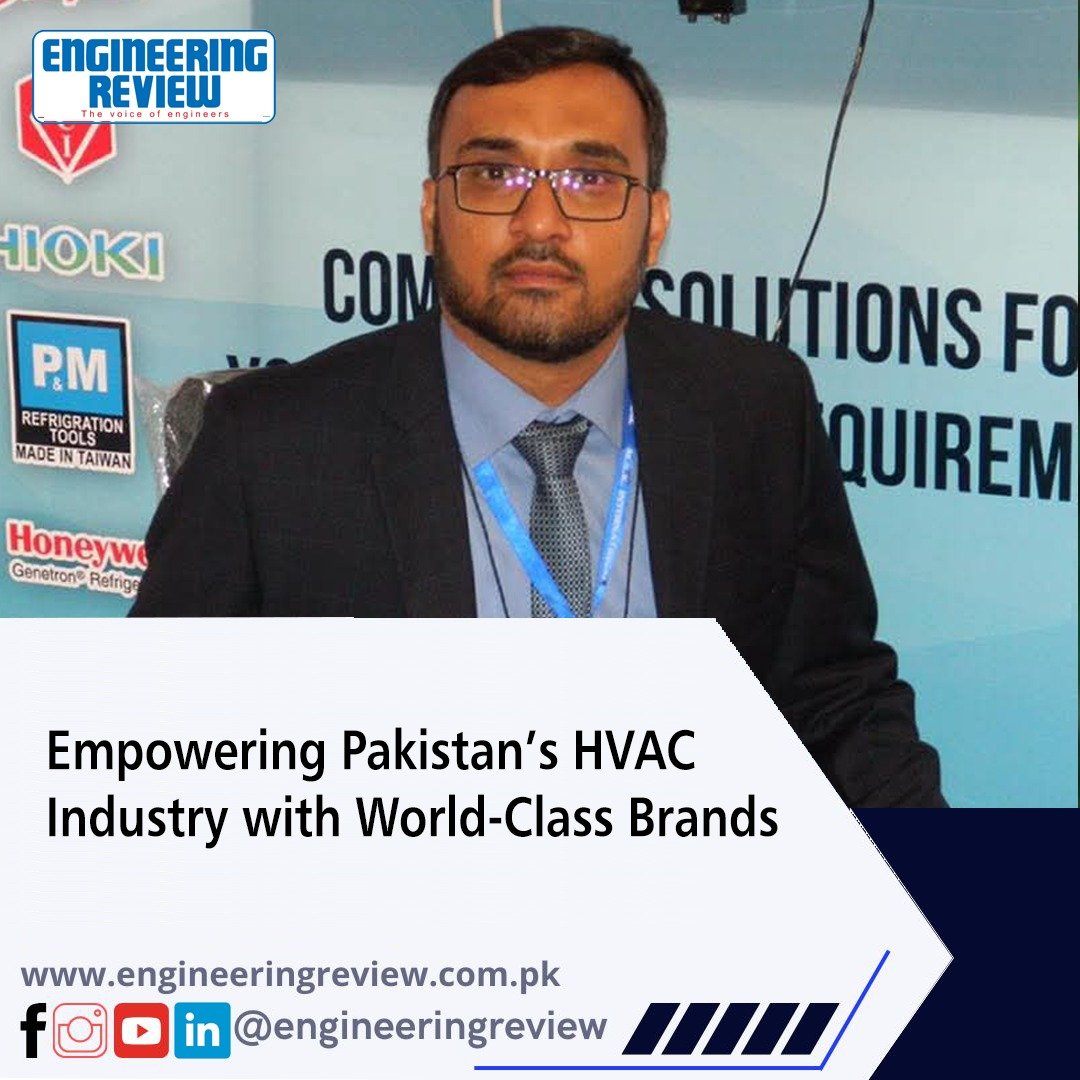
    MSK International, based in Karachi, is a prominent distributor of heating, refrigeration, and air conditioning (HVAC) equipment in Pakistan.   
    Established in 2010, the company has built a strong reputation for supplying high-quality products and maintaining excellent customer service.  
    MSK International has established itself as a leading distributor in Pakistan’s HVAC sector.  By partnering with renowned international brands, the company ensures the availability of superior quality products to meet the diverse needs of its clients.  Its extensive inventory and commitment to customer satisfaction have contributed to its strong market presence.  
    They are partnered with numerous world-renowned brands such as Errecom SPA, Mueller, ALCO, Honeywell, Suniso, Danfoss, Saginomiya, Castel, Superlon, Fuji, Packless, Robinair, Imperial, P&M, and Bristol Compressors. Our extensive reach serves the construction industry, OEMs, end users, contractors, dealers, and distributors across Pakistan.  
    Errecom SPA is a leading Italian company specializing in the formulation and production of chemical solutions for air conditioning and refrigeration systems.  Established in 2001 and headquartered in Italy, the company has become a significant player in the HVAC/R (Heating, Ventilation, Air Conditioning, and Refrigeration) industry over the past two decades.  
    Errecom has expanded its reach beyond Italy, establishing branches in the United States in 2018 and the Middle East in 2021.  Its products are now exported to over 130 countries, serving both the automotive and HVAC sectors.  The company’s commitment to quality and innovation has made it a trusted partner for Original Equipment Manufacturers (OEMs) worldwide.  
    Errecom SPA specializes in chemical solutions for air conditioning and refrigeration systems, including refrigeration lubricants. They provide specialized lubricants and disinfectants tailored for various applications.  
    At the core of Errecom’s operations is its in-house chemical laboratory, which focuses on developing timely and innovative solutions to address challenges in AC/R systems.  The company’s commitment to sustainability is evident in its use of biodegradable raw materials, eco-friendly packaging, and products designed to optimize system performance while reducing environmental impact.  This dedication to green practices has earned Errecom recognition as one of the 100 most sustainable Italian companies by Forbes.

  • The Use of Neural Networks and Related Algorithms for Predictions: An Engineering Perspective

    The Use of Neural Networks and Related Algorithms for Predictions: An Engineering Perspective

    by: Syed Umair Ali

    In modern engineering, the ability to analyze data and make accurate predictions has become essential, whether in designing efficient systems, managing industrial processes, or optimizing resources. Neural networks and their associated algorithms have emerged as powerful tools in this context, enabling engineers to solve complex prediction problems with high precision. This article explores how neural networks work, how they are trained, and their practical applications in various engineering fields.  
    What Are Neural Networks?  
    A neural network is a computational model inspired by the structure of the human brain. It consists of interconnected processing units called neurons, arranged in layers:  
    •        Input Layer: Receives raw data (e.g., sensor readings, time-series values).  
    •        Hidden Layers: Perform intermediate computations using weighted connections and activation functions.  
    •        Output Layer: Produces the final prediction or classification result.  
    Each connection carries a weight, and each neuron applies a non-linear activation function (e.g., ReLU, sigmoid) to introduce complexity into the model’s behavior. This architecture allows neural networks to approximate complex functions and relationships between input and output variables.  
    Predictive Modeling in Engineering  
    Neural networks are particularly valuable in engineering for solving tasks that involve:  
    •        System Identification and Control: Modeling nonlinear systems where traditional equations are hard to derive.  
    •        Fault Detection and Diagnosis: Predicting failures in industrial equipment using sensor data.  
    •        Load Forecasting: Estimating future power or network loads.  
    •        Predictive Maintenance: Forecasting equipment health using vibration, temperature, or acoustic signals.  
    •        Quality Control: Classifying product quality using image or signal analysis.  


    Key Algorithms That Power Neural Networks  
    1. Backpropagation  
    This is the core algorithm for training neural networks. It uses the chain rule of calculus to compute the gradient of the loss function concerning each weight. This gradient is then used to update the weights in a direction that minimizes error.  
    2. Optimization Algorithms  
    These algorithms determine how weights are updated during training:  
    •        Gradient Descent: The most basic form, updating weights incrementally based on the gradient.  
    •        Adam (Adaptive Moment Estimation): Combines momentum and adaptive learning rates, leading to faster convergence and better performance in noisy datasets.  
    3. Regularization Techniques  
    To avoid overfitting and improve generalization:  
    •        L2 Regularization (Ridge): Penalizes large weights.  
    •        Dropout: Randomly deactivates neurons during training to prevent dependency on specific paths.  
    4. Activation Functions  
    Introduce non-linearity to the model:  
    •        ReLU (Rectified Linear Unit): Common in deep networks due to computational efficiency.  
    •        Sigmoid/Tanh: Used in binary or bounded output cases.  
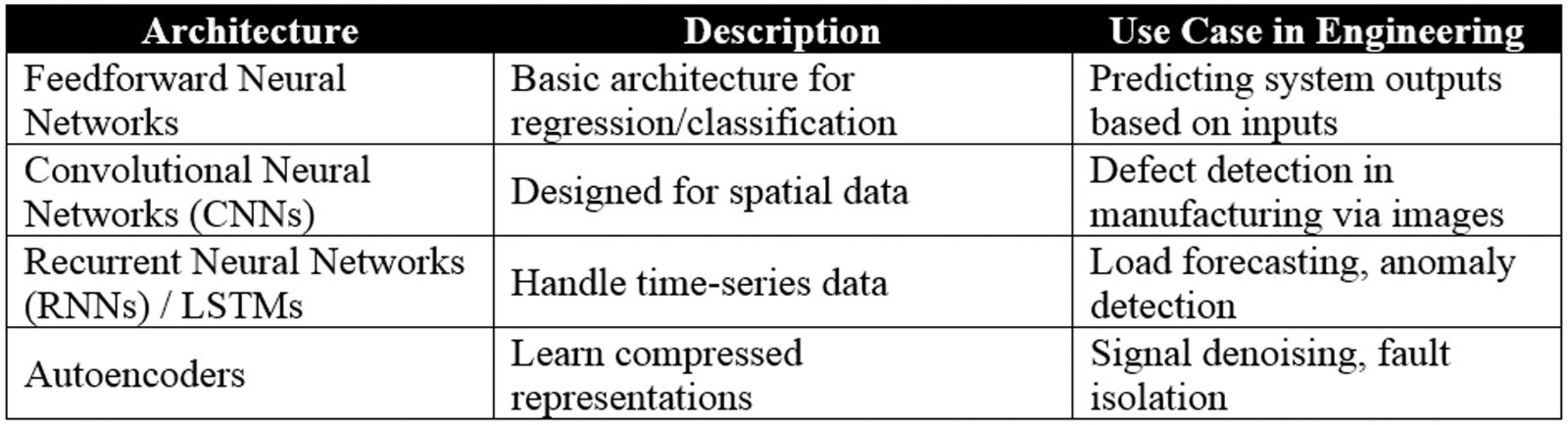
    Common Neural Network Architectures in Engineering  
    Case Example: Predictive Maintenance in Manufacturing  
    Imagine a manufacturing plant where motor vibrations are continuously monitored. A neural network can be trained using past vibration data to detect patterns that precede failures. Using an LSTM model, engineers can predict the Remaining Useful Life (RUL) of equipment and schedule maintenance before failure occurs, saving downtime and costs.  


    Implementation Tools  
    Engineers can implement neural networks using libraries such as:  
    •        TensorFlow / Keras (Python)  
    •        PyTorch  
    •        MATLAB’s Neural Network Toolbox  
    These platforms offer pre-built layers, training utilities, and GPU support to simplify deployment.  
    Challenges in Engineering Contexts  
    •        Data Collection and Preprocessing: Sensor data often requires filtering, normalization, and alignment.  
    •        Model Interpretability: Engineers may need explainable predictions, which is a challenge with deep models.  
    •        Real-Time Constraints: Some applications (e.g., control systems) require fast inference and lightweight models.  
    Conclusion  
    Neural networks, supported by sophisticated algorithms, offer engineers a robust framework for predictive modeling. Whether enhancing safety, improving product quality, or reducing operational costs, these AI tools are reshaping engineering practices. As data-driven engineering continues to evolve, neural networks will play an increasingly vital role in intelligent system design and optimization.  
    About the Author:  
    The author is a passionate writer and blogger, and the founder of https://thepengenius.com, a platform dedicated to exploring ideas that inspire growth, creativity, and meaningful living. With a keen interest in personal knowledge management, emerging trends in Artificial Intelligence, and innovative strategies for leading a more fulfilling life, Umair blends curiosity with purpose in his writing. His work reflects a continuous pursuit of insight, offering readers fresh perspectives and practical tools to thrive in an ever-evolving world.  

  • Entrepreneurial Thinking in Engineering Education

    Entrepreneurial Thinking in Engineering Education

    by: Dr. Muhammad Nawaz Iqbal

    Changing the primary perspective of engineering students is the foundational step in promoting entrepreneurship in engineering education.  
    Beyond acquiring skills, students should learn to approach problems as innovators—spotting gaps and imagining possible solutions. As a result, they begin focusing on formulating meaningful problems worth solving, which is a core aspect of entrepreneurship.  
    To cultivate this mindset, curriculum development should incorporate real-world, ambiguous situations. Educators should draw from industry, societal, and technological challenges to design problems with no single correct solution. This approach trains students to embrace uncertainty and apply inventive problem-solving as they work toward solutions.  
    Project-based learning is particularly effective in fostering entrepreneurial skills. When students are given multidisciplinary projects, they must collaborate, generate ideas, and iterate on improvements. This enables them to understand the delicate balance engineers must strike between functional requirements, client needs, costs, and market constraints.  
    Using case studies in entrepreneurship courses helps bridge the gap between theoretical knowledge and its practical application. Exploring the successes and failures of engineer-led startups helps students learn about scalability, pivoting, and value proposition design. This method also allows students to relate more closely to entrepreneurial thinking and see it as grounded in real-world experience.  
    Facilitating collaborative efforts between engineers and business professionals is another effective method of promoting entrepreneurial thinking. Courses jointly offered by engineering and business departments, as well as shared labs and startup incubators, can expose students to business models, customer engagement, and venture creation. This gives engineering students a broader perspective on innovation and boosts their confidence in launching or co-launching ventures.  


    Assessment methods must also evolve to support entrepreneurial education. Traditional exams test memory, but not creativity, decision-making, or risk-taking. Educators should incorporate pitch presentations, startup simulations, and reflective journals to help students think and express themselves like entrepreneurs.  
    Having a mentor significantly enhances students’ entrepreneurial abilities. Direct interaction with startup founders, industry disruptors, and engineering entrepreneurs provides invaluable insights and encouragement. These relationships help students clarify their own goals and understand the real challenges of entrepreneurship.  
    Universities should provide facilities that foster entrepreneurship within engineering departments. Innovation centers, maker labs, and prototype workshops enable students to bring their ideas to life—regardless of financial background. Competitions such as hackathons, idea sprints, and pitch contests simulate real business dynamics and encourage fast thinking, interdisciplinary collaboration, and public communication.  
    Cross-cultural exposure also enhances entrepreneurial perspective. International exchange programs, global innovation competitions, and virtual collaborative projects expose students to diverse markets and user needs. This global involvement enables them to develop adaptable, empathetic, and context-sensitive solutions.  
    Incorporating sustainability and ethics into entrepreneurial education ensures that innovation generates both profit and positive impact. When students are trained to evaluate the environmental, social, and ethical implications of their ideas, they are more likely to pursue lasting and responsible ventures.  
    Storytelling is a vital skill for communicating complex engineering ideas to non-technical audiences. Storytelling training helps engineers craft compelling narratives, which are essential for pitching ideas, attracting users, and inspiring teams.  
    Artificial intelligence and data analytics are increasingly important in entrepreneurial education. Engineer-entrepreneurs who understand how to leverage data can make smarter design decisions, better understand user behavior, and identify trends that drive disruptive innovation.  
    Failure is a vital learning experience in entrepreneurship. Students should be encouraged to experiment without fear of poor academic consequences. Reframing failure as a step in iteration builds resilience, adaptability, and a positive mindset—core traits of successful entrepreneurs.  
    Involving successful alumni helps sustain student interest in entrepreneurship. Alumni can participate in guest lectures, mentorship, and workshops, sharing practical insights grounded in their own engineering and entrepreneurial experiences.  
    Finally, universities must institutionalize entrepreneurial thinking by adapting policies to support innovation. This includes offering flexible credit options for entrepreneurship, providing assistance with intellectual property, and supporting startup incubation. Innovation should be valued on par with academic excellence.  
    The ultimate goal of fostering entrepreneurial thinking in engineering education is to cultivate a culture of curiosity, risk-taking, and value creation. This prepares engineers not just to build products, but to lead innovation and shape the future.  

  • Pakistan HVACR Expo 2025: Ushering a New Era of Sustainable Innovation

    Pakistan HVACR Expo 2025: Ushering a New Era of Sustainable Innovation

    30th International HVACR Expo & Conference returns with global participation, youth engagement, and focus on energy-efficient, eco-friendly technologies.

    The 30th Pakistan HVACR International Expo & Conference 2025, set to take place from June 19–21 at the Lahore Expo Centre, marks a significant milestone in the evolution of HVACR innovation in the region. Organized under the theme “Sustainable Environments Through HVACR Technology,” the event brings together the expanding domains of Heating, Ventilation, Air Conditioning & Refrigeration (HVACR), Mechanical, Electrical & Plumbing (MEP), and Building Materials Services, creating a cohesive platform for technological advancement, sustainable design, and economic collaboration.  
    With over 33 international companies from countries such as Germany (joining for the first time), China, Turkey, Ukraine, and Iran, this year’s exhibition reinforces Pakistan’s growing importance in the global HVACR ecosystem. Over 250 exhibitors and thousands of professionals are expected to attend the largest dedicated HVACR trade event in Pakistan, offering a dynamic mix of networking, knowledge exchange, and cutting-edge product demonstrations.  


    What’s New at the 2025 Expo?  
    Focus on Energy Efficiency & Green Innovation  
    Post-COVID, the HVACR industry has undergone a paradigm shift. With rising concerns over health, indoor air quality, and climate impact, this year’s expo is centered on sustainable technologies and energy-efficient solutions—critical for a country like Pakistan facing chronic energy shortages. From eco-smart cooling systems to low-carbon refrigeration technologies, the event puts the spotlight on climate-conscious engineering.  
    Unprecedented Academia & Startup Participation  
    For the first time in the expo’s history, the platform is opening its doors wide to young innovators. Over 21 universities from across the country will showcase student-led startups, offering a glimpse into the next generation of engineers shaping the industry’s future. These academic exhibits, supported by signed MoUs between the Society and engineering institutions, aim to bridge industry-academia collaboration and promote homegrown innovation.  
    Empowering SMEs  
    The Expo offers a powerful platform for Small and Medium Enterprises (SMEs) to introduce new machinery, materials, and solutions. It provides local manufacturers a front-row seat to observe global innovations, adapt them, and scale for domestic and export markets. This focus on local capacity-building is a step toward import substitution and export-driven growth.  
    International Training and Technical Knowledge  
    Global expertise takes center stage with technical sessions and workshops led by industry experts from the U.S., Egypt, and Malaysia. Engineers and professionals can attend hands-on training programs and presentations of technical papers, offering invaluable exposure to emerging standards and practices.  
    Free Accommodation for International Visitors  
    In a move to boost international participation and forge cross-border partnerships, free accommodations are being offered to foreign visitors, allowing seamless access to Pakistan’s growing HVACR market and opportunities.  
    A Message from the Leadership  
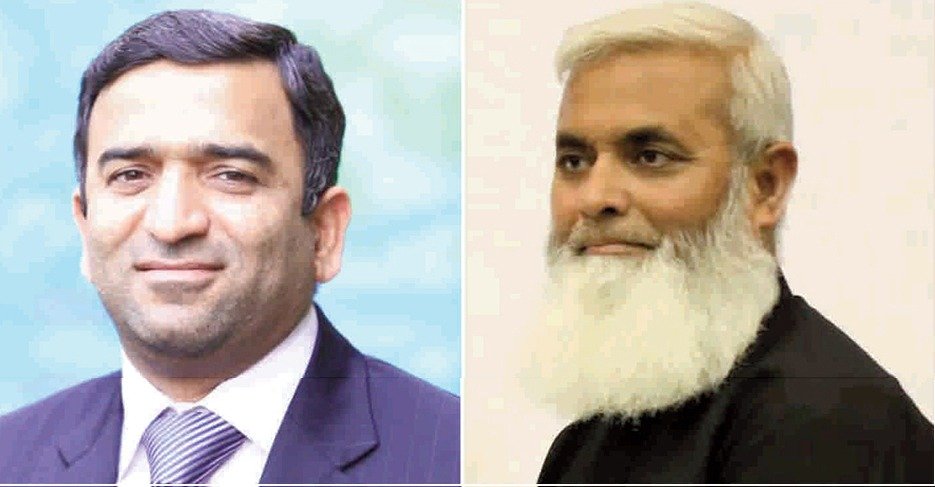
    Ramzan Sharif, President of the Pakistan HVACR Society, emphasized that this landmark 30th edition stands not only as a celebration of industry growth but as a strategic platform for transformation.  
    “This Expo is more than an exhibition—it’s a catalyst for business development, innovation, and global integration. We’ve worked tirelessly to grow our Society, strengthen ties with government and international partners like ASHRAE, and advocate for a progressive, future-ready HVACR industry.”  
    The President also highlighted key engagements with bodies such as NEECA, the Ministry of Climate Change, EDB, and PEC, underscoring the Society’s active policy role.  
    Syed Fakkhi Iftikhar, Chairman of the Islamabad Chapter, echoed similar sentiments:  
    “Post-COVID, the HVACR field has evolved drastically. Health, environmental standards, and energy efficiency are top priorities now. This Expo brings new technologies that local SMEs and startups can learn from, replicate, and even introduce to global markets.”  
    Why This Expo Matters  
    In an era of rapid urbanization and climate challenges, HVACR is no longer a support sector—it is central to smart building design, urban resilience, and sustainable development. This year’s exhibition showcases breakthrough technologies that redefine how buildings are cooled, ventilated, and made energy-efficient.  
    From AI-enabled building systems to smart grid integration in HVACR solutions, visitors can expect a comprehensive view of how the industry is aligning with global green building trends.  
    Looking Ahead  
    With the credibility of nearly three decades and a forward-looking strategy, the Pakistan HVACR Expo continues to set benchmarks. For manufacturers, professionals, academia, and policymakers alike, the 2025 edition offers unmatched opportunities to network, learn, and lead. – ER Report 

  • Airnest Global Pvt. Ltd.: Redefining HVAC Excellence in Pakistan

    Airnest Global Pvt. Ltd.: Redefining HVAC Excellence in Pakistan

    Airnest Global Pvt. Ltd. is a dynamic extension of a group with deep-rooted expertise in the MEP industry, established in 1982.  
    In 2018, our Board of Directors recognized a growing demand for high-quality, sustainable climate solutions and strategically expanded into the HVAC equipment supply sector. This move marked the birth of Air nest Global Pvt. Ltd., a company built to deliver innovative, reliable, and energy efficient air conditioning solutions to Pakistan’s evolving industrial and commercial landscape.  
    We are proud to be the exclusive suppliers of globally renowned brands such as Johnson Controls – Hitachi Air Conditioning, SKM Air Conditioning, and MESAN. Our offerings combine cutting-edge Japanese technology, world-class performance, and industry-proven durability. This partnership allows us to meet air conditioning needs with unmatched speed, intelligence, and efficiency, setting a new benchmark for HVAC excellence in the region.  
    Our vision is to be a leading provider of innovative and sustainable solutions by importing premium Hitachi and SKM products, empowering industries to create a cleaner, greener environment for future generations. We are committed to delivering top-tier products that not only enhance operational efficiency but also contribute to environmental sustainability. Our mission is to support our clients in reducing their ecological footprint through advanced HVAC technology and exceptional customer service. With a strong focus on innovation, quality, and dependability, we aim to drive positive transformation across all sectors we serve.  
    At Airnest Global Pvt. Ltd., we take pride in our clear organizational structure, dedicated leadership, and a collaborative team culture. Each professional in our team plays a vital role in fulfilling our commitment to delivering exceptional HVAC solutions. Together, we are shaping a future driven by sustainability, innovation, and performance.  

  • One-Day Int’l Symposium Under EU-Funded Erasmus+ CBHE CATCH_VR Project

    One-Day Int’l Symposium Under EU-Funded Erasmus+ CBHE CATCH_VR Project

    Digital Twins in Manufacturing Systems

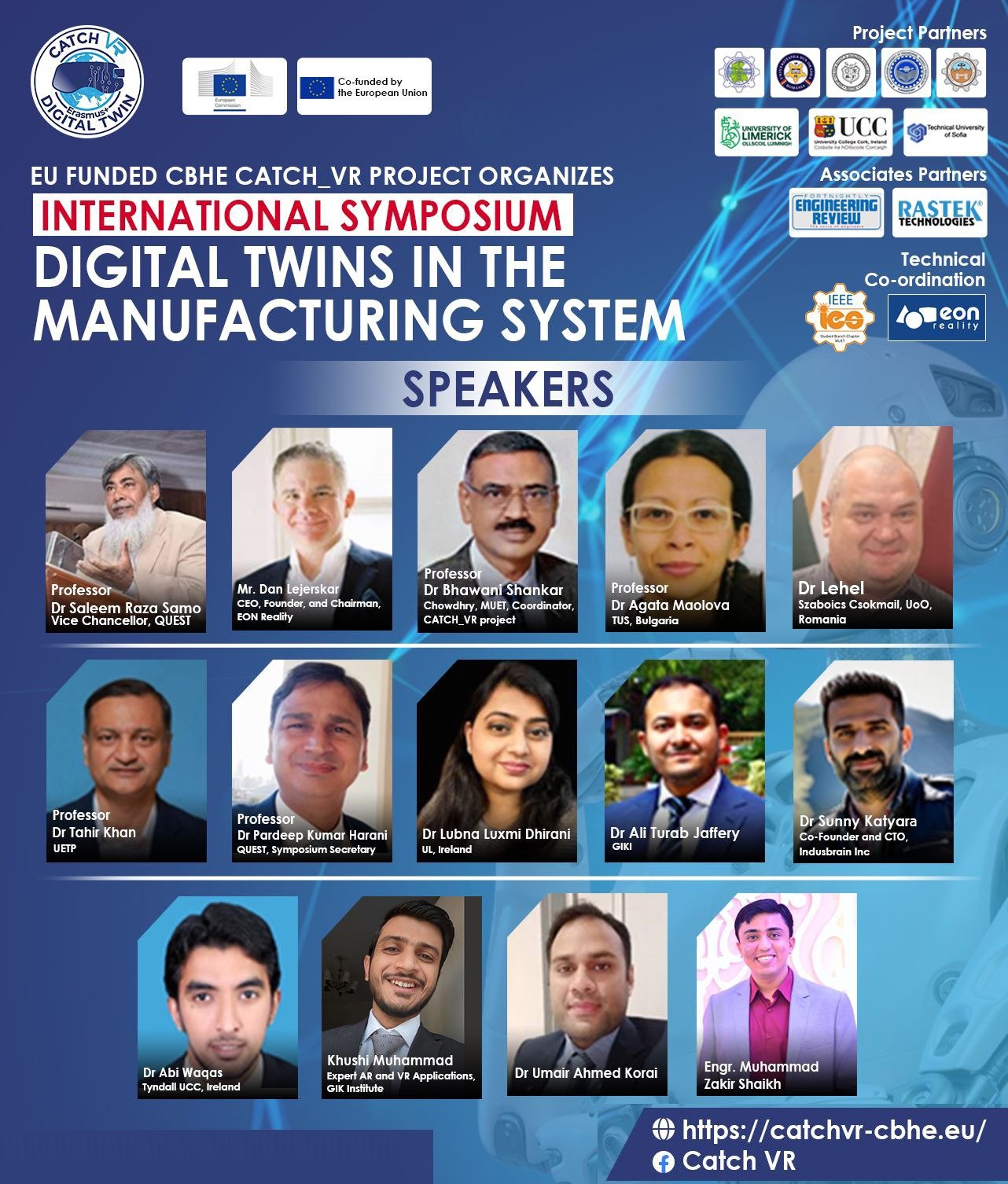
    Under the auspices of the EU-funded Capacity Building in Higher Education (CBHE) CATCH_VR Project, Mehran University of Engineering & Technology (MUET) hosted a one-day international Digital Twins in Manufacturing Systems Symposium.  
    The event convened researchers and industry experts from Ireland, Romania, Sweden, Bulgaria, Portugal, England, and Pakistan to share the latest innovations in augmented reality (AR), virtual reality (VR), artificial intelligence (AI), and immersive learning.  
    The symposium opened with remarks by Professor Dr. Saleem Raza Samo, Vice Chancellor of QUEST, who welcomed delegates and underscored the growing importance of digital technologies in engineering education. Dr. Bhawani Shankar Chowdhry, MUET Coordinator for the CATCH_VR project, then presented an overview of the project’s deliverables, tasks, and milestones.  


    Key presentations included:  
    •        Dr. Pardeep Kumar Harani (QUEST) on the “Importance of Digital Transformation in Manufacturing.”  
    •        Mr. Khushi Muhammad (GIK Institute) examining “AR/VR in Modern Manufacturing.”  
    •        Prof. Dr. Agata Maolova (Technical University of Sofia) discussing “Real-Time Data Integration with Digital Twins.”  
    •        Dr. Lehel Szaboics Csokmail (University of Oradea) demonstrating “ON-XR: An Immersive Learning Platform and Virtual Robotics Lab Tour.”  
    •        Dr. Sunny Katyara (Indusbrain Inc., UK) on “Designing Resilient and Agile Production Lines with Digital Twin Technology.”  
    •        Dr. Abi Waqas (Tyndall National Institute, Ireland) and Dr. Lubna Luxmi Dhirani (University of Limerick) exploring technical and security challenges in implementing digital twins.  
    •        Mr. Dan Lejerskar, CEO of EON Reality, presenting “EON-XR Platform: Leading XR and AI Solutions for Education & Technology.”  
    The day concluded with a panel discussion, moderated by Dr. Tahir Khan (UET Peshawar) and Dr. Ali Turab Jaffery (GIKI), which covered:  
    •        EON Reality’s 25-year journey in XR and AI innovation  
    •        Immersive learning applications in education, training, and industrial simulation  
    •        Live AI-powered document-to-XR lesson demonstrations  
    •        Virtual tours of robotics labs  
    •        Global success stories and future XR and AI trends  
    Closing remarks were delivered by Dr. Lubna Luxmi Dhirani, Symposium Chair, who praised the collaborative spirit and emphasized the symposium’s role in advancing sustainable, technology-driven engineering education. It is worth mentioning that Engineering Review is also an Associate Partner of the project. More details are available at: https://catchvr-cbhe.eu/  

  • Schneider Electric Pakistan Celebrates Key Partnerships

    Schneider Electric Pakistan Celebrates Key Partnerships

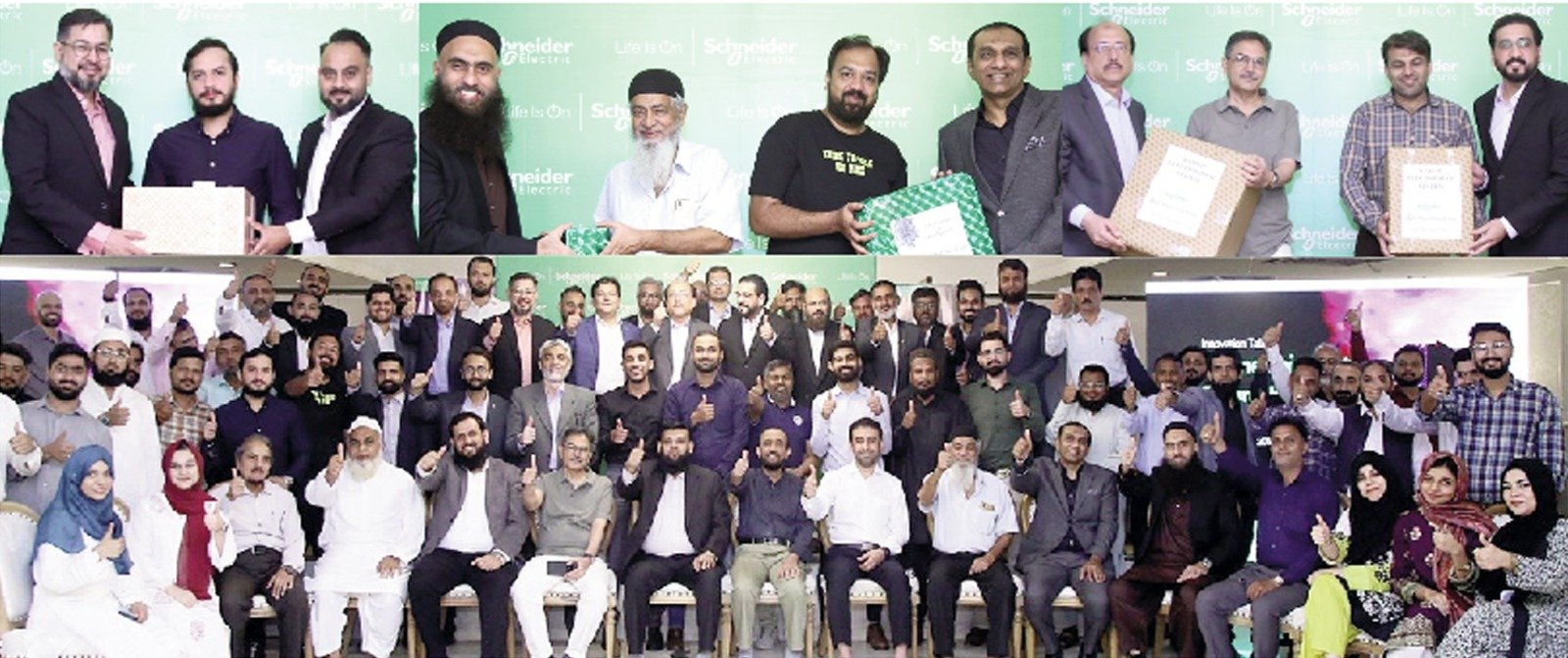
    Schneider Electric Pakistan recently hosted its highly anticipated Innovation Talk: Partnerships of the Future event in Karachi.  
    The exclusive gathering welcomed over 100 esteemed distributors, their dedicated resellers, retailers, and panel builders, marking a significant celebration of their pivotal role in the resounding success of the Schneider Electric Mega Sale Campaign 2024.  


    The Innovation Talk served as a profound acknowledgment of the exceptional contributions made by these vital partners. The event underscored the indispensable role of Schneider Electric’s robust partner network in driving market leadership and delivering unparalleled value to customers across the region. Achievements from both the direct “Sell-in” campaign and the broader “Sell-out” efforts were recognized, celebrating the strategic acumen and unwavering dedication that propelled the Mega Sale 2024 to a triumph in the dynamic city of Karachi.  
    “This event was a powerful testament to the strength of our partnerships,” stated Mr. Kamran Sultan, Country Leader for Panel Builder & Distribution. The drive and commitment from each of our partners in Karachi are instrumental in fuelling our shared vision for a more electrified and sustainable future. We extend our sincerest gratitude to all who joined us, and we eagerly anticipate deepening these vital collaborations as we continue to innovate and collectively shape the industry landscape in Pakistan, he added.  
    Schneider Electric Pakistan remains committed to fostering strong, mutually beneficial relationships with its partners, recognizing that their success is paramount to the company’s mission of empowering all to make the most of their energy and resources. – PR  

  • “Karachi’s Water Crisis: Between Mafia Control and Missed Opportunities” PEF Seminar Exposes Systemic Failures While Proposing Viable Solutions

    “Karachi’s Water Crisis: Between Mafia Control and Missed Opportunities” PEF Seminar Exposes Systemic Failures While Proposing Viable Solutions

    As Karachi braces for another scorching summer, its perennial water crisis looms larger than ever.  
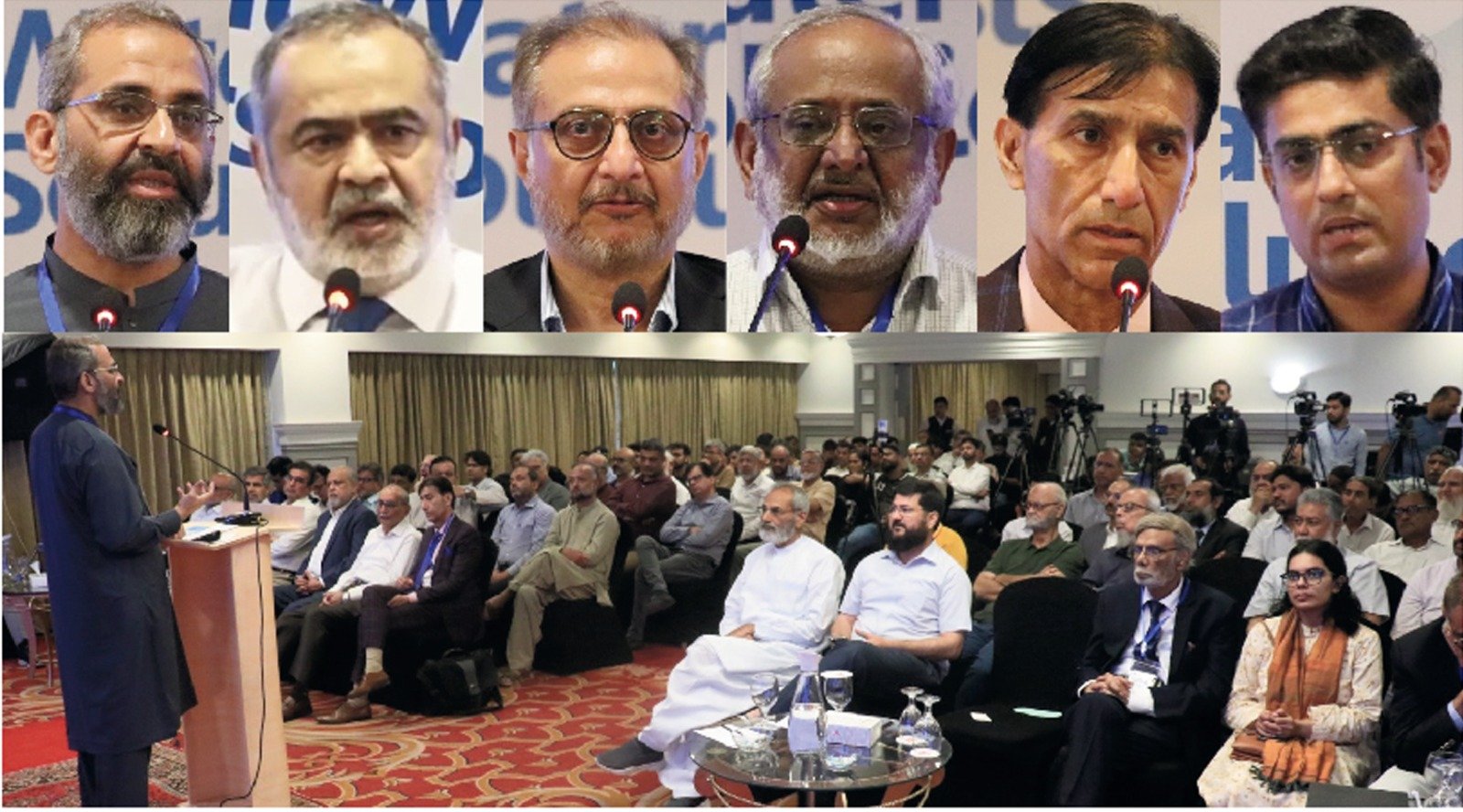
    The recent seminar organized by the Pakistan Engineers Forum (PEF) laid bare the harsh realities – from the tanker mafia’s stranglehold to bureaucratic inertia – while charting potential pathways to water security. The consensus was clear: Karachi’s thirst can only be quenched through urgent, collective action.  


    The Grim Reality  
    The seminar’s opening notes struck a somber tone. Javed Bilwani (President, KCCI) paid tribute to Karachiites’ resilience in enduring chronic water shortages, highlighting how water unavailability has become the new normal for Pakistan’s economic powerhouse.  
    Al Kazim Mansoor (Former PEF President) pulled no punches in exposing the water tanker mafia’s operations, revealing how this illegal industry has institutionalized water scarcity for profit. His revelations painted a picture of systemic exploitation where citizens pay premium prices for what should be a basic right.  
    Technical Solutions on the Table  
    The discussion then turned to potential solutions:  
    1.      The K-4 Project: Hope Delayed  
    Dr. Bashir Lakhani, overseeing the crucial K-4 project, presented progress updates on this 650 MGD initiative meant to bring Indus water to Karachi. While technical hurdles were acknowledged, the bigger challenge appears to be bureaucratic red tape and funding delays that keep pushing completion timelines. He also emphasised Sindh Government’s inability to augment the distribution network for these additional 650 MGDs of water to Karachiites at their house line nozzles.  
    2.      Groundwater Recharge: A Partial Answer  
    Dr. Imran Ahmed (NED University) made a compelling case for large-scale groundwater recharge systems. His presentation demonstrated how rainwater harvesting and managed aquifer recharge could supplement supplies, though he cautioned that these measures alone couldn’t meet the megacity’s massive demand.  
    3.      The Management Deficit  
    Prof. Dr. Shahid Saleem analyzed the root causes of water shortages, emphasizing that while infrastructure matters, poor management exacerbates the crisis. His data showed how unplanned urbanization and outdated distribution systems lead to massive water losses.  
    The Corruption Elephant in the Room  
    Senior journalist Monis Ahmed delivered perhaps the most damning indictment, tracing how corruption permeates every level of water governance. From illegal hydrants to political patronage of tanker operations, his exposé revealed why technical solutions alone won’t solve Karachi’s water woes.  
    Industry Leaders Speak Out  
    Junaid Naqi (President, Korangi Association of Trade & Industry (KATI)) expressed frustration at the Sindh government’s neglect of Karachi, the city that welcomes and sustains millions. “Why,” he asked, “does Pakistan’s economic engine get treated this way?”  
    A Call for Collective Action  
    The seminar’s most resonant message came from Monem Zafar Khan (Jamaat Islami Karachi Chief), who stressed that water transcends political divisions. His appeal for stakeholders to unite beyond party lines struck a chord, emphasizing that Karachi’s survival depends on putting people before politics.  
    The Path Forward  
    The solutions framework that emerged demands:  
    • Immediate crackdown on water mafias and corrupt practices  
    • Fast-tracking K-4 with transparent oversight  
    • Large-scale conservation and recharge initiatives  
    • Inclusive governance involving all stakeholders  
    As shields were awarded and participants departed for high tea, one question lingered: Will this seminar join Karachi’s long history of forgotten dialogues, or will it spark the movement that finally brings water justice to the city? The technical solutions exist. The crisis is understood. How many more seminars will it take before Karachi gets the water it deserves? The solutions exist. The crisis is understood. What remains is the hardest part – mustering the political will to act.