Author: admin

  • Engr. Anwar Saadat’s Legacy Immortalized at NED University: A Vision Reborn for the Future of HVACR in Pakistan

    Engr. Anwar Saadat’s Legacy Immortalized at NED University: A Vision Reborn for the Future of HVACR in Pakistan


    Engr. Anwar Saadat’s Legacy Immortalized at NED University: A Vision Reborn for the Future of HVACR in Pakistan  

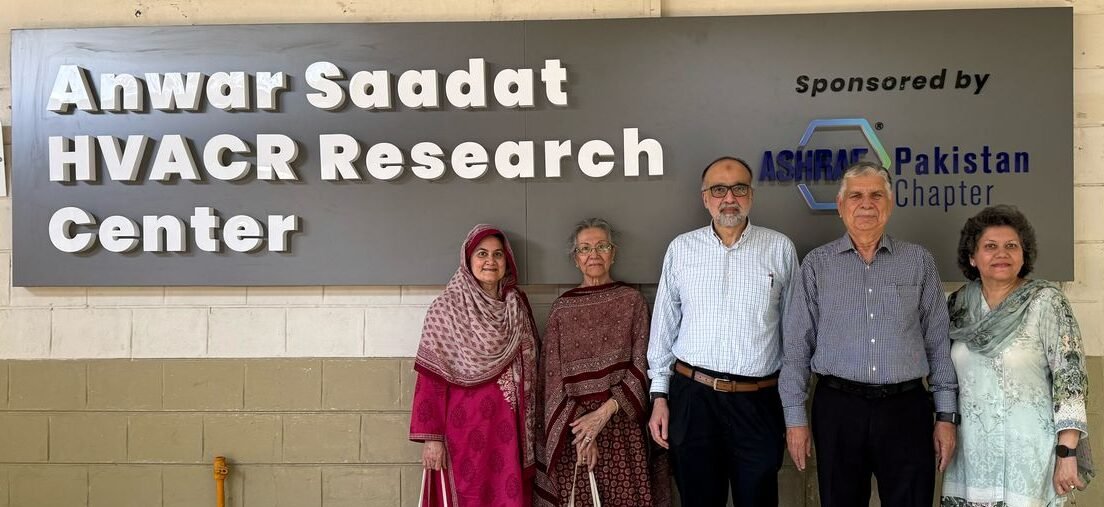
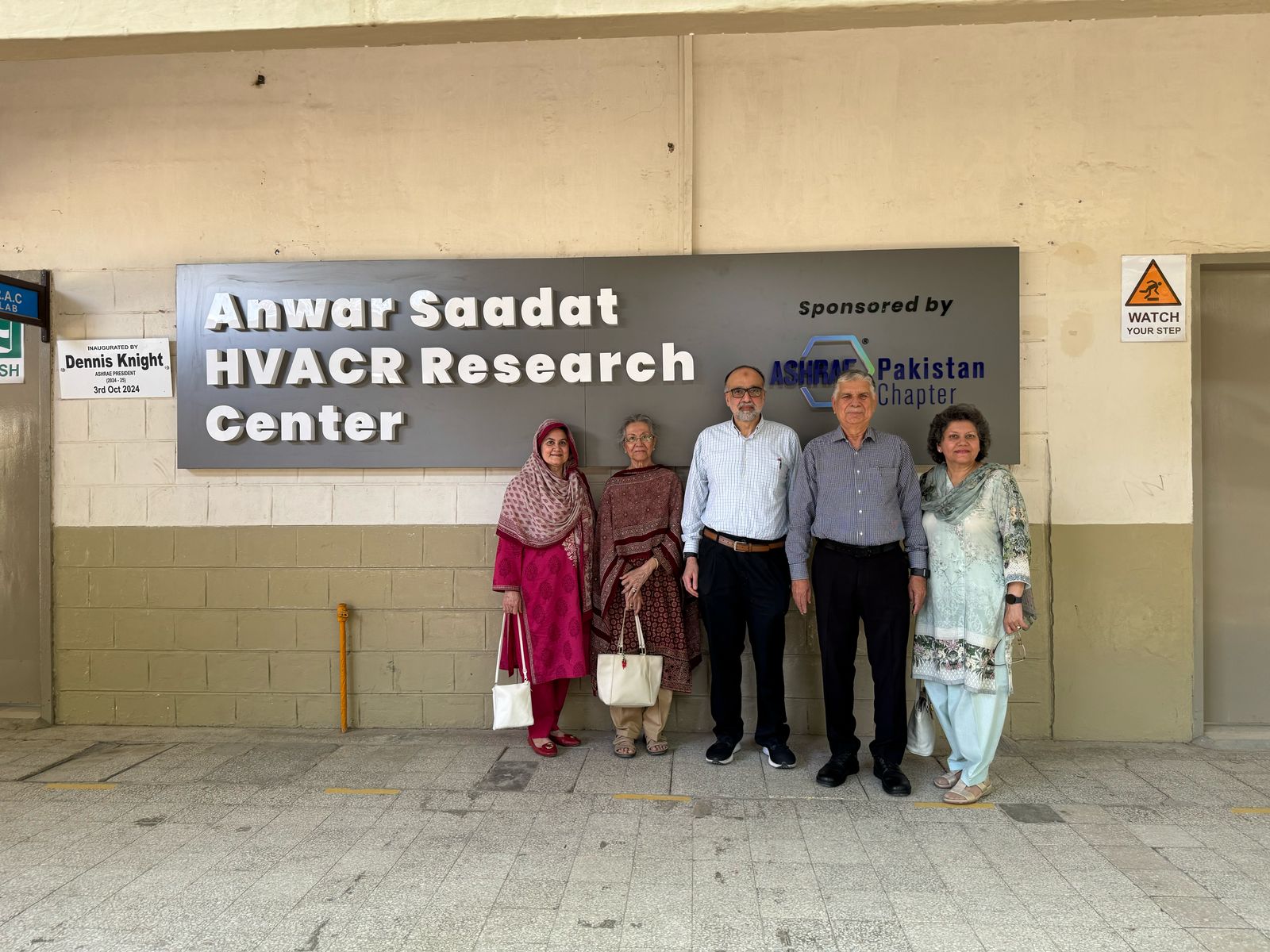
    In an inspiring fusion of legacy, learning, and leadership, ASHRAE Pakistan Chapter has turned a page in the history of engineering education by upgrading and renaming the Mechanical (HVACR) Lab at NED University of Engineering & Technology, Karachi, as the Anwar Saadat Research Centre. This remarkable transformation pays tribute to Engr. Anwar Saadat (Late) — a true visionary, Past President of ASHRAE Pakistan (2007–2008), and one of the most respected pioneers of the HVACR industry in Pakistan.  

    A Global Inauguration with Unmatched Presence  
    The upgraded lab was officially inaugurated on October 3, 2024, by Mr. Dennis M. Knight, PE, President of ASHRAE Society, in the presence of a historic gathering of global HVACR leadership. The momentous event featured a powerful delegation, including Mr. Farooq Mehboob, Past President ASHRAE Society, Mr. Tim Wentz and Mr. Mick Schwedler, PE, Past Presidents ASHRAE, Mr. Jeff Littleton, Executive Vice President & Chief Staff Officer, Ms. Sarah Matson, Treasurer ASHRAE, Mr. Basel Anbari, PE, Director & Regional Chair (Region-at-Large),       Ms. Adeeba Mehboob, Region Members Council Representative,           Engr. Abbas Sajid, PE, Regional Nominating Member, Mr. Mahmood Ahmad, PE, President, ASHRAE Pakistan Chapter (2024–2025).  
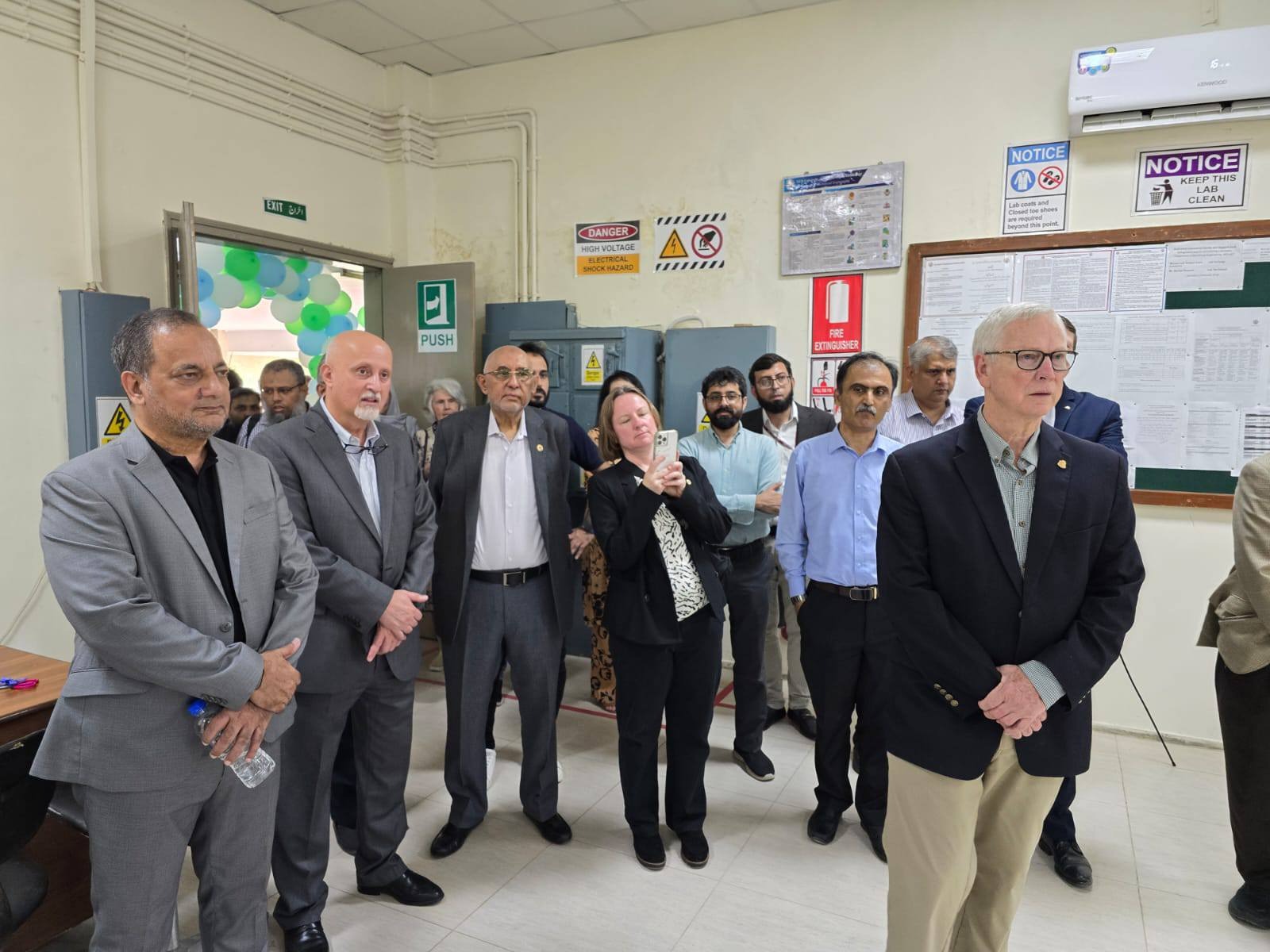
    This unprecedented convergence of ASHRAE’s leadership in Pakistan marked a bold new era — placing NED University and Pakistan’s HVACR talent on the international map of engineering innovation.  

    A Family’s Emotional Tribute — A Nation’s Moment of Pride  
    On April 11, 2024, the family of Engr. Anwar Saadat (Late) paid an emotional visit to the university where his legacy now lives on. The family toured the Anwar Saadat Research Centre, the Haptics – Human Robotics & Condition Monitoring Lab, and the Engr. Muhammad Abbas Sajid Board Room, witnessing firsthand how ASHRAE Pakistan had not only honored Engr. Saadat’s name but also elevated the future of engineering learning.  

    The visit wasn’t just symbolic — it sparked real change. Deeply moved by the initiative, the family announced a scholarship program for deserving NED students, ensuring that the values Engr. Saadat lived by excellence, mentorship, and accessibility — and would continue to shape lives for generations to come.  

    Empowering the Next Generation of Engineers  
    The Anwar Saadat Research Centre is more than a name on a plaque — it’s a living, breathing center of innovation, fully equipped to provide cutting-edge HVACR education, applied research, and industry training.  
    For young engineers, this is a gateway to:  
    •        Hands-on experience with modern HVACR systems  
    •        Workshops and seminars led by local and international experts  
    •        Direct engagement with ASHRAE programs and resources  
    •        Opportunities for internships, mentorship, and scholarships  
    It is a platform that bridges academia with industry, helping shape market-ready professionals while attracting investment and commercial attention to Pakistan’s growing engineering sector.  

    A Call to the Industry: Join the Movement  
    This initiative presents a powerful commercial and CSR opportunity for businesses, manufacturers, consultants, and corporate sponsors in the HVACR, construction, and energy sectors. Partnering with ASHRAE Pakistan and supporting labs like the Anwar Saadat Research Centre is not just a contribution to education — it’s a strategic investment in the future of Pakistan’s skilled workforce and sustainable infrastructure.

  • Bioeconomy in Pakistan: A Sustainable Path to Economic and Environmental Resilience

    Bioeconomy in Pakistan: A Sustainable Path to Economic and Environmental Resilience

    By: Ahsan Jalal

    In an era when economies worldwide are turning toward sustainable growth, Pakistan is at a crossroads with the need to transition from a fossil fuel-reliant economy to one rooted in renewable, bio-based solutions.  

    Dependence on conventional, fossil fuel-based energy has proven not only unsustainable for the environment but also economically burdensome, with billions spent annually on fuel imports. A transformation to a bio-based economy, drawing energy from renewable biological sources, offers an opportunity for Pakistan to leap forward in addressing both economic resilience and environmental sustainability.  

    The bioeconomy encompasses all production, conservation, and use of biological resources, and it presents an opportunity for Pakistan to leverage its rich agricultural base in the transition toward a more self-reliant, eco-friendly economy. In a country where agriculture accounts for close to 24% of GDP, the shift to a bioeconomy would also address high-priority concerns related to food and water security while contributing toward global SDGs. This article discusses why a bioeconomy is not only feasible for Pakistan but also an urgent necessity and outlines a strategic path toward this ambitious goal.  
    Bioeconomy: A Global Movement with Local Relevance  
    Through both indigenous and exogenous means, bio-based economies are being pursued in various countries globally. Countries such as the United States and Germany have invested billions in biotechnological research, bioenergy production, and sustainable agriculture. The People’s Republic of China has also integrated bioeconomy strategies into its high-tech and economic planning, increasing the contribution of the bioindustry to GDP and creating employment. The bioeconomy has been strengthened in India as well, encompassing biopharmaceuticals, bioagriculture, and bioenergy.  

    This transition holds particular relevance for Pakistan. As one of the leading agricultural countries in the world, it is well-suited to leverage its natural resources to generate renewable biological materials for biomanufacturing, bioenergy, and other bio-based industries. Full utilization and sustainable management of the country’s agricultural resources would reduce dependence on fossil fuels, enhance value-added exports, and provide environmentally friendly substitutes for synthetic inputs in many industries.  

    An Urgent Call for Action  
    Transformational change is desperately needed in real-time, given a host of current challenges: a rapidly growing population, water scarcity, shrinking arable land, and increasing climate change-induced natural disasters—all of which place immense pressure on agricultural productivity and food security. Moreover, the reliance on traditional energy resources raises production costs and undermines economic resilience. Energy costs for the agricultural sector are likely to double by 2030, further straining resources.  

    Transitioning toward a bioeconomy offers Pakistan a unique opportunity to address these challenges by building a circular, low-carbon economy that ensures resource efficiency, minimizes waste, and encourages reuse. Bioeconomic activities will also help Pakistan to meet Net Zero by 2050 and achieve several Sustainable Development Goals (SDGs), including:  
    •        SDG 1: No Poverty  
    •        SDG 2: Zero Hunger  
    •        SDG 6: Clean Water and Sanitation  
    •        SDG 7: Affordable and Clean Energy  
    •        SDG 8: Decent Work and Economic Growth  
    •        SDG 9: Industry, Innovation, and Infrastructure  
    •        SDG 12: Responsible Consumption and Production  
    •        SDG 13: Climate Action  
    •        SDG 14: Life Below Water  
    •        SDG 15: Life on Land  
    A Phased Roadmap for the Bioeconomy of Pakistan  

    In this respect, the strategic roadmap for Pakistan’s bioeconomy may be divided into three tiers. Short-term initiatives (within five years) should focus on collecting reliable data related to the country’s bio-resources, conducting overall resource mapping, and initiating partnerships for technology transfer and capacity building. These initial steps would lay the foundation for assessing and optimizing resources such as biomass potential in agriculture, forestry, and fisheries.  

    Medium-term initiatives (5–20 years) may include expanding bio-based industries and launching pilot projects on bioenergy and biomanufacturing. For instance, bagasse—a by-product of sugarcane—can be used to generate energy. Similarly, the 225 million livestock in the country can support large-scale biogas production, particularly in rural areas. In addition, programs on rainwater harvesting, vertical farming, and rural electrification through bioenergy can reduce pressure on limited water resources and enhance food production sustainably.  

    A longer-term vision (beyond 20 years) includes establishing advanced biomanufacturing hubs and biorefineries to produce bio-based chemicals and materials. Ultimately, Pakistan should aspire to become a regional leader in biotechnology and synthetic biology by providing innovative, homegrown bio-based solutions on both national and global scales.  

    Achieving this high vision will require strong determination from the government to ensure enabling policies that foster innovation, along with robust partnerships among academia, industry, and global stakeholders.

  • Integrating Technology Management with Agile Development Methodologies

    Integrating Technology Management with Agile Development Methodologies

    By: Dr. Muhammad Nawaz Iqbal

    Another dynamic ecosystem is created with technology management and agile methods in perfect harmony between strategic oversight and iterative innovation.

    Technology management sees to it that the adoption, use, and evolution of technology correspond with organizational objectives: Agile method supports adaptability through continuous feedback and, hence, offers flexibility in this process. Their very integration would thus require not only technical expertise but the presence of a strategically evolving view in line with rapidly changing markets. Technology management concerns itself with the planning, directing, and controlling of technological assets in support of business objectives. Once agile comes into play within this scenario, the linear flow of technology planning gets more responsive and modular. Due to its iterative nature, Agile allows consistent adjusting of technological tools, infrastructure, and systems according to real-time feedback and changing user needs, making technology managers even more responsive.

    In volatile markets, the speed of technological adaptation is paramount. Agile methodologies such as Scrum, Kanban, or Lean stress are regular re-evaluations of priorities and deliverables. In technology management, this switches from static, long-term technology roadmaps to dynamic, living strategies that can be agile without losing coherency or productivity. The integration also changes the role of technology managers. Traditionally, technology managers focused on long-term capital planning; costs, risk, and minimization. With Agile, they also need to lead with an ethos that fosters innovation, encourages experimentation, and tolerates calculated risk. In this evolution, they become Agile enablers wherein they will lead by removing impediments, coaching teams, and ensuring that the necessary infrastructure is in place to support iterative development cycles.

    The Agile principles endorse working solutions, collaboration with customers, and adaptability to changes over extensive documentation and fixed contracts. Technology management, usually with some requisite compliance, governance, and documentation requirements, should find a balance. By embedding lightweight governance models within agile sprints, managers can be sure that regulatory compliance and business agility coexist without conflict. Successful integration necessitates strong communication channels. Agile processes rely heavily on cross-functional collaboration and daily stand-ups, while technology management sometimes works within functional silos.

    To bridge this divide, communication protocols should be revamped for real-time data exchange, transparency in decision-making, and accountability shared across previously rigid boundaries between both management and development. The predicted key advantage of this integration is superior prioritization. Agile backlogs are a perfect match for technology management’s unique requirements in resource allocation. One can ensure most effective usage of resources at the most urgent-and important-required areas by enabling ongoing continuous grooming of the backlog in alignment with technology leaders’ strategic input for the organization as a whole. Resource management attains further intelligence. Due to Agile backing of incremental investment, technology management now has the capability to implement pilot programs and gradually upscale successful initiatives. Such an approach limits the risks associated with large-scale deployment and ensures that each technology project gains validation from feedback loops before going for expansion, thus protecting both financial and human capital.

    This paradigm shift changes the tradition of managing risk. Often in traditional technology management, an overall risk assessment manifests at the initiation of the project-as if everything has remained static since that time. Agile brings continual risk monitoring, leveraging retrospectives, sprint reviews, and constant involvement of stakeholders. This agile-aware risk framework allows real-time identification and mitigation of threats, making it comparatively resilient to unforeseen disruptions. Re-adjustment is required as far as metrics and performance evaluation are concerned. Technology management, while predominating in focusing on ROI, uptime, and system utilization, agile measures velocity lead times and team performance. Bringing all these divergent metrics into a common performance dashboard allows leaders to make data-driven decisions that consider both strategy and operational agility.

    Vendor and stakeholder engagement is underpinned by this integration. Traditional vendor management approaches in Agile settings may prove inefficient, given commercially-oriented contracts and service-level agreements. Technology managers, therefore, can help build more adaptable and innovative relationships with external partners by moving toward Agile-friendly partnerships that center around common goals, iteration, and collaborative problem-solving. The most commonly sought solutions for scalability, especially when it comes to management in technologies, have probably been transformed by AGILE frameworks, such as SAFe (Scaled Agile Framework) or LeSS (Large-Scale Scrum). They provide structured routes through which enterprises can scale their agile initiatives while maintaining integration and technological alignment. With these approaches in mind, technology managers can support agility across the enterprise level without losing strategic oversight into development.

    Now, this integration expeditiously catapults the organization into the new age. Thus digital management-the terms agile were developing rapid prototypes with iterative enhancement of digital tools-while technology management grounds these efforts as being attainable for the long haul and as integrative with legacy systems. All in all, they would generate a coherent structure map for innovation that makes possible balancing between the disruptive and continuity. As a result, they have the completely integrated approach towards the general management of the disruption caused by the change.

    Cultural transformation necessarily follows. Integrating Agile into technology management implies getting rid of traditional mindsets that resist change. It pushes for an improved culture of continuous improvement, openness to feedback, and shared responsibility across all technology initiatives. Such a cultural shift also guarantees sustainability, as agility will be embedded in the DNA of the organization. Technology management’s merger with the Agile world is really beyond a tactical alignment; it becomes a strategy for evolution. It gives organizations the power to confidently course through uncertainty, adapt precisely, and lead with vision. Value is delivered in each iteration, strengthening the technological backbone of the enterprise and ensuring that not only is there progress, but that progress is further enabled by every sprint.

  • Dr. Tariq Rahim Soomro: AdvancingComputer Science and Global Collaboration

    Dr. Tariq Rahim Soomro: AdvancingComputer Science and Global Collaboration

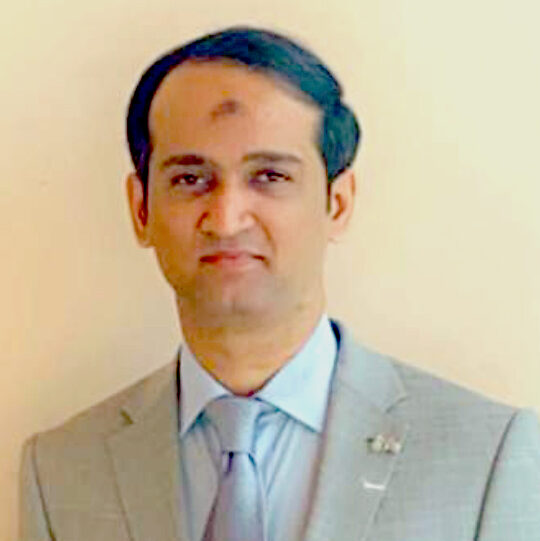
    Dr. Tariq Rahim Soomro holds a B.Sc. (Hons) and M.Sc. in Computer Science from the University of Sindh, Jamshoro, Pakistan, and a Ph.D. in Computer Applications from Zhejiang University, Hangzhou, China.  
    Notably, he is the first Pakistani to have earned all three degrees in the field of Computer Science.  

    With over 29 years of diverse and extensive experience, Dr. Soomro has distinguished himself as an academic administrator, computer programmer, researcher, and educator. He has held several key administrative positions, including Coordinator, Head of Department, Dean of Faculty, and Head of Academic Affairs. His expertise in academic accreditation spans globally recognized frameworks such as ABET (USA), NBEAC, NCEAC, HEC Pakistan, KHDA Dubai, and the Ministry of Higher Education and Scientific Research, UAE.

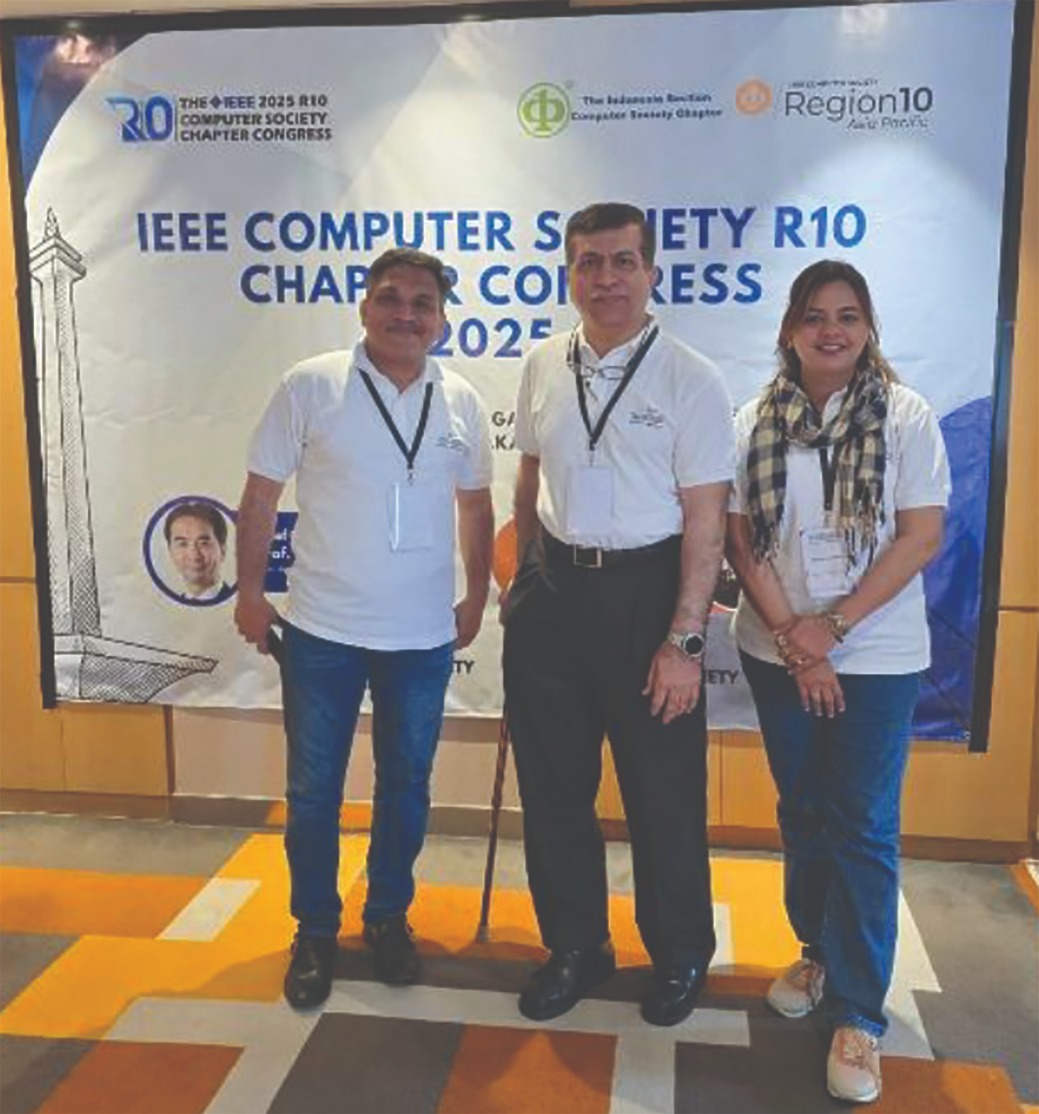
    Dr. Soomro has published more than 100 peer-reviewed research papers and remains actively engaged in the academic community. He has been a member of IEEE since 2000 and was elevated to Senior Member status in 2005. Currently, he serves as the Chair of the IEEE Karachi Section (2024–2025) and as the IEEE Computer Society R10 Southern Area Coordinator (2020–2025).  

    He has contributed to numerous committees and editorial boards, including the Task Force on Arabic Script IDNs under ICANN’s Middle East Strategy Working Group (MESWG), and serves on the editorial boards of several academic journals. Additionally, he has been a Technical Program Committee member for various national and international conferences.  
    Dr. Soomro’s contributions have been recognized with several prestigious accolades, including the ISOC Fellowship to the Internet Engineering Task Force (IETF) for its 68th meeting. He is affiliated with several professional societies such as the Computer Society of Pakistan (CSP), the Sindh Graduate Association (SGA), and the Association for Computing Machinery (ACM).  

    He is the first Pakistani to be recognized as an IEEE Computer Society Distinguished Visitor (2021–2023) and the only Pakistani to be honored as a Distinguished Contributor in the inaugural class of IEEE Computer Society Distinguished Contributors (2021).  

    As Chair of the IEEE Karachi Section, Dr. Soomro represented not only the Karachi Section but also the Lahore and Islamabad Sections at the 2025 IEEE Region 10 Meeting, held from February 22–23, 2025, in Incheon, South Korea.  

    Dr. Tariq Rahim Soomro  
    Professor of Computer Science and Rector at the Institute of Business Management (IoBM), Karachi

  • PROPHET YOUSUF

    PROPHET YOUSUF

    by: Muhammad Tariq Haq

    In ancient lands where tales unfold,   
    —- A story to Muhammad (PBUH), was divinely told.   
     
    Sent by Allah, a guiding light,  
    —- Through tests and trials, Yusuf was always tried.   
     
    In Quran, his tale shines bright,   
    —- Meccans inquired “How Bani Israel to Egypt arrived?”  
     
    They doubted Muhammad’s claim,   
    —- Yet eternal truth, brought them to shame.   
     
    Young Yusuf dreamed of stars and sun,   
    —- Jacob cautioned: “mention to none.”   
     
    His brothers envied, their hearts were led astray,   
    —- They cast him in a well and walked away.   
     
    A caravan passed through the desert sands,   
    —- Lifted him to foreign lands.   
     
    In Egypt’s mansions, as a slave he stayed,   
    —- In Aziz’s house, his true qualities were displayed.   
     
    But in Zulaikha’s heart, was a fire alight,   
    —- She desired pleasure and delight.   
     
    She tempted, but he ran outside,   
    —- Preserving his honour; with dignity and pride  
     
    When her friends criticised,  
    —- They cut their hand with the knife; utterly mesmerised  
     
    Imprisoned, though it was not justified  
    —- while he interpreted dreams, his wisdom was recognised.   
     
    Two prisoners sought his insight,   
    —- One would serve wine, the other would be crucified  
     
    In prison’s dark, Joseph spent his days and nights,   
    —- Till king saw a dream, continued his plight.   
     
    About seven cows fat and thin, he prophesied  
    —- Seven years of prosperity and then famine will strike  
     
    With wisdom rare, Yusuf advised:   
    —- “Store the ears of grain; be prepared and wise.”   
     
    From prisoner to ruler, he made his rise,   
    —- Thus, Allah rewards the true and upright.   
     
    His brothers came, in need of grain,   
    —- Unaware, their brother Yousuf held power and might.   
     
    Through subtle tests, their hearts he tried,   
    —- To see if any virtue therein did reside.   
     
    His brothers bowed, as childhood dreams saw the daylight,   
    —-Yusuf responded with mercy and generously supplied.   
     
    He turned to them with grace profound,   
    —- “Today, no blame is on you,  but only respite.”   
     
    The Quran’s message is loud and clear,   
    —- Invite mankind to reflect and by it teachings abide.   
     
    Be the party of God; follow prophet’s way  
    —- You’ll find eternal joy, come what may  

  • Cheetal Technology Expands Operations, Strengthens Industrial Automation Offerings

    Cheetal Technology Expands Operations, Strengthens Industrial Automation Offerings

    Cheetal Technology (Pvt.) Ltd., a leading provider of industrial automation and SCADA solutions, has become a private limited company. They have also acquired a new office to support their growing operations and technological advancements.  


    Cheetal Technologies are preparing to launch FMS V2, their next-generation SCADA-based Facility Management System with advanced remote monitoring capabilities. Additionally, they have integrated Overall Equipment Effectiveness (OEE) modules, empowering industries with practical insights to improve operational reliability, reduce downtime, and maximize productivity.  


    Cheetal Technology is also collaborating with Digitech Electric in delivering an IoT platform for their newly launched solar inverters, offering real-time system visibility through a dedicated mobile app. This solution ensures not just convenience for end-users but also business intelligence for distributors and manufacturers, enabling proactive maintenance, optimized energy performance, and seamless after-sales support.  


    The specialty of Cheetal Technology is that they convert your data into meaningful actions that drive efficiency, reduce operational costs, and enhance system longevity. Our solutions are designed to help industries move beyond reactive maintenance and towards intelligent, predictive operations that ensure long-term sustainability and profitability.

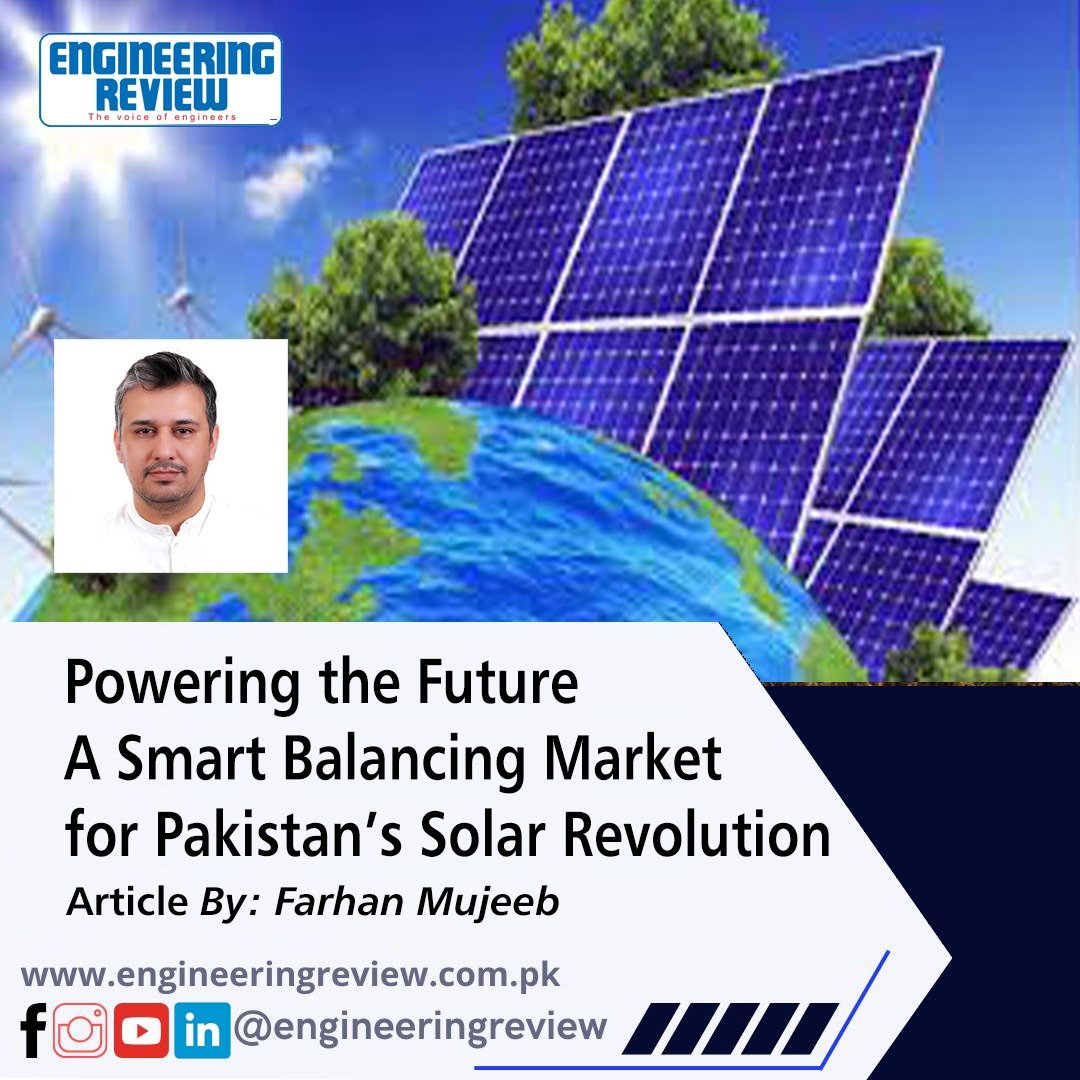
  • Powering the Future: A Smart Balancing Market for Pakistan’s Solar Revolution

    Powering the Future: A Smart Balancing Market for Pakistan’s Solar Revolution

    by: Farhan Mujeeb

    Pakistan’s power sector is undergoing a rapid transformation, driven by an influx of solar energy from rooftop solar PV installations.

    While this shift aligns with the country’s renewable energy targets, it also presents significant challenges for grid stability, economic dispatch, and real-time energy adjustments. Without a structured balancing market, Pakistan risks increased system inefficiencies, renewable energy curtailment, and economic losses.

    The integration of intermittent solar power creates supply-demand mismatches, leading to frequency fluctuations and costly grid interventions. The duck curve phenomenon—where solar reduces daytime demand but creates steep ramp-up needs in the evening—is becoming a growing concern. Additionally, excess solar generation during off-peak hours often leads to curtailment, where valuable renewable energy goes unused. Currently, Pakistan’s Single Buyer Market Model, managed by the Central Power Purchasing Agency (CPPA-G), lacks a real-time balancing mechanism. Without a dedicated market for short-term flexibility services, adjustments rely on expensive and inefficient manual interventions, often increasing electricity costs for consumers.

    A competitive balancing market can address these challenges by providing real-time price signals and procuring flexibility services from a mix of technologies, including Battery Energy Storage Systems (BESS).

    BESS can play a pivotal role in supporting grid stability, especially in a high-renewable energy environment. By providing fast-response frequency regulation, peak load management, and energy arbitrage, BESS can mitigate the variability of solar power. According to Dr. Tariq Mehmood, an energy expert and professor at the National University of Sciences and Technology (NUST),

    “Battery storage technology has proven itself as a key enabler for renewable energy integration worldwide. Pakistan must take proactive measures to incentivize its deployment to ensure a stable and reliable power system.”

    His insights underscore the necessity of modernizing Pakistan’s grid infrastructure and creating incentives for storage investments.

    The benefits of BESS are vast. It can respond within milliseconds to grid fluctuations, reducing reliance on expensive spinning reserves. Excess solar energy can be stored during the day and discharged during evening peaks, flattening demand curves. Instead of wasting surplus solar energy, BESS can absorb excess supply and release it when needed. Moreover, BESS can provide backup power and participate in the balancing market, ensuring real-time adjustments at minimal cost.

    Dr. Ayesha Khan, a senior policy advisor in the renewable energy sector, highlights:

    “Pakistan needs an integrated approach where policy frameworks, financial incentives, and technological advancements work together to support energy storage and grid flexibility.”

    To fully harness solar energy and BESS potential, Pakistan must introduce a well-structured balancing market and regulatory framework. Creating a transparent, competitive market for procuring short-term flexibility services is essential. Regulatory support must be provided to recognize energy storage as a market participant, allowing it to offer ancillary services. Smart grid development, including SCADA and metering infrastructure upgrades, should be prioritized to enable real-time dispatch and grid optimization. Financial mechanisms, such as capacity payments, should be introduced to encourage private-sector investment in BESS. Additionally, engaging rooftop solar owners in grid balancing through time-of-use tariffs and virtual power plant models can enhance efficiency and sustainability.

    Pakistan stands at a crossroads. Without market-driven reforms, increasing solar penetration could lead to inefficiencies, instability, and economic losses. By implementing a balancing market and promoting BESS adoption, the country can ensure a reliable, cost-effective, and sustainable energy future. It is time for policymakers, regulators, and industry leaders to act decisively.

    The future of Pakistan’s power sector depends on smart market mechanisms that enable the seamless integration of renewable energy.

  • The Role of Holographic Technology in Virtual Collaboration Management

    The Role of Holographic Technology in Virtual Collaboration Management

    By: Dr. Muhammad Nawaz Iqbal

    Holographic technology is transforming the world of virtual collaboration management by creating immersive, three-dimensional environments that enhance remote interactions.  
    Unlike typical video conferencing tools, holography presents participants as real-life, full-scale holograms, fostering a more natural and engaging communication experience. This advancement strengthens collaboration, particularly in industries where visualization is critical and spatial awareness is of utmost importance. One of the most significant benefits of holographic technology for virtual collaboration is its ability to bridge physical distances by creating a truly immersive virtual experience. In traditional virtual meetings, participants often struggle to engage with one another through a flat, two-dimensional screen. Holography eliminates this limitation, offering dynamic and interactive 3D representations that make collaboration feel almost like an in-person experience.  
    The integration of holography into teamwork and productivity takes collaboration to an entirely new level. For instance, product development teams can collaborate in real-time on modifications and improvements to holographic prototypes instead of relying on physical models for certain changes. These applications accelerate the design cycle and reduce expenses related to physical prototyping and logistics. Holography also plays a vital role in education and training. For example, medical students can practice surgical procedures using holographic representations of the human body, allowing them to gain hands-on experience without any real-life risk. Similarly, corporate training programs can incorporate holographic simulations, enabling employees to engage in realistic scenarios for more effective learning.  
    Holographic technology fosters global collaboration by eliminating geographical barriers. When team members are located in different places, they can participate in an all-holographic conference—a virtual space where employees interact as if they were in the same room. This strengthens professional relationships, reduces travel costs, and promotes knowledge sharing. Additionally, holography holds a prominent role in architectural and engineering practices for project visualization. Engineers and designers can study structures from any angle, test different configurations, and even detect potential flaws before construction begins. This high level of visualization enhances decision-making and improves the overall efficiency of large-scale projects.  
    The healthcare industry is also leveraging holographic technology to improve telemedicine and remote treatment options. Patients, from the comfort of their homes, can interact with holographically rendered 3D images of themselves, allowing doctors to make more accurate diagnoses and prescribe better treatment plans. This is especially beneficial for rural or underserved areas, where access to specialized healthcare services is often limited.  
    Another key advantage of holography is its ability to revolutionize business presentations and marketing. Sales teams and executives can showcase products using vivid 3D holograms, simplifying complex concepts and creating compelling customer experiences that increase engagement and improve negotiation outcomes. In retail, holographic displays offer interactive shopping experiences, including virtual try-ons, holographic product demonstrations, and immersive brand storytelling. These innovations not only enhance customer engagement but also influence purchasing decisions and improve overall customer satisfaction.  
    Holographic meeting rooms are now being integrated into smart workplaces, where employees collaborate on everyday tasks. Smart meeting rooms equipped with holographic displays enable employees to brainstorm, strategize, and solve problems in a highly interactive environment. This fosters creativity, innovation, and efficiency in business operations. However, despite its many benefits, security and privacy concerns remain significant barriers to the widespread adoption of holographic technology for virtual interactions. Because holographic meetings transmit highly detailed 3D data, organizations must implement advanced security measures to prevent unauthorized access, data breaches, and cyber threats that could compromise sensitive information.  
    Despite these challenges, the adoption of holographic technology continues to rise, driven by advancements in artificial intelligence (AI) and cloud computing, which make the technology more accessible and user-friendly. As AI-powered holographic avatars become more sophisticated, businesses are expected to see greater efficiencies in customer service, training, and automated collaboration.  
    Holographic collaboration also aligns with sustainability goals by significantly reducing business travel, thereby lowering carbon footprints and promoting eco-friendly business practices. This supports corporate sustainability initiatives and global efforts to combat climate change.  
    With continuous research and development, holography is expected to become seamlessly integrated into mainstream business operations. As the technology advances, it will offer even higher levels of immersion, efficiency, and effectiveness, marking a new era in virtual collaboration.

  • THE POWER OF TRUST, INTEGRITY AND HUMILITY

    THE POWER OF TRUST, INTEGRITY AND HUMILITY

    by: Muhammad Tariq Haq

    Once upon a time, there was a team led by a young and insightful leader named Ali. One afternoon, as the team gathered for their weekly meeting, Ali decided to share a story that he hoped would inspire his team and reinforce the values he believed were crucial for effective leadership.

    “Team,” Ali began, “I want to talk about something that I believe is more important than any skill or experience a leader can have—trust, integrity and humility.”

    He paused, letting the word sink in, and then continued, “Have you ever worked under a leader who made promises that were never kept? Or someone who took credit for our hard work but disappeared when things went wrong? I have, and the impact was profound—trust was shattered, morale plummeted, and our productivity suffered.”

    The team nodded, recalling their own experiences with such leaders.

    “But think about the leaders who truly inspired you,” Ali went on. “Were they the loudest in the room, or were they the ones who led with quiet confidence, honesty, and a deep sense of responsibility? The leaders we admire most are those who earn respect, not demand it.”

    “A leader’s reputation is their greatest asset. Skills and experience matter, but in the long run, nothing surpasses the power of integrity. Once a leader loses trust, rebuilding it is incredibly difficult. That’s why protecting your reputation with honesty and humility is not just good advice—it’s the foundation of long-term success.”

    He continued, “In today’s world, leadership isn’t just about authority or expertise—it’s about trust. Your reputation is built over time, through every decision you make, every word you speak, and every action you take. People are watching, even when you think no one is paying attention.”

    He smiled and added, “Trust takes years to build, seconds to break, and a lifetime to repair. But once a leader is known for integrity, they gain more than just respect—they build a legacy.”

    “Imagine working under a leader who takes responsibility for their mistakes, is transparent about challenges, treats every team member with respect, and admits when they don’t have all the answers. Now, imagine the opposite. The difference is night and day.”

    He concluded with a powerful message, “No one willingly follows a leader they don’t trust. Humility is a leadership FORTE. It doesn’t mean a lack of confidence—it means having the confidence to admit when you’re wrong, and to acknowledge the contributions of others.”

    “When leaders operate with humility, they foster stronger teams, deeper trust, and a culture of continuous growth. And the best part? Their reputation speaks for itself. People trust them—not because they have to, but because they want to.”

    With that, Ali wrapped up the meeting, leaving his team inspired and motivated to embrace integrity in their own leadership journeys.