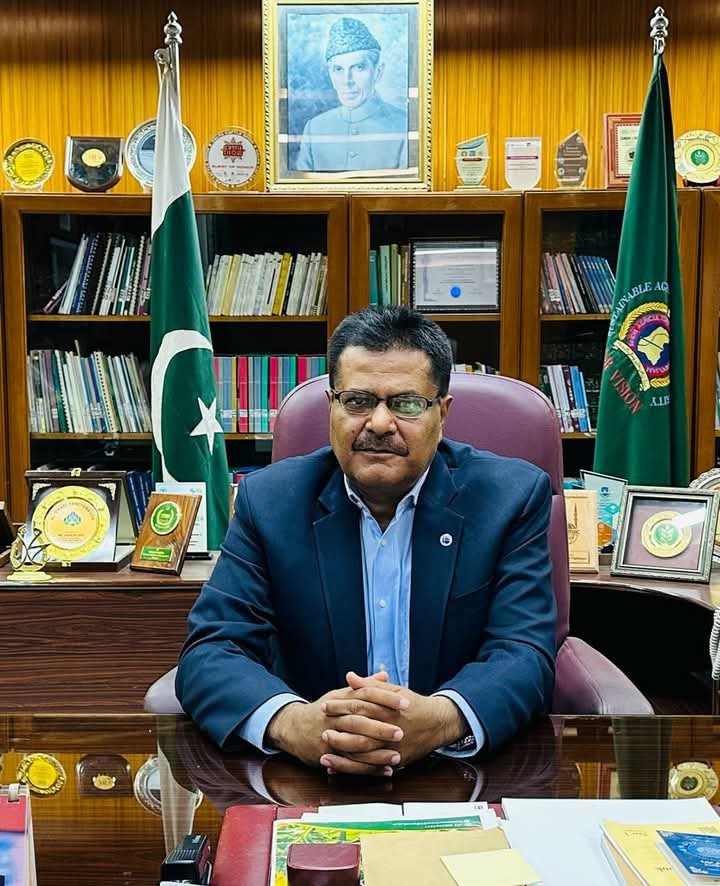
This is the typical story of many successful businesses in Pakistan, including the journeys of the Mians, Manshas, Dawoods, Tabanis, Lakhanis, Bilwanis, Agha Khanis, Bohris, Tabba’s, House of Habibs and leaders in textiles and denim! Almost all of them started humble. Through patience, hard work, integrity, humility, prayers and commitment to communities, they turned their dreams into reality. They believed in Pakistan as a land of opportunity, standing strong through challenges and celebrating small wins, proving that they could achieve greatness without leaving the country and succumbing to brain drain! In the lively heart of Karachi, a small shop opened in 1980. Owned by Mian Sahib’s father, this modest venture was filled with dreams and hard work. Little did anyone know that it would grow into a successful empire built on humility and vision. As time went on, Mian Sahib’s sons joined the family business, each bringing their own strengths. By 1989, they turned the shop into a thriving factory, beginning to export products and starting a new chapter. Their teamwork and shared goals pushed the business forward, and they eventually bought out their father’s shares, allowing him to enjoy life with his wife. Under the brothers’ leadership, the business grew into a large group known for its quality and integrity. Despite their success, they stayed humble, understanding that true achievement is about the positive impact they have on their community, not just about wealth. When discussing Pakistan’s economy, the brothers showed strong confidence in their country. “We built our fortune here, and there’s still so much work to do”. They announced plans for a new factory in Lahore, set to create thousands of jobs, while also expanding their Karachi operations. The Mian family was known for their discipline and punctuality, arriving at work by 9 AM and leaving at 5 PM. But when needed, they worked from 5 in the morning until 9 at night. Their commitment to routine showed their values of respect and integrity, creating a positive environment where employees felt valued and motivated. Amidst economic challenges, the Mian Sahibs stayed optimistic. They believed that success without humility would perish. Their story reminds us that true success is about nurturing values without pomp and pageantry. Just yesterday, I spoke with my twin brother, who recently retired as a top oncologist in Canada. He mentioned that his classmates from Dow College who stayed in Pakistan after graduation in the early ’80s are doing better than those who moved to North America. He also noted that Muslims from Pakistan have thrived more than those who stayed in India after partition. He further commented that despite a population ratio of more than 1:5 between Pakistan and India, doctors from Pakistan are one against three from India. Despite, Muslims being in a ratio of 1:5 in India, Muslim doctors are very sadly not more than 2% of all Indian doctors in the first world! This shows that Pakistan is indeed a land of opportunity, though we overlook it. Let’s take inspiration from the business successes in Pakistan. With humility, patience and prayers, we can create a brighter future HERE. Long live PAKISTAN!
‘SLA to be signed between DISCOs, industrial consumers with captive generation’
The Power Division has issued a special directive to all electricity distribution companies, including K-Electric, regarding the execution of exclusive service level agreements with industries that have captive power generation. The division has directed the distribution companies to sign a service agreement with the industry with captive generation. A Service Level Agreement (SLA) to be signed between electricity distribution companies (DISCOs), and industrial consumers with captive generation, says the directive. The purpose of this SLA is to encourage the consumers to increase reliance on the DISCOs distribution system by offering competitive terms and conditions and to ensure a reliable, uninterrupted and quality electricity supply to meet the consumer’s industrial requirements,” said two separate letters written to chief executive officers of all ex-Wapda Discos and KE by the Power Division. “In view of above, it is requested to get this service level agreement (SLA) vetted by your legal team and approved at the appropriate level. This agreement is in addition to and does not replace or override the conditions and parameters of the Distribution Code, Grid Code and the Consumer’s Service Manual, and any other applicable document/rules,” said the letter. The spokesman of Power Division said that the objective of these service level agreements is to enhance reliance on the transmission system of electricity distribution companies. These agreements will include provisions ensuring a stable, reliable, and high-quality electricity supply to these industries, catering to their specific needs. In case of non-compliance or violations by distribution companies, penalties will be imposed. Initially, these agreements are proposed to be for a period of two years. The agreements will also cover mechanisms for addressing technical faults in electricity supply and their resolution. A structured mechanism for resolving disputes arising under these agreements will also be outlined. The directive instructed all electricity distribution companies to fulfill the legal requirements for these service level agreements immediately. — ERMD
Pakistan’s Minister for Power Sardar Awais Leghari has announced the government’s plan to auction surplus electricity to industries. This initiative, designed to stimulate industrial growth and create job opportunities, was detailed in a press statement from the Ministry of Energy in January.
Leghari explained that the surplus electricity would be sold competitively, aiming to maximize benefits for Pakistan’s economy and industrial sector.
He also discussed the National Electric Vehicle (EV) Policy, which seeks to promote electric vehicles across the country. To make EVs more affordable, electricity tariffs for EV charging stations have been significantly reduced. This step, he said, supports the government’s broader goal of promoting sustainable energy solutions and reducing environmental impact.
However, energy experts have raised concerns regarding the feasibility of these plans on two key fronts. First, they question the accuracy of Pakistan’s claimed power generation and distribution capacity.
Although the government asserts a power generation capacity of 43,000 MW, experts argue that this number is misleading, as there is a significant gap between installed capacity and actual generation capacity. Many power plants often operate below their full potential, and as a result, the actual generation capacity is much lower than reported. They say the system cannot distribute more than 22000 MW of electricity.
Secondly, experts are concerned about the ability of Pakistan’s distribution companies, known as Discos, to handle the increasing demands of power distribution. Senior engineers have pointed out that these companies lack the infrastructure and capacity to effectively manage the power they generate.
One senior engineer highlighted the situation at HESCO, a Disco in Sindh, which struggles to manage medium voltages due to defective switches caused by continuous load-shedding. According to the engineer, only NTDC (National Transmission and Despatch Company) can manage such tasks, yet the situation in HESCO and other Discos remains dire. “How will the government execute its plans when these companies are so devastated?” the engineer questioned. He further noted that a Disco in Sindh had been supposed to complete 12 to 13 projects to install new grid stations and substations, but these projects remain incomplete.
The engineer also revealed a troubling incident in Hyderabad a few years ago, where a transformer explosion resulted in several fatalities. The cause was traced back to faulty equipment—12 transformers in the city had been installed using diesel instead of oil for cooling. This disaster, the engineer emphasized, was a stark example of the ongoing inefficiencies and risks in the country’s power distribution network.
In addition to addressing these challenges, Leghari outlined several reforms in the energy sector. These include efforts to reduce electricity tariffs, eliminate circular debt, and address inefficiencies in the pricing system, which he described as unsustainable. The government is also revising agreements with Independent Power Producers (IPPs) to ensure greater transparency and long-term sustainability. Revisions are also planned for government-owned IPPs in the next phase. By 2025, the government will no longer oversee electricity trade, and instead, consumers and power companies will negotiate electricity purchases directly. This shift is expected to foster competition and benefit all stakeholders. Industrial estates and economic zones will also soon take over the management of their own power distribution systems, reducing inefficiencies and encouraging industrial activity.
Leghari also mentioned the ongoing privatization of electricity distribution companies and efforts to reduce the tax burden on consumers.
On the topic of coal-based power plants operated by Chinese companies, Leghari revealed that these plants would transition from using imported coal to locally mined coal from the Thar region. This move is expected to reduce import costs and strengthen the local economy.
In a separate meeting, Leghari briefed US Ambassador Natalie A. Baker on recent reforms in the power sector. He emphasized the government’s commitment to appointing independent boards of directors for state-owned enterprises to ensure merit-based decision-making. Baker invited Leghari to participate in the Energy Security Dialogue in Washington, underscoring the importance of his involvement.
With the increase in the intensity of the digital economy, the demand for green data centers is becoming a substantial solution to environmental problems. The facilities that will be established will seek to achieve the goals and objectives of conserving energy and minimizing wastes being churned out into the environment, in doing this the facility will seek to put into practice sustainable measures even as it proactively works around achieving optimal operational efficiency. This paper aims to demonstrate that through the use of superior technologies and such strict processes, these green data centers are not only beneficial from the environment but also from an economic perspective, for businesses. The shift from basic data centers to environmentally more sustainable ones is crucial because demands for electricity and electronics are constantly increasing.
Energy-efficient hardware is therefore among the most important facets of green data centers. Efficient server hardware and storage, switches, and routers have a better value of power efficiency while offering the right level of performance. This indicates an improved thermal efficiency of modern processors, and the availability of far more efficient cooling mechanisms helps to lessen the overall energy load. Also, knowledge, possessed by authorized people makes it possible for several virtual machines to run on just one physical server thus reducing the power consumption of hardware and duplication of it.
The cooling of the data center is an area of acute interest in green data center designs since cooling systems consume nearly forty percent of the power used by the data center. Modern approaches to cooling are now replacing conventional cooling techniques like liquid cooling, air-side economization, and immersion cooling. Some examples of direct cooling include liquid cooling, in which water or other types of fluids used to cool the components are different from air cooling methods. Air-side cool recovery on the other hand means the use of outside air for cooling instead of mechanical chillers. These techniques ensure that the operating temperatures are sustained and energy consumption is kept to a minimum.
Another important concept of green data centers is the integration of renewable energy. Most facilities are now utilizing solar, wind, or hydroelectric power to eliminate or reduce their emissions of greenhouse gases. Internet giants such as Google and Amazon have taken significant first steps toward investing capital in renewable energy to fuel their data halls. Battery storage systems used together with on-site renewable energy systems provide the necessary power supply while reducing fossil fuels. Also, subscribing to renewable energy credit programs enhances the resolution towards sustainability.
While data centers produce a lot of heat, green data centers are finding ways to use this waste heat in useful processes. Waste heat can be utilized again to heat offices or other structures, households or even neighborhoods. It not only cuts the wasted energy but also yields other benefits from the energy we have used. It has become possible to incorporate waste heat recovery systems into the urban planning, making data centers to be very significant to other environments.
Good data management and storage also help in the conservation of energy as is made clear below. Energy-proportional storage, where frequently accessed data is potentially kept on faster, more energy-efficient devices, and the less frequently accessed data is on slower, lower energy devices, is efficient. Furthermore, the data reduplications and compression which are accomplished through powerful algorithms intend much lesser storage and hence much smaller hardware and energy demands. The efficiency of data management is therefore increased from automation and the use of artificial intelligence in solutions.
Another key challenge facing data centers is e-waste management and green facilities addressing and composting to recycle. End-of-life servers, PCs, or other related hardware are reused, redeployed or recycled rather than disposed on the landfills. It can involve working with certified e-waste recycling firms to make sure compliance with the legal requirements of dealing with these materials while at the same time to reuse items like copper, gold and aluminum. Others have also embraced leasing models for the equipment so that they can be updated frequently with minimal disposal.
Energy monitoring and reporting must therefore form part of the green data centers. Sophisticated EMS facilitates monitoring and controlling the utility consumption efficiency or PUE and other parameters in real-time. Essential infrastructure of data centers these systems not only reduce energy usage but also ensure high operation performance from their infrastructure. Additionally, the periodic energy audits enhance the exercise by identifying further measures to be taken to enhance energy efficiency. Green aspects are also important in the design and architecture of data centers. Modular data centers are scalable and efficient which means they can add capacity when they need to, which also means they do not waste money and resources. In housing design, especially in relation to the orientation of the building, the use of insulation and reflective materials on the roof has led to reduced cooling needs. Using such things as green roofs and rainwater harvesting systems improves sustainability and the health of the environment.
Introducing automatic and the use of artificial intelligence in running the green data centers has brought about change. Machines learn the average energy requirement and control system distribution based on specific patterns determined in advance. AI-driven predictive service ensure that the equipment is barely down and there are no energy-intensive repair works. Furthermore, it examines data center operations to learn about patterns that cause inefficiency and take action to ensure energy conservation.
The green protocols reinforcement has been boosted by collaboration between companies, governments, and the industries’ standards organizations. Measures, for example, energy consumption limits and bonuses for using green energy drive organizations to make decisions toward sustainability. Such programs like LEED (Leadership in Energy and Environmental Design), and Energy Star serves as guidelines to push the data center into performing better and meet up to this accreditation.
The growth of the digital marketplace will quickly spur much demand for more environmentally friendly data centers. Today’s green data center is at the forefront of responsible IT and investing in innovative, safe, and sustainable technology and processes. Such endeavors are not only directed at solving important ecological issues but also contribute to achieving the goals of the companies interested in economies of scale and reduction of adverse social and environmental impacts. The implementation of sustainability strategies into the heart of the data center is a revolution recognized as a revolution towards a green economy.
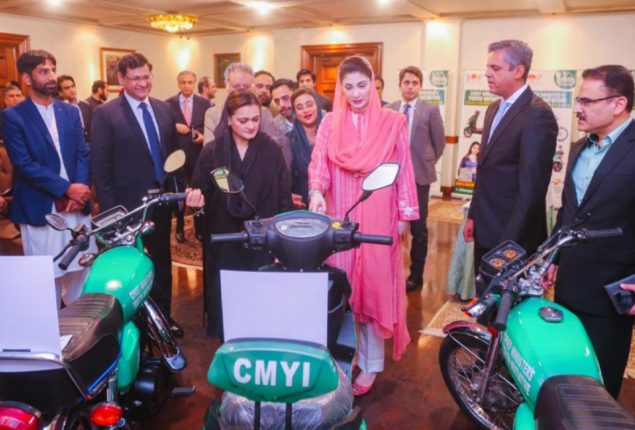
Punjab Chief Minister Maryam Nawaz Sharif announced free e-bikes for 2,200 athletes who emerged victorious in divisional-level competitions of the ‘Khelta Punjab Games’ 2025. Inaugurating what her government dubbed the largest sports event in Pakistan’s history, she emphasized the Punjab government’s commitment to youth development and enhancing sports opportunities. The announcement from Punjab Chief Minister Maryam Nawaz Sharif holds significant potential for improving the mobility and opportunities for young athletes in the province, both directly and indirectly. Here’s an analytical perspective on the impact of this initiative: People’s Mobility Free E-Bikes for Athletes: The provision of free e-bikes to 2,200 victorious athletes will enhance their mobility and ease of travel, particularly for those living in rural or underdeveloped areas. E-bikes are an affordable, eco-friendly mode of transport, allowing athletes to move quickly and efficiently for training, competitions, or general mobility. For many athletes, especially those from less accessible areas, this is a significant benefit that directly addresses mobility barriers. Expansion of Sports Infrastructure The Chief Minister’s commitment to developing sports facilities across the province, especially focusing on neglected sports fields, will create a better infrastructure that athletes can use to hone their skills. This not only facilitates mobility within sports communities but also ensures that sports facilities are more accessible to young talent from all areas of Punjab. Improved Employment and Economic Opportunities By launching an easy loan scheme for unemployed youth (ranging from Rs. 10 lakh to Rs. 3 crore), the government is promoting financial mobility. This initiative can empower young people to start their businesses, thus improving their financial independence and creating a ripple effect in terms of local economic growth. With improved access to capital, individuals may have more flexibility in their employment choices, which could include furthering their athletic or educational pursuits. Encouraging Education and Sports Development By placing a focus on youth education alongside sports, this initiative promotes holistic development. It ensures that young individuals are not confined to just one sphere but can balance academic progress with physical training. This can lead to a more well-rounded generation that is equipped for diverse opportunities, including those that may improve geographic mobility, such as scholarships or work opportunities abroad. Strengthening Unity and National Pride The Chief Minister’s speech on national unity, focusing on sports and education, implicitly promotes a sense of belonging and shared purpose. Youth from all parts of Punjab, regardless of background, can envision themselves as part of a larger national movement for progress, which can inspire them to pursue mobility, whether through sports, education, or entrepreneurship. Revival of Traditional Events (Horse & Cattle Show) The revival of events like the Horse & Cattle Show not only serves to enhance cultural mobility by preserving traditional heritage, but also promotes tourism and social integration across different regions of Punjab. Events like this attract visitors from across the province and beyond, which can result in greater interaction, mobility, and economic activity. Challenges & Considerations While the announcement presents several promising benefits for mobility, there are also practical challenges that need to be considered: Implementation and Access Ensuring that all athletes have equal access to e-bikes, especially those from marginalized or remote areas, could be logistically challenging. There may be issues related to maintenance, distribution, or ensuring that athletes can make use of the bikes in areas with insufficient infrastructure. Sustainability For long-term success, the Punjab government would need to ensure that the facilities and initiatives, like the loan schemes and sports fields, are sustainable and are not just one-time investments. Continued funding and maintenance are key to ensuring the benefits continue for future generations. Inclusivity While the scheme emphasizes the importance of education and sports for youth, there should be an inclusive approach that ensures all young people, including those with disabilities or from less privileged backgrounds, have access to these opportunities. Overall, the initiatives outlined by Punjab’s Chief Minister have the potential to significantly improve both the mobility and future prospects of young people in the province. By focusing on practical support for athletes, expanding economic opportunities, and fostering a more inclusive environment, the government’s plans promote long-term mobility that spans social, economic, and geographic boundaries. – Engineering Review Report
Sindh Agriculture University (SAU) Tandojam is enhancing its efforts to address critical agricultural challenges through targeted, issue-based research. This commitment was reaffirmed by Vice-Chancellor Dr Altaf Ali Siyal during his visit to the Faculty of Animal Husbandry and Veterinary Sciences and the Faculty of Crop Protection. Dr Siyal stressed the need to tackle the effects of climate change, including crop infestations such as locusts, global warming, and other emerging threats to agriculture. He underscored the importance of developing climate-resilient farming practices, improved crop varieties, and conservation of indigenous livestock breeds to support farmers and strengthen the agricultural sector. The VC highlighted the growing significance of agricultural education among the youth, citing its vast potential for employment and entrepreneurship. He urged faculty members to ensure student participation in classroom sessions, fieldwork, and laboratory activities to prepare them for practical challenges. He also emphasized the need to upgrade teaching and research facilities, pledging full institutional support to overcome any barriers. Dr Siyal further acknowledged the high expectations of the farming community, emphasizing the university’s role in delivering pure, high-yield seed varieties, cutting-edge technologies, and effective farmer advisory services. — ERMD
With a more efficient method for artificial pollination, farmers in the future could grow fruits and vegetables inside multilevel warehouses, boosting yields while mitigating some of agriculture’s harmful impacts on the environment.
To help make this idea a reality, MIT researchers are developing robotic insects that could someday swarm out of mechanical hives to rapidly perform precise pollination. However, even the best bug-sized robots are no match for natural pollinators like bees when it comes to endurance, speed, and maneuverability.
Now, inspired by the anatomy of these natural pollinators, the researchers have overhauled their design to produce tiny, aerial robots that are far more agile and durable than prior versions. Their research appears in Science Robotics.
The new bots can hover for about 1,000 seconds, which is more than 100 times longer than previously demonstrated. The robotic insect, which weighs less than a paperclip, can fly significantly faster than similar bots while completing acrobatic maneuvers like double aerial flips.
The revamped robot is designed to boost flight precision and agility while minimizing the mechanical stress on its artificial wing flexures, which enables faster maneuvers, increased endurance, and a longer lifespan.
The new design also has enough free space that the robot could carry tiny batteries or sensors, which could enable it to fly on its own outside the lab.
“The amount of flight we demonstrated in this paper is probably longer than the entire amount of flight our field has been able to accumulate with these robotic insects. With the improved lifespan and precision of this robot, we are getting closer to some very exciting applications, like assisted pollination,” says Kevin Chen.
Chen, an associate professor in the Department of Electrical Engineering and Computer Science (EECS), head of the Soft and Micro Robotics Laboratory within the Research Laboratory of Electronics (RLE), and the senior author of an open-access paper on the new design, is joined on the paper by co-lead authors Suhan Kim and Yi-Hsuan Hsiao, who are EECS graduate students; as well as EECS graduate student Zhijian Ren and summer visiting student Jiashu Huang.
Boosting performance
Prior versions of the robotic insect were composed of four identical units, each with two wings, combined into a rectangular device about the size of a microcassette.
“But there is no insect that has eight wings. In our old design, the performance of each individual unit was always better than the assembled robot,” Chen says.
This performance drop was partly caused by the arrangement of the wings, which would blow air into each other when flapping, reducing the lift forces they could generate.
The new design chops the robot in half. Each of the four identical units now has one flapping wing pointing away from the robot’s center, stabilizing the wings and boosting their lift forces. With half as many wings, this design also frees up space so the robot could carry electronics.
In addition, the researchers created more complex transmissions that connect the wings to the actuators, or artificial muscles, that flap them. These durable transmissions, which required the design of longer wing hinges, reduce the mechanical strain that limited the endurance of past versions.
“Compared to the old robot, we can now generate control torque three times larger than before, which is why we can do very sophisticated and very accurate path-finding flights,” Chen says.
Yet even with these design innovations, there is still a gap between the best robotic insects and the real thing. For instance, a bee has only two wings, yet it can perform rapid and highly controlled motions.
“The wings of bees are finely controlled by a very sophisticated set of muscles. That level of fine-tuning is something that truly intrigues us, but we have not yet been able to replicate,” he says.
Less strain, more force
The motion of the robot’s wings is driven by artificial muscles. These tiny, soft actuators are made from layers of elastomer sandwiched between two very thin carbon nanotube electrodes and then rolled into a squishy cylinder. The actuators rapidly compress and elongate, generating mechanical force that flaps the wings.
In previous designs, when the actuator’s movements reach the extremely high frequencies needed for flight, the devices often start buckling. That reduces the power and efficiency of the robot. The new transmissions inhibit this bending-buckling motion, which reduces the strain on the artificial muscles and enables them to apply more force to flap the wings.
Another new design involves a long wing hinge that reduces torsional stress experienced during the flapping-wing motion. Fabricating the hinge, which is about 2 centimeters long but just 200 microns in diameter, was among their greatest challenges.
“If you have even a tiny alignment issue during the fabrication process, the wing hinge will be slanted instead of rectangular, which affects the wing kinematics,” Chen says.
After many attempts, the researchers perfected a multistep laser-cutting process that enabled them to precisely fabricate each wing hinge.
With all four units in place, the new robotic insect can hover for more than 1,000 seconds, which equates to almost 17 minutes, without showing any degradation of flight precision.
“When my student Nemo was performing that flight, he said it was the slowest 1,000 seconds he had spent in his entire life. The experiment was extremely nerve-racking,” Chen says.
The new robot also reached an average speed of 35 centimeters per second, the fastest flight researchers have reported, while performing body rolls and double flips. It can even precisely track a trajectory that spells M-I-T.
“At the end of the day, we’ve shown flight that is 100 times longer than anyone else in the field has been able to do, so this is an extremely exciting result,” he says.
From here, Chen and his students want to see how far they can push this new design, with the goal of achieving flight for longer than 10,000 seconds.
They also want to improve the precision of the robots so they could land and take off from the center of a flower. In the long run, the researchers hope to install tiny batteries and sensors onto the aerial robots so they could fly and navigate outside the lab.
“This new robot platform is a major result from our group and leads to many exciting directions. For example, incorporating sensors, batteries, and computing capabilities on this robot will be a central focus in the next three to five years,” Chen says. — ERMD
It is the need of the hour to develop agriculture on modern lines to ensure food security and address the woes of the farming community, said Vice Chancellor University of Agricultural Faisalabad Prof Dr Muhammad Sarwar Khan. Talking to 42 Mid-Career Management Course at the National Institute of Management Islamabad, Prof Dr Khan said that the university had developed varieties of climate-resilient wheat with the support of Washington State University will prove to be a milestone. He said that the university has introduced high-yielding and potential varieties of Genetically Modified sugarcane including Insect-resistant transgenic sugarcane (CABB-IRS) and Herbicide-tolerant transgenic sugarcane (CABB-HTS). These sugarcane varieties carry superior traits like input-responsiveness, early maturing, top borer resistance, herbicide tolerance, and a high number of tillers. It is the second GM sugarcane variety after Brazil across the globe. He said that the UAF had introduced new varieties of soybeans which are being promoted among the farmers to get rid of the import. He said they had developed chickpeas for irrigated land. He was of the view that the brassica variety UAF 11 is also a hallmark step. He said that UAF, being the first agricultural institution in the subcontinent was playing a significant role in the uplift of the sector. He said that innovation in agriculture can be done only by bringing research to the doorsteps of farmers, for which agricultural scientists and experts will have to play an active role. Talking about internationalization, he said that the university was housing the Pak Korea Nutrition Center, the Center for Advanced Studies in Agriculture and Food Security, the Chinese Confucius Institute, the D8 Center, and ISTA Seed Lab and it has running 205 Memorandum of Understanding with international organization and 182 with national organization. He said that it has introduced new varieties of quinoa, backyard poultry, and others. — ERMD