In a private event held at the Institution of Engineers Pakistan (IEP) building on July 4, 2024, in Karachi, Pakistan, Construction Solutions Resources (CSR) proudly launched Regbar Construction Solutions in Pakistan, in collaboration with its Turkish partners. This initiative marks a significant step towards introducing advanced construction technologies tailored to enhance Pakistan’s infrastructure landscape.
The event featured distinguished speakers including Engr. Sohail Bashir, Chairman of IEP Karachi, and Dr. Sarosh Lodi, Vice Chancellor of NED University of Engineering & Technology shared insights on the importance of adopting innovative technologies in the construction sector.
Managing Partners from Regbar introduced a range of specialized products including Reinforcement Couplers, Anchorage Solutions, and Rock Bolts during the event. The interactive Q&A session elaborated on the product applications in local projects to enhance the quality and efficiency of construction endeavors.
Amir Ul Islam, CEO of CSR, concluded the event with a vote of thanks, emphasizing CSR’s commitment to advancing Pakistan’s construction industry through sustainable growth and technological innovation, focusing on implementing best practices to elevate construction standards nationwide.
About CSR: Construction Solutions Resources (CSR) is dedicated to enhancing Pakistan’s construction sector through innovative solutions and strategic partnerships. Established with a vision to promote sustainable development, CSR focuses on implementing best practices to elevate construction standards nationwide.
Author: Emp-1
-

CSR launches Regbar Construction Solutions in Pakistan
-
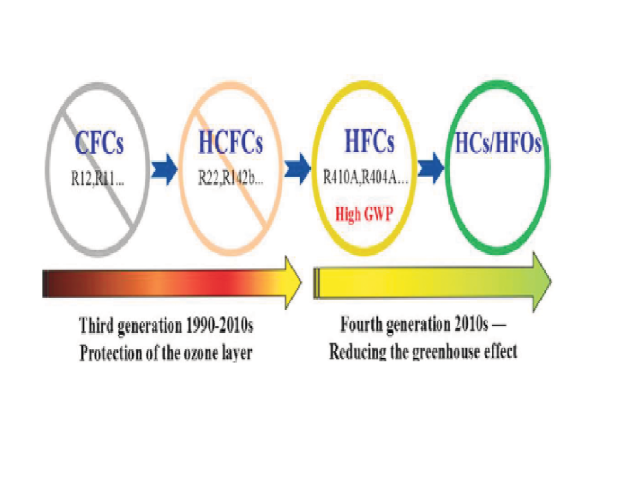
Evolution of new refrigerants and applications
INTRODUCTION: The purpose of this technical article is to understand the importance of new available refrigerants, and applications. In this paper, the low or ultra-low GWP refrigerants like hydro-fluoro-olefins HFO / HFO blends, HC, and Natural Refrigerants are considered as environmentally friendly next-generation refrigerants.
Early invention – inorganic compounds, today these are still used in many refrigeration, Air conditioning, and heat pump applications as refrigerants such as ammonia (NH3), water (H2O), carbon dioxide (CO2), and sulfur dioxide (SO2). Synthetic refrigerants have been used in refrigeration systems since the creation of CFCs and HCFCs in 1929.
Refrigeration and air conditioning play a vital role in domestic, commercial, and industrial applications. They have a great impact on our day-to-day life. They have also contributed to the world’s major environmental issues like global warming and climate change. The development of the refrigerants used in them, from the days when refrigeration was not known to the present day is very interesting. The development of different refrigerants over time took place based on safety, durability and environmental impact issues. Now, there has been a lot of talk about climate change and global warming.
The first regulation concerning the depletion of the ozone layer was the Montreal Protocol adopted on 16th Sep 1987. The result was that the scientific assessment of ozone depletion in 2014 confirms that the ozone layer is healing, thanks to actions taken by Parties under the Montreal Protocol. It means the Ozone Depletion Potential matter is resolved but the Global Warming potential is highlighted due to increase of global temperature and climate change.
Then, the Kigali Amendment, adopted in 2016, aims to phase down hydrofluorocarbons (HFCs), potent greenhouse gases that contribute to global warming. As of 1st July 2024, 160 countries have ratified the Kigali amendment. Under the Amendment, all countries will gradually phase down HFCs by more than 80 per cent over the next 30 years and replace them with more planet-friendly alternatives.
The scientists and engineers carried out the research and development to establish the next generation refrigerants including the safety that is the most important factor. The recent Scientific Assessment Report estimates that Kigali will reduce future global average warming in 2100 due to HFCs from a baseline of 0.3 °C – 0.5 °C to less than 0.1 °C.
Hydrocarbons are naturally occurring and made only from hydrogen and carbon. Let’s see the current availability of new refrigerants compared to existing HFC refrigerants for low, medium, and high-pressure applications of compressors. We need to choose the new refrigerants based on the environmental effect (GWP), safety, performance (COP), availability, and serviceability.
The three main flammability classifications are class 1 – for refrigerants that do not propagate a flame when tested as per the standard; class 2 – for refrigerants of lower flammability; and class 3 – for highly flammable refrigerants.
The classification of refrigerants are as follows:
The demand of Natural Refrigerants like Ammonia and Carbon dioxide as well as HCs are increasing. A2L refrigerants are slightly flammable than A2 and A3 is highly flammable. B1 & B2 represents toxicity. Mostly, new refrigerants belong to A2L, we should have a serious look at the design and installation of any indoor/outdoor unit, piping, valves, and mechanical room to avoid any accident, as it pertains to the limit of refrigerant charge, sensors, and exhaust according to available standards and local codes.
Ammonia is widely used in the food processing, cold storage, and pharmaceutical industries. However, local permitting authorities may restrict the use of ammonia due to its toxicity and flammability. It has pungent smell. System design for the best system COP may result in high cost, particularly when considering necessary items to ensure safety. Ammonia belongs to B2 category makes it suitable only for indirect chiller systems.
Carbon Dioxide belongs to the AI group, a greenhouse gas, and is very energy efficient but operates at very high pressure. CO2 and its high energy content, which continues to scale at greater temperatures, can be reclaimed, increasing overall system efficiency. From an environmental perspective, CO2 is a very attractive refrigerant with zero ODP and a GWP of 1 Carbon dioxide sees extensive use in large-scale refrigeration systems like marine refrigeration systems.
Hydrocarbons (HC) HC refrigerants have an Ozone depletion potential (ODP) of 0 and a global warming potential (GWP) is 3. Typical hydrocarbon refrigerants for Line refrigerators and freezers are Propane (R-290) or Isobutane (R-600a) but highly flammable belongs to the A3 category. It requires additional safety measures.
However, there’s been a push in recent years to explore other uses for R-290, and ASHRAE has proposed increasing its charge limit to either 300 grams or 500 grams, depending on the application.
ASHRAE Standard 34 shows that Application for Human Comfort stipulates that Group A2, A3, B1, B2, and B3 refrigerants shall not be used in high-probability systems for human comfort. Higher Flammability Refrigerants states that Group A3 refrigerants shall not be used except where approved by the authority having local jurisdiction.
Refrigerants listed as A2L in ASHRAE 34 are listed as Class 2 in the International Mechanical Code.
When we go deep then we see category A2 is divided into A2L and A2 groups. The A2L subgroup, as categorized by ASHRAE Standard 34, are a class of refrigerants that have lower flammability (flame propagation speed is less than 10 cm/s) compared to A2.
HFO refers to the chemical composition of the refrigerant. HydroFluoroOlefin indicates that the refrigerant is comprised of Hydrogen, Fluorine, and Carbon and that there is at least one unsaturated double bond between two carbons (olefin structure). A blend of an HFO with another type of refrigerant is typically combined with a slash HFO blend i.e. next-generation refrigerants compared to existing HFC refrigerants (R-134a, R-407c, and R-410a) i.e., high GWP:
R-1234yf
R1234yf is more environmentally friendly. It has 4 GWP compared to R-134 a 1300 GWP. R1234yf can be used as a long-term environmentally friendly solution in mobile air-conditioning systems. The safety kit is also available to detect the leakage. Technicians need to take the relevant safety measures for the correct transport, storage, and handling of flammable gas.
R-32
The GWP of R32 is 675 while R-410 has 2,088 GWP. EPA based on the Kigali amendment bans CFCs with GWP above 700; this stops new production or importation of R-410a Units by Jan 01, 2025. Besides, the EPA based on the Montreal Protocol stopped production and importation in 1996 for R12 machines and 2010 for R22 machines.
R32 only has one molecule in its formation, its saturated liquid and vapor temperatures are the same. R-32 is a colorless and odorless, mildly flammable gas (A2L). However, there is a slight chance of the smallest fully enclosed premises with total leakage in the evaporator unit.
R-32 is more efficient than R-410a. R-32 is available and requires less quantity than R-410a. R-32 pressure is high compared to R-410a and manufacturers mainly use it in Split Units or VRF. The outdoor unit should be installed in a shaded area especially at high ambient countries. Flush with Nitrogen and proper vacuum requires, and no air should be inside the pipe.
There is a chance of any damage the indoor unit installed in at confined space with a small amount of room volume. But it requires oxygen and constant sources to ignite like hot wire, open flames, etc.
R-32 is heavier than air, it goes down to the floor and may accumulate as well as have lower velocity at ground level then it may favor the formation of the fire but requires a constant high-power source is still required.
R-452B / R-454B
R452B is a mixture of HFC and HFO, with a glide temperature of 1.2 K. Its GWP is 676. Further, R452B has a safety classification of A2L and lower saturation pressure than R410A and R32.
R454B has 466 GWP compared to R-410 has 2,088 GWP. R-454B is mildly flammable gas (A2L) and colorless. Many manufacturers are using R454B refrigerant. It provides easy conversion with minimal changes from the R-410a design. Like R-410A, R-454B is a near azeotrope and so has minimal glide.
Manufacturers use R454B in Residential Light Commercial, Chillers and Heat Pumps. R454B extends cooling and heating capabilities at low ambient temperatures producing higher leaving hot water temperatures. R454B has wider operating maps and compressors, i.e. more reliable. R454B, to comply with future regulations and reduce their carbon footprint.
R-513A
R513A is a medium-pressure, non-flammable. The GWP of R-514A is 573. They have been assigned an A1 safety classification under ASHRAE 34. It may be an alternative to R-410a for new medium and high-temperature systems. It may use in screw and centrifugal chillers.
It is a direct drop-in replacement for R-134a in existing commercial and industrial medium and high-temperature refrigeration equipment that uses positive displacement compressors and direct expansion systems. It is compatible with POE synthetic oils. It is compatible with the equipment, components, lubricant, and joints of an existing R-134a system.
R-514A
ASHRAE 34 class R514A as a B1 category refrigerant, meaning that it is not flammable. It has a low pressure, non-ozone depleting, low global warming potential (GWP) hydrofluoroolefin (HFO) based replacement for R-123. It is suitable for new and retrofit systems, offering an optimal balance of properties, including high energy efficiency and environmental sustainability.
An Azeotrope with zero glides is a low GWP HFO-based refrigerant developed to replace R-123 in low-pressure centrifugal chillers for commercial and industrial applications. The application may be screw and centrifugal chillers.
R-1234ze
R-1234ze is known as a “next-gen” refrigerant & classified as HFO. It has category is A2L and not designed for retrofit projects. While the fact R1234ze has an ultra-low value GWP value is 1 vs 1300 of the R134a, it also results in very efficient chiller operations. This is pure fluid and having zero glide. The lubricant oil is POE Oil. It replaces mainly R134a refrigerant.
The application is air-cooled and water-cooled screw chillers as well as water-cooled centrifugal chillers. Besides, it can be used in medium-temperature commercial refrigeration and heat pumps. This refrigerant has a future choice within a stringent environmental regulation.
R-1233zd
R-1233zd is known as a “next-gen” refrigerant & classified as HFO. It has ultra-low value GWP value is 1. R1233zd is ideal for low-pressure centrifugal chillers which are common in cooling systems for large buildings. Besides, it has no temperature glide.
Refrigerant R1233zd(E) is classified as a fully safe refrigerant (ASHRAE Class A1). The composition of this refrigerant is a single component. R-1233zd is a new and widely accepted refrigerant for high-capacity mainly centrifugal chillers for its attractive properties and mainly to replace R123 refrigerant.
The initial cost of new refrigerants is typically high, but the cost tends to decrease with time due to production process improvements and economies of scale. The total Life Cycle Cost of a system has become increasingly important in recent years as the cost of the system to acquire, install, operational cost, and maintain gained focus.
CONCLUSION: HFCs have high global warming potential (GWP) and trap heat in our atmosphere which contribute to global warming. Thus, they are ultimately bad for the environment. Ultimately, the Kigali amendment timeline must be followed for respective countries. In addition, we need to follow the new design standards (especially A2L & A3), take safety precautions, select high-efficiency equipment, and follow ASHRAE Standards as well as local codes. -

EU funded the CBHE CATCH_VR Project Progress Meeting 1st Training Workshop at University of Oradea
The meeting began with a warm welcome note from Prof Radu Tarca, Principal Coordinator of the CATCH_VR project at the University of Oradea, Romania. An address by Prof Sanda Monica Filip, Pro-Rector of Research at the University of Oradea followed this. In his appreciating note, Prof Dr. Bhawani Shankar Chowdhry, Project Coordinator, thanked the University of Oradea for hosting the four-day event and highlighted the significance of the CATCH_VR project and the agenda for the project progress meeting. The aim of the “CApacity building in TeaCHing of AR/VR (CATCH_VR)” project is to enhance the capacity of higher education institutions through Augmented Reality (AR) and Virtual Reality (VR) using Digital Twining with a consortium of several educational institutions from Europe and Asia focusing on Graduate Engineering Education. The project involves a participatory learning approach, with a strong emphasis on practical demonstrations and hands-on experience with physical equipment and digital twins, which promises to be an exciting and engaging part of the project. The meeting also reviewed working on various committees for the work packages and user requirement analysis and finalizing the deliverables D1.1, D6.7, and D6.9. There has been a detailed discussion on Curriculum Development. The training workshop focused on the latest trends in AR/VR technologies, leading towards Digital Twin.
All partner universities from Pakistan, including MUET, QUEST, GIKI, and UET Peshawar, participated physically. Associate partners Rastek Technologies and Engineering Review participated online. European partner universities, including the University of Limerick, Ireland, University College Cork, Ireland, and the University of Oradea, Romania, participated physically, and Technical University Sophia, Bulgaria, participated online. -

Green Dreams for a Better Tomorrow: KU CSD Organizes Climate-Action Ideathon
The Department of Computer Science at the University of Karachi organized a two-day event titled the “Climate-Action Ideathon.” Forty teams from ten different universities presented various ideas to combat climate change. Judges selected winners who received cash prizes for first, second, and third place.
The closing ceremony was attended by prominent figures including Dr. Khalid Mahmood Iraqi, Vice Chancellor of the University of Karachi; Engr. Wasim Nazir, Managing Director of MMP; Dr. M. Ali Shaikh, former VC of SMIU; Dr. Tariq Rahim Soomro, Chair of IEEE Karachi Section; Abu Bakar Madni, Special Secretary to DG Local Government; Imdad Hussain Siddiqui, Director of Operations at Sindh Disaster Management Authority; and Dr. Musarrat Jahan Yousuf, Dean of the Faculty of Science at KU. Dr. Sadiq Ali Khan, Chairman of the Department of Computer Science and Chair of IEEE Education Society Karachi Section, hosted the event.
In his speech, Dr. Khalid Mahmood Iraqi emphasized that climate change, a global crisis, is one of the most defining challenges of our time, demanding urgent and innovative solutions. He stressed the importance of reaffirming commitment to sustainable development goals to tackle issues such as global warming, droughts, floods, and natural disasters exacerbated by climate change worldwide.
Dr. Iraqi highlighted the need for practical measures to minimize climate change, urging all relevant authorities worldwide to design effective preventive strategies to mitigate further damage. He underscored that addressing climate change requires a multidisciplinary approach involving experts from fields like engineering, economics, sociology, and computer science.
The event’s Chief Guest, Engr. Wasim Nazir, Managing Director of MMP, stated that climate change is no longer a distant concern but an urgent reality demanding collective action. He emphasized the critical role of oceans, covering over 70% of the planet’s surface, in ecosystems, climate regulation, and human livelihoods, stressing the need for effective irrigation and water management systems to address contamination.
Dr. M. Ali Shaikh, President of the Citizen Educational and Empowerment Society and former VC of SMIU, highlighted the pivotal role of education and technology in shaping a sustainable future. He emphasized the importance of developing solutions to mitigate climate change impacts and promote a greener, more sustainable planet.
Dr. Tariq Rahim Soomro, Chair of IEEE Karachi Section, emphasized that climate change transcends borders and disciplines, requiring a collaborative effort. He praised Dr. Sadiq Ali Khan for organizing the Ideathon and highlighted the crucial role of computer science and information technology in enhancing our response to environmental challenges.
Abu Bakar Madni, Special Secretary to DG Local Government, stressed that climate change is a global problem requiring local action and global cooperation. He encouraged participants to recognize the potential of their ideas, however small, to create significant positive change in the global effort against climate change.
Imdad Hussain Siddiqui, Director of Operations at Sindh Disaster Management Authority, shared firsthand experiences of the devastating impacts of climate change in the province, from floods to droughts. He emphasized the urgent need for innovative solutions, noting that climate change affects ecosystems, economies, and communities.
Dr. Musarrat Jahan Yousuf, Dean of the Faculty of Science, highlighted that climate action is not just an environmental issue but a global challenge impacting every aspect of life. She stressed the importance of prioritizing climate action to ensure a sustainable future for future generations.
Dr. Sadiq Ali Khan concluded by warning of dire consequences if immediate global action is not taken. He emphasized the Ideathon’s role in addressing today’s environmental challenges and urged young minds to lead in resolving these issues. -

2nd Pakistan Plumbing and Firefighting Expo 2024: A Remarkable Event for Industry Advancement
The 2nd Pakistan Plumbing and Firefighting Expo (PPFE 2024) successfully concluded on 3-4 July 2024 at the Karachi Expo Center, marking a significant milestone in promoting the importance of plumbing and firefighting systems in building sustainability and safety.
Industry Showcase and Participation PPFE 2024 witnessed the participation of 53 companies, showcasing top-quality solutions and products for plumbing and fire protection. Over 70 percent of the products displayed were made in Pakistan, reinforcing the event’s focus on local innovation and manufacturing. The expo emerged as the largest showcase of PVC pipes and fittings, with companies also presenting high-quality fire and protection systems.
Educational and Networking Opportunities The two-day event was a hub for immersive learning, networking, and professional growth. It featured two international-class conferences on Modern Plumbing and Fire and Safety, drawing participation from leading MEP consultants, engineers, and experts, including:
• Engr. Syed Amir Ali, CEO, SEMS Engineers
• Farhan Mehboob, CEO, SMC Consultants
• Fahmin I. Siddiqui, CEO, FND Consult
• Fahad Hasan, Director, YH Associates
• Pankaj Dhakar, Presidential Member, Fire & Security Association of India
Inauguration and Keynote Addresses Engr. Najeeb Haroon, Chairman of the Pakistan Engineering Council inaugurated the event and appreciated the concept and objectives of PPFE. Engr. Farooq Mehboob, Presidential Member of ASHRAE, delivered the keynote address, emphasizing the critical issues and importance of plumbing and safety in buildings, and their value for human lives, investment, and sustainable built environments. Notable speakers also included Engr. Sohail Bashir, Chairman, IEP, Prof. Dr. Sarosh Hashmat Lodi, Vice Chancellor, NED University, and Engr. Yousuf Hasan, CEO, YH Associates spoke about the standards and challenges in plumbing and fire safety.
Special Session and Panel Discussions Moreover, A special session on “Updates on International Accord,” that was chaired by Mr. George Faller, Chief Safety Officer at Accord Pakistan highlighted safety and fire protection standards in the textile and garment factories in Pakistan.
Tariq Moen, Director of the Fire Protection Association of Pakistan, delivered an insightful speech on fire and protection in Pakistan.
Two engaging panel discussions were also held:
Challenges in Plumbing Systems for High-Rise Buildings: Innovations, Solutions, and Best Practices
Lessons Learned from Major Fire Incidents: Improving Safety and Prevention Strategies
Training and Community Engagement PPFE 2024 turned into a comprehensive business and training platform, training 975 individuals over two days. In collaboration with Sindh Emergency Rescue Services (Rescue 1122), more than 500 participants from various sectors were trained as Emergency First Responders, and about 475 people attended a Masterclass Training on Fire and Safety, consisting of eight sessions over two days.
Visitor Turnout and Coverage The event drew an impressive 5,347 visitors and covered a total area of 36,000 square feet.
The organizer of the Pakistan Plumbing and Firefighting Expo has announced plans to return next year with even more value addition and industry advancements. The next edition promises to feature:
• Increased participation from more companies, both from Pakistan and abroad, showcasing the latest innovations and products.
• A greater number of expert speakers and presenters, providing cutting-edge insights and knowledge.
• Expanded learning opportunities through additional conferences, workshops, and training sessions.
• A futuristic approach to addressing industry challenges and trends, making the expo a truly international platform with unparalleled significance.
BRG Events is committed to building on the success of PPFE 2024, ensuring the event continues to set new benchmarks in the industry and provide unmatched value to all participants. -

Fast Cables: Aiming to empower communities through sustainable development. Govt should facilitate, provide a level playing field to local companies: Kamal Mian
We are very serious about focusing on our core business and its quality. We manufacture PVC, copper, and aluminum rods, and also engage in related business activities. However, our primary commitment lies in elevating the standards of our current operations. Our tagline, ‘Taroon Se Sitaroon Tak,’ reflects our dedication to achieving excellence in our vision,” says Kamal Mian, Managing Director of Fast.
He shared his insights with Engineering Review during an interview in Lahore. “Our decision to list on the Pakistan Stock Exchange aims to empower communities through sustainable development,” he explained. “To achieve this, we must ensure our own sustainability and undertake comprehensive planning to position ourselves for the future. This move will transform people into future stakeholders and enable us to raise funds for future expansions.
Relation between Economic Crisis and a Positive Approach
Instead of dwelling on negatives that drain your energy, we should focus on the positives, as positivity can yield results. We have always considered what we can do positively. For instance, during the balance of payments crisis, our cable and conductor industry, which imports metals and uses net dollars, began thinking about how to contribute to resolving this national issue. As a result, we shifted our focus to tripling our exports. This contribution to the national economy also benefited us; we were able to export goods worth over a billion rupees. Our positive approach led us to develop a medium voltage cable (33 KV cable), a product not typically made in Pakistan, and we exported over 400 kilometers of this cable to Saudi Arabia. I believe our national situation is not as dire as perceived.
Made in Pakistan and Our Governments
We often rely too heavily on the government. We must move away from this culture. What is the government? It collects taxes, fulfills macro-level responsibilities, and governs the country. I do not agree that we can only succeed if the government acts. Instead, we expect the government to facilitate and provide a level playing field, rather than offering subsidies, etc. What we need are policy interventions that ensure fairness, not policies like those seen in CPEC, where companies were granted tax and duty exemptions, putting local companies at a significant disadvantage. We oppose policies that harm the interests of local companies. By establishing a level playing field, local companies can thrive. During the Covid-19 pandemic and the balance of payments crisis, when imports were difficult, Fast Cables undertook an important project: The Thar-Matyari transmission line, where imports were not feasible. For the first time, we produced a 500 KV conductor for this transmission line. This demonstrated that local companies can better serve the country if they are trusted.
Innovation and Standard of Fresh Engineers
Of course, there is a gap, and we have introduced a Management Training Program in our company to bridge it. I think universities should link undergraduates with industrial experience by introducing various linkage programs so that they are ready before joining the industry. These programs should be introduced even at pre-university levels in the country, as we focus more on the theoretical and learning side rather than the practical side. Also, graduates require soft skills which are essential before specialization in their subjects.
Imports vs Exports
We have focused 10 percent of our business on exports. The balance of payments is not solely a government-specific issue; it’s a national issue since we import more than we export. All sectors, including the service industry, power, and agriculture, need to make efforts to increase exports. It will affect our economic growth because lower growth rates are not an option for us. We have to provide employment for a large number of young people, for whom growth is essential.
Fast and Lights
We launched the light project two years ago after thorough research. In this field, there are no national standards. Now we are educating people on why they should opt for quality lights; it is a challenge. Substandard lighting can affect vision and be detrimental to health. We have received a good response as our consumers are well aware. Price is, of course, an issue, but in terms of returns, people appreciate it. I think the Pakistan Engineering Council (PEC) and other bodies should work on standards for lights so that quality standards are maintained in the country. -

Dadhocha Dam Among Top 4 Water Sector Projects Receive ECNEC Approval
The Executive Committee of the National Economic Council (ECNEC), chaired by Deputy Prime Minister and Foreign Minister Senator Mohammad Ishaq Dar this month, approved four water sector projects.
Among these is the Government of Punjab’s project, “Construction of Dadhocha Dam (revised).”
According to a press release from the Office of the Deputy Prime Minister, “The project aims to address water deficiencies in Rawalpindi by supplying 35 MGDs of water.”
Dadhocha Dam will be located near Dadhocha village in Rawalpindi. The dam will have a storage capacity of 60,000 acre-feet, with a dead level of 15,000 acre-feet. It is considered crucial for meeting the water needs of Rawalpindi and its surrounding areas.
Initially proposed in 2001 with an estimated cost of Rs. 7 billion, construction of the dam was awarded to the Frontier Works Organisation (FWO) in 2020.
In August 2015, a report was submitted to the Supreme Court by the Punjab Irrigation Department, assuring that the dam would be built at its original site, which is included in the master plan of DHA Valley, Islamabad.
On January 27, 2016, the Rawalpindi district administration instructed the Punjab Irrigation Department to resume construction of the stalled Dadhocha Dam to resolve issues with Defence, Islamabad-Rawalpindi.
In January 2021, individuals affected by the dam project held a public gathering and peaceful march to express concerns about displacement without proper rehabilitation. They demanded increased compensation rates for their lands and the development of a resettlement plan.
Additionally, the ECNEC approved the Upgradation of Pakistan Railways’ existing Main Line-1 (ML-1) and directed that Phase I of the project, covering 929 km from Karachi to Multan, be prioritized.
The ECNEC also approved the “Flood Response Emergency Housing Project (Phase-I),” to be funded through an Asian Development Bank loan. This project aims to support over 250,000 flood-affected people in Sindh by reconstructing flood-resilient houses through community-led efforts.
Other water sector projects approved include the Gomal Zam Multipurpose Project, the Raising of Mangla Dam Project, and the Golen Gol Hydropower Project, all of which are now progressing towards completion.
Furthermore, the forum approved the “Development of Integrated Transit Trade Management System,” envisioning the construction of state-of-the-art border crossing points at Torkham, Chaman, and Wahga, establishment of the Land Port Authority, and digital end-to-end tracking of containerized cargo.
ECNEC also extended the implementation period of the “Karachi Neighborhood Improvement Project (KNIP)” by six months to December 31, 2024. This project aims to enhance the accessibility, usability, and attractiveness of public spaces such as roads, streets, parks, open spaces, and public buildings in selected neighborhoods of Karachi.
Lastly, ECNEC approved the Construction of a Border Terminal at the Pakistan-Afghanistan Border in Badini and the upgrade of a 40-km road from Murgha Faqirzai to Khan Dagar on the Main Badini Road in district Saifullah. -
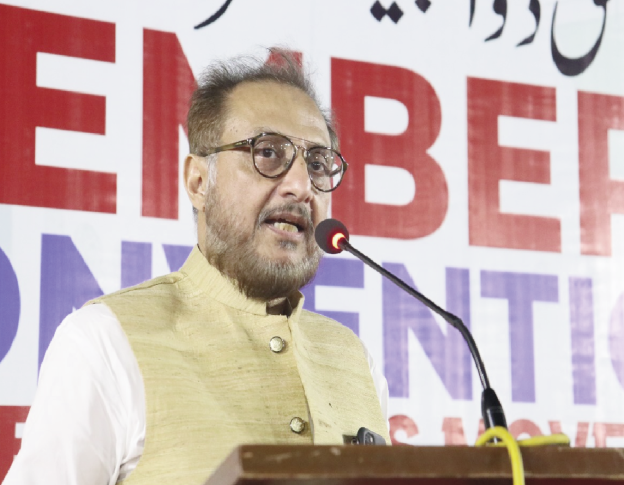
PEC Elections 2024 TEP, PEG-NEA begin exercises; Najeeb busy cobbling alliance
The alliance between the Professional Excellence Group (PEG) and the National Engineers Alliance (NEA) has created an interesting situation for engineers and their groups across Pakistan. Waseem Nazir and Qadir Shah, leading their respective groups, struggled to forge an alliance, which consequently led other groups and influential engineers, including the Pakistan Engineers Forum (PEF) to rethink their positions in the elections.
Before the PEG-NEA alliance, Waseem Nazir’s negotiating team was in talks with PEF for jointly contesting elections, while Qadir Shah and his team were on the verge of closing doors on Jawed Salim Qureshi’s The Engineers Pakistan (TEP). However, TEP’s core committee did not approve of picking Qadir Shah as the joint candidate for the chairman’s post.
Interestingly, despite the majority belief within Qadir Shah’s group that Shah cannot win the election as chairman independently, they are supporting a non-NEA leader for the chairman of the council once again. Before supporting Waseem Nazir, Qadir Shah’s group had agreed to back Najeeb Haroon as chairman, aligning with the Constructors Association of Pakistan (CAP) and personalities like Dr. Niaz Akhtar. Equally interesting is the fact that both Najeeb Haroon and Waseem Nazir hail from PEG.
NEA had opened talks with Jawed Salim Qureshi who, according to Shah’s engineers, had agreed to throw his weight behind Shah for the top slot but stepped back later. Behind-the-scenes discussions apart, prospects of the Shah-Qureshi alliance had sparked widespread discussions in the engineering fraternity, much like the talk after Shah’s alliance with Waseem Nazir. After an unsuccessful attempt with Jawed Salim Qureshi, Shah’s group found itself in a challenging situation and apparently had two options. ‘One, Shah should fight alone and lose the elections; and two, he should stand behind Najeeb yet again and lose,’ says one of his close associates. He said Waseem Nazir was the best solution in the given circumstances for winning the elections.
The NEA-PEG alliance, a senior TEP engineer says, will force Jawed Salim Qureshi to work hard and lure more and more engineers for support. Although Punjab would be the real battleground, the group has to seriously look into issues in Sindh—the second-largest province of Pakistan—where TEP has to face the Qadir Shah group now with Waseem Nazir.
Before falling for Waseem Nazir, NEA had some solid and some wavering support for Najeeb Haroon, who had hopes that his erstwhile allies would back him for the second tenure. ‘It was Qadir Shah who refused in point blank to stand alongside Najeeb,’ revealed an NEA leader.
Najeeb Haroon, the incumbent chairman of the council, is faced with a challenge to cobble together remaining groups and personalities for shaping a coalition that could be as influential as TEP and NEA. He is looking towards Ashfaq Shah, PEF, estranged associates of Waseem Nazir, and influential engineers, attempting to forge a kind of arrangement. Among them, any alliance with Ashfaq Shah may be a distant possibility for Najeeb Haroon, as Shah is reportedly adamant about his stance on the chairman’s post.
The PEG-NEA alliance has not only affected Najeeb Haroon’s calculations; PEF also has to rethink their strategy as the group was reportedly in advanced talks with the PEG team. They must be reevaluating the situation and weighing their options: supporting Najeeb Haroon, Ashfaq Shah, or going alone. In the 2021 elections, PEF was part of the National Engineers Alliance but withdrew at the last minute, claiming betrayal over seat allocations in the governing body. PEF leaders assert they had signed an agreement with Najeeb Haroon, which he did not honor.
Now, with Najeeb Haroon being one of three options, PEF must make a decision in the coming days. Whether they will be able to make a significant impact remains to be seen, as PEF may not support Ashfaq Shah, being a smaller group for the chairman’s post.
This week’s update: Engr. Waseem Nazir, leading the Professional Excellence Group (PEG), and Engr. Qadir Shah, leading the National Engineers Association (NEA), have decided to jointly contest the PEC Elections 2024 scheduled for August 18. The new alliance has announced that Engr. Nazir will be the coalition’s candidate for the post of Chairman, and Engr. Raghib Shah for Senior Vice Chairman.
The top leadership of PEG and NEA met in Karachi to forge an alliance for the upcoming Pakistan Engineering Council (PEC) Elections 2024, as stated in today’s NEA press release. Recognizing the importance of unity over individual ambitions, NEA and PEG have decided to merge their efforts and contest the elections under the unified banner of PEG-NEA.
The press release reads: “This collaboration combines the wealth of local experience with the innovative perspectives of global thought leaders. Together, they aim to transform PEC into a dynamic, forward-looking organization that meets international benchmarks and standards.” Engr. Waseem Nazir has been nominated as the joint candidate for Chairman, while Engr. Raghib Abbas Shah will stand for Senior Vice Chairman. Candidates for the remaining positions of vice chairmen of all provinces and members will be announced shortly. -

Uncertainty surrounding PEC election date sparks widespread debate
“The alliance fever that had gripped the friends and foes of Engr. Abdul Qadir Shah and Engr. Jawed Saleem Qureshi’s groups for the last few months has finally receded to a great degree. It seems that both, or at least one, has started to return to normal. As a result, both groups are likely to go their separate ways, and the rest of the groups are also expected to review their strategies for the PEC Elections 2024.”
“Both Engr. Shah and Engr. Qureshi, along with their intermediaries, maintained contact despite the latter’s core group never favoring support for the former, especially for the office of chairman. Engr. Qureshi’s core group believes they would suffer the most if they were to endorse Engr. Qadir Shah for the top office. Engr. Qureshi’s top lieutenants claim the negotiation process for the alliance, which aimed to promote Engr. Qadir Shah as the joint candidate for chairman, has broken down. Nevertheless, both groups can discuss a joint effort to resolve issues concerning engineers and the engineering industry in Pakistan.”
Now, with the alliance between two well-known groups appearing increasingly distant, one — TEP — has begun finalizing its panel, while the other — NEA — is contemplating whether to retain Engr. Qadir Shah as their candidate for the chairman’s post. The assessment suggests that no major group would endorse Engr. Shah for the top position. However, the consolidation of smaller groups, including one led by Engr. Ashfaq Shah, may work in his favor. Additionally, the situation may compel NEA to reconsider its earlier decision not to ally with Engr. Najeeb Haroon, whose political party is reportedly striving to gain support from PPP and PML-N circles for a second term in office. While the PPP-PML-N alliance is reportedly concluded, the outcome of MQM’s efforts remains to be seen.
“In a scenario where smaller groups of engineers in Pakistan have gained importance across all four provinces, larger groups are actively engaged in the field. For instance, the Pakistan Engineers Forum (PEF), led by Engr. Al Kazim Mansoor, has been proactive in organizing its strength while engaging with smaller groups and influential engineers nationwide. PEF leaders Engr. Mansoor and Engr. Imtiaz Shah have visited cities like Hyderabad and Nawabshah, believed to be supported by NEA, to garner support from engineers. PEF aims to make a difference in the upcoming elections, following a previous chapter that did not bring much fortune to the group.”
“Engr. Najeeb Haroon, as reports pour in, has been traveling across Pakistan and has actively launched his campaign in all four provinces. He has a long list of activities undertaken during his tenure that he believes are sufficient to convince engineers to vote for him for a second tenure. Many engineers in his circle still expect the NEA to return to his fold and revive the alliance that swept the elections in 2021.”
Like others, Engr. Waseem Nazir, leading a significant group of engineers in Pakistan—Pakistan Excellence Group (PEG)—has been busy meeting numerous groups to explore the possibility of support. Some engineers in Sindh say Engr. Nazir sees PEF as his ally, which they believe will bolster his position across the country, especially in Sindh and Punjab. PEF has already opened channels with Sindh-based Dr. Niaz Memon, who was the PEG candidate for the post of Vice Chairman Sindh against NEA candidate Engr. Mukhtiar Shaikh in previous elections.
Pakistan’s PEC Elections 2024 scenario is developing, but the exact date of the elections remains unclear. The last meeting of the PEC Governing Body (GB) failed to reach a consensus on the election date. One group of GB members, citing the PEC Act, insists that the election process must be completed two weeks before the date on which the winners of the 2021 Election were sworn in. However, another group, including the incumbent chairman, believes that weather patterns necessitate a one-month postponement of the elections. The council has sought the opinion of the Law Division on whether the elections can be delayed for this reason.
The uncertainty surrounding the election date has sparked widespread debate in engineering circles and groups. One such group, TEP, has stated that they will approach the court if the election schedule is not announced in the next few days. -
Hydrogen Strategy 2025: Recommendations for Pakistan
Pakistan’s energy future faces several significant threats. The country’s over-reliance on fossil fuels has led to resource depletion, while inefficiencies and outdated technologies in the energy sector contribute to substantial wastage. Water scarcity hampers hydroelectric power generation. Additionally, a lack of investment in infrastructure and technology impedes the development of indigenous sustainable energy solutions. Carbon emissions further threaten exports, as international markets like the European Union may ban products produced using fossil fuels. Pakistan’s hydrogen energy strategy, set to be issued in 2025 by the Ministry of Planning and Special Initiatives (MoP&SI), will be crucial to address these challenges.
Many countries are striving to achieve the objective of establishing hydrogen as a prominent, carbon-free energy source. Over 20 countries, including Japan, the European Union (EU) member states, the United Kingdom, the United States, China, Japan, and India, have announced their national hydrogen strategies. The EU aims to decarbonize hard-to-electrify sectors and reduce carbon emissions by 2030-2050, emphasizing public-private partnerships and significant investments in hydrogen infrastructure. Similarly, the UK’s strategy targets a substantial hydrogen economy by 2050, with plans for residential heating and various transport applications. China’s strategy includes shifting from coal-based to renewables-based hydrogen production and expanding hydrogen infrastructure. India’s ambitious National Green Hydrogen Mission targets energy independence by 2047 and carbon neutrality by 2070, with substantial investments and incentives to promote green hydrogen production and usage across multiple sectors with a focus on exporting hydrogen to Europe, especially Germany. These comprehensive strategies reflect a global commitment to advancing hydrogen fuels as a way to combat climate change. Pakistan is set to issue its strategy by 2025.
Currently, hydrogen production in Pakistan is primarily used as a raw material in fertilizers, a reducing agent in refineries, and for cooling generators in power plants. The country’s hydrogen production methods include steam methane reforming, cracking, reforming, and electrolysis. The electrolysis of water for hydrogen production is specific to power plants only. The Pilot projects for hydrogen electrolysis at Ghazi Barotha Dam and Quaid-e-Azam Solar Park are planned for 2026 and 2028, respectively. Oracle Power Company has also initiated a project to produce green hydrogen and ammonia using wind and solar power in Jhimpir.
The current status of hydrogen energy in Pakistan shows promising developments and potential for growth. A pre-feasibility study by NEECA recommends exploring seasonal hydrogen production and storage in salt caverns. The interesting point was that hydrogen generation from solar energy was estimated to be expensive due to tariff structure while the world insists on solar hydrogen production being the cheapest. In a symposium by the Pakistan Academy of Engineering (PAE) on Nuclear Hydrogen, a Representative from Pakistan Atomic Energy Commission nuclear hydrogen option is more feasible in Pakistan. Though there is no project about soon.
Irrespective of Tariff structure, Pakistan has significant opportunities in the realm of green hydrogen energy, particularly due to its abundant solar, and wind potential. The geopolitical shift towards reducing reliance on imported resources in Europe and the US, and advancements in hydrogen technology, creates a favourable environment for Pakistan to harness its renewable energy resources for hydrogen production. Additionally, with the development of fourth-generation nuclear reactors, Pakistan could simultaneously produce hydrogen and power.
However, several challenges need to be addressed to realize this potential. The cost of production, particularly the high cost of PEM electrolysers, is a significant hurdle. Hydrogen storage also poses challenges, with various methods like compressed gas, liquified gas, metal hydrides, and underground storage each having their own costs and logistical issues. Infrastructure development for distribution requires substantial investment and planning. Additionally, ensuring the safety of hydrogen handling and storage necessitates a comprehensive regulatory framework. Finally, the availability of water, its salinity, and its conditioning cost pose a significant challenge to realise Pakistan’s potential for hydrogen production. Despite these challenges, the strategic exploitation of renewable energy sources could position Pakistan as a key player in the global hydrogen economy.
To harness the potential while addressing challenges, I have the following suggestions for MoP&SI’s consideration.
Utilizing Waste and Seawater: Given Pakistan’s expected water scarcity, hydrogen production should focus on the pyrolysis of municipal waste, plastics, and using seawater and wastewater.
Developing Local Manufacturing: Establish a solar panel manufacturing plant by 2032 and an PEM/AEM/ SOEC electrolyser plant by 2040, with potential collaboration with China for a 1000 MT/year dust-resistant solar panel production facility and polysilicon production using local resources. Invest in developing local technologies for hydrogen production from water, waste, and biomass to promote a knowledge-based economy and job creation.
Private Sector Engagement: Encourage public-private partnerships to fund and bring expertise to the hydrogen industry.
Investing in a Hydrogen Centre: Create an engineering design and R&D centre focused on cost-effective hydrogen production, storage, and transportation, and study the compatibility of existing infrastructure like natural gas pipelines. Use effective Monitoring and evaluation Learning mechanisms for the improvement of service.
Substituting Imported Fuels: Focus on replacing methane with hydrogen in fertilizer production and developing hydrogen and coal-based power generation.
International Collaboration and Funding: Leverage Pakistan’s relationship with China under CPEC for mutually beneficial hydrogen projects and explore using nuclear energy for hydrogen production.
Exporting Hydrogen: Position Pakistan as a hydrogen exporter to Europe, negotiating investments in local manufacturing and renewable technologies in exchange for reliable and cost-effective hydrogen supplies. Consider collaboration with Germany for high-efficiency solar panels and human resource development.