Ignite National Technology Fund, operating under the Ministry of Information Technology and Telecommunication, has officially launched the AI Wrapper Competition 2025, a groundbreaking national initiative aimed at leveraging artificial intelligence to address Pakistan’s real-world challenges.
The competition will be conducted across five major cities — Karachi, Lahore, Quetta, Peshawar, and Islamabad — culminating in a grand finale in Islamabad. Open to students, professionals, researchers, startups, and innovators, the competition invites participants to design AI-powered solutions in key sectors including education, healthcare, governance, finance, and climate change.
With a total prize pool of Rs. 8.75 million, the AI Wrapper Competition 2025 ranks among the most significant technology contests in Pakistan. In addition to cash prizes, participants will gain access to expert mentorship, the opportunity to transform ideas into market-ready solutions, and potential selection to represent Pakistan in international AI competitions.
Speaking at the launch event, Federal Minister for IT and Telecom, Ms. Shaza Fatima Khawaja, stated:
“The AI Wrapper Competition 2025 reflects our strong commitment to harnessing technology for inclusive growth, social impact, and economic progress. Under the vision of Prime Minister Shehbaz Sharif for a Digital Nation Pakistan, we are building platforms that not only empower our youth but also highlight Pakistan’s innovation potential on the global stage.”
The initiative is part of Ignite’s broader mission to accelerate AI-driven innovation and position Pakistan as a global contributor in artificial intelligence. By empowering local talent to develop custom AI solutions for the country’s unique challenges, the competition also promotes scalable innovation that can benefit other developing nations.
Registrations are now open at ignitecode.org.pk/aiwrapper with the deadline set for October 10, 2025. – ER News Deak
UIT University is set to host an important orientation and workshop organized by the Charter Inspection and Evaluation Committee (CIEC) of the Sindh Higher Education Commission (SHEC) on Friday, September 27, 2025. The event, titled “CIEC Orientation Workshop,” will be held at UIT University’s Karachi campus.
The workshop is expected to draw approximately 65–70 participants, including Vice Chancellors, Pro Vice Chancellors, Deans, and Registrars from various universities across Karachi.
The day-long program will feature key briefings by the Secretary of Sindh HEC and the Chairman of CIEC. Sessions will focus on essential topics such as quality assurance models, the introduction of the new CIEC manual, and guidelines for establishing new university departments and academic programs.
Participants will also be briefed on the monitoring forms for the 10th round of inspections as well as online monitoring procedures. – PR
Artificial Intelligence (AI) has rapidly transformed the way knowledge is created, shared, and applied across disciplines. Among the many skills needed to effectively leverage AI, prompt engineering—the art of crafting precise and purposeful inputs to extract meaningful outputs from AI models—has emerged as a key competency.
For engineering students at undergraduate, graduate, and doctoral levels, mastering prompt engineering can enhance not only their academic performance but also their ability to engage in lifelong learning in an era defined by intelligent technologies.
Prompt Engineering at Different Levels of Study
1. Undergraduate Level
Undergraduate engineering students are in the formative stage of their academic journey. They often face challenges in understanding fundamental concepts, solving mathematical problems, or drafting technical reports.
• Generating problem-solving strategies for numerical assignments.
• Practicing coding with AI-assisted debugging and explanation.
• Drafting lab reports, technical essays, or presentations.
Impact: By learning to design precise prompts, undergraduates can bridge the gap between theoretical knowledge and practical understanding, reducing frustration and encouraging curiosity.
2. Graduate Level
Graduate students engage in advanced coursework and often begin specialized research. At this stage, higher-order critical thinking and synthesis of ideas are essential.
Applications of Prompt Engineering:
• Conducting literature reviews by asking AI to summarize, critique, or compare research papers.
• Designing research methodologies and generating problem statements.
• Exploring simulation strategies or creating initial drafts of algorithms.
• Preparing technical documentation, research proposals, and funding applications.
Impact: Skilled prompting allows graduate students to save time in research preparation, receive diverse perspectives on complex topics, and enhance the quality of their academic writing.
3. Doctoral Level
Doctoral students pursue original contributions to their field. They require tools to think critically, identify gaps in existing knowledge, and generate innovative solutions.
Applications of Prompt Engineering:
• Identifying unexplored research areas by prompting AI to highlight gaps across literature.
• Refining hypotheses and creating advanced data analysis workflows.
• Drafting scholarly articles, refining arguments, and ensuring academic rigor.
• Exploring interdisciplinary connections between engineering and other domains (e.g., AI in biomedical engineering or sustainability).
Impact: Proper prompt engineering empowers doctoral researchers to navigate vast amounts of data, enhance originality in their work, and streamline the communication of complex ideas.
Lifelong Benefits of Learning Prompt Engineering
• Enhanced Critical Thinking: Crafting effective prompts requires clarity of thought and goal-setting, skills transferable to problem-solving in professional life.
• Efficient Knowledge Acquisition: Students learn how to retrieve information quickly and accurately, which is invaluable in fast-evolving fields like engineering.
• Improved Communication Skills: Formulating clear prompts improves how students articulate technical ideas to both machines and humans.
• Adaptability to Emerging Tools: As AI technologies evolve, strong prompting skills ensure that engineers can leverage future tools without steep learning curves.
• Continuous Learning: Lifelong learning is sustained by the ability to query AI for new concepts, tools, and innovations long after formal education ends.
Free Courses for Students to Learn Prompt Engineering
Several platforms offer free or open-access resources that students at all levels can use:
1. Elements of AI (University of Helsinki – https://www.elementsofai.com)
A beginner-friendly course that introduces AI concepts and helps learners understand how AI interprets human input.
2. DeepLearning.AI: ChatGPT Prompt Engineering for Developers (Coursera, free-to-audit)
A practical introduction to prompt engineering with examples applicable to problem-solving, writing, and coding.
3. Learn Prompting (https://learnprompting.org)
A community-driven, open-source curriculum covering fundamentals, intermediate techniques, and advanced prompt design strategies.
4. Google AI and Machine Learning Resources (https://ai.google/education)
Free resources and guides on effective use of AI tools, with applications in engineering and research.
5. OpenAI Cookbook and Documentation (https://platform.openai.com/docs)
Practical examples of prompt usage, fine-tuning, and advanced applications for engineering problems.
Conclusion
Prompt engineering is not merely a technical skill; it is a cognitive tool that strengthens how students learn, solve problems, and communicate in the age of AI. For undergraduate students, it simplifies foundational learning; for graduate students, it enhances research preparation; and for doctoral candidates, it fuels innovation and originality. By integrating free learning resources and practicing this skill, engineering students can prepare themselves for academic excellence and lifelong adaptability in an AI-driven world.
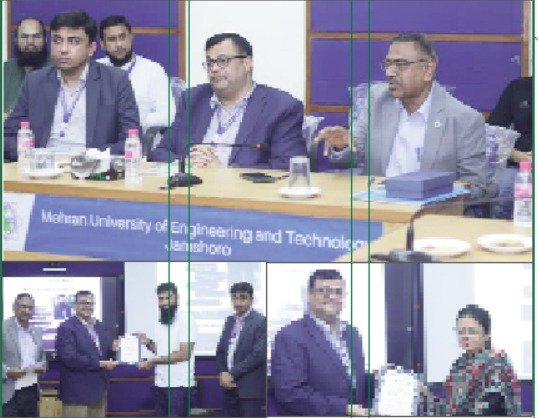
The two-day workshop on “Designing Future-Ready Technical Modules” commenced at Siren Hall, ORIC, Mehran University of Engineering & Technology, Jamshoro.
Prof. Dr. Aneel Kumar, Pro-Vice Chancellor of MUET, formally inaugurated the event. The distinguished resource person, Dr. Inam Ul Ahad, Co-Director – DCU APT Institute, Dublin City University, Ireland, conducted the workshop. The hands-on training aims to equip academic staff with innovative strategies for designing future-ready technical modules aligned with industry demands.
The workshop aimed to help academic staff reimagine module design, explore future-ready teaching practices, and co-create practical module prototypes aligned with industry needs and the evolving role of AI in assessment. Vice Chancellor Prof. Dr. Tauha Hussain Ali graced the closing ceremony and distributed certificates of appreciation and participation among the attendees. The event was coordinated under the supervision of Prof. Dr. Bhawani Shankar Chowdhry, Advisor (H) international collaborative projects, and Engr. Muhammad Zakir Sheikh, Director NCRAAI and lead dissemination team EU funded projects ACTIVE and CATCH_VR. – PR
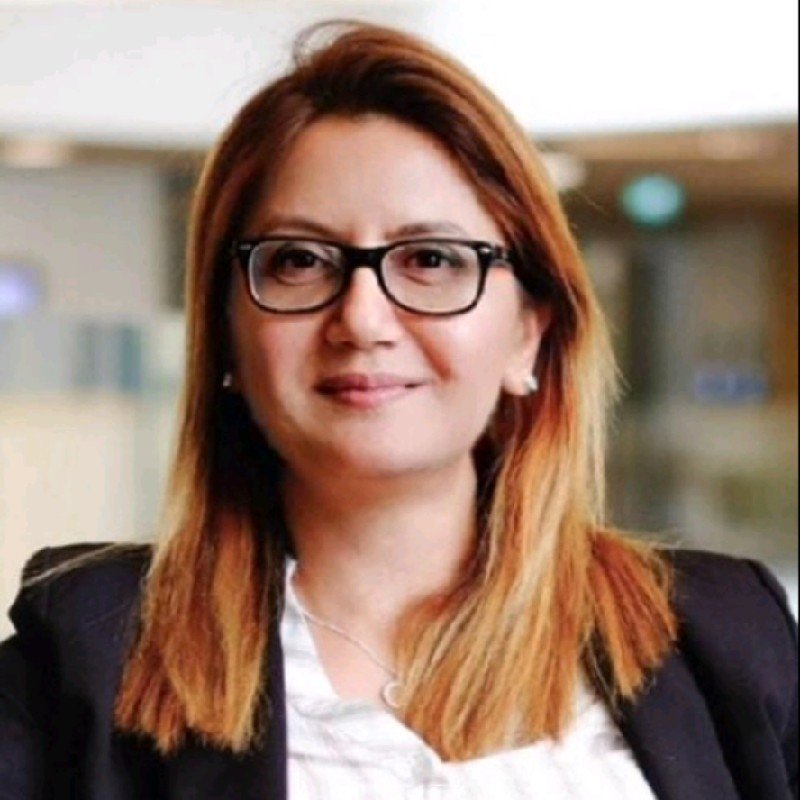
Dr. Fauzia I. Abro, a graduate of Mehran University of Engineering and Technology (MUET), Jamshoro, has been named one of the Top 50 Women in Engineering in the United Kingdom by the Women’s Engineering Society (WES).
“Delighted to share that I’ve been named one of the Top 50 Women in Engineering in the UK,” Dr. Abro wrote on her LinkedIn account.
This year’s awards, announced on International Women in Engineering Day (INWED), celebrate the outstanding achievements of women across the UK who are shaping the future of engineering, science, and technology. WES has been championing women in engineering since 1919, and its work continues to be a beacon for equity, visibility, and innovation in STEM.
“This recognition is a shared achievement—thank you to everyone who has supported my journey, which began at Mehran University of Engineering and Technology, Jamshoro,” she added.
She wrote: “A special thanks to my brother, Abro Tufaill, whose support was truly like the shade of a great tree—offering me comfort and protection as I navigated life alone for the first time in a new city, Jamshoro. I wish every girl had a brother like him. 🫶 I’m also grateful to my teachers and mentors at MUET: Bhawani Shankar Chowdhry, Engr. Wali Muhammad Rahimoon, Muhammad Ali Shaikh, Iqbal Yousuf, Farzana Rauf Abro, Shafiq Mahesar, Zubaida Metlo, Nafeesa Bohra, and Nasrullah Memon.” – ER/Dr. Fauzia’s Linked account
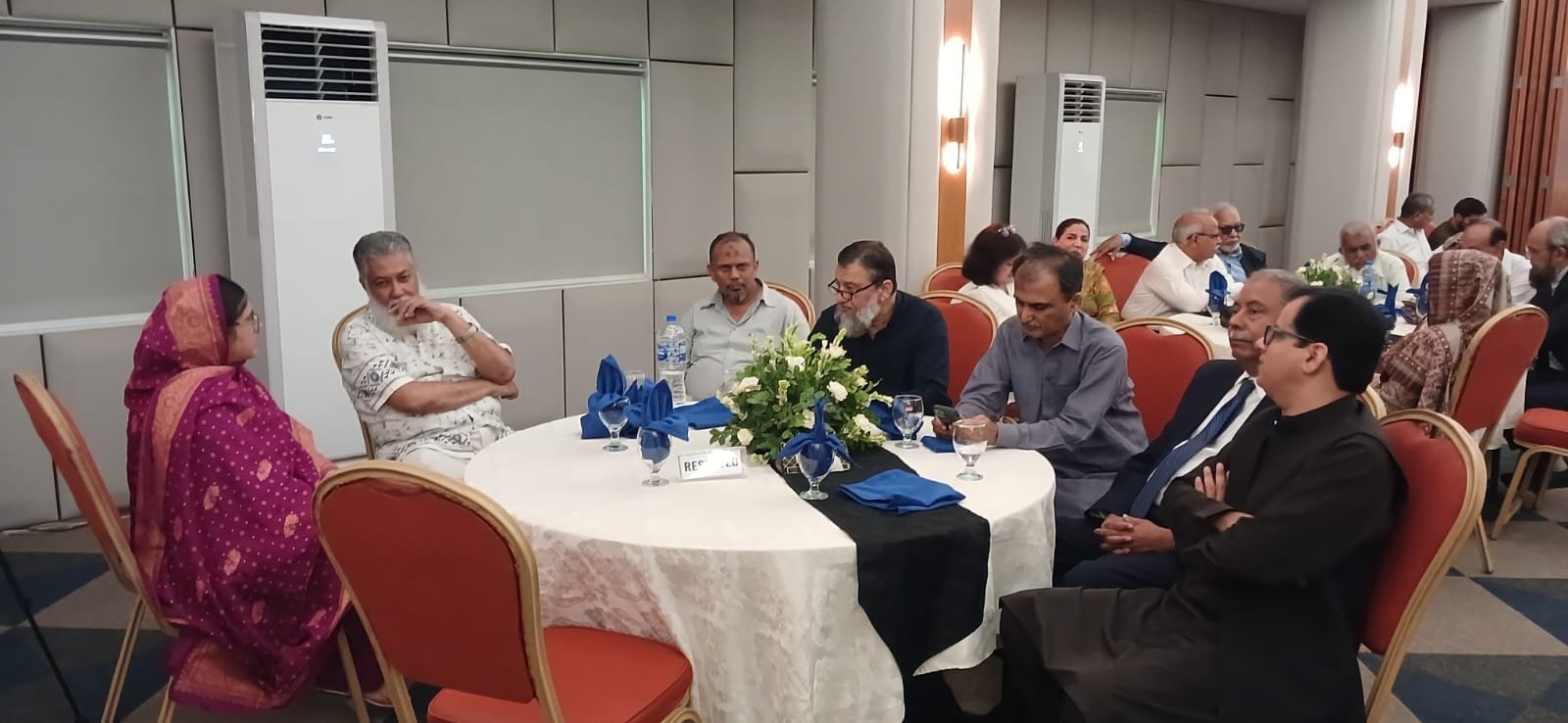
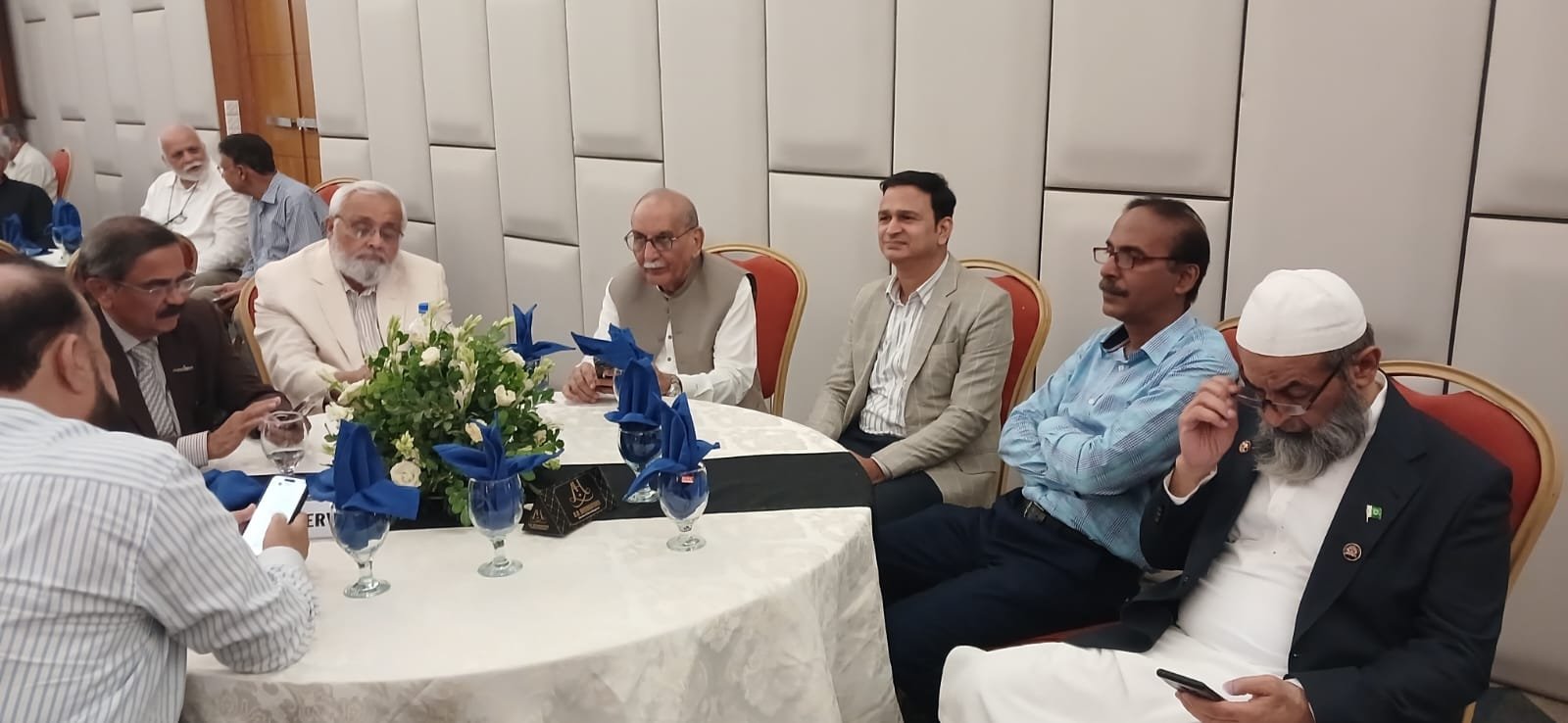
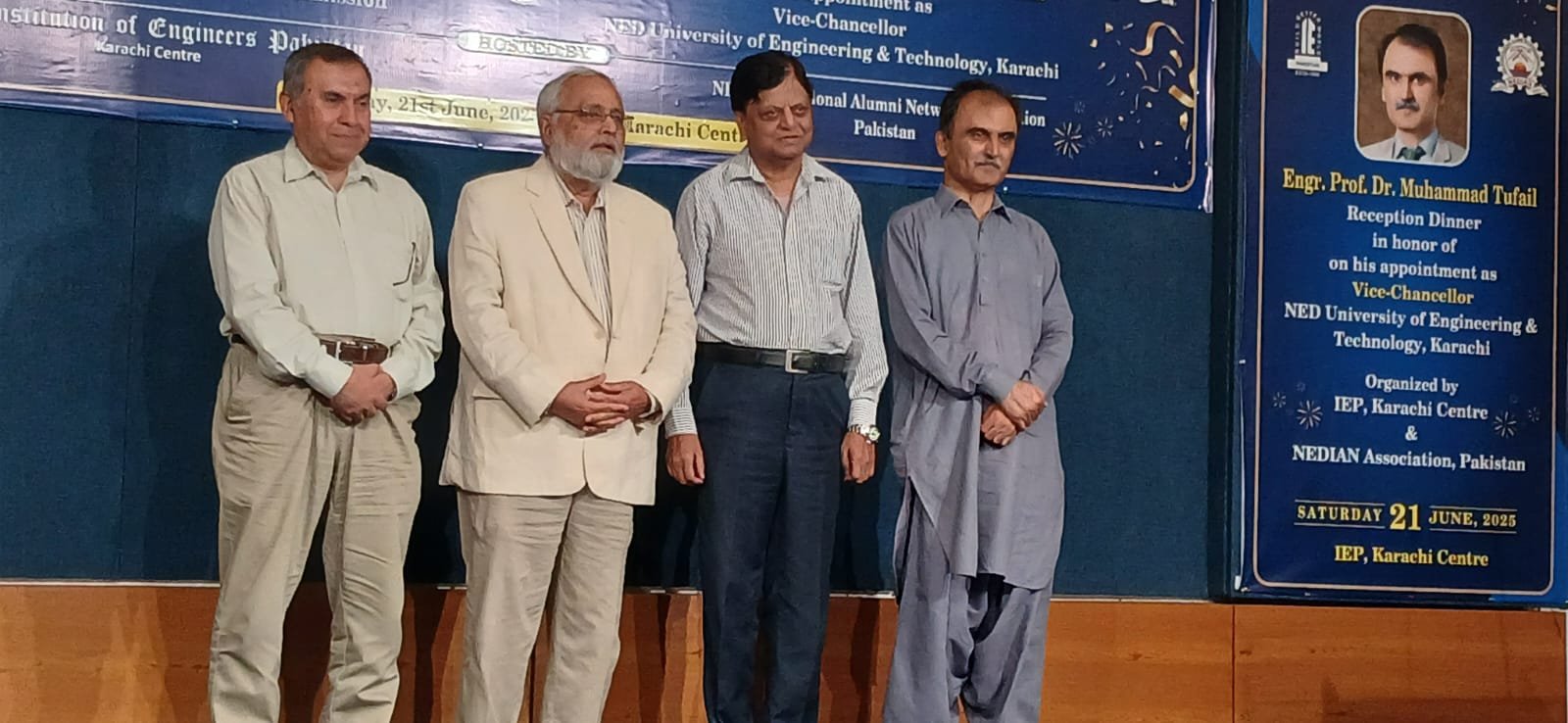
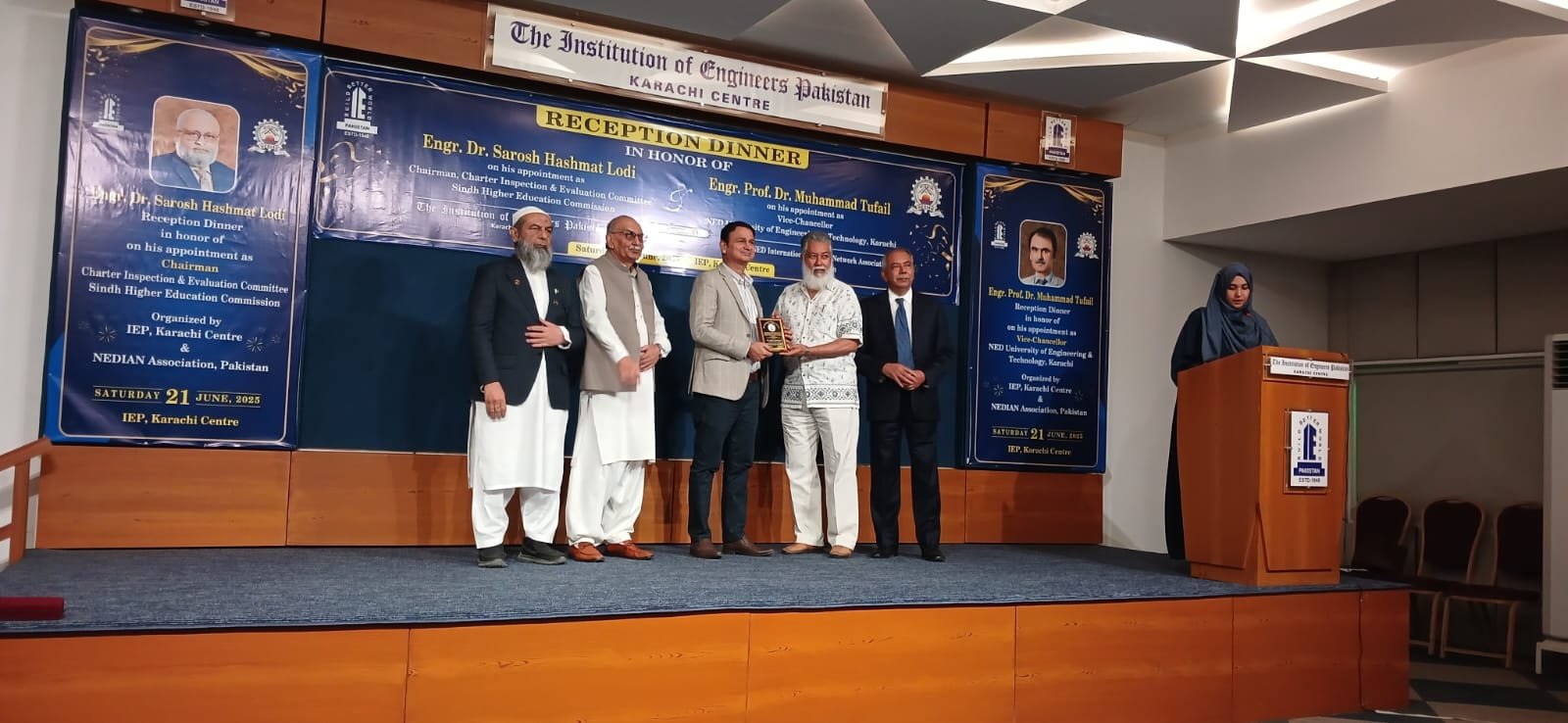
The Institution of Engineers Pakistan (IEP) hosted a graceful reception dinner in honor of two distinguished academic appointments: Dr. Mohammad Tufail, the newly appointed Vice Chancellor of NED University of Engineering & Technology, Karachi, and Dr. Sarosh Hashmat Lodhi, who has taken charge as Chairman of the Charter Inspection & Evaluation Committee (CIEC), Sindh Higher Education Commission.
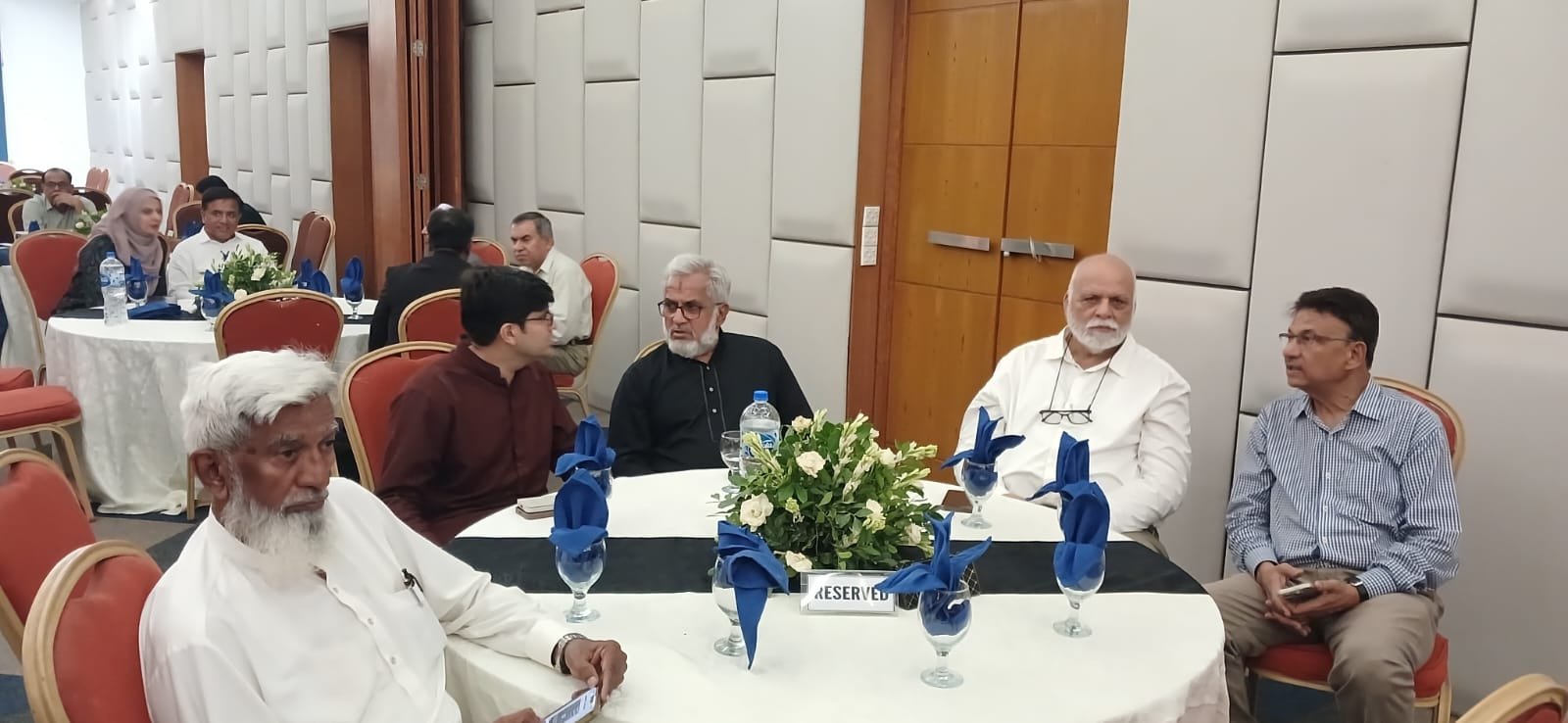
The ceremony was a well-attended affair, drawing a diverse gathering of engineers from both academia and industry. The event turned into a symbolic celebration of continuity and collaboration in engineering education.
In a rare moment of academic unity, three Vice Chancellors of NED University—the incumbent Dr. Mohammad Tufail, former VCs Dr. Sarosh Lodhi and Dr. Afzal Haque, as well as Dr. Noman Ahmed, who recently served as acting Vice Chancellor—were all present under one roof. Their collective presence reflected the strong institutional legacy and future direction of the university.
Adding further prestige to the event was the presence of Dr. Valiuddin, Vice Chancellor of UIT University, who also graced the occasion and joined in the dialogue on improving higher education in engineering.
Speakers from the academic and professional community addressed the challenges facing engineering universities, including curriculum modernization, faculty development, industry collaboration, and global competitiveness. There was a shared emphasis on the need to make NED University a more vibrant, research-driven, and innovation-oriented institution.
Dr. Sarosh Lodhi, reflecting on his tenure as Vice Chancellor, offered heartfelt advice to Dr. Tufail. Drawing from his experiences, he highlighted the importance of visionary leadership, academic integrity, and stakeholder engagement in taking the university to new heights.
The evening concluded on a note of optimism and shared responsibility, with attendees expressing hope that such academic collaborations would continue to shape the future of engineering education in Pakistan. – ENGINEERING REVIEW
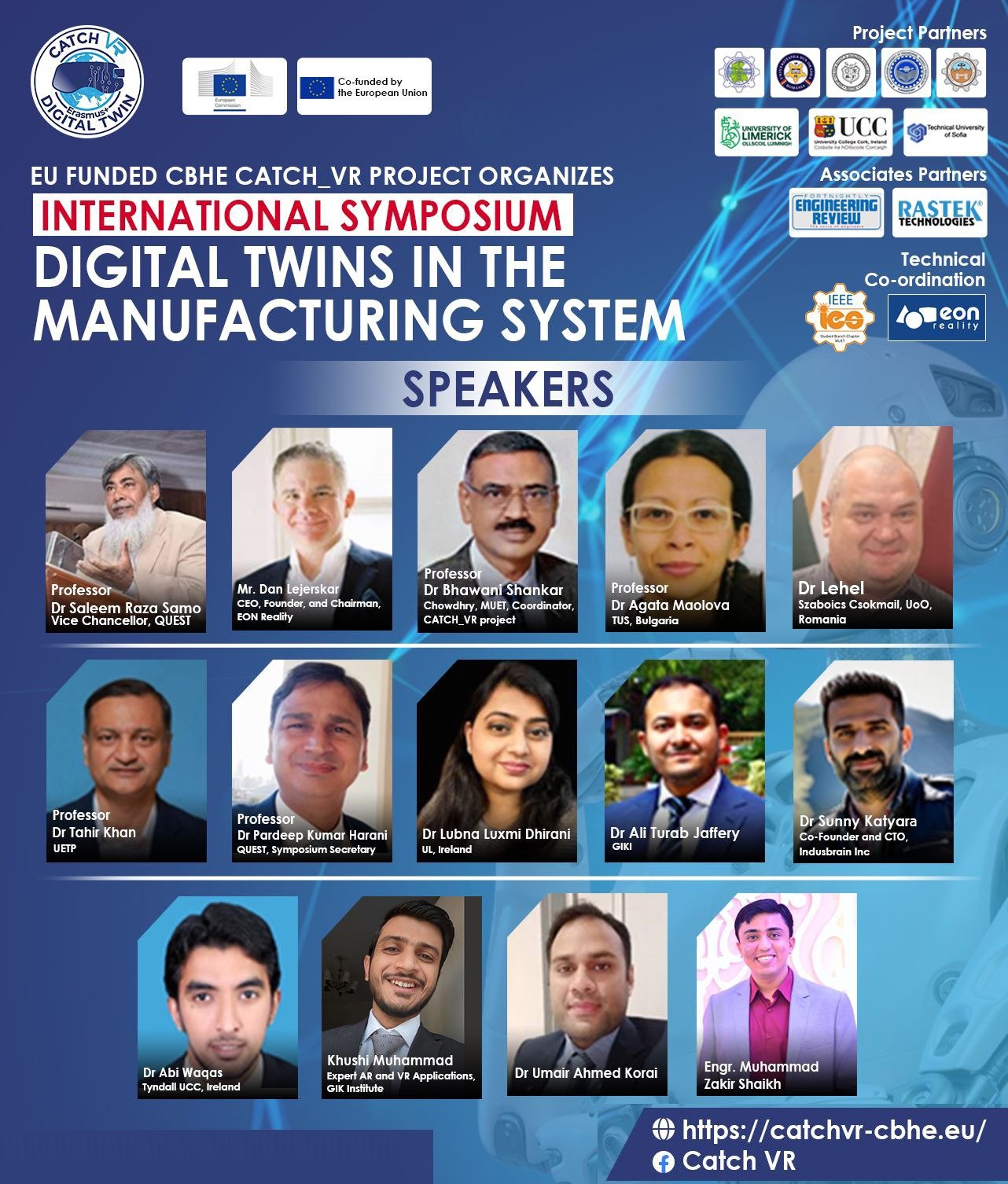
Under the auspices of the EU-funded Capacity Building in Higher Education (CBHE) CATCH_VR Project, Mehran University of Engineering & Technology (MUET) hosted a one-day international Digital Twins in Manufacturing Systems Symposium. The event convened researchers and industry experts from Ireland, Romania, Sweden, Bulgaria, Portugal, England, and Pakistan to share the latest innovations in augmented reality (AR), virtual reality (VR), artificial intelligence (AI), and immersive learning. The symposium opened with remarks by Professor Dr. Saleem Raza Samo, Vice Chancellor of QUEST, who welcomed delegates and underscored the growing importance of digital technologies in engineering education. Dr. Bhawani Shankar Chowdhry, MUET Coordinator for the CATCH_VR project, then presented an overview of the project’s deliverables, tasks, and milestones.
Key presentations included: • Dr. Pardeep Kumar Harani (QUEST) on the “Importance of Digital Transformation in Manufacturing.” • Mr. Khushi Muhammad (GIK Institute) examining “AR/VR in Modern Manufacturing.” • Prof. Dr. Agata Maolova (Technical University of Sofia) discussing “Real-Time Data Integration with Digital Twins.” • Dr. Lehel Szaboics Csokmail (University of Oradea) demonstrating “ON-XR: An Immersive Learning Platform and Virtual Robotics Lab Tour.” • Dr. Sunny Katyara (Indusbrain Inc., UK) on “Designing Resilient and Agile Production Lines with Digital Twin Technology.” • Dr. Abi Waqas (Tyndall National Institute, Ireland) and Dr. Lubna Luxmi Dhirani (University of Limerick) exploring technical and security challenges in implementing digital twins. • Mr. Dan Lejerskar, CEO of EON Reality, presenting “EON-XR Platform: Leading XR and AI Solutions for Education & Technology.” The day concluded with a panel discussion, moderated by Dr. Tahir Khan (UET Peshawar) and Dr. Ali Turab Jaffery (GIKI), which covered: • EON Reality’s 25-year journey in XR and AI innovation • Immersive learning applications in education, training, and industrial simulation • Live AI-powered document-to-XR lesson demonstrations • Virtual tours of robotics labs • Global success stories and future XR and AI trends Closing remarks were delivered by Dr. Lubna Luxmi Dhirani, Symposium Chair, who praised the collaborative spirit and emphasized the symposium’s role in advancing sustainable, technology-driven engineering education. It is worth mentioning that Engineering Review is also an Associate Partner of the project. More details are available at: https://catchvr-cbhe.eu/
In a significant development for Pakistan’s higher education sector, the Government of Sindh has appointed Prof. Dr. Muhammad Tufail Jokhio as the new Vice Chancellor of NED University of Engineering & Technology, Karachi.
The appointment, made under Section-27(1) of the NED University Act, 1977 — as amended by the Sindh Universities and Institutes Laws (Amendment) Act, 2025 — was formally approved by the Honourable Chief Minister of Sindh. Dr. Tufail will serve a four-year term with immediate effect.
A handing over and taking over ceremony was held to mark this historic transition. Attendees from academic and professional circles celebrated the moment, recognizing it as a new chapter for one of Pakistan’s most prestigious engineering institutions.
“Congratulations to Dr. Muhammad Tufail Jokhio on his well-deserved appointment,” read a statement from university officials and well-wishers. “We wish him a successful and inspiring tenure as he leads NED University toward new heights of academic excellence and innovation.”
Acknowledgment and gratitude were also extended to the outgoing leadership for their lasting contributions to the university’s progress and reputation.
Dr. Tufail brings with him years of academic, administrative, and research experience, and is expected to build upon NED’s strong legacy while driving reforms, modernization, and global collaboration. – ENGINEERING REVIEW
In a landmark step to build blockchain capacity in Pakistan, Binance Academy, the educational arm of the world’s largest cryptocurrency exchange, has partnered with the Ministry of IT and Telecom (MoITT) to roll out a nationwide blockchain education initiative. The program aims to equip university faculty and students with the skills required to thrive in the Web3 and digital economy.
The initiative will cover 20 universities across the country, targeting 300 educators and reaching up to 80,000 students by 2026. It builds upon Binance Academy’s Global University Outreach Program (GUOP)—the world’s largest Web3 education initiative launched in partnership with the Blockchain & AI Technology Center (BAITC).
Accelerating Pakistan’s Digital Transformation Speaking on the partnership, Ms. Shaza Fatima Khawaja, Minister of IT and Telecom, emphasized its alignment with Prime Minister Shehbaz Sharif’s vision for a digitally empowered Pakistan.
“This partnership marks a key milestone in our digital transformation journey. It not only contributes to economic growth but also positions Pakistan as a global hub for blockchain talent,” she said.
The program is designed to integrate blockchain education into university curricula, supported by open-access resources, professional certifications, and strategic industry collaboration.
Global Vision, Local Impact Bader Al Kalooti, MEASA Head of Growth and Operations at Binance, stated:
“As blockchain reshapes the global financial landscape, our collaboration with MoITT is a major step toward developing a skilled workforce that can lead innovation and drive sustainable growth.”
Binance Academy has already trained over 3,000 students in Pakistan since 2022, across 13 universities in three provinces. This new initiative significantly scales up its outreach, reflecting Binance’s commitment to supporting Pakistan’s digital future.
The GUOP, launched in 2023 with a pilot in Kazakhstan, now spans 20 countries and aims to reach over 200 universities and one million students globally by 2026.
About the Partners Binance Academy: A global leader in blockchain and cryptocurrency education, offering over 1,000 resources in more than 30 languages. Its programs include Learn and Earn, student ambassador initiatives, and global academic partnerships.
Blockchain & AI Technology Center (BAITC): A multinational research and education center operating in 20+ countries, promoting blockchain and AI through open bootcamps, hackathons, and corporate training programs. – ENGINEERING REVIEW
The Chief Minister of Khyber Pakhtunkhwa, in his capacity as Chancellor of the provincial universities, has approved the appointment of Dr. Muhammad Zafar Iqbal as the new Vice-Chancellor of Gomal University, under the authority granted by Section 12(1) of the Khyber Pakhtunkhwa Universities Act, 2012 (as amended).
According to a notification issued here, the newly appointed Vice-Chancellor will serve a four-year term, with an initial tenure of two years commencing immediately. The term may be extended for an additional two years based on satisfactory performance, in accordance with Section 12(6B) of the Act.
However, the appointment is subject to the outcome of a Review Petition currently pending before the Honorable Supreme Court of Pakistan. The petition challenges the Order dated April 16, 2025, in CPLA No. 4335/2024.
The Vice-Chancellor’s salary and service conditions will be governed by the Department’s Notification No. SO(U-II)HE/3-1/2022/121-55 dated May 27, 2022.
This significant development comes amid ongoing efforts to strengthen leadership in higher education institutions across the province. – APP/ENGINEERING REVIEW