Category: Emerging Tech

  • Hybrid model predicts best tech for slashing industrial emissions in the chemical industry

    Hybrid model predicts best tech for slashing industrial emissions in the chemical industry

    A computational tool that can reduce this work by comparing separation technologies for a given chemical mixture, and predict the most efficient and inexpensive technology for the task, has been developed by researchers at KAUST. The work is published in the journal Nature Energy.

    “We are able to predict the separation of millions of molecules relevant across industries such as pharmaceuticals, pesticides, and pigments,” says Gyorgy Szekely, who led the research.

    Commercial nanofiltration membranes can slash the energy cost of chemical separations, compared to traditional heat-driven methods such as evaporation and distillation, by selectively filtering out the desired product. Nanofiltration does not work in all cases, however.

    “Predicting the separation performance of membranes for different chemical mixtures is a notoriously difficult challenge,” Szekely says.

    To develop their overall chemical separation technology selection tool, Szekely and his team compiled a collection of nearly 10,000 nanofiltration measurements from the scientific literature, focusing on commercially available membranes.

    The researchers used machine learning to analyze the data, generating an AI model able to predict the nanofiltration performance for untested chemical mixtures. This information was combined with mechanistic models to estimate the energy and cost requirements of a chemical separation if it was performed by nanofiltration, evaporation or extraction.

    “Our novel hybrid modeling approach enables us to evaluate millions of potential separation options, to identify the most suitable and energy-efficient technology for any given chemical separation task,” says Gergo Ignacz, a member of Szekely’s team. “This will allow industry to make better-informed decisions that significantly reduce operating costs, energy consumption, and carbon emissions.”

    The predictive power of the hybrid model was experimentally validated using three industrially relevant case studies, Szekely says. “We found an excellent match between the values that our model predicted, and measured values for these processes.”

    The researchers showed that the carbon dioxide emissions of pharmaceutical purifications could be reduced by up to 90% by selecting the most efficient technology for the task. Overall, the energy consumption and carbon dioxide emissions of industrial separations could be cut by an average 40% using this method, they estimated.

    One surprising finding was the stark difference between the best method and the other two methods for any given separation, Ignacz says. “For most cases, either nanofiltration, evaporation, or extraction emerged as a clear winner, with one method significantly outperforming the others based on economic and energy metrics, leaving little middle ground.”

    Although the predictive power of the model proved to be high, there is still room for improvement and further validation, Szekely says. “Our tools are available as open access through the OSN Database at www.osndatabase.com, and we encourage the community to use them.”

    Courtesy TechXplore

  • Trump calls China’s DeepSeek AI leap a ‘wake-up call’ for US tech

    Trump calls China’s DeepSeek AI leap a ‘wake-up call’ for US tech

    US President Donald Trump has called Chinese AI start-up DeepSeek’s strong showing a “wake-up call” and “positive” for America’s tech sector, and also warned that he would slap tariffs on foreign-made semiconductor chips, including those made by Taiwan’s TSMC, if they do not start producing them stateside.

    “Today and over the last couple of days, I’ve been reading about China and some of the companies in China, one in particular, coming up with a faster method of AI and much less expensive method. And that’s good, because you don’t have to spend as much money. I view that as a positive, as an asset”, Trump told Republican lawmakers gathered at his Doral golf resort in Miami, Florida.

    American AI firms try to poke holes in disruptive DeepSeek

    He added: “The release of DeepSeek AI from a Chinese company, should be a wake up call for our industries, that we need to be laser focused on competing to win, because we have the greatest scientists in the world”.

    Trump also pledged during his remarks that under his administration “we’re going to unleash our tech companies, and we’re going to dominate the future like never before”, telling American tech firms that “you’ll be doing that too, so you won’t be spending as much, and you’ll get the same result”.

    DeepSeek’s AI reasoning model R1 was published fully open-source last week. The announcement sparked a sell-off in US tech stocks on Monday, with investors fearing that the new AI model could threaten the dominance of current leaders in the space.

    The market jitters were particularly severe for US semiconductor giant Nvidia, which saw a staggering US$592.7 billion drop in market value amid growing concerns over China’s rapidly advancing AI technology.
    According to DeepSeek, its latest AI model required less than US$6 million worth of Nvidia’s less advanced H800 chips. This breakthrough represents a significant challenge to US policy, which has relied on sanctions and export controls to limit China’s access to advanced technology.

    The H800 chips were introduced in November 2022 as a more affordable alternative for Nvidia’s Chinese customers, just a month after the US imposed its initial restrictions on exports of advanced microchips and equipment to China.
    Last year, the US also pressured Taiwan – home to the world’s largest chipmaker, Taiwan Semiconductor Manufacturing Company (TSMC) – to prevent the sale of its most advanced chips to mainland Chinese companies.
    TSMC has been constructing two plants in Arizona. The first, a $12 billion facility, was approved during Trump’s first term as US president in 2020, which his administration touted as a significant win, while the second plant was announced during President Joe Biden’s term in 2022.

    Biden approved nearly US$6 billion in subsidies under the Chips and Science Act, his signature initiative to bring chip manufacturing back to American soil.

    Speaking to CNBC a day before Trump’s inauguration, TSMC Chief Financial Officer Wendell Huang expressed confidence that the funding would continue to flow under Trump as the fabrication plants reached construction and production milestones.

    The first fabrication plant in Arizona started producing advanced chips in the fourth quarter of last year, Huang said in the interview. He added that the construction of two plants in Arizona was on track, with the second expected to be operational in 2028.

    On Monday, Trump suggested he might impose tariffs on Taiwan and end subsidies for its tech companies manufacturing in the US.

    Warning about the imposition of tariffs on semiconductor chips, Trump remarked: “They left us, and they went to Taiwan, which controls about 98 per cent of the chip business, by the way.”

    “We want them to come back, but we don’t want to give them billions of dollars like this ridiculous programme Biden’s offering. They already have billions of dollars,” Trump continued.

    “We don’t need to give them money. They’re going to come back because it’s in their interest to do so,” he said, calling the establishment of plants in the US the “only way” to avoid tariffs.

  • American AI firms try to poke holes in disruptive DeepSeek

    American AI firms try to poke holes in disruptive DeepSeek

    Chinese startup DeepSeek on Monday sparked a stock selloff and its free AI assistant overtook OpenAI’s ChatGPT atop Apple’s App Store in the U.S., harnessing a model it said it trained on Nvidia’s lower-capability H800 processor chips using under $6 million.

    As worries about competition reverberated across the U.S. stock market, some AI experts applauded DeepSeek’s strong team and up-to-date research but remained unfazed by the development, said people familiar with the thinking at four of the leading AI labs, who declined to be identified as they were not authorized to speak on the record.

    OpenAI CEO Sam Altman wrote on X that R1, one of several models DeepSeek released in recent weeks, “is an impressive model, particularly around what they’re able to deliver for the price.” Nvidia said in a statement DeepSeek’s achievement proved the need for more of its chips.

    Software maker Snowflake decided Monday to add DeepSeek models to its AI model marketplace after receiving a flurry of customer inquiries.

    With employees also calling DeepSeek’s models “amazing,” the U.S. software seller weighed the potential risks of hosting AI technology developed in China before ultimately deciding to offer it to clients, said Christian Kleinerman, Snowflake’s executive vice president of product.

    “We decided that as long as we are clear to customers, we see no issues supporting it,” he said.

    Meanwhile, U.S. AI developers are hurrying to analyze DeepSeek’s V3 model. DeepSeek in December published a research paper accompanying the model, the basis of its popular app, but many questions such as total development costs are not answered in the document.

    China has now leapfrogged from 18 months to six months behind state-of-the-art AI models developed in the U.S., one person said.

    Yet with DeepSeek’s free release strategy drumming up such excitement, the firm may soon find itself without enough chips to meet demand, this person predicted.

    DeepSeek’s strides did not flow solely from a $6 million shoestring budget, a tiny sum compared to $250 billion analysts estimate big U.S. cloud companies will spend this year on AI infrastructure.

    The research paper noted that this cost referred specifically to chip usage on its final training run, not the entire cost of development.

    The training run is the tip of the iceberg in terms of total cost, executives at two top labs told Reuters. The cost to determine how to design that training run can cost magnitudes more money, they said.

    The paper stated that the training run for V3 was conducted using 2,048 of Nvidia’s H800 chips, which were designed to comply with U.S. export controls released in 2022, rules that experts told Reuters would barely slow China’s AI progress.

    Sources at two AI labs said they expected earlier stages of development to have relied on a much larger quantity of chips. One of the people said such an investment could have cost north of $1 billion.

    Some American AI leaders lauded DeepSeek’s decision to launch its models as open source, which means other companies or individuals are free to use or change them.

    “DeepSeek R1 is one of the most amazing and impressive breakthroughs I’ve ever seen – and as open source, a profound gift to the world,” venture capitalist Marc Andreessen said in a post on X on Sunday.

    The acclaim garnered by DeepSeek’s models underscores the viability of open source AI technology as an alternative to costly and tightly controlled technology such as OpenAI’s ChatGPT, industry watchers said.

    Wall Street’s most valuable companies have surged in recent years on expectations that only they had access to the vast capital and computing power necessary to develop and scale emerging AI technology.

    Those assumptions will come under further scrutiny this week and the next, when many American tech giants will report quarterly earnings.

  • OpenAI faces new copyright case, from global book publishers in India

    OpenAI faces new copyright case, from global book publishers in India

    Courts across the world are hearing claims by authors, news outlets and musicians who accuse technology firms of using their copyright work to train AI services and who are seeking to have content used to train the chatbot deleted.

    The New Delhi-based Federation of Indian Publishers told Reuters it had filed a case at the Delhi High Court, which is already hearing a similar lawsuit against OpenAI.
    The case was filed on behalf of all the federation’s members, who include publishers like Bloomsbury (BLPU.L), opens new tab, Penguin Random House, Cambridge University Press and Pan Macmillan, as well as India’s Rupa Publications and S.Chand and Co, it said.

    “Our ask from the court is that they should stop (OpenAI from) accessing our copyright content,” Pranav Gupta, the federation’s general secretary said in an interview about the lawsuit, which concerns the ChatGPT tool’s book summaries.
    “In case they don’t want to do licensing with us, they should delete datasets used in AI training and explain how we will be compensated. This impacts creativity,” he added.

    OpenAI did not respond to a request for comment on the allegations and the lawsuit, which was filed in December but is being reported here for the first time. It has repeatedly denied such allegations, saying its AI systems make fair use of publicly available data.

    OpenAI kicked off an investment, consumer and corporate frenzy in generative AI after the Nov. 2022 launch of ChatGPT. It wants to be ahead in the AI race after raising $6.6 billion last year.

  • OpenAI faces new copyright case, from global book publishers in India

    OpenAI faces new copyright case, from global book publishers in India

    Courts across the world are hearing claims by authors, news outlets and musicians who accuse technology firms of using their copyright work to train AI services and who are seeking to have content used to train the chatbot deleted.

    The New Delhi-based Federation of Indian Publishers told Reuters it had filed a case at the Delhi High Court, which is already hearing a similar lawsuit against OpenAI.
    The case was filed on behalf of all the federation’s members, who include publishers like Bloomsbury (BLPU.L), opens new tab, Penguin Random House, Cambridge University Press and Pan Macmillan, as well as India’s Rupa Publications and S.Chand and Co, it said.

    “Our ask from the court is that they should stop (OpenAI from) accessing our copyright content,” Pranav Gupta, the federation’s general secretary said in an interview about the lawsuit, which concerns the ChatGPT tool’s book summaries.
    “In case they don’t want to do licensing with us, they should delete datasets used in AI training and explain how we will be compensated. This impacts creativity,” he added.

    OpenAI did not respond to a request for comment on the allegations and the lawsuit, which was filed in December but is being reported here for the first time. It has repeatedly denied such allegations, saying its AI systems make fair use of publicly available data.

    OpenAI kicked off an investment, consumer and corporate frenzy in generative AI after the Nov. 2022 launch of ChatGPT. It wants to be ahead in the AI race after raising $6.6 billion last year.

  • Microsoft to train 1 million South Africans on AI skills

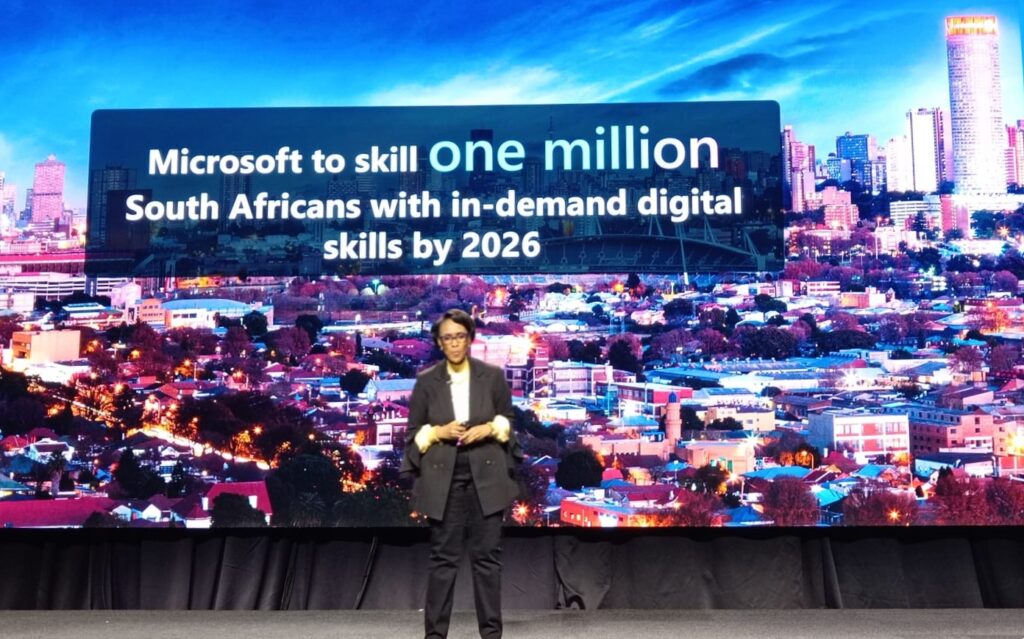
    Microsoft to train 1 million South Africans on AI skills

    Microsoft’s (AI) national skilling initiative targets a broad audience, and in South Africa will prioritise all sectors from companies to government and the youth, Barnard said at the company’s “AI Tour” in Johannesburg.

    She did not disclose the investment figure for the initiative.

    Microsoft to invest $3bn in India to expand AI, cloud capacity

    “By providing skilling opportunities and access to industry recognised certifications, our youth will be well positioned to compete on the global stage,” Barnard said.

    Microsoft, the first global “hyperscale” public cloud provider to build data centres in South Africa, has trained four million Africans in the last five years and has committed to train 30 million Africans in the next five years. — Courtesy Reuters

  • General Atlantic CEO says he is optimistic on TikTok deal in the US

    General Atlantic CEO says he is optimistic on TikTok deal in the US

    General Atlantic is also an investor in TikTok’s parent company.

    New US President Donald Trump signed an executive order on Monday seeking to delay by 75 days the enforcement of a ban of TikTok. The app in the US was slated to be shuttered on January 19.

    “The objective is for TikTok to continue operating,” General Atlantic CEO Bill Ford said during a panel debate at the World Economic Forum in Davos. “I have a sense of optimism that we can meet U.S. security needs and not sell the company.”

  • LinkedIn sued for disclosing customer information to train AI models

    LinkedIn sued for disclosing customer information to train AI models

    According to a proposed class action filed on Tuesday night on behalf of millions of LinkedIn Premium customers, LinkedIn quietly introduced a privacy setting last August that let users enable or disable the sharing of their personal data.

    Customers said LinkedIn then discreetly updated its privacy policy on Sept. 18, 2024 to say data could be used to train AI models, and in a “Frequently Asked Questions” hyperlink said opting out “does not affect training that has already taken place.”

    This attempt to “cover its tracks” suggests LinkedIn was “fully aware” it violated customers’ privacy, and its promise to use personal data only to support and improve its platform, to minimize public scrutiny and legal fallout, the complaint said.

    The lawsuit was filed in the San Jose, California, federal court on behalf of LinkedIn Premium customers who sent or received InMail messages, and whose private information was disclosed to third parties for AI training before Sept. 18.

    Meta backs data analytics firm Databricks as AI boom attracts investors

    It seeks unspecified damages for breach of contract and violations of California’s unfair competition law, and $1,000 per person for violations of the federal Stored Communications Act

    Microsoft did not immediately respond on Wednesday to requests for comment. A lawyer for the plaintiffs had no immediate additional comment.

    The lawsuit was filed several hours after U.S. President Donald Trump announced a joint venture among Microsoft-based OpenAI, Oracle and SoftBank, with a potential $500 billion of investment, to build AI infrastructure in the United States.

  • Meta backs data analytics firm Databricks as AI boom attracts investors

    Meta backs data analytics firm Databricks as AI boom attracts investors

    The Series J funding round closed on Wednesday and valued Databricks at $62 billion.

    The company also secured a $5.25 billion credit facility led by JPMorgan Chase alongside Barclays, Citi, Goldman Sachs, and Morgan Stanley.

    Founded in 2013, San Francisco-based Databricks offers a platform designed to help users ingest, analyze and build artificial intelligence applications using complex data from a variety of sources.

    Saudi Alwaleed’s KHC interested in TikTok if Musk or others buy it

    Investors are racing to pour money into AI-related startups after the meteoric success of OpenAI’s ChatGPT triggered a surge in corporate adoption of the technology.

    Sam Altman-led OpenAI raised $6.6 billion from investors in 2024.

    Companies, including Meta, have been investing heavily to build and train large language models (LLMs) such as ChatGPT, which are advanced AI systems designed to understand and generate human-like text.

    Databricks works closely with Meta’s Llama team. Llama is a family of open-source LLMs developed by the Facebook parent.

    How AI could help humans gain up to 10 years of life expectancy

    “Thousands of customers are using Llama on Databricks and we have been working closely with Meta on how to best serve those enterprise customers with Llama,” Databricks co-founder and CEO Ali Ghodsi said.

    “It naturally made sense for both parties to deepen that partnership through this investment.”

    More than 10,000 organizations, including Comcast, Block, Rivian and Shell, rely on the company’s Databricks Data Intelligence Platform to manage and analyze data for AI applications, according to its website.

  • Saudi Alwaleed’s KHC interested in TikTok if Musk or others buy it

    Saudi Alwaleed’s KHC interested in TikTok if Musk or others buy it

    The search to find a buyer for the Chinese-owned popular short-video app continues after it went dark and was revived later after U.S. President Donald Trump signed an executive order, opens new tab delaying the enforcement of a ban on it by 75 days.

    Human-inspired AI model can produce, understand vocal imitations of everyday sounds

    Trump said on Tuesday he was open to billionaire Musk buying the app if the Tesla (TSLA.O), opens new tab CEO wanted to do so.

    Al-Maiman, responding to a question by Saudi-owned Al Arabiya if KHC would be interested in TikTok in case Musk offered to buy it, said: “If Musk or others offered, we would have a desire to look into that investment, no doubt.”

    KHC already holds stakes in Musk’s social media platform X and his artificial intelligence startup xAI.