Category: Emerging Tech

  • ZTBL, Wateen LaunchAdvanced Security Operations Center to Protect Customer Data

    ZTBL, Wateen LaunchAdvanced Security Operations Center to Protect Customer Data

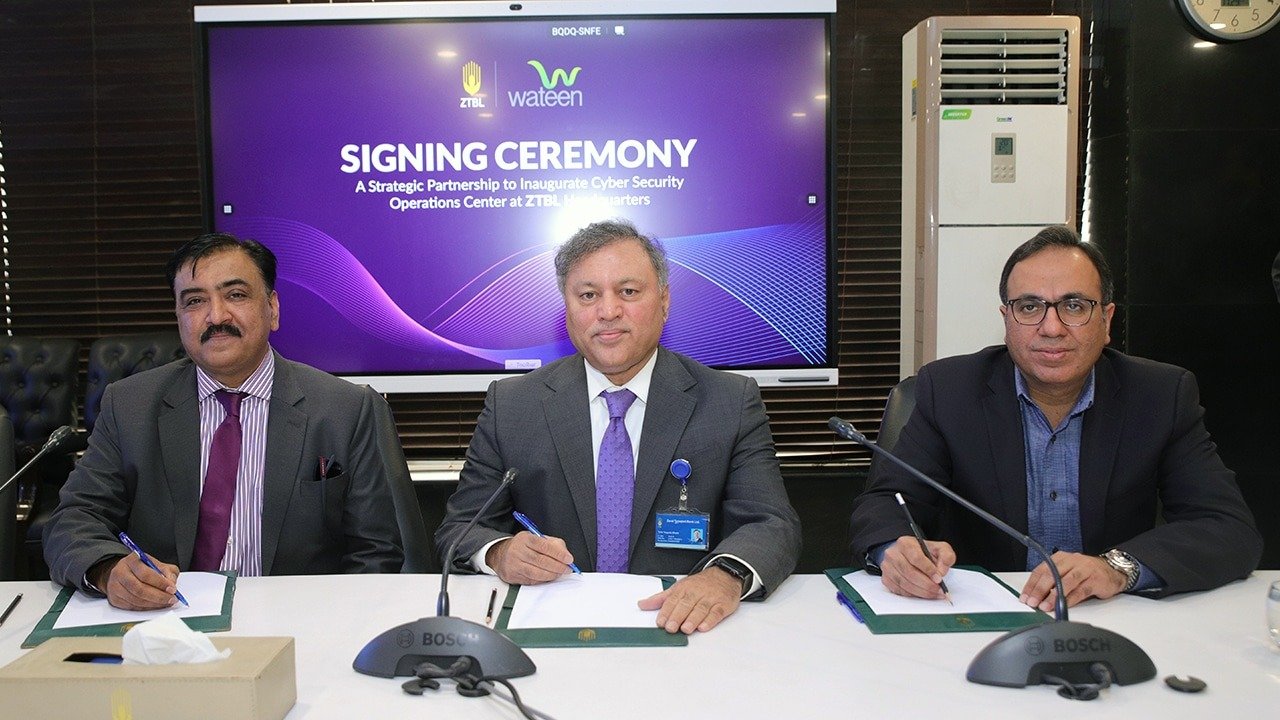
     Zarai Taraqiati Bank Limited (ZTBL), Pakistan’s leading agricultural financing bank, has partnered with Wateen, a pioneer in Pakistan’s ICT sector and a recognized leader in managed cybersecurity services. This strategic collaboration aims to establish a state-of-the-art Security Operations Center (SOC) to protect critical digital infrastructure and safeguard the data of over half a million ZTBL customers.

    The partnership was formalized with the signing of an agreement between Tahir Yaqoob Bhatti, President and CEO of ZTBL, and Adil Rashid, CEO of Wateen, with senior representatives from both organizations in attendance. ZTBL has been at the forefront of digital innovation, offering a wide range of modern banking services, including internet banking, WhatsApp banking, mobile banking, ATM services, on-the-go digital services through MCO tablet applications, digital onboarding, RAAST integration, state-of-the-art customer support centers, and USSD-based banking.

    Under this partnership, Wateen will manage ZTBL’s cybersecurity operations, providing round-the-clock monitoring, advanced threat detection, and rapid incident response to ensure the security of the bank’s digital assets. Wateen will also enhance ZTBL’s overall cybersecurity measures, protecting it from evolving cyber threats. ZTBL’s President and CEO, Tahir Yaqoob Bhatti, emphasized, “At ZTBL, safeguarding our customers’ trust and securing their data are our top priorities. With our broad range of digital banking services and this partnership with Wateen, we are strengthening our commitment to maintaining the highest cybersecurity standards while continuing to empower Pakistan’s agriculture sector.”

    Adil Rashid, CEO of Wateen, highlighted the importance of the partnership, saying, “We are proud to collaborate with ZTBL to strengthen their cybersecurity framework. As cyber threats grow more sophisticated, securing the financial sector is more crucial than ever. Our goal is to protect ZTBL’s critical data, ensuring its operations remain resilient, while setting a higher standard for cybersecurity across the industry.”

    Wateen’s expertise in banking regulations and cybersecurity makes it the ideal partner for financial institutions like ZTBL. The new SOC will incorporate advanced technologies such as artificial intelligence, machine learning, and real-time threat intelligence, ensuring the security of ZTBL’s IT infrastructure against emerging threats. The partnership also complies with key regulatory standards, including those set by the Federal Board of Revenue (FBR), the State Bank of Pakistan (SBP), the National Cyber Security Policy 2021, Pakistan Telecommunication Authority (PTA), PCI DSS, and ISO 27001. This reinforces ZTBL’s reputation as a secure and compliant financial institution.

    Through this collaboration, Wateen will provide comprehensive, continuous surveillance of ZTBL’s IT systems, proactively protecting against cyber threats and strengthening customer trust. This initiative underscores Wateen’s leadership in managed cybersecurity and ZTBL’s commitment to data integrity and security.


  • Is China charging ahead on the road to EV battery recycling?

    Is China charging ahead on the road to EV battery recycling?

    China is perhaps in a prime position when it comes to electric vehicle (EV) adoption, accounting for over 60% of worldwide sales in 2022. This dominant position makes it a critical player in addressing one of the most pressing sustainability challenges of the electric vehicle revolution: how to recycle batteries.
    As the world increasingly turns to EVs to combat climate change, the question of what happens to EV batteries once they reach the end of their life has never been more urgent.
    Writing in the International Journal of Electric and Hybrid Vehicles, Igor Laine of LUT University in Lappeenranta, Finland, explains how the big issue is the lifecycle of lithium-ion batteries, which are used to power most of today’s EVs.
    These batteries contain valuable metals, including cobalt, lithium, and nickel, which are finite resources and environmentally harmful if not disposed off correctly. As the demand for EVs grows, so too does the pressure on these raw materials, making effective recycling both a necessity and a challenge.
    According to Laine, China has become the world’s largest manufacturer and consumer of EVs and is responding to the growing challenge of waste batteries with a strong recycling strategy. The country has implemented a variety of regulations aimed at holding manufacturers accountable for the entire lifecycle of their products.
    In addition to legal measures, China has invested heavily in the development of new technologies designed to improve the efficiency of battery recycling. Techniques for diagnosing battery health, dismantling old batteries, and extracting precious metals for re-use have been developed in recent years. China’s EV future could well become sustainable in terms of batteries.
    However, Laine points out that China’s recycling infrastructure is not entirely mature. Recycling processes themselves could be improved in terms of efficiency. One of the major problems is that the precious metals that are at the heart of EV batteries are present with myriad other substances, all of which make extracting those metals difficult.
    Extraction of the metals is the fine detail problem of battery recycling. The bigger picture sees the vast EV market in China where concerns about the efficiency of battery recycling are overarched by the sheer scale of the problem, and the enormous numbers involved. There is something of a paradox at play with these two perspectives.
    On one hand, demand for EVs is growing, which means there is a constant flow of waste batteries to be harvested for the next generation of vehicles. But, the size of the market puts the potential for scalable sustainability out of reach, at least for the time being.
    Laine’s work suggests that the regulatory approach to EV battery recycling taken by China represents a drive in the right direction. However, to address the big problems might require an international stance, a global collective effort. International cooperation could help with research and development into recycling technology and allow standardized recycling practices to be established.
    The path to truly sustainable battery recycling needs innovation, regulation, and collaboration.

  • Pakistan will meet $25 billion target in IT exports in 3 years: PM

    Pakistan will meet $25 billion target in IT exports in 3 years: PM

    Highlighting the government’s efforts to promote the telecommunications sector, Prime Minister Shehbaz Sharif reiterated his resolve to meet the target of $25 billion in IT exports in the next three years.

    In a meeting with a five-member delegation of VEON Group led by Chairman Augie K Fabela, the prime minister said the government was introducing 5G internet service to provide fast and reliable internet connectivity even in remote areas. He added that the 5G services would also help the government realise its vision of a Digital Pakistan.

    The telecommunication sector had a significant role in promoting a cashless and digital economy, he said and lauded the services of VEON Group’s subsidiary Jazz in Pakistan’s telecommunications and financial technology sectors, according to a PM Office press release.

    Prime Minister Shehbaz said the government was willing to collaborate with VEON Group on IT, digitization, and artificial intelligence.

    The members of the delegation appreciated the government’s efforts for economic stability and said that Pakistan had become an important investment destination for the IT and telecom sector.

    Minister of State for Information Technology and Telecommunications Shaza Fatima Khawaja, Minister of State for Finance and Revenue Ali Pervaiz Malik, Coordinator to PM Rana Ehsan Afzal, and relevant senior officers attended the meeting. — ERMD

  • Rethinking Globalization for the Modern Era

    Rethinking Globalization for the Modern Era

    Globalization, a process that has reshaped economies and societies over decades, is now at a crossroads. The concept that once symbolized seamless international integration has come under scrutiny as nations grapple with new challenges and shifting priorities. The modern era demands an updated understanding of globalization, one that reflects the complexities of the current geopolitical and economic landscape.

    In its early phases, globalization was driven by the pursuit of open markets, cross-border trade, and the movement of capital, goods, and services without significant barriers. It led to unprecedented growth and interconnectedness, lifting millions out of poverty and sparking innovation. However, this unbridled globalization also exposed vulnerabilities, such as economic dependency and the rapid spread of crises. The recent trend has seen a rise in strategic nationalism, where countries prioritize domestic resilience and self-sufficiency over extensive global integration. This shift was accelerated by events like the COVID-19 pandemic, which underscored the fragility of global supply chains and prompted countries to rethink their reliance on external sources.

    Technological advancements are redefining globalization. Digital transformation has enabled global communication and commerce on an unprecedented scale, allowing businesses to operate and reach markets anywhere. However, it also presents new challenges, including cybersecurity risks and digital inequality. The future of globalization will likely hinge on how nations navigate the balance between open global collaboration and protecting their technological sovereignty. Emerging technologies such as artificial intelligence and quantum computing have become areas of strategic competition, further complicating the narrative of global interdependence.

    A modern take on globalization must also incorporate climate change and sustainability. The shared global threat of environmental degradation has shifted priorities, prompting nations to collaborate on climate initiatives while balancing economic interests. Policies that foster sustainable globalization—such as green trade practices and international environmental accords—are crucial for a resilient global economy.

    Updating globalization requires a nuanced approach that balances openness with strategic safeguards. Policymakers and leaders must forge frameworks that promote equitable growth, technological cooperation, and environmental responsibility while safeguarding national interests. By rethinking the global model to address today’s realities, a more inclusive and sustainable form of globalization can emerge, benefiting both economies and societies worldwide.

  • Expert moot on Creativity, Emerging Technologies for a Sustainable Economy FPCCI Central Standing Committee Hosts Hybrid Meeting on Creativity and Emerging Technologies for a Sustainable Economy.

    Expert moot on Creativity, Emerging Technologies for a Sustainable Economy FPCCI Central Standing Committee Hosts Hybrid Meeting on Creativity and Emerging Technologies for a Sustainable Economy.

    The Federation of Pakistan Chambers of Commerce and Industry (FPCCI) recently held a hybrid meeting of its Central Standing Committee, focused on the vital role of creativity and emerging technologies in fostering a sustainable economy for Pakistan. This event brought together a diverse group of professionals and experts from seven cities and three countries, highlighting the importance of collaboration across various fields.
    Participants included specialists in chip manufacturing, solar cell technology, and healthcare optics, as well as professionals from the switch manufacturing sector. The meeting also featured insights from industry and academia, including human capital development experts and vice chancellors from five prominent universities. Their collective expertise underscored the need for innovation and indigenization in Pakistan’s economic landscape.
    The lectures delivered during the event focused on key areas such as manufacturing processes and the crucial role of human capital development in driving economic growth. Experts emphasized the necessity of integrating creative solutions and advanced technologies to enhance productivity and sustainability in various industries.
    This gathering not only facilitated the exchange of ideas but also served as a platform for stakeholders to discuss actionable strategies for leveraging creativity and technology to strengthen Pakistan’s economy. The collaborative efforts from participants are expected to pave the way for significant advancements in manufacturing and overall economic development in the country.

  • Data Centers, Cloud Computing, AI: Mari Petroleum to Invest Rs10 Bn in New Subsidiary.

    Data Centers, Cloud Computing, AI: Mari Petroleum to Invest Rs10 Bn in New Subsidiary.

    Mari Petroleum Company Limited (MARI), one of Pakistan’s largest exploration and production companies, has approved a Rs10 billion (approximately $36 million) investment to establish a wholly-owned subsidiary focused on technology-driven ventures. The announcement was made in a notice to the Pakistan Stock Exchange (PSX) this month.
    During an emergent board meeting on September 23, 2024, the board approved this significant investment aimed at developing capabilities in areas such as data centers, cloud computing, artificial intelligence (AI), and other new technologies, particularly in the petroleum and mining sectors.
    This move follows the board’s prior decision to create a subsidiary concentrating on cloud computing and AI, signaling MARI’s growing interest in the rapidly evolving tech sector. The initiative aligns with the burgeoning IT industry in Pakistan, which has seen IT and IT-enabled services (ITeS) export remittances soar to a record $3.223 billion in the fiscal year 2023-24, marking a 24% increase from $2.596 billion in the previous year.
    In FY2024, MARI reported a profit-after-tax (PAT) of Rs77.28 billion, up nearly 38% year-on-year from Rs56.13 billion the previous year. The board also announced a final cash dividend of Rs134 per share, equating to a 1,340% return, along with an 800% bonus share issuance (eight shares for every one share held) sourced from the Capital Redemption Reserve Fund and Revenue Reserves.
    In a previous notice accompanying its financial results, MARI revealed its initial foray into the IT sector with the formation of a subsidiary dedicated to cloud computing and AI. The recent developments come amid the government’s approval of a five-year extension for the Mari D&P lease, which now extends the company’s rights until November 2029, alongside an additional payment based on wellhead value.
    The company stated that the amendments to the Petroleum Policy 2012 now allow the lease extension as long as field production remains commercially viable. The issuance of bonus shares reflects MARI’s robust balance sheet and commitment to growth and diversification.n

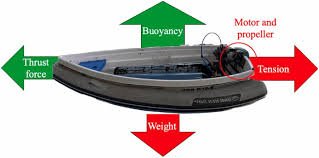
  • Scientists create air-operated propeller able to drive vessels and ferries.

    Scientists create air-operated propeller able to drive vessels and ferries.

    Scientists say they have designed a propeller system that can replace electrical and diesel-operated engines currently used to drive ferries plowing through seas on pre-determined routes.
    The propulsion system was created by a team at the University of Sharjah, and it is touted as more feasible economically, more efficient in terms of energy use than conventional engines, but more importantly it is friendly to the environment.
    “The pneumatic system would prove more feasible both economically and from an energy efficiency perspective. The on-board compressed air tanks that drive an air motor, which in turn rotate the propeller, can be refilled with air at the end of the trip while waiting for passengers to board,” said team leader Abdul Hai Alami, who is University of Sharjah’s Professor of Sustainable and Renewable Energy Engineering.
    The scientists describe their invention as a bold step on the path of the transition from conventional engines to pneumatic propulsion. They forecast profound environmental benefits, such as reducing aerial emissions, water pollution from fuel and engine oils and excessive noise reduction.
    Their research is reported in the journal Ocean Engineering in which the scientists outline their project studying the impact of equipping ferry boats with a pneumatically operated propeller to replace diesel-driven engines.
    They write, “In this paper, an alternative propulsion method is proposed in the form of a pneumatically powered boat. The system is powered by an air motor-mounted propeller fed by an onboard compressed air tank(s).
    “In contrast to typical propulsion systems, compressed air systems offer effective, clean, and sustainable propulsion systems. The system performance was analyzed and compared with that of an electrical propulsion system powered by electrochemical batteries.
    “In addition, a life cycle analysis was conducted to quantify any reduction in carbon dioxide emissions due to the utilization of the pneumatic system.”
    Prof. Alami said the pneumatic propeller his team created was tested on vessels transporting passengers and cargo on pre-determined routes in the United Arab Emirates (UAE). Famous for their popular name of Abra, these ferry boats are part of the country’s maritime culture and one of its main tourist attractions.
    “The experimental results proved that compressed air is an effective alternative to electrical motors in terms of eco-friendliness, effectiveness, and sustainability,” the researchers note. “The pneumatic system provided a 6% extra propulsion force and a carbon footprint saving of 307 kgCO2/year over their electrical counterparts.”
    Co-author Ahmad Yasin, a research assistant at Sustainable Energy and Power Systems Research Center (RISE), recounted numerous advantages for the pneumatic propeller over its diesel or electrical counterparts.
    ngine an attractive solution,” he said. “Life-cycle assessment proves that the carbon footprint of the equipment and materials used are far less than conventional electric propulsion systems.”
    Maitha Almheiri, a co-author and a student in the Sustainable and Renewable Energy Engineering Department, predicted their invention would eventually become the means to drive cargo and passenger ferries over pre-determined maritime routes.
    “Pneumatic engines for maritime propulsion would practically replace diesel and electric engines,” she said.
    In their paper, the researchers provide evidence that “pneumatic systems offer a real advantage over other propulsion methods for ferryboat applications, which are defined by a constant trip length and path.”
    Prof. Alami highlighted the main goal of the project, which he said was “to provide experimental information on the suitability of pneumatic propulsion for maritime transportation.
    “The positive impacts on the marine environment are multifold, including lower pollution, noise reduction and significantly lower emissions.
    “While it may not be suitable for leisure cruising purposes, the operation of the pneumatic system is well-suited for ferrying passengers between predefined stops.”
    The scientists are currently exploring possibilities for utilizing their pneumatic power-driven machine and getting their proposed system installed in vessels in the UAE.
    Prof. Alami said his team saw the installation of the system between the current ferry stops in Dubai as practically achievable, with compressed air tank recharge taking place while waiting for passengers to disembark and others to board.
    “This sheds light on another advantageous aspect of pneumatic propulsion through rapid charge rates compared to electric systems as well as competing-well with diesel filling time.
    “The proposed system has a much lower carbon footprint due to straightforward recyclability of the components that do not contain dangerous chemicals or reactive materials as is the case with battery-operated propulsion.”
    The team is currently cooperating with two UAE establishments to industrialize their project. They have already introduced their pneumatic propeller to the Road and Transportation Authority in Dubai and the Sharjah Water Sports Club, which is equipped with a boat manufacturing facility.

  • Algorithm takes robots a step closer to being able to ‘act on intuition’.

    Algorithm takes robots a step closer to being able to ‘act on intuition’.

    Researchers from the University of Hertfordshire have developed a new algorithm that will allow robots to function more intuitively—that is, make decisions using their environment for guidance.
    The principle is that, through the algorithm, the robot agent creates its own goals.
    For the first time, the algorithm unifies different goal-setting approaches under one concept which is tied directly to physics, and it furthermore makes this computation transparent so that others can study and adopt it.
    The principle of the algorithm is related to the famous chaos theory, because the method makes the agent “master of the chaos of the system’s dynamics.”
    The study has been published in the journal PRX Life. Herts researchers explored robot “motivation models” that mimic the decision-making processes of humans and animals, even in the absence of clear reward signals.
    The study introduces artificial intelligence (AI) formulas that compute a way for a robot to decide future actions without direct instructions or human input.
    Daniel Polani, Professor of Computer Science and senior author explains, “In an applied sense, what this could mean, for example, is getting a robot to play and manipulate objects on its own without being told to do so.
    “It could enhance the way robots learn to interact both with humans and with other robots by encouraging more ‘natural’ behaviors and interactions.
    “This has further applications—such as the survivability behavior of semiautonomous robots placed in situations where they are unreachable by a human operator, such as in subterranean or interplanetary locations.”
    In humans and animals, one theory assumes the existence of an “intrinsic motivation,” where behaviors are driven only by the interaction between the being and its environment rather than by specific learned rewards, such as food. This paper successfully translates that “intrinsic motivation” theory into one that can be used by robotic agents.
    Professor Polani adds, “This work is exciting because we can now implement a mechanism, similarly to those helping humans and animals solve new problems without prior experience, in robots.
    “We expect that we can build on this work to develop more human-like robots in the future with more intuitive processes. It opens up a huge opportunity for more sophisticated robots with similar decision processes to us.”
    The theory underlying this paper, called “empowerment maximization,” has been developed at Herts for many years. It suggests that by increasing the range of future outcomes, a robot will have better options also in the longer future. Importantly, this method replaces and thus possibly obviates traditional reward systems (e.g. food signals).
    While empowerment maximization has shown promise, it is not yet fully understood or widely applied. Most studies used to rely on simulations, while meticulously calculating the necessary information for complex systems and the theory remains challenging.
    However, this latest innovative research aims to explain why empowerment-based motivations can create behaviors similar to those of living organisms, potentially leading to more intrinsically motivated robots; and it additionally offers a significantly improved way to compute these motivations.
    Professor Polani says the next steps are to use this breakthrough algorithm to allow robots to discover more about the world, developing direct learning and identifying and honing new skills that would drive their value in real-world scenarios.

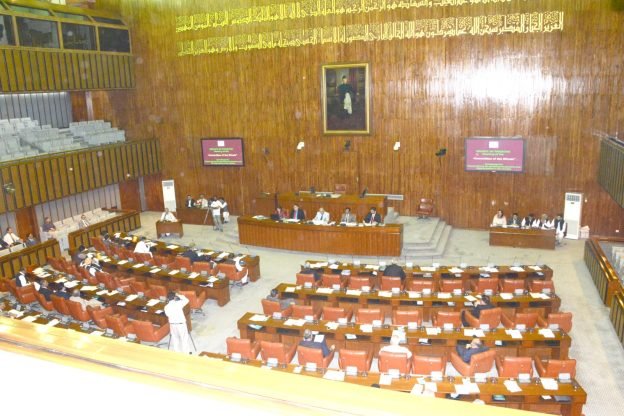
  • Artificial Intelligence Act 2024 tabled in Senate.

    Artificial Intelligence Act 2024 tabled in Senate.

    A ruling PML-N member has tabled a bill titled the ‘Regulation of Artificial Intelligence Act 2024’ in the Senate. The bill seeks to regulate the use of artificial intelligence (AI) in the country to mitigate the “various risks” associated with the technology and suggests imposing fines amounting to billions of rupees for violators.
    Senator Afnan Ullah Khan moved the legislation as a private member, and the draft has been referred to the Senate’s standing committee on information technology for further deliberation.
    Digital rights activists have reportedly raised concerns about the proposed legislation. Nighat Dad, the founder of the Lahore-based Digital Rights Foundation, described the bill as “odd” and “abstract.” She was quoted by an English daily as saying, “This bill talks about privacy [of personal data], but there is no data protection or privacy law in the country at the moment. This bill, to me, is just another piece of legislation that has been proposed without doing any groundwork.”
    In his statement of objectives, Senator Khan emphasized the “dire need to monitor, regulate, superintend, and supervise” the dissemination of data and information at both national and international levels. He highlighted the risks associated with AI use, calling for increased human involvement to prevent “an unseen catastrophe” and to establish a “secure and well-protected” AI system to drive growth and productivity in the country.
    The bill further proposes the establishment of a “National Artificial Intelligence Commission” with its headquarters in Islamabad. According to the bill, the commission would have several key mandates including 1) ensuring equitable access to AI opportunities for all citizens, regardless of religion, gender, ethnicity, geographic location, financial status, or physical ability, 2) maintaining human oversight over AI matters, particularly in areas such as national security, health, and education, 3) guaranteeing that AI systems are safe, secure from “malicious use,” and free from errors, 3) developing a robust AI research and development infrastructure, 4) utilizing AI to enhance public service delivery in sectors such as healthcare, finance, trade, and science.
    The bill also proposes protecting the privacy and safety of AI users and advocates for transparency in AI data collection, storage, and usage. Additionally, it calls for strengthening the country’s telecommunications systems, digital governance, and cybersecurity. The commission members, who will be appointed by the government, will be prohibited from holding any public or political office simultaneously. Violations of the bill could result in fines ranging from Rs1.5 billion to Rs2.5 billion, with the possibility of increased penalties for cases involving the “dissemination of sensitive or classified data.” However, the bill does not specify which particular violations would trigger these fines.

  • AI Integration in Pharma: PPMA Workshop Explores New Frontiers in Drug Discovery and Personalized Medicine.

    AI Integration in Pharma: PPMA Workshop Explores New Frontiers in Drug Discovery and Personalized Medicine.

    The Pakistan Pharmaceutical Manufacturers Association (PPMA) recently hosted a workshop to emphasize the transformative role of artificial intelligence (AI) in the pharmaceutical industry. The event focused on AI’s potential to revolutionize drug discovery and personalized medicine, offering innovative approaches to healthcare solutions.

    Experts at the workshop highlighted how AI can streamline the drug development process by significantly reducing research time and costs. AI-driven technologies enable the identification of novel drug candidates, predicting patient responses to treatments, and optimizing clinical trials, thereby increasing efficiency in the pharmaceutical sector.

    In addition to drug discovery, the discussion also focused on personalized medicine, where AI can be leveraged to tailor treatments to individual patients based on their unique genetic makeup and medical history. This approach has the potential to improve patient outcomes and minimize side effects, representing a major advancement in healthcare delivery.

    The PPMA’s workshop underscored the importance of integrating AI into Pakistan’s pharmaceutical industry to keep pace with global innovations. By adopting AI, the sector can achieve greater efficiency and ensure that Pakistan remains competitive in the evolving global healthcare landscape.