President Biden signed a far-reaching executive order on artificial intelligence last week, requiring that companies report to the federal government about the risks that their systems could aid countries or terrorists to make weapons of mass destruction. The order also seeks to lessen the dangers of “deep fakes” that could swing elections or swindle consumers.
“Deep fakes use A.I.-generated audio and video to smear reputations, spread fake news and commit fraud,” Mr. Biden said at the signing of the order at the White House. He described his concern that fraudsters could take three seconds of a person’s voice and manipulate its content, turning an innocent comment into something more sinister that would quickly go viral.
“I’ve watched one of me,” Mr. Biden said, referring to an experiment his staff showed him to make the point that a well-constructed artificial intelligence system could convincingly create a presidential statement that never happened — and thus touch off a political or national security crisis. “I said, ‘When the hell did I say that?’”
The order is an effort by the president to demonstrate that the United States, considered the leading power in fast-moving artificial intelligence technology, will also take the lead in its regulation. Already, Europe is moving ahead with rules of its own, and Vice President Kamala Harris is traveling to Britain this week to represent the United States at an international conference organized by that country’s prime minister, Rishi Sunak.
“We have a moral, ethical and societal duty to make sure that A.I. is adopted and advanced in a way that protects the public from potential harm,” Ms. Harris said at the White House. She added, “We intend that the actions we are taking domestically will serve as a model for international action.”
But the order issued by Mr. Biden, the result of more than a year of work by several government departments, is limited in its scope. While Mr. Biden has broad powers to regulate how the federal government uses artificial intelligence, he is less able to reach into the private sector. Though he said that his order “represents bold action,” he acknowledged that “we still need Congress to act.”
Still, Mr. Biden made it clear that he intended the order to be the first step in a new era of regulation for the United States, as it seeks to put guardrails on a global technology that offers great promise — diagnosing diseases, predicting floods and other effects of climate change, improving safety in the air and at sea — but also carries significant dangers.
“One thing is clear: To realize the promise of A.I. and avoid the risks, we need to govern this technology,” Mr. Biden said. “There’s no other way around it, in my view.”
The order centers on safety and security mandates, but it also contains provisions to encourage the development of A.I. in the United States, including attracting foreign talent to American companies and laboratories. Mr. Biden acknowledged that another element of his strategy is to slow China’s advances. He specifically referred to new regulations — bolstered two weeks ago — to deny Beijing access to the most powerful computer chips needed to produce so-called large language models, the mass of information on which artificial intelligence systems are trained.
While businesses often chafe at new federal regulation, executives at companies like Microsoft, Google, OpenAI and Meta have all said that they fully expect the United States to regulate the technology — and some executives, surprisingly, have seemed a bit relieved. Companies say they are worried about corporate liability if the more powerful systems they use are abused. And they are hoping that putting a government imprimatur on some of their A.I.-based products may alleviate concerns among consumers.
The chief executives of Microsoft, Google, OpenAI and another A.I. start-up, Anthropic, met with Ms. Harris in May, and in July they and three other companies voluntarily committed to safety and security testing of their systems.
“We like the focus on innovation, the steps the U.S. government is taking to build an A.I. work force and the capability for smaller businesses to get the compute power they need to develop their own models,” Robert L. Strayer, an executive vice president at the Information Technology Industry Council, a trade group that represents large technology companies, said on Monday.
At the same time, several companies have warned against mandates for federal agencies to step up policing anticompetitive conduct and consumer harms. The U.S. Chamber of Commerce raised concerns on Monday about new directives on consumer protection, saying that the Federal Trade Commission and the Consumer Financial Protection Bureau “should not view this as a license to do as they please.”
The executive order’s security mandates on companies were created by invoking a Korean War-era law, the Defense Production Act, which the federal government uses in what Mr. Biden called “the most urgent moments.” The order requires that companies deploying the most advanced A.I. tools test their systems to ensure they cannot be used to produce biological or nuclear weapons. The companies must report their findings from those tests to the federal government — though the findings do not have to be made public.
The order also requires that cloud service providers report foreign customers to the federal government. It also recommends the watermarking of photos, videos and audio developed by A.I. tools. Watermarking helps track down the origin of content online and is used to fight deep fakes and manipulated images and text used to spread disinformation.
Mr. Biden, trying to make watermarking sound useful to Americans, said, “When your loved ones hear your voice on a phone, they’ll know it’s really you.”
Many of the directives in the order will be difficult to carry out, said Sarah Kreps, a professor at the Tech Policy Institute at Cornell University. It calls for the rapid hiring of A.I. experts in government, but federal agencies will be challenged to match salaries offered in the private sector. The order urges privacy legislation, though more than a dozen bills have stalled in the divided Congress, she said.
“It’s calling for a lot of action that’s not likely to receive a response,” Ms. Kreps said.
Category: Emerging Tech
-
Aiming to slow China’s advances, govern technology US moves to regulate artificialintelligence, signs order
-
Concerns raised over the ‘dangerous’ ideology shaping AI debate
Silicon Valley’s favorite philosophy, long-termism, has helped to frame the debate on artificial intelligence around the idea of human extinction.
The approach prioritizes taking action in the present to improve the distant future and reduce long-term risks, potentially at the expense of addressing more immediate problems.
But increasingly vocal critics are warning that the philosophy is dangerous, and the obsession with extinction distracts from real problems associated with AI, like data theft and biased algorithms.
Author Emile Torres, a former long-termist turned critic of the movement, has said that the philosophy rests on the kind of principles used in the past to justify mass murder and genocide.
Yet the movement, and linked ideologies like transhumanism and effective altruism, holds huge sway in universities from Oxford to Stanford and throughout the tech sector.
Venture capitalists like Peter Thiel and Marc Andreessen have invested in life-extension companies and other pet projects linked to the movement.
Elon Musk and OpenAI’s Sam Altman have signed open letters warning that AI could make humanity extinct — though they stand to benefit by arguing only their products can save us.
Ultimately critics say this fringe movement is holding far too much influence over public debates regarding the future of humanity.
Long-termists believe we are duty bound to try to produce the best outcomes for the greatest number of humans.
This is no different to many 19th-century liberals, but long-termists have a much longer timeline in mind. They look to the distant future, and see trillions upon trillions of humans floating through space, colonizing new worlds.
The long-termist argument is that we owe the same duty to each of these future humans as we do to anyone alive today, and because there are so many of them, they carry much more weight than today’s specimens.
This kind of thinking makes the ideology “really dangerous,” said Torres, author of “Human Extinction: A History of the Science and Ethics of Annihilation.”
“Any time you have a utopian vision of the future marked by near infinite amounts of value, and you combine that with a sort of utilitarian mode of moral thinking where the ends can justify the means, it’s going to be dangerous,” said Torres.
If a superintelligent machine could be about to spring to life with the potential to destroy humanity, long-termists are bound to oppose it no matter the consequences.
When asked in March by a user of Twitter, the platform now known as X, how many people could die to stop this happening, long-termist ideologue Eliezer Yudkowsky replied that there only needed to be enough people “to form a viable reproductive population.
“So long as that’s true, there’s still a chance of reaching the stars someday,” he wrote, though he later deleted the message.
Long-termism grew out of work done by Swedish philosopher Nick Bostrom in the 1990s and 2000s around existential risk and transhumanism — the idea that humans can be augmented by technology.
Academic Timnit Gebru has pointed out that transhumanism was linked to eugenics from the start.
British biologist Julian Huxley, who coined the term transhumanism, was also president of the British Eugenics Society in the 1950s and 1960s.
“Longtermism is eugenics under a different name,” Gebru wrote on X last year.
Bostrom has long faced accusations of supporting eugenics after he listed as an existential risk “dysgenic pressures,” essentially less-intelligent people procreating faster than their smarter peers.
The philosopher, who runs the Future of Humanity Institute at the University of Oxford, apologized in January after admitting he had written racist posts on an internet forum in the 1990s.
“Do I support eugenics? No, not as the term is commonly understood,” he wrote in his apology, pointing out it had been used to justify “some of the most horrific atrocities of the last century.”
Despite these troubles, long-termists like Yudkowsky, a high school dropout known for writing Harry Potter fan-fiction and promoting polyamory, continue to be feted.
Altman has credited him with getting OpenAI funded and suggested in February he deserved a Nobel peace prize.
Gebru, Torres and many others are trying to refocus on harms like theft of artists’ work, bias and concentration of wealth in the hands of a few corporations.
Torres, who uses the pronoun they, said while there were true believers like Yudkowsky, much of the debate around extinction was motivated by profit.
“Talking about human extinction, about a genuine apocalyptic event in which everybody dies, is just so much more sensational and captivating than Kenyan workers getting paid $1.32 an hour, or artists and writers being exploited,” they said. -

Monitoring IT Skills BootCamp
Web Engineering, Data Analysis
at heart of IT Bridge ProgramOn the 4th of August 2023, a significant monitoring visit took place, led by Ms. Tanzeela Ume Habiba, the Special Assistant to the Chief Minister. Accompanied by her dedicated team from the IT Department, the purpose of this visit was to assess the ongoing IT Skills BootCamp classes at Public School Hyderabad.
The IT Skills BootCamp, an initiative sponsored by the IT Department Government of Sindh and conducted by Sukkur IBA, represents a commendable effort to equip deserving candidates with employability skills for both local and international markets. The primary aim is to bridge the skills gap and empower individuals for better career prospects.
In its current phase, BootCamp is focusing on two essential courses, namely Web Engineering and Data Analysis with Python. These courses are being conducted across six different locations in Sindh, marking a concerted effort to extend the benefits of the program widely.
The rigor of BootCamp’s curriculum is evident in its approach. With an intensive schedule of five hours per day and five days per week over three months, participants are fully immersed in their learning journey. The assessment criteria go beyond traditional exams, incorporating individual projects and real-world simulations of job interviews or freelancing endeavors.
One of the standout aspects of the BootCamp is the professionalism and enthusiasm exhibited by the trainers. Their commitment to nurturing the students’ skills and knowledge is truly commendable.
During the visit, Ms. Tanzeela Ume Habiba took the opportunity to engage with and motivate the students in each class. She underlined the fact that the government’s investment in the program is a testament to its commitment to bring the candidates to employability levels.
Ms. Tanzeela Ume Habiba emphasized that the students’ and trainers’ dedication is pivotal at this juncture. The government’s efforts are aimed at creating a conducive learning environment, but it is the responsibility of the students and trainers to channel their efforts toward success. Completion of individual software projects and successful job interviews or freelancing endeavors would not only signify personal achievements but also pave the way for extending the program’s benefits to numerous other deserving candidates.
Joining the visit were esteemed members of the IBA Sukkur, Dr. Altaf Samoo, and Mr. Kamran Shah, who accompanied Ms. Tanzeela Ume Habiba. Their presence underscores the collaborative approach to skill development and highlights the program’s significance.
The Worthy Director General, Dr. Rana Shahzad, a key figure in this initiative, emphasized that registration for the program’s second phase was open until August 15, 2023. This phase particularly targets graduates who are seeking meaningful employment opportunities but lack the requisite skills. Interested individuals can conveniently register online by visiting https://istd.sindh.gov.pk/bootcamp.
The monitoring visit concluded on a note of optimism and determination, with all stakeholders reaffirming their commitment to the success of the IT Skills BootCamp. As the program continues to make strides in empowering individuals and transforming their lives, its impact is poised to resonate far and wide. -
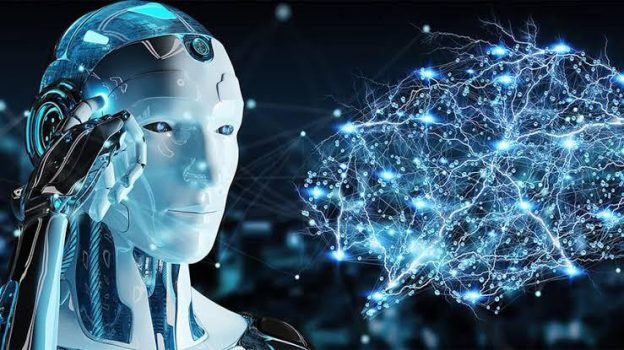
Artificial Intelligence: Technology of Future
Artificial intelligence (AI) is a rapidly advancing field that has the potential to transform the way we live and work. AI is already being used in many industries, from healthcare to finance to transportation, and its applications are only expected to grow in the coming years. Here are some reasons why AI is the best technology to learn for the future:
AI is one of the fastest-growing and most in-demand fields in technology. According to a report by LinkedIn, AI specialist roles are among the top emerging jobs in the technology industry. Learning AI skills can help you stand out in the job market and open up new career opportunities.
AI has applications in many different industries, so learning AI skills can prepare you for a wide range of careers. For example, AI can be used in healthcare to analyze medical images and diagnose diseases, in finance to analyze market trends and predict stock prices, and in transportation to optimize traffic flow and reduce congestion.
AI is an innovative and rapidly evolving field, which means that there are always new developments and discoveries to be made. Learning AI skills can help you stay up-to-date with the latest trends and technologies, and can prepare you to be a part of the next wave of innovation.
AI can automate repetitive tasks and analyze large amounts of data quickly and accurately, which can help businesses and organizations increase efficiency and productivity. Learning AI skills can help you contribute to these efforts and make a positive impact in your field.
AI has the potential to address some of the world’s most pressing challenges, such as climate change, healthcare access, and economic inequality. Learning AI skills can help you contribute to these efforts and make a positive impact on society.
Artificial intelligence is the best technology to learn for the future because of its high demand, versatility, innovation, increased efficiency and productivity, and potential to address societal challenges. Learning AI skills can prepare you for a wide range of careers, help you stay up-to-date with the latest trends and technologies, and enable you to make a positive impact in your field and the world.
It is recommended for all engineers, especially fresh graduates from any field, to gain knowledge of artificial intelligence (AI) as it is a rapidly growing field with many applications. There are many short courses and workshops available that teach the fundamentals of AI to engineering graduates. Examples of online AI courses include “Introduction to Artificial Intelligence” on edX, “AI for Everyone” on Coursera, and “Applied AI” on edX. In-person workshops and boot camps are also available. These courses cover topics such as machine learning, deep learning, natural language processing, and computer vision, and often include hands-on exercises and projects to provide practical experience. -
Displays more versatile, efficient than LED screens
Flexible displays that can change color, convey information and even send veiled messages via infrared radiation are now possible, thanks to new research from the University of Illinois Urbana-Champaign. Engineers inspired by the morphing skins of animals like chameleons and octopuses have developed capillary-controlled robotic flapping fins to create switchable optical and infrared light multipixel displays that are 1,000 times more energy efficient than light-emitting devices.
The new study led by mechanical science and engineering professor Sameh Tawfick demonstrates how bendable fins and fluids can simultaneously switch between straight or bent and hot and cold by controlling the volume and temperature of tiny fluid-filled pixels. Varying the volume of fluids within the pixels can change the directions in which the flaps flip — similar to old-fashioned flip clocks — and varying the temperature allows the pixels to communicate via infrared energy.
The study findings are published in the journal Science Advances.
Tawfick’s interest in the interaction of elastic and capillary forces — or elasto-capillarity — started as a graduate student, spanned the basic science of hair wetting and led to his research in soft robotic displays at Illinois.
“An everyday example of elasto-capillarity is what happens to our hair when we get in the shower,” Tawfick said. “When our hair gets wet, it sticks together and bends or bundles as capillary forces are applied and released when it dries out.”
In the lab, the team created small boxes, or pixels, a few millimeters in size, that contain fins made of a flexible polymer that bend when the pixels are filled with fluid and drained using a system of tiny pumps. The pixels can have single or multiple fins and are arranged into arrays that form a display to convey information, Tawfick said.
“We are not limited to cubic pixel boxes, either,” Tawfick said. “The fins can be arranged in various orientations to create different images, even along curved surfaces. The control is precise enough to achieve complex motions, like simulating the opening of a flower bloom.”
The study reports that another feature of the new displays is the ability to send two simultaneous signals — one that can be seen with the human eye and another that can only be seen with an infrared camera.
“Because we can control the temperature of these individual droplets, we can display messages that can only be seen using an infrared device,” Tawfick said, “Or we can send two different messages at the same time.”
However, there are a few limitations to the new displays, Tawfick said.
While building the new devices, the team found that the tiny pumps needed to control the pixel fluids were not commercially available, and the entire device is sensitive to gravity — meaning that it only works while in a horizontal position.
“Once we turn the display by 90 degrees, the performance is greatly degraded, which is detrimental to applications like billboards and other signs intended for the public,” Tawfick said. “The good news is, we know that when liquid droplets become small enough, they become insensitive to gravity, like when you see a rain droplet sticking on your window and it doesn’t fall. We have found that if we use fluid droplets that are five times smaller, gravity will no longer be an issue.”
The team said that because the science behind gravity’s effect on droplets is well understood, it will provide the focal point for their next application of the emerging technology.
Tawfick said he is very excited to see where this technology is headed because it brings a fresh idea to a big market space of large reflective displays. “We have developed a whole new breed of displays that require minimal energy, are scaleable and even flexible enough to be placed onto curved surfaces.” -

Google launches first ‘App Growth Lab’ in Pakistan
Following the launch of the Gaming Growth Lab in Pakistan last year, Google has announced the launch of the first-ever App Growth Lab in Pakistan.
The latter is a four-month program designed to identify high-potential app developers, studios, and companies that are looking to accelerate and grow their businesses, said a news release. The launch represents Google’s commitment to helping grow Pakistan’s app industry locally and globally. With intensive education and support phases, the program will allow app developers to learn from Google experts in areas such as Ads, AdMob, Firebase, gTech, and Play as well as industry leaders.
Farhan S. Qureshi, Google’s Regional Director for Pakistan, Bangladesh, and Sri Lanka, said, “Today, we are proud to announce the launch of App Growth Lab to support up-and-coming local developers and help them expand their offerings to an international audience. The project demonstrates Google’s dedication to supporting the sustainable growth of the developer ecosystem in the country. Through our ongoing efforts, we hope to support Pakistani developers in their pursuit of creating great applications for the world. The App Growth Lab program is based on four core pillars.”
Saad Hameed, CEO of Game District, shared, “The Gaming Growth Lab Pakistan 2022 was indeed one of the most insightful programs that we have attended so far in Game District. We have learned a lot of information covering all the domains of the mobile gaming industry, from basics to advance. We have optimized our games’ performance by implementing all the intuitive knowledge that we learned from this program.” The program will commence in June and run for four months. Interested organizations, app, and development studios may apply till May 22. -

Chat GPT Executive Center Established at NSU Prof. Mukhtar, Vice Chancellor advises the government to carefully evaluate ChatGPT 4.0
The National Skills University Islamabad (NSU)–a UNESCO/UNEVOC international center in Pakistan–leads by establishing Generative Pre-Trained Transformer (GPT) Executive Training Center. A policy document entitled “ChatGPT and Artificial Intelligence in Higher Education raises some of the main challenges and ethical implications of AI in higher education and offers practical steps that higher education
institutions can take”.
According to Prof. Mukhtar, Vice Chancellor NSU, Pakistani academia can compete and excel globally by introducing the GPT at all educational levels. This technology exists, and we cannot hinder youth access. About academia, the ChatGPT is precisely like a switch from old-time phones with dialers to touchscreen ones. There should be nationwide contemplation on how the benefits of the GPT can be transferred to youth by eliminating its drawbacks. Moreover, if Pakistani IT professionals develop an Urdu version of ChatGPT, they will have regional superiority.
Experts believe ChatGPT has broader applications in basic and higher education systems, including teaching and learning, research design, data collection and analysis, administrative tasks, and university-community engagement.
The NSU team believes GPT is evolving fast, thus having several versions. However, the ChatGPT 4 is revolutionary as it allows people to interact with computers, like their colleagues and peers. Moreover, UNESCO describes ChatGPT as a “Computer Robot” to whom you can talk about anything. Get help for any of your issues and find ways to get them resolved.
I have continuously observed the GPT evolution over the past few months, says Prof. Mukhtar. As an educationist, I advise the government to carefully evaluate ChatGPT 4.0 irrespective of its ethical issues and delimitations. If we do not assist our youth, they use this technology alone. Most importantly, the latest version of ChatGPT4 is free of negative feelings, ethical interactions with users, is humane, and dispels negative emotions.
The NSU GPT Executive Center will be open to academia nationwide and international partners. -
US sanctions will not halt rise of China’s chip industry
While China’s semiconductor capabilities in no way compare to those of Taiwan, the Netherlands or the U.S. at present, it is hardly starting from ground zero.
Since the start of Beijing’s Made in China 2025 initiative in 2015, Chinese companies have made varying degrees of headway across the semiconductor ecosystem. At this point, it seems likely that China will slip its U.S. chokehold in short order, with its chip industry eventually emerging little worse for wear.
Chinese companies today represent 20% of the world’s fabless chip design houses and 10% of the overall global chipmaking capacity, according to the Brookings Institution. China’s 9% share of 2020 global chip sales, according to Semiconductor Industry Association data, placed it ahead of Taiwan and just behind the 10% captured by both the EU and Japan.
The controls the administration of U.S. President Joe Biden announced last October would apply to technologies to make what are known as 14 nanometer or 16 nm chips, as well as more advanced chips, which are referenced by even shorter lengths. The intention is to restrain China’s advances in artificial intelligence, quantum computing and ballistic missile development.
But there are signs that China could already be well on its way to producing sub-14 nm chips. Semiconductor Manufacturing International Corp. (SMIC), China’s largest contract chip producer, last year appeared to successfully produce 7 nm chips although a lack of detail regarding the breakthrough has led to questions about whether the production is commercially sustainable.
SMIC is not the only Chinese company claiming such feats. Huawei Technologies, which has been subject to the most intense U.S. restrictions, late last year filed for a patent for lithographic technology, which is critical for producing advanced chips.
If budgets were the key measure of success, then China would probably be in first place. Under the CHIPS and Science Act, passed last year, the U.S. is funneling $52.7 billion into building, modernizing and expanding domestic chip production. The EU is mulling a plan to invest $46 billion.
But even combined, these amounts pale in comparison to the 1 trillion yuan ($146 billion) package that China is said to be preparing.
To get CHIPS Act aid, companies will need to meet a host of conditions, including, crucially, not expanding semiconductor capacity in “foreign countries of concern for 10 years” and also must not “knowingly engage in any joint research technology licensing effort with a foreign entity of concern that involves sensitive technologies or products.”
The key country of concern, of course, is China. The Biden administration, in effect, is asking companies to choose between the world’s two biggest economies.
Most chip producers have been heavily involved in China for many years. Taiwan Semiconductor Manufacturing Co. (TSMC) and Samsung Electronics, for instance, have been investing billions of dollars in their factories in China.
Despite support from U.S. President Joe Biden, in tie, Taiwan Semiconductor Manufacturing Co. will find it challenging to build a vertically integrated semiconductor ecosystem for its new factory in the state of Arizona. © Reuters
When Nancy Pelosi, then the speaker of the U.S. House of Representatives, visited Taiwan last year, Morris Chang, TSMC’s founder and former chairman, is said to have told her that Washington’s efforts to become a semiconductor powerhouse are naive and doomed to fail.
Chang may have been referring to the complexities of building a vertically integrated semiconductor ecosystem by 2024, when TSMC’s first factory in the state of Arizona is scheduled for completion. It has taken TSMC over 30 years to foster, nurture, and trust its 2,500-odd top-tier suppliers and more than 10,000 secondary suppliers, many of which are based in China.
The notoriously difficult supply chain for chipmaking may work in China’s favor.
Chipmaking entails coordinating myriad unrelated resources and advanced technologies including raw silicon ingots and rare earth metals from China and neon gas from Ukraine, along with specialty chemicals, processing and testing tools, lasers, vacuum sealers and power supplies from all corners of the world.
Combined, the logistical hoops make the Arizona plant’s planned 2024 start date a flat-out impossibility.
Moreover, export controls will not affect China’s 30-year head start in nurturing its stockpile of rare earth metals, skilled chip designers and engineers, and thousands of indigenous suppliers.
Though still behind the world leaders in chip technology, China has proved over time that it can turn fledging industries — whether in high-speed rail, telecommunications, electric vehicles or social media — into juggernauts.
If the U.S. sanctions on Huawei are an indication of the future, then Biden’s chip controls are doomed to fail. The Trump administration in 2020 banned companies from supplying Huawei with custom chips using American software or hardware.
This virtually wiped out Huawei’s once-dominant position in the world’s handset market. Many wrote Huawei off as dead, but it has hardly disappeared. It remains the world’s largest provider of telecommunications equipment while also developing new lines of business, such as creating artificial intelligence applications for governments, phone companies and other businesses.
Biden’s sanctions more than likely will follow a similar path toward obsolescence. The embargo, while seemingly onerous, gives an undeterred Beijing the impetus to garner homegrown technological know-how, muster hundreds of billions of dollars and cultivate a supply chain to catapult an underrated semiconductor ecosystem to new heights.
In the end, the new sanctions are just too little, too late to stop China’s momentum. -

Over 75 pc of companies look to adopt latest technologies in next 5 years 14 million people will loose jobs in next five years, WEF Future of Jobs Report says
Economic, health and geopolitical trends have created divergent outcomes for labour markets globally in 2023. While tight labour markets are prevalent in high-income countries, low- and lower-middle-income countries continue to see higher unemployment than before the COVID-19 pandemic.
On an individual level, labour-market outcomes are also diverging, as workers with only basic education and women face lower employment levels. At the same time, real wages are declining as a result of an ongoing cost-of living crisis, and changing worker expectations and concerns about the quality of work are becoming more prominent issues globally.
The fourth edition of the Survey has the widest coverage thus far by topic, geography and sector. The Future of Jobs Survey brings together the perspective of 803 companies – collectively employing more than 11.3 million workers – across 27 industry clusters and 45 economies from all world regions.
The Survey covers questions of macrotrends and technology trends, their impact on jobs, their impact on skills, and the workforce transformation strategies businesses plan to use, across the 2023-2027 timeframe.
Technology adoption will remain a key driver of business transformation in the next five years. Over 85% of organizations surveyed identify increased adoption of new and frontier technologies and broadening digital access as the trends most likely to drive transformation in their organization. Broader application of Environmental, Social and Governance (ESG) standards within their organizations will also have a significant impact.
The next most-impactful trends are macroeconomic: the rising cost of living and slow economic growth. The impact of investments to drive the green transition was judged to be the sixth-most impactful macro trend, followed by supply shortages and consumer expectations around social and environmental issues.
Though still expected to drive the transformation of almost half of companies in the next five years, the ongoing impact of the COVID-19 pandemic, increased geopolitical divisions and demographic dividends in developing and emerging economies were ranked lower as drivers of business evolution by respondents.
The largest job creation and destruction effects come from environmental, technology and economic trends.
Among the macro trends listed, businesses predict the strongest net job-creation effect to be driven by investments that facilitate the green transition of businesses, the broader application of ESG standards and supply chains becoming more localized, albeit with job growth offset by partial job displacement in each case.
Climate change adaptation and the demographic dividend in developing and emerging economies also rate high as net job creators. Technological advancement through increased adoption of new and frontier technologies and increased digital access are expected to drive job growth in more than half of surveyed companies, offset by expected job displacement in one-fifth of companies. The net job creation effect places these two trends in 6th and 8th place respectively.
The three key drivers of expected net job destruction are slower economic growth, supply shortages and the rising cost of inputs, and the rising cost of living for consumers. Employers also recognize that increased geopolitical divisions and the ongoing impact of the COVID-19 pandemic will drive labour market disruption – with an even split between employers who expect these trends to have a positive impact and employers who expect them to have a negative impact on jobs.
Within technology adoption, big data, cloud computing and AI feature highly on likelihood of adoption. More than 75% of companies are looking to adopt these technologies in the next five years. The data also shows the impact of the digitalization of commerce and trade. Digital platforms and apps are the technologies most likely to be adopted by the organizations surveyed, with 86% of companies expecting to incorporate them into their operations in the next five years. E-commerce and digital trade are expected to be adopted by 75% of businesses. The second-ranked technology encompasses education and workforce technologies, with 81% of companies looking to adopt these technologies by 2027. The adoption of robots, power storage technology and distributed ledger technologies rank lower on the list. The impact of most technologies on jobs is expected to be a net positive over the next five years. Big data analytics, climate change and environmental management technologies, and encryption and cyber security are expected to be the biggest drivers of job growth. Agriculture technologies, digital platforms and apps, e-commerce and digital trade, and AI are all expected to result in significant labour market disruption, with substantial proportions of companies forecasting job displacement in their organizations, offset by job growth elsewhere to result in a net positive. All but two technologies are expected to be net job creators in the next five years: humanoid robots and non-humanoid robots. Employers anticipate a structural labour market churn of 23% of jobs in the next five years. This can be interpreted as an aggregate measure of disruption, constituting a mixture of emerging jobs added and declining jobs eliminated. Respondents to this year’s Future of Jobs Survey expect a higher-than-average churn in the Supply Chain and Transportation and Media, Entertainment and Sports industries, and lower-than-average churn in Manufacturing as well as Retail and Wholesale of Consumer Goods. Of the 673 million jobs reflected in the dataset in this report, respondents expect structural job growth of 69 million jobs and a decline of 83 million jobs. This corresponds to a net decrease of 14 million jobs, or 2% of current employment. The human-machine frontier has shifted, with businesses introducing automation into their operations at a slower pace than previously anticipated. Organizations today estimate that 34% of all business-related tasks are performed by machines, with the remaining 66% performed by humans. This represents a negligible 1% increase in the level of automation that was estimated by respondents to the 2020 edition of the Future of Jobs Survey. This pace of automation contradicts expectations from 2020 survey respondents that almost half (47%) of business tasks would be automated in the following five years. Today, respondents have revised down their expectations for future automation to predict that 42% of business tasks will be automated by 2027. Task automation in 2027 is expected to vary from 35% of reasoning and decision-making to 65% of information and data processing. But while expectations of the displacement of physical and manual work by machines has decreased, reasoning, communicating and coordinating – all traits with a comparative advantage for humans – are expected to be more automatable in the future. Artificial intelligence, a key driver of potential algorithmic displacement, is expected to be adopted by nearly 75% of surveyed companies and is expected to lead to high churn – with 50% of organizations expecting it to create job growth and 25% expecting it to create job losses. The combination of macrotrends and technology adoption will drive specific areas of job growth and decline:
The fastest-growing roles relative to their size today are driven by technology, digitalization and sustainability. The majority of the fastest growing roles are technologyrelated roles. AI and Machine Learning Specialists top the list of fast-growing jobs, followed by Sustainability Specialists, Business Intelligence Analysts and Information Security Analysts. Renewable Energy Engineers, and Solar Energy Installation and System Engineers are relatively fast-growing roles, as economies shift towards renewable energy. – The fastest-declining roles relative to their size today are driven by technology and digitalization. The majority of fastest declining roles are clerical or secretarial roles, with Bank Tellers and Related Clerks, Postal Service Clerks, Cashiers and Ticket Clerks, and Data Entry Clerks expected to decline fastest. – Large-scale job growth is expected in education, agriculture and digital commerce and trade. Jobs in the Education industry are expected to grow by about 10%, leading to 3 million additional jobs for Vocational Education Teachers and University and Higher education Teachers. Jobs for agricultural professionals, especially Agricultural Equipment Operators, are expected to see an increase of around 30%, leading to an additional 3 million jobs. Growth is forecast in approximately 4 million digitally enabled roles, such as E-Commerce Specialists, Digital Transformation Specialists, and Digital Marketing and Strategy Specialists.
The largest losses are expected in administrative roles and in traditional security, factory and commerce roles. Surveyed organizations predict 26 million fewer jobs by 2027 in Record-Keeping and Administrative roles, including Cashiers and Ticket Clerks; Data Entry, Accounting, Bookkeeping and Payroll Clerks; and Administrative and Executive Secretaries, driven mainly by digitalization and automation.
Analytical thinking and creative thinking remain the most important skills for workers in 2023. Analytical thinking is considered a core skill by more companies than any other skill and constitutes, on average, 9% of the core skills reported by companies. Creative thinking, another cognitive skill, ranks second, ahead of three self-efficacy skills – resilience, flexibility and agility; motivation and self-awareness; and curiosity and lifelong learning – in recognition of the importance of workers ability to adapt to disrupted workplaces.
Dependability and attention to detail, ranks sixth, behind technological literacy. The core skills top 10 is completed by two attitudes relating to working with others – empathy and active listening and leadership and social influence – as well as quality control.
Employers estimate that 44% of workers’ skills will be disrupted in the next five years. Cognitive skills are reported to be growing in importance most quickly, reflecting the increasing importance of complex problem-solving in the workplace. Surveyed businesses report creative thinking to be growing in importance slightly more rapidly than analytical thinking. Technology literacy is the third-fastest growing core skill. Self-efficacy skills rank above working with others, in the rate of increase in importance of skills reported by businesses. The socio-emotional attitudes which businesses consider to be growing in importance most quickly are curiosity and lifelong learning; resilience, flexibility and agility; and motivation and self-awareness. Systems thinking, AI and big data, talent management, and service orientation and customer service complete the top 10 growing skills. While respondents judged no skills to be in net decline, sizable minorities of companies judge reading, writing and mathematics; global citizenship; sensory-processing abilities; and manual dexterity, endurance and precision to be of declining importance for their workers. Six in 10 workers will require training before 2027, but only half of workers are seen to have access to adequate training opportunities today. The highest priority for skills training from 2023-2027 is analytical thinking, which is set to account for 10% of training initiatives, on average. -

International Symposium on AI and Robotics by IEEE Computer Society and
University of KarachiThe International Symposium on Artificial Intelligence and Robotics was successfully put on by the IEEE Computer Society Karachi Section, the University of Karachi, and eSpark. The two-day symposium, which took place on May 15 and 16, 2023, gathered together eminent specialists, business titans, and academics to talk about the most recent advancements, their implications, and emerging trends in computer science and technology, with a focus on artificial intelligence (AI) and robotics.
The symposium’s opening day was devoted to studying artificial intelligence. Along with the chief guest, Prof. Dr. Atta-ur-Rehman, eminent speakers like Dr. Sadiq Ali Khan, Prof. Dr. Tariq Raheem Soomro, Mr. Huzaifa Ali, Prof. Dr. Samina Bano, and Prof. Dr. Khalid Mahmood Iraqi were invited as guest speakers. Dr. M. Sadiq Ali Khan gave the symposium its official inauguration. Dr. M. Sadiq emphasised the significance of AI and its potential to influence the future while highlighting the University of Karachi and the IEEE Computer Society Karachi Section’s contributions to the advancement of AI and technology.
Throughout the day, a number of eminent speakers shared their knowledge and perspectives. In his discussion on the IEEE Computer Society’s significance in the field of artificial intelligence, Prof. Dr. Tariq Raheem Soomro emphasised the organization’s major contributions to research and publications. The Dean of the Faculty of Sciences, Prof. Dr. Samina Bano, discussed the differences between artificial intelligence and natural intelligence while urging cooperation to improve AI and realise its full potential. Vice Chancellor of the University of Karachi, Prof. Dr. Khalid Mahmood Iraqi, emphasised the significance of the symposium and its function in fostering a technological environment conducive to the growth of AI.
The keynote address by Prof. Dr. Atta-ur-Rehman, a former Federal Minister of Science and Technology and Chairman HEC, was the event’s high point. Dr. Atta-ur-Rehman provided a thorough examination of the distinctions between artificial intelligence and natural intelligence, illuminating the significant economic impact that AI is anticipated to have on the world at large. He also spoke about ChatGPT’s applications and the advancements it has made in AI, particularly in the fields of energy, agriculture, and healthcare.
The symposium resumed on day two with a roster of knowledgeable speakers from Pakistan and overseas. An innovative remote discussion on AI that takes inspiration from biology was delivered by famous roboticist Ronald C. Arkin of the Georgia Institute of Technology. While Faizan-ur-Rehman enthralled the audience with his insights on IoT smart devices for home automation, S.M. Aqil Burney investigated the integration of soft computing and machine learning in robotics. The most recent advances in AI were reviewed by Yasar Ayaz, and the relationship between intelligence levels and the harmony of logic and intuition was covered by Prof. Dr. Shahab Ahmed Siddiqui.
The CASE Institute of Technology’s chancellor, Dr. Shoab Ahmed Khan, gave an enlightening speech on the future effects of AI and the interconnectedness of technology. A Grandmaster on Kaggle and the Chief AI Officer of Proxima AI, Adnan Zaidi shared helpful advice for budding data scientists while highlighting the importance of AI in skill development. R&D Manager Rawidean Kassim at the Malaysian Institute of Microelectronic Systems concentrated on the use of wireless sensor networks and the Internet of Things in smart agriculture.
An awards ceremony honouring exceptional achievements in the fields of artificial intelligence and robotics marked the end of the International Symposium on Artificial Intelligence and Robotics. Without a doubt, the symposium was successful in encouraging cooperation, encouraging the exchange of ideas, and educating attendees about the enormous potential that AI and robotics have for the future.
The dedicated work of the organising committee, the backing of the sponsors, and the excitement and participation of the attendees all contributed to the event’s success. The International Symposium on Artificial Intelligence and Robotics will be remembered for years to come, since it forever changed Pakistan’s technical landscape and paved the way for new developments.