Category: Emerging Tech

  • Concepts of Multiprocessing through Microarchitecture

    Concepts of Multiprocessing through Microarchitecture

    Engr. Dr. Muhammad Nawaz Iqbal

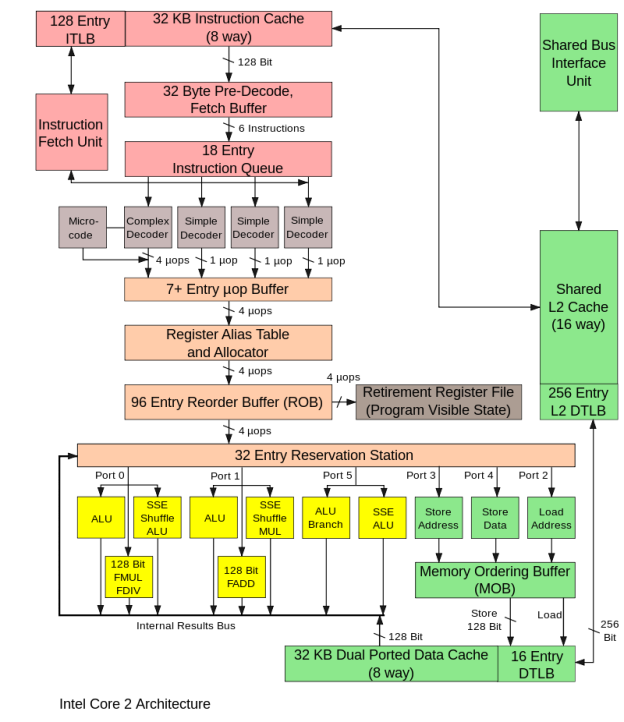
    Occasionally, this fad is referred to as throughput computing. This concept first appeared in the mainframe industry, where online transaction processing placed an emphasis on handling large numbers of transactions rather than just the speed at which one transaction could be executed. The last ten years have seen a significant increase in transaction-based applications like network routing and website serving, which has caused the computer industry to emphasis capacity and throughput issues once again. The specific microarchitecture is typically represented by the system designer as a type of data flow diagram. The microarchitecture diagram, like a block diagram, uses a single schematic symbol to represent each microarchitectural component, such as the arithmetic and logic unit and the register file. To distinguish between three-state buses (which need a three-state buffer for each device that drives the bus), unidirectional buses always driven by a single source, such as the way the address bus on simpler computers is always driven by the memory address register, and individual control lines, the diagram typically connects those elements with arrows, thick lines, and thin lines.A schematic outlining the links between the logic gates needed to build each microarchitectural component is used to illustrate each one in turn. Each logic gate in a given logic family is represented by a circuit diagram that shows the connections between the transistors that were utilized to create it.
    Microarchitecture also requires execution units. Arithmetic logic units, floating point units, load/store units, branch prediction, and SIMD are examples of execution units. These components carry out the processor’s actions or calculations. A key microarchitectural design challenge is selecting the number of execution units, their delay, and their throughput. Microarchitectural choices also affect the size, latency, throughput, and connection of the system’s memories.
    What each component of the computer should be performing is determined by the control logic’s cycle clock, cycle state either high or low, and instruction decode register bits. A table of bits defining the control signals to each component of the computer in each cycle of each instruction can be created in order to construct the control logic. This logic table can then be examined in a computer simulation that is executing test code. A logic table that is stored in memory and utilized to power a genuine computer is referred to as a microprogram.
    Multiprocessing is a term used in operating systems to describe the execution of numerous concurrent processes in a system, each executing on a different CPU or core as opposed to just one process running at a time. Multitasking, which may only employ a single processor but switches it between tasks in time slices, is commonly contrasted with multiprocessing when used with this meaning example a time-sharing system). However, multiprocessing refers to the actual concurrent execution of numerous programmes on multiple processors.
    All CPUs in a multiprocessing system might be equal, or some might be set aside for specific tasks. The symmetry (or lack thereof) in a given system is determined by a mix of hardware and operating system software design concerns. The execution of kernel-mode code may be limited to only one specific CPU, whereas user-mode code may be executed in any combination of processors, depending on hardware or software considerations. For instance, only one specific CPU may be required to respond to all hardware interrupts, whereas all other work in the system may be equally distributed among CPUs.
    In multiprocessing, the processors can be utilized to execute numerous sequences of instructions in a single context, or a single sequence of instructions in multiple contexts single instruction, multiple data, or SIMD, which is frequently used in vector processing. n

  • First-ever digital Census in Pakistan

    First-ever digital Census in Pakistan

    The effort is entirely indigenous; all the systems devised and the tools created are by our own experts: PIDA

    The digital census would be a great success, as the merits of digital census include: time reduction, GIS-based monitoring, real-time progress analysis, instant data availability, online task allocation, data quality assurance, transparency, a dashboard for stakeholders, complaint resolution through a hotline, real-time trend analysis, decision support dashboard and so on.


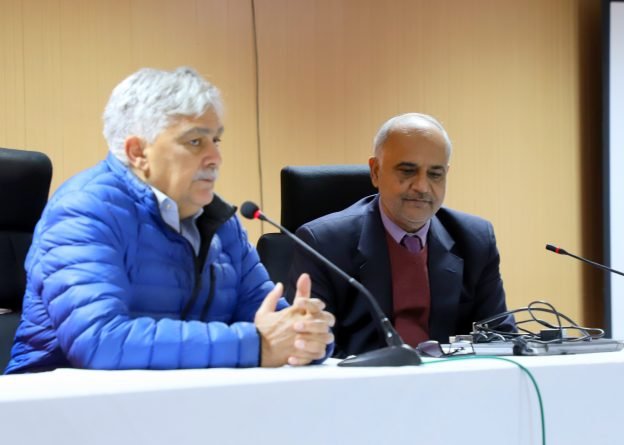
    Pakistan’s Census in 2023 is going to be digital for the first time in the country’s history. All the preparations are rolled out and the team is now ready for a gigantic task. The effort is entirely indigenous; all the systems devised and the tools created are by our own experts, enunciated Naeem uz Zafar, Chief Statistician, Pakistan Bureau of Statistics (PBS), proudly. He was addressing a hybrid seminar, themed “Census 2023: All You Want to Know About”, at the Pakistan Institute of Development Economics (PIDE) Islamabad.


    He shared that census is an important national activity that is linked with resource allocation to provinces, representation in National/Provincial assemblies, and the delimitation process. Therefore, the credibility of the census is of utmost importance. This is what called for comprehensive introspection leading to a solution acceptable to all – digital census.


    He apprised the audience that after the results of the latest Census 2017 were approved in the 45th CCI meeting held on 12th April 2021, the Council of Common Interests (CCI) gave directions for the next census to start as early as possible and should be according to international best practices by using the latest technology. The Government of Pakistan then constituted a committee of renowned demographers and experts with comprehensive TORS, to bring transparency, credibility, and wider acceptability of census processes and results. For this, a board-based stakeholders’ engagement was carried out in order to have ownership of the process.


    Earlier in his opening remarks Dr. Nadeem ul Haque, Vice Chancellor PIDE said that the Censuses remain controversial in Pakistan, at times delayed for over a decade. Now that we are moving toward the new Census, it is time to raise all the concerns and questions we have.


    To address the Seminar on the forthcoming Census 2023, Dr. Naeem uz Zafar said that following UN Guidelines and detailed deliberations of the Committee, it was decided that there ought to be clarity regarding the primary objectives of the census – policy and planning. Ensuring universality, implying that counting of the whole population residing in the country at the time of census should be done, irrespective of its status/whether one is the holder of CNIC or not. The exercise is of counting not of verification. Individual enumeration to be carried out – information on each enumerated person to be collected. It was also agreed upon that census must be conducted simultaneously and in the shortest possible time, he said.


    The Chief Statistician also added that a National Census Coordination Committee (N3C) has been developed at the national level in the House of PBS. N3C can be imagined as National Command and Operation Center (NCOC) that was set up during the pandemic. N3C would have centralized decision-making, having a control room with dashboards showing real-time progress, trends, and analysis.
    For the first time, the self-enumeration method will also be used. It’s a two-step process. First, you will have to sign in on a portal and fill out the form. Toward the end, it will provide you with a QR code. Save it for yourself. Later, when the enumerator knocks on your door, just show him the QR code. He would scan it and the data will be saved into the system. Moreover, geo-tagging of each structure, tablet-based and self-enumeration system will build the trust of stakeholders. 126,000 tablets will be used in the exercise. All checks and security measures are in place for breach or manipulation of the data. He also said that PBS has conducted training on the digital census in three tiers i.e. Training of Master Trainers, Training of Trainers (ToT), and Training of Enumerators. As of now, the pilot census has also been completed.


    All of this would be backed up by strict monitoring oversight with cross-checks and in-built checks within the systems.


    Regarding the questionnaire, the Chief Statistician said that there are around 40 questions on 08 broad themes. These include household, basic amenities, demography, education health, employment, disability, and migration.


    The digital census would be a great success, as the merits of digital census include: time reduction, GIS-based monitoring, real-time progress analysis, instant data availability, online task allocation, data quality assurance, transparency, a dashboard for stakeholders, complaint resolution through a hotline, real-time trend analysis, decision support dashboard and so on.


    In the end, Naeem uz Zafar thanked PIDE for the opportunity and requested any feedback to mitigate any loopholes if any.


    It is pertinent to note that, the first-ever regular population census in the areas now comprising Pakistan, was held in 1881. Since then regular Census was conducted after every ten years up to 1981. Six censuses have been undertaken so far i.e. 1951, 1961, 1972, 1981, 1998, and latest in 2017. — PR

  • NCAI announces Artificial Intelligence challenge

    NCAI announces Artificial Intelligence challenge

    National Center for Artificial Intelligence (NCAI) has invited young and bright minds to present the most innovative projects to participate in Artificial Intelligence (AI) competition “AI TechVerse2023.”
    Al Techverse 2023 is an augmentation of NCAI’s flagship events: the 3rd IEEE International Conference on Artificial Intelligence (ICAI 2023), Al IDEAS Challenge, Al Expo (Lab2Market), and Al Voyage. According to an official of NCAI, this auspicious event titled “Al Techverse 2023” is going to be held from February 21-23 at the National University of Science and Technology (NUST). The competition will provide an opportunity for young minds to connect, network, and bring their best ideas to the table.

  • Growing cybersecurity skills gap necessitates human factor security

    Growing cybersecurity skills gap necessitates human factor security

    Concerns of cyber security, cyber bullying, and cyber hygiene are relevant in this age of media where children are all time wired to social media and the internet. Every person needs to be aware of the steps they take to keep them safe from any kind of harm. So, to represent the needs of the cybersecurity ecosystem in the world, IEEE, IES Karachi Section Chapter in Collaboration with Higher Education Authority, Ireland successfully organized the workshop on “CYBER SKILLS” held on 23-Dec-2022 at VDC Hall, IICT Building, Mehran University of Engineering & Technology, Jamshoro.
    This workshop was organized to acknowledge people about how to detect and mitigate cyber-attacks. It provides training on Cyber Range, Analyzing Potential Malware, Identifying Live Machines, Service Identification, and Protocol Analysis.
    The event started with the recitation of the Holy Quran. Afterward, Dr. Abi Waqas, organizer of the event and also serving as Branch Counselor IEEE MUET STB and Chair IEEE IES Karachi Section presented the opening remarks. He welcomed the Chief Guest, Guest speaker, teacher coordinators, and participants and started the formal proceedings of the event.
    The chief guest of the event, Prof. Dr. Tuaha Hussain Ali Vice Chancellor of MUET mentioned the need for Cyber Skills in this digital world where things can’t work out without social media and the internet. He also appreciated the efforts of the whole team and the coordinators, Dr. Abi Waqas and Chief organizer Prof. Dr. Bhawani Shankar Chowdhry for arranging such a workshop through which people can be aware of the risks on social media. He also emphasized the role of IEEE in the capacity building of students and professionals. He said, IEEE has a great significance in extra co-curricular activities of this university and bought so many glories for Mehran UET and he believed that such technical activities will be proven instrumental for students in the future.
    The chief coordinator of the event Prof.Dr.Bhawani Shankar Chowdhry who is also serving as CHAIR IEE KARACHI SECTION, organized this workshop to acknowledge people about the cyber range and Malware protection so that they can acquire knowledge about Cyber Security. He also expressed his positive thoughts on IEEE for being the most vibrant engineering society worldwide. Prof stressed the students focus on life-building skills along with academic knowledge and technical skills. He considered communication, interaction, and confidence as important skills when a student becomes a part of the team/organization. As of today, students are facing a lot of challenges to kick-start their careers, he called patience, tolerance, and hard work as keys to success in connecting individuals to the right Industries.
    The event was joined by a renowned guest speaker who delivered his keynote virtually, Dr. Thomas Newe, he received his Honors Degree in Computer Engineering in 1991. Following this, he worked as a senior software engineer with The Microelectronics Applications Centre (MAC), in Ireland. He was awarded his Ph.D. in 2003 from the University of Limerick for work on Formal Verification Logic for use in security protocol design.
    He is currently an Associate Professor in the Department of Electronic and Computer Engineering at the University of Limerick, group leader of the IoT/WSN Security activities in the Optical Fibre Sensors Research Centre (www.ofsrc.ul.ie) and the Centre for Robotics and Intelligent Systems (www.cris.ul.ie), a PI in Confirm (www.confirm.ie), and FI in the MaREI (www.marei.ie), and Lero (www.lero.ie) SFI National Research Centres.
    A renowned guest Dr. Muzaffar Rao who is currently a Lecturer in the Department of Electronic and Computer Engineering, University of Limerick (UL) conducted the workshop physically. He is also an Associated Investigator (AI) in ‘Lero – Irish Software Engineering’ and ‘CONFIRM – Smart Manufacturing research centers. He was awarded his Ph.D. in January 2017 from the University of Limerick. During his Ph.D., he worked on the hardware implementation of cryptographic algorithms/security protocols. His research interests include OT/ICS security, IT/OT integration, BitW (Bump-in-the-Wire) security, AI/ML in cybersecurity, IoTs & IIoTs, robotic automation, cyber-physical systems, and Embedded systems. His research work has resulted in several peer-reviewed publications at international conferences and Journals
    He spoke about Cyber skills and the Cyber range that it is a virtual environment that allows organizations to practice cyber combat training. It’s a powerful way of replicating existing information systems to test and develop a skill set such as pen testing, network protection, system hardening, TTPs, and incident response. It is also a relevant means to raise awareness, especially among managers and board members, by showing them in a realistic manner what damages can be caused by ransomware attacks.
    A successful workshop to spread awareness among the people about the cyber-attacks and how to stay protected from those attacks using the cyber range was attended by many students from different departments of Mehran University of Engineering and Technology Jamshoro (MUET). The Coordinators Dr.Abi Waqas Memon Chair of IEEE Karachi Section, Dr. Faheem Yar Khuhawar Associate Prof, TL, MUET. and the whole team managed to arrange such a wonderful event. A closing ceremony was arranged at the end in which all participants and volunteers were awarded certificates for their dedication. Tokens of appreciation were also presented to distinguished guests of the event.

  • How innovative IT parks may affect Pakistan

    How innovative IT parks may affect Pakistan

    Karachi IT Park is the largest IT project of its kind in Pakistan, claims Amin-ul-Haq, the Federal Minister for Information Technology and Telecommunication. His claim does indicate the growth of the widespread process of IT parks across Pakistan that not only offers professionals, especially the younger lot an opportunity to execute their ideas but also a way to improve the economy.
    Karachi’s and Islamabad’s IT parks (costing Rs. 41 billion and Rs 13.72 billion respectively) are under construction which will create over 35,000 IT jobs.
    Of them, Karachi IT Park is being tipped as a gateway for its innovation and it, as the minister reportedly claims will benefit not only the citizens of Karachi but also the IT professionals and companies of Sindh and the country.
    IT Park, Karachi was approved by ECNEC in June 2021, at a capital cost of USD 186.658 million (including USD 158.416 million from Korean Exim Bank as a loan and PSDP local share of USD 28.242 million). The project, for which land has been acquired near Jinnah International, would be completed in June 2026.
    The IT Park Karachi was an eleven-story (8 storeys above and 3 underground floors) self-contained building having a covered area of 106,449 square meters, a report said.
    This Technology Park will provide office space to approx. 225 start-ups and small to medium enterprises and other ancillary facilities like testing laboratories, classrooms, industry-academia linkage centers, auditoriums, etc.
    The government has invited the private sector to actively participate and play a frontline role to make the IT Park and other IT-related projects “big success stories.”
    The foundation stone of IT Park in Islamabad was laid in Chak Shahzad on May 6 by Minister for IT and Telecommunication Syed Amin Ul Haque, fulfilling the “Digital Pakistan Vision.” The project would be completed in 30 months with a total cost of Rs 13.72 billion.
    The park would not only mitigate the shortage of infrastructure for the IT sector but also facilitate technology transfer through industry and academia linkages, support technology commercialization, links tertiary education and production, and promote research and development; besides enhancing IT exports and industry competitiveness.
    IT Park Islamabad would consist of a twelve-storey (two basements or ground floors plus 10 storeys) self-contained building having a covered area of 66,893 square meters.
    Islamabad IT Park would initially provide office space to around 120 start-ups and small to medium enterprises and other ancillary facilities like testing laboratories, classrooms, industry-academia linkage center, auditorium, etc.
    Currently, Pakistan has 15 software technology parks; three in Islamabad, two in Rawalpindi, eight in Lahore, and one each in Karachi and Gilgit.
    Pakistan wants to establish software technology parks in small and big cities of country. Pakistan Software Export Board is working to establish software technology parks in Quetta, Gwadar, Faisalabad, Bannu, Swat, Mardan, Sukkur, and Hyderabad. Moreover, an IT Park for the University of Balochistan costing Rs 1 billion and the provision of fiber optic cable for Tehsil Wadh of District Khuzdar are under consideration. — ER

  • Hack Fest 2022: Google Developer Student Club trained for SDGs

    Hack Fest 2022: Google Developer Student Club trained for SDGs

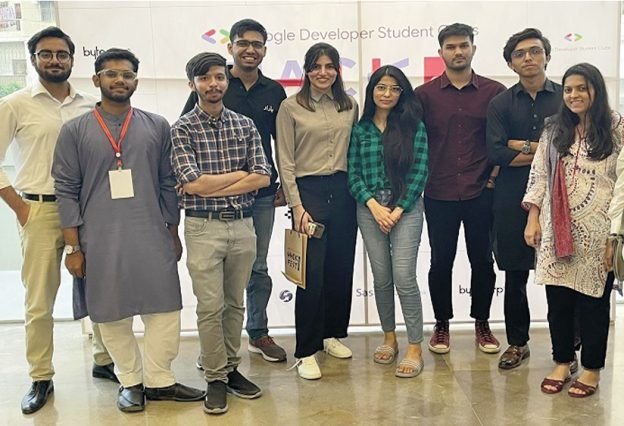
    Students of 10 universities belonging to Google Developer Student Club, on Friday participated in a three-day event titled Hack Fest 2022 at IBA City Campus Karachi, where they were trained about finding technical solutions to the challenges pertaining to UN’s 17 Sustainable Development Goals (SDGs).
    Speaking on the occasion, Hamza Siddiqui stressed the need to find technical solutions to the UN’s 17 SDGs. He said that 17 UN goals are not a problem but are challenges that we have to solve. He said that students should fully prepare themselves for this cause. He also guided and trained students in this regard.
    Umama Iftikhar Siddiqui, Marketing Lead, Google Developer Student Club (GDSC) of the University of Karachi, said that GDSC is a platform at which students of 10 universities are receiving technical knowledge and training to solve problems in different areas like poverty, sanitation, water, and traffic. She said that they were preparing students to find Google solutions to meet challenges pertaining to UN’s 17 SDGs.
    Umama further said that they would fully prepare students to find technical solutions to the problems being faced by them in their areas, while suggestions for a solution to those issues would also be presented to the sgovernment.
    Danella Patrick, SMIU GDSC Lead, said that the club is an innovative platform for training students for solutions to the SDGs challenges, adding 64 students from SMIU had participated in this program which is the highest number as compared to other universities.
    She said that three excellent and best-performing students in the next session would be honored with cash prizes of Rs50,000 for the first runner up, Rs30,000 for the second runner up, and Rs20,000 for 3rd runner up.
    A panel discussion was also held in which panelists Krinza Momin, Muhammad Ali Khan, Fatima Moin, and Arbaz Piwani advised students to coordinate their relevant mentors and get sufficient knowledge about their work at their respective organizations to make real progress.
    Gifts were also distributed among the participating students. Rafia Manzoor, GDSC Team Lead from the University of Karachi, and Eman Ahmed of Salim Habib University conducted program proceedings.
    The universities which took part in the program were the University of Karachi, SMIU, SSUET, Salim Habib University, Usman Institute of Technology, IBA, DHA Suffa University, NED University, and FAST.— KARACHI:

  • Over 19 researchers awarded grants by Pharmevo Research Forum

    Over 19 researchers awarded grants by Pharmevo Research Forum

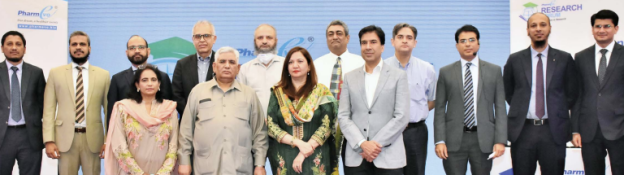
    Over 19 researchers and healthcare professionals have been awarded research grants up to Rs300,000 each by the Pharmevo Research Forum.
    They will conduct research in areas of pediatrics, diabetes, hypertension, cardiology, endocrinology, gynecology, orthopedics, infectious diseases, etc.
    The researchers have assumed a timeline to complete their studies within 18 months of receiving the research grants.
    Known health professional Prof Saeed Hamid, Director of Clinical Trials Unit at Aga Khan University told a research conference that around 80-90 percent of Pakistani Hepatitis C patients are infected with Genotype-3 of the HCV, which is very difficult to treat but unfortunately, most of the data on this genotype comes from the Western world as we don’t have enough data and research on this genotype because Pakistan is not a conducive place for clinical trials and research,” Prof Saeed Hamid deplored.
    Congratulating the winners of research grants, Prof Saeed Hamid said these researchers should also strive for international research grants and also called for a consortium of clinical trials units working across the country to come up with quality research and data on local issues.
    A team of advisors who are prominent healthcare professionals including Prof Anwar Siddiqui, Prof Badar Fayyaz Zuberi, Prof Feroz Memon and others has short-listed and approved the research projects for the award of grants.
    He said It was heartening that the pharmaceutical industry was supporting the research and others should follow this precedent.n

  • Pakistan Secures 1st Position inInternational Unity 3D Competition

    Pakistan Secures 1st Position in
    International Unity 3D Competition

    The Faculty of Telecommunications at the Technical University of Sofia, Bulgaria organized the CENTRAL Workshop including Training and Competition on Unity 3D for Interactive Content development as part of the CENTRAL Project- Capacity Building and ExchaNge towards attaining Technological Research and modernizing Academic Learning in June 2022. Besides all partner universities of EU Capacity Building in Higher Education Project CENTRAL, various faculty members, researchers, and students across the globe participated in the workshop and competition.
    From 6th -9th June 2022, the Technical University of Sofia also Organized IEEE International Black Sea Conference on Communications and Networking at Sofia Technology Park in which many researchers across the globe participated and presented their research work.
    On 13th June 2022, a meeting of partner Universities of the CENTRAL Project took place which provided a platform for different sectors to look for new initiatives and future course of action for defining project proposals for the European Commission-funded project. CENTRAL is aimed at enabling employability, internationalization, and interdisciplinary engagement of students and graduates, as well as research staff.
    From 14th to 17th June 2022, Training and Competition on Unity 3D was organized. The workshop created an atmosphere for socialization among participants and on the popular happenings in the Digital World specially the importance of Unity 3D was the focus of attention. The delegates from the USA, Spain, Pakistan, Thailand, Denmark, Bulgaria, and India were also present.
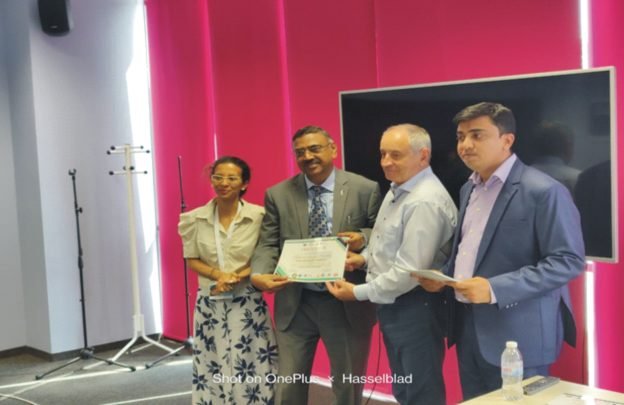
    From Pakistan, two Universities namely Mehran University of Engineering and Technology Jamshoro and Sir Syed University of Science and Technology Karachi were part of this training and competition. Engr Muhammad Zakir Shaikh from Mehran University Pakistan secured 1st Position in this International Unity 3D Competition. The second and third positions were secured by researchers from India.
    Besides great networking sessions, Various visits were also arranged for the participants including visits to High Tech Laboratories, departments, and visit to Sofia Tech Park. The Overall Objective of this event was to open discussions on innovation and its commercialization through a strong partnership between industries and academia as well as on modern practices and methodologies in cross-/multi-/interdisciplinary areas such as Unity 3D, social science, technology, Business Canvas, and so on. At the end of the event, certificates were distributed among all the participants. Furthermore, Prof Vladimir Poulkov and Associate Professor Agata Manolova of TUS thanked all the participants for being part of this

  • Robots in SIUT
    First robotic surgery, training center becomes reality

    Sindh Institute of Urology and Transplantation (SIUT) has set up a robotic surgery and training center. Chief Minister Syed Murad Ali Shah inaugurated the center—the one which has brought yet another distinction for the institute.
    In 2017, SIUT embarked on its Robotic Surgical Program in collaboration with the Civil Hospital Karachi.
    The robotic Surgical Unit that the institute established was funded by Bashir Dawood, the Sindh government, and SIUT North America.
    SITU website says the donation by Bashir Dawood for the Robotic Unit was to honor his family friend Kassim Parekh, a renowned banker who became Governor of the State Bank of Pakistan.
    Recently two robotic surgical units were acquired by SIUT from Cambridge Medical Robotics (CMR). These are currently used by many centers in Europe, the Middle East, India, and Latin America.
    This acquisition is part of the SIUT philosophy to remain at the cutting-edge of technology. Robotic surgery is considered the future generation of surgical sciences.
    Robotic procedures are associated with less pain, less blood loss, and faster recovery. Patients are discharged within a few days and can resume regular activities.
    The unit has started with urological surgeries, to be followed by colorectal and gynecological surgeries. Thus far more than 1000 Robotic Surgeries have been performed at the department.
    SIUT had already planned for a regional Robotic Surgical Training Center to train the next generation of surgeons in this state-of-the-art technology both from within Pakistan and the region, the institute says.
    Chief Minister Shah said robots performed surgery on organs that are difficult to reach by hand. “It is a revolution.”
    Shah congratulated Dr. Adib Rizvi, the founder of SIUT and an internationally acclaimed surgeon.
    Shah said he was proud that his government took a lead in robotic surgery in the country. He hoped more centers would be established in the country and offer young doctors to use modern tools and methods.
    He also recalled that the first robot was acquired by the Sindh Government in 2017 from Intuitive Surgical Company, USA – The da Vinci System. It was used both by Dr. Ruth Fau, Civil Hospital, and SIUT and later the Robot was moved to a dedicated Robotic Surgery Unit in SIUT. – ER Report

  • Modes of Operation in Laser Technology

    Modes of Operation in Laser Technology

    The coherence of lasers distinguishes them from other light sources. The output of spatial (or transverse) coherence is usually a narrow, diffraction-limited beam. Laser beams can be concentrated in very small areas for high irradiance, or they can have very low divergence for concentrating power over a long distance. A laser differs from other light sources in that it emits coherent light. Laser cutting and lithography are made possible by spatial coherence, which allows a laser to be focused to a small area. Spatial coherence also allows a laser beam to remain narrow over long distances (collimation), making laser pointers and lidar possible (light detection and ranging).
    Lasing usually starts with spontaneous emission into the lasing mode in most lasers. This original light is subsequently amplified in the gain medium by stimulated emission. In terms of direction, wavelength, and polarisation, stimulated emission produces light that is identical to the input signal, but the phase of the emitted light is 90 degrees ahead of the stimulating light. This, together with the optical resonator’s filtering function, provides laser light its distinctive coherence and, depending on the resonator’s design, may also give it uniform polarisation and monochromaticity. Depending on whether the power output is largely continuous across time or if it takes the form of light pulses on one- or another-time scale, a laser can be categorized as either continuous or pulsed. Of course, even a laser whose output is generally continuous can be turned on and off at a certain rate to produce light pulses.
    Some laser applications require a beam with a constant output power throughout time. Continuous-wave (CW) lasers are one type of laser. To meet this need, a variety of lasers can be made to operate in continuous-wave mode. Many of these lasers lase in multiple longitudinal modes at once, and beats between the slightly different optical frequencies of those oscillations will produce sufficiency minor departure from time scales more limited than the full circle time (the proportional of the recurrence separating between modes), commonly a couple of nanoseconds or less. In other circumstances, the application necessitates the generation of pulses with the highest energy achievable. Because the beat energy is equivalent to the typical power partitioned by the reiteration rate, this objective can some of the time be fulfilled by slowing down the rate of pulses so that more energy can be stored between them. Another way to achieve pulsed laser operation is to pump the laser material with a pulsed source, either through electronic charging in the case of flash lamps or by using another pulsed laser. In the past, dye lasers used pulsed pumping because the inverted population lifespan of a dye molecule was so brief that a high-energy, quick pump was required.
    By reducing or killing tumors or precancerous growths, lasers are employed to treat cancer. They’re most typically utilized to treat tumors that are found on the body’s surface or in the lining of internal organs. They’re used to treat basal cell skin cancer, as well as the early stages of cervical, penile, vaginal, vulvar, and non-small cell lung cancer. Fiber lasers have a fundamental constraint in that the light intensity in the fiber cannot be so high that optical nonlinearities caused by the local electric field strength become dominant, preventing laser operation and/or leading to fiber material damage.
    Stimulated emission, in which energy is taken from a transition in an atom or molecule, is the mechanism by which a laser produces radiation. Albert Einstein predicted this quantum phenomenon when he derived the link between the A coefficient, which describes spontaneous emission, and the B coefficient, which describes the absorption and stimulated emission.n