Category: Emerging Tech

  • PM’s Task Force on  IT & Telecom notified

    PM’s Task Force on IT & Telecom notified

    Prime Minister’s Task Force on IT & Telecom has been notified after the federal cabinet approved it in a meeting in November this year.

    The Task Force is aimed at advise policy changes and develop strategic plans to strengthen the technology ecosystem of Pakistan, said a report.

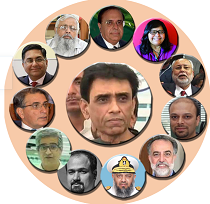
    The Task Force is headed by Federal Minister IT & Telecom Dr. Khalid Maqbool Siddiqui who will be its Chairman.

    Secretary, Ministry of IT & Telecom, Secretary, Ministry of Federal Education and Professional Training, Dr. Atta-ur-Rehman, Former Minister of Science & Technology and Former Chairman of Higher Education Commission, Engr. Jawad Salim Qureshi, Chairman Pakistan Engineering Council,

    Syed Raza Ali Shah, Member IT at Ministry of IT & Telecom, Mudassir Hussain, Member Telecom at Ministry of IT & Telecom, Vice Admiral (R) Syed Arifullah Hussaini, CEO Hussaini Concepts & Solutions Pvt. Ltd., Syed Ahmed, Chairman P@SHA and CEO DPL, Dr. Zartash Afzal Uzmi, Faculty of Electrical Engineering & Computer Science LUMS, Shahid Mustafa, CEO Telenor Microfinance Bank,

    Nadeem Mustafa, Former Country Manager Microsoft, Jehan Ara, Program Director The Nest I/O, Zohair Khaliq, Co-Founder & Partner Teamup – National Incubation Center and Former CEO Mobilink, Pervez Iftikhar, CEO ICT Forum Pakistan and Former CEO Universal Services Fund, Abdul Aziz Khan, Chairman Appollo Telecom and Former CEO Ufone and Dr. Sarosh Hashmat Lodi, Vice Chancellor NED University of Engineering & Technology are the members.

  • Smart devices will be becoming battery less soon!

    Smart devices will be becoming battery less soon!

    Researchers at the University of Waterloo (Canada) have taken a huge step towards making smart devices that do not use batteries or require charging.

    These battery-free objects, which feature an IP address for internet connectivity, are known as Internet of Things (IoT) devices. If an IoT device can operate without a battery it lowers maintenance costs and allows the device to be placed in areas that are off the grid.

    Many of these IoT devices have sensors in them to detect their environment, from a room’s ambient temperature and light levels to sound and motion, but one of the biggest challenges is making these devices sustainable and battery-free.

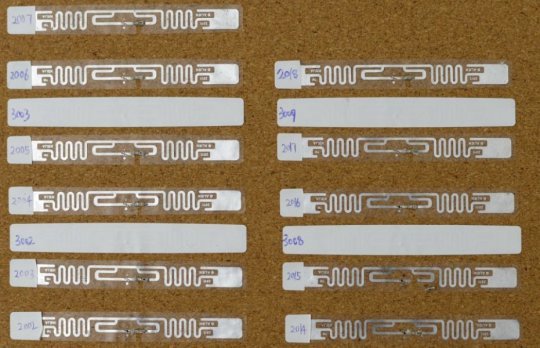
    Professor Omid Abari, Postdoctoral Fellow Ju Wang and Professor Srinivasan Keshav from Waterloo’s Cheriton School of Computer Science have found a way to hack radio frequency identification (RFID) tags, the ubiquitous squiggly ribbons of metal with a tiny chip found in various objects, and give the devices the ability to sense the environment.

    “It’s really easy to do,” said Wang. “First, you remove the plastic cover from the RFID tag, then cut out a small section of the tag’s antenna with scissors, then attach a sensor across the cut bits of the antenna to complete the circuit.”

    In their stock form, RFID tags provide only identification and location. It’s the hack the research team has done — cutting the tag’s antenna and placing a sensing device across it — that gives the tag the ability to sense its environment.

    To give a tag eyes, the researchers hacked an RFID tag with a phototransistor, a tiny sensor that responds to different levels of light.

    By exposing the phototransistor to light, it changed the characteristics of the RFID’s antenna, which in turn caused a change in the signal going to the reader. They then developed an algorithm on the reader side that monitors change in the tag’s signal, which is how it senses light levels.

    Among the simplest of hacks is adding a switch to an RFID tag so it can act as a keypad that responds to touch.

    “We see this as a good example of a complete software-hardware system for IoT devices,” Abari said. “We hacked simple hardware — we cut RFID tags and placed a sensor on them. Then we designed new algorithms and combined the software and hardware to enable new applications and capabilities.

    “Our main contribution is showing how simple it is to hack an RFID tag to create an IoT device. It’s so easy a novice could do it.”

    The research paper by Wang, Abari and Keshav titled, Challenge: RFID Hacking for Fun and Profit-ACM MobiCom, appeared in the Proceedings of the 24th Annual International Conference on Mobile Computing and Networking, October 29-November 2, 2018, New Delhi, India, 461- 70.

    Courtesy: Science Daily

  • Philippine Inventor Kyxz Mendiola Develops ‘Passenger Drone’

    Philippine Inventor Kyxz Mendiola Develops ‘Passenger Drone’

    Philippines – Single-seater is powered by six lithium-ion batteries and carries weight up to 100 kg.

    Philippines: A Philippine inventor has unveiled what he calls a flying sports car that represents the future of transport, riding it out of a warehouse towards a cheering crowd, leaving a cloud of dust in his wake.

    Former dancer and camera operator Kyxz Mendiola flew and hovered for a few minutes in a single-passenger contraption powered by the “multicopter” technology commonly used in small unmanned drones.

    “It was amazing,” Mendiola told Reuters after what he said was the first public test flight of his invention. “All the hard work paid off. Everything worked perfect.” Mendiola’s machine, the “Koncepto Milenya”, can fly as high as 6.1 m (20 ft) and speed up to 60 kph (37 mph) but its maiden flight lasted just a little over 10 minutes.

    He said it took a long time to save up the funds for the components of the single-seater powered by six lithium-ion batteries whose passenger steers with a portable radio frequency controller.

    “Press a button and it will go up, then push the stick forward, it goes forward. It’s very smart, that’s why I’m saying it has a lot of potential,” Mendiola said.

    The machine, which can carry up to 100 kg (220 lbs), could shave hours off trips in cities like the capital, Manila, crippled by chronic traffic problem, Mendiola felt.

    “When we have to go somewhere about an hour’s drive, this can take you there in five minutes,” he said.

    An added safety feature is that the craft’s 16 rotary motors allow it to keep flying, even if one or two fail, he added.

    An Australian company, Star8, is partnering with Mendiola to develop the vehicle after a video featuring it went viral on social media.

    Star8’s Chief Executive Jacob Maimon said he wanted to mass produce it and market it in Australia, Europe and Hong Kong, after helping Mendiola perfect the machine.

    “We will get there very fast now, what with the help that we can give him,” he added. – Courtesy Arab News

  • 18th ITCN, Fire & Safety, SecurityAsia  exhibition leaves a good impression! By Abbas Mansoor

    18th ITCN, Fire & Safety, SecurityAsia exhibition leaves a good impression! By Abbas Mansoor

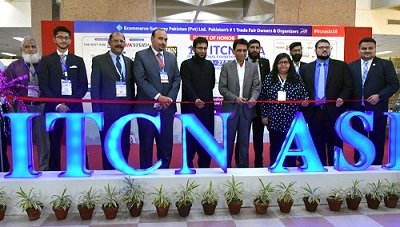
    18th ITCN exhibition and Fire and Safety, Security Asia Exhibition held from September 25 at Karachi Expo Centre left good imprints on the industry in general and the initial reports said it attracted mutual agreements to the tune of $250 million dollars.

    The organizers claimed over 70,000 people from various categories including students from universities visited the exhibition. It was a huge success for them.

    In contrast, Engineering Review’s interaction with a number of exhibitors shows that not every exhibitor was happy. The exhibitors in the category of fire and security seemed jubilant and earned attraction more than their expectation. However, lighting exhibitors, however, seemed a bit sluggish.

    Despite an extended exhibition which covered a huge area in terms of space and technology, the number of local manufacturers remained very slim and ER could find quite a few local manufacturers including Haseen Habib Corporation.

    Over 600 companies representing 25 countries participated in the event. However, the presence of Chinese exhibitors was so evident that many said they have now become part and parcel of our business and trade activity anywhere in Pakistan.

    Yet another aspect was the absence of smart TV companies and telecommunication companies which were very much there in the exhibition last year.

    In money terms, the worth of agreements more than previous years is surely a success no matter hardware companies were not visible like in last year’s exhibition.

    On information dissemination side, the event had over 30 conferences and seminars on IT security, cyber safety, fire and control where experts and scholars shared their experiences.
    Some IT experts believed that due to increasing awareness about IT this year attendance was much higher this time. However, an exhibitor said more professional presentations and people of high repute are required to be invited at the expo.

    Murtuza Wahab, Adviser to Sindh Chief Minister and Shehla Raza visited the exhibitions. Wahab said that Sindh government also promoted such exhibitions and also interested in cooperating with the private sector in future.

    On the last day of the exhibitions, Umair Nizam, Vice President, E-Commerce Gateway Pakistan said that it was a big challenge to organise two exhibitions at a time. However, the organisers have managed to accomplish the task, he added.

    Umair Nizam, Vice President, E-Commerce Gateway, Pakistan said over 600 international and domestic IT brands were presented at the exhibition.

    Umair Nizam said that both the exhibitions occupied six halls of the expo centre. He expected that over 150,000 people will visit both the exhibitions. Others claimed the number was around 70,000.

    He informed that agreements worth $100 million were signed at the 17th ITCN Exhibition.

    Imran Batada, Director, Center for Information and Communication Technology, IBA said that for the last three years they were cooperating in exchange of information.

  • A beam of invisibility Cloaking technologies  could become a reality

    A beam of invisibility Cloaking technologies could become a reality

    Once thought of as the province of only “Star Trek” or “Harry Potter,” cloaking technologies could become a reality with a specially designed material that can mask itself from other forms of light when it is hit with a “beam of invisibility,” a new study says.
    Theoretically, most “invisibility cloaks” would work by smoothly guiding light waves around objects so the waves ripple along their original trajectories as if nothing were there to obstruct them. Previous work found that cloaking devices that redirect other kinds of waves, such as sound waves, are possible as well.
    But the new study’s researchers, from at the Technical University of Vienna, have developed a different strategy to render an object invisible — using a beam of invisibility.
    Complex materials such as sugar cubes are opaque because their disorderly structures scatter light around inside them multiple times, said study senior author Stefan Rotter, a theoretical physicist at the Technical University of Vienna.
    “A light wave can enter and exit the object, but will never pass through the medium on a straight line,” Rotter said in a statement. “Instead, it is scattered into all possible directions.”
    With their new technique, Rotter and his colleagues did not want to reroute the light waves.
    “Our goal was to guide the original light wave through the object, as if the object was not there at all. This sounds strange, but with certain materials and using our special wave technology, it is indeed possible,” study co-author Andre Brandstötter, a theoretical physicist at the Technical University of Vienna, said in the statement.
    The concept involves shining a beam, such as a laser, onto a material from above to pump it full of energy. This can alter the material’s properties, making it transparent to other wavelengths of light coming in from the side. Reality will be sensed soon.
    “To achieve this, a beam with exactly the right pattern has to be projected onto the material from above — like from a standard video projector, except with much higher resolution,” study lead author Konstantinos Makris, now at the University of Crete in Greece, said in a statement.
    The pattern that is projected onto an object to render it invisible must correspond perfectly to the inner irregularities of that item that usually scatters light, the researchers said.
    “Every object we want to make transparent has to be irradiated with its own specific pattern, depending on the microscopic details of the scattering process inside,” Rotter said in a statement. “The method we developed now allows us to calculate the right pattern for any arbitrary scattering medium.”
    Rotter and his colleagues are now carrying out experiments to see whether their idea will actually reality work. “We think that an experiment would be easiest to perform in acoustics,” Rotter told Live Science. For instance, loudspeakers could generate sound waves to make a tube “transparent” to other forms of sound.
    “For me, personally, the most surprising aspect is that this concept works at all,” Rotter said. “There may be many more surprises when digging deeper along these lines.”
    Eventually, similar research could also experiment with light, he said. Such work could have applications in telecommunication networks, Rotter said. “It is clear, however, that considerable work is still required to get this from the stage of fundamental research to practical applications,” Rotter said

  • Tharis to become  Android App developers

    Tharis to become Android App developers

    Tharis-Ms Sindhu Mukesh Kumar has joined Sindh Engro Coal Mining Company (SECMC) as Admin Coordinator at Islamkot site office.
    A young mother of two kids, Sindhu along with her family responsibilities is determined to grow in her professional career. She has done graduation in Commerce from Karachi University.
    Previously, she has served in Pakistan Red Crescent Society and HBL. She is a source of motivation and inspiration for Thari women. Her addition is another milestone in our journey for the empowerment of Thari women.
    IT initiative
    IT program of Thar Foundation has launched a new initiative.
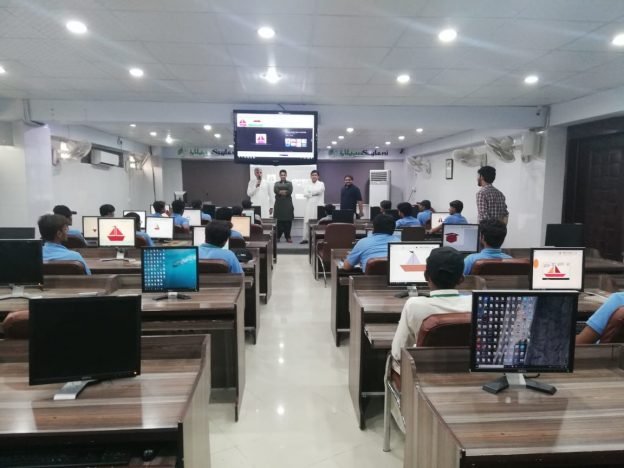
    25 young Tharis have reached Karachi to learn Android App development through an 18-months course.
    Thar Foundation provides full sponsorship of this course including accommodation, food, transport and stipend.
    A competent Android App developer can earn handsome income from 50 to 500 thousand rupees a month without any big investment.
    We aim to mainstream Thari youth in the modern job market of information technology, says a SECMC communication — PR

  • Samsung opens world`s largest  phone factory in India

    Samsung opens world`s largest phone factory in India

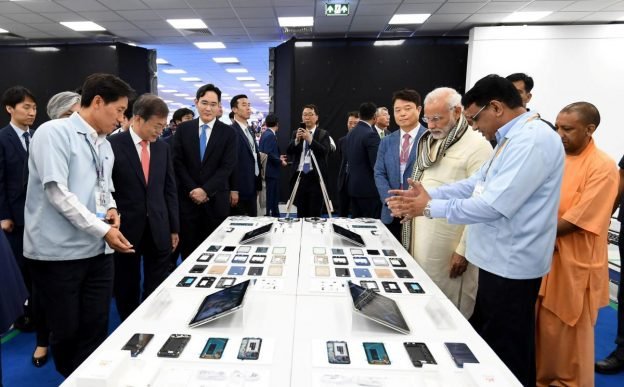
    Samsung Electronics has formally opened a new factory in India, which the South Korean tech group says is the world`s biggest mobile phone manufacturing plant, part of its plans to expand production in the world`s fastest growing major mobile phone market.
    The factory in Noida, on the outskirts of New Delhi, will allow Samsung to make phones at a lower cost due to its scale at a time when other phone male ing hubs such as China are getting more expensive, analysts tracking the sector said.
    The factory, inaugurated jointly on Monday by Indian Prime Minister Narendra Modi and South Korean President Moon Jae-in, will also help Samsung to compete more effectively with rivals such as China`s Xiaomi, which became India`s biggest smartphone brand by shipments earlier this year.
    `This 50 billion-rupee investment will not only strengthen Samsung`s business ties in India, it will also play a key role in India-Korea relations,` Modi said in a speech in Hindi at the inauguration of the plant.
    Samsung said last year it would spend 49.2 billion rupees ($716.57 million) over three years to expand capacity at its Noida plant.
    The new factory will help Samsung to double its current capacity for mobile phones in Noida to an annual 120 million units after the phased expansion plan is complete, the company said in a statement. India, the world`s second biggest smartphone market and home to more than a billion wireless subscribers, is a big opportunity for Samsung where sluggish smartphone earnings growth has fuelled concerns that its mobile business is running out of ideas to underpin sales of its premium Galaxy devices.
    Samsung, which has been assembling phones in India since 2007, also plans to export India-made handsets.
    `We `Make in India`, `Make for India` and now, we will `Make for the World`,` H C Hong, Chief Executive Officer at Samsung India said in the statement.
    Prime Minister Narendra Modi`sgovernmenthasimposed taxes on imports of key smartphone components as part of a plan to encourage electronics manufacturing in India which would boost growth and create millions of new jobs.
    While Modi`s flagship `Make in India` campaign is still a long way from delivering on ambitious job promises, the programme has had some success with the phased manufacturing of mobile devices and components. More than 120 local factories currently assemble mobile phones and accessories like chargers, batteries, power banks and earphones in India, according to tech research firm Counterpoint.- Courtesy Reuters

  • Free trade with China may Dampen Investment in SEZs?

    Free trade with China may Dampen Investment in SEZs?

    Pakistani Manufacturers start selling Chinese-made products with ‘Made in Pakistan’ tags!

    Beijing’s push for further trade liberalization under second phase of the Pakistan-China free trade agreement (FTA) may severely dampen prospects of Chinese investment in prioritized special economic zones (SEZs) being set up under  (CPEC).

    It would be convenient and cheaper for Chinese companies to manufacture in China and import products into Pakistan at zero duties, which would render the SEZs useless, officials in the Board of Investment (BOI) fear.This will also dash Pakistan’s hopes of starting a new wave of industrialization as almost 60% of the national output is contributed by the services sector which is not job-oriented. This means Pakistan is en route to becoming a trading nation.

    Another worrisome aspect of the proposed second phase of the FTA, called FTA-II, is that it is shrouded in secrecy. Both Federal Board of Revenue (FBR) and the BOI were not aware of the tariff lines on which the commerce ministry wanted to slash duties to zero.

    The timing of the FTA-II is also a matter of concern for some government agencies as Pakistan is not yet ready for further open trade due to a lack of product diversification and high cost of doing business.The Commerce Ministry says it will not sign the FTA unless every stakeholder is on board including the BOI and FBR.

    Prime Minister Shahid Khaqan Abbasi will visit Beijing next month and the government intends to sign the expanded FTA with China. Pakistan has reportedly agreed to offer zero duties on 75% of tariff lines, which constitute roughly 5,340 out of total 7,120 tariff lines. About 35% of tariff lines were already subjected to zero duties, which have caused huge losses to the domestic industries.

    It was unearthed in a meeting of the Senate Standing Committee on Finance that Pakistani manufacturers have even started importing goods from China and selling them as ‘Made in Pakistan’ products by placing their stamps on them.The FBR is concerned that the proposed 75% reduction in customs duty will adversely hit its revenues. However, the government said it did not care about the revenue loss because the FTA-II would help increase Pakistan’s exports to China from the current $1.5 billion to $9 billion. – ER Monitoring Desk

  • Hong Kong Invited to Invest in Technology, Logistics and Infrastructure

    Prime Minister Shahid Khaqan Abbasi invited Chinese investors and companies to participate in the development of Pakistan’s power sector. PM stated this while talking to Administrator of National Energy Administration (NEA) of China, Nuer Baikeli, who called on him on the sidelines of BOAO Forum for Asia, a statement issued by the PM House here said.

    PM expressed the hope to further strengthening cooperation with the National Energy Administration of China and the government of Pakistan. Appreciating the contribution rendered by CPEC energy projects in alleviating the energy shortage in Pakistan, PM thanked  Chinese government and NEA for their strong support and collaboration. He said that these projects were providing efficient and affordable electricity and both sides were continuing to work on other projects based on hydropower in north of Pakistan and local coal in Thar district of south.

    He also indicated the need of early completion and synchronization of transmission line of South-North with the upcoming generation projects in Karachi and Thar. PM stated that the oil and gas sector was a priority area which was featured prominently in the Long Term Plan for CPEC. He emphasised that the government was committed to supply clean, affordable and sustainable energy to consumers.  PM said that focus was on provision of affordable and diversified energy mix as Pakistan holds tremendous potential in the coal, hydro, solar and wind sectors.

    The PM expressed satisfaction over regular exchange of views between experts on energy from the two sides. He said that private sector was now playing a crucial role in developing Pakistan’s economy by supplementing generation capacities and related infrastructure. Present government has introduced robust policy frameworks that carry competitive incentives and simplified procedures for both local and foreign investors, PM said.

    Meanwhile, PM said that businessmen from Hong Kong could expect excellent returns on investment in Pakistan in the fields of financial services, technology, logistics and infrastructure. PM was talking to Chief Executive of Hong Kong Ms Carrie Lam who called on him on the sidelines of BOAO Forum for Asia, PM office media wing said in a press release. PM said Pakistan considered Hong Kong as a significant and largest free trade area and a super connector of the Belt & Road Initiative.

    PM said Hong Kong was home to over 25,000 Pakistan origin residents and commended Hong Kong’s policy of tolerance and interfaith harmony that was hallmark of its diversity. He said the enhanced people to people contacts were the key to strengthening relations and suggested a more liberal visa regime for Pakistani businessmen & tourists; and increase in scholarships for Pakistani students in universities of Hong Kong.

    He expressed his satisfaction over participation of investors from Hong Kong in the ‘Pakistan Investment Forum’. PM expressed the hope to organise investment and trade promotion events, and B2B meetings in collaboration with the government of Hong Kong. He also felicitated Ms Lam on assuming office of the chief executive through a successful election process that manifested effectiveness of the unique model of ‘one country, two systems’.

    PM invited the Chief Executive of Hong Kong to visit Pakistan.The Hong Kong chief executive commended the economic growth attained by Pakistan under the present government and expressed the hope to further strengthen economic and people-to-people contacts.


  • Scanmarker

    The next generation  highlighter is called scanmarker, that  allows you to digitally ‘highlight’ words in any book, that are then transcribed onto your screen automatically.

    A portable, small, Bluetooth gadget; can translate more than 40 languages; 30 times faster than typing on keyboard; compatible with any device. It’s the new study buddy for the digital generation. You can even listen to the scanned material, gift for the smart listener.