Zarea Limited has undertaken a series of major strategic initiatives as part of its ongoing digital transformation and international expansion strategy, further strengthening its technology backbone, brand identity, and innovation capabilities.
As a significant milestone in its global branding efforts, Zarea Limited has successfully acquired the premium five-letter global domain www.zarea.com . The acquisition of this high-value digital asset enhances the Company’s global brand recognition and aligns with its long-term international expansion plans. The domain is also expected to positively contribute to the Company’s intangible asset value.
In parallel, Zarea Limited has completed a comprehensive technology upgradation across its digital and enterprise platforms. The transformation covered all critical phases, including planning and initial setup, design and development, pilot testing and optimization, and full implementation. As a result, the Company has established a more scalable, resilient, and future-ready technology ecosystem.
A key component of this transformation is the strengthening of ERP and supply chain capabilities through deep integration of AI-enabled tools with core ERP systems, alongside the development of custom supply chain management (SCM) software. These enhancements have enabled optimized supplier management, intelligent procurement, and data-driven decision-making, leading to more efficient and transparent procurement workflows.
Zarea has also modernized its infrastructure by migrating to cloud-native technologies, leveraging frameworks such as Next.js, React.js, and Node.js, supported by AWS-based cloud infrastructure, including RDS and advanced cloud services. These upgrades have significantly improved system performance, data processing and warehousing capabilities, cybersecurity, reliability, and scalability, while delivering a faster and more intuitive user experience.
As part of its focus on artificial intelligence and innovation, the Company has launched “Zarea AI – Your Commodities Assistant,” described as Pakistan’s first AI-enabled commodities assistant. The new feature provides intelligent commodity discovery, market intelligence, sourcing support, pricing insights, enhanced platform navigation, and other value-added services for users.
In addition, Zarea Limited has successfully completed the registration of its trademark and copyright in Pakistan, ensuring formal legal protection of its brand identity and proprietary digital platform.
Collectively, these initiatives are expected to enhance Zarea Limited’s operational efficiency, strengthen the strategic value of its intangible assets, and position the Company for sustained growth and innovation as it expands its digital commerce and supply chain platforms globally. – ER News Desk
Zuma Resources Limited has achieved several major corporate and strategic milestones during the period under review, most notably completing a change of name from Bilal Fibres Limited to Zuma Resources Limited. The rebranding has been formally approved and acknowledged by the Securities and Exchange Commission of Pakistan (SECP), marking a new chapter in the Company’s corporate identity.
In line with its long-term growth strategy, the Company has transitioned its principal line of business from the textile sector to information technology. The new strategic focus encompasses IT investments, partnerships, and collaborations across a diversified portfolio of companies operating in information technology, AI-enabled services, electric vehicle (EV) technology, healthcare technology, e-commerce, and other emerging sectors.
This strategic shift was approved by shareholders at the Annual General Meeting held on December 31, 2025, representing a pivotal transformation aimed at diversification, innovation, and sustainable growth.
To support the commencement of operations under the new business model, the Company’s directors injected PKR 8.495 million into the Company up to December 31, 2025. In addition, Zuma Resources Limited appointed a new Chief Executive Officer, an MBA from LUMS with over 17 years of experience in the telecom and technology sectors, to steer the Company through its transformation phase.
Further strengthening its operational footprint, the Company has established a new head office in DHA Phase-8, Lahore, and is in the process of opening an additional office in Islamabad.
As part of its future-focused strategy, the Company is actively negotiating strategic arrangements with several high-growth companies for potential inclusion under its corporate umbrella. During the period, Zuma Resources Limited entered into a Memorandum of Understanding (MoU) with Elysium Technologies LLC, USA, for collaboration in the global travel e-SIM business. The partnership will provide access to an international digital marketplace covering more than 120 countries.
Management expressed confidence that the shift from traditional textile operations to the information technology sector will significantly enhance revenue potential, strengthen operational resilience, and create sustainable long-term value for the Company and its shareholders. – ER News Desk
Zuma Resources Limited (formerly Bilal Fibres Limited) has approved its quarterly financial statements for the period ended September 30, 2025, and announced a series of key changes in its top management and board, following a meeting of the company held on Wednesday.
According to a formal disclosure, the board reviewed and approved the unaudited quarterly accounts for the first quarter of the current financial year, reflecting the company’s ongoing operational and strategic transition.
The board accepted the resignation of Mr. Naeem Omer from the position of Chief Executive Officer. In his place, Mr. Muhammad Usman Saber has been appointed as the new CEO, with effect from January 1, 2026.
In another significant development, Mr. Syed Tahir Nawazish has been appointed as Chairman of the Board, replacing Mr. Muhammad Aslam Bhatti, also with effect from January 1, 2026.
The meeting further approved changes in the company’s secretarial leadership. The resignation of Mr. Muhammad Ijaz Shahid as Company Secretary was accepted, and Mr. Muhammad Saeed has been appointed as the new Company Secretary, effective January 1, 2026.
The board expressed its appreciation for the outgoing executives for their services and welcomed the newly appointed leadership, reaffirming its commitment to strong corporate governance and the company’s evolving strategic direction.
Zuma Resources Limited, recently rebranded from Bilal Fibres Limited, is undergoing a transformation aimed at diversifying its business focus while strengthening its management structure to support future growth. – ER Web Desk
The Youth Empowerment Training Program (YETP) has announced plans to launch a comprehensive Artificial Intelligence (AI) training program for young people across the country in January 2026, aimed at equipping youth with industry-relevant digital skills through structured learning and practical exposure.
According to a YETP official, the initiative has been designed to provide participants with in-depth knowledge and hands-on experience in Artificial Intelligence and other emerging technologies. The program seeks to develop practical competencies aligned with current and future industry requirements, thereby enhancing the employability of young professionals in both local and international markets.
The training will comprise well-structured modules covering foundational concepts as well as applied aspects of Artificial Intelligence. Participants will engage in practical exercises, real-world problem-solving and project-based learning to ensure meaningful skill development beyond theoretical instruction.
The official noted that Artificial Intelligence is rapidly transforming industries worldwide, making it essential for young people to acquire relevant technical skills to remain competitive. Through this initiative, YETP aims to nurture a new generation of technology-driven professionals capable of contributing to innovation, productivity and sustainable economic growth.
YETP believes that investment in Artificial Intelligence education will not only improve individual career prospects but also strengthen the country’s digital economy. With this initiative, the program reaffirmed its commitment to empowering youth to play an active role in shaping a technology-driven future and ensuring they are well prepared to succeed in an increasingly digital world. – ER Web Desk/APP
Technology entrepreneurship is quickly becoming an extremely influential force in contemporary society. What used to be exclusive to the realms of software creation or digital utility has now evolved into a vibrant ecosystem whereby technological solutions are becoming carriers of change in society.
Today, entrepreneurs are not only looking at technology as a means of profitability but also as an avenue through which they can solve long-standing social, economic, and environmental issues. This new attitude of valuing society alongside business has made tech entrepreneurship one of the most promising sources of social innovation, where novel ideas are generated at the crossroads of digital resourcefulness and human necessity.
The ability to carry out rapid experimentation and iteration is one of the characteristic advantages of tech entrepreneurship. Conventional social interventions may take years to negotiate policy, secure funding, or pass bureaucratic clearances before being implemented. Conversely, technology-based enterprises have the ability to build prototypes faster, pilot them within communities, collect data, and optimize models in a fraction of the time. Such responsiveness helps entrepreneurs address emerging social problems as they arise, such as improving telemedicine during health crises, developing AI-assisted farming technologies to help small farmers, or producing real-time learning applications for under-resourced schools.
Scalability is another significant contribution tech entrepreneurship offers to social innovation. A technology-based solution can serve millions of users with comparatively fewer resources than traditional programs. Social-impact solutions are no longer limited by geographical boundaries or socio-economic constraints due to mobile platforms, cloud computing, and digital distribution. A mental-health application created in Pakistan can assist users in Kenya or Indonesia; a supply-chain transparency tool based on blockchain can empower ethical producers across continents. This scalability is what gives social innovations created within tech ecosystems both impact and sustainability.
Additionally, tech entrepreneurship introduces a culture of informed decision-making into the social innovation space. Analytics, algorithms, and user data help entrepreneurs understand patterns, identify root causes, and test hypotheses. This approach is more accurate, minimizes guesswork, and improves social service interventions. For example, machine-learning algorithms can identify the risk of student dropout before it occurs, enabling educators to intervene earlier, while predictive analytics can help municipal governments manage traffic congestion or air pollution more effectively. Data thus becomes a powerful ally, making social innovation more refined and evidence-based rather than intuitive.
Another feature of tech entrepreneurship that benefits social innovation is collaboration. Technological projects usually operate within ecosystems where developers, designers, investors, academic institutions, non-governmental organizations, and policy bodies interact. Such cross-sector partnerships bring diverse expertise to the table and make solutions more contextual and holistic. For instance, a health-tech startup may collaborate with hospitals, government health departments, and international organizations to develop universal platforms for remote diagnostics. These cooperative models ensure that social innovations are grounded in real-world needs and supported by multidimensional expertise.
Tech entrepreneurship also promotes inclusivity by democratizing access to resources and opportunities. Digital tools allow marginalized groups to participate more actively in both economic and social spheres. Technology can empower women entrepreneurs, rural populations, and differently abled individuals to acquire new skills, establish businesses, and access markets previously unavailable to them. Micro-entrepreneurship platforms, digital payments, and online marketplaces enable these groups to engage in and benefit from the innovation economy. This democratization of opportunity itself represents a significant form of social innovation.
The rise of social-impact technology startups has introduced new approaches to value creation. Rather than focusing solely on financial performance, many ventures now adopt blended-value or triple-bottom-line models, where social and environmental outcomes are considered as important as financial returns. Subscription-based educational platforms, pay-per-use solar energy grids, and community-driven financing systems are examples of how business innovation can balance profitability with social well-being. These models support long-term sustainability while ensuring that impactful solutions remain financially viable.
Tech entrepreneurship also acts as a driving force behind environmental sustainability. Innovative companies are leading efforts in renewable energy, smart waste management, climate sensing, and digital agriculture. These innovations address immediate environmental challenges while supporting communities vulnerable to climate-related risks. For example, IoT-based water-management systems can conserve resources for farmers and enhance crop resilience, illustrating how technology-driven solutions can simultaneously transform environmental and social outcomes.
Moreover, tech entrepreneurship has transformed education and skill development. EdTech platforms offering personalized learning, immersive simulation environments, and AI-assisted tutoring help bridge educational inequalities. These digital tools provide quality education to students in remote or low-income areas that would otherwise be inaccessible. This not only improves literacy and employability but also nurtures a new generation of problem solvers equipped with the skills needed to drive further social innovation.
In the health sector, tech entrepreneurship has enabled solutions that make care more accessible, affordable, and effective. Telemedicine platforms connect physicians with patients, wearable technologies monitor chronic conditions, and AI-based diagnostics enable earlier disease detection. These innovations reduce systemic burdens and improve health equity, particularly in underserved regions. By integrating technology with healthcare delivery, entrepreneurs create social value that extends beyond treatment to prevention and awareness.
Finally, tech entrepreneurship is redefining civic engagement and public governance. Digital platforms that promote transparency, citizen participation, and accountability strengthen democratic processes. Applications for reporting municipal issues, participatory budgeting platforms, and AI tools for detecting corruption demonstrate how technology can reinforce civic institutions. These innovations strengthen the relationship between citizens and institutions, laying the foundation for more resilient and responsive governance.
Another significant contribution of tech entrepreneurship lies in advancing financial inclusion. Digital banking, fintech solutions, and mobile payment systems have transformed how individuals and small businesses manage finances. In many developing markets, fintech providers offer microloans, savings tools, and credit assessments that bypass traditional banking barriers. This economic empowerment fosters entrepreneurship, enhances household resilience, and supports inclusive economic growth.
Systems Limited, one of Pakistan’s largest software and IT services companies, has announced its plan to acquire Confiz Pakistan (Private) Limited through a formal merger process.
The development was disclosed in a notice submitted to the Pakistan Stock Exchange (PSX) on Thursday. According to the filing, the Board of Directors approved the acquisition on December 10, 2025, through a resolution passed by circulation.
“The Board considered and approved the acquisition of Confiz Pakistan (Private) Limited, along with its direct and indirect shareholdings in the Confiz Group of Companies, by way of amalgamation/merger of Confiz with and into the Company, in accordance with a draft Scheme of Arrangement under Sections 279 to 283 and 285(8) of the Companies Act, 2017,” the notice stated. The approval remains contingent upon obtaining all required consents and regulatory clearances.
Under the proposed scheme, Systems Limited will issue new shares to the shareholders of Confiz as consideration for the merger.
The company noted that the arrangement is subject to approval from shareholders, creditors, and relevant regulators, as well as final sanction by the Lahore High Court. It may also undergo modifications based on legal requirements or procedural adjustments.
Confiz Pakistan (Private) Limited represents the local presence of Confiz, a global technology services provider founded in 2005. The company specializes in digital transformation, cloud solutions, data and AI services, software engineering, and mobile application development, with a strong footprint in retail, fintech, and other sectors.
Systems Limited, founded in 1977 and listed on the PSX in 2015, is a leading provider of software development and business process outsourcing services. The company supports organizations across the US, UK, EU, Middle East, and Pakistan in their digital transformation and technology modernization initiatives. – ER News Desk
Zuma Resources Limited, formerly known as Bilal Fibres Limited, has approved a new primary line of business focused on investing, partnering, and strategically collaborating with a diversified portfolio of companies in technology, AI-enabled services, electric vehicles (EVs), healthcare, e-commerce, and other emerging sectors.
According to information shared with the Pakistan Stock Exchange (PSX), the Board of Directors (BOD) meeting held on December 5, 2025, also approved the company’s financial statements for the year ended June 30, 2025. In addition, the Board approved the sale of land, building, plant, machinery, and other fixed assets in accordance with the order of the Honourable Lahore High Court to settle outstanding bank liabilities.
The BOD further authorized the management to convene the Annual General Meeting (AGM) on December 31, 2025.
Brief Introduction of the Company
Zuma Resources Limited (formerly Bilal Fibres Limited) was historically engaged in the textile sector, primarily in polyester staple fiber manufacturing. Over the years, the company has undergone restructuring and reorientation due to financial challenges, leading to changes in its operational scope. With its newly approved business model, Zuma Resources aims to transition into a diversified investment and strategic collaboration platform, focusing on high-growth and technology-driven sectors to build a sustainable future business portfolio. – ER News Desk
On the same day, the company informed that it has entered into a Memorandum of Understanding (MoU) with Elysium Technologies LLC, USA for TRAVEL E-SIM (https://sim.market), a global e-SIM marketplace covering more than 120 countries.
Under the MoU, the company will provide global support and digital marketing services—excluding Pakistan—to promote the products and services of sim.market (USA). In return, Zuma will receive a 20% share of the gross revenue generated from global sales of sim.market (USA).
OpenAI and Taiwanese tech giant Foxconn have announced a collaboration to design and manufacture AI data center hardware in the United States. OpenAI will receive early access to evaluate the systems and has the option to purchase them.
The deal comes amid soaring global demand for AI infrastructure, which OpenAI head Sam Altman says is already outpacing supply. Foxconn, shifting from low-margin iPhone assembly to AI servers, has seen profits surge.
The partnership underscores Foxconn’s growing role in US-based AI infrastructure, alongside other collaborations like its deal with Google’s Intrinsic for intelligent robotics solutions. Analysts see the move as validation of Foxconn as a major player in AI hardware build-out. – AFP/ERMD
Researchers at the University of Oulu are envisioning a future where LED lights do far more than brighten rooms: they also transfer data and power smart devices. As white LEDs are expected to provide 95 percent of global indoor lighting by 2035, scientists see an opportunity to turn everyday lighting infrastructure into a secure, efficient communication network.
The work is part of the SUPERIOT project led by 6G expert Professor Marcos Katz. He says the goal is to use existing lighting sustainably. Because LEDs can be rapidly controlled, they can send information through visible light communication, or VLC. A standard desk lamp could function like a Wi-Fi router, transmitting data via tiny flickers interpreted by a phone or laptop—too fast for the human eye to notice. Reverse communication could occur through invisible infrared light, ensuring convenience without visual distraction.
Light-based communication offers key advantages over radio signals: it’s fast, energy-efficient, and doesn’t interfere with sensitive equipment in hospitals, factories, or aircraft. It is also more secure since signals cannot pass through walls. However, VLC requires a clear line of sight, and radio will still be needed in areas with no lighting.
Beyond communication, Katz’s team is exploring how LED light can power future smart-city devices. Tiny solar cells could harvest indoor light, reducing reliance on disposable batteries. The project is also advancing printed electronics to create ultra-thin, low-resource IoT devices—from smart labels to hospital sensors—that use both light and radio to operate safely and sustainably. – ER News Desk
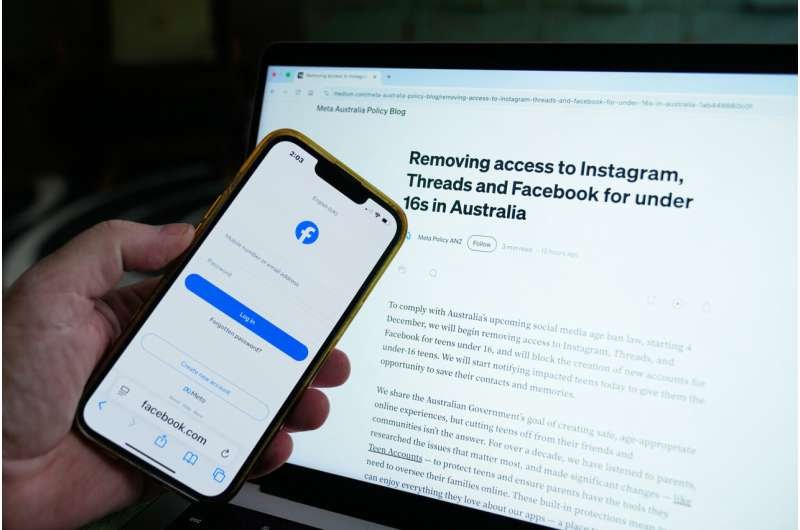
Meta has begun sending thousands of young Australians two-week warnings to download their data and prepare for account deletion ahead of a world-first ban on social media accounts for children under 16. The new Australian law, announced earlier this month, requires platforms including Facebook, Instagram, Threads, Snapchat, TikTok, X and YouTube to take “reasonable steps” to block underage users beginning December 10.
On Thursday, Meta became the first major platform to outline its compliance plan, notifying suspected under-16 account holders via SMS and email. From December 4, those users will begin losing access. “We will start notifying impacted teens today to give them the opportunity to save their contacts and memories,” Meta said, adding that teens may also update contact information to help regain access once they turn 16.
Meta estimates that 350,000 Australians aged 13 to 15 use Instagram and 150,000 use Facebook. Users incorrectly flagged as underage can verify their age through Yoti Age Verification by submitting government ID or a “video selfie,” though experts warn facial-recognition tools have at least a 5% failure rate.
The government has cautioned platforms against requiring all users to verify their age, arguing companies already possess enough data to identify many under-16 accounts. Failure to take reasonable action could result in fines up to AU$50 million.
Meta’s global head of safety, Antigone Davis, urged a broader solution, calling for app stores to verify users’ ages at sign-up. Parent advocates, meanwhile, say families should begin preparing children for life with less social media and more offline activities. – ERMD/TX