Category: Emerging Tech

  • Pakistan, UAE to Enhance Cooperation in Digital Innovation and AI: Shaza Fatima

    Pakistan, UAE to Enhance Cooperation in Digital Innovation and AI: Shaza Fatima

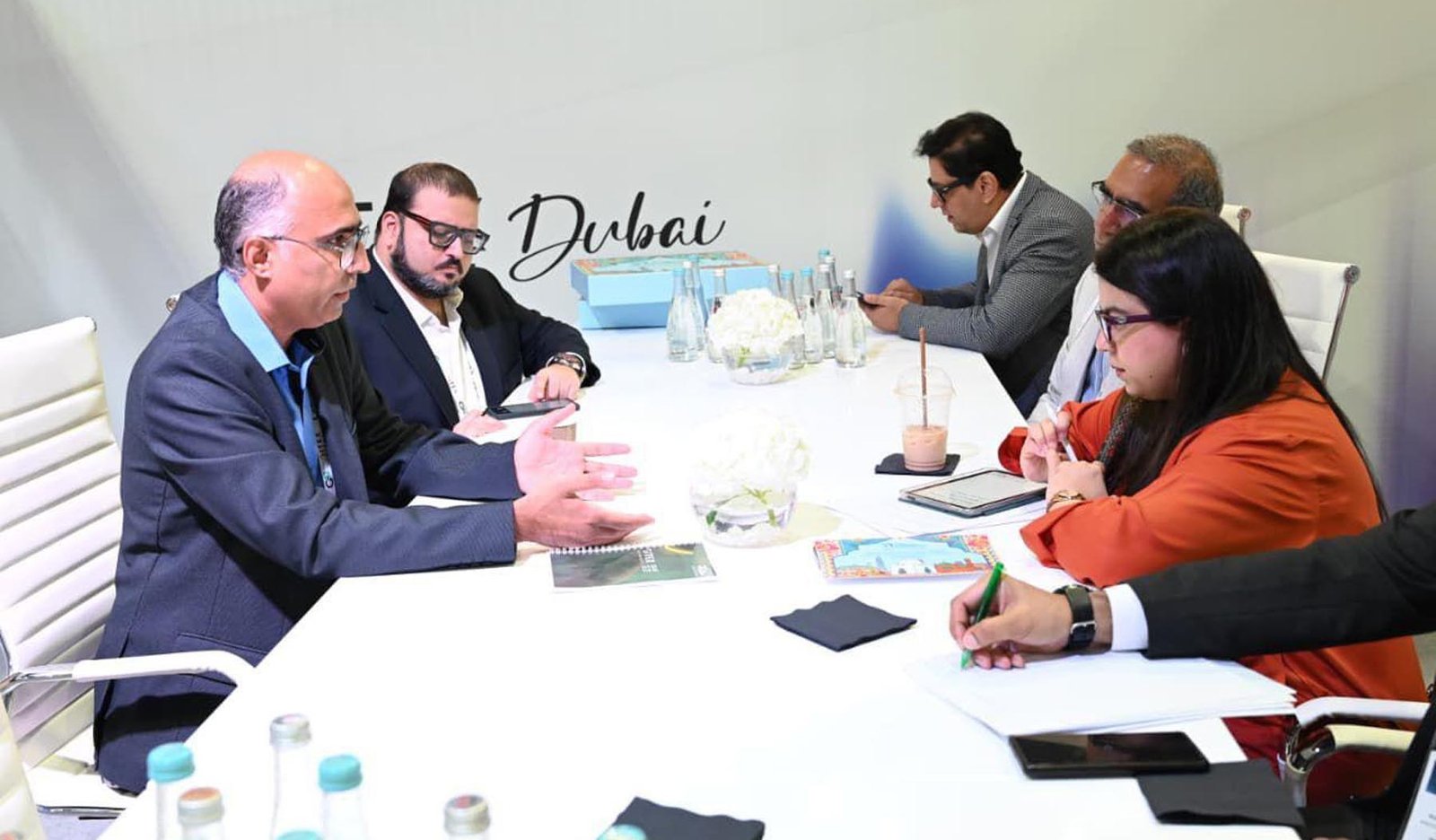
    During a meeting with H.E. Omar Suwaina Al Suwaidi, Undersecretary at the UAE Ministry of Industry and Advanced Technology, the two sides discussed joint efforts in digital governance, AI innovation, data infrastructure, and startup ecosystem development.

    Minister Shaza Fatima highlighted key Pakistani initiatives, including the Digital Nation Pakistan Act, National Data Exchange Layer, and programs promoting a cashless economy, smart governance, and AI integration. Both parties expressed their commitment to deepening cooperation in advanced technologies, data innovation, and cross-border startup investment.

    The Minister also met Mr. Massimo Falcioni, Chief Competitiveness Officer at the Abu Dhabi Investment Office, to explore avenues for expanding UAE–Pakistan collaboration in digital investment, fostering innovation, and building cross-border technology partnerships.

    In a separate meeting with Mr. Muneeb Anjum, CEO of AHAD, discussions centered on advancing Pakistan’s cybersecurity framework. The dialogue focused on enhancing digital trust, implementing robust security solutions, and strengthening public-private partnerships to bolster national cyber resilience and support the country’s innovation ecosystem.

    Minister Shaza Fatima underscored Pakistan’s commitment to positioning itself as a regional hub for digital innovation and secure technology growth through strategic global collaborations. – ER News Desk

  • Ignite Launches AI Wrapper 2025 with Rs. 8.75M Prize Pool

    Ignite Launches AI Wrapper 2025 with Rs. 8.75M Prize Pool

    The competition will be conducted across five major cities — Karachi, Lahore, Quetta, Peshawar, and Islamabad — culminating in a grand finale in Islamabad. Open to students, professionals, researchers, startups, and innovators, the competition invites participants to design AI-powered solutions in key sectors including education, healthcare, governance, finance, and climate change.

    With a total prize pool of Rs. 8.75 million, the AI Wrapper Competition 2025 ranks among the most significant technology contests in Pakistan. In addition to cash prizes, participants will gain access to expert mentorship, the opportunity to transform ideas into market-ready solutions, and potential selection to represent Pakistan in international AI competitions.

    Speaking at the launch event, Federal Minister for IT and Telecom, Ms. Shaza Fatima Khawaja, stated:

    “The AI Wrapper Competition 2025 reflects our strong commitment to harnessing technology for inclusive growth, social impact, and economic progress. Under the vision of Prime Minister Shehbaz Sharif for a Digital Nation Pakistan, we are building platforms that not only empower our youth but also highlight Pakistan’s innovation potential on the global stage.”

    The initiative is part of Ignite’s broader mission to accelerate AI-driven innovation and position Pakistan as a global contributor in artificial intelligence. By empowering local talent to develop custom AI solutions for the country’s unique challenges, the competition also promotes scalable innovation that can benefit other developing nations.

    Registrations are now open at ignitecode.org.pk/aiwrapper with the deadline set for October 10, 2025. – ER News Deak

  • ‘Meta to face EU charge for failing to police illegal posts’

    ‘Meta to face EU charge for failing to police illegal posts’

    The European Commission is preparing to issue preliminary findings saying that Meta’s Facebook and Instagram lack an adequate mechanism that would let users flag illegal posts for removal, the report said, citing two people familiar with the plans.

    The charge sheet is expected in the coming weeks, the report added.

    Meta’s Facebook and Instagram are also being investigated by the European Commission over their suspected failure to tackle disinformation and deceptive advertising in the run-up to the 2024 European Parliament elections.– Courtesy Reuters/TS

  • Satellite Technology to Resolve Crop Data Disputes in Punjab

    Satellite Technology to Resolve Crop Data Disputes in Punjab

    The initiative, spearheaded by the Special Investment Facilitation Council (SIFC), will be implemented in collaboration with China and the Land Information and Management System (LIMS), which was launched in 2023 to promote sustainable and technology-driven agriculture. Officials believe the project will help resolve chronic discrepancies between the Punjab Crop Reporting Service (CRS) and the Pakistan Cotton Ginners Association (PCGA).  


    For years, CRS has been accused of inflating provincial cotton output through controversial sampling methods, while the PCGA’s figures—based only on cotton received at ginning factories—are said to understate the crop. This has left Pakistan with two conflicting national datasets, undermining its credibility in international cotton forums and complicating decisions on imports, exports, and pricing.  
    In the current fiscal year, CRS reported Punjab’s seed cotton output at 609,000 bales as of July 31, while PCGA put the figure at just 301,000 bales. CRS Director General Dr Abdul Qayyum defended the service’s estimates, saying they are based on internationally recognised methodologies, including randomised sampling, GPS-enabled tools, and FAO-endorsed yield estimation techniques. He argued that PCGA data ignores cotton still at farms, transferred to other provinces, or held by stockists.  


    Dr Qayyum urged the Federal Board of Revenue (FBR) to establish a foolproof system at ginning factories to ensure transparent and real-time reporting of processed cotton. “This step is essential for strengthening data integrity and improving policy coordination,” he said.  

    Meanwhile, the All Pakistan Textile Mills Association (APTMA) has shown interest in taking over the Pakistan Central Cotton Committee (PCCC). The proposal follows a meeting on cotton revival chaired by Deputy Prime Minister Ishaq Dar, during which APTMA settled billions of rupees in outstanding dues with PCCC. Industry stakeholders believe the takeover could boost cotton research, helping develop high-yielding and climate-resilient varieties to improve per-acre output.  

    On the market front, heavy rains across cotton-growing areas have triggered a shortage of quality lint, pushing prices higher. Rates rose by Rs200–300 per maund, reaching Rs16,400–16,600 in local markets. Cotton Ginners Forum Chairman Ihsanul Haq warned that continued depreciation of the rupee could drive prices up further. – ER Report

  • Battery-Free Wireless Sensing: A Passive Approach

    Battery-Free Wireless Sensing: A Passive Approach

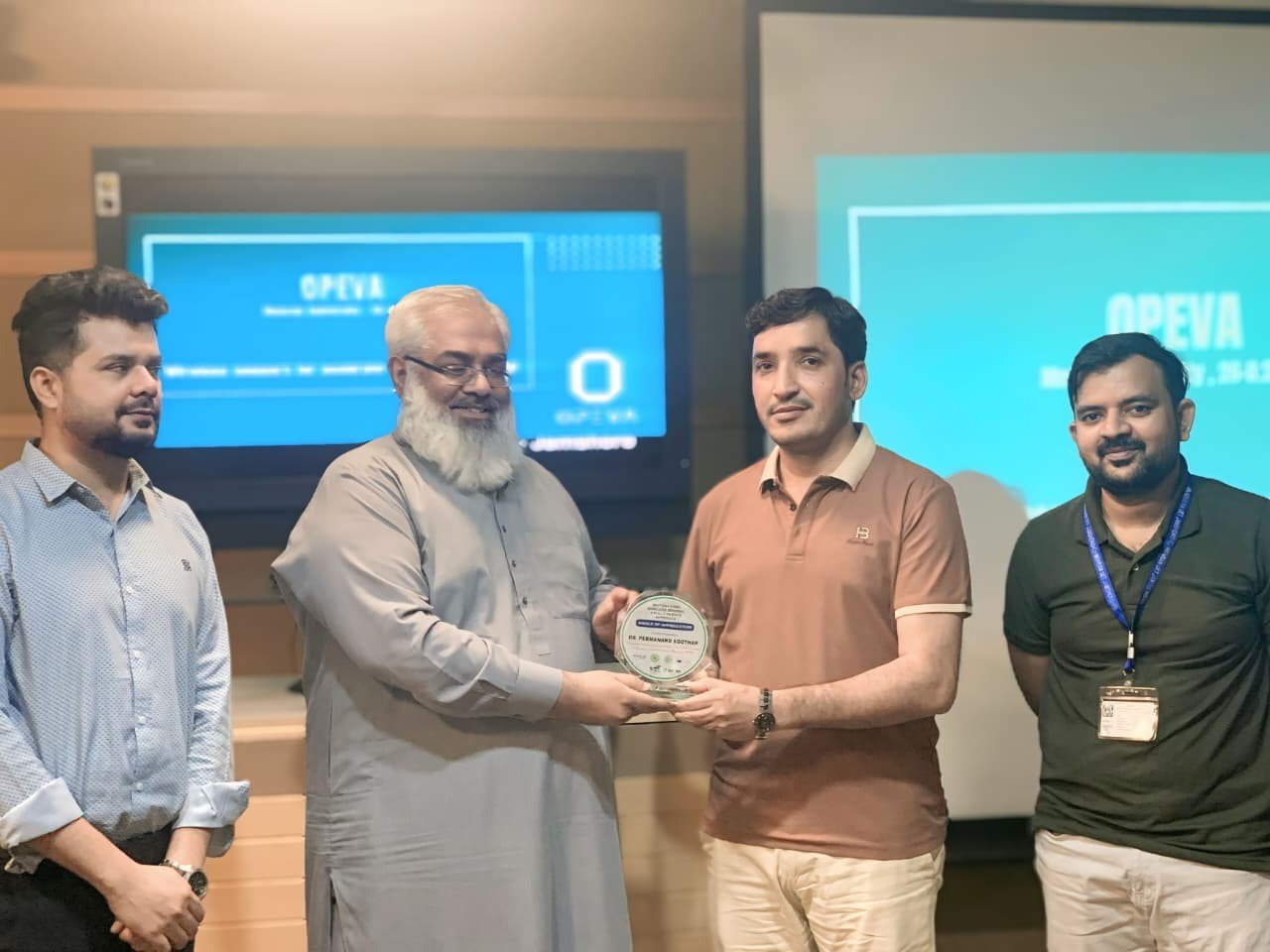
    The keynote speaker, Prof Dr. Valentina Palazzi, from the University of Perugia, Italy, joined us virtually and delivered a compelling session. Her insights into the cutting-edge developments in passive wireless sensing captivated the audience and opened new directions for future research. We were honored by the in-person presence of Dr. Badar Muneer, a prominent researcher at the University of Perugia, Italy, whose practical expertise and collaborative perspective enriched the discussion further.  


    Prof. Dr. Bhawani Shankar Chowdhry, Vice Chair of IEEE MTTS, Karachi Section, who joined us virtually from Canada, concluded the session with his encouraging and insightful remarks. Prof Chowdhry appreciated this highly insightful seminar on Battery-Free Wireless Sensing for broadening our perspective and for showing us the exciting future directions in this field. He further said that practical dimensions that enriched today’s discussion and opened new horizons for research, innovation, and collaboration. He appreciated the effort of Dr. Permanand, Chair and Advisor of the IEEE MTTS Student Branch, for his dynamic leadership and efforts in making this seminar possible.  

    Today’s exchange of knowledge has truly inspired us. Prof. Dr. Faisal Karim Shaikh, Chairman of the Department of Telecommunication, MUET, appreciated the efforts of the organizing team and distributed shields of appreciation to the keynote speakers and certificates to participants and volunteers.  

    The seminar was further graced by Dr. Umair Ahmed Korai, Chair of IEEE ComSoc, and Engr. Talha Kaimkhani, PhD Scholar at MUET. Over 60 participants attended the seminar, comprising faculty, students, and volunteers, which contributed to a vibrant and engaging academic atmosphere.  
    This successful seminar marks another milestone in promoting innovative research and global collaboration under the IEEE MTTS platform.

  • Ultrasound-based wireless charging technology for implantable medical devices

    Ultrasound-based wireless charging technology for implantable medical devices

    A research team led by Professor Jinho Chang from the Department of Electrical Engineering and Computer Science at DGIST has developed an “ultrasound-based wireless charging technology” capable of rapidly and efficiently charging the batteries of implantable medical devices.

    This technology has achieved world-class energy efficiency, fully charging a commercial battery within two hours, even inside the human body. The research is published in the journal Biosensors and Bioelectronics.

    Recently, due to population aging, diseases, and accidents, a rapid increase in demand for implantable medical devices (e.g., pacemakers and neural stimulators) has been observed. However, the batteries in these devices must be replaced periodically, requiring patients to undergo repeated surgeries—posing both inconveniences and risks. To address this issue, developing technology that can wirelessly transmit energy from outside the body is essential in order to charge the batteries without the need for additional surgeries.

    Although wireless charging technologies using ultrasound have existed previously, harvesters (energy receivers) that can be implanted in the human body have faced limitations in size and structure. Additionally, the ultrasound intensity that can be safely used in the human body is restricted, resulting in insufficient power output.

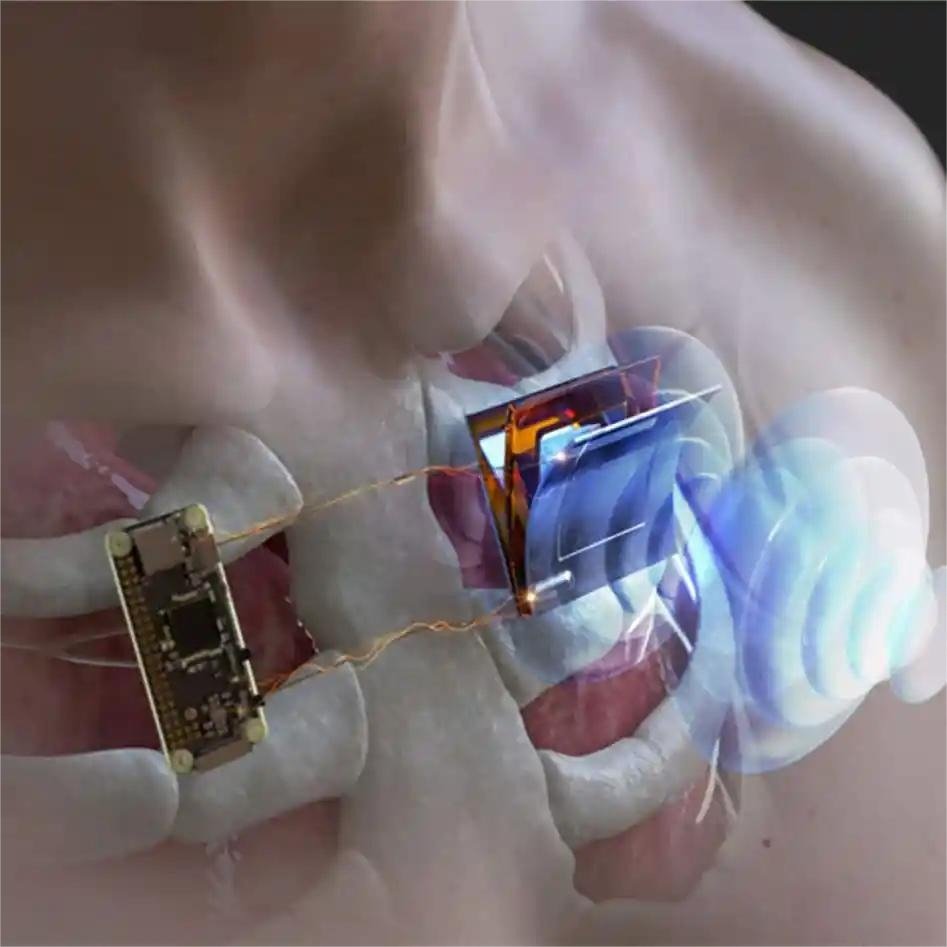
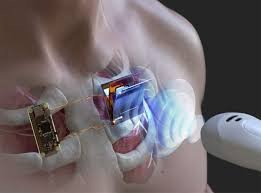
    To overcome these limitations, Professor Chang’s research team at DGIST developed a new type of “sandwich-structured piezoelectric energy harvester.” Two piezoelectric layers are stacked such that the front layer harvests incoming ultrasound energy to generate electricity, while the rear layer captures the residual ultrasound to produce additional power. By combining the output from both layers, the harvester achieves over 20% greater efficiency compared to that of conventional designs.

    Using this technology, the research team demonstrated that a 140mAh commercial battery could be fully charged in just one hour and 40 minutes at an underwater distance of 30mm. In another experiment using 30mm-thick pig tissue, a 60mAh battery was fully charged within one hour and 20 minutes. These results represent a world-leading performance, achieving at least twice the power output of previously reported technologies. Professor Chang stated, “This research presents an innovative technology that effectively harvests ultrasound energy, which has not been fully utilized in the past, for wireless charging of implantable medical devices. We aim to commercialize a system capable of fully charging within one hour by combining this ultrasound-based wireless charging technology with high-efficiency semiconductor components.” – TX

  • Pakistan’s New Remote Sensing Satellite Becomes Fully Operational

    Pakistan’s newly launched remote sensing satellite has become fully operational after its successful deployment last month from China’s Xichang Satellite Launch Centre, the Space and Upper Atmosphere Research Commission (Suparco) has announced.

    “The satellite has established stable contact with ground stations and begun capturing and transmitting high-resolution imagery, greatly enhancing data availability and reliability for various national sectors,” Suparco said in a statement.

    According to the agency, the advanced satellite will revolutionise urban planning, infrastructure development, and regional monitoring by providing high-quality imaging to track urban expansion and growth. It will also support disaster management through early warnings and rapid response to floods, landslides, and earthquakes, in addition to monitoring glacier recession, deforestation, and climate change indicators. The satellite, Pakistan’s second after PRSS-1, will further improve agricultural productivity by enabling precision farming, mapping crop patterns, and managing water resources more efficiently—boosting the country’s food security.

    Officials said the system will also have a strategic role in supporting national projects, including the China–Pakistan Economic Corridor (CPEC), by mapping transportation networks, assessing geohazard risks, and guiding efficient resource allocation. “These capabilities will not only improve decision-making across multiple sectors but also promote sustainable socio-economic development and strengthen Pakistan’s technological autonomy,” Suparco noted.

    The development places Pakistan alongside a growing number of countries in the region enhancing their space programs. India, for example, operates a fleet of advanced Earth observation satellites under its Cartosat and Resourcesat series, which support agriculture, disaster response, and military reconnaissance. China has built one of the world’s most extensive satellite constellations, providing services ranging from remote sensing to navigation and communications, while also assisting partner countries like Pakistan. Bangladesh launched its first communications satellite, Bangabandhu-1, in 2018, expanding its digital connectivity and broadcasting capabilities, and Sri Lanka joined the space domain through leasing and partnerships with private satellite operators. Analysts note that with its latest deployment, Pakistan has taken another important step in regional space competition, seeking not only to strengthen its scientific and economic base but also to ensure that it does not lag behind its South Asian neighbors in leveraging satellite technology for development and security. – ER News Desk

  • Ultrasound-based wireless charging technology for implantable medical devices

    Ultrasound-based wireless charging technology for implantable medical devices

    The research is published in the journal Biosensors and Bioelectronics.

    Recently, due to population aging, diseases, and accidents, a rapid increase in demand for implantable medical devices (e.g., pacemakers and neural stimulators) has been observed. However, the batteries in these devices must be replaced periodically, requiring patients to undergo repeated surgeries—posing both inconveniences and risks. To address this issue, developing technology that can wirelessly transmit energy from outside the body is essential in order to charge the batteries without the need for additional surgeries.

    Although wireless charging technologies using ultrasound have existed previously, harvesters (energy receivers) that can be implanted in the human body have faced limitations in size and structure. Additionally, the ultrasound intensity that can be safely used in the human body is restricted, resulting in insufficient power output.

    To overcome these limitations, Professor Chang’s research team at DGIST developed a new type of “sandwich-structured piezoelectric energy harvester.” Two piezoelectric layers are stacked such that the front layer harvests incoming ultrasound energy to generate electricity, while the rear layer captures the residual ultrasound to produce additional power. By combining the output from both layers, the harvester achieves over 20% greater efficiency compared to that of conventional designs.

    Using this technology, the research team demonstrated that a 140mAh commercial battery could be fully charged in just one hour and 40 minutes at an underwater distance of 30mm. In another experiment using 30mm-thick pig tissue, a 60mAh battery was fully charged within one hour and 20 minutes. These results represent a world-leading performance, achieving at least twice the power output of previously reported technologies.

    Professor Chang stated, “This research presents an innovative technology that effectively harvests ultrasound energy, which has not been fully utilized in the past, for wireless charging of implantable medical devices. We aim to commercialize a system capable of fully charging within one hour by combining this ultrasound-based wireless charging technology with high-efficiency semiconductor components.” – TX

  • Digi Insurance gets Pakistan’s First Digital-Only Insurance License

    The Securities and Exchange Commission of Pakistan (SECP) has granted the country’s first-ever digital-only non-life insurance license to Digi Insurance Limited, marking a major milestone in the evolution of Pakistan’s insurance sector. The license, issued under SECP’s progressive regulatory framework, reflects the Commission’s commitment to promoting innovation and expanding access to financial services through technology-led models.  
    Digi Insurance Limited is a homegrown insurtech company offering an end-to-end digital platform for non-life insurance products. Its business model is built on digital-first principles, with core operations—such as policy issuance, customer onboarding, and claims processing—conducted entirely through digital channels. By leveraging advanced technologies and data-driven tools, Digi Insurance aims to deliver faster claims processing, enhanced customer experience, and operational efficiency.

     
    The digital-only license allows Digi Insurance to operate without any physical branch infrastructure, reducing overhead costs and enabling broader reach, especially in underserved and remote regions. This move supports SECP’s strategic goal of financial inclusion through responsible innovation, and promotes the adoption of customer-centric, tech-enabled insurance solutions.  
    This initiative is part of SECP’s broader efforts to modernize Pakistan’s regulatory landscape and encourage the growth of new market entrants that offer agile and efficient business models. The Commission expects this approval to act as a catalyst for digital transformation within the insurance industry, driving greater competition, improved service delivery, and innovation in product offerings.  
    SECP remains committed to supporting Pakistan’s shift toward a digitally enabled economy by fostering innovation, simplifying business processes, and strengthening the accessibility and resilience of the financial sector.

  • A massive AI data center will use 1.8 gigawatts of electricity much more than the host town homes combined

    A massive AI data center will use 1.8 gigawatts of electricity much more than the host town homes combined

    “It’s a game changer. It’s huge,” Mayor Patrick Collins said Monday.

    With cool weather—good for keeping computer temperatures down—and an abundance of inexpensive electricity from a top energy-producing state, Wyoming’s capital has become a hub of computing power.

    The city has been home to Microsoft data centers since 2012. An $800 million data center announced last year by Facebook parent company Meta Platforms is nearing completion, Collins said.

    The latest data center, a joint effort between regional energy infrastructure company Tallgrass and AI data center developer Crusoe, would begin at 1.8 gigawatts of electricity and be scalable to 10 gigawatts, according to a joint company statement.

    A gigawatt can power as many as 1 million homes. But that’s more homes than Wyoming has people. The least populated state, Wyoming, has about 590,000 people.

    And it’s a major exporter of energy. A top producer of coal, oil and gas, Wyoming ranks behind only Texas, New Mexico and Pennsylvania as a top net energy-producing state, according to the U.S. Energy Information Administration.

    Accounting for fossil fuels, Wyoming produces about 12 times more energy than it consumes. The state exports almost three-fifths of the electricity it produces, according to the EIA.

    But this proposed data center is so big, it would have its own dedicated energy from gas generation and renewable sources, according to Collins and company officials.- TX