At the Mobile World Congress 2025, held in Barcelona until March 6, the Australian start-up Cortical Labs is causing a stir with the CL1, billed as the world’s first ever commercial biocomputer.
This computer features an innovative system with human neurons grown directly on a silicon chip, allowing direct interaction via electrical signals. The Australian startup Cortical Labs is behind this innovation, with the aim of exploiting the energy efficiency and learning capacity of neurons to develop a new generation of intelligent computer systems. This surprising computer is the first example.
Human stem cells were cultivated in a laboratory and placed on a silicon chip equipped with electrodes. The neurons then form interconnected networks that evolve and adapt continuously, as can happen in the human brain.
This combination of human brain cells and traditional electronic circuits is capable of adaptive learning, making it particularly suitable for the management of artificial intelligence, especially in the context of medical applications. This cutting-edge technology, which is aimed primarily at researchers and professionals in the fields of medicine, robotics and artificial intelligence, does, however, come at a price: namely US$35,000 (RM154,774).
With this innovation, Cortical Labs is paving the way for significant advances in many fields, but the idea of combining real human cells with a computer system is not new. For example, in 2023, researchers at Indiana University in Bloomington, US, succeeded in combining lab-grown human brain cells with an electronic circuit, making them “intelligent” and capable of processing information.
This type of experiment could lead to the development of new hybrid tools in the future – including computers and other devices – integrating human cells grown in a laboratory.
President Donald Trump said Tuesday US lawmakers should get rid of a landmark 2022 bipartisan law to give $52.7 billion in subsidies for semiconductor chips manufacturing and production and use the proceeds to pay debt.
“The CHIPS act is a horrible, horrible thing. We give hundreds of billions of dollars and it doesn’t mean a thing. They take our money and they don’t spend it,” Trump said in a speech to Congress.
“You should get rid of the CHIPS Act and whatever is left over, Mr. Speaker, you should use it to reduce debt.”
The CHIPS and Science law signed by then President Joe Biden in August 2022 included $39 billion in subsidies for US semiconductor manufacturing and related components along with $75 billion in government lending authority.
Commerce Secretary Howard Lutnick has praised the program but said previously he wanted to review awards finalized during the Biden administration.
Under Biden, the Commerce Department convinced all five leading-edge global semiconductor firms to locate factories in the United States in the effort to tackle national security risks from imported chips.
In the final weeks of the Biden administration, the Commerce Department finalized more than $33 billion in awards including $4.745 billion to South Korea’s Samsung Electronics up to $7.86 billion for Intel, $6.6 billion for Taiwan Semiconductor Manufacturing Co and $6.1 billion for Micron.
Some officials have expressed concern Trump could seek to invalidate binding grant agreements struck in the Biden administration. New York Governor Kathy Hochul said Tuesday the law “is the reason Micron is bringing $100 billion and 50,000 jobs to Central New York. Trump just said he wants to get rid of it.”
TSMC announced this week with Trump it plans to make a new $100 billion investment in the United States that involves building five additional chip facilities there in coming years.
Lutnick referenced the $6.6 billion award in a White House event – but noted the department was not planning to give TSMC any new subsidies.
TSMC said last month it has already received $1.5 billion of its award.
This week about one-third of the staff in the US Commerce Department office overseeing $39 billion of manufacturing subsidies for chipmakers was laid off, two sources familiar with the situation said.
Reuters reported last month that the new Trump administration, which has embarked on a dramatic overhaul of the federal government, is reviewing the projects awarded.
Malaysia will invest US$250 million (US$1= RM4.44) over the next decade, leveraging on Arm Holdings Plc’s expertise, to create a new ecosystem in the artificial intelligence (AI) and semiconductor industry through a strategic collaboration with the United Kingdom-based company.
Prime Minister Datuk Seri Anwar Ibrahim is expected to launch the strategic collaboration later today.
This move will kick off the journey towards the first Malaysia-based chip while providing a platform for local players to gain access to the semiconductor and software design firm’s intellectual property (IP) network, as well as transfer of technology and know-how.
According to a Bloomberg news report, Malaysia is aiming to create as many as 10 chip companies with total annual revenue of US$20 billion.
The report said Malaysia is already a key hub for chip testing and packaging, but the country has yet to make a meaningful foray into chip design.
Arm Holdings has to date issued 6,800 patents while 2,700 applications are still pending, and more than 300 billion Arm-based chips have been sold worldwide.
Confirming the matter, the Prime Minister’s senior press secretary Tunku Nashrul Abaidah said that through the collaboration, Malaysia will make history in the global technology industry and witness a transformation in its AI and semiconductor landscape.
Tunku Nashrul, in the Prime Minister’s Office (PMO) daily briefing streamed live on Anwar’s official Facebook page as well as PMO Malaysia’s Facebook page, said Malaysia will be the first country in this region where the company will set up its office.
“The Prime Minister views this collaboration as a strategic step to strengthen the country’s technology ecosystem, positioning Malaysia as a key player in the global technology arena.
“With this collaboration in place, Malaysia moves ahead of other countries by becoming the company’s first technology ecosystem partner, making it a key hub in ASEAN,” he said.
Tunku Nashrul said this MADANI Government initiative is implemented by the Investment, Trade and Industry Ministry, the Finance Ministry and the Economy Ministry.
He said this partnership will enable Malaysian companies to leverage advanced technology and expertise in semiconductors, as well as train the local skilled workers.
“This will accelerate the development of a high-skilled workforce and strengthen the competitiveness of the nation’s technology industry,” he said.
He added that the launch and signing of this strategic collaboration is a testament to global investors’ confidence in the MADANI Government’s policies and continued commitment in having high-value collaborations with Malaysia.
Chinese artificial intelligence phenomenon DeepSeek revealed some financial numbers on Saturday, saying its “theoretical” profit margin could be more than five times its costs, peeling back a layer of the secrecy that shrouds business models in the AI industry.
The 20-month-old startup that rattled Silicon Valley with its innovative and inexpensive approach to building AI models said on X its V3 and R1 models’ cost of inferencing to sales during a 24-hour-period on the last day of February put profit margins at 545%.
Inferencing refers to the computing power, electricity, data storage and other resources needed to make AI models work in real time.
However, DeepSeek added a disclaimer in details it provided on GitHub, saying its actual revenues are substantially lower for various reasons, including the fact that only a small set of its services are monetized and it offers discounts during off-peak hours. Nor do the costs factor in all the R&D and training expenses for building its models.
While the eye-popping profit margins are therefore hypothetical, the reveal comes at a time when profitability of AI startups and their models is a hot topic among technology investors.
Companies from OpenAI Inc. to Anthropic PBC are experimenting with various revenue models, from subscription-based to charging for usage to collecting licensing fees, as they race to build ever more sophisticated AI products.
But investors are questioning these business models and their return on investment, opening a debate on the feasibility of reaching profitability any day soon.
The Hangzhou-based startup said Saturday on X that its online service had a “cost profit margin of 545%” and gave an overview of its operations including how it optimized computing power by balancing load – that is managing traffic so that work is evenly distributed between multiple servers and data centres.
DeepSeek said it innovated to optimize the amount of data processed by the AI model in a given period, and managed latency – the wait time between a user submitting a query and receiving the answer.
In a series of unusual steps beginning early this week, the startup, which has espoused open-source AI, surprised many in the industry by sharing some key innovations and data underpinning its models, in contrast to the proprietary approach of its biggest US rivals like OpenAI.
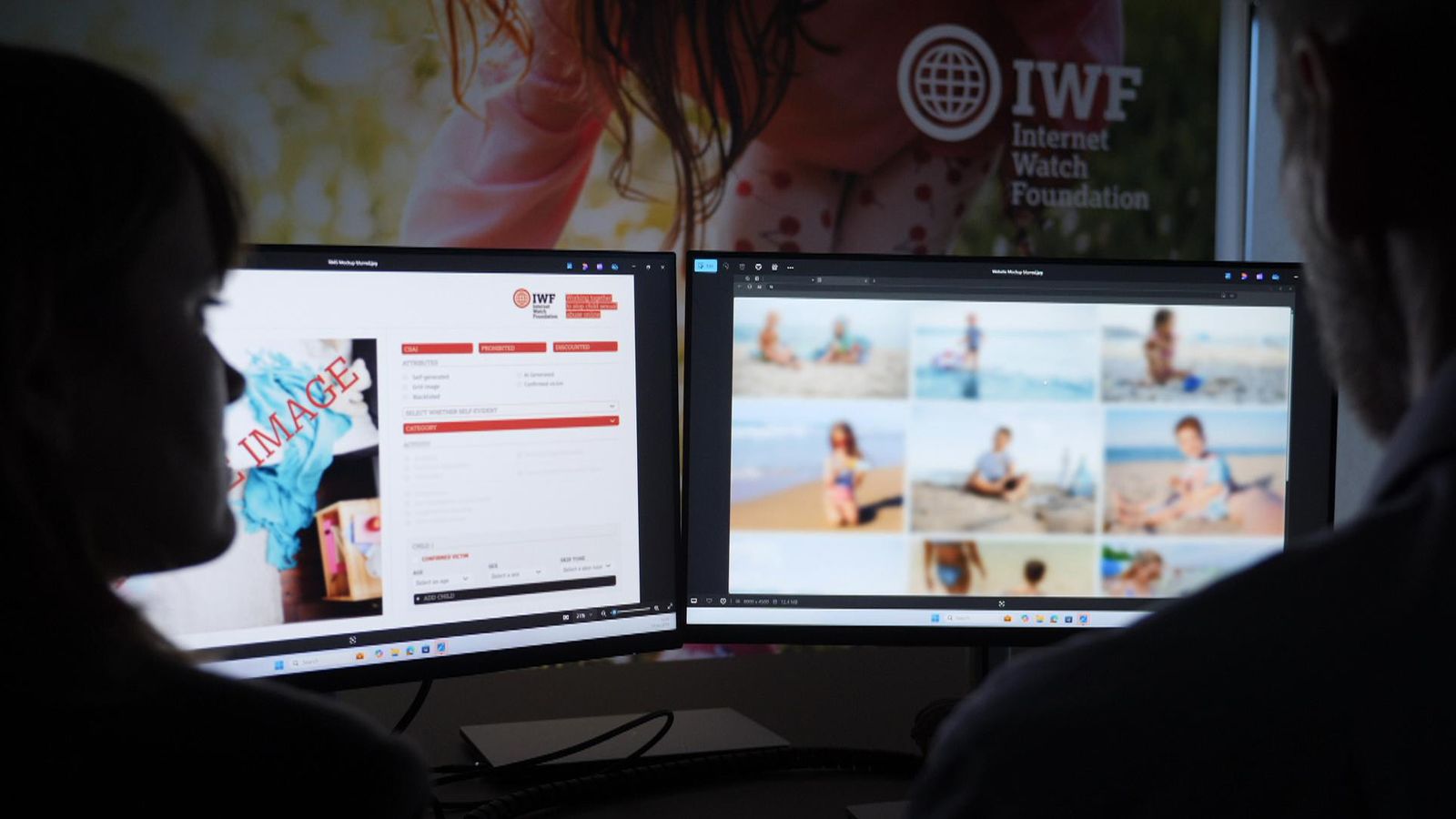
Two dozen arrested in int’l swoop for links to AI-made child sex abuse images
Two dozen people were arrested this week for their role in a criminal group that distributed images generated by artificial intelligence of children being sexually abused, the European Union’s police agency said on Friday.
The operation is one of the first involving AI-generated child abuse material, Europol said, adding there was a lack of national legislation surrounding the use of AI tools for this purpose.
The main suspect, a Danish national, ran an online platform where he distributed the AI-generated material he produced. Users around the world paid a “symbolic online payment” to access the platform.
The operation is ongoing, with authorities from 19 countries including Australia, Spain and the United Kingdom involved.
Most of the 25 arrests were carried out simultaneously on Wednesday in the operation led by Danish authorities, said Europol, without identifying the countries where the arrests took place. More are expected in the coming weeks, it said.
Lenovo on Friday won an appeal in Britain in its attempt to get an interim licence to use Ericsson’s patents, in the latest ruling in the companies’ global licensing dispute over 5G wireless technology.
Lenovo sued Ericsson at London’s High Court in 2023, one of several cases brought by Lenovo or Ericsson around the world which has seen the companies trade lawsuits in Brazil, Colombia and the United States.
The dispute centres on the fair, reasonable, and non-discriminatory (FRAND) terms for a licence to use Lenovo and Ericsson’s patents. Disputes over FRAND licensing have led to global legal battles in the telecom industry.
In London, Lenovo sought a declaration that a willing licensor would agree to a short-term licence pending the final determination of FRAND terms.
Its application was refused last year, but the Court of Appeal overturned that decision on Friday.
Judge Richard Arnold said in a written ruling that “a willing licensor in the position of Ericsson would enter into an interim licence with Lenovo”, adding that he hoped Ericsson would now choose to do so.
Lenovo’s Chief Legal Officer Laura Quatela said the ruling “not only confirms that Lenovo is a willing licensee but strengthens and reaffirms our commitment to advocating for transparency and fairness in global FRAND licensing”.
Ericsson did not immediately respond to a request for comment.
Apple Inc is removing its most advanced encrypted security feature for cloud data in the UK, a stunning development that follows the government ordering the company to build a backdoor for accessing user data.
The company said on Feb 21 that Advanced Data Protection, an optional feature that adds end-to-end encryption to a wide assortment of user data, is no longer available in the UK for new users. The technology had provided an extra layer of security to iCloud data storage, device backups, web bookmarks, voice memos, notes, photos, reminders and text message backups.
“We are gravely disappointed that the protections provided by ADP will not be available to our customers in the UK given the continuing rise of data breaches and other threats to customer privacy,” the company said in a statement. “ADP protects iCloud data with end-to-end encryption, which means the data can only be decrypted by the user who owns it, and only on their trusted devices.”
The unprecedented step comes two weeks after media outlets, including Bloomberg News, reported that the UK government ordered Apple to build a backdoor into customer data globally.
Without ADP, the UK government is poised to have an easier time requesting user data – a potentially alarming scenario for customers in the country. The move also threatens to set a precedent that encourages other nations to push Apple to reduce security.
A representative for the UK Home Office said it doesn’t comment on operational matters, including “confirming or denying the existence of any such notices.”
Apple previously called a bill from the UK Parliament that sought access to user data “unprecedented overreach by the government.” At the time, the company said that “the UK could attempt to secretly veto new user protections globally preventing us from ever offering them to customers.”
Customers already using ADP will need to manually disable it during an unspecified grace period to keep their iCloud accounts. The company said it will issue additional guidance in the future to affected users and that it doesn’t have the ability to automatically disable it on their behalf.
The move to pull its encryption feature – rather than complying and building a backdoor – is a clear rebuke of the government’s order.
“As we have said many times before, we have never built a backdoor or master key to any of our products or services and we never will,” Apple said Friday.
“Enhancing the security of cloud storage with end-to-end encryption is more urgent than ever before” the company said, adding that it “remains committed to offering our users the highest level of security for their personal data and are hopeful that we will be able to do so in the future in the United Kingdom.”
Users who attempt to enable Advanced Data Protection will receive a message on their iPhone, iPad or Mac that says “Apple can no longer offer Advanced Data Protection (ADP) in the United Kingdom to new users.” Bloomberg News published a guide on how to enable the feature, which remains available elsewhere globally.
The elimination of Advanced Data Protection in the UK won’t remove end-to-end encryption provided by default for several other Apple features, including iMessage, FaceTime, password management and health data. Some industry watchers speculated that Apple could pull its services from the UK altogether in light of the order, but removing the optional extra security is the company’s compromise – at least for now.
Apple has a history of making changes regionally in order to keep offering its products in those markets. For instance, iCloud in China is operated by a local provider, and it is working with Alibaba Group Holding Ltd. on a content filtering system in order to offer its AI features in the region. At the same time, it has pushed privacy as a guiding principle and fought the US government about a decade ago when it asked the company to build a backdoor into iPhone data.
As part of its order to Apple, the UK asked it for access to global user data, Bloomberg News reported. The mandate orders Apple to provide access under the UK’s Investigatory Powers Act, a law that granted officials the authority to compel companies to remove encryption under what’s known as a “technical capability notice.” The law also makes it illegal for companies to reveal when the government has made such an order.
“Protecting our users’ privacy and the security of their data is at the very heart of everything we do at Apple,” the company said in response to the 2023 bill from the UK Parliament that sought access to user data.
Pakistan’s leading digital company, Motto Vest, has been recognized at the prestigious Digital Prosperity Awards for its contributions to technological innovation and societal impact.
This achievement highlights Pakistan’s growing influence in the global digital economy.
Additionally, Zeeshan Shahid received the Empowering Society Ethics award at the event. He was presented the award by H.E Deemah Al-Yahya, Secretary-General of the Digital Cooperation Organization (DCO), along with a H.E Dr. Jaafar Abdel Fattah Hassan, Prime Minister of Jordan.
This recognition underscores Pakistan’s commitment to ethical digital transformation and inclusive technological development.
Minister of State for IT & Telecommunication, Shaza Fatima Khawaja, congratulated Motto Vest and Zeeshan Shahid, stating: “This award is a testament to Pakistan’s thriving digital ecosystem and our commitment to fostering innovation with ethical responsibility.
“Our tech sector is making remarkable strides globally, and we will continue to support initiatives that promote digital prosperity and inclusive growth.”
The Growth of Fiber Optic Technology and Its Impact on Pakistan have brought a big change, says Hamid Jalal, CEO, FiberCom in an interview with ER
Journey Towards Fiber
I am a network professional, and I must share that the communication industry saw significant growth in 2020, as we braved the challenges of COVID-19. The shift to working from home made the need for reliable internet and associated technologies inevitable. I have been working in the security field, specializing in surveillance, access control, and fire alarms, as it has been my family business. However, after witnessing the boom in the communication industry, I decided to transition into this field. Over time, I expanded into areas such as communication and optical fiber transmission. Since optical fiber offers the fastest data transfer speeds, the required components at the backend, such as receivers, are available as solutions. As customer demand for solutions increased, we optimized our offerings.
Fiber, Speed, and Quality
The speed of optical fiber is virtually limitless in terms of its medium at the front end, and the determination of speed depends on the backend technology. The highest models available in the market today can handle up to 100 GB. However, given the rapid development of this industry in Pakistan, we are gradually progressing towards speeds of up to 1.6 terabits.
We initially targeted network corporations and ISPs that wanted to connect to their data centers, sourcing required components from China. Later, the telecom industry, including the SCO in Azad Kashmir, approached us, becoming one of our biggest customers. As a result, we continue to grow in this field.
The global boom in this industry has also been reflected in Pakistan. With the growing necessity of internet access, we trained people to understand this technology. Today, internet services like ChatGPT and DeepSeek are helping us meet these evolving needs.
Modern Communication and Monetary Cost
In the past, communication relied on copper-based connections between exchanges, connected by radio. Today, these connections are facilitated via optical fiber. Copper-based connections are expensive when you need multiple lines, but optical fiber makes these connections more affordable. With a single-core fiber line, you can support multiple connections without the costly infrastructure required for copper.
Currently, many companies in Pakistan produce optical fiber locally, which has further reduced costs. In addition to lower costs and faster transfer speeds, optical fiber offers a variety of solutions for customers.
5G and Starlink
Starlink is expensive in Pakistan, and its global tariffs are high as well. However, it is beneficial for remote areas that lack communication infrastructure. At present, Pakistan is 80% covered by optical fiber, and the necessary infrastructure is already in place. I don’t see Starlink as a major threat to our business, as fiber optics have virtually limitless capacity, while Starlink has limitations.
The Local Communication Industry
Pakistan is gradually developing its local communication industry, with companies like Premier Cables and PTCL cables exporting products. Additionally, some smaller industries are manufacturing optical fiber, and the quality is quite good. However, the core components are still imported from China, and all the required devices are also sourced internationally.
Made in Pakistan
If we were more export-oriented, we would be in a very strong position due to Pakistan’s strategic location. However, there is a lack of focus on this, with many people investing in real estate instead of contributing to industrial development. In contrast, India has made significant progress by installing SMT machines and purchasing chips from Taiwan to offer its own solutions. Pakistan has the skills to do the same, but it requires better policies, such as lower electricity costs, to make it viable here.
About FibreCom
We started our journey in 2020, and FibreCom deals with communication and fiber technologies. We strive to provide all the equipment necessary to streamline the communication process, offering maximum support at the backend. Our solutions cover everything from home to industrial applications.
China’s telecommunication giant Huawei has kicked off roadshows for the 12th edition of its flagship competition “Seeds For The FutureBangladesh”, which aims to develop the country’s ICT ecosystem by enhancing students’ ICT knowledge and skills.
As part of this initiative, roadshows have recently been held at several leading educational institutions, including East West University, BRAC University and so on, engaging more than 1,000 students, the company said in a statement here on Tuesday.
During these sessions, it said Huawei presented the objectives of the “Seeds For The Future” programme, its roadmap, suggestions on preparation, and opportunities for the students. The roadshows will be hosted at several other universities across the country.
This year, the roadshows will take place till March, followed by the official inauguration of the programme in April, when the registration process will open for applicants.
The winners of this competition in Bangladesh will advance to the regional competition in China.
Seeds for the Future is a knowledge and skill-based global competition for university students.
Since its launch in Bangladesh in 2014, the programme has gained strong recognition among academics and students for nurturing future ICT leaders. Winners from countries join regional and global rounds every year. – ERMD