Category: Emerging Tech

  • Adobe launches AI video tool to compete with OpenAI

    Adobe launches AI video tool to compete with OpenAI

    The Firefly Video Model, as Adobe is calling the service, will compete against Sora, a model developed by ChatGPT creator OpenAI, and startup Runway, both of which currently offer video-generation services. Facebook owner Meta Platforms has also developed a video-generation AI model but has not given a timeline for when it will be released.

    Adobe’s model differs from its rivals because it is geared toward generating clips that will fit into how film and television studios use Premiere Pro, its flagship video editing software.

    To that end, many of the features that Adobe is emphasizing revolve around feeding existing shots into the video model and asking it to generate clips that fix or expand on shots that were taken on a real production set but that did not come out quite right.

    Adobe said the service will generate five-second clips at 1080p resolution. While that is shorter than the clips of up to 20 seconds generated by OpenAI’s service, Adobe executives said the majority of individual clips in most productions are only three seconds.

    Adobe said a user can generate 20 clips per month for $9.99 and 70 clips for $29.99. That compares with 50 videos for $20 per month with OpenAI’s plan at lower resolution and a $200 OpenAI plan that can handle longer, higher resolution videos.

    Adobe is also working on a “Premium” pricing plan for studios and other high-volume video users and will release those pricing details later this year. Alexandru Costin, Adobe’s vice president of generative AI, said the company is working to generate 4K video and will remain focused on quality rather than longer clips.

    “We actually think that great motion, great structure, great definition scheme, making the actual clip look like it was film, is more important than making a longer clip that’s unusable,” Costin told Reuters.

  • Microsoft to launch ‘responsible AI’ foundation in Abu Dhabi

    Microsoft to launch ‘responsible AI’ foundation in Abu Dhabi

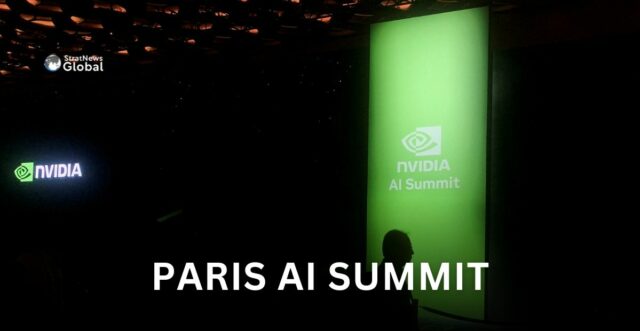
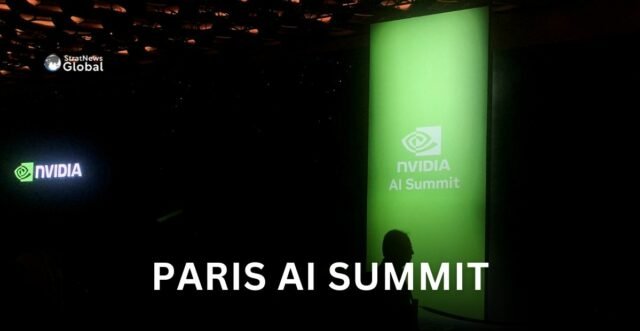
    The step “aims to promote responsible AI standards and best practices in the Middle East and Global South,” Microsoft said ahead of an AI summit in Paris this week.

    Emirati AI developer G42 and the Mohamed bin Zayed University of Artificial Intelligence (MBZUAI) will partner in the project, the US company added.

    Microsoft said in April 2024 that it would invest US$1.5bil (RM6.7bil) into G42, which is controlled by Tahnoon bin Zayed, brother of the Emirati president and the country’s national security advisor.

    Meanwhile MBZUAI has taken in a role in several initiatives launched around the Paris AI summit, which will gather political and tech business leaders as well as experts on Monday and Tuesday in the French capital.

    The UAE is pushing for leading role in the emergence of AI with multiple collaborations including in France.

    Paris’s Polytechnique school has announced a research partnership with MBZUAI, while Emirates leader Mohamed bin Zayed Al Nahyan this week signed a deal with his French counterpart Emmanuel Macron to build a vast AI campus and data centre in France worth up to US$50bil (RM223.3bil). – Courtesy AFP

    Also read:

  • Paris AI summit: Artificial intelligence sharpening gender pay disparities

    Paris AI summit: Artificial intelligence sharpening gender pay disparities

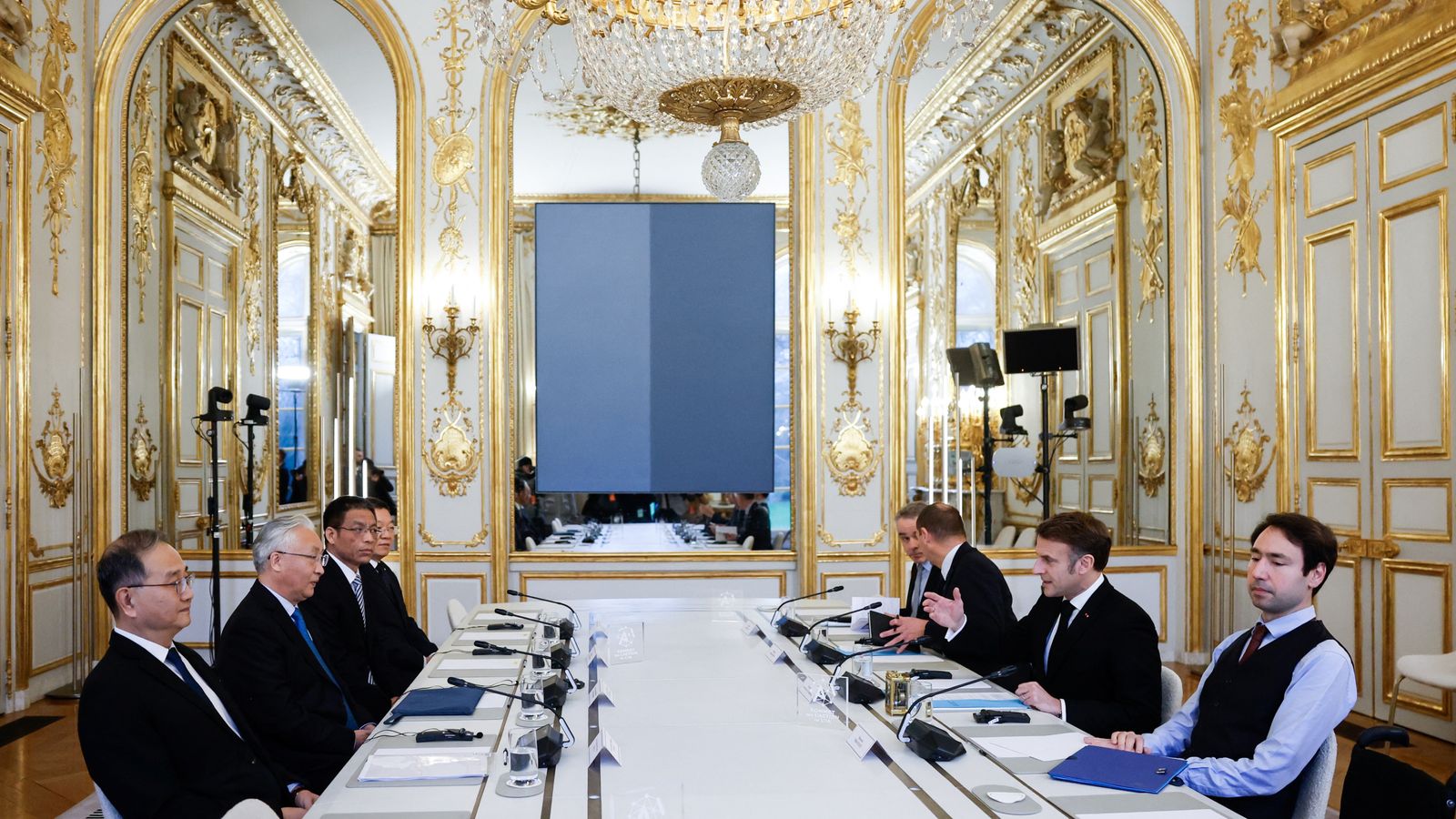
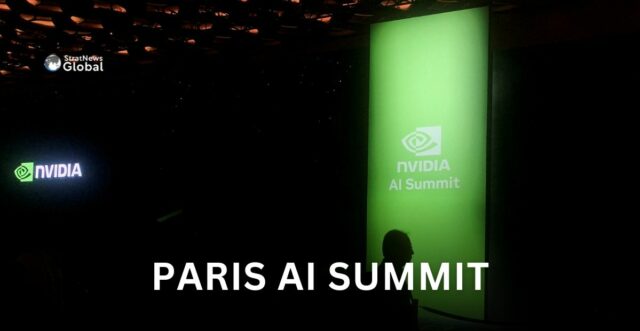
    Co-hosted by French President Emmanuel Macron and Indian Prime Minister Narendra Modi, the Paris summit aims to lay the groundwork for governing the nascent sector, as global powers race to play leading roles in the fast-developing technology.

    Technology’s shift to AI was set to be “the biggest of our lifetimes”, Google chief Sundar Pichai was due to say according to the text of his speech seen by AFP.

    “We have the chance to democratize access (to a new technology) from the start,” Pichai will add.

    World Trade Organization chief Ngozi Okonjo-Iweala said her staff had calculated that “near universal adoption of AI… could increase trade by up to 14 percentage points” from its current trend.

    But global “fragmentation” of regulations on the technology and data flows could see both trade and output contract, she added.

    In the workplace, AI is mostly replacing humans in clerical jobs disproportionately held by women, International Labor Organization (ILO) head Gilbert Houngbo told an audience in the French capital’s opulent Grand Palais.

    That risks widening the gender pay gap even though more jobs are being created than destroyed by AI on current evidence, he added.

    All eyes on Paris AI Summit: No one knows if Trump’s men can find common ground with China, 100 nations

    What’s more, “there is a risk of those new jobs being paid less and sometimes with much less protection” for employees, Houngbo said.

    Political leaders, including US Vice President JD Vance and Chinese Vice Premier Zhang Guoqing, are set to rub shoulders in Paris with the likes of Pichai and OpenAI boss Sam Altman.

    A largely suit-wearing crowd of men and women speaking languages from all over the world flocked under the glass-and-steel dome of the great hall, built for the 1900 Universal Exhibition and now decked out with screens and geodesic domes.

    French ‘Stargate’
    Macron on Sunday had trumpeted the economic benefits of artificial intelligence, saying 109 billion euros ($113 billion) would be invested in French AI in the coming years.

    That was “the equivalent for France of what the US has announced with ‘Stargate’,” he added.

    That $500-billion US program led by ChatGPT maker OpenAI and the emergence of high-performing, low-cost Chinese startup DeepSeek have made clearer the technical challenges and price of entry for nations hoping to keep abreast.

    For the EU, European Commission chief Ursula von der Leyen is expected to announce while attending the summit that around 10 public supercomputers designed for use by researchers and startups will be built.

    Also on Monday, a group of more than 60 European companies such as Airbus, Volkswagen and Mistral AI launched an “EU AI Champions Initiative”.

    They said that they were aiming to increase use of AI by industrial firms and stimulate the emergence of new companies.

    Global governance puzzle
    Away from the investment grandstanding, a group of countries, companies and philanthropic organizations on Sunday said that they would pump $400 million into a partnership called “Current AI” that would foster “public interest” approaches to the technology, including offering open-source tools.

    And a group of major tech players OpenAI, former Google boss Eric Schmidt and vast gaming platform Roblox said they were launching a suite of open-source safety tools for battling harms including child sexual abuse imagery (CBAM).

    Open source development refers to software makers sharing freely the inner workings of their systems so others can build on and adapt them.

    While few AI makers fully respect the philosophy, “things that are even a little bit open… are starting to make it possible for the global AI community to collaborate on making AI better and more accessible,” Mark Surman, president of open-source software maker Mozilla told AFP.

    On Tuesday, political leaders from around 100 countries will hold a plenary session, with notable attendees including Modi, Vance, Zhang and Von der Leyen.

    France hopes that governments will agree on voluntary commitments to make AI sustainable and environmentally friendly.

    But any agreement may prove elusive between blocs as diverse as the European Union, United States, China and India, each with different priorities in tech development and regulation. – Courtesy AFP/TX/ERMD

  • World Government Summit 2025 to kick off in Dubai tomorrow

    World Government Summit 2025 to kick off in Dubai tomorrow

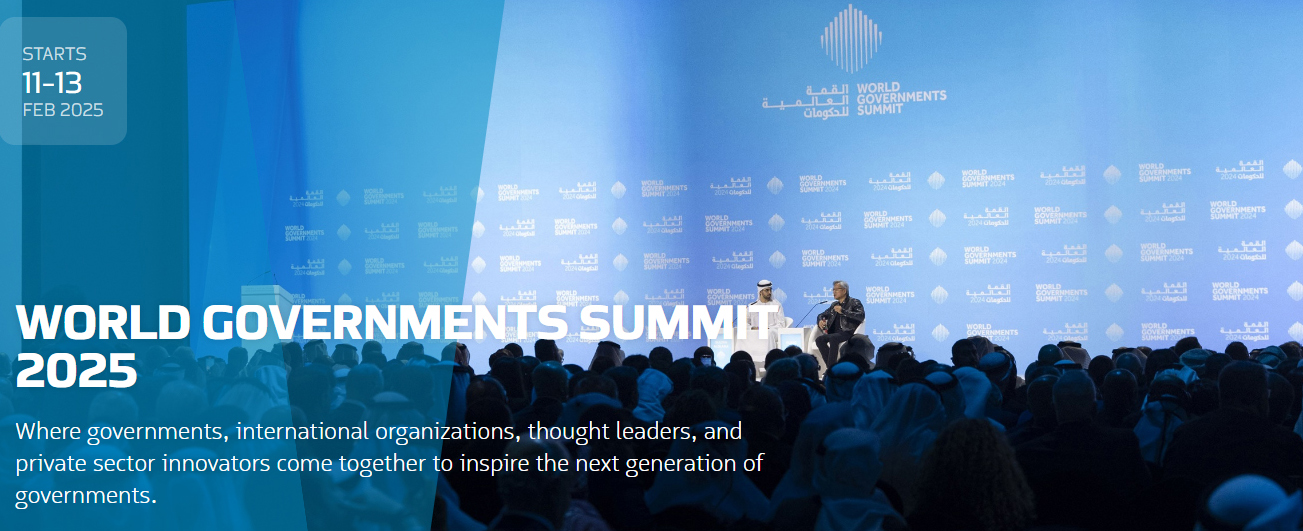
    With the theme “Shaping Future Governments”, the summit which will run Dubai from Feb. 11 to Feb. 13, will also welcome more than 80 international, regional and intergovernmental organisations to join in the discussion on the future of governance, global challenges, and their innovative solutions.

    “This year’s summit will witness the participation of world leaders, including the presidents of Indonesia, Poland, Sri Lanka, and Colombia, alongside the prime ministers of Kuwait, Armenia, Pakistan, Kenya, Libya, Georgia, and Bangladesh,” the website of World Governments Summit quoted Mohammed Al Gergawi, Minister of Cabinet Affairs and Chairman of the World Governments Summit, as saying.

    “It will also see an unprecedented ministerial gathering with more than 400 ministers taking part in discussions spanning governance, economy, technology, sustainability, and global health.”

    He said 27 international organisations, including the World Economic Forum, International Monetary Fund, International Energy Agency, Unesco, the Arab League, and the Gulf Co-operation Council, will be represented.

    Sessions this year will explore strategies to enhance government transparency and efficiency, foster sustainable economic growth, develop urban resilience in the face of climate change, and ensure healthcare systems are equipped for evolving global challenges. Discussions will also tackle the impact of emerging technologies such as artificial intelligence, quantum computing, and biotechnology, assessing how governments can harness these advancements while mitigating potential risks.

    It will also host ministerial meetings including 32 high-level ministerial gatherings, bringing together government leaders from various sectors to exchange expertise and best practices.

    A key highlight will be the TIME 100 AI gathering, which will convene 100 of the world’s most influential AI experts to discuss the transformative role of artificial intelligence in shaping the future. The private sector will also have a prominent presence, with global industry leaders from sectors such as technology, finance, energy, and media taking part in the discussions.

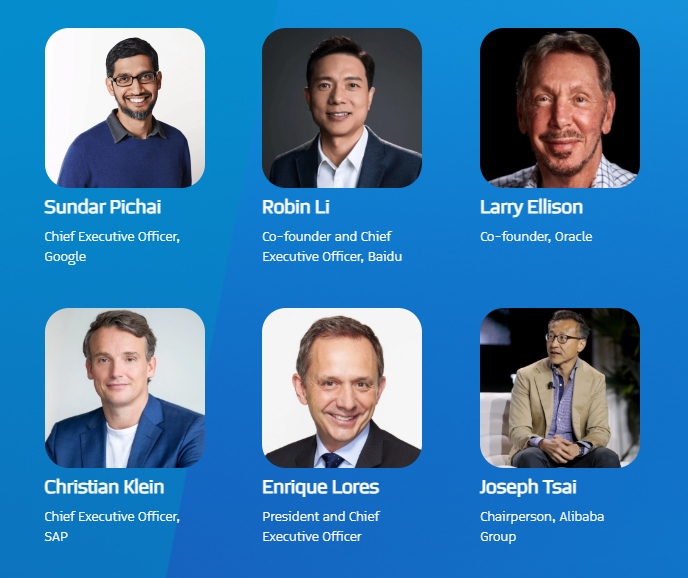
    “Among the notable private sector figures attending are the CEOs of Google, Alibaba, Oracle, MasterCard, CNN, IBM, HP, SAP, Dow Jones, AstraZeneca, Baidu, The Economist, and Vodafone,” Mr Al Gergawi said during an event at Dubai’s Museum of the Future. “The private sector is a key partner in shaping the future. Governments understand where businesses are heading, the opportunities emerging, and the challenges that lie ahead. The summit provides a platform for dialogue between governments and the private sector to navigate these transformations together.”

    The summit will celebrate excellence in governance through five awards. These include the Best Minister in the World Award, the Innovative Government Solutions Award, the Global Award for Best Government Applications, the Global Government Excellence Award, and the Best Teacher in the World Award.

    “The summit will be a global platform for passion, knowledge, and dialogue. In past editions, we have worked together to build a better future for humanity, addressing challenges and developing solutions,” Mr Al Gergawi added.

    “From the UAE, the nation of the future, we extend this collaboration to the world, uniting governments, international organisations, and private sector leaders to create a better tomorrow.”

    Last year’s event assessed global issues ranging from the conflict in Gaza to climate change, to the role of artificial intelligence in modern society.

    More than 25 world leaders, technology trailblazers, industry experts and Nobel laureates came together to help shape the debate, which President Sheikh Mohamed described as the UAE’s “responsible invitation to the whole world” to join a constructive dialogue.

    Among the key achievements were an agreement to help limit global temperature rises and a firm plan to introduce air taxi services to the UAE before the end of the decade.

    About World Governments Summit Organization
    The World Governments Summit Organization is a global, neutral, non-profit organization dedicated to shaping the future of governments. Through its events, dialogues, and other engagements, the organization explores the agenda a new era of governance, focusing on harnessing innovation and technology to solve the universal challenges facing humanity. Since its inception, the Summit has successfully established a new model for international collaboration to empower and enable the next generation of governments.

    PM Shehbaz departs for UAE on two-day visit

    Prime Minister Shehbaz Sharif departed on Monday to the United Arab Emirates on a two-day official visit to attend the World Governments Summit in Dubai.

    He is undertaking this visit at the invitation of the Vice President and Prime Minister of the UAE and Ruler of Dubai, Sheikh Mohammed bin Rashid Al Maktoum.

    The PM is accompanied by a high-level delegation including Deputy Prime Minister Ishaq Dar and other key members of the Cabinet. — WGS Website/ERMD

  • Experts call for regulation to avoid ‘loss of control’ over AI

    Experts call for regulation to avoid ‘loss of control’ over AI

    France, co-hosting the Monday and Tuesday gathering with India, has chosen to spotlight AI ‘action’ in 2025 rather than put the safety concerns front and centre as at the previous meetings in Britain’s Bletchley Park in 2023 and the Korean capital Seoul in 2024.

    The French vision is for governments, businesses and other actors to come out in favour of global governance for AI and make commitments on sustainability, without setting binding rules.

    “We don’t want to spend our time talking only about the risks. There’s the very real opportunity aspect as well,” said Anne Bouverot, AI envoy for President Emmanuel Macron.

    Max Tegmark, head of the US-based Future of Life Institute that has regularly warned of AI’s dangers, told AFP that France should not miss the opportunity to act.

    “France has been a wonderful champion of international collaboration and has the opportunity to really lead the rest of the world,” the MIT physicist said.

    “There is a big fork in the road here at the Paris summit and it should be embraced.”

    Tegmark’s institute has backed the Sunday launch of a platform dubbed Global Risk and AI Safety Preparedness (GRASP) that aims to map major risks linked to AI and solutions being developed around the world.

    “We’ve identified around 300 tools and technologies in answer to these risks,” said GRASP coordinator Cyrus Hodes.

    Results from the survey will be passed to the OECD rich-countries club and members of the Global Partnership on Artificial Intelligence (GPAI), a grouping of almost 30 nations including major European economies, Japan, South Korea and the United States that will meet in Paris Sunday.

    The past week also saw the presentation of the first International AI Safety Report on Thursday, compiled by 96 experts and backed by 30 countries, the UN, EU and OECD.

    Also read: All eyes on Paris AI Summit: No one knows if Trump’s men can find common ground with China, 100 nations

    Risks outlined in the document range from the familiar, such as fake content online, to the far more alarming.

    “Proof is steadily appearing of additional risks like biological attacks or cyberattacks,” the report’s coordinator and noted computer scientist Yoshua Bengio told AFP.

    In the longer term, 2018 Turing Prize winner Bengio fears a possible “loss of control” by humans over AI systems, potentially motivated by “their own will to survive”.

    “A lot of people thought that mastering language at the level of ChatGPT-4 was science fiction as recently as six years ago, and then it happened,” said Tegmark, referring to OpenAI’s chatbot.

    “The big problem now is that a lot of people in power still have not understood that we’re closer to building artificial general intelligence (AGI) than to figuring out how to control it.”

    AGI refers to an artificial intelligence that would equal or better humans in all fields.

    Its approach within a few years has been heralded by the likes of OpenAI chief Sam Altman.

    “If you just eyeball the rate at which these capabilities are increasing, it does make you think that we’ll get there by 2026 or 2027,” said Dario Amodei, Altman’s counterpart at rival Anthropic said in November.

    “At worst, these American or Chinese companies lose control over this, and then after that Earth will be run by machines,” Tegmark said.

    Stuart Russell, a computer science professor at Berkeley in California, said one of his greatest fears is “weapons systems where the AI that is controlling that weapon system is deciding who to attack, when to attack, and so on.”

    Russell, who is also coordinator of the International Association for Safe and Ethical AI (IASEI), places the responsibility firmly on governments to set up safeguards against armed AIs.

    Tegmark said the solution is very simple: treating the AI industry the same way all other industries are.

    “Before somebody can build a new nuclear reactor outside of Paris they have to demonstrate to government-appointed experts that this reactor is safe. That you’re not going to lose control over it… it should be the same for AI,” said Tegmark. – Courtesy AFP

  • No plans to acquire TikTok’s US operations: Elon Musk

    No plans to acquire TikTok’s US operations: Elon Musk

    “I’ve not put in a bid for TikTok and I don’t have any plans for what I would do if I had TikTok,” said Musk in comments made via videolink at a German forum in late January that were released on the weekend.

    TikTok is facing down a US law that ordered the company broken off from its Chinese owner ByteDance or otherwise be banned in the United States over national security concerns regarding the data it gathers on users.

    In one of his first acts in office, Trump ordered a pause on enforcing the law that should have seen TikTok effectively made illegal in the country a day before he took office for a second term.

    Soon after, Trump said he would be open to Musk—the owner of social media platform X, Tesla and a slew of other companies—buying the platform.

    All eyes on Paris AI Summit: No one knows if Trump’s men can find common ground with China, 100 nations

    Musk, however, said he did not wish to acquire the company.

    “I don’t use TikTok personally, so, you know, I’m not that familiar with it,” he said. “I’m not chomping at the bit to acquire TikTok.”

    Musk bought social media giant Twitter, which he renamed X, for $44 billion in 2022, insisting he was doing so in order to safeguard “free speech.”

    Since his takeover, rights campaigners warn there has been a spike in hate speech and disinformation on the platform.

    Musk was one of Trump’s main financial backers in his presidential campaign, and is heading the US president’s budget-slashing initiatives. — Agencies/ERMD

  • All eyes on Paris AI Summit: No one knows if Trump’s men can find common ground with China, 100 nations

    All eyes on Paris AI Summit: No one knows if Trump’s men can find common ground with China, 100 nations

    About a year after world powers reckoned with the dangers of AI in England’s Bletchley Park, a wider array of countries are gathering in Paris to discuss putting the technology to work.

    France, eager to promote its national industry, is hosting the AI Action Summit alongside India on Feb. 10 and 11, with a focus on areas where Europe’s second-largest economy has an advantage: freely available or “open-source” systems, and clean energy to power data centers.

    DeepSeek founder Liang Wenfeng gets hero’s welcome in Lunar New Year hometown visit

    Mitigating labor disruption and promoting sovereignty in a global AI market are also on the agenda.

    Top executives from Alphabet, Microsoft, OpenAI, and dozens of other businesses are slated to attend. Government leaders are expected to dine on Monday with select CEOs.

    It was less clear whether the U.S. will reach consensus with other nations on AI.

    U.S. Vice President JD Vance will attend for the American delegation.

    Trump calls China’s DeepSeek AI leap a ‘wake-up call’ for US tech

    A non-binding communiqué of principles for the stewardship of AI, bearing U.S., Chinese and other signatures, has been under negotiation and would mark a big achievement if reached, said the people involved in the summit.

    Safety commitments dominated the conversation in prior global AI summits in Bletchley Park and Seoul. In Paris, creating new regulation is not on the agenda.

    Europe and particularly France are eager to discuss frameworks for AI policy but not rules that could slow down their national champions, which have lagged American companies.

    Countries like France are evaluating how to implement the EU AI Act in as flexible a way as possible so it does not discourage innovation, the people involved in the summit said.

    Instead in focus is how to distribute AI’s benefits to developing nations, via cheaper models made by the likes of France’s startup Mistral and China’s DeepSeek.

    France has seized on the development as evidence that the global race to more powerful AI remains wide open.

    One of the summit’s likely outcomes is that philanthropies and businesses are expected to commit an initial $500 million in capital, going up to $2.5 billion over five years, to fund public-interest projects on AI around the world, the people said.

    Another is addressing the energy crunch that industry thinks is inevitable from their power-hungry AI models. A major producer of clean energy in the form of nuclear power, France wants to reconcile the world’s climate and AI ambitions.

    France’s decarbonized energy and “nuclear fleet, in the context of data center installations, is an asset,” the Élysée official said. “We will most likely have announcements in this regard at the summit.”

  • DeepSeek founder Liang Wenfeng gets hero’s welcome in Lunar New Year hometown visit

    DeepSeek founder Liang Wenfeng gets hero’s welcome in Lunar New Year hometown visit

    Wenfeng visited his hometown for the Lunar New Year holiday, according to local media and social media posts, as the Chinese start-up remains under the spotlight for its impact on the artificial intelligence (AI) industry.

    Liang, 40, returned to Mililing village in Zhanjiang, a port city in southern Guangdong province, where a red banner was raised hailing the low-profile tech entrepreneur as “hometown pride” for bringing honor to the local community, according to social media posts.

    His visit on Lunar New Year’s Eve marked the day when Chinese families traditionally hold reunions during this national public holiday.

    It also raised the profile of Liang’s hometown, which has turned into a tourist attraction based on its DeepSeek connection, amid an influx of domestic visitors to the remote village, according to a report by Yangcheng Evening News, a state-backed publication based in Guangzhou, capital of Guangdong.

    Hangzhou-based DeepSeek sent shockwaves through Wall Street and Silicon Valley for developing AI models at a fraction of the cost and computing power that US tech firms like OpenAI, Google, and Meta Platforms typically invest in such projects.

    The heightened domestic and international attention given to DeepSeek and its founder reflects the AI community’s admiration for the firm’s low-cost development of world-class models – which either surpassed or matched the performance of rival products across a range of industry benchmark tests – despite tightened US restrictions on China’s access to advanced semiconductors and related technologies.

    An unidentified fellow Mililing villager was quoted by Yangcheng Evening News as saying that Liang was gifted growing up there, adding that “he taught himself senior high-school math when he was still a junior.”

    During the 2002-2010 period when he studied at Zhejiang University, Liang developed an interest in applying machine-learning technology to quantitative trading.

    In 2015, Liang founded High-Flyer Quant, which uses deep-learning algorithms to run what has become one of the largest quantitative hedge funds in mainland China. In 2023, the company spun off DeepSeek as an independent enterprise.

    There are certain similarities between Liang and Jim Simons, the American quantitative hedge fund manager and mathematician, according to journalist Gregory Zuckerman, who wrote a book about the US billionaire titled The Man Who Solved the Market.

    Liang apparently draws inspiration from Simons and agreed to write the preface to the book’s Chinese edition, Zuckerman reported in The Wall Street Journal.

    “The publication of this book unravels many previously unresolved mysteries and brings us a wealth of experiences to learn from,” Liang wrote in the preface.

    Liang also pointed out that whenever he encounters difficulties at work, he recalls Simons’ words: “There must be a way to model prices.” – SOUTH CHINA MORNING POST

  • India IT minister praises DeepSeek’s low-cost AI, compares it with own investment approach

    India IT minister praises DeepSeek’s low-cost AI, compares it with own investment approach

    India announced a $1.25 billion AI investment in March, dubbed IndiaAI mission, which includes funding for AI startups and developing its own AI infrastructure.

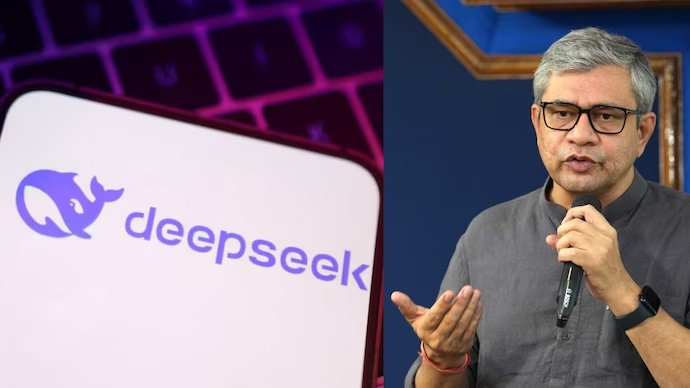
    “Some people question the amount of investments the government has committed in (IndiaAI mission). You have seen what DeepSeek has done? $5.5 million and a very very powerful model. Because, the use of brain,” Ashwini Vaishnaw said on Tuesday at an event in the eastern state of Odisha.

    Alibaba releases AI model it claims surpasses DeepSeek-V3

    DeepSeek has triggered a dramatic rethink on artificial intelligence spending around the world, claiming it took just two months and cost under $6 million to build an AI model using Nvidia’s less-advanced H800 chips.

    Downloads of its app recently surpassed OpenAI’s ChatGPT on Apple’s App Store, while the cost and performance of its tools upended industry beliefs that China was years behind US rivals in the AI race.

    Vaishnaw’s statement appeared to target comments made by OpenAI’s Sam Altman during a visit to India last year, when he cast doubt on the possibility of an Indian team being able to build a substantial model in the OpenAI space with a $10 million budget.

    Italian startup Exein to supply cybersecurity for chips to MediaTek

    “The way this works is we’re going to tell you it’s totally hopeless to compete with us on training foundation models. You shouldn’t try. And it’s your job to like try anyway. And I believe both of those things,” he said, comments which are now in focus again on online platforms such as X after DeepSeek’s success.

    Altman is due to visit India again on February 5, just as his company is currently locked in a court battle in the country with digital news and book publishers over copyright breaches.

  • Italian startup Exein to supply cybersecurity for chips to MediaTek

    Italian startup Exein to supply cybersecurity for chips to MediaTek

    The deal will provide security features to billions of chips using the system worldwide in industries including mobile, home, automotive and healthcare, Exein said in a statement.

    Why it’s important

    Italy has been trying foster a tech startup sector, and a deal with a major chipmaker could extend its reach.

    By the numbers

    Exein said that following the deal with MediaTek, its technology would be embedded in more than 3 billion devices. The partnership between the two groups is valued at more than 5 million euros ($5.2 million), a figure that Exein expects will double by 2028.

    “This is a longterm relationship and positions Exein well to further expand into the automotive and robotics sectors globally,” Exein said.

    “MediaTek is a key strategic partner for us,” it added.

    Context

    Exein raised $15 million in Series B funding last year.

    Its clients include Daikin, Seco and Kontron.