Category: Engineering Bodies

  • ACEP Conference Highlights Urgent Need for Fire Safety Reforms After Gul Plaza Tragedy

    ACEP Conference Highlights Urgent Need for Fire Safety Reforms After Gul Plaza Tragedy

    The conference exposed grey areas in fire prevention mechanisms and discussed weaknesses in enforcement of laws, lack of required infrastructure in buildings, and the urgent need to make structures safe for human habitation.
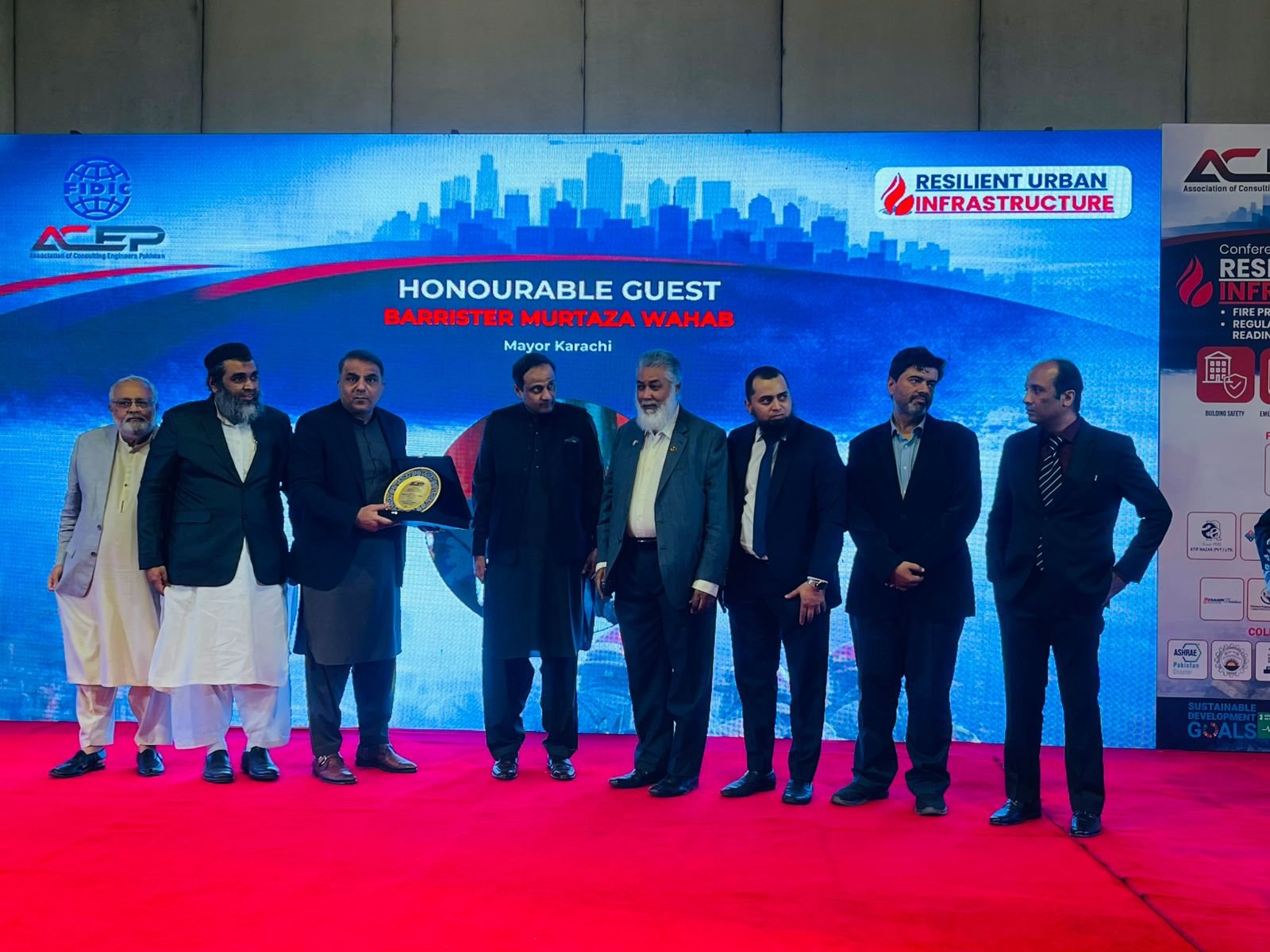
    The event was attended by Sindh Minister for Information Sharjeel Inam Memon, a civil engineer by education from Mehran University of Engineering & Technology, Jamshoro, and Barr. Murtaza Wahab, Mayor of Karachi, who faced significant challenges in the wake of the Gul Plaza fire incident.

    The moot was organized in collaboration with the Institution of Engineers Pakistan (IEP), FIDIC, and several other professional bodies. A large number of engineers from the public and private sectors, corporate professionals, academicians, and constructors participated to contribute recommendations aimed at improving Karachi’s building safety standards and engaging stakeholders as well as the general public in reform efforts. Pakistan’s first woman architect, Yasmeen Lari, also attended as a special guest.
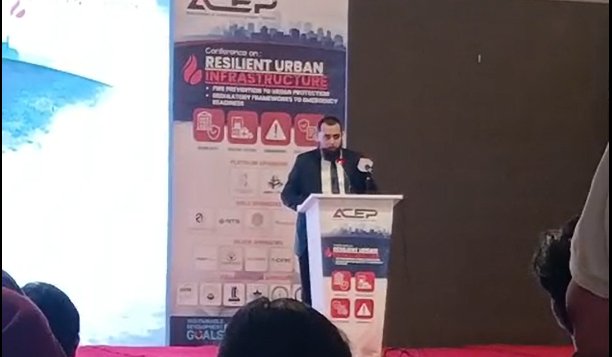
    The organizers arranged three comprehensive panel discussions along with expert presentations involving professionals from industry, engineering institutions, and academia. The discussions culminated in a set of recommendations, the outlines of which were presented by Dr. Sarosh Hashmat Lodi, former Vice Chancellor of NED University, Karachi.

    Dr. Lodi emphasized that empowering local governments is essential for effective implementation of safety measures. He called for mandatory third-party validation of building safety compliance and stressed replacing the prevailing “NOC culture” with a “culture of responsibility.”

    He highlighted the importance of urban planning and establishing a well-networked firefighting system across Karachi. Among the key recommendations were dedicated fire-extinguishing vehicles for specific zones, emergency water reservoirs, strengthening fire stations and civil defence mechanisms, addressing risks in dense markets and the informal economy, eliminating illegal wiring, and making fire safety systems, drills, and training mandatory.

    He also stressed regular audits of high-rise buildings to ensure residential safety, improved safety mechanisms in industrial and logistics zones, and the development of localized fire safety plans. He expressed confidence that if implementation begins immediately, significant improvements could be achieved within the next five years.

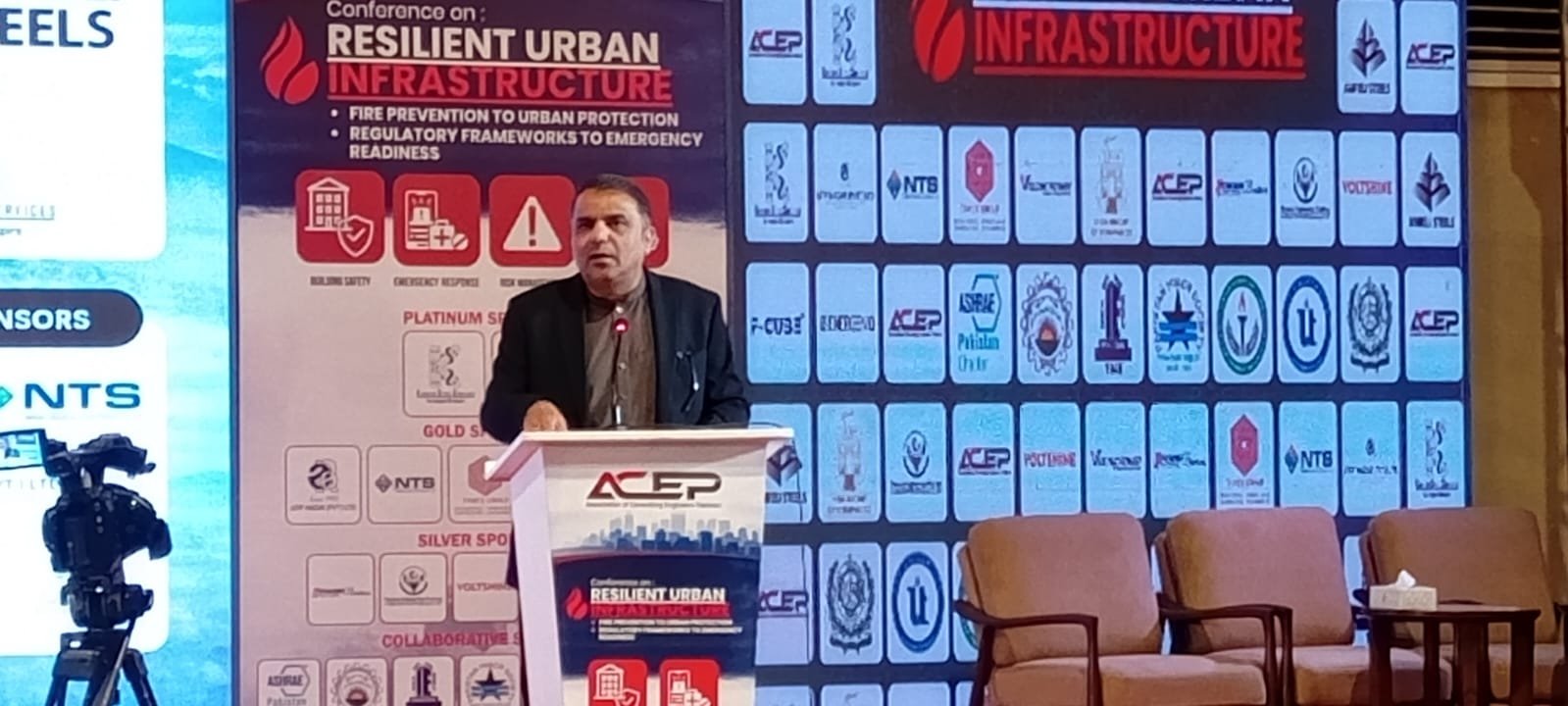
    Speaking on the occasion, Waseem Asghar, President, ACEP said the recommendations would be forwarded to competent forums. He stressed that laws must be reviewed in light of technological advancements and market demands, noting that many existing regulations have become obsolete. He described the Gul Plaza tragedy as yet another lesson compelling the city to move forward with serious reforms, particularly in older buildings and aging infrastructure.

    Addressing the gathering, Sharjeel Inam Memon termed the issue extremely important and said society has developed a tendency to avoid discussing core issues. “This is not a political issue; it is a matter of life and death for citizens,” he remarked.

    He acknowledged that in incidents like the Gul Plaza fire, the government bears primary responsibility, though accountability often shifts among stakeholders. “The government carries the greatest responsibility,” he said.

    Memon highlighted shortcomings in the entire construction process from soil testing and structural design to plumbing and electrification and stressed that all stakeholders share responsibility. He admitted that there were gaps in enforcement and regulatory compliance and said the government had identified shortcomings following the Gul Plaza incident.

    He further stated that corrective measures must be undertaken collectively, although primary responsibility rests with the government. After the tragedy, the government engaged chambers of commerce and industry organizations, assigning them the task of conducting safety audits within their respective sectors to ensure compliance with safety requirements.

    The conference concluded with a renewed commitment from stakeholders to strengthen enforcement, modernize regulations, and improve emergency preparedness to prevent similar tragedies in the future. – ER Report

  • Training 50,000 Engineers Without Industrial Growth: Promise or Policy Mismatch?

    Training 50,000 Engineers Without Industrial Growth: Promise or Policy Mismatch?

    The minister has compared the initiative to the house job system for doctors, arguing that it will improve employability, reduce unemployment, and discourage outward migration. While the announcement signals recognition of the engineering employment crisis, experts argue that training without economic restructuring risks becoming symbolic rather than transformational.

    Pakistan’s Economic Context: Why Numbers Matter
    Any serious assessment of this program must begin with Pakistan’s economic fundamentals, because engineering demand is not driven by population size alone but by industrial depth and GDP composition.

    Pakistan is the world’s fifth most populous country, yet remains under-industrialized. Manufacturing contributes only around 13 percent of GDP, while growth is largely driven by consumption, remittances, agriculture, and real estate, sectors that generate limited demand for engineers.

    Pakistan at a glance

    IndicatorPakistan
    Population240 million
    GDP (nominal)$US 340–360 billion
    Average GDP growth3–4 percent
    Manufacturing share of GDP13 percent
    Engineering exportsNegligible

    This context explains why engineering unemployment persists despite a steady output of graduates.

    Engineering Density: How Pakistan Compares Regionally

    One commonly used global benchmark is engineers per 10,000 population, which reflects how deeply engineering is embedded in an economy. Countries with strong manufacturing, technology, and export sectors consistently show higher engineering density.

    Pakistan’s ratio remains significantly lower than its regional peers—not because it produces fewer graduates, but because industry does not absorb them.

    Engineers per 10,000 population:This gap reflects differences in economic structure, not education systems.

    CountryEngineers / 10,000
    Malaysia45–50
    India25–30
    Pakistan8–10

    This gap reflects differences in economic structure, not education systems.

    Pakistan, India, and Malaysia: Similar Size, Very Different Outcomes

    A comparison with India and Malaysia further highlights the structural issue. Malaysia’s economy is only modestly larger than Pakistan’s in nominal terms, yet it sustains a far higher number of engineers due to export-led industrialization and technology-intensive growth.

    Macro comparison:

    IndicatorPakistanIndiaMalaysia
    Population240m1.43bn34m
    GDP (nominal)$US 350bn$US 3.7tn$US 440bn
    Manufacturing (percent of GDP)13 percent17–18 percent23–25 percent
    Engineering exportsNegligible$US 100bn+$US 40bn+
    Engineers per 10,0008–1025–3045–50

    The lesson is clear: engineering employment follows industrialization, not training programs alone.

    GDP Growth Quality: Why Engineers Remain Underutilized
    Experts stress that not all GDP growth creates engineering jobs. Growth driven by agriculture, consumption, or remittances produces limited technical demand, whereas growth driven by manufacturing, infrastructure, energy, and technology is engineering-intensive.
    This distinction explains why Pakistan experiences periods of GDP growth without corresponding improvements in engineering employment.

    The Engineer–GDP Demand Relationship
    Planners often use an Engineering Intensity Factor (EIF) to estimate how many engineers an economy can realistically absorb per $US 1 billion of GDP.

    Engineering Intensity Factor benchmarks:

    Economy TypeEngineers per $US 1 bn GDP
    Low-industrial700–900
    Mid-industrial1,200–1,500
    Export-led / high-tech1,600–2,000

    Applying this framework to Pakistan

    GDP $US 350 billion
    Current EIF 700
    Estimated demand 245,000 engineers

    This figure closely matches the number of engineers currently absorbed in core sectors, explaining why additional graduates face underemployment.

    Sectoral Distribution: Where Engineers Actually Work

    Another revealing comparison is how engineers are distributed across sectors. In Pakistan, most engineers are confined to execution-heavy construction roles, while design, automation, R&D, and technology remain underdeveloped.

    Share of engineers by sector:

    SectorPakistanIndiaMalaysia
    Manufacturing25 Percent40 Percent45 Percent
    Construction & infrastructure35 Percent25 Percent20 Percent
    Energy & utilities15 Percent15 Percent15 Percent
    Technology & automation5 Percent15 Percent20 Percent
    R&D & design<2 Percent10 Percent1 Percent

    This imbalance limits productivity, innovation, and export potential.

    Why the “House Job” Analogy Is Problematic
    Experts argue that equating the proposed program with doctors’ house jobs overlooks key differences:
    – Medical house jobs operate within a regulated national healthcare system
    – Engineering projects are contractor-driven, often lump-sum, cost-focused, and short-term
    – Engineering competence develops through long-term industrial engagement, not brief site exposure
    – Without permanent roles, six-month/one year placements risk becoming stopgap measures rather than career pathways.

    Persistent Concerns Raised by the Engineering Community
    Key concerns include:
    – Political motivation and past failures of similar program
    – Lack of transparency and merit-based selection
    – Temporary nature with no guaranteed absorption
    – Absence of credible national data on engineering unemployment
    – Ignoring private-sector contracting practices
    – Global mobility of engineers cannot be restricted
    – Rapid disruption from AI and emerging technologies
    – Weak linkage between economic growth and engineering demand

    The Core Issue Remains Economic Structure
    The central conclusion emerging from expert analysis is unequivocal:
    Pakistan does not have too many engineers—it has too little engineering-driven growth.
    Until manufacturing rises toward 20 Percent of GDP, engineering exports expand meaningfully, and growth becomes industry-and technology-led, training initiatives alone will not resolve unemployment.

    Necessary, But Not Sufficient

    The government’s training program may offer short-term exposure and financial relief, but without structural economic reform, it risks joining a long list of well-intentioned but ineffective interventions.

    As global experience shows, skills follow growth, not the other way around. For Pakistan’s engineers, sustainable employment will come not from temporary placements, but from an economy that finally begins to grow through engineering itself.

  • ASPIRE Pakistan, CECOS University Sign MoU to Empower Entrepreneurs and Innovators

    ASPIRE Pakistan, CECOS University Sign MoU to Empower Entrepreneurs and Innovators

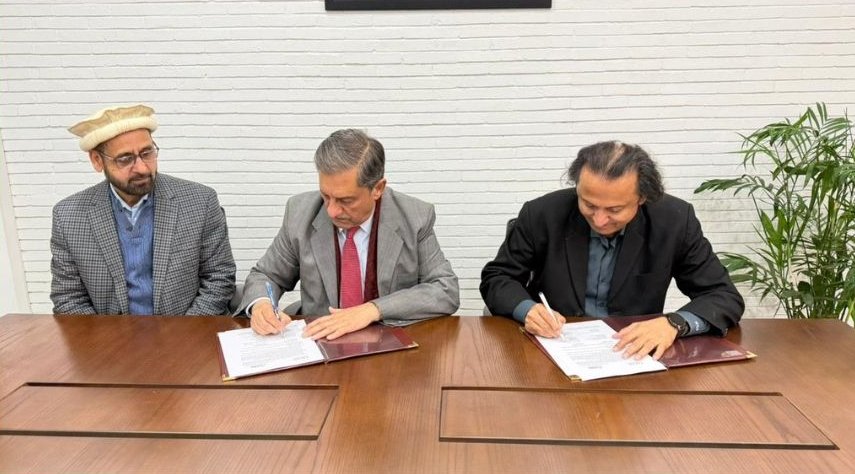
    The MoU was formally signed on 20th January 2026 by Hassan Syed, CEO of ASPIRE Pakistan, and senior leadership from CECOS University, including Dr. Mohammad Mohsin Khan, Vice Chancellor; Dr. Abdul Hanan, Director of ORIC; and Dr. Shiraz Khan, Dean of the Faculty of Computing and Management Sciences, as stated on ASPIRE Pakistan’s LinkedIn.

    This partnership will empower aspiring entrepreneurs and students at CECOS through structured innovation programs, mentorship support, and startup incubation pathways—nurturing a future-ready generation of changemakers and problem-solvers.

    During the visit, Mr. Hassan Syed commended CECOS University’s institutional commitment to fostering a culture of innovation and emphasized the shared mission of bridging academia with the national entrepreneurial ecosystem.

    This collaboration marks another milestone in ASPIRE Pakistan’s ongoing journey to build a connected, empowered, and innovation-driven Pakistan.

    ER News Desk

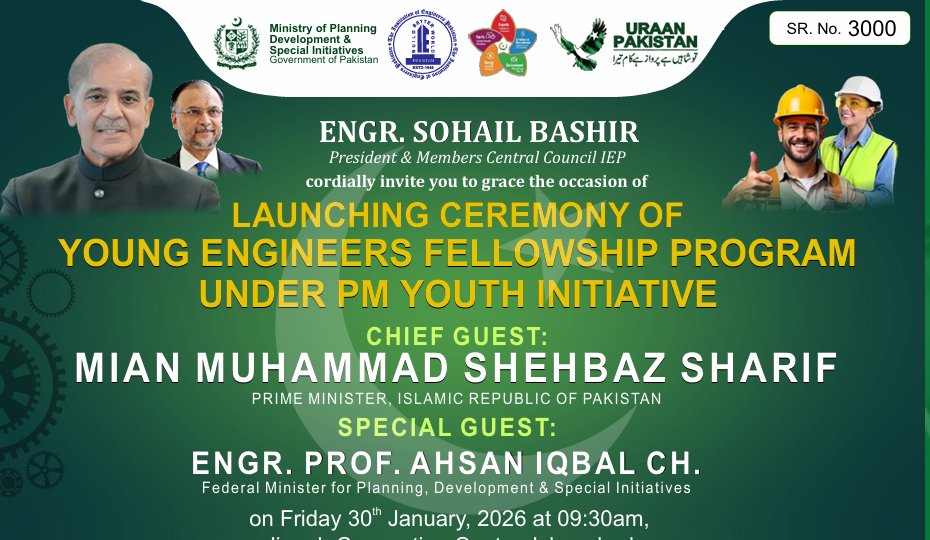
  • Prime Minister to Inaugurate Young Engineers Fellowship Program on January 30

    Prime Minister to Inaugurate Young Engineers Fellowship Program on January 30

    The event has been organized by The Institution of Engineers Pakistan (IEP). Federal Minister for Planning, Development, and Special Initiatives, Engineer Professor Ahsan Iqbal Chaudhry, will attend the ceremony as the special guest, while IEP President Engineer Sohail Bashir, members of the Central Council, and senior engineers will be the hosts.

    The Young Engineers Fellowship Program is a one-year paid fellowship designed exclusively for graduate engineers, aiming to bridge the gap between engineering education and practical exposure to public sector development projects. Under the program, selected fellows will be placed on Public Sector Development Programme (PSDP) funded projects across the country, based on project requirements and the fellows’ stated preferences.

    According to program details, the fellowship will provide hands-on learning, professional mentorship, and field exposure. Capacity building will be supported through free professional training programs offered by IEP. Fellows will receive a monthly stipend of Rs 50,000 during the fellowship period.

    The program is open to Pakistani nationals who are graduate engineers with 16 years of education, a minimum CGPA of 2.0, and valid Pakistan Engineering Council (PEC) registration, which is mandatory. Applicants must be fresh engineering graduates, not older than 28 years, and unemployed at the time of application.

    The selection process will be fully digital and merit-based, with 60 percent weightage for academic performance and 40 percent for a structured interview, IEP leaders said.

    IEP officials stated that the initiative aims to enhance the employability of young engineers, strengthen their professional skills, and contribute to the effective implementation of national development projects by integrating fresh engineering talent into the public sector. – ER News Desk

  • Pakistan Cables signs MoU with PEC for Graduate Engineer Trainee Placement Program

    Pakistan Cables signs MoU with PEC for Graduate Engineer Trainee Placement Program

    The company will intake 15 Graduate Engineer Trainees, to be shortlisted by the council from within Sindh

    GET is an initiative designed to bridge the gap between academic learning and professional practice by placing fresh engineering graduates with industry partners for five months of structured training.

    As part of this program, Pakistan Cables will intake 15 Graduate Engineer Trainees, to be shortlisted by PEC from within Sindh in line with the Company’s operational requirements and location.

    This reflects the Company’s’ continued commitment to supporting STEAM education and youth empowerment in Pakistan.

    About Pakistan Cables Ltd.
    Founded in 1953, Pakistan Cables is the premier and most reputable wires and cables manufacturer in Pakistan. Being the first and oldest wires and cables manufacturer listed on the PSX since 1955, it has the largest geographical footprint in Pakistan, with presence in over 200 cities and towns. It is also a member company of the Amir S. Chinoy group. It is ISO 9001:2015, ISO 14001:2015, and ISO 45001:2018 certified, and various cables type tested by KEMA, Netherlands. The Company’s science-based emission reduction targets are validated and approved by SBTi. It is also a signatory of the UN Global Compact and net-zero commitment. To learn more about Pakistan Cables Ltd. – PR

  • PEC, Energy China Sign Landmark Pact to Deploy Pakistani Engineers on Global Mega Projects

    PEC, Energy China Sign Landmark Pact to Deploy Pakistani Engineers on Global Mega Projects

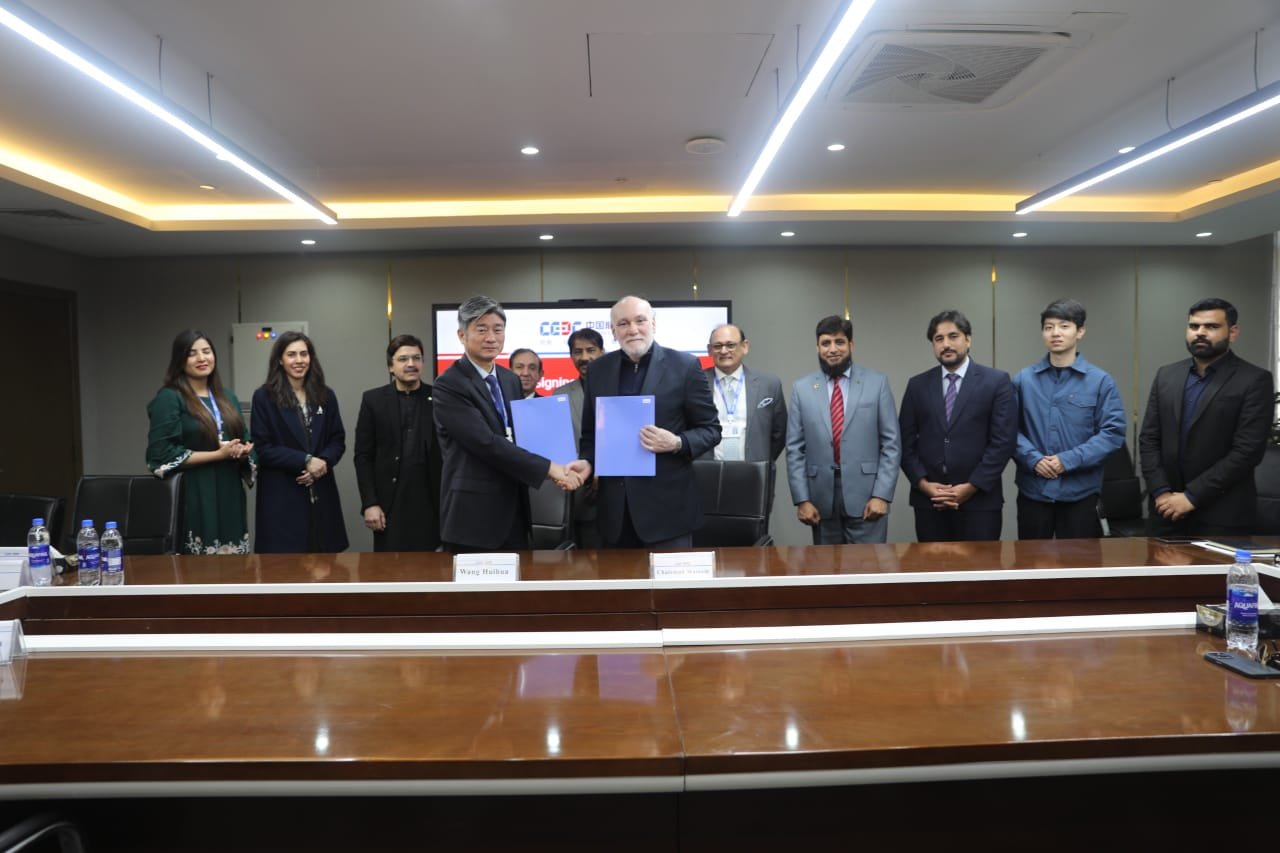
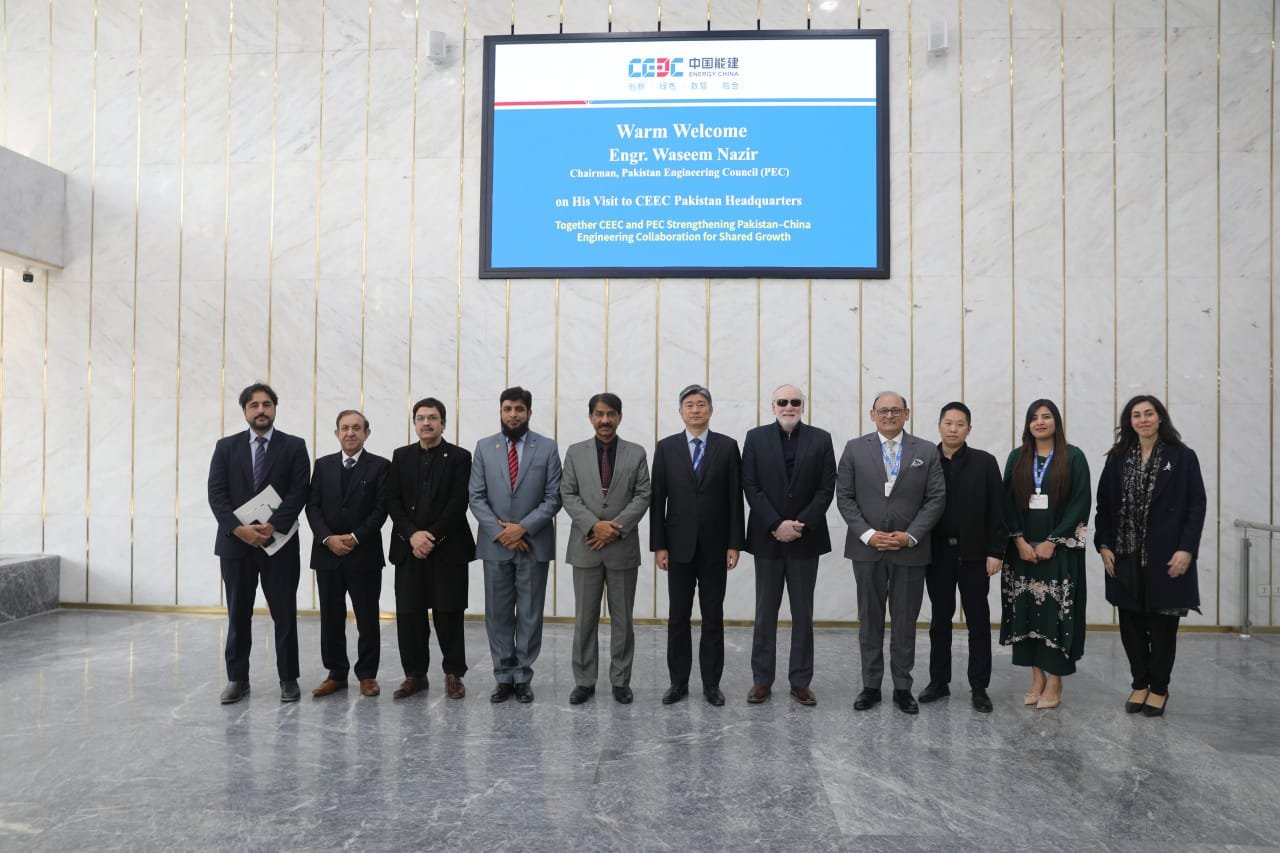
    The high-impact Memorandum of Understanding (MoU) was signed at the Energy China Office in Islamabad, marking a major milestone in international engineering cooperation and global workforce mobility.

    Under the agreement, PEC-registered Pakistani engineers will gain structured access to Energy China’s mega projects spanning power generation, renewable energy, hydropower, transmission networks, transport infrastructure, and investment ventures across Southeast Asia, the Middle East, Africa, and Europe. The initiative is expected to create direct overseas employment opportunities while enabling advanced skills transfer and global exposure for Pakistan’s engineering workforce.

    Speaking at the signing ceremony, Energy China Managing Director Mr. Wang Hui Hua highlighted CEEC’s extensive global footprint, with over 140,000 professionals operating in 147 countries. He reaffirmed the company’s commitment to recruiting Pakistani engineers, collaborating with local contractors, and embedding corporate social responsibility within China’s investments in Pakistan.

    PEC Chairman Engr. Waseem Nazir described the MoU as a “paradigm shift” for Pakistan’s engineering sector. He announced the establishment of a dedicated China Desk at PEC to ensure sustained engagement, transparent placement mechanisms, and capacity-building collaboration with Chinese state-owned enterprises. He added that 2026 would be remembered as a turning point when Pakistani engineers transitioned from domestic opportunities to global engineering leadership.

    The agreement positions Pakistan as a strategic engineering talent hub for one of the world’s largest infrastructure developers, opening a new chapter of high-value, technology-driven, and globally integrated career pathways for Pakistani engineers. – ER News Desk

  • PEC & KIU Join Hands to Design Capacity-Building Programs for Engineers in GB

    PEC & KIU Join Hands to Design Capacity-Building Programs for Engineers in GB

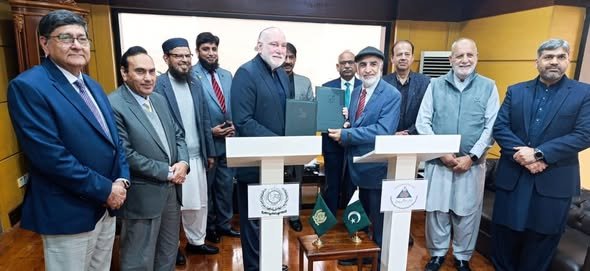
    According to the council, PEC & KIU will jointly design and deliver capacity-building programs for engineers serving public sector organizations, professional development initiatives for students & young engineers, and training on ethics, regulatory compliance, engineering standards, Pathway to Practice, and emerging technologies.

    The MoU also aims to enhance industry–academia linkages, improve engineering input in government development projects, and support socio-economic development of GB. KIU will serve as a focal hub for PEC-led training, workshops, and outreach activities in the region, with implementation oversight. – ERMD

  • GET Placement Program to Be Remembered in the Years to Come: Engr. Waseem Nazir

    GET Placement Program to Be Remembered in the Years to Come: Engr. Waseem Nazir

    It has taken one year—consuming nearly 6,000 hours—to develop the GET Placement Program, which is now fully automated. This journey has reached its culmination. It is one of the most comprehensive programs ever, as it has brought PEC, clients, and industry onto a common platform.

    Here in Karachi, we have partnered with 15 clients, including some of the country’s largest national organizations and industries, many of which engaged with PEC for the first time. These organizations provided assurances to onboard trainee engineers and demonstrated their commitment during the dialogue. This was possible due to extensive groundwork carried out by the Council, which helped stakeholders realize that this responsibility also rests with them.

    I am confident that this program will be remembered in the years to come. It is set to become a mandatory program within the next five years. Please keep this on record.

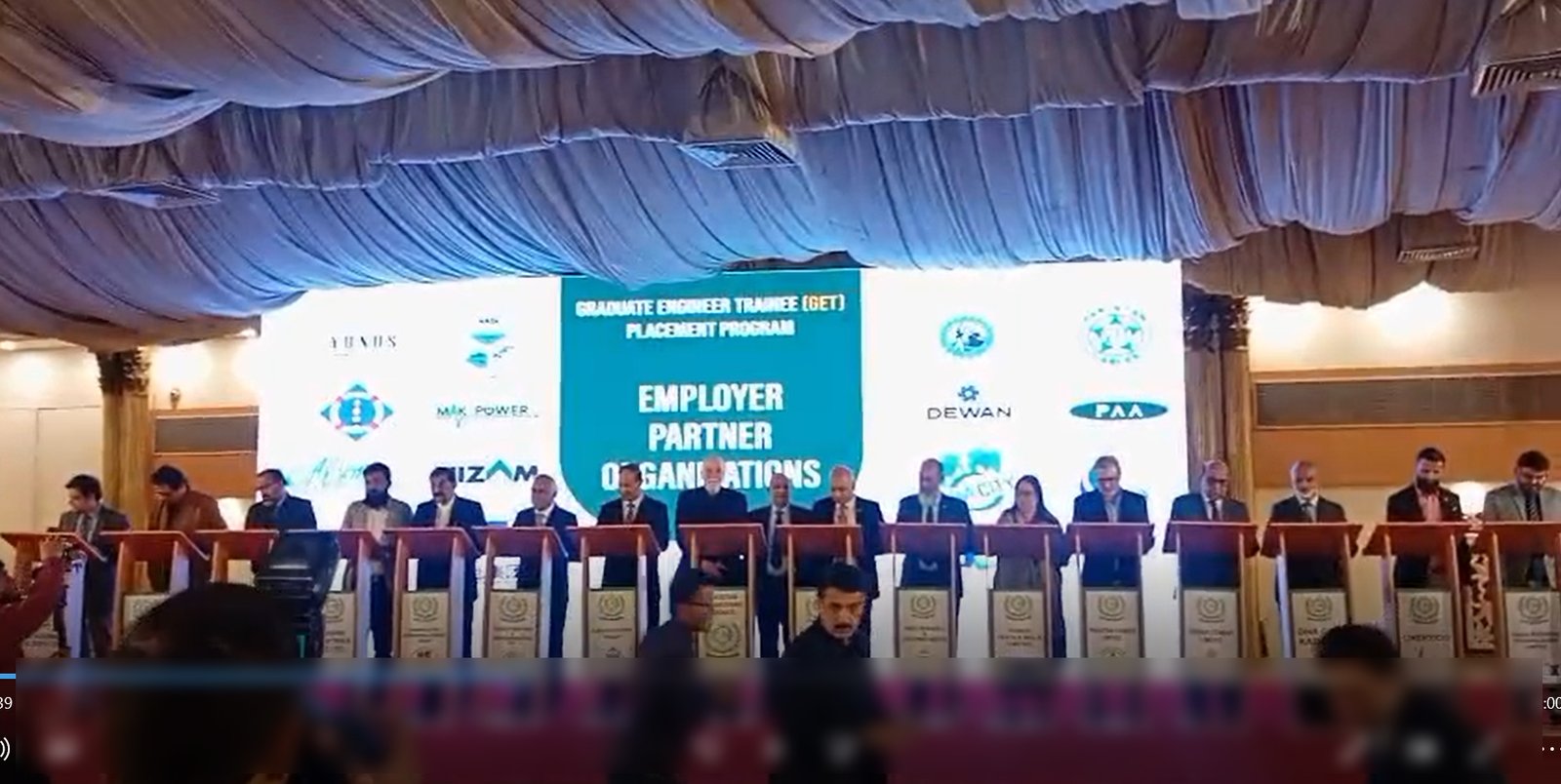
  • PEC Expands Graduate Engineer Trainee Program with 15 New MoUs in Karachi

    PEC Expands Graduate Engineer Trainee Program with 15 New MoUs in Karachi

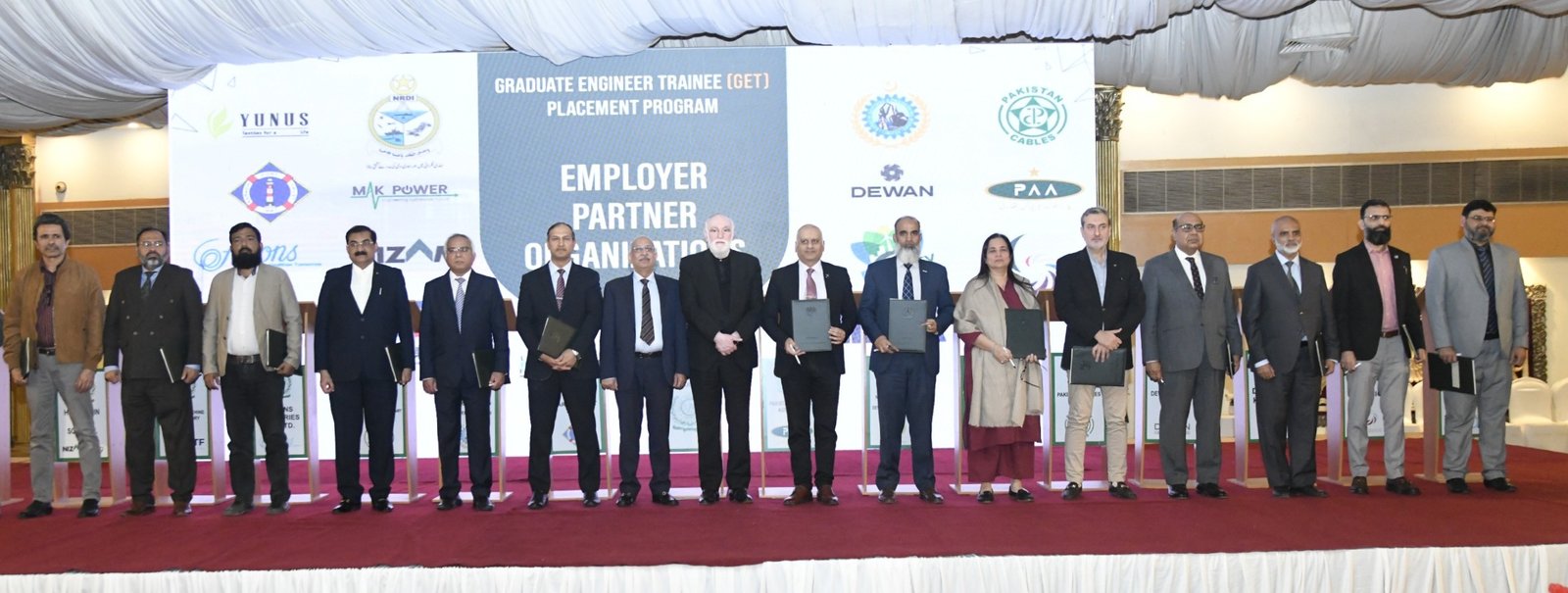
    Previously, PEC had entered into partnerships with 14 leading organizations in Islamabad, bringing the total number of partner organizations under the GET Placement Program to 29. The program was launched under the leadership of PEC Chairman Engr. Waseem Nazir as part of the Council’s broader effort to modernize engineering education and professional development in Pakistan.

    Chairman PEC, Engr. Waseem Nazir

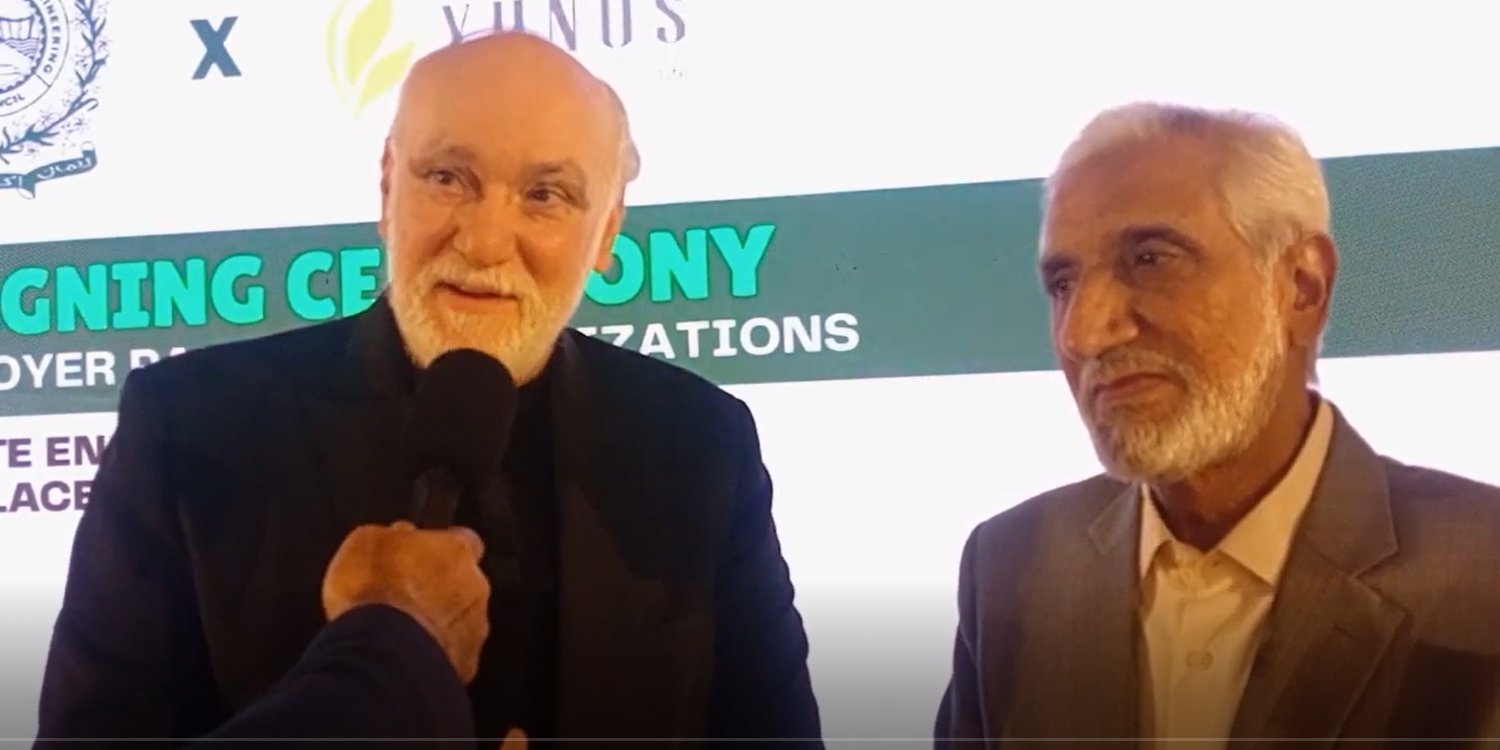
    The MoU signing ceremony was held at a local hotel in Karachi and was led by Chairman PEC Engr. Waseem Nazir along with his team. Former PEC Chairman Engr. Qadir Shah, senior engineers, and representatives of the partner organizations were also present at the event.

    GET Partners’ Views

    Often described as a “house job for engineers,” the GET Placement Program is designed to bridge the long-standing gap between academic learning and industry requirements by providing structured, hands-on professional training to fresh engineering graduates.

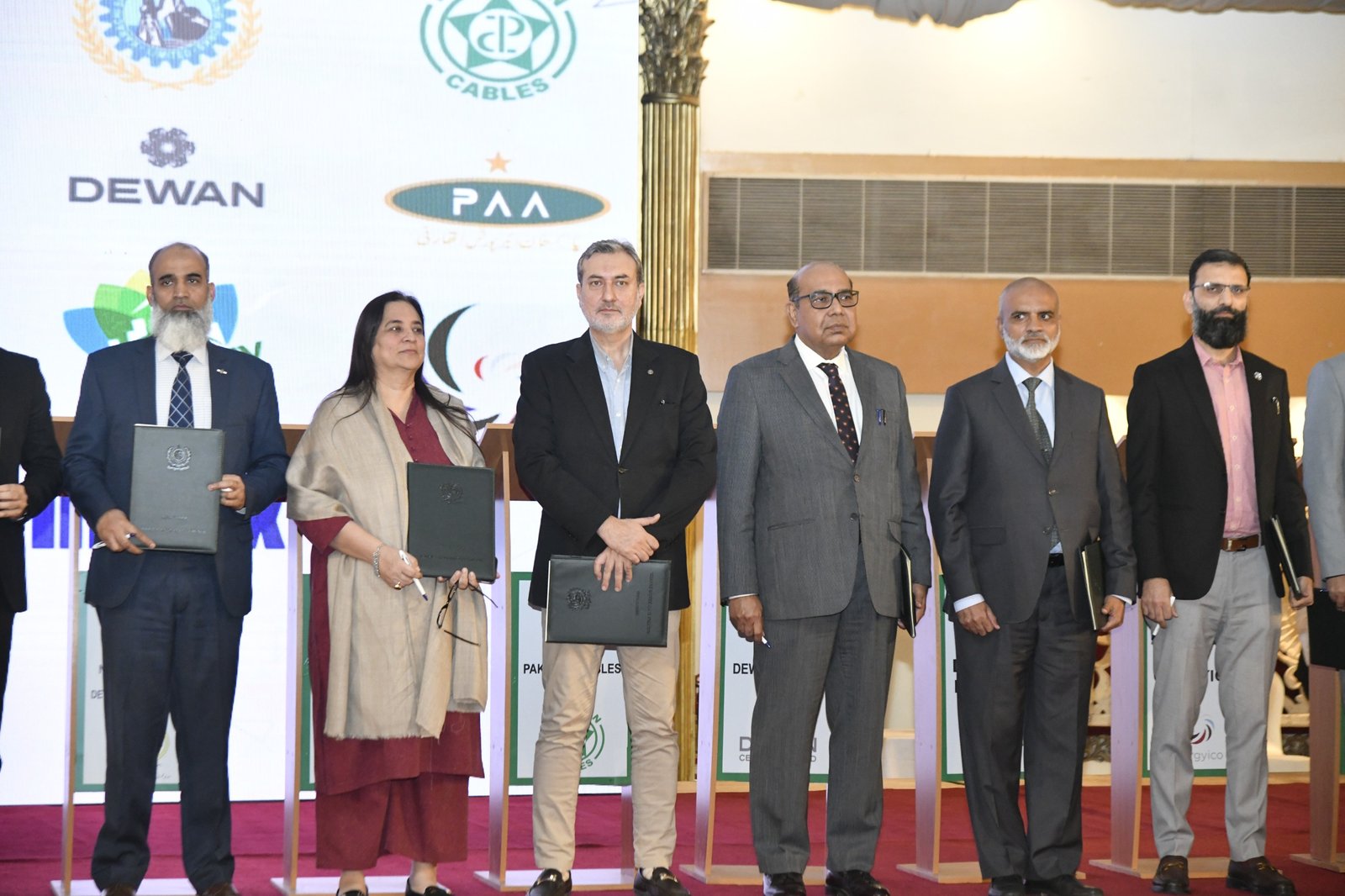
    The newly signed partner organizations include Yunus Textile Mills Limited, Karachi Shipyard & Engineering Works Ltd., Karachi Port Trust (KPT), Pakistan Airports Authority, Pakistan Cables Limited, Pakistan Machine Tool Factory, Naval Research & Development Institute, Inbox Business Technologies Limited, Harbin Electric International, Dewan Cement Limited, Alsons Industries (Pvt.) Ltd., Cynergico, DHA City Karachi, H. Nizam Din & Sons Ltd., and MAK Power International (Pvt.) Ltd.

    Engr. Waseem Nazir with GET partners

    Engineering graduates and professionals have long emphasized the need for such a structured training mechanism, noting that academic qualifications alone are insufficient to prepare young engineers for real-world challenges. The GET Program addresses this concern through a six-month training cycle, comprising five months of on-the-job field exposure and one month dedicated to soft skills development, mirroring the house-job model successfully implemented in the medical profession.

    Addressing the ceremony, Chairman PEC Engr. Waseem Nazir said the initiative would enable graduates to transition smoothly from classroom theory to workplace practice.

    “This program is about turning knowledge into competence,” he said. “Our goal is to produce industry-ready engineers who are confident, skilled, and capable of contributing effectively to Pakistan’s national development.”

    He added that similar partnerships have already been established in other parts of the country and that PEC plans to further expand the program nationwide.

    Representatives of the partner organizations welcomed PEC’s renewed focus on practical training, describing the GET initiative as a timely and forward-looking effort to align academic output with industry needs. They stressed that Pakistan’s industrial and economic growth depends on engineers who are not only theoretically sound but also technically proficient and adaptable.

    One industry representative remarked that programs like GET could “reshape the professional culture of engineering in Pakistan,” provided the process remains transparent, consistent, and results-oriented.

    For the thousands of young engineers entering an increasingly competitive job market each year, the Graduate Engineer Trainee Program represents both an opportunity and a challenge. If implemented effectively, it has the potential to become a sustainable national model for professional development—where education meets application and potential is transformed into performance. – ER

  • PEC to sign MoUs with industry partners for Graduate Engineer Trainee Placement Program Today

    PEC to sign MoUs with industry partners for Graduate Engineer Trainee Placement Program Today

    The ceremony will take place at 3:00 pm at Zaver Hall, Pearl-Continental Hotel, Club Road, Karachi. Chairman Pakistan Engineering Council, Engr. Waseem Nazir, will preside over the event.

    The MoU signing ceremony represents a significant milestone in PEC’s efforts to enhance capacity building and career development opportunities for young engineering graduates across Pakistan. Under the initiative, PEC will formally partner with leading employer organizations that are actively supporting and contributing to the implementation and sustainability of the GET Placement Program.

    The Graduate Engineer Trainee Placement Program is designed to bridge the gap between academic learning and industry requirements by providing fresh engineering graduates with structured, hands-on professional experience. Through collaboration with employer partners, the program aims to improve employability, practical skills, and professional exposure for young engineers entering the workforce.

    Senior representatives from partner organizations, academia, and the engineering community are expected to attend the event. The ceremony will highlight the shared commitment of PEC and participating employers to nurturing engineering talent and supporting the country’s human resource development in the engineering sector. – ER Report

    PEC Launches Graduate Engineer Trainee Program, Places 600 Engineers Nationwide
    The Pakistan Engineering Council (PEC) has launched the first batch of its Graduate Engineer Trainee (GET) Placement Program, placing 600 young engineers in leading public and private sector organizations across the country for hands-on industrial training. Read Details

    PEC Signs MoUs with 14 Organizations for Graduate Engineer Trainee Program
    In a major step toward strengthening the professional competence of Pakistan’s young engineers, the Pakistan Engineering Council (PEC) has signed Memoranda of Understanding (MoUs) with 14 leading organizations under its flagship Graduate Engineer Trainee (GET) Placement Program. The ceremony, held in Islamabad, was attended by PEC Chairman Engr. Waseem Nazir, senior engineers, and representatives from both the public and private sectors. Read Details