Category: Engineering Bodies

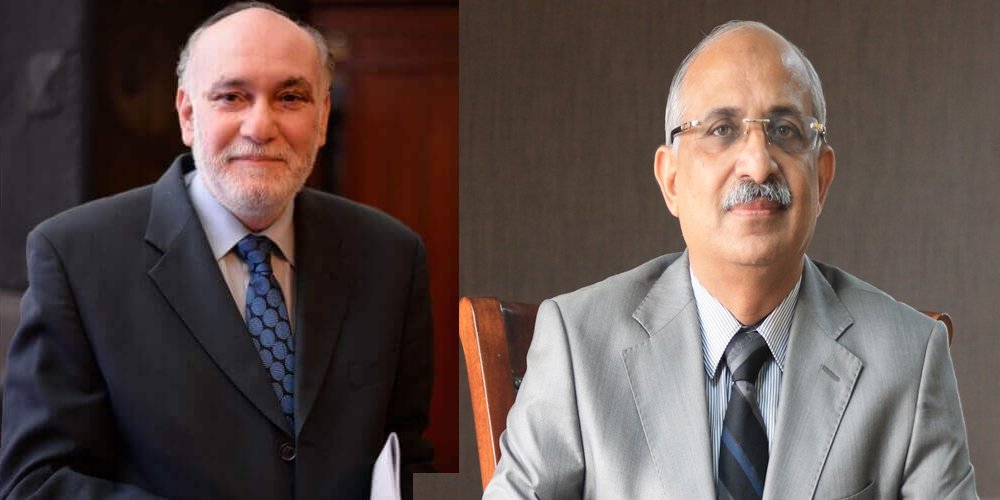
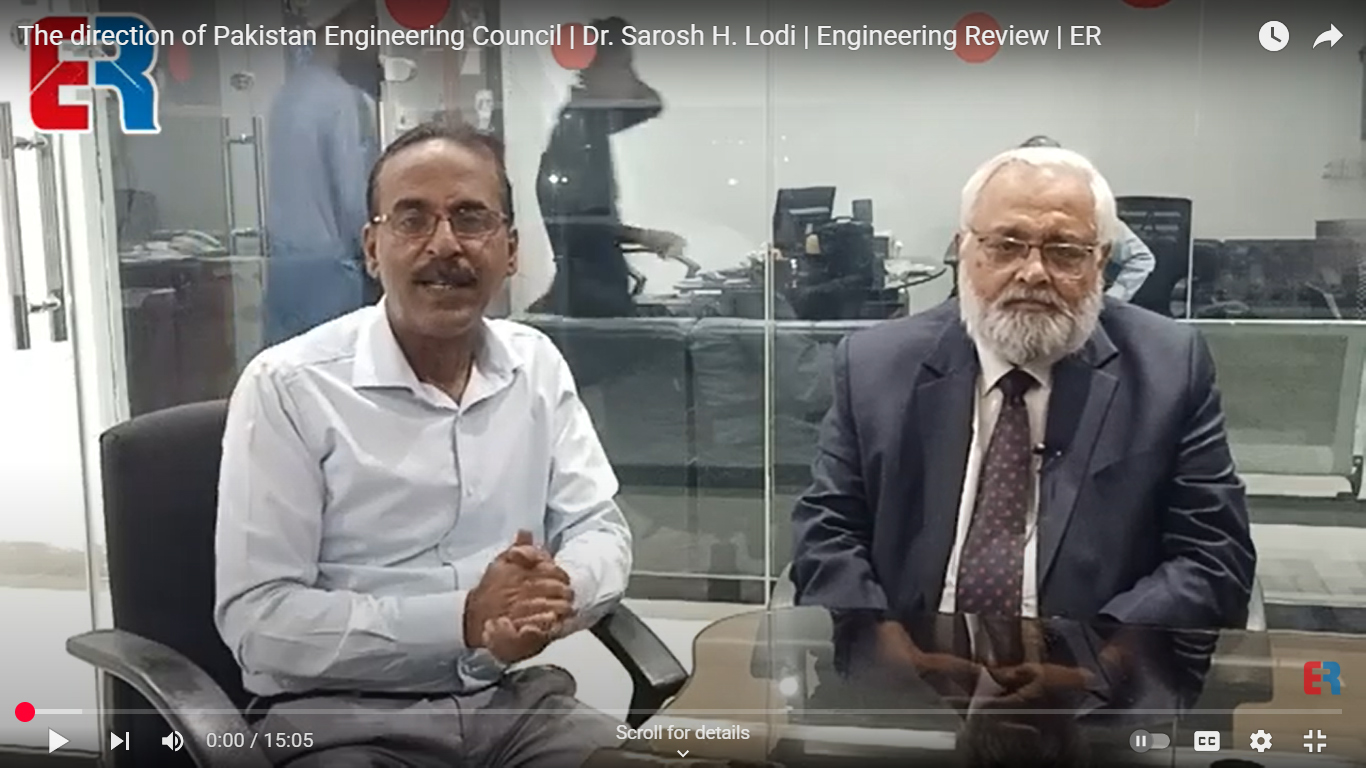
  • Senior Vice Chairman Sarosh Lodhi Warns PEC Chairman Waseen Nazir of Persistent Violations of Law

    Senior Vice Chairman Sarosh Lodhi Warns PEC Chairman Waseen Nazir of Persistent Violations of Law

    According to the letter, this action breaches Clauses 3(A)(1), 9(1) of the PEC Act 1976 (as amended), and Clause 49 of the PEC Bye-laws 1976, all of which vest executive powers in the Governing Body, not the Chairman alone. The letter further alleges that newly created posts such as Technical Advisor (Operations) and Technical Advisor (Regulation) do not exist within the PEC’s legal framework.

    The Vice Chairman also accused the Chairman of withholding key information from the Governing Body, entering secret agreements, and overriding the 52nd Governing Body meeting. The letter ends with a stern warning to halt these “blatant violations” and avoid further institutional and legal disaster for PEC.

    Here is is the letter of Dr. Sarosh Lodi to Chiarman PEC Engr. Waseem NAzir.

    “Dear Engr. Waseem Nazeer,

    I came to know about yet another illegal decision that you have undertaken vide office order no. PEC/HR/058/02/2025 dated June 28, 2025 regarding placement of several officers in the PEC Secretariat. This order was issued only a day after the 52nd Governing Body meeting. You, in your usual manner, are making illegal decisions without paying any heed to the Act and the Byelaws. Even though I am confident that in your usual manner you would not pay any attention my legal advice but I still feel it is my utmost responsibility as Senior Vice Chairman of PEC, as a person having more than 25 years of serving in different administrative positions of the Government, heading a leading engineering institution for eight years and having served in the Governing Body of PEC for six years earlier, to point out that this order is in violation of Clauses 3(A)(1), 9(1) of PEC Act 1976 as amended and Clause 49 of Pakistan Engineering Council Bye-laws, 1976.

    Clauses 3(A)(1) and 9(1) of the PE Act mentioned above are reproduced below for ready reference.

    3A. Executive powers of the Council. — (1) The general direction and administration of the Council and its affairs shall vest in the Governing Body which may exercise all powers and do all acts and things that may be exercised or done by the Council.

    9. Governing Body.— (1) There shall be a Governing Body which shall be the principal executive authority of the Council for supervising and governing the affairs and functions assigned to the Council by or under this Act and bye-laws.

      Similarly, Clause 49 of Pakistan Engineering Council Bye-laws, 1976 is reproduced below.

      49. The powers and duties of the officers and staff shall be such as may be laid down from time to time in the Standing Orders framed by the Governing Body.

        I must point out that you also failed to utilize powers vested in you as Chairman under Clause 3A(1)/(2) as it was done only a day after the 52nd Governing Body meeting, as there was no emergency.
        It is evident from these clauses that your order mentioned above has no legal standing. You, unfortunately, have failed to acquire permission from the Governing Body. To make things worse the positions mentioned in the said order e.g., Technical Advisor (Operations), Technical Advisor (Regulation) etc. do not exist in the PEC nomenclature. These positions were created without any approval of office, legal and competent forum. I am not sure whether provisions and financial impacts were included in the recently approved budget.

        You may recall that 20 members of Governing Body had filed for requisition of meeting of Governing Body on 20/06/2025 but you ignored the requisition, once again violating Clause 34(5) of Pakistan Engineering Council bye-laws,1976.

        Registrar has entered a secret agreement with Power Planning and Monitoring Company (PPMC) for renting out a floor of PEC Office in Lahore without any approval of Governing Body once again violating Clause 3A(1) of PEC Act 1976 as amended. I have mentioned time and time again in the meeting of the 10th Management Committee meeting held on 4th June 2025 to check the agreement which PEC has made with the Government of Punjab regarding non-payment of use of land which was duly endorsed by the then Governing Body, I am afraid that you not only ignored the advice but also misinformed Governing Body during the 52nd meeting. I would strongly urge you to share the agreement done with the Government of Punjab and the resolution of Governing Body with an endorsement and with signatures of members of the Governing Body.

        You are deliberately hiding the matter of PEC and National Technology Council without taking the Governing Body in confidence. Even though you brought this matter to the agenda of 52nd Governing Body meeting but you intentionally left it incomplete despite the fact of my insistence and of the other learned members. Finally, you categorically said that no matter what you will not share the details with the Governing Body. I do not see the proceedings of the 52nd Governing Body meeting were recorded. I am confident that this will be reflected in the minutes. Once again, a major policy decision without any discussion or prior approval. I am sure you have also misguided the Government also on this very important matter.

        I would once again very humbly request you to kindly respect rules and regulations and refrain such blatant violation which will lead to a major disaster. You may also recall the entire Management Committee has shown complete lack of confident in you in writing during the 108th meeting the Management Committee held on 4th June 2025.
        I would like to advise you to kindly refrain from taking such illegal decisions before it’s too late.”

      1. Is Chairman Engr. Waseem Nazir Falling Short in His Leadership Role at the Pakistan Engineering Council?

        Is Chairman Engr. Waseem Nazir Falling Short in His Leadership Role at the Pakistan Engineering Council?

      2. Technology Transfer Vital for Pakistan’s Growth: Local Integration Key, Says Adnan Sheriff

        Technology Transfer Vital for Pakistan’s Growth: Local Integration Key, Says Adnan Sheriff

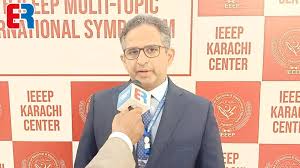
        Speaking to Engineering Review, Sheriff praised the organizers, stating, “The management must be appreciated and they should also keep on improving the symposium in the coming years.” He highlighted that discussions on new technologies are vital for keeping the event relevant and beneficial to the industry.

        Explaining Jubilee Corporation’s support for events like the IEEEP Symposium, Sheriff said knowledge sharing and community service are core values of the organization. “Our elders, including my father, prioritized community service when launching this business, even though commercial interests naturally existed. Industry-academia liaison and supporting students have been part of our blood — we cannot leave it, and InshaAllah, we shall continue it,” he said.

        Sheriff also emphasized the role of technology transfer in national development. “Our footprint in technologies is increasing because Pakistan urgently needs technology transfer. This is only possible if companies like ours introduce new technologies and gradually integrate them into the local environment,” he added.

        The IEEEP Symposium is recognized as a key platform for promoting technological advancement and collaboration between academia and industry in Pakistan. – Engineering Review

      3. PEF New Leadership in Sindh (South)

        PEF New Leadership in Sindh (South)

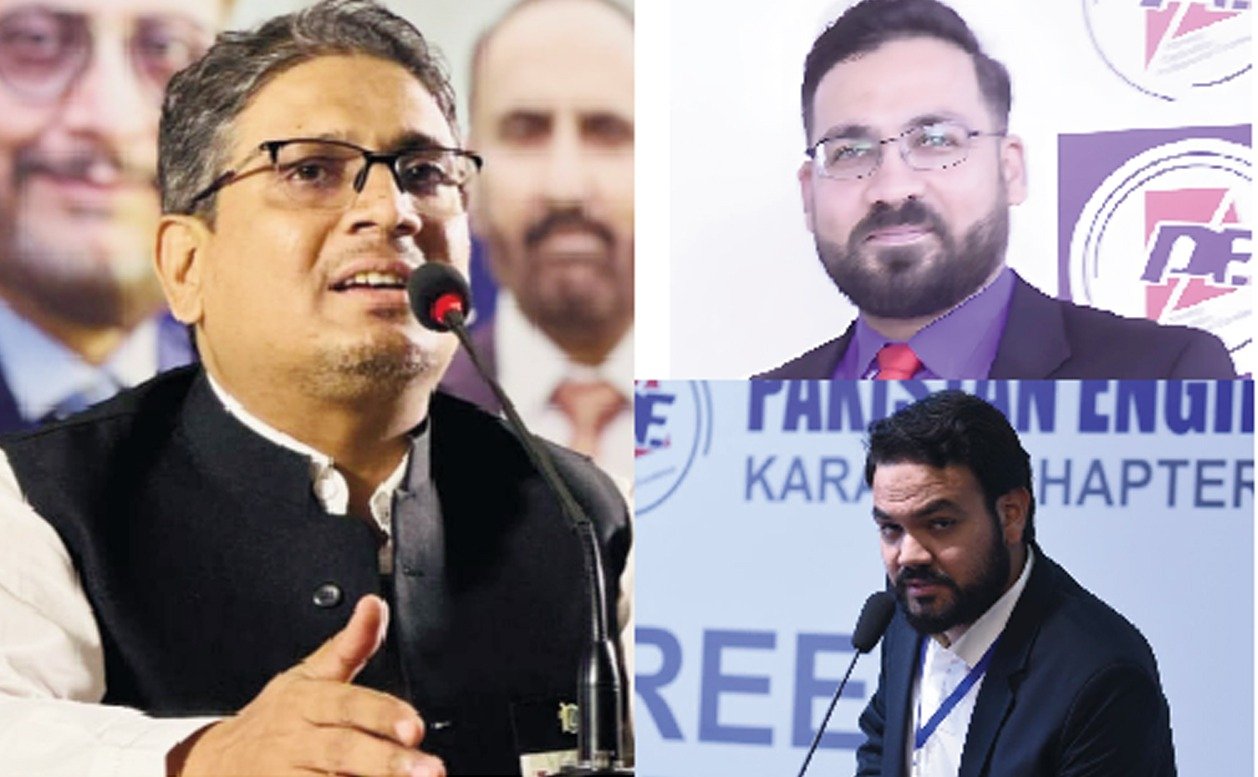
        Engr. Hafiz Haider Ali, President and the Executive Committee of Pakistan Engineers Forum, has appointed new leadership in Sindh South region for the term of 2025-26.

        Engr. Muhammad Imran will be President, Sindh South and Engr. Umar Farooq Memon will be the General Secretary. The other team members are Engr. Ammad Rizvi (Vice President), Engr. Syed Siraj Uddin Hussain (Deputy General Secretary), Engr. Sohaib Ali Khan (Deputy General Secretary), Dr. Saad Nadeem (Finance Secretary), Engr. Wahaj Shahid (Deputy Finance Secretary), and Engr. Uzair Elahi (Social Media Incharge).  

        The District Presidents in Karachi are Engr. Ammad Rizvi (Karachi East), Engr. Umar Farooq Memon (Karachi South), Engr. Arslan Mansoor (Karachi Malir), and Engr. Abdul Saboor Khan (Karachi North).  

        The newly appointed President Sindh South, Engr. Muhammad Imran, is a seasoned Textile Engineer and Manager with over 20 years of experience and a Master’s in Textile Engineering from NED University. He is currently working as Manager, Pre-Treatment, in the premium textile industry. Since 2004, Imran has been actively serving the engineering community through PEF and previously held the position of General Secretary for PEF Karachi.

      4. Is Engr. Waseem Nazir’s One-Man Show Failing the PEC?

        Is Engr. Waseem Nazir’s One-Man Show Failing the PEC?

        The pressure at the last moot of the GB was so high that his tactic to invite the members to the scenic northern settlement of Bhurban to woo them failed miserably. Members hailing from The Engineers Pakistan (TEP) and even some from his ally, The National Engineers Association (NEA), pushed him to realize that his authoritarian style was not helping in resolving the issues of engineers across Pakistan or in running the affairs of the council. “One member of the GB allegedly asked him if he deemed himself ‘Trump’,” a participant divulged to the Engineering Review.

        Engr. Nazir, now history’s only chairman of the PEC besieged by the members of the GB, has already allegedly become notorious for his famous words: “Don’t worry, I am doing everything.” “Even his allies are fed up with his response to the demand of running the council in an inclusive manner,” said a GB member.

        The information collected by Engineering Review about the proceedings of the Governing Body Meeting at Bhurban suggests that there are five striking aspects of the moot.

        One, that Engr. Nazir had attempted to emulate the past practice of keeping significant demands of the members under the carpet.

        Two, he tried to usurp all powers of the governing body, which, as per law, has to run the affairs of the council. He has also been exposed as an unwanted interventionist in the decisions of his own working groups, which have now become dysfunctional. “A convenor of one of the working groups says he does not allow us to work smoothly and keeps on intervening, although he has no experience of running the council at all.”

        Three, his allies — NEA — failed to silence their members, who went on to press their genuine demands.

        Four, the GB was exposed to an alleged unlawful practice of tampering with the minutes of the meetings. “The minutes of the meetings are tampered with many times, and we are witnesses to such practices,” claimed a member.

        Five, the real pre-GB show was stolen by the arch-rival of Engr. Nazir, Engr. Jawed Salim Qureshi, who had arranged a dinner in Murree for GB members hailing from his group.

        It’s evident that the chairman, who left Bhurban as an unhappy man, was forced to concede to some of the governing body’s demands. He accepted the constitution of a committee to look into issues relating to the promotion and extension given to the registrar of the council. Also, he surrendered to the demand that the regional office of the council should not be shut down.

        No matter how much Engr. Nazir insists that he is the chairman of all engineers, as there is “no politics after the elections” — both his friends and foes played real politics and worked hard to assert the power of the governing body around the GB meeting in Bhurban. He lured Engr. Qadir Shah to neutralize Engr. Mukhtiar Shaikh, and ironically, both contemptuously joined hands to strangulate him, as the former succeeded in getting an unnecessary coordination committee, and the latter scared him by writing to the registrar for initiating the impeachment of the chairman.

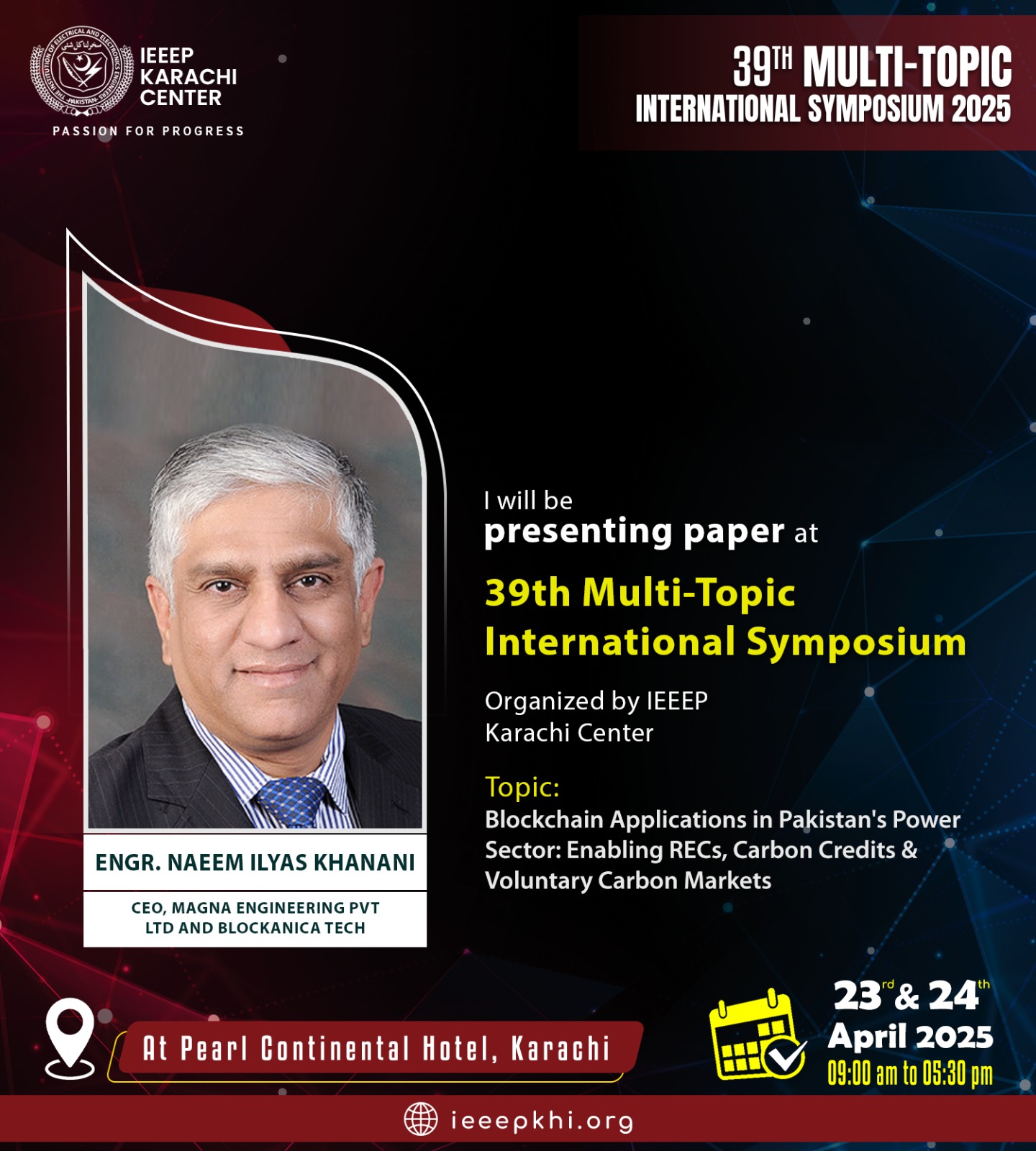
      5. Blockchain Applications in Pakistan’s Power Sector: Enabling RECs, Carbon Credits & Voluntary Carbon Markets

        Blockchain Applications in Pakistan’s Power Sector: Enabling RECs, Carbon Credits & Voluntary Carbon Markets

        To be presented by: Engr. Naeem Ilyas Khanani, CEO of Magna Engineering Pvt. Ltd., DigiEstate Pvt. Ltd., & Blockanica Technologies

        Abstract
        Blockchain technology offers transformative potential for Pakistan’s power sector by introducing transparency, traceability, and automation in critical areas such as Renewable Energy Certificates (RECs), carbon credits, and Voluntary Carbon Markets (VCMs).

        This paper explores blockchain applications that support the country’s decarbonization goals—particularly through the voluntary implementation of the NEECA Energy Conservation Building Code (ECBC) in mixed-use buildings.

        By leveraging blockchain, verifiable energy savings and renewable generation data can be tokenized into carbon credits and RECs, ensuring immutable records and preventing double counting. Smart contracts can automate credit issuance, trading, and settlement processes, while integrating with Building Management Systems (BMS) and digital energy meters for real-time validation.

        International case studies from Singapore, South Korea, India, and the UAE highlight successful blockchain-driven energy and carbon markets. These examples inform a tailored roadmap for Pakistan, beginning with pilot projects in major urban centers, followed by stakeholder engagement, platform development, and eventual regional integration.

        The proposed strategy aligns with Pakistan’s Nationally Determined Contributions (NDCs), climate finance aspirations, and clean energy transition. The paper calls for regulatory sandboxes and public-private collaborations to accelerate adoption. Blockchain can enable Pakistan to become a regional leader in digital energy and carbon asset markets while advancing sustainability and economic resilience.

      6. Engr. Mukhtiar Shaikh Urges Impeachment Proceedings Against PEC Chairman

        Engr. Mukhtiar Shaikh Urges Impeachment Proceedings Against PEC Chairman

        Under the subject “Agenda Points for the 51st Meeting of PEC Governing Body Proposed by Vice Chairman (Sindh)”, the communication to the Council’s top officer states: “It is suggested that impeachment proceedings be initiated against the Chairman PEC for any illegal actions or decisions taken without the approval of the Governing Body. In this regard, the 51st Governing Body meeting should address this important matter. This will ensure accountability and reinforce proper governance within the PEC.”

        Justifying his allegations against Engr. Waseem Nazir, the Vice Chairman cites specific provisions of the PEC Act. He notes that under Article 3A, “the general direction and administration of the Council and its affairs shall vest in the Governing Body (GB), which may exercise all powers and perform all acts and functions that may be exercised or performed by the Council.” Furthermore, Article 9 states that “the Governing Body shall be the principal executive authority of the Council for supervising and governing the affairs and functions assigned to the Council.”

        He emphasizes that the Governing Body is the ultimate decision-making authority at the Pakistan Engineering Council (PEC), and that the Chairman’s powers are limited accordingly. No action, he argues, can be taken by the Chairman without prior approval from the GB.

        Detailing the allegations against the Chairman, Engr. Shaikh writes: “The Chairman PEC has misused his authority by unlawfully approving the use of an 1800cc car with unlimited fuel for Engr. Mohammad Sohail, who is currently serving as Head of Department/Additional Registrar (PEC-20) in the Coordination Department at PEC Headquarters. This vehicle has reportedly been used without any logbook or proper recordkeeping, despite Engr. Sohail also receiving the Car Monetization allowance admissible to BPS-20 officers.”

        He further alleges that Engr. Sohail has been assigned various personal tasks by the Chairman, for which he has claimed significant amounts of TA/DA (Traveling Allowance/Daily Allowance). Additionally, Engr. Shaikh states that Engr. Sohail was illegally promoted from Deputy Registrar (PEC-18) to Senior Deputy Registrar (PEC-19), and subsequently to Additional Registrar (PEC-20), without approval from any competent forum.

        In light of these alleged irregularities, Engr. Shaikh strongly recommends that a thorough inquiry be initiated into both the promotions and the potential misuse of PEC property and funds. He suggests that a detailed report be presented to the Governing Body for further action and decision.

        The agenda points further state: “As per Article 9 (para 5) of the PEC Act, the Governing Body is required to hold at least three meetings per year. Additionally, under Article 5, an Annual General Meeting (AGM) must be held to present the Annual Report, Audited Accounts, Annual Budget, Appointment of Auditors, and other relevant business items.”

        However, it is noted with concern that only two Governing Body meetings were held last year, and the AGM was not conducted at all. In light of this, it is suggested that one of the missed Governing Body meetings from the previous year be scheduled in the current year.

        Furthermore, it is proposed that a minimum of four Governing Body meetings, along with the AGM, be conducted this year in order to fully comply with the requirements of the PEC Act.

        Engr. Mukhtiar Ahmed Shaikh, Vice Chairman (Sindh) and a Member of the PEC Management Committee and Governing Body, has proposed that these points be formally included in the agenda of the 51st PEC Governing Body meeting for deliberation and appropriate action. – Engineering Review Report

      7. 39th IEEEP Multi-Topic International Symposium to be Held on April 23-24, 2025

        39th IEEEP Multi-Topic International Symposium to be Held on April 23-24, 2025

        The symposium will cover a broad spectrum of topics, including energy markets and sustainability, industrial solutions and innovations, digital transformation, and emerging technologies. It will also feature thought-provoking panel discussions, interactive sessions, and networking opportunities, making it an essential platform for professionals, project managers, EPC contractors, manufacturers, and engineering students.

        For further details or to register for the event, contact Engr. Zeeshan Khan at registration@ieeepkhi.org or call 0321-2553620.

        Join IEEEP Karachi Center and be part of Pakistan’s leading engineering symposium! – ER

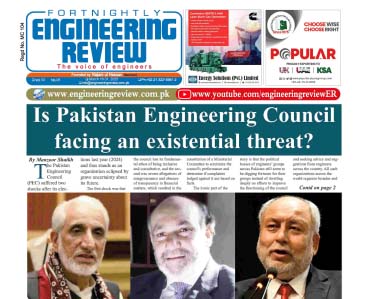
      8. Is Pakistan Engineering Council facing an existential threat?

        Is Pakistan Engineering Council facing an existential threat?


        The ironic part of the story is that the political bosses of engineers’ groups across Pakistan still seem to be digging fortunes for their groups instead of dwelling deeply on efforts to improve the functioning of the council and seeking advice and suggestions from engineers across the country. All such organizations across the world organize broader and more intense consultative meetings to face challenges they encounter in the wake of engineering aspects of the economy, engineering education and institutions, environmental disasters, and the onslaught of new technologies that have started swallowing traditional sets of engineering disciplines. However, the PEC seems negligent of all challenges and also real threats emanating from inside the council. In recent months, the council, as scores of engineers believe, has become a secret service-like organization, whose boss’s doorless office attracts a scant few of his cronies in running the affairs of the council.


        Amidst concerns about the outcome of the Federal Cabinet’s Ministerial Committee, the council cared not to convene the meeting of the Governing Body (GB)—which, as per the Act of the council, is mandated to meet thrice a year—and take the elected members into confidence. “Why would he call the meeting?” asked one of his close allies, saying he is a manager, not a leader. A senior engineer who prefers to remain anonymous said, “He is an exclusionist; it’s his style, and that’s the reason he did not form committees, which is the mandate of the governing body. The chairman of the council cannot make committees as per the law,” claims another senior engineer. The committees that he called “working groups” are based on governing body members. None of these committee-cum-groups have come up with anything substantial. A member of such a group told Engineering Review that he was unable to understand the situation; no one was interested in working.


        Interestingly enough, it’s been seven months since the PEC elections, and little less than half of the GB members hailing from The Engineers Pakistan (TEP), led by Engr. Jawed Salim Qureshi, stayed away from the meetings of the working groups. The reason is the alleged lack of transparency in the poll. “They shall not turn up unless their grievances are addressed,” they said. After the polls, many of these elected members fear drastic changes that may fall upon the council in the backdrop of the outcome of the Ministerial Committee’s hunt.

        Some of these members believe the NEA, led by Engr. Qadir Shah, and TEP should sit together to save what they call the very existence of the council. But it seems less probable as Chairman Engr. Waseem Nazir has already appeased NEA’s Shah group by making a politically-driven committee led by Engr. Qadir Shah, whose prime objective, according to NEA insiders, is to place his men in the working groups and committees.


        Engr. Nazir’s political move has helped him neutralize Engr. Mukhtiar Shaikh—in a marriage of inconvenience with Engr. Shah—since he cannot afford to face both Shah and Shaikh in the same line. Engineers close to Engr. Shaikh suggest he turned instrumental in launching a tirade against the chairman during a recent meeting of the Management Committee of the council. The chairman is said to have been alienated in the meeting, echoed by hot arguments, and finally called off without discussing the agenda.
        The chairman’s style of running the affairs of the council and the post-PEC elections flurry of allegations of corruption leveled by Engr. Zahoor—a former member of the GB—have compounded into an impression across the country that the council has malfunctioned.


        ‘The council seems to have been paralyzed after its elections, especially,’ believes a GB member. Even the PEC chairman cared not to look into the allegations of a former GB member that damaged the image of the council, he stated. ‘The young engineers, already angry with engineering political groups led by veterans, contribute to the accusation game too.’


        The image of PEC in the federal public sector organizations and the ruling circles has been tarnished, claims an engineer working with a federal government department at a higher position. “At any level, no one from the top of the council came forward to control the damage.” The council, though working under the Ministry of Science & Technology (MoST), is not synchronized with the relevant ministries so that they could be part of the overall development of the country, he argued, saying it’s for this reason that Engr. Jawed Salim’s complaints traveled to the federal cabinet.


        With such an image in mind, a high-powered committee will assess the performance of the council, mandated to evaluate the performance of the Pakistan Engineering Council in accordance with its mandate, as outlined in the preamble of the Pakistan Engineering Council Act of 1975 and its functions as specified in Section 8 of the Act. It will also assess the authenticity of complaints received against the PEC and the validity of general dissatisfaction with the council, and review the PEC Act of 1975 to identify any gaps or weaknesses in the law that may be affecting institutional outcomes.


        Although some in Engr. Qureshi’s camp believe the complaints lodged by them with the MoS&T, where an exercise of rightsizing departments is going on, may rebound on the complainants, ‘Instead of focusing on election-related complaints, the Ministerial Committee would look into many other things that may have a huge impact on the council,’ a TEP engineer says.


        However, Engr. Jawed Salim Qureshi, talking to ER, said he welcomed the formation of the Ministerial Committee with a heavy heart. He demanded that first, it should be determined who brought the council to this point. “Our complaints on election transparency were not investigated properly, and now the culprits should be brought to the book. The council should be running as per the Act and Bylaws. No one other than the GB can constitute the committee.”


        In TEP, there are many who predict the extinction of the council and see another mechanism to regulate engineering education and the industry. ‘Since the leadership of the engineers is weak, I don’t see the council in the future anymore,’ said another engineer.


        The NEA leader Abdul Qadir Shah agrees with Engr. Qureshi regarding the potency of the leadership. He believes Engr. Nazir made a few mistakes at the outset, which worked as oil on the fire. However, he did not share the details of what exactly Engr. Waseem did that led to the situation reaching this extent.


        The PEC headquarters, with few exceptions, seems content, and the officers and staffers welcome the scrutiny of the council’s performance by the Ministerial Committee, as they believe whatever may be investigated has to do with the doings of the elected members of the council. A few of them claim there is no ground for the allegations of Engr. Jawed Salim Qureshi, as these 760 votes were cast by veteran engineers, whose biometrics are not possible. ‘It’s a common practice in the elections, and even during the last elections, more votes were cast by senior engineers,’ claimed one.


        Interestingly enough, the PEC headquarters also claims there is no proof that the Nadra System collapsed because of any problem in the PEC. Nadra, he said, had offered to conduct a reelection, but all parties agreed to go with the same election process.


        Disagreeing or otherwise with Engr. Qureshi’s stance on the transparency of elections, senior officers, however, do find like the chairman monopolistic in his style. A senior officer said Engr. Zahoor’s allegations and the chairman’s autocratic style have caused real damage. ‘The council chairman should have come up with a plan to discourage the practices that harmed the council’s image,’ he suggested, alleging some of the chairman’s close aides were enjoying the same perks that others did during other administrations of the council.


        Hundreds of miles away in other cities of Pakistan, this allegation is circulating, and many engineers point fingers at some of the chairman’s close aides who allegedly receive undue perks. An engineer said many engineers have valid documentary proof to validate the allegations.


        Are these allegations based on facts? The PEC chairman has to answer this question, but he is not in touch with the independent engineering media and could not be accessed despite repeated calls and messages by Engineering Review. However, he is present in all PEC offices across the country through his vision and mission statements, some of which are debatable though, hanging on the walls.
        Now, all eyes are on the Ministerial Committee, which has been given three weeks to compile its report and what every engineer in Pakistan has to see is if the committee comes up with a realistic report and lays the groundwork for the reform of the council.

      9. Ministerial Committee to Review Pakistan Engineering Council’s Performance

        Ministerial Committee to Review Pakistan Engineering Council’s Performance

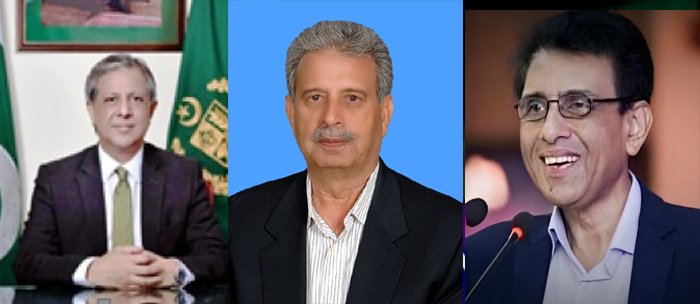
        The committee, which consists of six members—three federal ministers and three federal secretaries—is tasked with submitting its report to the cabinet within three weeks.

        The committee members include the Minister for Law and Justice, the Minister for Science and
        Technology, the Minister for National Food Security and Research, the Secretary of the Law and Justice
        Division, the Secretary of the Technology Division, and any additional members appointed by the
        committee.

        The committee’s terms of reference include the following:
        • To evaluate the performance of the Pakistan Engineering Council in accordance with its
        mandate, as outlined in the preamble of the Pakistan Engineering Council Act of 1975 and its
        functions as specified in Section 8 of the Act.

        • To assess the authenticity of complaints received against the PEC and the validity of general
        dissatisfaction with the council.

        • To review the Pakistan Engineering Council Act of 1975 and identify any gaps or weaknesses in
        the law that may be affecting institutional outcomes.

        • To address any other matters related to the institution.

        The Science and Technology Division will provide secretariat support to the committee, which is
        expected to present its findings to the cabinet within three weeks.