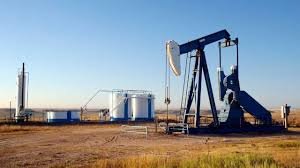
Mari Energies Limited (MariEnergies) has announced a new oil and gas discovery at its Mari Ghazij CF-B1 exploration well, located within the Mari Development and Production Lease (D&PL) area in Sindh Province.
According to a notification submitted to the Pakistan Stock Exchange (PSX) under Section 96 of the Securities Act, 2015, and Clause 5.6.1(a) of the PSX Regulations, the company confirmed that the discovery resulted from successful exploratory drilling operations in the region.
The Mari Ghazij CF-B1 well was spud-in on September 12, 2025, and drilled to a total depth of 1,195 meters into the SUL formation. The primary target of the well was the oil-prone Ghazij formation.During testing, the well flowed 305 barrels of oil per day (BOPD) and 3 million standard cubic feet per day (MMSCFD) of gas, with a wellhead flowing pressure (WHFP) of 225 psi at a choke size of 48/64 inches.
MariEnergies holds a 100% working interest and is the operator of the Mari D&PL block.
The company stated that the discovery underscores its continued commitment to enhancing Pakistan’s domestic hydrocarbon production and contributing to the country’s energy security. – ER News Desk
The Oil and Gas Development Company Limited (OGDCL) has announced that it has entered into a farm-out agreement to acquire a 20% working interest in the Eastern Offshore Indus-C Block from Pakistan Petroleum Limited (PPL).
According to a statement submitted to the Pakistan Stock Exchange (PSX) under Section 96 of the Securities Act, 2015, the partnership also includes Turkish Petroleum Overseas Company (TPOC) — a wholly owned subsidiary of Türkiye Petrolleri Anonim Ortaklığı (TPAO), the national oil company of Türkiye — and MariEnergies.
The collaboration follows high-level engagements between the Governments of Pakistan and Türkiye to deepen bilateral cooperation in the energy sector and attract foreign direct investment (FDI) for exploration in Pakistan’s underexplored offshore basins.
Subject to regulatory approvals, the operatorship of the Indus-C Block will be transferred to TPOC, which has extensive global experience in offshore exploration and field development. Once the transaction is finalized, the participating interests in the block will stand as:
OGDCL stated that the transaction reaffirms its commitment to advancing offshore exploration in Pakistan. Leveraging its technical expertise, seismic capabilities, and prior participation in offshore programs, the company aims to play a pivotal role in accelerating exploration and development activities in the country’s offshore sector. The company added that this partnership marks a significant milestone in strengthening long-term strategic energy cooperation between Pakistan and Türkiye, paving the way for the exploration of Pakistan’s vast offshore hydrocarbon potential. –
Pakistan Oilfields Limited (POL) announced that the Razgir-1 well, located in the TAL Block, has been successfully brought onstream on October 12, 2025, after obtaining all necessary regulatory approvals.
According to the company’s disclosure to the Pakistan Stock Exchange (PSX), the development follows earlier communications regarding the testing results of the Lumshiwal, Kawagarh, and Lockhart formations at the well.
As per information received from MOL, the operator of the TAL Block, production from Razgir-1 is being gradually increased and is expected to achieve a flow rate of 25.1 million cubic feet per day (MMCFD) of gas and 333 barrels per day of condensate.
POL further informed that its pre-commercial working interest in the TAL Block stands at 25%.
The company stated that the commencement of production from Razgir-1 marks another step toward enhancing domestic energy supplies and strengthening Pakistan’s upstream sector.
In accordance with Section 96 and 131 of the Securities Act, 2015 and Clause 5.6.1 of the Rule Book of the
Pakistan Stock Exchange Limited (PSX), we hereby convey the following material information: With reference to the order issued by Competition Commission of Pakistan (CCP) and the imposition of penalty on International Steels Limited (“the Company”), the Company is reviewing the details and will take appropriate legal steps as needed. – ER News Desk
The Expo and Conference Organizing Committee proudly announced the upcoming 31st Pakistan HVACR International Expo & Conference 2026, as around 100% of the exhibition stalls were booked within just 15 minutes of the opening of the online portal.
This record-breaking success reflects the unwavering trust and confidence of the exhibitors and industry stakeholders in the platform that has become the premier stage for showcasing innovation, technology, and growth in the HVACR sector, The Expo & Conference of the Pakistan HVACR Society.
The overwhelming response from our exhibitors demonstrates the strength, credibility, and importance of this platform for the HVACR community. This milestone lays a solid foundation for delivering an exceptional Expo & Conference in 2026, Karachi. Khalid Mansoor, Chairman Organizing Committee, Fahad Ali Afridi, Chief Convener, Zeeshan Siddiqui, Convener Exhibition, Aley Muhammad, Convener Finance, Naeem A. Khan, Convener Audit, Syed Fakkhi Iftikhar, Event Manager, and the entire Organizing Committee, whose professionalism and dedication contributed greatly to this remarkable success.
The 31st Pakistan HVACR International Expo & Conference 2026 shall be held in Karachi in February 12-14, 2026, and is expected to bring together industry leaders, professionals, and innovators from across Pakistan and beyond, showcasing the latest advancements in HVACR technologies and sustainable solutions. (Pulished in Oct. 1-15,2025)
The Vice Chairman of the Pakistan Engineering Council (PEC), Engr. Mujeeb-ur-Rehman Marri, has raised serious concerns about the current state of affairs within the Council, warning that key commitments to the engineering community remain unfulfilled despite one year since the new office bearers took charge.
In a detailed letter addressed to PEC Chairman Engr. Waseem Nazeer, Marri expressed disappointment that the Council had failed to deliver on promises made at the time of oath-taking. These included implementation of a service structure and technical allowances for engineers, creation of job opportunities, enhancement of the On-the-Job Training (OJT) program, capacity-building initiatives, and progressive policies for engineers, contractors, and consultants.
“Unfortunately, the present reality is quite the opposite,” he wrote, noting that management committee meetings are not being held as required, while the Governing Body and Annual General Meeting (AGM) remain pending without justification. He criticized what he described as a “corporate culture style” of governance, with PEC business driven by personal preferences rather than the PEC Act and by-laws.
Marri also expressed concern over the abrupt discontinuation of the OJT program, which was replaced by the Graduate Engineers Training (GET) program. Although scheduled to launch in July 2025, the initiative has yet to materialize, depriving young engineers of opportunities.
The Vice Chairman further highlighted several pressing issues, including the failure of the Continuing Professional Development (CPD) crash program, the poor results of the last EPDC exam with only a 17% pass rate, and student exchange programs with China that, he alleged, were revolving around “a personal circle rather than being open and merit-based.” He also criticized attempts to close PEC branch offices and reintroduce proposals for shifting PEC offices to universities, both of which had previously been rejected by the Governing Body.
Calling on the Chairman to take “historical and concrete steps” for the welfare of engineers and stakeholders, Marri emphasized the need to restore dignity, fairness, and vision to PEC. “PEC must bring prosperity and hope instead of disheartenment,” he concluded.
Earlier Concerns by Senior Vice Chairman It may be recalled that earlier, in June–July 2025, PEC’s Senior Vice Chairman had also written a strongly worded letter to Chairman Engr. Waseem Nazeer, questioning what he termed “illegal decisions” in violation of the PEC Act and Bye-Laws. Referring specifically to an office order issued on June 28, 2025, regarding the placement of officers in the PEC Secretariat, he argued that the Chairman acted without the approval of the Governing Body and created positions not recognized in PEC’s nomenclature.
The Senior Vice Chairman also raised objections over an agreement with the Power Planning and Monitoring Company (PPMC) to rent out PEC’s Lahore office floor without authorization, as well as withholding of details related to PEC’s dealings with the National Technology Council and the Government of Punjab.
He urged the Chairman to respect the PEC Act and Bye-Laws and refrain from making unilateral decisions, warning that continued violations “will lead to a major disaster” for the Council. – ER Report (Published in Oct 1-15,2025)
• Pakistan is experiencing an energy revolution as households and businesses rapidly adopt solar-plus-battery systems to meet their own energy needs.
• Making this transition more inclusive will require financing mechanisms that lower costs for underserved users and support grid upgrades for all.
• The country’s approach to this shift offers valuable lessons for other emerging economies navigating their own energy transitions. For years, and especially during the 2022-23 energy crisis, Pakistan has struggled with chronic power shortages and soaring electricity costs as heavy reliance on imported coal and gas leaves it exposed to global price shocks. In response, residential, commercial and industrial consumers are increasingly turning to decentralized energy solutions, most notably rooftop solar combined with battery energy storage systems. In 2024, Pakistan imported 17 gigawatts (GW) of solar photovoltaic (PV). The country also imported an estimated 1.25 gigawatt-hours (GWh) of lithium-ion battery packs in 2024. These are substantial additions to an energy system with approximately 40 GW of total installed capacity. If this trend continues, total battery imports could reach 8.75 GWh by 2030. This would be enough to meet over a quarter of peak demand, while solar could cover most daytime electricity needs. This surge in solar and batteries is driving down energy costs and improving reliability for individual users in Pakistan. By reducing dependence on imported fuels like LNG, it is easing pressure on Pakistan’s balance of payments and strengthening the country’s energy sovereignty. This revolution is redefining energy access and the country’s future from the ground up. And while it is also creating new challenges for the grid and overall system resilience, Pakistan’s handling of this shift offers valuable lessons for other emerging economies navigating their own energy transitions. Grid versus off-grid energy divide The rapid, uncoordinated growth of distributed energy and a lack of system-level planning and integration is raising critical questions for Pakistan’s national grid. One of the biggest challenges is ensuring fairness in how costs are shared.
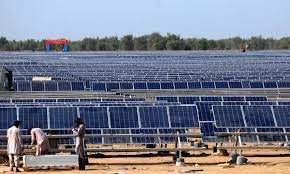
Many households and small businesses, especially those in flats or small dwellings, cannot install rooftop solar or afford batteries. As other users reduce their reliance on the grid using these methods, the utility’s fixed costs for maintaining generation and transmission are spread across a shrinking pool of customers. At the same time, legacy gas and coal plants continue to be remunerated even when underutilized due to “take-or-pay” agreements that impose penalties if a minimum amount of power is not purchased. Pakistan’s National Electric Power Regulatory Authority (NEPRA) reports that capacity payments to power plants exceeded PKR2 trillion (Pakistani rupee) or $7 billion in 2024. These costs must be recovered through higher tariffs on fewer ratepayers regardless of actual usage. Without regulatory reform such as redesigning tariffs or planning for flexible grid infrastructure, Pakistan could see a widening energy divide. On one side, a growing class of energy “prosumers” would enjoy more reliable, low-cost power off-grid, while those still tied to the grid would be left paying ever-higher costs for a legacy system. Affordable energy for all To make the transition more inclusive, Pakistan needs financing mechanisms that lower entry costs for underserved users and support grid upgrades that benefit everyone. Blended finance, which uses public or philanthropic funds to help unlock private investment, could play a key role here. Low-interest credit lines for rooftop solar and batteries, as well as guarantees to de-risk lending, could make solar-plus-battery energy solutions more accessible. Development banks such as the Asian Development Bank (ADB) and Green Climate Fund (GCF) are already active in Pakistan and could help structure these facilities. The Pakistan Distributed Solar Project already uses a GCF‑backed guarantee to finance 43 megawatts of solar PV installations for households, agribusinesses and small- and medium-sized enterprises. The facility supports lending through the State Bank of Pakistan’s renewable energy scheme, enabling partners like JS Bank to offer concessional loans to new customer segments while also providing technical assistance and market awareness support. Pakistan will also need to expand utility‑scale solar to complement rooftop and distributed systems.
While this may reduce the use of existing thermal plants even further, such projects are essential to meet growing demand and drive the transition. Ultimately, financing must go beyond what works for early adopters. Creating mechanisms that make clean, reliable power accessible to all will ensure Pakistan’s rapid shift to solar and storage strengthens the entire power system. Lessons for other emerging economies The factors driving Pakistan’s solar and battery boom are not unique to the country. Many other developing economies face the same pressures of high power prices, unreliable electricity and gaps in energy access. They can also benefit from the rapid drop in the cost of solar panels and, more recently, batteries. Pakistan’s experience is an important case study for other emerging economies. Five key recommendations include: 1. Make the energy transition inclusive Help households and businesses that cannot yet afford the investment in solar and storage to do so in a coordinated and collective manner. 2. Integrate distributed energy into the system Encourage sharing, trading and coordinated use of power from small, decentralized installations so surplus energy is not wasted and the whole grid benefits. Incentivize battery charging and discharge when it makes sense for the system. 3. Include legacy assets Develop business models and financial arrangements for existing thermal plants so they can serve as backup, grid stabilizers and providers of ancillary services, while minimizing emissions and keeping the system reliable during periods of low renewable output. 4. Incorporate the mobility sector Use the growth of distributed solar and battery systems to support the electrification of transport. Align charging infrastructure planning with local generation and storage capacity, and design incentives that encourage EV charging when solar output is high. This reduces strain on the grid and links two major energy transitions. 5. Plan ahead for scale Treat solar-plus-batteries as a major source of capacity growth and generation in the next decade, rather than a fringe add‑on. Grid planning and policy must anticipate this shift rather than react to it. For many emerging markets, the question is no longer if the energy transition will happen, but how to manage it. With the right planning and smarter financing instruments, countries can turn a rocky, uneven shift to clean power into a coordinated pathway towards affordable, reliable and low-carbon energy for all. – WEF
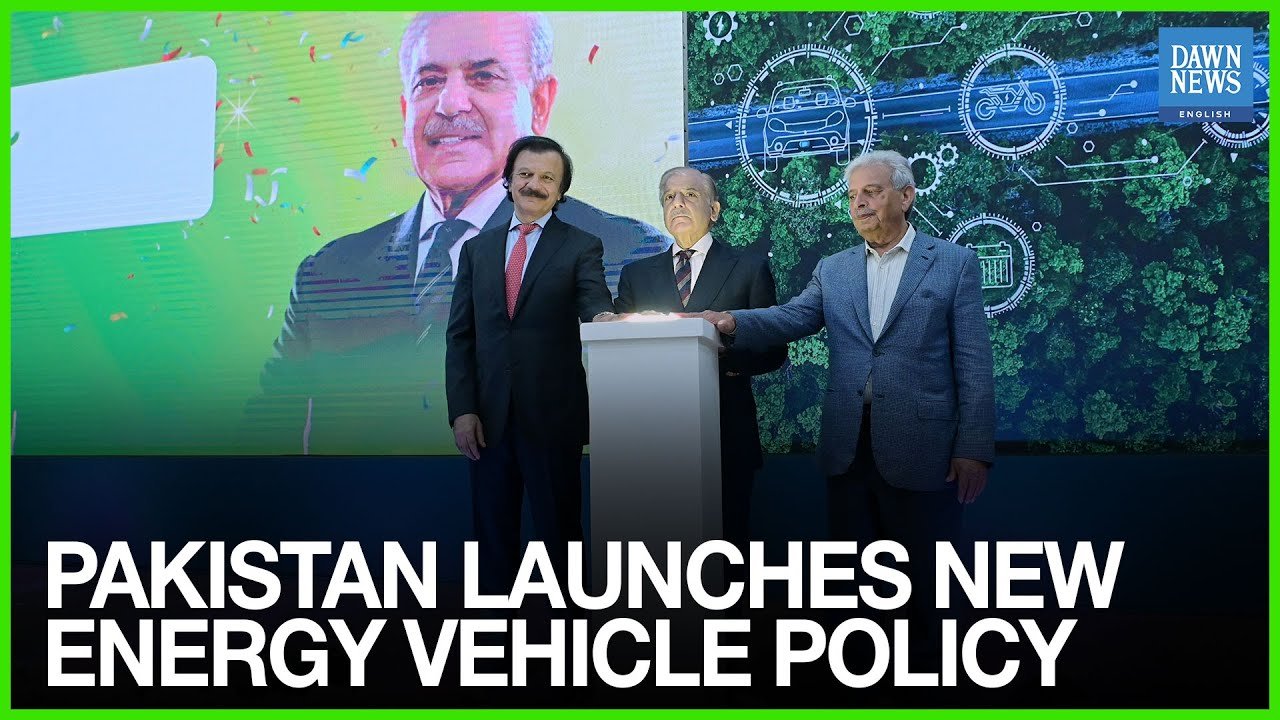
Prime Minister Shehbaz Sharif unveiled Pakistan’s New Energy Vehicle (NEV) Policy 2025-30, describing it as a landmark initiative to tackle the country’s intensifying climate crisis, cut petroleum imports, and usher in a new era of green industrial growth. The policy, which promotes electric mobility and clean transportation, has been hailed as both a timely response to global environmental imperatives and a bold attempt to reshape Pakistan’s economic and industrial future. At the launch ceremony, the prime minister underscored Pakistan’s acute vulnerability to climate change despite its negligible contribution to global carbon emissions. He pointed to the devastating 2022 floods that caused over USD 30 billion in damages, alongside recurring monsoon catastrophes and heatwaves that continue to threaten millions. “Pakistan is among the ten countries most affected by climate change,” Sharif said. “Our carbon footprint is negligible, yet our people, economy, and infrastructure suffer the most.” The new policy seeks to accelerate the transition to electric vehicles (EVs), offering incentives such as toll exemptions, financing reforms, subsidies, and free registration. It also includes the distribution of electric bikes and 100,000 laptops to top-performing students, with a 10 percent quota reserved for Balochistan. “This is not only an environmental measure but an investment in the country’s youth, who will lead Pakistan into a greener future,” the premier emphasized. Special Assistant to the Prime Minister on Industries and Production, Haroon Akhtar Khan, described the initiative as a “blueprint for Pakistan’s clean transport revolution.” He explained that the NEV Policy would not only reduce petroleum demand but also help the country shift from vehicle assembly toward manufacturing advanced EV components, batteries, and charging equipment. “This green revolution is the future of Pakistan,” Khan remarked, noting that running an electric motorcycle costs less than one-third of what it takes to operate a petrol-based one. Federal Minister for National Food Security Rana Tanveer Hussain hailed the launch as a historic moment, asserting that the policy had been designed in alignment with international environmental standards. Ambassadors, federal ministers, and top-performing students from across Pakistan attended the ceremony, while the government hinted at plans to increase the current Rs 9 billion education support budget in the upcoming fiscal year. However, while optimism around the NEV Policy runs high, experts warn that significant bottlenecks and challenges threaten to delay or dilute its impact. Chief among these is the lack of infrastructure to support mass EV adoption. Pakistan currently has a negligible number of charging stations, raising concerns about accessibility, especially in rural areas where power supply is already unreliable. Without a robust nationwide charging network, the dream of widespread electric mobility may remain out of reach. Another pressing issue is the country’s fragile energy sector. Pakistan continues to grapple with power shortages, high transmission losses, and dependence on imported fuels for electricity generation. Unless renewable energy is significantly scaled up, critics fear that charging EVs may simply transfer the burden from oil imports to electricity imports, undermining the environmental and economic benefits of the policy. The financial dimension is equally daunting. Although subsidies and tax exemptions are built into the policy, high upfront costs of EVs remain a barrier for average households and small businesses. Local manufacturing of batteries and EV parts—vital to reducing costs—will require substantial foreign investment, technology transfer, and skill development. Ensuring strict compliance from international partners, as stressed by Khan, will be critical to avoiding delays. Industry readiness is another hurdle. Pakistan’s automotive sector has long been centered on conventional vehicle assembly, with limited capacity for innovation. Transitioning toward electric mobility will demand retraining workers, restructuring supply chains, and incentivizing companies to invest in EV technology. Without adequate government-industry coordination, the policy risks faltering in execution. Policy continuity also raises concerns. With Pakistan’s political transitions often derailing long-term projects, stakeholders fear the NEV Policy may face setbacks if not insulated from political turbulence. Experts stress the need for bipartisan consensus and legal safeguards to ensure the policy’s sustainability through 2030. Finally, financing challenges loom large. Pakistan is already under immense fiscal strain and has limited room to take on new loans. While Sharif has appealed to the international community for greater climate assistance, uncertainty remains over whether sufficient global financing will materialize. Without international support, Pakistan may struggle to fund both infrastructure and incentives critical to the NEV Policy’s success. In his address, the prime minister acknowledged these concerns, reiterating that Pakistan cannot shoulder the costs of climate recovery and green transition alone. “We are no longer in a position to bear the weight of more loans or financial strain,” he said. “The international community must step up and support vulnerable states like Pakistan in building resilient infrastructure.” For now, the launch of the NEV Policy represents a bold declaration of intent: to cut emissions, reduce oil imports, generate green jobs, and empower youth. But whether Pakistan can navigate the complex landscape of financing, infrastructure, industry readiness, and political will remains the ultimate test for turning this ambitious vision into a reality. – ER REport
Mari Energies Limited has announced strong financial and operational results for the year ended June 30, 2025, posting a net profit of Rs. 65.1 billion and earnings per share (EPS) of Rs. 54.25, despite lower applicable hydrocarbon prices and additional 15% wellhead payments on Mari Field from November 2024.
Net sales stood at Rs. 177.1 billion.
The Board of Directors, in its meeting held on August 8, 2025, recommended a final cash dividend of Rs. 21.7 per share (217%), with no bonus or right shares. PACRA reaffirmed the company’s top-tier credit profile with AAA (Long Term) and A1+ (Short Term) ratings in January 2025.
Operationally, MariEnergies achieved its highest-ever hydrocarbon sales of 39.13 MMBOE (107.2 kboepd) compared to 39.01 MMBOE (106.6 kboepd) last year, despite RLNG curtailments and delays in Waziristan Block production. Early output from Waziristan began on March 23, 2025, delivering 70 MMSCFD of gas and around 700 barrels per day of condensate. Production also commenced from Jhim-East X-1 and Pateji X-1 via the Sujawal Gas Processing Facility.
The company added 110 MMBOE in 2P reserves, achieving a Reserve Replacement Ratio (RRR) of 278%. Total reserves and resources (2P+2C) stood at 952 MMBOE at year-end, supported by discoveries at Spinwam-1, Soho-1, and Pateji X-1. The reserve-to-production ratio reached a record 20 years.
In mining, target drilling began in EL-322 & 323 in August 2025, with expansion in Chaghi through strategic acquisitions. The company also entered the technology sector with the incorporation of Mari Technologies Limited and SKY47 Limited, and is constructing a 5 MW data center in Islamabad, with a second planned in Karachi. The final dividend will be paid to shareholders on record as of September 19, 2025. The share transfer books will remain closed from September 22 to 26, 2025. The Annual General Meeting will be held on September 26, 2025, at 10:00 a.m. at Sheesh Mahal Hall, Islamabad Serena Hotel. The Annual Report will be available via PUCARS and on the company’s website. – ER News Desk
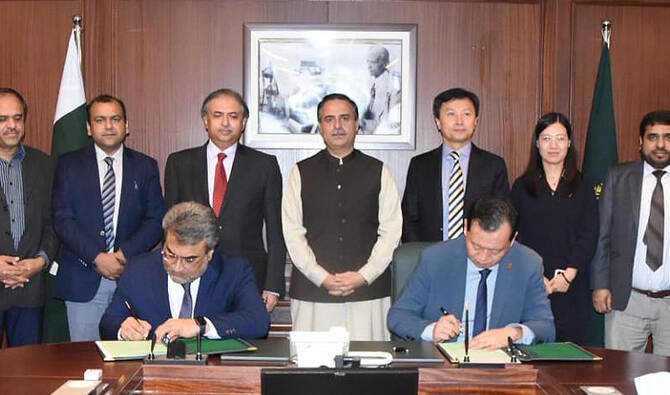
Federal Minister for Maritime Affairs, Muhammad Junaid Anwar Chaudhry, has said that Pakistan’s shipping sector is poised for a major transformation following the signing of a Memorandum of Understanding (MoU) between the Pakistan National Shipping Corporation (PNSC) and China’s Shandong Xinxu Group. The federal minister expressed these views while addressing the signing ceremony of the MoU, signed by the CEO of PNSC and the Chairman of Shandong Xinxu Group Corporation. “The signing of this MoU symbolizes a growing partnership between Pakistan and China in the maritime domain, paving the way for future cooperation, investment, and development in Pakistan’s shipping industry,” he added. He emphasized that the collaboration would boost regional trade, enhance connectivity, and strengthen Pakistan’s role in the global maritime industry through mutual cooperation and shared economic goals. PNSC, headquartered in Karachi, is Pakistan’s premier national flag carrier operating under the Ministry of Maritime Affairs. Shandong Xinxu Group Corporation, based in Zibo City, Shandong Province, China, is a leading enterprise engaged in international trade and shipping.
The minister stated that the MoU establishes a framework of mutual trust and cooperation between the two entities, aimed at achieving commercial benefits and creating favorable conditions for investment in Pakistan’s maritime sector. The understanding primarily focuses on collaborative efforts in several key areas. These include the sale and purchase of merchant cargo vessels such as liquid bulk tankers, dry bulk carriers, and containerized ships under joint or individual ownership, as well as through profit-and-loss sharing arrangements. The MoU also encompasses the leasing of such vessels by Xingu to PNSC through various charter mechanisms, including time, spot, and bareboat charters. Another major component of the MoU involves PNSC offering commercial, technical, and administrative management services for the vessels, as mutually agreed. These services cover chartering, marketing, revenue optimization, maintenance, dry-docking, crewing, and regulatory compliance. Furthermore, the MoU includes provisions for financing arrangements by Xinxu to PNSC for investments in ships and other floating platforms. These arrangements will be governed by commercially competitive terms, ensuring mutual benefit and financial viability.