Category: Eng Review

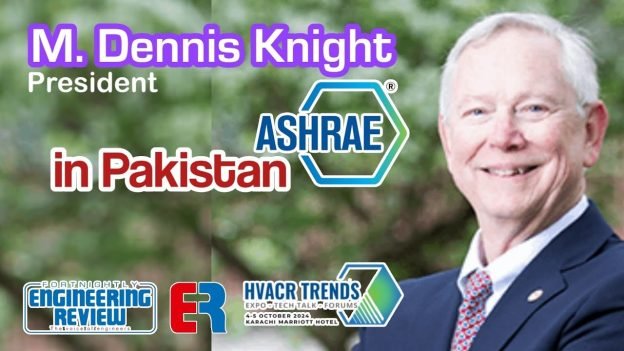
  • Interview of M. Dennis Knight | President | ASHRAE | by Manzoor Sheikh.

    Interview of M. Dennis Knight | President | ASHRAE | by Manzoor Sheikh.

    Manzoor Sheikh:

    Assalamualaikum welcome to Engineering Review. We have with us. Dennis Knight, he’s president of ASHRAE. Thank you so much. Mr. Knight, you took time to talk to us. I would like to start that. How do you feel be in Pakistan You are for the first time you have been visiting Pakistan.

    Dennis Knight:

    This is the second or third time I’ve been to Pakistan. This is the second time I’ve been the HVAC and our trends. I visited chapters in Karachi, Lahore, Islamabad and made a little trip up to Muree one time. So pakistan’s not new to me. I enjoy coming. I enjoy visiting with my friends in the HVAC. Our industry.

    Manzoor Sheikh:

    So you are the person who can tell us what the change is coming in this sector in Pakistan.

    Dennis Knight:

    Oh, the change is coming. Not only here, it’s coming all over the world but especially in Pakistan. I mean your po is to grow. Your population growth over the next 20 years is going to be tremendous. You’re going to triple the number of tons of HVAC system as more and more people begin to well as we feel the effects of climate change and as more and more people get access to HVAC, you’re going to triple the size of this business. So it’s more important than ever that we get manufacturing brought to Pakistan. We get young people involved and we get to build a very large HVAC in our workforce in Pakistan.

    Manzoor Sheikh:

    This sector is huge. You know millions of companies are doing business, millions of engineers, millions of tacticians. I mean a lot of people are involved. You know the more huge is in sector, the more other challenges in the background of climate change. Yes, what do you think? Are we on the right direction?

    Dennis Knight:

    We are on the right direction, but we’ve got to change the way we talk about our industry. If we’re going to bring enough young people, you say there’s millions of people. If there’s millions.

    Triple that make that three times that in just 26 years and we don’t have a lot of young people coming into the industry right. So we got to change the way we talk about our industry. We’ve got to talk about our industry, not about the technology and how to put things in. But we’ve got to talk to young people about the impact of our industry on climate change, on sustainability, on human health and well-being and why this is an important career and why a young person should should consider it as a career. You can do no matter what degree you have. No matter what discipline you’ve studied in there’s a place for you in HVAC&R and an ASHRAE In this industry, we need experts from every discipline.

    Manzoor Sheikh:

    Why is it so young people are not coming? What? What are the bottlenes?

    Dennis Knight:

    Well,Population is not growing as fast as our middle class, so our population, the number of people that we’re growing is not growing as fast as our industry and we’re all IT. Industry, the manufacturing industry, the engineering industry.

    The private sector they’re all pulling from the same pool of people that graduate every year. And if we do not have a compelling message as to why some young person should choose this career, why they can come into this career, have passion, have purpose, have a family sustaining and upwardly mobile career path. We want at track them and they’ll go to other industries. So it’s very important that we talk about our industry and what we’re doing now and having an impact and how we since we consume 40 percent of or we our systems produce 40 percent of the world’s carbon emissions. How we are a vital player in reducing that.

    Manzoor Sheikh:

    Then I’ve been talking to just 5 ten minutes before you. I was talking to Sarah, you know, ask that whatever we are doing, you, there are many things that we have to do. But the thing is, is it enough that we are doing in the context of climate change so that mitigate the impacts of climate change?

    Dennis Knight:

    Well, we have to step up our game. We have to begin talking to our clients, convincing them that it’s important to convert from fossil fuels or by-materials that have low embedded carbon. And we’ve got to do that faster than we’re doing it now if we’re going to meet the targets we’ve set and and as we said last year you hit the challenges we’ve accepted, we have got to move forward faster if we’re going to eliminate carbon emissions by 2050.

    Manzoor Sheikh:

    Business is you know, from one respect is about profits, profit earning. You think it’s a greed of profits that is hindering and maybe one of the reason.

    Dennis Knight:

    Well, maybe I mean, maybe pushing for more and more profits and focusing on the bottom line is’t necessarily always the best solution for the environment. Best solution for the employees, best solution for the communities I think we’re going to see as the world of finance, the world of insurance and the consumers become more and more aware of how important having a low impact on the environment is in the decisions they made. The products they buy, the systems they buy, the more and more you see that i think you’ll see that profit. The bottom line for profit to be less important, maybe be than environmental and social justice.

    Manzoor Sheikh

    Thank thank you.
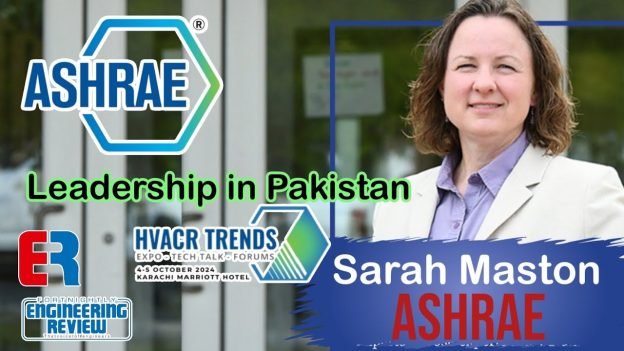
  • Interview of Sarah Maston | Treasurer | ASHRAE | by Manzoor Shaikh.

    Interview of Sarah Maston | Treasurer | ASHRAE | by Manzoor Shaikh.

    Manzoor Sheikh:

    Assalamualaikum welcome to Engineering review. We are in a HVACR exhibition here in Karachi and we have with us Miss Sarah She is at the moment treasure of ASHRAE. But the future president of this organization thank you so much for talking to us. HVACR is a huge sector. Millions of companies, billions of engineers, billions of technicians are involved. The more huge is this sector, the more are the challenges in the background of climate change. When you think about that, what comes in your mind?

    Miss Sarah:

    There’s a lot of work for a lot of people. So dennis’s theme this year our current president is all about empowering our workforce. And I think what we’re seeing here in Pakistan and in all over the world is that there’s a lot of opportunity in this building industry for everyone.

    Manzoor Sheikh:

    Well, we talk about opportunities right. I mean there are a lot of commitments at a global level that we have to you know take drastic efforts so that we can mitigate the impacts of climate change. What do you think? What’s the Role of ASHRAE.

    Miss Sarah:

    So I think Mr Faruk maboo’s talk this morning really summed it up for me, particularly in the challenges that Pakistan faces, particularly with the textile industries in the United States where I’m from in the northeast area of the country. We don’t have a lot of textile manufacturing, but we do like to wear our denim and so in the conversation this morning I learned that you know that creating denim, making denim is a huge consumption for water and I had no idea in the fact that so much water pollution is is here in Pakistan and I think ashore has a role to play as far as our designers and our technicians to find more sustainable solutions for this industry and for the other industries in Pakistan. Because as we said over over the next you know 15 to 20 years, the number of HVAC systems that are going to be required is going to at least double. And so you know again the opportunities here to train people and to you know, educate them as far as how to design these systems more sustainably. To look at some of the new technologies here that we have today on the trade show just to see what that future looks like.

    Manzoor Sheikh:

    Okay. I mean whatever we are doing at the moment. Right training and designing new technologies that help you out. You know the bit, get the impacts of all that climate change. If you make a comparison, maybe the things which are not getting better too much and the designing and our work and the efforts we are doing anything that you see. These two things have synchronized.

    I mean, the more whatever we are doing. Yes, if you think it’s enough.

    Miss Sarah:

    It’s never really enough. I think we’re on the right path, but I think these things are going to take a little time. So you know, we are already seeing changes to our climate and we know that across the world that buildings account for 40 percent of like, our greenhouse gas emissions. So looking at any opportunity that we can to go with greener technologies to reduce our fossil fuel burning, we’ll make that difference now. How fast is it going to change? I don’t really know the answer to that. You know, we just had a major flood in the United States and and it was in an area of the country that isn’t prone to flooding. It wasn’t a coastal community, it was 300 miles from the coast. And so you know, we’re seeing this all over. It’s not. It’s not just happening in one country right. It’s happening across the globe. And so I think it has taken some time to get to the forefront of understanding what the climate crisis really means. But to understand that it is a global issue. It’s not just like I said isolated to one particular country. So I think the fact that.

    Buildings take you know into account like I said 40 percent of our greenhouse gas emissions, we have the opportunity to make a huge difference in seeing what you know. Reducing the temperature, the global temperature rise and hopefully know can bring some of our climate issues back into check.

    Manzoor Sheikh:

    Thank you So much.

  • What was special about today’s event and which generator are you launching here?

    What was special about today’s event and which generator are you launching here?

    What was special about today’s event and which generator are you launching here?

    As you know, FPT is an Italian brand and we have their distribution.

    Today’s launch was a new series of their small generators in small engines, which is 20 and 30 KVA.

    So that was their launch, which we have done here.

  • Wounds Refuse to Heal asPEC Embarks on a New Three-Year Journey

    Wounds Refuse to Heal asPEC Embarks on a New Three-Year Journey

    No matter that Engr. Jawed Salim Qureshi, the nominee of The Engineers Pakistan (TEP) for chairman, and Engr. Raghib Abbas Shah, the candidate of NEA-PEG for senior vice chairman, contested the elections from their respective groups—considered to be bitter rivals in the PEC Elections 2024—the pain experienced by both stalwarts is the same. More interestingly, the man who caused them such pain is also no different. Had he not brought his powerful friend into action, the outcome might have been quite different.
    More than three weeks after the elections, the wounds refuse to heal as the new chairman, provincial vice chairmen, and governing body members are about to take charge for the next three years. Both the winners and the losers are analyzing the factors that led to results that left many candidates in an uncertain state for days.
    These elections, as expected, have now been recorded as the most complex and interesting ever and are now open to scrutiny for the most glaring outcomes of the contest.
    The very first significant event on election day was the collapse of the NADRA system linked with the PEC polling. The system, which failed around 11 a.m., could not be restored until 3:30 p.m. As a result, a significant number of voters returned home, and it is unknown how many decided to return after the Election Committee extended the polling time to 9 p.m.
    Although NADRA did not provide a clear reason for this lengthy glitch, the disruption cast doubt on the credibility of the elections. Due to its duration, engineers in charge considered postponing the elections for a week, but common wisdom and the nature of the elections made this impractical.
    Ironically, no one in the council or NADRA has come forward with an explanation for the glitch, which not only affected the transparency of the elections but also created mistrust among the vast majority of engineers across Pakistan. Now the interior ministry has appointed a senior NADRA official to investigate the issue on Ahsan Iqbal’s request.
    The fall of Engr. Jawed Salim Qureshi is significant for several reasons. First, his group, which he claims to be the largest party of engineers in Pakistan, faced a setback. Second, he is well-entrenched in Punjab, the largest province. Third, his group is believed to have strong ties with the ruling PML-N in the province. Additionally, this time, he and his group employed a different campaign strategy, similar to political parties, using multiple tools such as election songs and slogans to attract voters. His campaign succeeded in creating the perception of being a strong contender.
    But the question remains: why did he lose despite these factors? “Engr. Qureshi failed to recognize the dwindling political support of PML-N in the province,” says a senior engineer based in Lahore. Others suggest that people have shifted their support to a different political class, which likely favored Engr. Qureshi’s main rival.
    Another factor that played a role was the senior vice chairman candidate. Dr. Sarosh Lodi won the election with a slim margin of just over a hundred votes against Engr. Raghib Abbas Shah. Dr. Lodi’s campaign in Sindh yielded positive results for his group, and Engr. Qureshi also received a better number of votes in Sindh but still fell short of victory. Informed circles claim that Syed Murad’s support for Dr. Lodi made a significant difference this time, aided by his family member, Chief Secretary Syed Asif Ali Shah, who followed up more diligently than his predecessor during the last elections in 2021. However, this was not the only factor behind TEP’s gains in Sindh. “Engr. Mukhtiar Shaikh, a key figure in NEA in Sindh, did not put in his full effort this time, resulting in the defeat of Dr. Lodi’s rival, Engr. Raghib Abbas Shah,” a group of engineers from NEA and TEP believe.
    Another notable event is the political support for UEP candidate for chairman, Engr. Ashfaq Hussain Shah. Engr. Shah initially used the PTI narrative without directly naming the party, but PTI Secretary General’s support later became public. Surprisingly, Omer Ayub’s support did not significantly benefit Dr. Shah. However, his candidate for the office of vice chairman Khyber Pakhtunkhwa emerged successful.
    Transparency: Fact and Fiction
    The NADRA system’s glitch provided many engineers with a reason to cover their failures. But the major question is: was it purely technical or manmade? PEC officials claim unequivocally that PEC had nothing to do with the glitch or the system’s collapse. PEC maintains its own server, used for providing various services to engineers across Pakistan, including maintaining Computerized National Identity Cards (CNIC) and registration numbers. For biometrics, PEC relies on NADRA services for confirmation.
    In the case of elections, PEC provides NADRA with a complete voter data set, and NADRA is responsible for integrating it into its system and issuing ballot papers to eligible voters. There is no integration between the PEC server and the NADRA system for elections. Before election day, NADRA conducts a test run. Any issues, such as those encountered on August 18, are likely to arise from NADRA’s side only, says a senior PEC official, adding that it happens occasionally and in this case, he sees no deliberate effort to rig the elections.
    Challenges Ahead
    The new chairman faces several challenges, with the first being to ensure that the governing body operates cohesively. Members from TEP have already announced their intention to attend the session with black bands around their arms as a sign of protest. Engr. Waseem Nazir, the new chairman, has promised to introduce macro-level reforms within the first three months. Whether he can secure the confidence of the governing body members for these reforms remains to be seen.n

  • Ecnec Approves The Project of Rail Track Uplift of Karachi-Peshawar

    Ecnec Approves The Project of Rail Track Uplift of Karachi-Peshawar

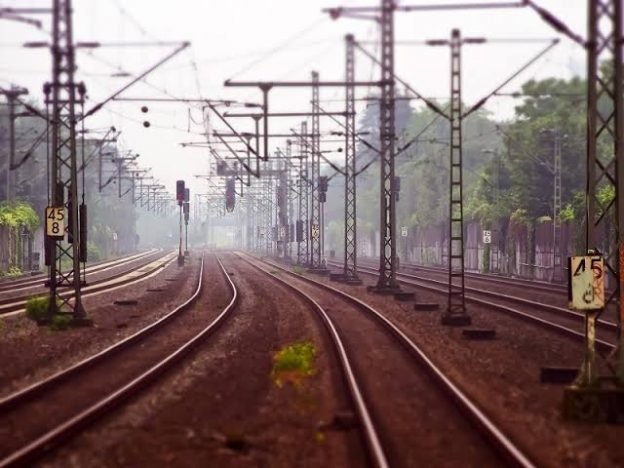
    The Executive Committee of the National Economic Council (Ecnec) gave the approval to improve the vital Mainline-1 railway track. The committee estimated the cost of the project which is around Rs1.137 trillion.

    Dr Abdul Hafeez Shaikh, the advice of the Prime Minister of finance and revenue, took the decision while presiding the meeting of the committee on Wednesday.

    The committee also gave its approval to three other development projects, with a total estimated cost of Rs114 billion.

    Whereas Ecnec also working on the project on the establishment of a dry port near Havelian which cost is estimated $6.807bn on cost-sharing basis between the governments of China and Pakistan, in which Chinese bank will provide 90pc of the cost of the project. And the remaining amount will be borne by the federal government. The 59pc amount of the project, i.e. Rs672bn will be spent on local material, equipment and labour costs while machinery and equipment worth is $2.7bn.

    The project is divided into three phases. So as to maintain a strategic distance from responsibility charges, the credit sum for each bundle will be independently contracted.

    Under this general undertaking, the current 2,655km track will be updated, said an official statement. The speed of passenger trains will increase from 65-110 kilometres for every hour to 165km every hour and line limit will increment from 34 to 137/171 trains each way per day.

    A restructuring plan for Pakistan Railways has additionally been affirmed by the prime minister.

    In June this year, the Central Development Working Party had suggested the project cost at $7.2bn and referred it to Ecnec for endorsement. But, the Planning Commission said on Tuesday the estimated cost referred to Ecnec for endorsement was $6.8bn. This is because of termination of the line at Peshawar instead of the earlier proposal of extending it to Torkham. The Karachi-Hyderabad section will be built on commercial lines under PPP mode. The ML-1 is a high-priority project of the government irrespective of the political divide.

    The project stayed under discussion in light of its enormous budgetary effect, the US opposition to Chinese interests in Pakistan and limitations of the government under the debt sustainability perspective of the IMF.

  • SBP Has Decided to Promote Renewable Energy Technology and Raised Financing limit to Rs. 2 Billion

    SBP Has Decided to Promote Renewable Energy Technology and Raised Financing limit to Rs. 2 Billion

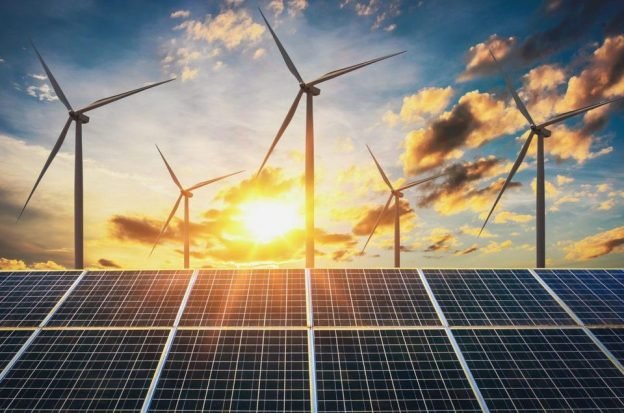
    The State Bank of Pakistan (SBP) has upgraded the financing limit of Renewable Energy Refinance Scheme by 100 percent from Rs 1 billion to Rs 2 billion focused on further advancing and expanding the utilization of sustainable power source.

    The SBP Financing Scheme for Renewable Energy was announced in June 2016 with a goal to help address the difficulties of energy shortages and environmental change in the country. Since the presentation of the plan, absolute extraordinary financing under the plan has flooded to Rs15.6 billion for 217 undertakings having the capability of including 292 MW of energy supply.

    SBP announced that the feedback of stakeholders became the reason to increase the financing of the scheme. According to the reconsidered scheme, the total financing limit has additionally been expanded from Rs.1 billion to Rs.2 billion. While the size of the venture set up by vendor or energy sale organization has been improved from 1 MW to 5 MW.

    SBP has permitted financing under category III of the scheme to solar-powered and wind-based energy sale organizations built up explicitly to embrace solar-based and wind-based projects to sell electricity to ultimate users. Such organizations won’t be required to be affirmed under the Alternative Energy Development Board (AEDB) Certification Regulations.

    At first, the plan contained two classifications. Class 1 permitted financing for setting up of renewableenergy power projects with limit going from 1 MW to 50 MW for own utilization or selling of power to the national grid or both.

    Classification II permitted financing to household, farming, business and industrial borrowers for installation of renewable energy-based tasks of up-to 1 MW to create electricity for own utilization or offering to the grid or organizations under net metering.

    Afterwards, in July 2019, SBP presented another Category III for encouraging financing to sellers for installation of wind and solar systems of up to 1 MW. SBP additionally propelled a Shariahcomplaint version of the scheme in August 2019. Presently some new highlights have additionally been included under Category III of the plans and the total financing cutoff of a merchant, provider or vitality deal organization has been upgraded from Rs. 1 billion to Rs. 2 billion.