Institution Looks to Engr. Sohail Bashir for Institutional Revival and Global Engagement; Sohail Bashir Outlines Vision for a Stronger, United Institution
New President, IEP, Engr. Sohail Bashir
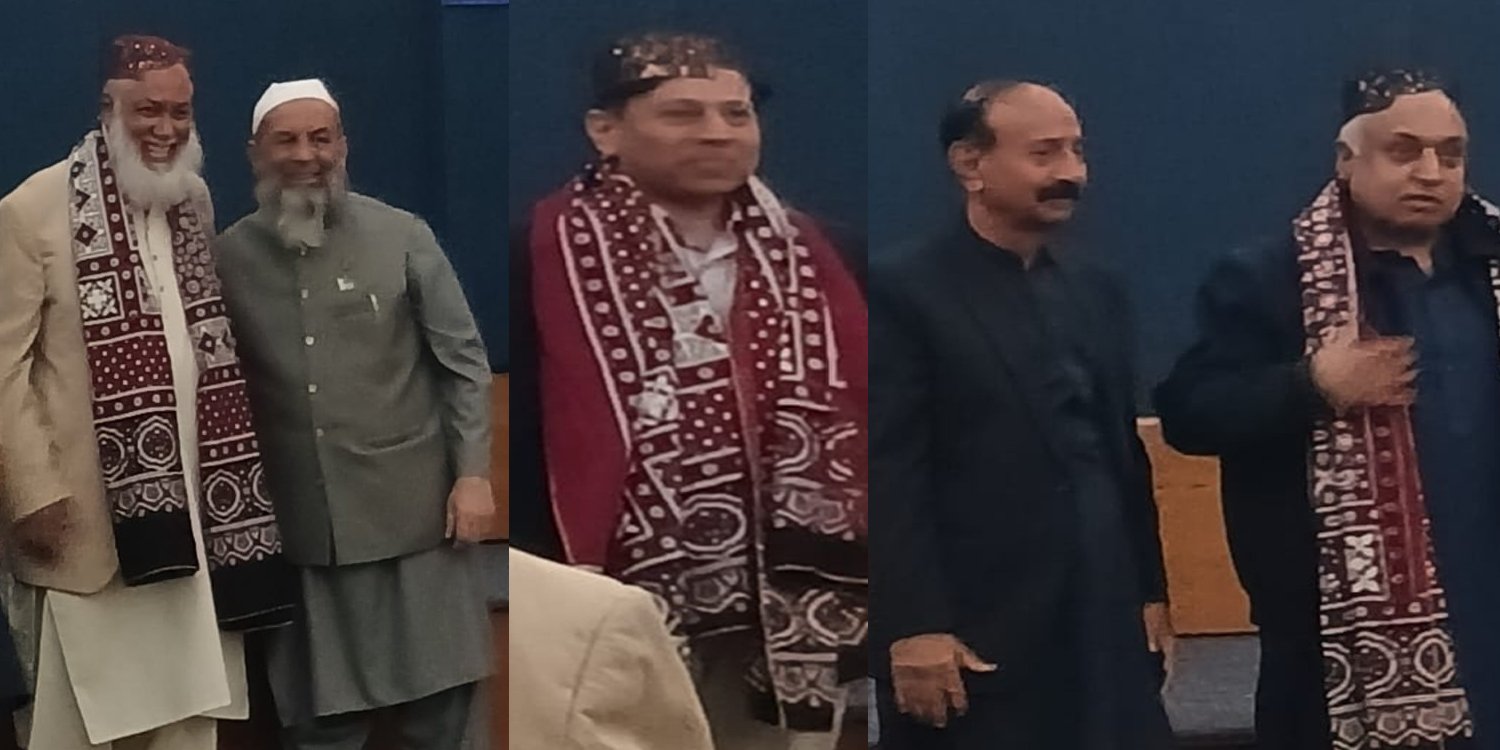
The Institution of Engineers Pakistan (IEP), Karachi, hosted a gala dinner last night in honour of the newly elected IEP President, Vice Presidents, Secretary General, Chairmen of Local Centres, and Central Council Members.
Engr. Khizr, Lahore
A large number of senior engineers, vice chancellors, and professional engineers serving abroad participated in the event and exchanged views on issues pertaining to engineers, educational institutions, and industry.
Under the leadership of Engr. M. Farooq Arbi, the newly elected Chairman of the institution’s Karachi Chapter, the event was organised by Engr. M. Aijazul Haque.
Senior and elected engineers from Lahore, Islamabad, and Hyderabad gathered at the dinner and were addressed by the newly elected President, Engr. Sohail Bashir; Vice President Engr. Ameer Zamir; and the outgoing President, Engr. Farhat Adil.
Addressing the gathering, Engr. Sohail Bashir said that engineers across Pakistan actively participated in the elections, with voter turnout being the highest ever in the institution’s history. He said that the elections were now over and it was time to move forward and decide on future priorities.
He added that the new leadership would continue the institution’s legacy and strengthen IEP’s representation of Pakistan at international forums. He noted that IEP has bilateral agreements with more than 50 countries and that international engagement had remained dormant in recent years, which the new team aims to revive.
Engr. Bashir announced plans to organise a series of international conferences across the country, not only in Karachi but also in Hyderabad, Multan, Faisalabad, Lahore, Islamabad, and Peshawar. “We aim to create a nationwide web of conferences, which will require teamwork, and we are committed to working collectively to achieve these goals,” he said.
Engr. Ameer Zamir, Secretary of the IEP Election Commission, highlighted the comprehensiveness of the electoral process and termed it a positive development that elections were successfully held. He said the results reflected participation by engineers from across the country, from Khyber to Karachi.
He appreciated the services of former President Engr. Farhat Adil and expressed high expectations from the newly elected President Engr. Sohail Bashir, recalling his exemplary performance as Chairman of the Karachi Chapter. He expressed confidence that Engr. Bashir would take the institution to new heights.
The moot was also addressed by the chief guest, Dr. Sarosh Lodhi, as well as elected presidents of Lahore and other IEP centres. – ER Report
Oil and Gas Development Company Limited (OGDCL) has announced a significant oil and gas discovery at its exploratory well Baragzai X-01 (Slant), located in District Kohat, Khyber Pakhtunkhwa, according to a notice submitted to the Pakistan Stock Exchange (PSX).
OGDCL is the operator of the Nashpa Exploration License with a 65 percent working interest, alongside joint venture partners Pakistan Petroleum Limited (PPL) holding 30 percent, and Government Holdings (Private) Limited (GHPL) with a 5 percent carried interest.
The discovery was made in the Datta Formation (Jurassic age) following a successful cased-hole Drill Stem Test (DST-02). During testing, the well flowed at a rate of 4,100 barrels of oil per day (BOPD) and 10.5 million standard cubic feet per day (MMSCFD) of gas, at a 32/64-inch choke size with a wellhead flowing pressure of 3,880 psig.
Baragzai X-01 (Slant) was spudded on December 30, 2024 as an exploratory well and drilled to a total depth of 5,170 meters into the Kingriali Formation. During drilling, approximately 187 meters of Datta Formation was encountered. Based on strong hydrocarbon shows, interpretation of open-hole wireline logs, petrophysical evaluation, and fracture indications observed on image logs, the decision was taken to conduct cased-hole testing in the formation.
Earlier, the well had also yielded positive results from CHDST-01 in the Kingriali Formation (Triassic age), which had already confirmed a discovery, further enhancing the prospectivity of the structure.
OGDCL stated that this new oil and gas discovery will contribute towards reducing Pakistan’s energy supply-demand gap through the utilization of indigenous resources. It will also add to the hydrocarbon reserves base of OGDCL, its joint venture partners, and the country, reinforcing efforts to enhance energy security and reduce reliance on imported fuels. – ER Web Desk
Receives Rs 8.3 Billion From Uch Power
OGDCL notice to Pakistan Stock Exchange: In continuation of our earlier announcement dated December 11, 2025, we are pleased to inform that, as part of the circular debt settlement, OGDCL has further received Rs 8.3 Billion from Uch Power (Private) Limited towards settlement of outstanding receivables. This receipt reflects Government of Pakistan’s initiative to address circular debt in the energy sector.
AI and emerging technologies have significantly impacted the HVACR sector: Saifuddin
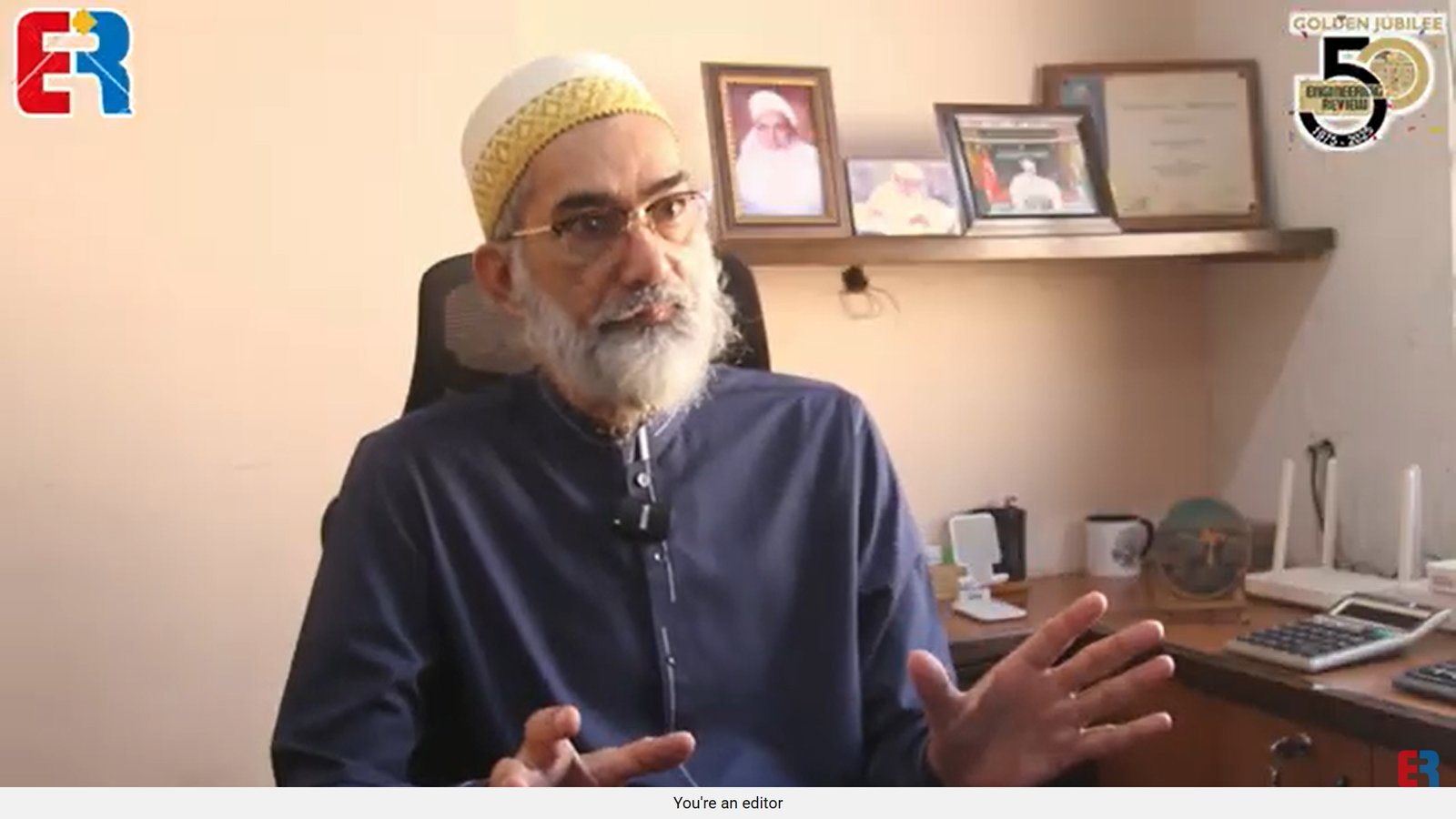
The head of JES Instrumentation & Control speaks about AI, the quality of young engineers, and the ethics that drive business growth in an interview with Engineering Review (ER).
Engineering Industry, AI, and Emerging Technologies
There must be acceptance of technological trends within the industry, and in our HVACR sector their impact is quite significant. These technologies are being used almost 100 percent. For example, those of us working in controls integrate our Building Management System (BMS) software. The benefit is that predictive actions for lighting can be taken. All past data is incorporated, and future predictions are made with the help of AI. In this way, when BMS is directed toward energy efficiency, AI plays an active role, and this industry has accepted it very positively.
Good consultants, especially those inclined toward controls and automation, are accepting this technology and also explaining its benefits to end users (such as pharma, textile, and other sectors). However, when it comes to the Seth (traditional industrialist) culture, they become fearful of such terms and go on the back foot. Even hearing the term BMS makes them hesitant. Sometimes the consultant presents it in a softened way and even asks us not to explain it openly. Consultants are very interested in implementation. There is a need to educate those who are hesitant. The educated segment accepts this technology with an open heart. Older people want to run even controls on old systems; AI is a much more advanced concept.
Role of AI in Operations
Earlier, report writing, letter writing, and emails took a lot of time; now this tool saves many times over. It is a very good tool. Final copies, however, are still checked by us ourselves. There should be skill in knowing how to benefit from AI.
Quality of New Engineering Graduates
Two things are happening in the industry. There are employment difficulties as well. Good universities produce good graduates, but among them the best try to go abroad and do not stay here. Brain drain is taking place. Average graduates remain behind. Their level is not very strong, regardless of the university. There are also smaller institutions whose students are weak; in interviews they do not even know what final-year project they completed, yet they pass and graduate.
Very good students have very high expectations. Engineers should understand that they need to learn first; money comes with time. After two years, it becomes clear which field one should pursue—there are many fields. About 50 percent of people do not know what they want to do. I train them myself. Some other companies here also do this work because they have an interest in developing talent from young people.
I once spent a lot of time training a young man in BMS. One day he said to me that his electronics were strong and he wanted to go fully into electronics. I got angry at first, then asked him to wait for a day, and afterward I opened a separate electronics department for him. That department still exits, and we have created many value-added solutions. That young man progressed tremendously.
JES Instrumentation & Controls
Our original name is Jamali Engineering Services, which we started in 1995. I began my career in 1990. I did five years of service because I wanted to learn, and after another five years I decided to start my own business. In the Bohra community, our Syedna Sahib has always encouraged the belief that we are born to do business—it is in our blood.
When we founded JES, the beginning was difficult and it took time. Earlier I was alone; today we have more than 30 employees in Karachi, Lahore, and Islamabad. Our teams and offices represent JES. Product-wise, we started with Honeywell. After graduating from NED, I worked for Honeywell, and even today we are working with them. We have onboarded additional systems.
In 2009, we introduced a new technology: prepaid electricity meters, a Chinese brand, which is very good. Consultants like it, and it has been widely installed across Pakistan. This concept also exists in Europe and America—pay first, then use. We have brought in VAVs and are currently working with Air Venturi valves. We also manufacture field devices for other OEMs. There are many other products that we have onboarded and are marketing very effectively, while also using them ourselves. Alhamdulillah, the business has expanded. My children are also involved; two of them are now working with me in managing the business. We have a professional team, including diploma holders. This professional touch brings satisfaction to the company. Whatever we do, we try to do it in the best way. No matter how big the volume becomes, it still feels small as the team keeps growing. The real achievement is the young people I trained, who are now very successful in their respective fields.
JES–Honeywell Partnership
A person has their own nature; one should be content, and that nature should be long-lasting. Loyalty should also be part of one’s character. This is a natural process—do not be overly opportunistic, and relationships become long-lasting. The same applies to personal relationships; friendships last when there is loyalty and sincerity.
Honeywell is a good brand, a premium brand, with good people and no unethical practices. Their corporate culture has never promoted shortcuts. Their product line is also excellent. I always intended—and still intend—to work with good brands. Walking with Honeywell has been a major success for us because we have trained engineers. We received training ourselves; my cousin was with Honeywell, so we are trained according to their standards. Our strength is application and design—our designs have zero error. In 35 years, there has never been an error. Honeywell says, “You are the only partner who has given us no trouble.” Even today, they hold us in high regard. We continue this relationship with loyalty.
In the last two years, we have significantly increased Honeywell’s business without any failures, which is why the connection remains strong. We are the only HVAC controls and BMS partners of Honeywell in Pakistan. – By Muhammad Salahuddin
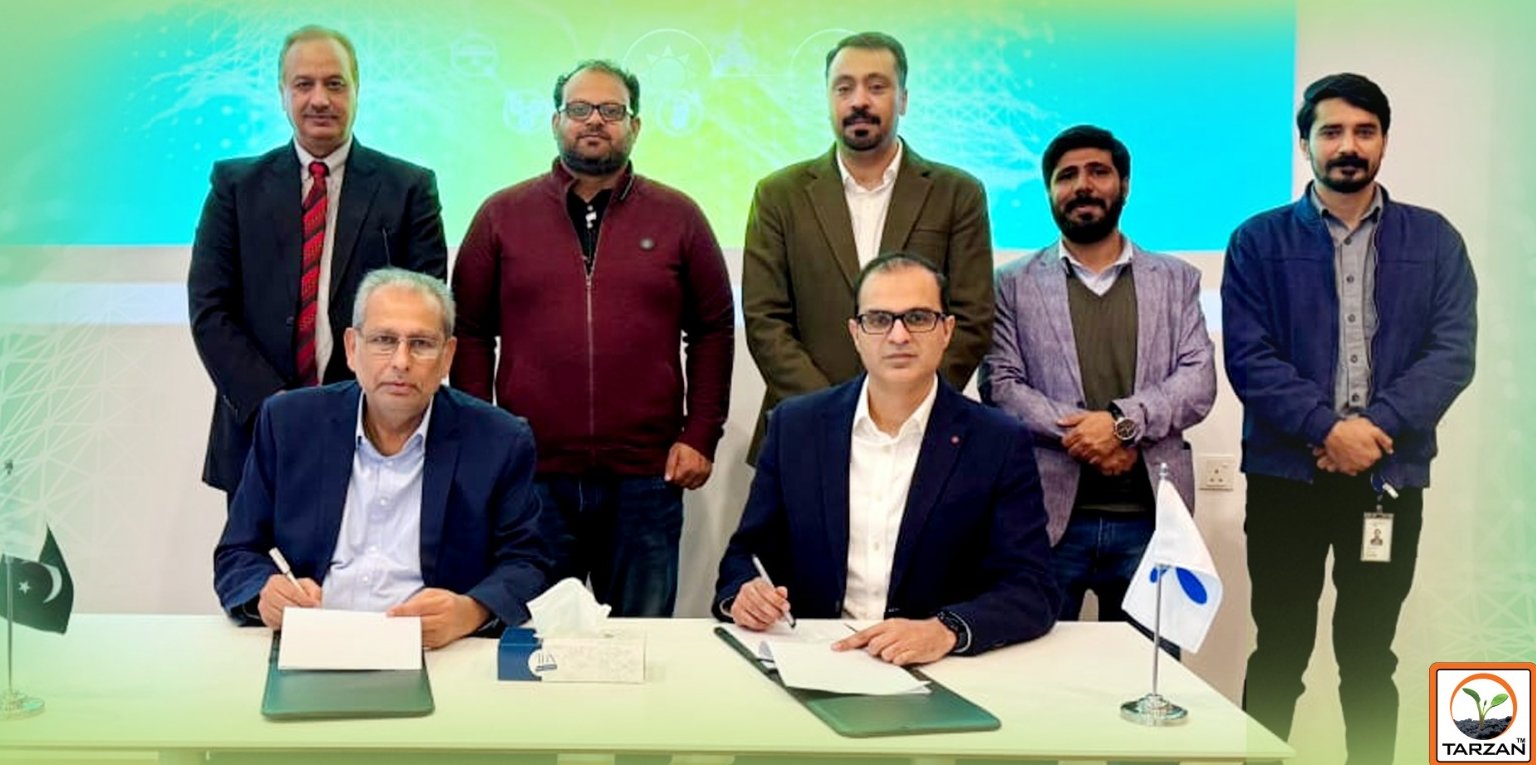
Four Brothers Group Pakistan and Telenor Pakistan have signed a Memorandum of Understanding (MoU) to jointly provide free Crop Research and Development (R&D) services to farmers across Pakistan, marking a major step toward digital transformation of the agriculture sector as 2025 draws to a close.
Under the agreement, the two organizations will collaborate to strengthen digital connectivity and promote innovation in agriculture by leveraging Telenor Pakistan’s digital platforms and outreach to over 16 million farmer customers nationwide, alongside Four Brothers Group’s expertise in agricultural research, development, and advisory services.
The strategic partnership is aimed at empowering farmers through technology-driven solutions, enabling better crop management, improved productivity, and informed decision-making. By integrating digital tools with advanced agricultural R&D, the initiative seeks to support farmers in adopting modern, data-driven farming practices.
Officials said the collaboration would contribute to the development of a smart and sustainable agri-ecosystem, helping farmers respond more effectively to challenges such as climate variability, input optimization, and market access.
The initiative is expected to enhance agricultural productivity, promote sustainable farming methods, and improve livelihoods in rural communities. Both organizations reiterated their commitment to supporting Pakistan’s agriculture sector by making innovation accessible to farmers at no cost, reinforcing the role of technology as a catalyst for inclusive growth. – ER
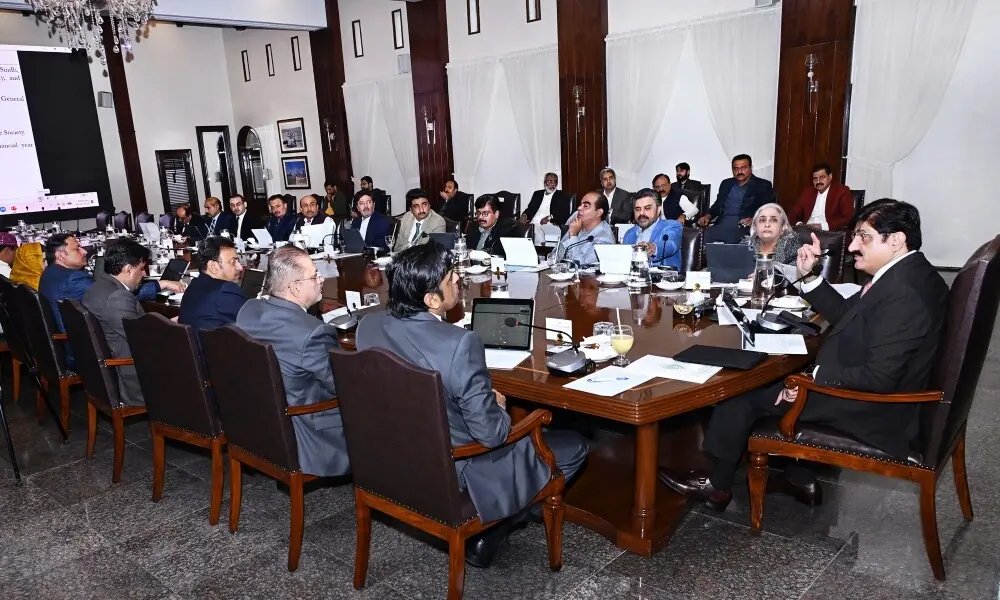
The Sindh Cabinet has approved a development package worth Rs2.9 billion aimed at improving infrastructure in industrial zones across the province.
Chairing the cabinet meeting, Chief Minister Syed Murad Ali Shah said the funds would be utilised to rehabilitate road networks and drainage systems in industrial areas of the port city, stressing that modern infrastructure is essential for sustained industrial growth and economic stability.
The chief minister described the initiative as the first phase of a broader provincial strategy, adding that the Industries Department is finalising development plans for industrial estates in other cities of Sindh. He said separate funding packages for these regional industrial hubs would be announced once project plans are completed.
Addressing governance issues, CM Murad also reviewed complaints received during Awami Kacheris (public hearings) held in 23 districts, noting that most grievances related to law and order, healthcare, municipal services, and irrigation. He directed all departments to resolve the complaints promptly and submit compliance reports, warning that negligent officers would face strict disciplinary action. A second round of public hearings is scheduled to begin in the second week of January.
Earlier, Sindh Senior Minister Sharjeel Inam Memon had termed the approval of a Rs9.28 billion development package for Karachi’s industrial areas a historic and timely step. He said further development packages would be announced following the completion of the ongoing programme.
In a statement issued on December 22, the senior minister said the PPP-led Sindh government was pursuing consistent and targeted initiatives to restore Karachi as a competitive international industrial and commercial hub. He noted that Karachi remains the backbone of the national economy and that the revival of its industrial zones is directly linked to employment generation, exports, and investment.
According to the government, the development work, funded through the Infrastructure Development Cess paid by industries, is being carried out under a comprehensive roadmap and is expected to be completed within six months. – ERMD
The Pakistan Banks Association (PBA) on Sunday elected and constituted a new 16-member Executive Committee, including two female members and eight newly inducted member banks, marking a strategic shift toward greater inclusivity and broader industry representation.
Following the elections, the executive committee unanimously elected Zafar Masud, President and Chief Executive Officer of The Bank of Punjab, as Chairman of the PBA, according to a press release issued here.
Commenting on his election, Masud said the newly constituted executive committee represents an important evolution in the association’s governance. He noted that the expanded and more diverse membership strengthens the PBA’s ability to advance a national economic agenda, with a focus on bridging credit gaps in priority sectors, accelerating financial inclusion through digital channels, and supporting Pakistan’s sustainable economic recovery.
The leadership team also includes Nassir Salim, President and Chief Executive Officer of Habib Bank Limited, as Senior Vice Chairman, and Yousaf Hussain, President and Chief Executive Officer of Faysal Bank Limited, as Vice Chairman.
On the occasion, Nassir Salim emphasized the importance of resilience and strong compliance frameworks amid global headwinds, while Yousaf Hussain highlighted modernization, technology adoption, and agility as key priorities to ensure the banking sector remains innovative and regionally competitive.
Commenting on the milestone, Muneer Kamal, Chief Executive Officer and Secretary General of the PBA, said that the expansion of the executive committee, including the historic inclusion of female representation, reflects the association’s commitment to diversity and modern governance.
Under the new leadership, the PBA aims to deepen collaboration with the State Bank of Pakistan, the Ministry of Finance, and the federal government to support infrastructure development, expand private sector credit for agriculture and SMEs, and advance the country’s digital transformation. – APP/ERMD
Known economist and former State Bank of Pakistan (SBP) governor Dr Shamshad Akhtar, 71, passed away due to cardiac arrest on Saturday.
Akhtar, known for her leadership roles in both national and international financial institutions, took over as the 14th governor of SBP on January 2, 2006, becoming the first woman to hold the position.
She had also been the finance minister in the caretaker setups before the 2018 and 2024 general elections.
Akhtar also served as the vice president of the World Bank for the Middle East and North Africa and the executive secretary of the United Nations Economic and Social Commission for Asia and the Pacific (ESCAP).
Prior to her appointment as SBP governor, Akhtar served as the director general of the Asian Development Bank’s (ADB) Southeast Asia Department since January 2004. She also held the position of the Governance, Finance and Trade Division director for ADB’s East and Central Asia Department.
Born in Hyderabad, Akhtar received her early education in Karachi and Islamabad. She graduated from the University of Punjab with a Bachelor’s degree in Economics in 1974. – ERMD
Dewan Farooque Motors Limited (DFML) has appointed Ghazanfar Baber Siddiqi as Chairman of the Board of Directors and Waseem-ul-Haque Ansari as Chief Executive Officer (CEO), effective December 26, 2025, the company said in a notice to the Pakistan Stock Exchange (PSX) on Friday.
Waseem-ul-Haque Ansari is a graduate mechanical engineer from NED University of Engineering & Technology and brings more than 28 years of diversified experience in the automobile industry. He is currently serving as Chief Operating Officer at DFML.
In his present role, Ansari has been responsible for overseeing the overall vehicle assembly operations for the KIA and Hyundai brands under technical license agreements.
The newly appointed chairman, Ghazanfar Baber Siddiqi, holds two master’s degrees—an MSc in Inorganic Chemistry from the University of Karachi and an MBA in Marketing from The International University, Independence, Missouri, USA.
According to information available on the Yousuf Dewan Company’s website, Siddiqi’s dual academic background has enabled him to work across a diversified portfolio, including paints, chemicals, fibre, food commodities, and petrochemicals.
He has over 25 years of professional experience in senior leadership roles, ranging from strategy formulation to company management, and has also spent 14 years managing multiple product lines at global conglomerate ICI Pakistan Limited. – ERMD
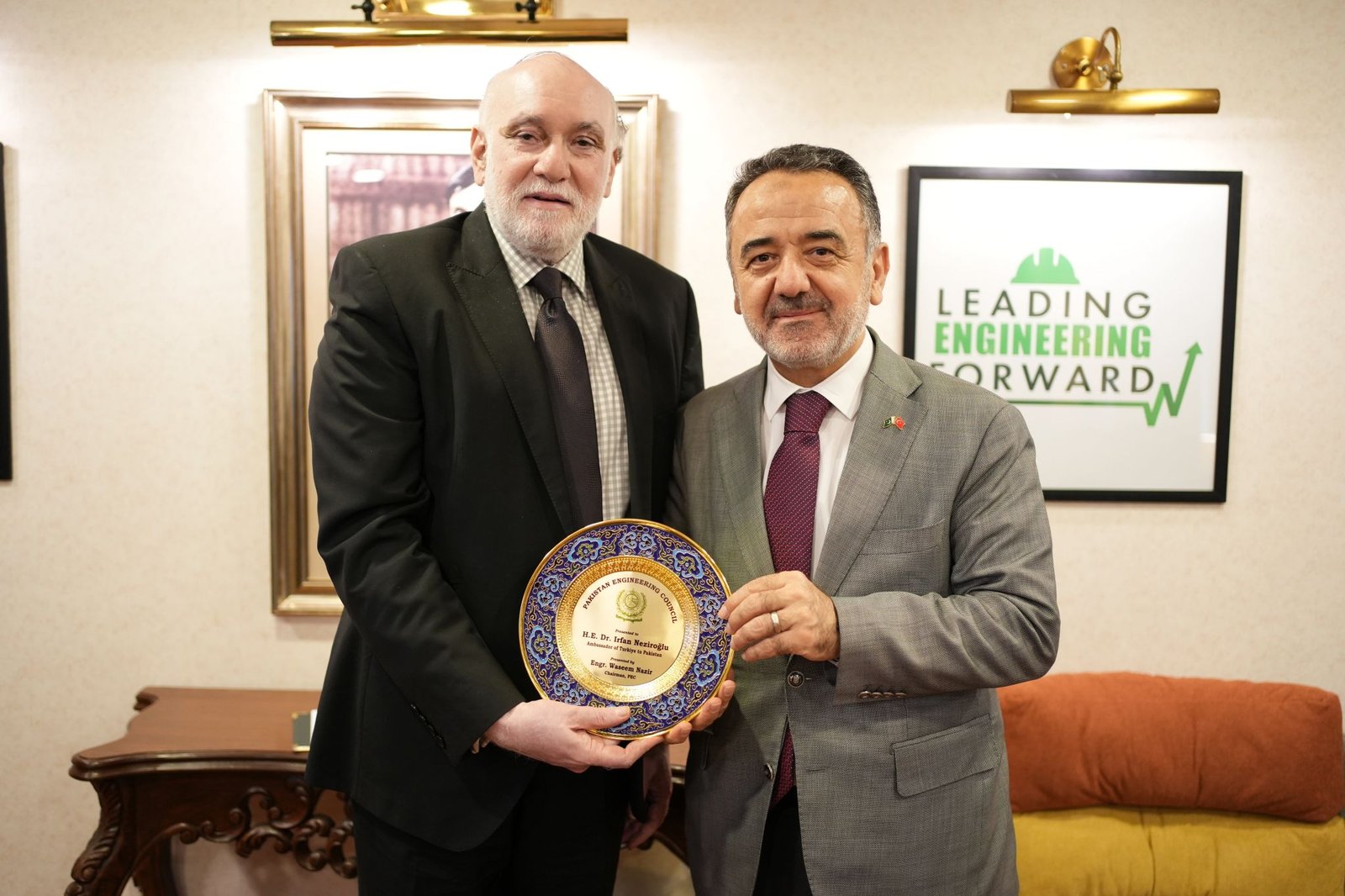
A high-level meeting between H.E. Dr. Irfan Nazir Oglu, Ambassador of the Republic of Türkiye to Pakistan, and Chairman Pakistan Engineering Council (PEC) Engr. Waseem Nazir has marked a significant step forward in strengthening Pakistan–Türkiye cooperation in the engineering sector.
According to the social media platform of the Pakistan Engineering Council (PEC), both sides agreed to develop structured and result-oriented partnerships covering engineering education, professional development and industrial collaboration. The initiatives aim to enhance capacity building, skills development and technology exchange between the two countries.
Among the key proposals discussed was the launch of a Structured Engineers Training, Exposure and Technology Ambassador Program, along with a Faculty Exchange Program between leading engineering institutions in Pakistan and Türkiye. The two sides also agreed on the exchange of high-tech engineers to support capacity-building programmes in both countries.
In addition, a business-to-business (B2B) exposure visit of Pakistani constructors, consultants and clients to Türkiye was proposed to strengthen industrial linkages and promote collaboration in infrastructure and engineering projects.
A flagship Joint Four-Year Engineering Degree Program was also discussed, involving Pakistan, Türkiye, Malaysia and a fourth Islamic country to be identified. The programme is envisioned as a collective initiative of Islamic countries to produce globally competitive “Ummah Engineers,” with Pakistan taking the lead role. The proposed degree would integrate international curricula, industry relevance, student mobility and globally recognised accreditation standards.
Officials said a follow-up session would be held soon to further advance the agreed initiatives and finalise implementation frameworks. – ER Web Desk
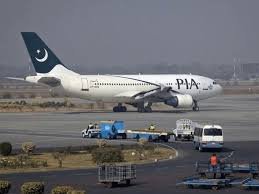
The federal cabinet, chaired by Prime Minister Muhammad Shehbaz Sharif, on Tuesday approved key decisions related to the privatisation of Pakistan International Airlines (PIA) and reiterated the government’s firm commitment to transparency, political dialogue and economic reform.
A special meeting of the federal cabinet was held at the Prime Minister’s House, during which the cabinet formally endorsed the decisions taken earlier in the day by the Cabinet Committee on Privatisation regarding PIA, a Prime Minister’s Office news release said. The cabinet also offered prayers for the smooth and successful completion of all stages of the privatisation process.
Addressing the cabinet, Prime Minister Shehbaz Sharif underscored that the PIA privatisation would be carried out in a transparent, credible and reliable manner, noting that the bidding process would be broadcast live on television. He said sealed bids would be placed in see-through boxes, with envelopes opened only after price determination, and the award would be made through a competitive process to the highest bidder.
“This is one of the largest financial transactions in Pakistan’s history, and therefore the entire process must be transparent and credible,” the prime minister said, adding that the outcome of the bidding would be brought back to the cabinet for final approval. He urged cabinet members to actively participate so that decisions could be taken with collective wisdom.
The prime minister appreciated the efforts of the relevant ministries and cabinet members in advancing the privatisation agenda, particularly commending the roles of the deputy prime minister, defence minister and finance minister. He described the day as significant for PIA’s future and expressed confidence that a transparent process would improve economic management and boost private-sector confidence.
Prime Minister Shehbaz Sharif reaffirmed that the government remained committed to its principled stance of peaceful dialogue with all political parties for national development, prosperity and political harmony. He said he had personally extended offers of dialogue to all political parties on multiple occasions.
However, he made it clear that no attempt to disrupt law and order under the guise of political dialogue would be allowed to succeed. “Dialogue can only move forward on the basis of legitimate demands and constitutional principles,” he said, stressing that political harmony was essential for Pakistan’s stability and progress.
During the meeting, the prime minister congratulated the nation on Pakistan’s victory in the Under-19 cricket championship, calling it a moment of pride for the entire country. He also referred to the recent conferment of the King Abdulaziz Award on Pakistan’s field marshal in Saudi Arabia, saying the honour belonged not to an individual but to the whole nation and reflected Pakistan’s collective dignity.
In addition to PIA-related decisions, the federal cabinet approved several important policy and legislative measures. On the recommendation of the Petroleum Division, the cabinet approved the extension of the Off-Grid Power Plants Levy Act 2025 to include the sale of gas to captive power plants by third parties.
To modernise public procurement processes, the cabinet granted principled approval for amendments to the Public Procurement Regulatory Authority (PPRA) Ordinance 2002, aimed at aligning public tendering and procurement procedures with contemporary requirements.
The cabinet also approved the repeal of the National University for Security Sciences Islamabad Bill 2025, and constituted a committee to ensure effective consultation on private members’ bills and other legislation in the National Assembly.
Further, the cabinet approved the National Cannabis Control and Regulatory Policy 2025, which aims to promote the use of plant-based resources in the pharmaceutical and textile sectors under a regulated framework.
On the recommendation of the Ministry of Interior, the cabinet approved a visa clearance system designed to facilitate Pakistani citizens travelling abroad by providing a transparent and secure mechanism for visa acquisition.
The federal cabinet also ratified the decisions taken by the Cabinet Committee on Legislative Cases in its meetings held on October 20, November 5 and November 21, 2025, as well as the decisions of the Economic Coordination Committee taken in its meeting on December 18, 2025.
Prime Minister Shehbaz Sharif reaffirmed, in conclusion, that national interest would remain the guiding principle of the government’s decisions, particularly in matters concerning economic reform, political stability and public confidence. – APP/ ER Web Desk