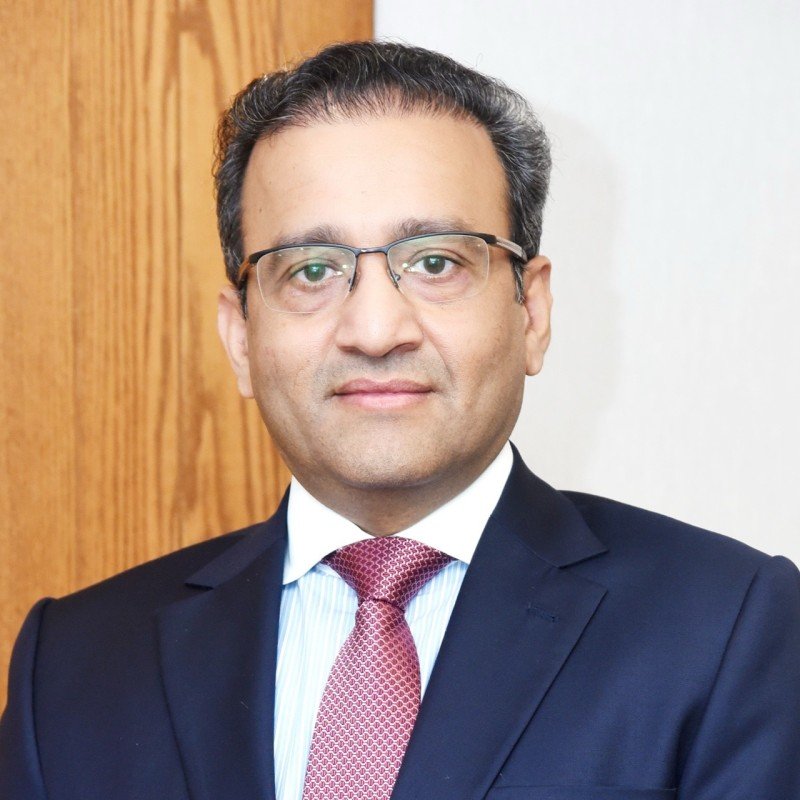
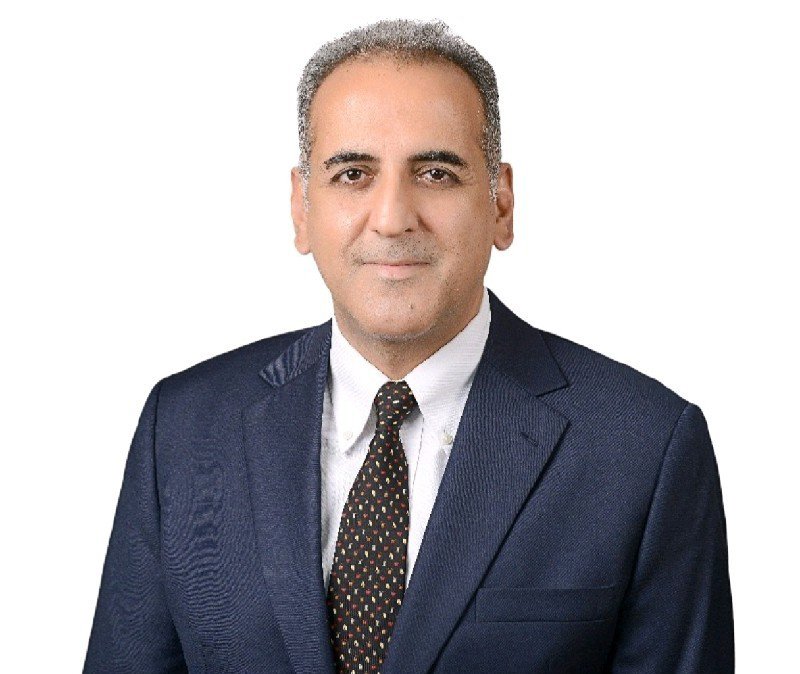
Samba Bank Limited (SBL) has informed the Pakistan Stock Exchange (PSX) that its Board of Directors has approved the appointment of Mr. Rashid Jahangir as President and Chief Executive Officer of the bank.
The decision was taken during the 133rd meeting of the Board of Directors held on February 17, 2026. Mr. Jahangir, who has been serving as Acting President & CEO, will now assume the role on a full-time basis.
The appointment is subject to approval from the State Bank of Pakistan (SBP) and compliance with all applicable laws, rules, and regulatory requirements.
The bank did not disclose further details regarding the tenure of the appointment. However, the move signals continuity in leadership at Samba Bank, as Mr. Jahangir transitions from his interim role to permanently head the institution.
Market observers view the appointment as a step toward maintaining strategic stability and operational consistency within the bank, pending regulatory clearance from the central bank.
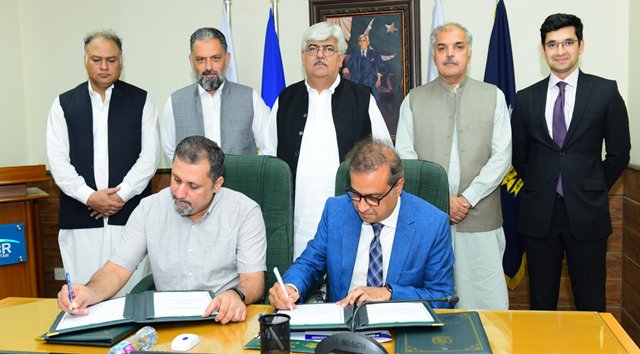
The Federal Board of Revenue (FBR) has signed a contract with the Lahore University of Management Sciences (LUMS) to deliver customized professional certification programs for its officers, marking a significant step in strengthening institutional capacity and modernization efforts.
The signing ceremony was attended by Chairman FBR, Member (Admin/HR), Member IR-Operations, Member Customs-Operations, Directors General of the Inland Revenue Service and Customs Academies, along with other senior FBR officials. Representing LUMS were the Dean of the Suleman Dawood School of Business and the Associate Dean of the Rausing Executive Development Centre.
Under the certification initiative, officers from both Inland Revenue and Pakistan Customs Services will undergo three-week intensive programs focused on technical areas critical to modern tax and customs administration. These areas include artificial intelligence, data science, revenue forecasting, customs valuation, advanced audit strategies, supply chain management, trade facilitation, and accounting.
All BS-17 and BS-18 officers will be required to complete two mandatory certifications. Each course will feature three weeks of in-person instruction, hands-on laboratory sessions, and proctored examinations to ensure rigorous assessment standards.
The initiative forms part of FBR’s broader transformation plan and builds upon the successful launch of a nine-month Postgraduate Diploma program for newly inducted officers at LUMS. Officials noted that the collaboration reflects FBR’s continued commitment to developing a modern, future-ready tax administration through sustained investment in human resource development. – ER News Desk
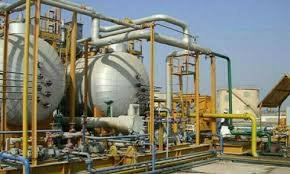
Oil and Gas Development Company Limited (OGDCL) has informed the Pakistan Stock Exchange (PSX) that it has significantly enhanced oil production from its Kal-03 well, located in District Chakwal, following a successful workover operation.
According to the company’s disclosure, prior to the intervention, the well was producing approximately 50 barrels of oil per day (BPD) under natural flow conditions. After carrying out a planned workover—comprising Multistage Physico-Chemical (MPC) treatment and installation of an Electric Submersible Pump (ESP)—production has surged to 750 BPD.
OGDCL stated that the initiative is part of its ongoing production optimization program aimed at sustaining and enhancing output from mature oil and gas fields. The company continues to focus on deploying advanced technologies and cost-effective interventions to maximize recovery and improve operational efficiency.
The increase in output from the Kal-03 well is expected to contribute positively to the company’s overall production portfolio and support national energy supplies.
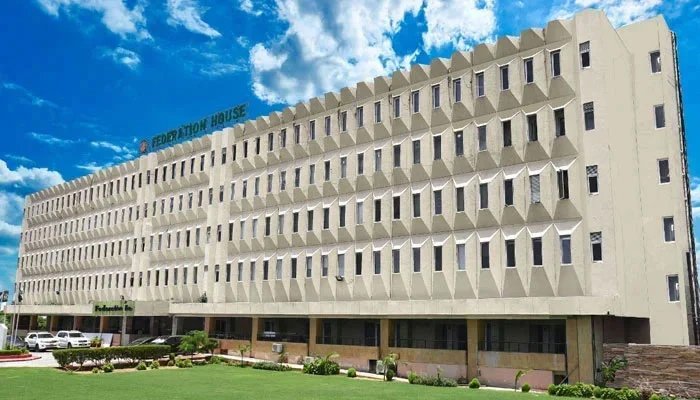
At a press conference held at Federation House, Karachi, the President of the Federation of Pakistan Chambers of Commerce & Industry (FPCCI), Atif Ikram Sheikh, welcomed the Sindh government’s decision to reduce the Sindh Infrastructure Cess from 1.85 percent to a range of 0.80 percent to 0.85 percent.
Describing the development as a “major relief” for the business community, Atif Ikram Sheikh said the reduction would lower the annual cost of doing business by approximately $700 million. He termed the move a historic breakthrough, stating that FPCCI had successfully resolved a 20-year-old issue through sustained efforts and negotiations.
He further announced that the Infrastructure Cess has been abolished on the Export Facilitation (EF) Scheme, providing additional relief to exporters. According to him, FPCCI’s long struggle has finally borne fruit, bringing substantial financial relief to traders and industrialists across the country.
Court Cases and Payment Structure
Senior Vice President of FPCCI, Saquib Fayyaz Magoon, highlighted that the business community currently faces court cases amounting to approximately Rs350 billion under the Sindh Infrastructure Development Cess.
He explained that traders opting to withdraw their cases would be required to pay 15 percent of the outstanding amount by July 31, 2025, another 15 percent by October 31, 2026, and a further 15 percent by July 31, 2027.
Magoon added that a one percent reduction in the cess would significantly ease the financial burden on importers and improve overall trade competitiveness.
Long-Term Payment Plan and Port Efficiency
Regional Chairman Sindh and Vice President FPCCI, Abdul Mohaimin Khan, thanked Sindh government officials, including Mukesh Kumar Chawla, Zia-ul-Hassan Lanjar, and Murtaza Wahab, for facilitating the reduction in the cess.
He stated that after paying 45% of dues within one and a half years, the remaining 55 percent would be payable over a 12-year period from 2028 to 2040. According to him, this step would accelerate cargo clearance processes at ports and reduce associated costs.
Vice President FPCCI Asif Sakhi expressed hope that the Sindh government would continue to introduce business-friendly measures to support industry and trade.
He clarified that the new cess rate would be 0.85% for traders with pending court cases, while those without litigation would be charged a reduced rate of 0.80 percent.
FPCCI officials termed the decision a landmark development aimed at improving the ease of doing business and strengthening economic activity in Sindh and across Pakistan.
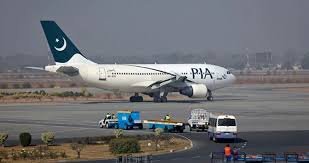
The consortium led by Arif Habib Group has announced its intention to acquire the remaining 25 percent stake held by the Government of Pakistan in Pakistan International Airlines (PIA), a move that would give it full ownership and control of the national carrier.
Speaking to a British media outlet, Shahid Ali Habib, Chief Executive Officer of Arif Habib Limited, said the consortium has decided to proceed with the purchase of the outstanding shares. He stated that a formal decision is expected in April, with payment to be completed within the following 12 months.
According to Habib, once 100 percent ownership is secured, PIA will operate entirely as a private entity, free from government-nominated board members and direct state control.
In December last year, the Arif Habib-led consortium acquired 75 percent of PIA’s shares for Rs135 billion. The government’s privatization initiative aims to restructure the loss-making airline, expand its fleet, and improve passenger services to restore profitability.
Following the initial 75 percent sale, the government granted the consortium a 90-day window to exercise its option to acquire the remaining 25 percent stake, valued at approximately Rs45 billion. The deadline for this decision falls at the end of April. Under the agreement finalized in January, the consortium has a 12-month period to complete the financial settlement, making the transaction operationally viable.
The successful consortium comprises Fatima Fertilizer Company Limited (34.1 percent), Fauji Fertilizer Company Limited (33.9 percent), Lake City (16 percent), and a partnership between The City School and AKD Group (16 percent).
Habib noted that the airline’s turnaround strategy focuses on improving staff performance, upgrading ticketing systems, and enhancing safety and security standards. He emphasized that under full private ownership, PIA will be positioned to modernize operations and deliver improved services to passengers. – ERMD
Service Industries Limited (SIL) has informed the Pakistan Stock Exchange (PSX) that the Board of Directors of its subsidiary/associated company, Service Long March Tyres Limited (SLM), has approved the establishment of a Passenger Car Radial (PCR) tyre manufacturing project in Pakistan.
According to the notification, the new project will be set up at SLM’s existing manufacturing facility in Nooriabad, Sindh. The Board has approved an investment of US$80 million for the project.
The company stated that the planned PCR tyre manufacturing unit will cater to both domestic and export markets, reflecting the group’s strategy to expand its footprint in the automotive tyre segment and strengthen Pakistan’s local manufacturing base.
Service Industries Limited is one of Pakistan’s leading conglomerates, with diversified operations spanning footwear manufacturing and retail, tyre production, and related industrial ventures. The company owns well-known footwear brands and operates an extensive retail network across Pakistan.
Through its tyre manufacturing arm, including Service Long March Tyres Limited, SIL has established a strong presence in the truck and bus radial (TBR) tyre segment. The newly approved Passenger Car Radial (PCR) project marks a strategic expansion into the passenger vehicle tyre market.
With a focus on innovation, quality, and export growth, Service Industries Limited continues to play a prominent role in Pakistan’s manufacturing and industrial development.
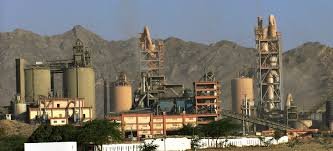
Fauji Cement Company Limited (FCCL) and Kot Addu Power Company Limited (KAPCO) have announced a public offer to acquire up to 10,950,306 ordinary shares, representing approximately 7.97% of the total issued and paid-up capital of Attock Cement Pakistan Limited (ACPL).
According to separate notices submitted to the Pakistan Stock Exchange (PSX), the offer is being made jointly by FCCL and KAPCO under the provisions of the Securities Act, 2015, and the Listed Companies (Substantial Acquisition of Voting Shares and Takeovers) Regulations, 2017.
The public offer forms part of a broader transaction aimed at acquiring joint control of Attock Cement. Last month, FCCL and KAPCO entered into a Sale and Purchase Agreement (SPA) with Pharaon Investment Group Limited Holding S.A.L for the acquisition of 84.06% of ACPL’s total issued and paid-up share capital.
Under the SPA, Fauji Cement will acquire 57.76 million ordinary shares, equivalent to 42.03% of ACPL’s paid-up capital, while KAPCO will purchase an equal number of shares, representing another 42.03%, at an adjusted price of Rs330.41 per share.
In addition, through the public offer, each of the joint acquirers intends to purchase a further 3.98% stake at the same price of Rs330.41 per share. If fully subscribed, the combined shareholding of FCCL and KAPCO could rise to nearly 92%.
The total estimated payout under the public offer, assuming full acceptance, stands at approximately Rs3.62 billion.
In its notice, FCCL stated that both FCCL and Attock Cement are primarily engaged in the manufacturing and sale of different types of cement. The acquisition is described as strategically beneficial for FCCL, as it strengthens its portfolio in the cement sector and complements its existing investments and nationwide presence.
The transaction is also expected to enable FCCL to expand its footprint in the cement industry. Meanwhile, for KAPCO, the acquisition represents an entry into the cement sector, allowing the power producer to diversify and broaden the range of sectors in which it has investments.
According to the public announcement, Attock Cement will continue to operate in the ordinary course of business and will remain listed on the Pakistan Stock Exchange.
The company further stated that, in line with Regulation 7(5) of the Takeover Regulations, additional documents and information are being submitted separately to the Securities and Exchange Commission of Pakistan (SECP). A copy of the public offer announcement will be published in the newspapers Nawa-i-Waqt and The Nation within five days of the announcement. – ER News Desk
Pakistan Oxygen Limited has informed the Pakistan Stock Exchange (PSX) that its Board of Directors has re-appointed Mr. Matin Amjad as Chief Executive Officer (CEO) of the company.
According to the notification, the decision was taken during the Board meeting held on February 13, 2026. Mr. Amjad has been re-appointed for a period up to August 2, 2026, in accordance with Section 187(1) of the Companies Act, 2017. The re-appointment follows the recent election of directors of the company.
The company did not disclose further details regarding the terms of the re-appointment; however, the move signals continuity in leadership at one of Pakistan’s leading industrial and medical gases manufacturers.
Market observers believe the decision reflects the Board’s confidence in Mr. Amjad’s leadership and strategic direction, particularly at a time when industrial activity and healthcare demand remain key drivers for the gases sector.
About Pakistan Oxygen Limited Pakistan Oxygen Limited is a leading manufacturer and supplier of industrial, medical, and specialty gases in Pakistan. The company operates production facilities across the country and caters to a diverse range of sectors including healthcare, manufacturing, metallurgy, energy, and infrastructure.
Its product portfolio includes oxygen, nitrogen, argon, hydrogen, carbon dioxide, and various specialty gas mixtures used in industrial processes, hospitals, laboratories, and engineering applications.
With decades of operational experience, the company has established itself as a key player in supporting Pakistan’s industrial development and healthcare infrastructure, particularly during periods of heightened medical oxygen demand.
Pakistan Oxygen continues to focus on operational excellence, safety standards, and sustainable growth while maintaining compliance with regulatory requirements and corporate governance standards as a publicly listed company. – ER News Desk
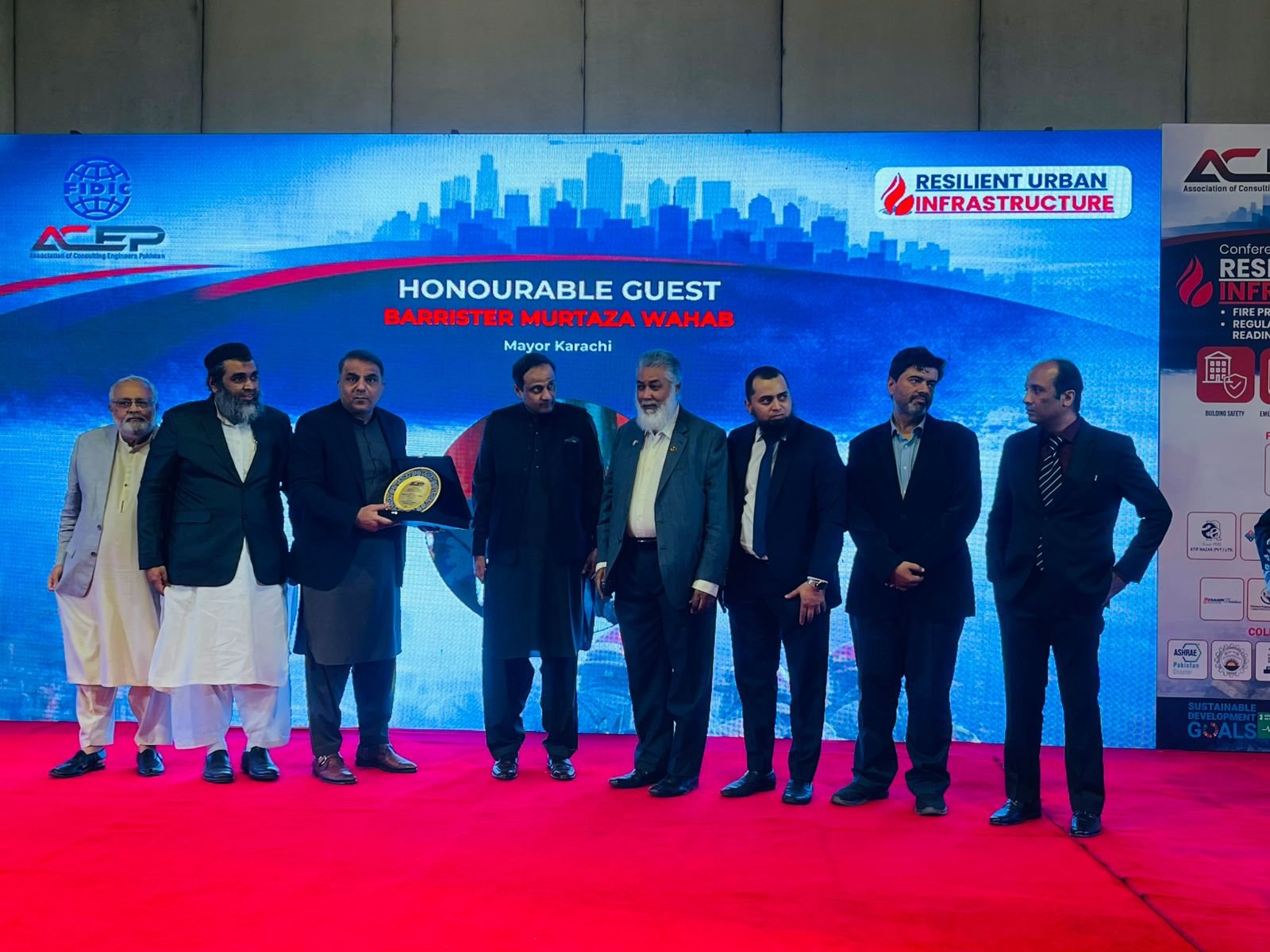
Marked as one of the critical initiatives in the aftermath of the Gul Plaza fire incident in Karachi, the Association of Consulting Engineers Pakistan (ACEP) organized a comprehensive conference on Friday (13 February) to identify gaps in emergency preparedness and building safety regulations.
The conference exposed grey areas in fire prevention mechanisms and discussed weaknesses in enforcement of laws, lack of required infrastructure in buildings, and the urgent need to make structures safe for human habitation.
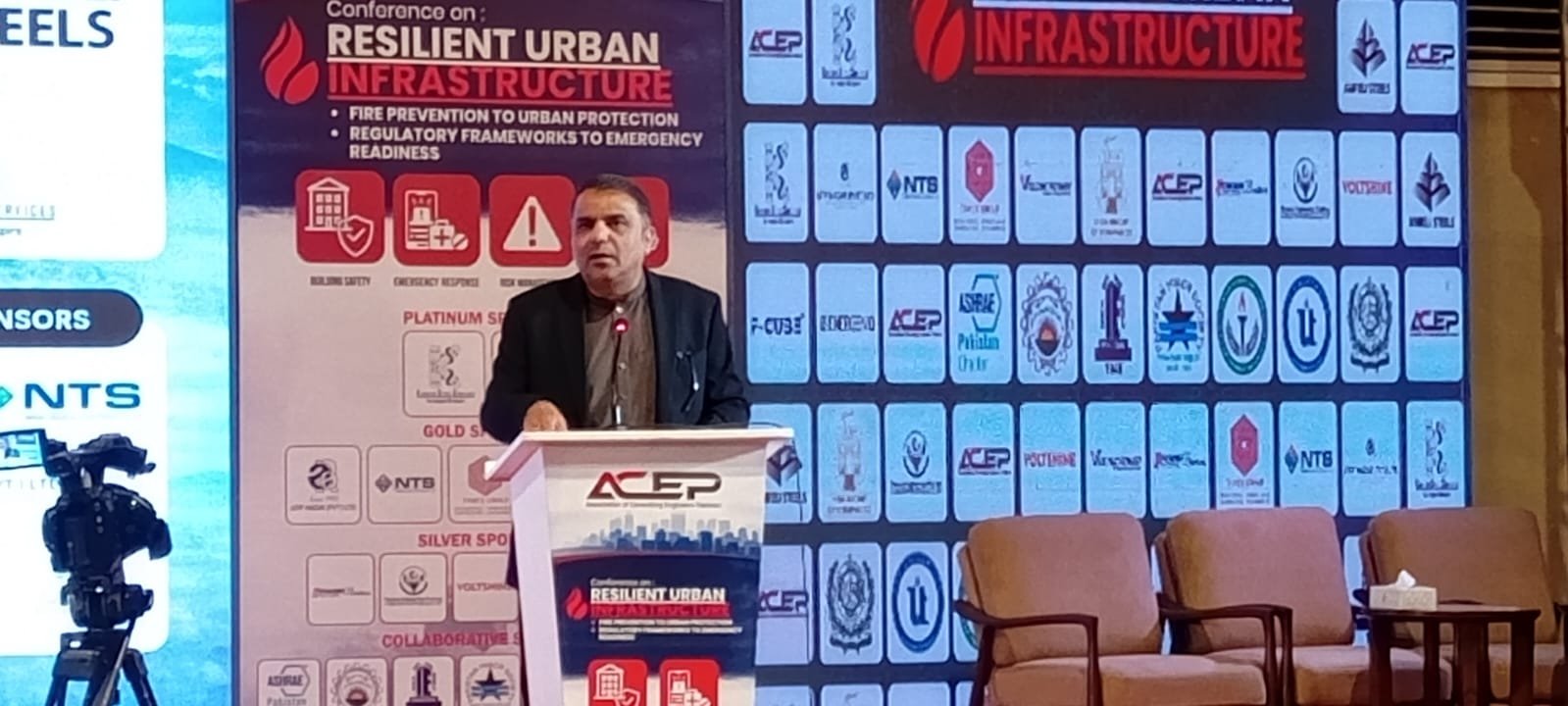
Engr. Waseem Asghar, President ACEP
The event was attended by Sindh Minister for Information Sharjeel Inam Memon, a civil engineer by education from Mehran University of Engineering & Technology, Jamshoro, and Barr. Murtaza Wahab, Mayor of Karachi, who faced significant challenges in the wake of the Gul Plaza fire incident.
The moot was organized in collaboration with the Institution of Engineers Pakistan (IEP), FIDIC, and several other professional bodies. A large number of engineers from the public and private sectors, corporate professionals, academicians, and constructors participated to contribute recommendations aimed at improving Karachi’s building safety standards and engaging stakeholders as well as the general public in reform efforts. Pakistan’s first woman architect, Yasmeen Lari, also attended as a special guest.
Engr. Wasif Nazar, Secretary ACEP
The organizers arranged three comprehensive panel discussions along with expert presentations involving professionals from industry, engineering institutions, and academia. The discussions culminated in a set of recommendations, the outlines of which were presented by Dr. Sarosh Hashmat Lodi, former Vice Chancellor of NED University, Karachi.
Dr. Lodi emphasized that empowering local governments is essential for effective implementation of safety measures. He called for mandatory third-party validation of building safety compliance and stressed replacing the prevailing “NOC culture” with a “culture of responsibility.”
He highlighted the importance of urban planning and establishing a well-networked firefighting system across Karachi. Among the key recommendations were dedicated fire-extinguishing vehicles for specific zones, emergency water reservoirs, strengthening fire stations and civil defence mechanisms, addressing risks in dense markets and the informal economy, eliminating illegal wiring, and making fire safety systems, drills, and training mandatory.
He also stressed regular audits of high-rise buildings to ensure residential safety, improved safety mechanisms in industrial and logistics zones, and the development of localized fire safety plans. He expressed confidence that if implementation begins immediately, significant improvements could be achieved within the next five years.
Speaking on the occasion, Waseem Asghar, President, ACEP said the recommendations would be forwarded to competent forums. He stressed that laws must be reviewed in light of technological advancements and market demands, noting that many existing regulations have become obsolete. He described the Gul Plaza tragedy as yet another lesson compelling the city to move forward with serious reforms, particularly in older buildings and aging infrastructure.
Addressing the gathering, Sharjeel Inam Memon termed the issue extremely important and said society has developed a tendency to avoid discussing core issues. “This is not a political issue; it is a matter of life and death for citizens,” he remarked.
He acknowledged that in incidents like the Gul Plaza fire, the government bears primary responsibility, though accountability often shifts among stakeholders. “The government carries the greatest responsibility,” he said.
Memon highlighted shortcomings in the entire construction process from soil testing and structural design to plumbing and electrification and stressed that all stakeholders share responsibility. He admitted that there were gaps in enforcement and regulatory compliance and said the government had identified shortcomings following the Gul Plaza incident.
He further stated that corrective measures must be undertaken collectively, although primary responsibility rests with the government. After the tragedy, the government engaged chambers of commerce and industry organizations, assigning them the task of conducting safety audits within their respective sectors to ensure compliance with safety requirements.
The conference concluded with a renewed commitment from stakeholders to strengthen enforcement, modernize regulations, and improve emergency preparedness to prevent similar tragedies in the future. – ER Report
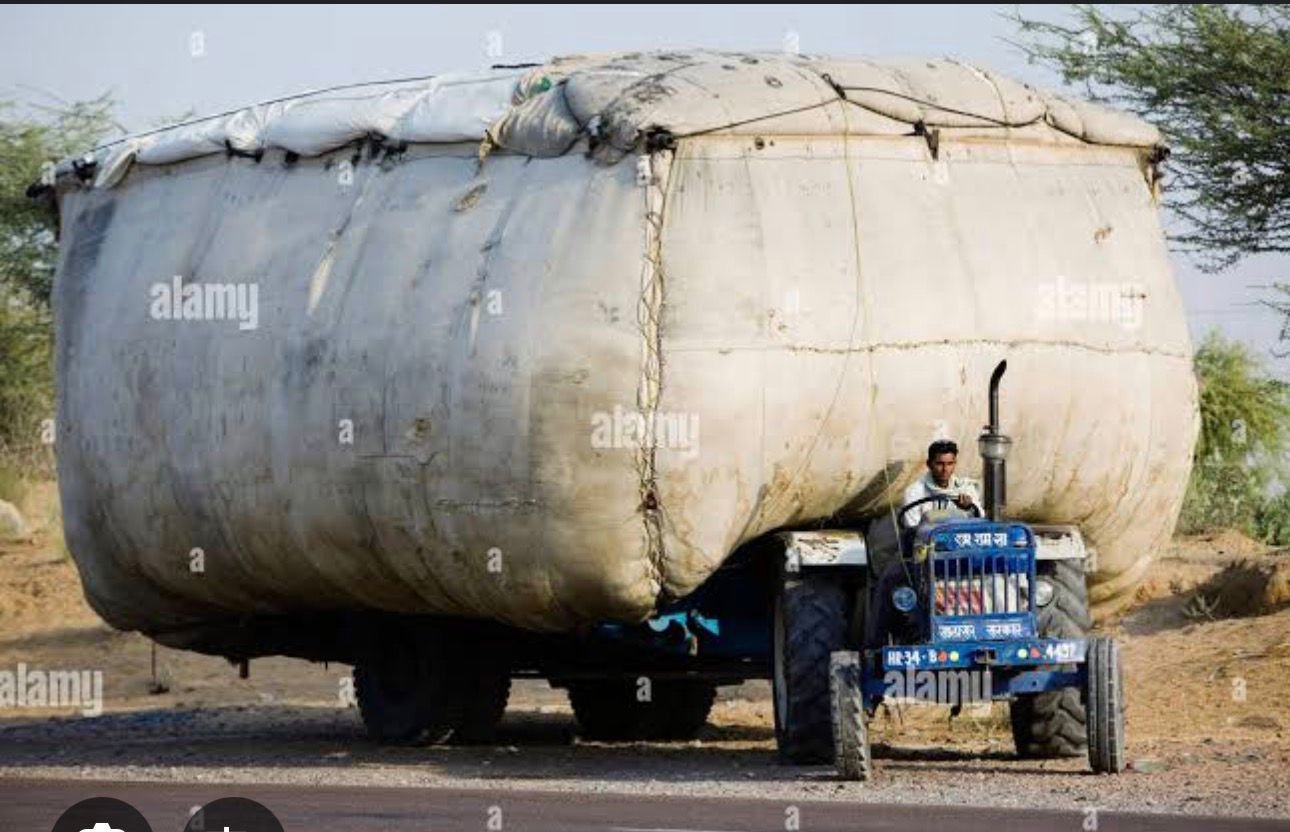
Across the fields of Sindh and Punjab, the harvest season is a time of economic activity—but on the roads, it has become a season of tragedy. Every year, scores of families lose fathers, sons, and daughters to accidents caused by overloaded tractor trolleys and trucks carrying sugarcane, cotton, and rice or wheat bhoosa. These are not ordinary collisions—they are preventable disasters, born from vehicles that extend far beyond their legal width, lack reflectors, and operate on rural and highway roads with little oversight.
The Invisible Killers: Extra-Width Vehicles Imagine a narrow two-lane country road. Now picture a tractor trolley loaded with sugarcane stretching over two lanes, its taillights completely hidden by the crop. At night, a motorcyclist approaches, unable to see the obstruction in time. Within seconds, a life is lost. This is the daily reality in Sindh’s sugarcane belt—Badin, Thatta, Tando Allahyar—and Punjab’s cotton heartlands—Multan, Rahim Yar Khan, and Faisalabad. Tractor trolleys and trucks carrying loose bhoosa and crop residues extend dangerously beyond the vehicle’s dimensions. Rear and side reflectors are rare. Drivers, pressed for time and profit, take risks that cost lives.
Families Torn Apart The human cost is devastating. Fathers crushed in collisions; children losing primary caregivers; mothers widowed in a single, preventable night. In many cases, accidents go unreported, and local hospitals simply tally bodies without highlighting the underlying cause: unsafe agricultural transport. Statistics reveal the scale of this crisis:
Pakistan sees over 41,000 road deaths annually, with rural accidents contributing a significant portion.
In Punjab alone, 4,791 people were killed in 2025, a 19% increase from the previous year.
Tractor-trolley crashes specifically account for about 10% of all road deaths in the province, according to emergency services reports.
Motorcycles, the primary mode of rural transport, are involved in 75% of these accidents, highlighting the vulnerability of ordinary families. These numbers are more than statistics—they are families shattered and futures lost.
Roads Not Built for This Burden It’s not just human life at risk. Roads in Pakistan’s countryside are designed for light to medium traffic, not for tractor trolleys carrying multiple tons of sugarcane or cotton. Excessive width and weight can cause rutting, shoulder collapse, and damage to culverts. When these overloaded vehicles enter highways, they disrupt traffic flow, force unsafe overtaking, and accelerate pavement deterioration. Public funds are wasted on constant repairs while fatalities continue unabated.
Why Enforcement Fails Why does this persist? The answer lies in weak governance, fragmented authority, and cultural acceptance. Traffic police, highways departments, agriculture departments, and local administrations share overlapping responsibilities, yet enforcement is seasonal and reactive. Farmers and transporters operate without proper awareness or incentives to comply, and laws regarding vehicle width, load limits, and mandatory reflectors are rarely enforced. Even when roads are wide enough, extra-width vehicles force other traffic into dangerous positions. On highways, this creates bottlenecks, head-on risks, and chaotic conditions, especially during harvest months.
Lessons from Abroad Countries like India, Australia, and EU members have tackled similar challenges effectively:
Tractor trolleys classified as restricted agricultural vehicles with daylight-only operation.
Mandatory rear and side reflectors, tail lights, and hazard boards.
Dedicated corridors and seasonal permits manage harvest traffic safely. Pakistan can adopt similar measures, tailored for Sindh and Punjab, to save lives without harming farmers’ livelihoods.
A Way Forward The solution is clear and urgent:
Strict enforcement of width, length, and axle-load limits for tractor trolleys and trucks.
Mandatory reflectors and hazard boards for all agricultural vehicles.
Dedicated harvest season corridors and route planning on highways and farm-to-market roads.
Public awareness campaigns in Sindhi, Punjabi, and Urdu about the human cost of unsafe loading.
Infrastructure upgrades where loads exceed original road design limits. Billions are wasted repairing damaged roads, and countless lives are lost—not because of nature, but because of human neglect. Farmers, transporters, and authorities must work together. Roads are not private property—they are public lifelines.
When Convenience Kills The sugarcane trolley may look harmless on a field, and a heap of cotton or bhoosa may seem like a minor inconvenience on a country lane. But when these vehicles hit public roads, they become invisible killers. Every year, families mourn loved ones; children grow up without fathers; and communities suffer under broken roads. It’s time to stop this silent epidemic. Enforce the laws. Install reflectors. Redesign transport logistics. Protect lives. Because no harvest, however valuable, is worth a family’s tragedy.