Category: Featured

  • Experts call for regulation to avoid ‘loss of control’ over AI

    Experts call for regulation to avoid ‘loss of control’ over AI

    France, co-hosting the Monday and Tuesday gathering with India, has chosen to spotlight AI ‘action’ in 2025 rather than put the safety concerns front and centre as at the previous meetings in Britain’s Bletchley Park in 2023 and the Korean capital Seoul in 2024.

    The French vision is for governments, businesses and other actors to come out in favour of global governance for AI and make commitments on sustainability, without setting binding rules.

    “We don’t want to spend our time talking only about the risks. There’s the very real opportunity aspect as well,” said Anne Bouverot, AI envoy for President Emmanuel Macron.

    Max Tegmark, head of the US-based Future of Life Institute that has regularly warned of AI’s dangers, told AFP that France should not miss the opportunity to act.

    “France has been a wonderful champion of international collaboration and has the opportunity to really lead the rest of the world,” the MIT physicist said.

    “There is a big fork in the road here at the Paris summit and it should be embraced.”

    Tegmark’s institute has backed the Sunday launch of a platform dubbed Global Risk and AI Safety Preparedness (GRASP) that aims to map major risks linked to AI and solutions being developed around the world.

    “We’ve identified around 300 tools and technologies in answer to these risks,” said GRASP coordinator Cyrus Hodes.

    Results from the survey will be passed to the OECD rich-countries club and members of the Global Partnership on Artificial Intelligence (GPAI), a grouping of almost 30 nations including major European economies, Japan, South Korea and the United States that will meet in Paris Sunday.

    The past week also saw the presentation of the first International AI Safety Report on Thursday, compiled by 96 experts and backed by 30 countries, the UN, EU and OECD.

    Also read: All eyes on Paris AI Summit: No one knows if Trump’s men can find common ground with China, 100 nations

    Risks outlined in the document range from the familiar, such as fake content online, to the far more alarming.

    “Proof is steadily appearing of additional risks like biological attacks or cyberattacks,” the report’s coordinator and noted computer scientist Yoshua Bengio told AFP.

    In the longer term, 2018 Turing Prize winner Bengio fears a possible “loss of control” by humans over AI systems, potentially motivated by “their own will to survive”.

    “A lot of people thought that mastering language at the level of ChatGPT-4 was science fiction as recently as six years ago, and then it happened,” said Tegmark, referring to OpenAI’s chatbot.

    “The big problem now is that a lot of people in power still have not understood that we’re closer to building artificial general intelligence (AGI) than to figuring out how to control it.”

    AGI refers to an artificial intelligence that would equal or better humans in all fields.

    Its approach within a few years has been heralded by the likes of OpenAI chief Sam Altman.

    “If you just eyeball the rate at which these capabilities are increasing, it does make you think that we’ll get there by 2026 or 2027,” said Dario Amodei, Altman’s counterpart at rival Anthropic said in November.

    “At worst, these American or Chinese companies lose control over this, and then after that Earth will be run by machines,” Tegmark said.

    Stuart Russell, a computer science professor at Berkeley in California, said one of his greatest fears is “weapons systems where the AI that is controlling that weapon system is deciding who to attack, when to attack, and so on.”

    Russell, who is also coordinator of the International Association for Safe and Ethical AI (IASEI), places the responsibility firmly on governments to set up safeguards against armed AIs.

    Tegmark said the solution is very simple: treating the AI industry the same way all other industries are.

    “Before somebody can build a new nuclear reactor outside of Paris they have to demonstrate to government-appointed experts that this reactor is safe. That you’re not going to lose control over it… it should be the same for AI,” said Tegmark. – Courtesy AFP

  • No plans to acquire TikTok’s US operations: Elon Musk

    No plans to acquire TikTok’s US operations: Elon Musk

    “I’ve not put in a bid for TikTok and I don’t have any plans for what I would do if I had TikTok,” said Musk in comments made via videolink at a German forum in late January that were released on the weekend.

    TikTok is facing down a US law that ordered the company broken off from its Chinese owner ByteDance or otherwise be banned in the United States over national security concerns regarding the data it gathers on users.

    In one of his first acts in office, Trump ordered a pause on enforcing the law that should have seen TikTok effectively made illegal in the country a day before he took office for a second term.

    Soon after, Trump said he would be open to Musk—the owner of social media platform X, Tesla and a slew of other companies—buying the platform.

    All eyes on Paris AI Summit: No one knows if Trump’s men can find common ground with China, 100 nations

    Musk, however, said he did not wish to acquire the company.

    “I don’t use TikTok personally, so, you know, I’m not that familiar with it,” he said. “I’m not chomping at the bit to acquire TikTok.”

    Musk bought social media giant Twitter, which he renamed X, for $44 billion in 2022, insisting he was doing so in order to safeguard “free speech.”

    Since his takeover, rights campaigners warn there has been a spike in hate speech and disinformation on the platform.

    Musk was one of Trump’s main financial backers in his presidential campaign, and is heading the US president’s budget-slashing initiatives. — Agencies/ERMD

  • Prince Karim Aga Khan Laid to Rest Today in Aswan, Egypt

    Prince Karim Aga Khan Laid to Rest Today in Aswan, Egypt

    The Governor of Aswan facilitated and participated in a dignified procession through the city to the banks of the River Nile. Mawlana Shah Karim’s casket was transferred by boat in a ceremonial crossing to the mausoleum of Mawlana Sultan Mahomed Shah. The janaza (casket) was carried by hand to the hilltop mausoleum, where Shah Karim’s body was interred.

    After the ceremony, leaders present had the opportunity to express condolences to the family, and the Governor of Aswan presented Mawlana Hazar Imam with a symbolic key to the City of Aswan as a mark of respect.

    A new mausoleum for Mawlana Shah Karim will be constructed as his final resting place on land adjacent to the existing structure.

    Egypt was the centre of the Fatimid Caliphate, which was governed by Ismaili Imams during the 10th and 11th centuries. The Fatimid Imam-Caliphs founded the city of Cairo, a major centre of learning, culture, and trade. Their support of pluralism, education and the arts led to a series of advancements in science, architecture, and philosophy, and their legacy can be observed today in the rich history and culture of the region.

    Aswan is the final resting place of Mawlana Sultan Mahomed Shah and his wife, Mata Salamat, both of whom enjoyed warm relations with the people of Aswan. This relationship was sustained by Mawlana Shah Karim through the continuation of the development work of the Om Habibeh Foundation and later the Aga Khan Foundation.

    Mawlana Sultan Mahomed Shah’s mausoleum, constructed from limestone featuring a central dome with arched windows, is a landmark in Aswan. Its elegant architecture blends elements of traditional Islamic design with Mughal and Persian influences. – Source: The official LinkedIn page of the Ismaili Muslim community

    Prince Karim Aga Khan Being Laid to Rest Today in Aswan, Egypt

    Aga Khan’s funeral service held in Portugal ahead of private burial ceremony in Egypt

    The funeral of Aga Khan IV, the 49th hereditary imam of the Shiite Ismaili Muslims, has taken place in Lisbon.

    Canadian Prime Minister Justin Trudeau and Spain’s King Emeritus Juan Carlos were among the dignitaries who attended Saturday’s private ceremony for His Highness Prince Karim Al-Hussaini at the Ismaili community center. Portugal’s President Marcelo Rebelo de Sousa and the mayor of Lisbon were also among the mourners.

    The Ismaili religious community said Prince Karim will be laid to rest during a private burial ceremony in Aswan, Egypt, on Sunday.

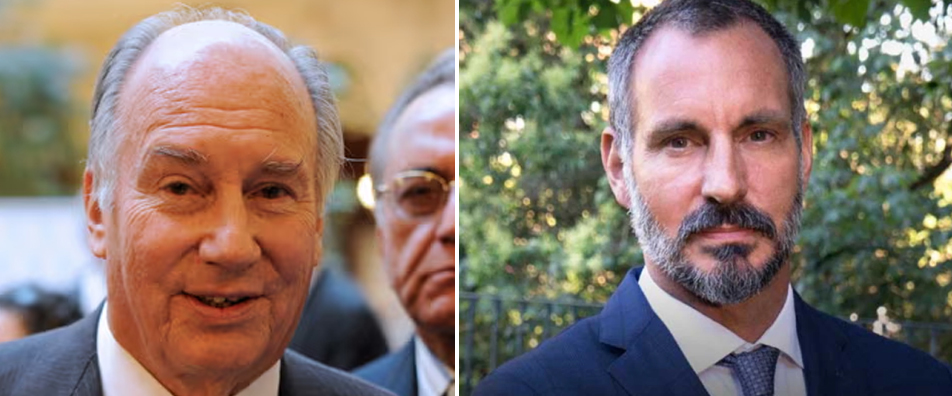
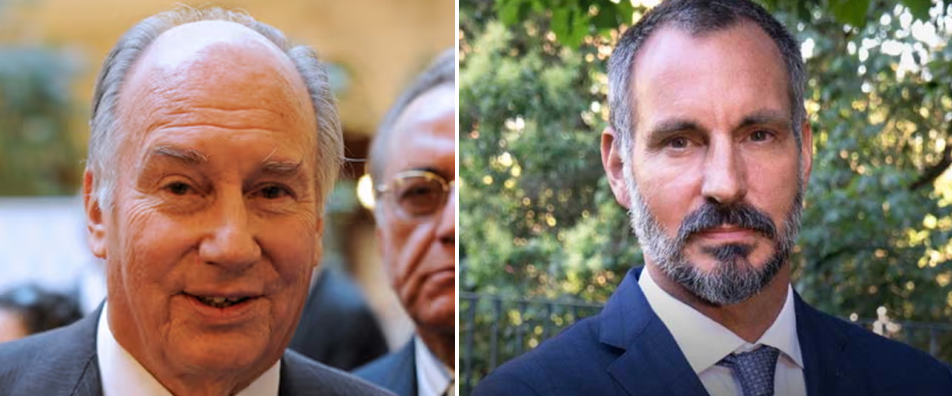
    His death was announced Tuesday by the Aga Khan Development Network and the Ismaili religious community. The following day, 53-year-old Rahim Al-Hussaini was named as the Aga Khan V, the spiritual leader of the world’s millions of Ismaili Muslims, in according with his father’s will.

    The Aga Khan is considered by his followers to be a direct descendant of the Prophet Muhammad and is treated as a head of state.

    Rahim Al-Hussaini named as 50th Aga Khan after death of father

    Prince Karim was given the title of “His Highness” by Queen Elizabeth in July 1957, two weeks after his grandfather, the Aga Khan III, unexpectedly made him heir to the family’s 1,300-year dynasty as leader of the Ismaili Muslim sect.

    Over decades, the late Aga Khan evolved into a business magnate and a philanthropist, moving between the spiritual and the worldly with ease. A defender of Islamic culture and values, he was widely regarded as a builder of bridges between Muslim societies and the West.

    The Aga Khan Development Network deals mainly with issues of health care, housing, education and rural economic development. It says it works in over 30 countries and has an annual budget of about $1 billion for nonprofit development activities.

    Ismailis lived for many generations in Iran, Syria and South Asia before also settling in east Africa, Central Asia and the Middle East, as well as Europe, North America and Australia more recently. They consider it a duty to donate up to 12.5% of their income to the Aga Khan as steward. — Courtesy AP/ERMD

  • Every bank should allocate 20 percent of its lending to SMEs: AR Allana, Chairman Alsons

    Every bank should allocate 20 percent of its lending to SMEs: AR Allana, Chairman Alsons

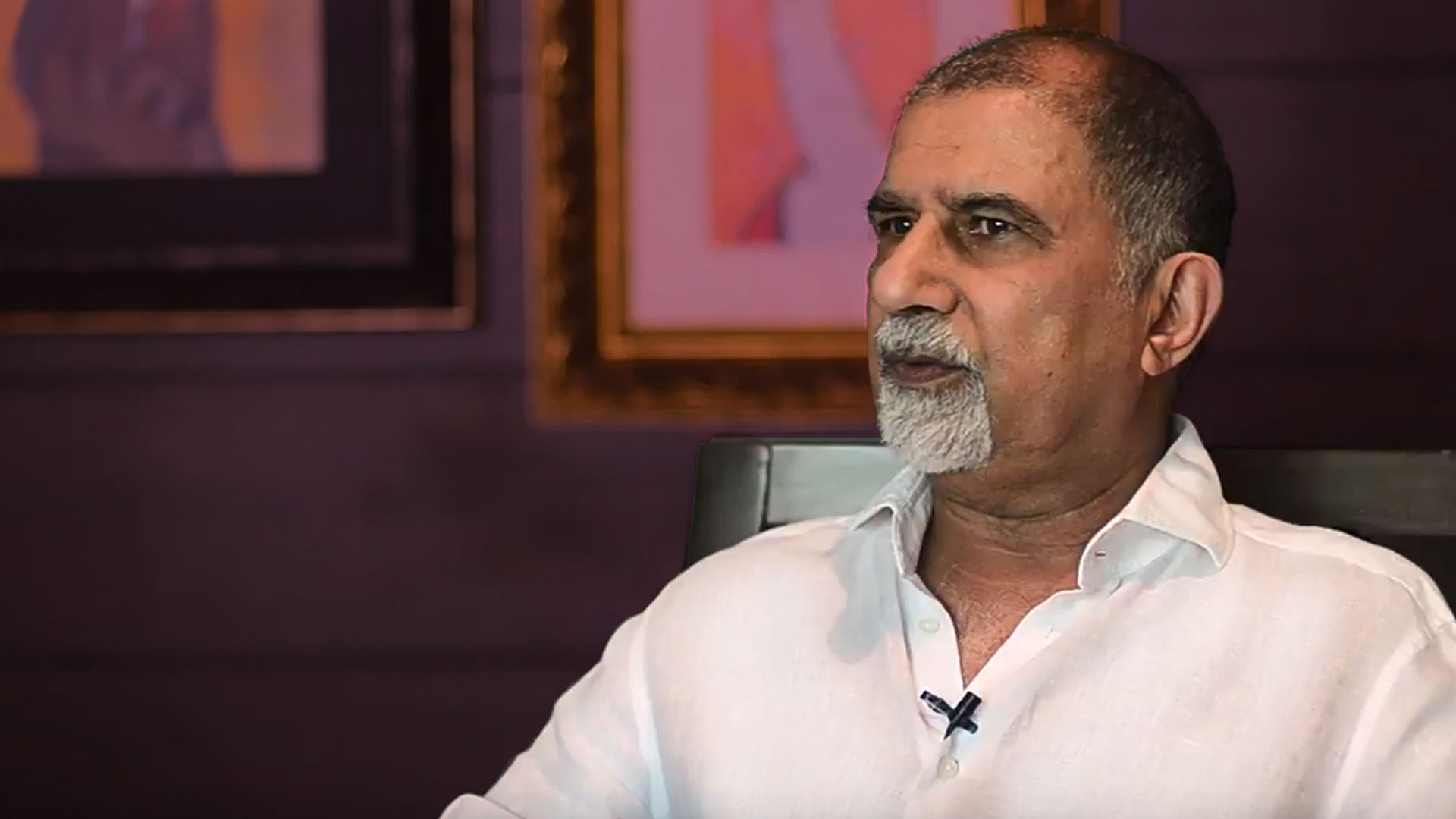
    Here is his talk on the eve of the launch of AVB – 100 in Islamabad on February 3, 2025. Rana Tanveer, Federal Minister for Production was the chief guest of the event. However, Finance Minister Aurangzeb, Defence Minister Khawaja Asif, and P&D and Special Initiatives Minister Ahsan Iqbal also participated in the launch event.

  • A Shared Crisis: Addressing Transboundary Air Pollution in South Asia

    A Shared Crisis: Addressing Transboundary Air Pollution in South Asia

    “A dialogue can also be an opportunity to work out a mechanism for joint monitoring of crop burning,” Ahmad Rafay Alam and Sanjay Upadhyay suggest in their recent joint article published in the Pakistani newspaper Dawn under the title “Potential of Air Quality Cooperation.”

    The article reads: In October-November of 2024, air quality in the Indo-Gangetic Plain (IGP) region deteriorated significantly to critical levels, particularly in the vicinity of the Punjab region.

    Governments on both sides are making efforts to address this issue, but it is a complex one and requires a collective, collaborative regional effort to protect the health of people, particularly infants and the elderly, who are more vulnerable to air pollution.

    Maryam Nawaz Sharif, the Chief Minister of Pakistan’s Punjab, proposed “climate diplomacy” between Indian and Pakistani Punjab on the issue of air pollution. Chief Minister Sharif’s statement was made in the context of the annual spike in air pollution that occurs in the northern IGP region during October and November.

    This is caused by year-round air pollution in both countries, but the spikes in the airshed during the onset of winter are due to seasonal crop burning.

    Last year’s historically unprecedented AQI levels — in some places lasting for several days — were also possibly due to changes in the otherwise unusual large-scale wind circulation linked to La Niña under the influence of climate change.

    The reality of the health impacts of air pollution on human life, agricultural production, and flora and fauna is serious. The WHO informs us that over nine million people prematurely lose their lives due to air pollution every year. Most of these deaths occur in Asian and African cities because of air pollution from transport, energy production, and industrial emissions.

    Millions of people in South Asia are at risk of losing their lives every year due to air pollution. Crop productivity is also stifled by air pollution, leading to falling agricultural incomes. Livestock is also affected by air pollution, though this area requires further study.

    Air pollution in South Asia is not a city- or country-specific problem. It is a regional problem that will worsen unless addressed at every level. It is incumbent on states in the IGP airshed — that is, India and Pakistan — to act to protect the lives and property of their citizens.

    Air pollution does not respect borders, and a transboundary airshed approach, based on data, is necessary to address air pollution. It is in this spirit that an agenda and course of action for cooperation on regional air pollution may be envisioned.

    Joint action by India and Pakistan to reduce air pollution can lead to health benefits on both sides.

    A dialogue between environmental, air pollution, energy, transport, and health experts from both countries can and should be convened. The common issues in such a dialogue should include improved air quality research and monitoring, sharing knowledge that also includes climate data.

    Ideally, experts, scientists, and research institutions from both countries should be involved in data collection and work to achieve desired research-based solutions for mutual benefits in saving the lives of affected people on both sides of the border.

    Based on scientific findings, fossil fuel-based energy production is a major cause of deteriorating air quality in urban areas in our countries. Pathways to transition to cleaner energy, especially renewable energy, should be discussed not only in the context of India and Pakistan’s commitments under the Paris Agreement but also to improve air quality in the region.

    India has made strong strides in the transition to electric vehicles in the transport sector, improving the quality of fuel, and using alternative fuels such as PNG and now hydrogen, among others. However, to deal with transboundary pollution generated primarily from fossil fuel combustion, it is imperative to work within the complete airshed for a meaningful outcome.

    Both countries can also learn from each other’s experience in controlling automobile emissions and improving fuel quality. The first step should be to develop a high-resolution emission inventory of major pollutants in the entire airshed region encompassing both countries, particularly near the border areas, rather than focusing on cities or states.

    Seasonal crop burning remains an issue neither India nor Pakistan has been able to tackle effectively. An air pollution summit can be a forum to share challenges in introducing soil-seeding machines, as well as other options such as crop rotation or crop substitution. A dialogue can also be an opportunity to work out a mechanism for joint monitoring of crop burning.

    Most importantly, a dialogue can bring together health experts to discuss the multifarious impacts of air pollution on the health of citizens, especially children and senior citizens. Improved and more accessible data collection and research on the public health impacts of air pollution can catalyze policymakers to make the important — and often costly and long-term — decisions necessary to improve air quality.

    Lastly, a dialogue can chart out a shared strategy to monitor and reduce crop burning, find technological alternatives, and discourage traditional practices through incentive-based mechanisms. It can also agree on a vision, target, and timeline for improved air quality.

    Cities and countries that have faced and addressed air pollution in the past have all had one thing in common: a strong civil society vision of a clean-air future that is more sustainable than the five-year election cycle.

    We believe an air pollution dialogue would be one manifestation of that vision. While such a dialogue may not result in improved air quality — at least not in the short term — it will be an opportunity to share goodwill between neighbors — goodwill that could foster momentum in other areas of diplomacy. The exchange of best practices in the long run may also reduce hostilities and mitigate the distrust that exists between the neighbors.

    In a few weeks, as winter dissipates, air pollution levels will drop — though nowhere near acceptable levels — and this issue will be kicked down the road until the onset of the next winter. By not dealing with air pollution as a regional, year-round health pollution emergency, policymakers on both sides of the border are losing sight of the fact that early and coordinated action now is the best way to improve air quality in the future. – ERMD

    You can read original article here:

    Potential of air quality cooperation

  • Judge blocks Trump plan to place thousands of USAID workers on leave

    Judge blocks Trump plan to place thousands of USAID workers on leave

    A federal judge on Friday dealt President Donald Trump and billionaire ally Elon Musk their first big setback in their dismantling of the U.S. Agency for International Development, ordering a temporary halt to plans to pull thousands of agency staffers off the job.

    U.S. District Judge Carl Nichols, a Trump appointee, also agreed to block an order that would have given the thousands of overseas USAID workers the administration wanted to place on abrupt administrative leave just 30 days to move families and households back to the U.S. on government expense.

    Both moves would have exposed the U.S. workers and their spouses and children to unwarranted risk and expense, the judge said.

    Nichols pointed to accounts from workers abroad that the Trump administration, in its rush to shut down the agency and its programs abroad, had cut some workers off from government emails and other communication systems they needed to reach the U.S. government in case of a health or safety emergency.

    The Associated Press reported earlier that USAID contractors in the Middle East and elsewhere had found even “panic button” apps wiped off their mobile phones or disabled when the administration abruptly furloughed them.

    “Administrative leave in Syria is not the same as administrative leave in Bethesda,” the judge said in his order Friday night.

    In agreeing to stop the 30-day deadline given USAID staffers to return home at government expense, Nichols cited statements from agency employees who had no home to go to in the U.S. after decades abroad, who faced pulling children with special needs out of school midyear, and had other difficulties.

    The judge also ordered USAID staffers already placed on leave by the Trump administration reinstated. But he declined a request from two federal employee associations to grant a temporary block on a Trump administration funding freeze that has shut down the six-decade-old agency and its work, pending more hearings on the workers’ lawsuit.

    Nichols stressed in the hearing earlier Friday on the request to pause the Trump administration’s actions that his order was not a decision on the employees’ request to roll back the administration’s swiftly moving destruction of the agency.

    The American Foreign Service Association and the American Federation of Government Employees argue that Trump lacks the authority to shut down the agency without approval from Congress. Democratic lawmakers have made the same argument.

    Trump’s administration moved quickly Friday to literally erase the agency’s name. Workers on a crane scrubbed the name from the stone front of its Washington headquarters. They used duct tape to block it out on a sign and took down USAID flags. Someone placed a bouquet of flowers outside the door.

    The Trump administration and Musk, who is running a budget-cutting Department of Government Efficiency, have made USAID their biggest target so far in an unprecedented challenge of the federal government and many of its programs.

    Administration appointees and Musk’s teams have shut down almost all funding for the agency, stopping aid and development programs worldwide. They have placed staffers and contractors on leave and furlough and locked them out of the agency’s email and other systems. According to Democratic lawmakers, they also carted away USAID’s computer servers.

    “This is a full-scale gutting of virtually all the personnel of an entire agency,” Karla Gilbride, the attorney for the employee associations, told the judge.

    Justice Department attorney Brett Shumate argued that the administration has all the legal authority it needs to place agency staffers on leave. “The government does this across the board every day,” Shumate said. “That’s what’s happening here. It’s just a large number.”

    Friday’s ruling is the latest setback in the courts for the Trump administration, whose policies to offer financial incentives for federal workers to resign and end birthright citizenship for anyone born in the U.S. to someone in the country illegally have been temporarily paused by judges.

    Earlier Friday, a group of a half-dozen USAID officials speaking to reporters strongly disputed assertions from Secretary of State Marco Rubio that the most essential life-saving programs abroad were getting waivers to continue funding. None were, the officials said.

    Among the programs they said had not received waivers: $450 million in food grown by U.S. farmers sufficient to feed 36 million people, which was not being paid for or delivered; and water supplies for 1.6 million people displaced by war in Sudan’s Darfur region, which were being cut off without money for fuel to run water pumps in the desert.

    The judge’s order involved the Trump administration’s decision earlier this week to pull almost all USAID workers off the job and out of the field worldwide.

    Trump and congressional Republicans have spoken of moving a much-reduced number of aid and development programs under the State Department.

    Within the State Department itself, employees fear substantial staff reductions following the deadline for the Trump administration’s offer of financial incentives for federal workers to resign, according to officials who spoke on condition of anonymity for fear of reprisal. A judge temporarily blocked that offer and set a hearing Monday.

    The administration earlier this week gave almost all USAID staffers posted overseas 30 days, starting Friday, to return to the U.S., with the government paying for their travel and moving costs. Diplomats at embassies asked for waivers allowing more time for some, including families forced to pull their children out of schools midyear.

    In a notice posted on the USAID website late Thursday, the agency clarified that none of the overseas personnel put on leave would be forced to leave the country where they work. But it said that workers who chose to stay longer than 30 days might have to cover their own expenses unless they received a specific hardship waiver.

    Rubio said Thursday during a trip to the Dominican Republic that the government would help staffers get home within 30 days “if they so desired” and would listen to those with special conditions.

    He insisted the moves were the only way to get cooperation because staffers were working “to sneak through payments and push through payments despite the stop order” on foreign assistance. Agency staffers deny his claims of obstruction.

    Rubio said the U.S. government will continue providing foreign aid, “but it is going to be foreign aid that makes sense and is aligned with our national interest.”

  • January 2025 was warmest on record despite La Nina’s cooling effect: EU climate agency

    January 2025 was warmest on record despite La Nina’s cooling effect: EU climate agency

    This comes on the heels of the Earth experiencing its hottest year on record in 2024, also the first to see global average temperatures rise 1.5 degrees Celsius above pre-industrial levels.

    According to the Copernicus Climate Change Service (C3S), January 2025 recorded an average temperature of 13.23 degrees Celsius, 0.09 degrees warmer than the previous hottest January (2024) and 0.79 degrees above the 1991-2020 average.

    The surprising reason cities are losing the war on rats

    Scientists also found that the Earth’s temperature in January was 1.75 degrees Celsius higher than pre-industrial levels.

    Global temperatures have stayed above the 1.5-degree mark for 18 of the last 19 months.

    Samantha Burgess, Deputy Director of C3S, said, “January 2025 is another surprising month, continuing the record temperatures observed throughout the last two years, despite the development of La Nina conditions in the tropical Pacific and their temporary cooling effect on global temperatures.”

    La Nina is a climate pattern where the surface waters in the central Pacific Ocean become cooler than usual, affecting weather worldwide.

    It typically brings stronger monsoons and heavier rainfall to India while causing droughts in parts of Africa and South America.

    It also tends to cool global temperatures slightly, unlike its opposite, El Nino, which warms them.

    Copernicus scientists also reported that the last 12-month period (February 2024 – January 2025) was 1.61 degrees Celsius warmer than pre-industrial times.

    Meanwhile, sea surface temperatures (SSTs) remained unusually high in many parts of the world.

    The average SST for January (between 60° South and 60° North) was 20.78 degrees Celsius, making it the second warmest January on record.

    Although signs of La Nina were visible in the central Pacific, ocean temperatures in the eastern Pacific remained above normal, suggesting that the shift toward La Nina may be slowing or stalling.

    Greenpeace Activists Slip Through Davos Security To Stage Climate Protest

    In the Arctic, sea ice reached its lowest extent for January, falling 6 per cent below average, almost matching the record low set in January 2018, Copernicus said.

    The World Meteorological Organisation in January declared 2024 the warmest year on record, with the global mean temperature 1.55 degrees Celsius above the 1850-1900 baseline, the period before human activities, such as burning fossil fuels, began significantly impacting the climate.

    However, a permanent breach of the 1.5-degree Celsius limit specified in the Paris Agreement refers to long-term warming over a 20 or 30-year period.

  • Pakistan, China agree to strengthen cooperation in anti-terror, CPEC development

    Pakistan, China agree to strengthen cooperation in anti-terror, CPEC development

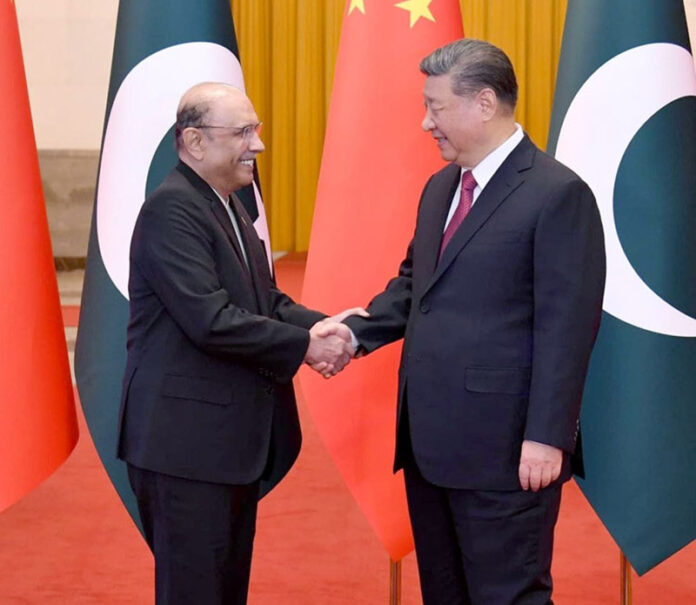
    The bilateral ties and cooperation were discussed as President Asif Ali Zardari, during his ongoing five-day state visit to China, met with President Xi Jinping, Premier Li Qiang, Chairman of the Standing Committee of the National People’s Congress Zhao Leji, according to a joint statement issued by the Foreign Office encompassing the discussions and agreements reached during the visit.

    “While the transformation not seen in a century is accelerating, the China-Pakistan relationship remains of strategic significance, and any attempt to disrupt or undermine it is bound to fail…The two sides agreed that the China-Pakistan All-Weather Strategic Cooperative Partnership is a choice by history and by the people, and enjoys broad support from all walks of life in both countries,” it said.

    During the visit, the two sides signed over a dozen documents covering cooperation on CPEC, trade, science and technology, people’s livelihoods, and media, etc. During his stay in China, President Zardari will also attend the opening ceremony of the Ninth Asian Winter Games.

    Besides enhancing cooperation in IT and emerging areas like artificial intelligence, big data and communication technology, the two sides agreed to expand cooperation in education, media, think tanks, youth, films and television to strengthen the bond between the two peoples and enhance mutual learning between civilizations.

    Pakistan and China agreed to conduct further consultation on trade liberalization under the framework of the Phase-II of China-Pakistan Free Trade Agreement, and actively explore the possible bilateral concessional arrangements based on the spirit of mutual benefit and win-win cooperation.Pakistani cuisine recipes

    It was also agreed to promote the implementation of the eight major steps on high-quality Belt and Road cooperation in Pakistan and jointly build a growth corridor, a livelihood-enhancing corridor, an innovation corridor, a green corridor and an open corridor, to create an upgraded version of CPEC, in line with Pakistan’s 5Es framework.

    Both sides reaffirmed to make efforts to advance the upgradation of ML-1 in a phased and secure manner and reiterated that the Karakoram Highway (Raikot-Thakot) realignment project is of great importance to the land connectivity between China and Pakistan, and agreed to reach an early consensus on its implementation and financing.

    Two sides believed that having withstood the test of changing international circumstances, the enduring partnership and iron-clad friendship between China and Pakistan transcended geopolitical interests. The two sides have always understood and supported each other, and have been deepening strategic mutual trust and practical cooperation.

    The Chinese side reiterated that the China-Pakistan relationship was a priority in its foreign relations and of special significance in China’s foreign policy. The Pakistani side also underscored that the Pakistan-China relationship was the cornerstone of its foreign policy.

    Pakistan highly commended and expressed strong support for the Global Development Initiative, the Global Security Initiative, and the Global Civilization Initiative put forth by President Xi Jinping. The two sides agreed to step up international cooperation in this regard to jointly tackle global challenges and foster a Community with a Shared Future for Mankind.

    President Zardari lauded the great development achievements made by the Chinese people and expressed firm support for the Chinese side in advancing the great cause of building a great modern socialist country in all respects.

    The Chinese side gladly noted Pakistan’s National Economic Transformation Plan (Uraan), applauding the new achievements attained by Pakistan in economic reform and national development and wished Pakistan stability, security, development and prosperity.

    The Pakistani side reaffirmed its firm commitment to the one-China principle, calling Taiwan an inalienable part of the territory of China and the Taiwan question the core of China’s core interests.

    “It firmly supports all efforts made by China to achieve national reunification and resolutely opposes all forms of “Taiwan independence.” Pakistan will also firmly support China on issues related to Xinjiang, Xizang, Hong Kong and the South China Sea.”

    The Chinese side reiterated its firm support for Pakistan in defending its national sovereignty, independence, and territorial integrity, and its support for Pakistan’s efforts to safeguard national security, stability, development and prosperity.

    Both countries believed that a peaceful and prosperous South Asia was in the common interest of all parties and reaffirmed the importance of maintaining peace and stability in South Asia and the need for resolution of all outstanding disputes, and their opposition to any unilateral action.

    The Pakistani side briefed the Chinese leadership on the latest developments in the situation in Jammu and Kashmir.

    The Chinese side reiterated that the Jammu and Kashmir dispute was left over from history and should be properly and peacefully resolved in accordance with the U.N. Charter, relevant U.N. Security Council resolutions and bilateral agreements.

    Pakistan and China agreed to strengthen high-level interactions, enhance exchanges and cooperation across various departments and at different levels between central governments, local authorities, legislative bodies and political parties, and carry out in-depth exchanges of governance experience.

    Pakistan reiterated its strongest condemnation of the terrorist attacks in Pakistan involving Chinese personnel and reaffirmed that ensuring the safety and security of Chinese personnel, projects and institutions in Pakistan was the foremost responsibility of Pakistani government as China’s All-weather Strategic Cooperative partner and the host country.

    “The Chinese nationals in Pakistan have made important contributions to Pakistan’s national construction and the improvement of people’s livelihoods and serve as a strong force helping boost Pakistan’s development, progress and prosperity.”

    The two sides reiterated their commitment to combating terrorism in all its forms and manifestations with a zero-tolerance attitude, and agreed to further strengthen bilateral and multilateral cooperation on counter terrorism.

    “The Pakistani side will continue to make all efforts to investigate into the terrorist attacks involving Chinese personnel and bring the perpetrators to justice. It will also further increase input into security, and take targeted and enhanced measures to effectively ensure the safety and security of Chinese personnel, projects and institutions in Pakistan, and create a safe environment for cooperation between the two countries,” it added.

    The Chinese side appreciated Pakistan’s unremitting efforts and tremendous sacrifices in combating terrorism and expressed its willingness to provide the necessary support for Pakistan’s counter-terrorism capacity building.

    Recalling the 13th CPEC Joint Cooperation Committee (JCC) meeting, the two sides reiterated the commitment to further leverage the JCC’s functions to strengthen alignment of ideas and coordination of actions for high-quality CPEC development.

    The two sides agreed to hold the 14th JCC meeting as early as possible at a mutually agreed date.

    Both sides welcomed the official inauguration of the new Gwadar International Airport, and reaffirmed their commitment to promoting the comprehensive development and operation of the Gwadar Port to further leverage its role as a multimodal logistics hub.

    The Pakistani side reiterated its commitment to continuing to improve its business environment and provide a favorable policy framework for Chinese investment. The two sides welcomed the active participation of third parties in CPEC cooperation.

    Pakistan and China expressed their willingness to encourage Chinese companies to engage in investment and cooperation in Pakistan’s mining industry and encourage relevant departments of both countries to carry out terrestrial and marine geological survey cooperation.

    The two sides agreed to further strengthen agricultural cooperation and select the next batch of projects under the CPEC framework.

    It was agreed that China would encourage its technology companies to actively expand their businesses in Pakistan to accelerate Science & Technology cooperation in the high-quality development of CPEC’s second phase and develop an innovation corridor.

    The two sides noted with satisfaction their ongoing collaborative efforts to leverage joint ventures in priority areas to enhance the export-oriented industry in Pakistan and encouraged Chinese companies with capabilities to invest in these sectors under the concept of win-win cooperation.

    It was agreed to strengthen joint support for Business-to-Business (B2B) cooperation in both countries and facilitate deeper exchanges and cooperation between business communities of the two countries.

    The Pakistani side reiterated its high appreciation for China’s valuable support for the fiscal and financial stability of Pakistan.

    Both sides reaffirmed their desire to further strengthen bilateral cooperation in the financial and banking sectors, and support each other within regional and international multilateral financial platforms.

    They agreed to continue to cooperate on people’s livelihood in areas such as healthcare, agriculture, education, climate response, and disaster prevention and alleviation, and to deliver more “small and beautiful” projects beneficial for the people.

    The Pakistani side spoke highly of the children’s congenital heart disease treatment project and health kits project carried out by the Chinese side in Pakistan.

    Both sides discussed ways to deepen cooperation in health sector, including in traditional and herbal medicine.

    The Chinese side expressed the readiness to actively support Pakistani students in learning the Chinese language as well as to explore avenues for promoting technical and vocational training.

    Both countries expressed satisfaction at the existing level of cooperation in space and agreed to advance and pursue further progress in this important area for socio-economic purpose.

    “The two sides expressed satisfaction that the two militaries have long enjoyed high-level of mutual trust, high-level cooperation, and high-level coordination. The two sides agreed to maintain the momentum of high-level military-to-military visits and exchanges, and to continuously elevate cooperation in areas of joint training, exercises and military technology.”

    They expressed satisfaction with their close cooperation at the U.N. and other multilateral fora, and expressed resolution to further deepen coordination on multilateral issues to uphold common interests of developing countries and international equity and justice.

    The two sides agreed to maintain close communication and coordination on the issue of Afghanistan, and play a constructive role in helping Afghanistan achieve stable development and integrate into the international community.

    They called on the Interim Afghan Government to take visible and verifiable actions to dismantle and eliminate all terrorist groups based in Afghanistan which continue to pose a serious threat to regional and global security, and to prevent the use of Afghan territory against other countries.

    The two sides welcomed the ceasefire agreement in Gaza, and hoped that the agreement would be implemented effectively, leading to a full and permanent ceasefire in Gaza.

    The two sides reaffirmed their support for the right of the Palestinian people to self-determination, including their right to establish an independent State of Palestine. The two sides will work with international community to make unremitting effort for peace and stability in the Middle East.

    President Zardari also invited President Xi Jinping to visit Pakistan at a mutually convenient time.

  • Rahim Al-Hussaini named as 50th Aga Khan after death of father

    Rahim Al-Hussaini named as 50th Aga Khan after death of father

    Prince Karim Al-Husseini, Aga Khan IV, the spiritual leader of the Ismaili community and known for his development work around the world, died in Lisbon at the age of 88, according to the Aga Khan Development Network on X.

    The 49th hereditary imam or spiritual leader of the world’s 15 million Ismailis, his name also became synonymous with success as a racehorse owner, with the thoroughbred Shergar among his most famous.

    The international jet setter — who held British, French, Swiss and Portuguese citizenship — poured millions into helping people in the poorest parts of the world.

    The Aga Khan Development Network and the Ismaili religious community announced earlier that His Highness Prince Karim Al-Hussaini, the Aga Khan IV and 49th hereditary imam of the Shia Ismaili Muslims, died surrounded by his family.

    It said his burial and will-reading will be held in the coming days, followed by an homage ceremony.

  • India’s finance ministry asks employees to not use ChatGPT, DeepSeek: Report

    India’s finance ministry asks employees to not use ChatGPT, DeepSeek: Report

    The government has cited the risk posed to the confidentiality of government documents and data behind the move.

    According to Reuters, reports of the advisory, dated January 29, surfaced on social media on Tuesday, ahead of OpenAI chief Sam Altman’s visit to India on Wednesday, where he is also due to meet the IT minister Ashwini Vaishnaw.

    “It has been determined that AI tools and AI apps (such as ChatGPT, DeepSeek etc.) in the office computers and devices pose risks for confidentiality of (government) data and documents,” the advisory by the union finance ministry said.

    Three unidentified finance ministry officials told Reuters that the note was genuine and that it had been issued internally this week.

    Representatives of the finance ministry, ChatGPT-parent OpenAI and DeepSeek, however, did not immediately respond to Reuter’s requests for comment.

    It is unclear whether other ministries of the union government have issued similar directives.

    Several countries around that world have placed similar restrictions or warning on the use of DeepSeek, citing data security risks.

    Earlier this week, Taiwan barred all of its government agencies and critical infrastructure service providers from using Chinese artificial intelligence startup DeepSeek’s technology, citing security concerns.

    Taiwan’s digital ministry said that no official or confidential information should be used to query DeepSeek, given its Chinese origins. “It is a product that endangers national information security,” the ministry’s statement said.

    ERMD/HT