Category: Featured

  • All eyes on Paris AI Summit: No one knows if Trump’s men can find common ground with China, 100 nations

    All eyes on Paris AI Summit: No one knows if Trump’s men can find common ground with China, 100 nations

    About a year after world powers reckoned with the dangers of AI in England’s Bletchley Park, a wider array of countries are gathering in Paris to discuss putting the technology to work.

    France, eager to promote its national industry, is hosting the AI Action Summit alongside India on Feb. 10 and 11, with a focus on areas where Europe’s second-largest economy has an advantage: freely available or “open-source” systems, and clean energy to power data centers.

    DeepSeek founder Liang Wenfeng gets hero’s welcome in Lunar New Year hometown visit

    Mitigating labor disruption and promoting sovereignty in a global AI market are also on the agenda.

    Top executives from Alphabet, Microsoft, OpenAI, and dozens of other businesses are slated to attend. Government leaders are expected to dine on Monday with select CEOs.

    It was less clear whether the U.S. will reach consensus with other nations on AI.

    U.S. Vice President JD Vance will attend for the American delegation.

    Trump calls China’s DeepSeek AI leap a ‘wake-up call’ for US tech

    A non-binding communiqué of principles for the stewardship of AI, bearing U.S., Chinese and other signatures, has been under negotiation and would mark a big achievement if reached, said the people involved in the summit.

    Safety commitments dominated the conversation in prior global AI summits in Bletchley Park and Seoul. In Paris, creating new regulation is not on the agenda.

    Europe and particularly France are eager to discuss frameworks for AI policy but not rules that could slow down their national champions, which have lagged American companies.

    Countries like France are evaluating how to implement the EU AI Act in as flexible a way as possible so it does not discourage innovation, the people involved in the summit said.

    Instead in focus is how to distribute AI’s benefits to developing nations, via cheaper models made by the likes of France’s startup Mistral and China’s DeepSeek.

    France has seized on the development as evidence that the global race to more powerful AI remains wide open.

    One of the summit’s likely outcomes is that philanthropies and businesses are expected to commit an initial $500 million in capital, going up to $2.5 billion over five years, to fund public-interest projects on AI around the world, the people said.

    Another is addressing the energy crunch that industry thinks is inevitable from their power-hungry AI models. A major producer of clean energy in the form of nuclear power, France wants to reconcile the world’s climate and AI ambitions.

    France’s decarbonized energy and “nuclear fleet, in the context of data center installations, is an asset,” the Élysée official said. “We will most likely have announcements in this regard at the summit.”

  • ‘Nissan may call off merger talks with Honda’

    ‘Nissan may call off merger talks with Honda’

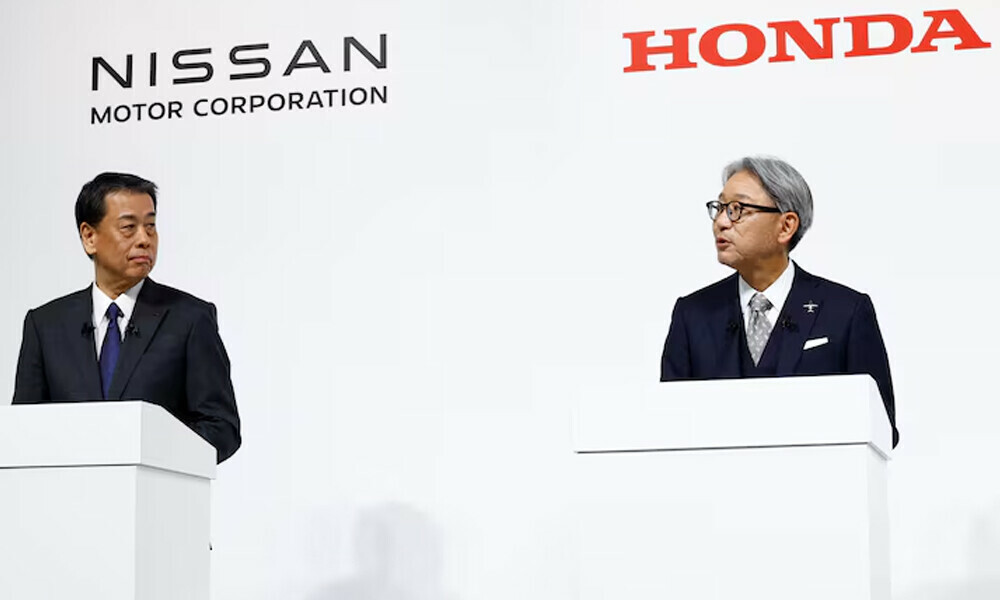
    Japan’s Nissan may call off its merger talks with Honda, according to a person familiar with the matter, adding that Nissan’s board members were due to meet in the near future to decide a course of action.

    The development puts in doubt a tie-up that would create the world’s third-largest automaker by sales and raises fresh questions about how hard-hit Nissan could ride out its latest crisis without external help.

    Reports of the merger talks ending sent shares of both carmakers higher on Wednesday, with Honda up more than 2% and Nissan up 1.6% against a slight decline in Tokyo’s Nikkei 225 index.

    Honda, Japan’s second-largest car maker, and Nissan, its third-largest, last year said they were in discussions to merge their businesses, in what would mark a pivotal change for an industry that faces a vast threat from China’s BYD and other new electric vehicle entrants.

    But those talks have been complicated by growing differences on both sides, according to two people familiar with the matter, both of whom declined to be identified because they were not authorised to speak to the media.

    Nissan’s board is due to soon meet to discuss calling off the merger talks after Honda sounded it out about becoming a subsidiary, one of the people said, adding that such an arrangement was a departure from the original spirit of their discussions.

    Honda, with a market value nearly five times bigger than Nissan, is increasingly worried about its smaller rival’s progress in its turnaround plan, said the other person.

    Japan’s Asahi Shimbun newspaper earlier reported that the merger could be called off.

    Spokespeople for both companies on Wednesday did not comment on whether merger talks were off, but said they would make an announcement in mid-February, as previously flagged.

    Nissan has been hit harder than some other carmakers by the shift to EVs, having never fully recovered after years of crisis sparked by the arrest and ouster of former Chairman Carlos Ghosn in 2018.

    The tie-up talks have coincided with the disruption posed by potential tariffs from U.S. President Donald Trump.

    Tariffs against Mexico would be more painful for Nissan than for Honda or Toyota, according to analysts.

    Nissan’s long-term alliance partner Renault had said it would be open in principle to the merger with Honda. The French automaker owns 36% of Nissan, including 18.7% through a French trust.

  • China denounces Trump tariff: ‘Fentanyl is America’s problem’

    China denounces Trump tariff: ‘Fentanyl is America’s problem’

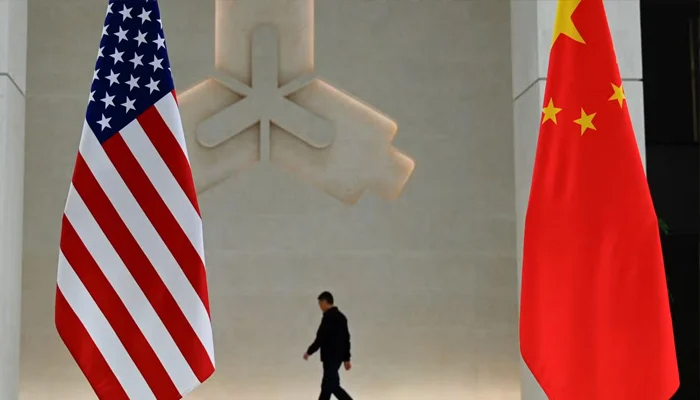
    Beijing will challenge President Donald Trump’s tariff at the World Trade Organization and take unspecified “countermeasures” in response to the levy, which takes effect on Tuesday, the finance and commerce ministries said.

    The response stopped short of the immediate escalation that had marked China’s trade showdown with Trump in his first term as president and repeated the more measured language Beijing has used in recent weeks.

    China’s commerce ministry said in a statement that Trump’s move “seriously violates” international trade rules, urging the US to “engage in frank dialogue and strengthen cooperation”.

    Trump launches trade war with tariffs on Mexico, Canada and China

    Filing a lawsuit with the WTO would be a largely symbolic move that Beijing has also taken against tariffs on Chinese-made electric vehicles by the European Union.

    For weeks Chinese Foreign Ministry spokesperson Mao Ning has said Beijing believes there is no winner in a trade war.

    China’s sharpest pushback on Sunday was over fentanyl, an area where the administration of Trump’s predecessor, Joe Biden, had also been urging Beijing to crack down on shipments of the China-made precursor chemicals needed to manufacture the drug.

    “Fentanyl is America’s problem,” China’s foreign ministry said.

    “The Chinese side has carried out extensive anti-narcotics cooperation with the United States and achieved remarkable results.” – Courtesy Reuters

  • Trump launches trade war with tariffs on Mexico, Canada and China

    Trump launches trade war with tariffs on Mexico, Canada and China

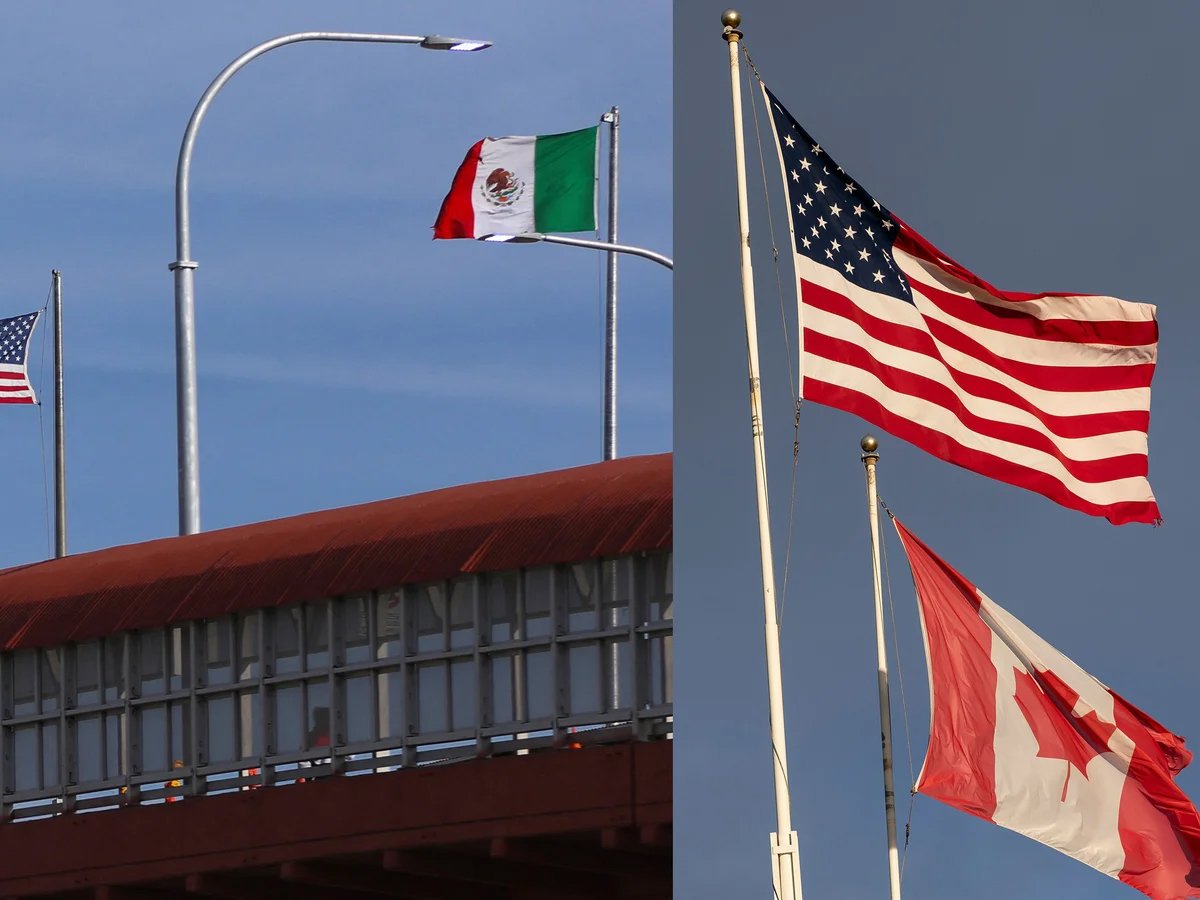
    Mexico and Canada, the top two U.S. trading partners, immediately vowed retaliatory tariffs, while China said it would challenge Trump’s move at the World Trade Organization and take other “countermeasures.”

    In three executive orders, Trump imposed 25% tariffs on Mexican and most Canadian imports and 10% on goods from China, starting on Tuesday.

    He vowed to keep the duties in place until what he described as a national emergency over fentanyl, a deadly opioid, and illegal immigration to the U.S. ends. The White House provided no other parameters for determining what might satisfy Trump’s demands.

    Responding to concerns raised by oil refiners and Midwestern states, Trump imposed only a 10% duty on energy products from Canada, with Mexican energy imports facing the full 25% tariff.

    Canadian Prime Minister Justin Trudeau said Canada would respond with 25% tariffs against $155 billion of U.S. goods, including beer, wine, lumber and appliances, beginning with $30 billion taking effect Tuesday and $125 billion 21 days later.

    No New Currency Against the Mighty Dollar, or Face 100% Tariffs, Warns Trump to BRICS Member Countries

    Trudeau warned U.S. citizens that Trump’s tariffs would raise their grocery and gasoline costs, potentially shutting down auto assembly plants and limiting supplies of goods such as nickel, potash, uranium, steel and aluminum. He urged his own citizens to forego travel to the U.S. and to boycott U.S. products.

    Mexican President Claudia Sheinbaum, in a post on X, said she was instructing her economy minister to implement retaliatory tariffs but gave no details.

    Canada and Mexico said they were working together to face Trump’s tariffs.

    China’s Commerce Ministry did not specify its planned countermeasures. Its statement left open the door for talks between Washington and Beijing.

    “China hopes that the US will view and handle its own fentanyl and other issues in an objective and rational manner,” it said, adding that Beijing wanted to “engage in frank dialogue, strengthen cooperation and manage differences.”

    A White House fact sheet said the tariffs would stay in place “until the crisis alleviated,” but gave no details on what the three countries would need to do to win a reprieve.

    At nearly $100 billion in 2023, imports of crude oil accounted for roughly a quarter of all U.S. imports from Canada, according to U.S. Census Bureau data.

    Automakers would be particularly hard hit, with new steep tariffs on vehicles built in Canada and Mexico burdening a vast regional supply chain where parts can cross borders several times before final assembly.
    The tariff announcement makes good Trump’s repeated threat during the 2024 presidential campaign and since taking office, defying warnings from top economists that a new trade war with the top U.S. trade partners would erode U.S. and global growth, while raising prices for consumers and companies.

    Republicans welcomed the news, while industry groups and Democrats issued stark warnings about the impact on prices.

    National Foreign Trade Council President Jake Colvin said Trump’s move threatened to raise the costs of “everything from avocados to automobiles” and urged the U.S., Canada and Mexico to find a quick solution to avoid escalation.

    The three countries should work together to “gain a competitive advantage and facilitate American companies’ ability to export to global markets,” Colvin said in a statement.

    Provincial officials and business executives in Canada also reacted with outrage, calling for forceful tariffs on imports from the U.S.

    Roughly 90 minutes after Trump’s announcement, the American national anthem was booed in the nation’s capital Ottawa ahead of the opening face-off at the Ottawa Senators and Minnesota Wild National Hockey League game. The Senators won 6-0.

    U.S. tariff collections are set to begin at 12:01 a.m. EST (0501 GMT) on Tuesday, according to Trump’s written order. But imports that were loaded onto a vessel or onto their final mode of transit before entering the U.S. before 12:01 a.m. Saturday would be exempt from the duties.

    Trump declared the national emergency under the International Emergency Economic Powers Act and the National Emergencies Act to back the tariffs, which allow the president sweeping powers to impose sanctions to address crises.

    Trade lawyers said Trump was once again testing the limits of U.S. legislation and the tariffs could face legal challenges, while Democratic lawmakers Suzan DelBene and Don Beyer decried what they called “a blatant abuse of executive power.”

    White House officials said there would be no exclusions from the tariffs and if Canada, Mexico or China retaliated against American exports, Trump would likely increase the U.S. duties.
    Nova Scotia’s Premier Tim Houston said he directed that all alcohol imported from the U.S. be removed from the province’s store shelves.

    The White House officials said that Canada specifically would no longer be allowed the “de minimis” U.S. duty exemption for shipments under $800. The officials said Canada, along with Mexico, has become a conduit for shipments of fentanyl and its precursor chemicals into the U.S. via small packages that are not often inspected by customs agents. — Courtesy Reuters

  • The surprising reason cities are losing the war on rats

    The surprising reason cities are losing the war on rats

    Now, we may be able to add another unexpected outcome of human-induced warming to that list:

    Rats. Lots and lots more rats.

    Urban rat populations are booming around the world due in large part to rising average temperatures, according to an analysis of 16 cities published Friday. The trend is most pronounced in Washington, D.C., followed by San Francisco, Toronto and New York.

    The findings have hairy implications for warming cities already struggling to deal with the destructive pests, which spread disease, contaminate food with urine and feces, bite people and pets, chew through wiring in homes and cars, and cause an estimated $27 billion in damage a year in the United States alone.

    “It gives cities a better picture of the uphill task that they face,” said Jonathan Richardson, an urban ecologist at the University of Richmond who led the work published in the journal Science Advances.

    ‘An infinite sea of rats’
    It’s hard out there for a rat. During the height of winter, the rodents flee underground or indoors, spending less time foraging for food to feed their young and grow their numbers.

    “For a small mammal, it’s pretty tough to make your living in the very cold winter months,” Richardson said.

    To assess whether milder temperatures alleviate that winter burden and allow rats to reproduce more, Richardson and his colleagues collected data on rat sightings over a dozen years in cities including Tokyo and Amsterdam. Sightings rose significantly in 11 of the 16 cities analyzed, a result unsurprising to those working in rodent management.

    Over the past decade, rat sightings in D.C. jumped by more than 300 percent, while in New York they went up by 162 percent, according to Richardson.

    “We live in an infinite sea of rats,” said Niamh Quinn, a human-wildlife interactions adviser at the University of California Division of Agriculture and Natural Resources who was not involved in the study.

    About 40 percent of the overall increase in rat sightings is linked to rising temperatures in cities, according to the analysis. Researchers also found that the more densely populated a city is, and the less green space it has, the more urban rats thrived.

    The research is the first to find a link between climate change and rat populations, said Kaylee Byers, an assistant professor and urban rat expert at Simon Fraser University in Canada.

    “It’s a question we’ve had for a while,” said Byers, who was not involved in the research. The study is “the first one of its kind,” she said, adding that she would like to see more research in labs on the physiology of rodents to see how they respond to temperature changes.

    Rooting out the rodents
    Of course, it’s more than just rising temperatures allowing rats to proliferate. Urban rodents thrive in areas with poor trash management, where broken garbage bags and open dumpsters offer rats a daily feast.

    Some cities are stepping up efforts to end the all-you-can-eat buffet. D.C. has a “rat academy” to train property managers and private exterminators to spot and attack infestations while rogue groups of dog owners root out rats with terriers. New York hired a “rat czar” to pilot a plan for securing trash in bins, where rodents can’t get it.

    But rat experts say none of this is enough. In the “war on rats,” the rodents are winning. It is hard to even know the scale of the problem because doing a census on an animal that is nocturnal and hides in sewers and alleys is difficult.

    “Hardly any cities are collecting data on rat numbers,” Quinn said. “If you were to look at the cities in the United States, a huge proportion of them don’t have any municipal planning for rats.”

    That lack of data forces researchers like Richardson to use the number of complaints to public health officials as a stand-in for rat populations in cities. But rat complaints, he said, are still “a pretty faithful proxy” for population size.

    Byers agreed. “It’s kind of the best data we have.”

    With temperatures poised to continue to rise and make rat infestations worse, the findings underscore how municipal governments need to move away from simply trying to poison rats and instead removing the food waste and debris that give them sustenance and shelter, Richardson said.

    “Understanding that climate warming may lead to a general increase in rats isn’t good news,” he said, “but it’s really important to know the challenges you’re facing ahead of time so that you can dedicate more resources to try to slow that trend.” — Courtesy WP

  • DeepSeek founder Liang Wenfeng gets hero’s welcome in Lunar New Year hometown visit

    DeepSeek founder Liang Wenfeng gets hero’s welcome in Lunar New Year hometown visit

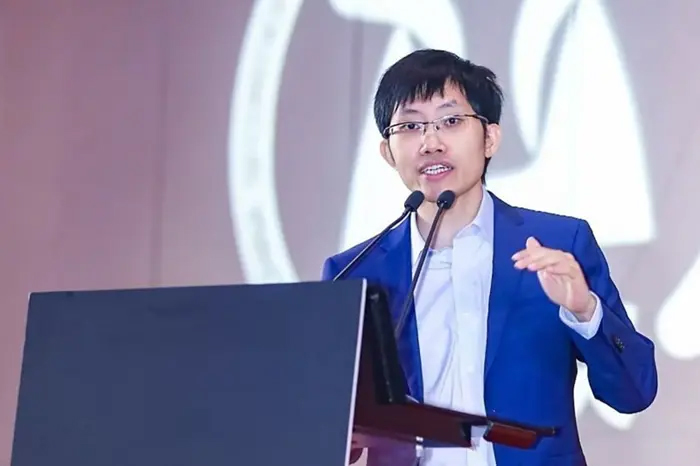
    Wenfeng visited his hometown for the Lunar New Year holiday, according to local media and social media posts, as the Chinese start-up remains under the spotlight for its impact on the artificial intelligence (AI) industry.

    Liang, 40, returned to Mililing village in Zhanjiang, a port city in southern Guangdong province, where a red banner was raised hailing the low-profile tech entrepreneur as “hometown pride” for bringing honor to the local community, according to social media posts.

    His visit on Lunar New Year’s Eve marked the day when Chinese families traditionally hold reunions during this national public holiday.

    It also raised the profile of Liang’s hometown, which has turned into a tourist attraction based on its DeepSeek connection, amid an influx of domestic visitors to the remote village, according to a report by Yangcheng Evening News, a state-backed publication based in Guangzhou, capital of Guangdong.

    Hangzhou-based DeepSeek sent shockwaves through Wall Street and Silicon Valley for developing AI models at a fraction of the cost and computing power that US tech firms like OpenAI, Google, and Meta Platforms typically invest in such projects.

    The heightened domestic and international attention given to DeepSeek and its founder reflects the AI community’s admiration for the firm’s low-cost development of world-class models – which either surpassed or matched the performance of rival products across a range of industry benchmark tests – despite tightened US restrictions on China’s access to advanced semiconductors and related technologies.

    An unidentified fellow Mililing villager was quoted by Yangcheng Evening News as saying that Liang was gifted growing up there, adding that “he taught himself senior high-school math when he was still a junior.”

    During the 2002-2010 period when he studied at Zhejiang University, Liang developed an interest in applying machine-learning technology to quantitative trading.

    In 2015, Liang founded High-Flyer Quant, which uses deep-learning algorithms to run what has become one of the largest quantitative hedge funds in mainland China. In 2023, the company spun off DeepSeek as an independent enterprise.

    There are certain similarities between Liang and Jim Simons, the American quantitative hedge fund manager and mathematician, according to journalist Gregory Zuckerman, who wrote a book about the US billionaire titled The Man Who Solved the Market.

    Liang apparently draws inspiration from Simons and agreed to write the preface to the book’s Chinese edition, Zuckerman reported in The Wall Street Journal.

    “The publication of this book unravels many previously unresolved mysteries and brings us a wealth of experiences to learn from,” Liang wrote in the preface.

    Liang also pointed out that whenever he encounters difficulties at work, he recalls Simons’ words: “There must be a way to model prices.” – SOUTH CHINA MORNING POST

  • No New Currency Against the Mighty Dollar, or Face 100% Tariffs, Warns Trump to BRICS Member Countries

    No New Currency Against the Mighty Dollar, or Face 100% Tariffs, Warns Trump to BRICS Member Countries

    President Donald Trump on Thursday warned off BRICS member countries from replacing the U.S. dollar as a reserve currency by repeating a 100%-tariffs threat he had made weeks after winning the November presidential elections.

    “We are going to require a commitment from these seemingly hostile Countries that they will neither create a new BRICS Currency, nor back any other Currency to replace the mighty U.S. Dollar or, they will face 100% Tariffs,” Trump said on Truth Social in a statement nearly identical to one he posted on Nov. 30.

    At the time, Russia said that any U.S. attempt to compel countries to use the dollar would backfire.

    The BRICS grouping includes Brazil, Russia, India, China, and South Africa and a few other countries that joined in the past couple of year.

    The grouping does not have a common currency, but long-running discussions on the subject have gained some momentum after the West imposed sanctions on Russia over the war in Ukraine.

    “There is no chance that BRICS will replace the U.S. Dollar in International Trade, or anywhere else, and any Country that tries should say hello to Tariffs, and goodbye to America!,” he said.

    Trump posted his warning to the BRICS as Canada and Mexico await for his decision to follow through on a pledge to impose 25% tariffs on the United States’ North American trading partner from Feb. 1.

    Trump wants to use tariffs as a tool to get Mexico and Canada to help stem the flow of illegal drugs into the United States, particularly the deadly opioid fentanyl, and also migrants crossing illegally into the U.S.

    Dollar dominance — the outsized role of the U.S. dollar in the world economy — has strengthened of late, thanks to the robust U.S. economy, tighter monetary policy and heightened geopolitical risks, even as economic fragmentation has boosted a push by BRICS countries to shift away from the dollar into other currencies.

    A study by the Atlantic Council’s GeoEconomics Center last year showed that the U.S. dollar remains the world’s primary reserve currency, and neither the euro nor the so-called BRICS countries have been able to reduce global reliance on the dollar.

    The acronym BRIC, which did not initially include South Africa, was coined in 2001 by then Goldman Sachs chief economist Jim O’Neill in a research paper that underlined the growth potential of Brazil, Russia, India and China.

    The bloc was founded as an informal club in 2009 to provide a platform for its members to challenge a world order dominated by the United States and its Western allies. South Africa was the first beneficiary of an expansion of the bloc in 2010 when the grouping became known as BRICS.

    The group added Egypt, Ethiopia, Iran and the United Arab Emirates in 2023, and Indonesia became member earlier this month.

  • Avride partners with Grubhub to roll out food delivery robots

    Avride partners with Grubhub to roll out food delivery robots

    Autonomous technology startup Avride said on Thursday it has partnered with food delivery company Grubhub to deploy its robots on college campuses across the United States.

    Companies and colleges began testing sidewalk delivery robots after the pandemic started, aiming to address labor shortages, cut costs, and reduce dependence on cars for deliveries.

    Avride’s first fleet of 100 robots is active at Ohio State University, where it also plans to introduce its next-generation models, the startup said.

    The university also uses robots from other startups such as Cartken and now exclusively relies on robot deliveries.

    “Campuses are almost ideal environments for introducing automation in delivery. They are relatively small areas, with a high density of orders, that is where robots shine the most right now,” Avride CEO Dmitry Polishchuk told Reuters.

    Polishchuk added that the company has seen strong interest and demand for robots on U.S. campuses.

    Companies such as Avride and Serve Robotics have been cementing partnerships with ride-hailing and delivery startups to commercialize robotic food delivery.

    In October, Avride said it would partner with Uber and its delivery unit for food deliveries and robotaxi services.

    Austin, Texas-based Avride, which has already made 200,000 deliveries across five countries, was founded in 2017. The startup was previously part of the self-driving division of Russian company Yandex, from which it separated last year following corporate restructuring.

  • India IT minister praises DeepSeek’s low-cost AI, compares it with own investment approach

    India IT minister praises DeepSeek’s low-cost AI, compares it with own investment approach

    India announced a $1.25 billion AI investment in March, dubbed IndiaAI mission, which includes funding for AI startups and developing its own AI infrastructure.

    “Some people question the amount of investments the government has committed in (IndiaAI mission). You have seen what DeepSeek has done? $5.5 million and a very very powerful model. Because, the use of brain,” Ashwini Vaishnaw said on Tuesday at an event in the eastern state of Odisha.

    Alibaba releases AI model it claims surpasses DeepSeek-V3

    DeepSeek has triggered a dramatic rethink on artificial intelligence spending around the world, claiming it took just two months and cost under $6 million to build an AI model using Nvidia’s less-advanced H800 chips.

    Downloads of its app recently surpassed OpenAI’s ChatGPT on Apple’s App Store, while the cost and performance of its tools upended industry beliefs that China was years behind US rivals in the AI race.

    Vaishnaw’s statement appeared to target comments made by OpenAI’s Sam Altman during a visit to India last year, when he cast doubt on the possibility of an Indian team being able to build a substantial model in the OpenAI space with a $10 million budget.

    Italian startup Exein to supply cybersecurity for chips to MediaTek

    “The way this works is we’re going to tell you it’s totally hopeless to compete with us on training foundation models. You shouldn’t try. And it’s your job to like try anyway. And I believe both of those things,” he said, comments which are now in focus again on online platforms such as X after DeepSeek’s success.

    Altman is due to visit India again on February 5, just as his company is currently locked in a court battle in the country with digital news and book publishers over copyright breaches.

  • Alibaba releases AI model it claims surpasses DeepSeek-V3

    Alibaba releases AI model it claims surpasses DeepSeek-V3

    The unusual timing of the Qwen 2.5-Max’s release, on the first day of the Lunar New Year when most Chinese people are off work and with their families, points to the pressure Chinese AI startup DeepSeek’s meteoric rise in the past three weeks has placed on not just overseas rivals, but also its domestic competition.

    “Qwen 2.5-Max outperforms … almost across the board GPT-4o, DeepSeek-V3 and Llama-3.1-405B,” Alibaba’s cloud unit said in an announcement posted on its official WeChat account, referring to OpenAI and Meta’s most advanced open-source AI models.

    The Jan. 10 release of DeepSeek’s AI assistant, powered by the DeepSeek-V3 model, as well as the Jan. 20 release of its R1 model, has shocked Silicon Valley and caused tech shares to plunge, with the Chinese startup’s purportedly low development and usage costs prompting investors to question huge spending plans by leading AI firms in the United States.

    But DeepSeek’s success has also led to a scramble among its domestic competitors to upgrade their own AI models.

    Two days after the release of DeepSeek-R1, TikTok owner ByteDance released an update to its flagship AI model, which it claimed outperformed Microsoft-backed OpenAI’s o1 in AIME, a benchmark test that measures how well AI models understand and respond to complex instructions.

    This echoed DeepSeek’s claim that its R1 model rivalled OpenAI’s o1 on several performance benchmarks.