Category: Featured

  • Vietnamese scientists discover new snail species in world’s largest cave

    Vietnamese scientists discover new snail species in world’s largest cave

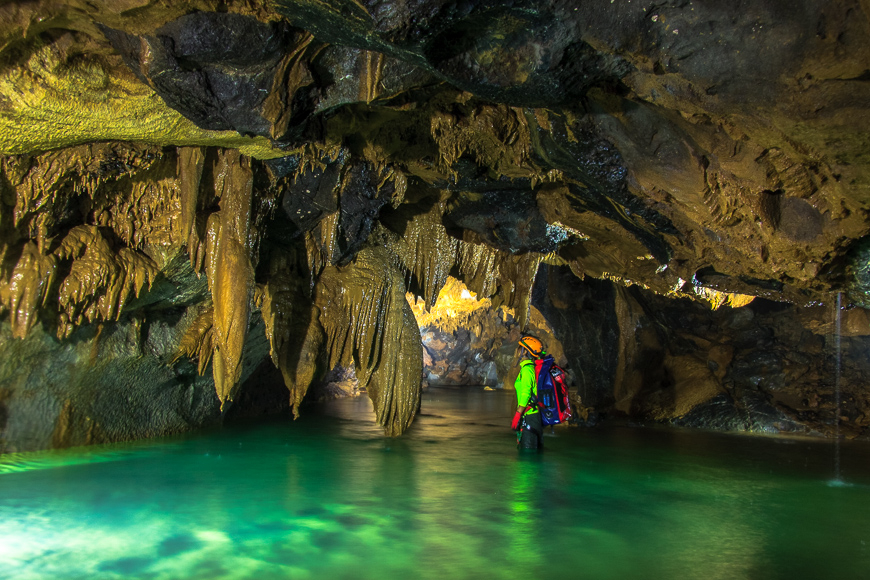
    This land snail species, scientifically called Calybium plicatus sp. nov., belongs to the Calybium genus, the Helicinidae family, the Cycloneritida order, and the Gastropoda class, within the Animalia kingdom.

    It was found during a state-level project to research biodiversity in the Son Doong Cave system for conservation and sustainable development, implemented by the Vietnam Museum of Nature under the Vietnam Academy of Science and Technology.

    Deputy General Director of the museum and the project leader, Associate Professor Dr Vu Van Lien, said that Calybium plicatus sp. nov. has a shell resembling that of Calybium massiei Morlet, 1892, but it is smaller in size and has six evenly spaced top plates on the apex. This discovery marks the first recorded species of land gastropods in Vietnam.

    The research results on the new species have been published in the Ruthenica Journal, Volume 35, Issue 1 (2025), enhancing the scientific value and international attention on the unique ecosystem of the Phong Nha – Ke Bang National Park, said Dr Lien.

    Pham Hong Thai, Director of the park’s Management Board, praised the research, noting that it provides crucial scientific contributions that will help the park manage and protect Son Doong Cave and the surrounding caves sustainably.

    The project has also created a comprehensive biodiversity database for the Son Doong cave system and surrounding areas, reinforcing the park’s global significance not only in geological and scenic terms but also in biodiversity and unique aesthetic values, he added.

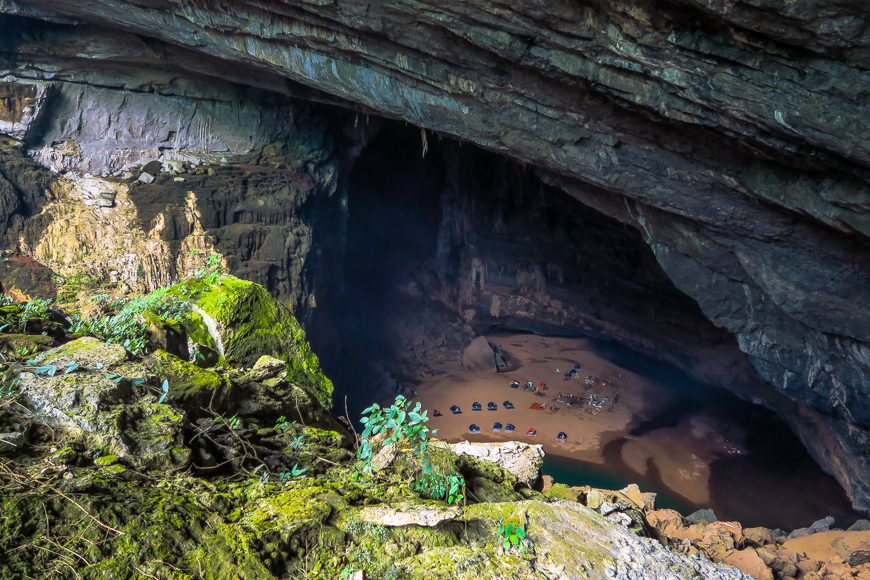
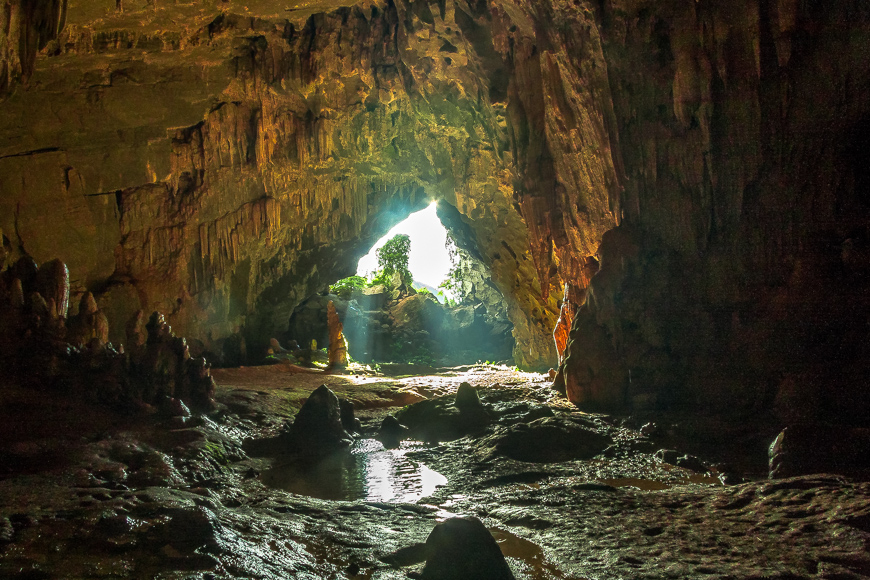
    Son Doong Cave, located in the Phong Nha – Ke Bang forest in Quang Binh, was first discovered by a local resident in 1990. In 2009, it was explored and confirmed by the British Cave Research Association as the largest cave in the world. Since its discovery, Son Doong has captivated the world with its enormous size and unique cave formations that are unmatched anywhere. (Want to know more? Wait a bit. Read after this this story.

    The Phong Nha – Ke Bang National Park currently records 2,954 species of higher plants, belonging to 1,007 genera, 198 families, 63 orders, 12 classes, and six phyla, including 111 species in Vietnam’s Red Data Book of Threatened Species, and 121 in the International Union for Conservation of Nature (IUCN) Red List.

    It also records 1,399 animal species from 835 genera, 289 families, 66 orders, 12 classes, and four phyla, including 82 species in Vietnam’s Red Data Book and 116 in the IUCN Red List.

    HANOI: Bernama-VNA

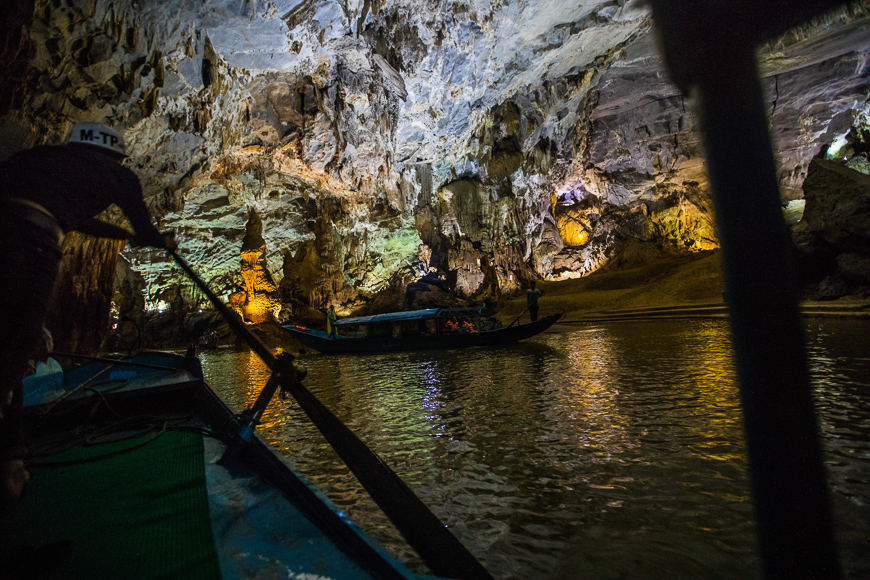
    Phong Nha is an adventurer’s paradise. Millions of years of flooding have chiseled out the world’s largest caves, meandering rivers entwine ancient karsts, and jungle-clad mountains lend an otherworldly atmosphere.

    Colossal caves may be the main draw, but linger a little longer and Phong Nha-Ke Bang National Park will reveal hiking trails, countryside lanes, and rivers perfect for kayaking. Although this is Vietnam’s top adventure destination, Phong Nha is still in the early stages of development. Now is the time to come. The caves are pristine, the locals are friendly, and you’ll feel like you have the wilderness all to yourself.
  • Malaysia targets to register 5,000 startups this year, says minister

    Malaysia targets to register 5,000 startups this year, says minister

    He said the target was in line with the Malaysia Startup Ecosystem Roadmap (Super) 2021-2030 and noted that there are currently 4,415 startups registered.

    “We are on track and we are close to our target but of course, we hope we can achieve more,” he told reporters after the launch of Versa Quests, a feature in the Versa app, a digital wealth management platform.

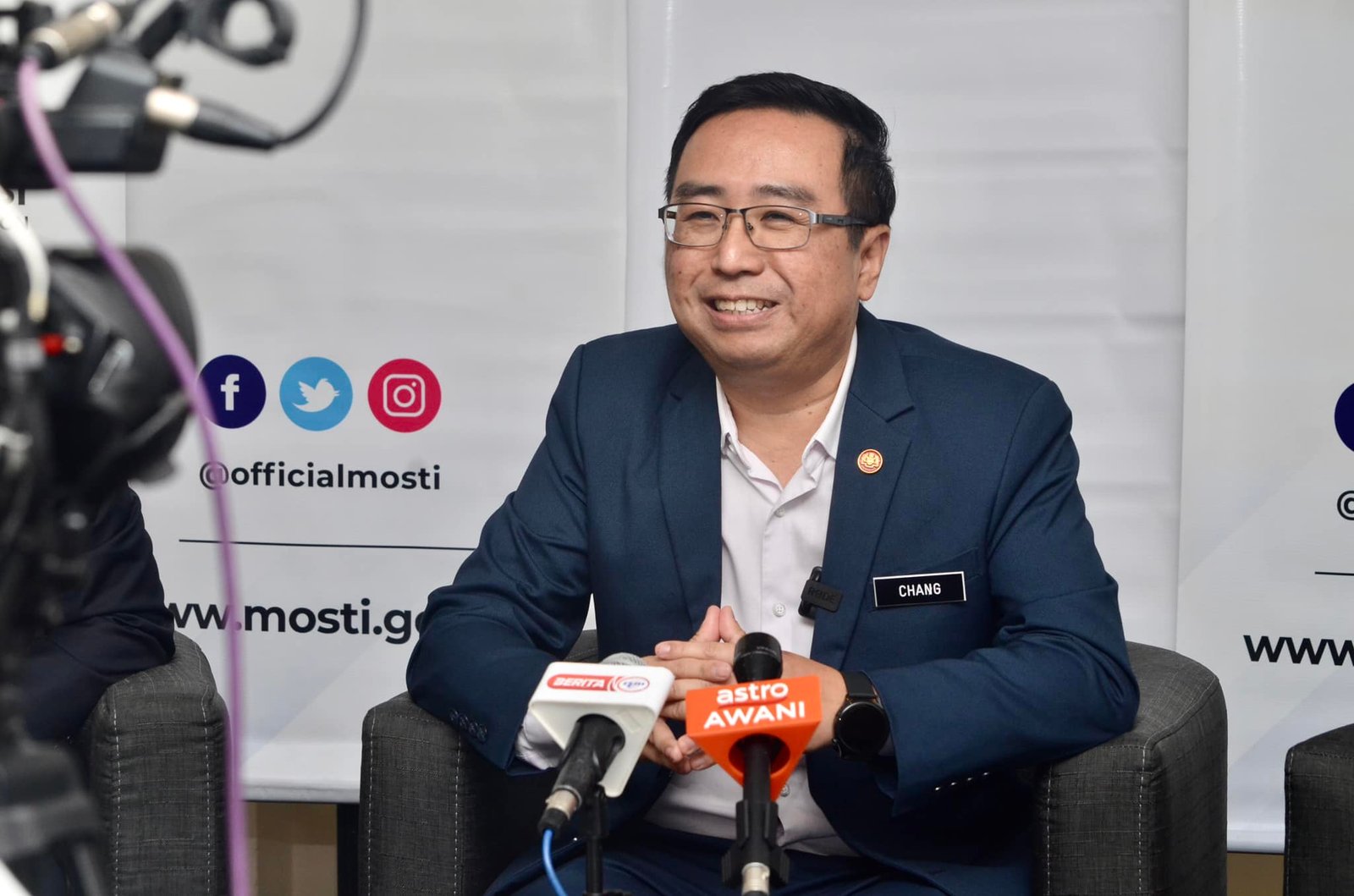
    Chang said in order to further support the growth of homegrown startups like Versa, the ministry was committed to assist companies by providing coaching to connect them with potential investors and customers. He said the ministry offers grants, including CIP SPARK and CIP SPRINT, through Cradle Fund to eligible companies.

    Meanwhile, Versa chief executive officer Teoh Wei Xiang said the launch marks the company’s first step in evolving from a transactional platform to an experiential one as it incorporated ‘quests’ and gamification into the platform, making learning about finance and managing wealth more enjoyable.

    Versa Quests is designed to make saving money more rewarding for users. By participating in various challenges known as ‘quests’, users can stack multiple ‘booster rewards’ which enable them to achieve higher net returns on their Versa Cash or Versa Cash-i account.

    In a span of three years, Versa has grown to nearly 300,000 users, with over RM500mil in assets managed in 2024.

    Versa’s ambassador Khairy Jamaluddin said that Versa Quest resonates with his personal objective, which is to make sure that young Malaysians have the opportunity to save and invest.

    “I myself use Versa. I invested, meaning I save my money in Versa and many products in Versa are Shariah compliant, so this increases confidence, especially among Muslim investors in Malaysia,” he said. Earlier, the launch of Versa Quests was officiated by Tengku Arif Temenggong Pahang Tengku Fahd Mua’adzam Shah Sultan Ahmad Shah.

    Courtesy The Star

  • Chinese, Pakistani companies sign $1.6 bn MoUs on medical equipment

    Chinese, Pakistani companies sign $1.6 bn MoUs on medical equipment

    The event, held on Friday in Beijing, saw the Silk Road Assistance Industrial Internet Platform, a provider of advisory services for cross-border businesses, enter into agreements with Pakistan’s dental and surgical instrument manufacturer Sawuat and the Chinese pharmaceutical company UPH Biopharma.

    As reported by China Economic Net (CEN), this collaboration aims to encourage more Chinese companies to engage in trade and establish joint ventures in Pakistan’s medical instrument sector.

    Sunny Yang, the platform’s Chief Technology Officer, told CEN that Pakistan’s vast market, tax incentives, and European-standard regulations give it a competitive edge in attracting international investment. “Pakistan’s medical industry can be further advanced through collaboration with China,” he said. While Pakistan excels in equipment and instruments, there is significant potential for improvement in areas like image documentation. By combining efforts, Chinese technology can help Pakistan build its brand and ascend the global value chain.”

    Ahsan Iqbal Declares Alsons Group as the First Champion of Uran Pakistan

    Pakistan is home to the world’s fifth-largest medical manufacturing hub in Sialkot, and exports over 80% of its domestic production. Its low production costs and strategic location, linking Central Asia and the Middle East, offer attractive opportunities for international companies. Additionally, Pakistan supplies inexpensive medical raw materials and primary products to other countries for processing and export.

    “Pakistan has abundant raw material resources and a large labor force. With significant strengths in medical consumables such as surgical instruments, the demand for high-value medical products is steadily increasing,” stated Zhou Hui, Chairman of the China Chamber of Commerce for Import and Export of Medicines and Health Products.

    He advised Pakistani enterprises seeking cooperation with China to stay informed about Chinese regulations on medical devices and pharmaceuticals. “The Chamber will continue to provide consulting services to support the entry of Pakistani medical products into the Chinese market,” he added.

    Dr. Muhammad Shahbaz, President of the China-Pakistan Medical Association, shared that he is working on establishing a China-Pakistan Friendship Hospital in Islamabad and a joint medical technology park in Pakistan. During the conference, his association reached an agreement with a technology company based in Hangzhou, China, to trade medical equipment, establish joint ventures, and transfer technology.

    The conference, organized by the Pakistani Embassy in China, attracted over 120 companies from both countries. This event marks the conclusion of the first series of seven B2B events held since Pakistan’s Prime Minister visited China last June. Another seven roadshows are planned to begin next month, focusing on 14 priority sectors and creating additional opportunities for collaboration between businesses in both countries.

  • National climate goals: Faisalabad Chamber leaders meet PM’s climate change advisor

    National climate goals: Faisalabad Chamber leaders meet PM’s climate change advisor

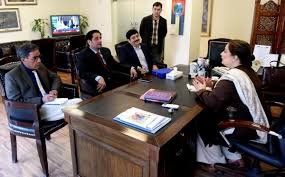
    Coordinator to the Prime Minister for Climate Change, Romina Khurshid Alam has urged the business community to adopt environmentally responsible practices and support Pakistan’s national climate goals.

    During a meeting with two-member delegation of Faisalabad Chamber of Commerce and Industry (FCCI) led by its president, Rehan Naseem Bharara, Alam suggested to convene all Pakistan chambers roundtable conference aimed at raising awareness on carbon credit initiatives and engage the private sector about the importance of transitioning to clean energy and integrating sustainable practices into business operations.

    2024 on track to be the first year to exceed 1.5ºC above the pre-industrial average

    Romina highlighted that the government is committed to addressing the climate crisis through comprehensive policies focused on reducing carbon emissions and promoting sustainable development across industries.

    “Climate change is an immediate challenge that requires urgent action from all sectors of society, including the business community,” Ms. Alam said during the meeting and added: “We need businesses to step up and lead by adopting energy-efficient technologies, reducing waste, and implementing environmentally responsible production processes.”

  • Pakistan launches first home-made observation satellite

    Pakistan launches first home-made observation satellite

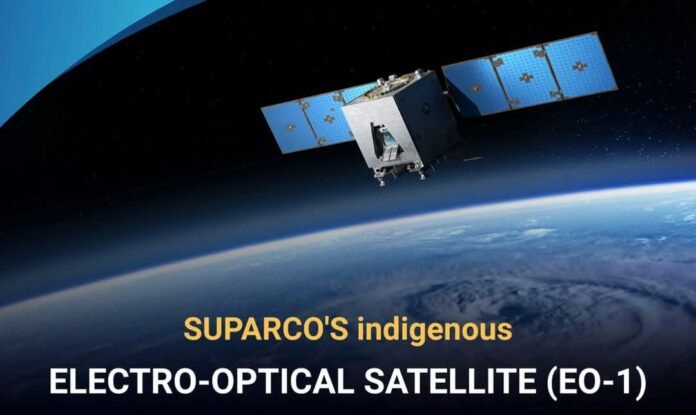
    The PRSC-EO1 satellite will boost Pakistan’s ability to monitor and manage natural resources, respond to disasters, and improve urban planning and agricultural development, the Space and Upper Atmosphere Research Commission (SUPARCO) said in a statement.

    This type of satellite uses electro-optical sensors to collect data and images of the Earth’s surface by detecting and measuring reflected sunlight or emitted radiation.

    SUPARCO’s Indigenous Electro-Optical Satellite (EO-1) to be launched on Jan 17

    China’s Long March-2D carrier rocket also launched on Friday two other satellites, Tianlu-1 and Blue Carbon 1, into orbit along with the PRSC EO1, China Aerospace Science and Technology Corporation said.

    “Spearheaded by SUPARCO, this demonstrates our nation’s growing capabilities in space science and technology,” said Prime Minister Shehbaz Sharif.

    Currently valued at $5 billion, the earth observation satellite market is among the fastest growing sectors within the commercial space industry, with Novaspace predicting it to exceed $8 billion by 2033.

    Countries including the United States, China and India have been building their own government and private satellite constellations to map the Earth. Indian startup Pixxel this month launched the country’s first privately built satellite constellation. – Courtesy Reuters

  • Taiwan takes a further step in production of AI chips with advanced new plant

    Taiwan takes a further step in production of AI chips with advanced new plant

    The opening ceremony for the Tan-Ke factory in the central city of Taichung was attended by Jensen Huang, CEO and co-founder of California-based Nvidia Corp., a world leader in the design of AI chips, reinforcing the companies’ partnership in the production of advanced AI chips.

    SPIL is a leader in semiconductor  packaging and testing.

    “The technology that we’re working on is becoming more sophisticated. Chips are getting more and more complex, and the packaging technology will need to evolve as well. What’s even more exciting is the integration of silicon photonics, enabling us to connect multiple packages into one massive system,” Huang said.

    He said Nvidia’s partnership with SPIL would be instrumental in pushing the boundaries of innovation in coming years.

    Huang also addressed the broader implications of AI development, saying that AI combined with robotics will bring tremendous benefits to Taiwan’s world-leading electronics industry.

    SPIL expressed enthusiasm for the collaboration, stating that Huang’s visit highlights the strong relationship between the two companies.

    Huang also was to visit Taiwan Semiconductor Manufacturing Co. Ltd., or TSMC, the world’s largest independent contract manufacturer of semiconductors.

    Huang’s visits reflect the critical role Taiwan plays in the global AI supply chain and underscores the growing importance of partnerships between technology leaders like Nvidia and key Taiwanese players in the semiconductor industry.

    The Biden administration has proposed a new framework for exports of the advanced computer chips used to develop AI, an attempt to balance national security concerns with the economic interests of producers and other countries.

    Part of the motivation is to make it “harder for China to circumvent existing restrictions that were focused on China,” said Johannes Himmelreich, a professor who researches AI policy at Syracuse University.

    Chip companies have criticized the policy as hastily drawn up and potentially damaging to the industry.

    Because the proposed framework includes a 120-day comment period, the incoming Republican administration could ultimately determine the rules for sales abroad of advanced computer chips designed mostly by California companies such as Nvidia and AMD but manufactured in locations such as Taiwan and South Korea. – Courtesy TechXplore

  • Suzuki Motor president says India to be global production hub for EVs

    Suzuki Motor president says India to be global production hub for EVs

    The company said its Indian subsidiary will be the largest manufacturing hub for global exports—for both internal combustion engine (ICE) vehicles and electric cars. The company does not see any threat from competitors, including its partner as well as rival Toyota Motor, in its aim to achieve 50 percent market share.

    Toshihiro Suzuki, Representative Director and President, Suzuki Motor Corporation (SMC) told reporters here that the company will also be launching affordable small electric vehicles (EVs) in the future as India still has a big potential for small cars with more than one billion two-wheeler customers likely to upgrade to a small car.

    “India is now the third largest automobile market in the world, hence the entire world is looking at it. So, naturally the competition is getting intense/ tougher, but Maruti Suzuki India (MSIL) would like to respond with products, services, and marketing. By making efforts in these areas, we would like to expand our market share to 50 per cent,” Suzuki was quoted as saying by media.

  • SUPARCO’s Indigenous Electro-Optical Satellite (EO-1) to be launched on Jan 17

    SUPARCO’s Indigenous Electro-Optical Satellite (EO-1) to be launched on Jan 17

    According to the SUPARCO, the launch of the indigenous EO-1 mission reflects SUPARCO’s dedication and expertise in advancing Pakistan’s technological capabilities in space science and innovation.


    This indigenously developed satellite represents a significant achievement in Pakistan’s space technology journey and is poised to enhance the country’s ability to monitor and manage natural resources, predict and respond to natural disasters, support food security, and drive economic growth through informed decision-making and sustainable development.


    The EO-1 satellite offers substantial benefits across various sectors in Pakistan. In agriculture, it will enable precision farming by monitoring crops, assessing irrigation needs, predicting yields, and supporting food security initiatives.


    For urban development, the satellite will assist in tracking infrastructure growth, managing urban sprawl, and aiding city and regional planning efforts. In environmental monitoring and disaster management, it will provide timely updates on floods, landslides, earthquakes, deforestation, and land erosion.


    Additionally, it will support extraction and conservation strategies for natural resources, including monitoring of minerals, oil and gas fields, glacier recession, and water resources.
    The launch of the EO-1 satellite marks a momentous milestone in Pakistan’s space journey.


    This achievement is set to position advanced space technology capabilities at the forefront of national progress and development, aligning with the goals of National Space Policy.

  • Charge your smartphones in just two seconds

    Charge your smartphones in just two seconds

    The Swippitt is an innovative device designed to recharge a smartphone extremely quickly. But since the promise of charging your smartphone in two seconds seems a little too good to be true, there’s inevitably a catch.

    In fact, it’s not your smartphone that’s being recharged here, but an external battery built into a dedicated case. So it’s not the smartphone alone that you insert into the device, but the handset equipped with its “Link” case, which houses an additional battery. This battery then gets swapped at lightning speed for a new, full one once inside the Swippitt.

    The device looks like a toaster, into which you slide your smartphone and in which the battery swap takes place. In fact, it’s a veritable docking station that can accommodate and charge several 3,500 mAh batteries simultaneously. This means that several people in the same household could switch their batteries in no time at all.

    This ingenious system of interchangeable batteries enables almost instantaneous recharging. At present, the system is only compatible with iPhone 14, 15 and 16, with a view to its rapid expansion to Android-based devices. A mobile application accompanies the device, enabling users to monitor the charge level of the various batteries.

    The concept of “recharging” your smartphone in two seconds is more than appealing, but ultimately, all that’s going on here is swapping a depleted removable battery for a fully-charged one.

    While we’re still a long way from being able to charge smartphone batteries in a matter of seconds, progress in this area has been quite spectacular in recent years, especially on the part of Chinese manufacturers.

    In 2024, Realme unveiled a 320W fast-charging technology capable of fully recharging a 4,420 mAh battery in less than five minutes. Xiaomi and Oppo also offer technologies capable of fully recharging a (high-end) handset in less than 10 minutes. The Consumer Electronic Show (CES) runs until Jan 10, 2025, in Las Vegas.

  • Not Indus alone, all five rivers make it a complete system

    Not Indus alone, all five rivers make it a complete system

    A known agriculturist and the Vice Chancellor of Sindh Agriculture University (SAU) Tandojan Sindh Dr. Altaf Sial says we often focus on the Indus River as if the Chenab and Jhelum Rivers are of no consequence. In reality, all five rivers (Indus, Chenab, Jhelum, Ravi, and Sutlej) are interconnected. If these supplementary rivers are blocked or diverted, the Indus will ultimately be affected.

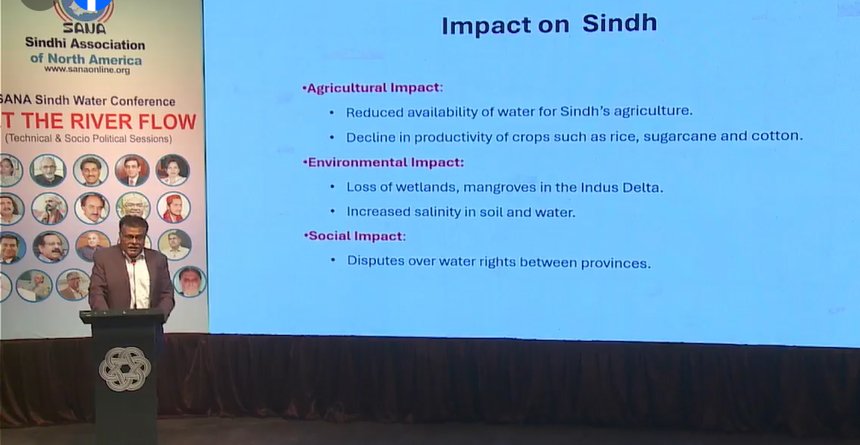
    Making a GIS Analysis of Proposed Strategic Canals in a program organized by diaspora Sindhis Association of North America (SANA) in Karachi, Dr. Sial said: We are raising objections to the construction of strategic canals, but many of us are unaware of their locations, where they start, or where they discharge. To help, I’ve compiled information about the geographic locations of these canals and will outline their potential impacts.

    Some of these canals, like the Reni Canal and the Kachi Canal, were first excavated in 2001, but many of us have been unaware of their existence. Although they are not new, work is ongoing to extend them.

    Currently, we have 19 barrages and a significant number of lined canals and watercourses. This extensive lining is contributing to the depletion of our fresh water aquifers in Sindh. Why wouldn’t our underground water resources decrease if everything is lined? The lining has effectively choked natural recharge systems, and this was done without fully assessing the environmental consequences. As a result, the river is drying, and the recharge of underground water resources has been halted, a situation that could worsen further.

    Out of the six proposed strategic canals, the Jalalpur Canal stands out as a major concern. This canal, which is under construction, takes off from the Rasool Barrage on the Jhelum River, and will cost Rs. 32.72 billion. Satellite images already show its progression. The canal will carry 13,500 cusecs of water and will have a command area of 170,000 acres. As a perennial canal, it will draw water year-round, which could have significant consequences.

    Next is the Greater Thal Canal. It is often confused with the Thal Canal, but they are two separate projects. The Thal Canal takes off from the Chashma-Link Canal, while the Greater Thal Canal is a seasonal canal, designed with several minor canals. It will carry 8,500 cusecs and irrigate lands in Khush, Layyah, Bhakar, and Jhang districts.

    Link canals, such as the CJ and TP canals, were originally intended to supplement rivers that were allocated to India under the 1960 Indus Basin Treaty. These canals were supposed to operate only during the flood season. However, areas within the command areas of these link canals are now being irrigated throughout the year. Sindh has consistently objected to the early opening of the CJ Link Canal before the monsoon season. Sindh urgently needs water in April and May due to early sowing for the Kharif season. These canals should only be opened during the monsoon period. Currently, construction of the Chaubara Canal, which connects to the Greater Thal Canal, is underway after securing funding. This project will irrigate a total of 3.6 million acres.

    The Kachi Canal, which takes off from the Taunsa Barrage, irrigates areas in DG Khan, Rajanpur (Punjab), Dera Bugti, Naseerabad, Bolan, and Jhal Magsi (Balochistan) over 175 kilometers.

    The Reni Canal, although no official water allocation has been made, is still receiving water, and it will ultimately end in the Khairpur district. The Thar Canal is still on paper, with no detailed information available, though it is expected to reach Umerkot.

    It is important to note that a large area upstream of the Reni Canal is affected by Punjab’s drainage water.

    The Cholistan Canal, which will irrigate the Cholistan and Thal deserts of Punjab, will be 190 kilometers long, with a capacity of 4,000 cusecs. It is scheduled to start in 2024 and is considered a seasonal canal. The canal will take off from the Sutlej River, which does have water, but there is a risk of water being drawn from other rivers (including the Indus) through link canals. The Cholistan Canal will irrigate lands in Bahawalpur and Bahawalnagar.

    We often focus on the Indus River as if the Chenab and Jhelum Rivers are of no consequence. In reality, all five rivers (Indus, Chenab, Jhelum, Ravi, and Sutlej) are interconnected. If these supplementary rivers are blocked or diverted, the Indus will ultimately be affected.

    Consider the potential impacts on Kotri. These projects could have devastating agricultural, environmental, and social effects. Sindh is an arid region, with rainfall below 500 mm annually, and these changes could exacerbate the region’s water scarcity.