Category: Featured

  • I believe Cholistan Canal may be the most harmful for Sindh: Naseer Memon

    I believe Cholistan Canal may be the most harmful for Sindh: Naseer Memon

    Of the six strategic canals, I believe the Cholistan Canal may be the most harmful for Sindh, says Naseer Memon, a known researcher on irrigation water resources in Pakistan.

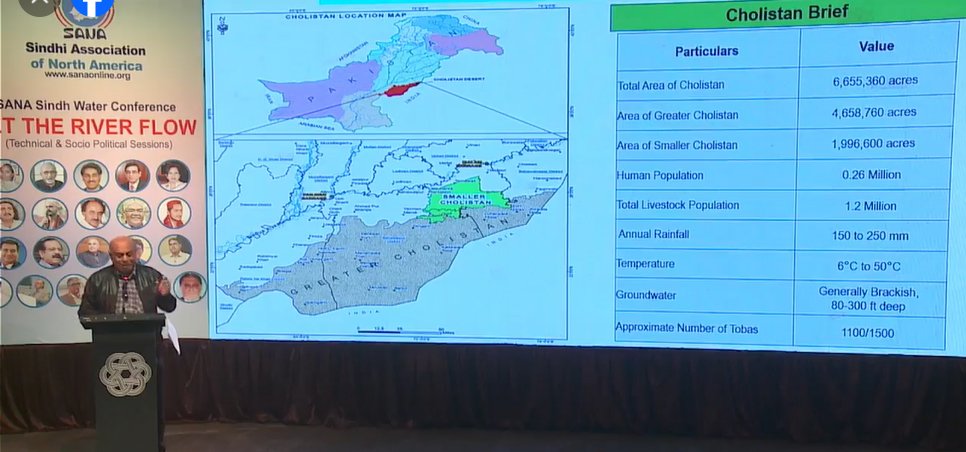
    The history of Cholistan Canal is over a century old, and old documents suggest that the water availability was exaggerated even back then. An English engineer had raised objections about the data on water availability. Thus, the history of inaccurate or falsified statistics is longstanding, he claimed in a program organized by diaspora Sindhis Association of North America (SANA) in Karachi.  

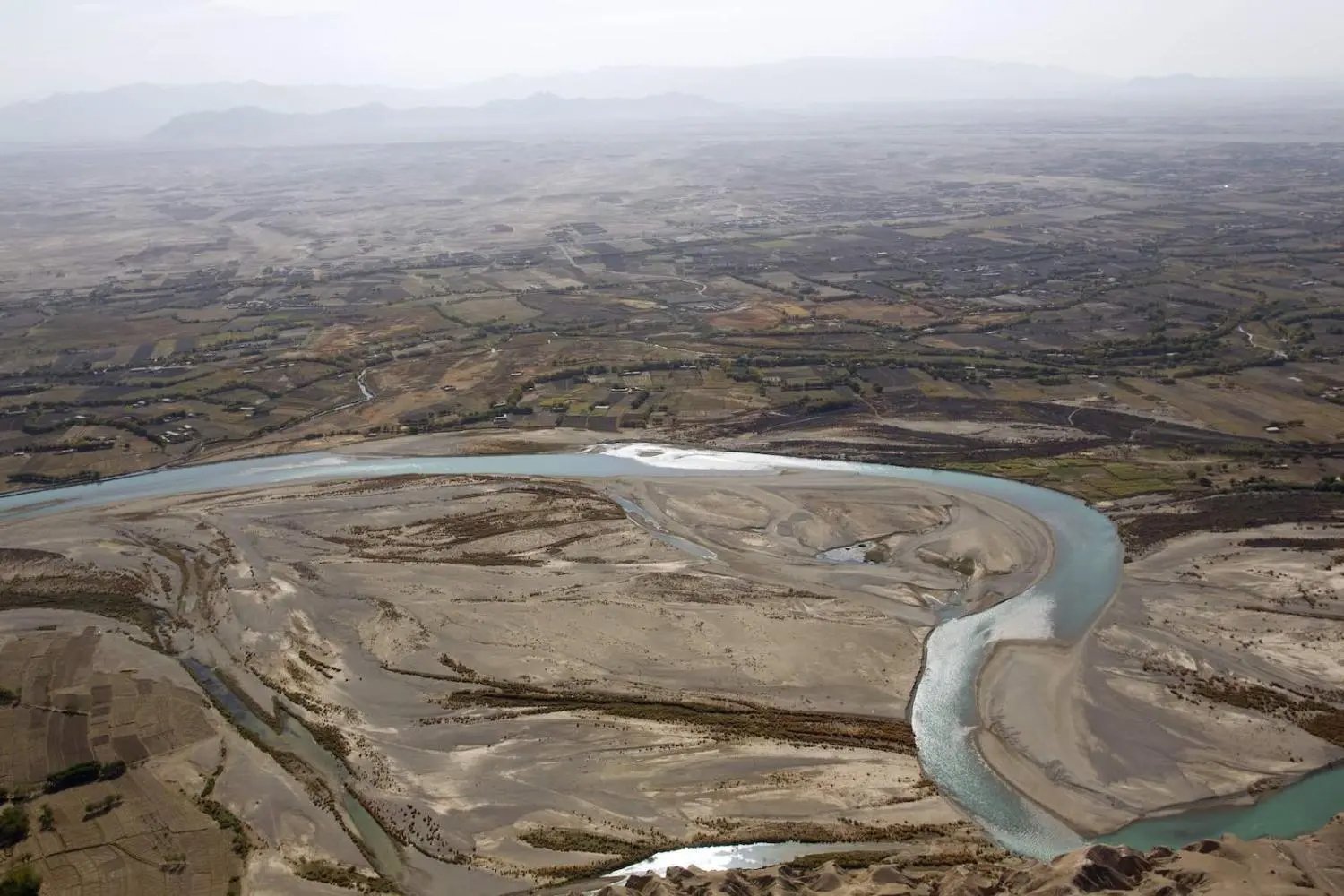
    The canal command area of the Cholistan Canal and its connecting canals covers 6.6 million acres (including the Greater Thal Canal). How will they irrigate such a large area? The strategic canal plan includes Phase I of the smaller Cholistan Canal. The real scheme involves the Greater Cholistan Canal followed by the smaller Cholistan Canal, with Phase I as a precursor. The capacity of this canal is 4000 cusecs, drawing water from the Sulemanki Barrage on the Sutlej River. A 120-kilometer-long canal will connect to it. The total length of this project is 176 kilometers. In Phase I, 452,000 acres of land would be irrigated. Three small dams are also included in the plan on the Chenab River. Additionally, there are two barrages on the Sutlej River: Haselpur and Bahawalnagar. It’s important to note that the Indus River is not alone; its system includes all these rivers.

    They claim the canal is on the Sutlej River. However, it is actually on the Indus River because the Sutlej is a dry river. It is one of the three rivers that Pakistan handed over to India under the Indus Basin Treaty. Officially, there is no water in the river, and India is not under any obligation to allow water to flow. If there is a need for water, it will have to be transferred from the Indus River, as the Sutlej doesn’t have any water. No such large project should be launched on a dry river. Therefore, the water will be transferred from the Jhelum River to the Chenab, then to the Ravi, and from the Ravi to the Sutlej through link canals. When water is transferred through the link canal, there will be a shortage in the command area of the Jhelum River, and water from the Indus will be diverted through link canals connecting the Indus with the Jhelum. Thus, the project is indirectly connected to the Indus, and this is a major concern.

    We believe there is no surplus water in the system. From 1976 to 1999, the average flow below the Indus was 40 million acre-feet (MAF), and if we calculate the flows from 1999 to 2024, the average flow downstream of Kotri has been 14 MAF. How can such huge projects be launched under these conditions? In fact, we are facing a shortfall of 35 MAF today, especially when considering our commitments. – KARACHI: ER Report
  • Over 22 m children out of school in Pakistan: Shehbaz Sharif

    Over 22 m children out of school in Pakistan: Shehbaz Sharif

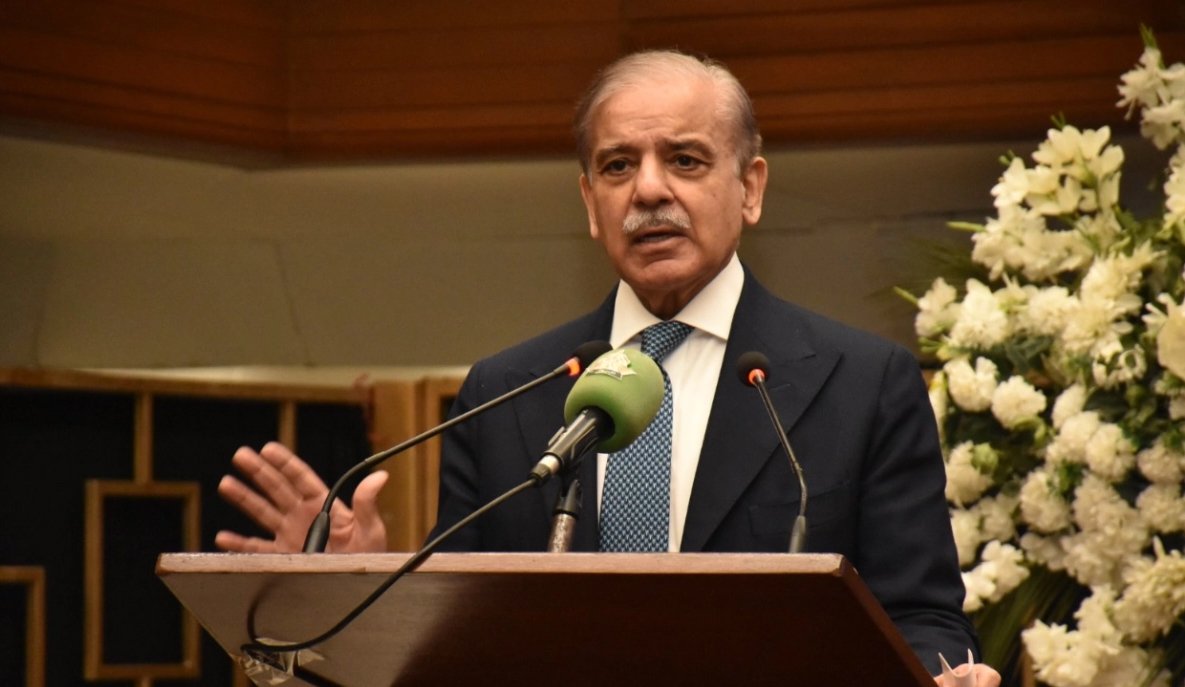
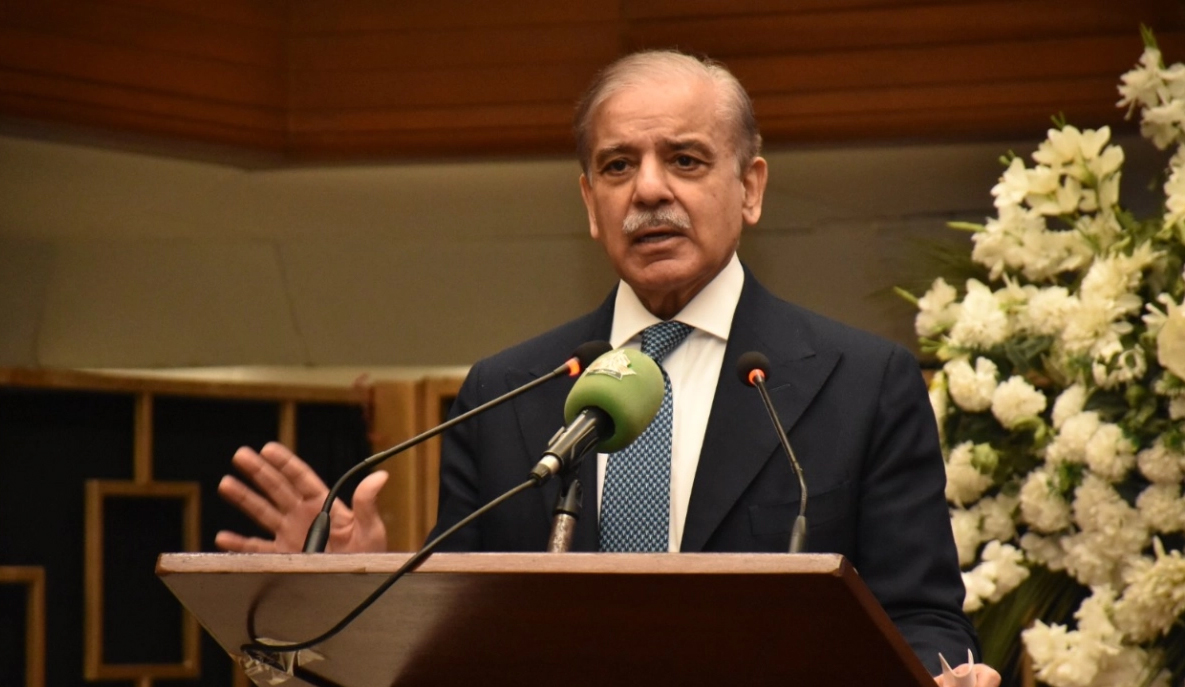
    Pakistan’s Prime Minister Shehbaz Sharif on Saturday said over 22 million children are out of schools in his country, as he emphasized the urgent need for Muslim countries to prioritize girls’ education, state media reported.

    Opening the two-day International Conference on Girls’ Education in Muslim Communities: Challenges and Opportunities, in the capital Islamabad, Premier Sharif said the Muslim world faces significant challenges in ensuring equitable access to education for girls.

    Sharif said millions of young girls over the next decade will enter the job market, emphasizing they have the potential not just to lift themselves, their families and nations out of poverty but also to enrich the global economy.

    He pointed out that in Pakistan, women make up more than half of the total population, yet the female literacy rate stands at only 49%. Alarmingly, he said around 22.8 million children in the age bracket of five to 16 years are out of school with a disproportionate number being girls.

    Denying education to girls is tantamount to denying them their voice and choice while depriving them of their right to a bright future.

    The conference is being attended by several international representatives from Muslim-majority countries, including Pakistani Nobel Peace Prize laureate Malala Yousafzai.

    “I am excited to join Muslim leaders from around the world for a critical conference on girls’ education,” Yousafzai said on X. “On Sunday, I will speak about protecting rights for all girls to go to school, and why leaders must hold the Taliban accountable for their crimes against Afghan women & girls.”

    The summit will conclude with a formal signing ceremony of the Islamabad Declaration, outlining the shared commitment of the Muslim community to empower girls through education, paving the way for inclusive and sustainable educational reforms, and a brighter future for generations to come, according to Pakistan’s Foreign Ministry.

    “We have decided to place Islamabad Declaration to be signed by this conference before the UN, including the UN Security Council as a collective aspiration of the Ummah,” said the Pakistani premier. – Courtesy Anadolu Agency

  • 2024 on track to be the first year to exceed 1.5ºC above the pre-industrial average

    2024 on track to be the first year to exceed 1.5ºC above the pre-industrial average

    November 2024 was the second warmest month of November globally in the ERA5 reanalysis dataset, according to the latest monthly update of the Copernicus Climate Change Service (C3S). With this data, it is now virtually certain that 2024 will be the warmest year on record and that the global average temperature will exceed the 1.5ºC limit above the pre-industrial average set by the Paris Agreement.

    Around Antarctica, the sea ice saw its lowest extent on record for November.

    “With Copernicus data in from the penultimate month of the year, we can now confirm with virtual certainty that 2024 will be the warmest year on record and the first calendar year above 1.5°C. This does not mean that the Paris Agreement has been breached, but it does mean ambitious climate action is more urgent than ever.” said Samantha Burgess, Deputy Director of the Copernicus Climate Change Service.

    The Paris Agreement aims at “keeping a global temperature rise this century well below 2 degrees Celsius above pre-industrial levels and to pursue efforts to limit the temperature increase even further to 1.5 degrees Celsius,” however, this temperature goal refers to a long-term average.

    November 2024 was the second warmest globally only behind November 2023, with an average temperature of 14.10ºC and 0.73ºC above the average for November in the period 1991-2020. Both months, November 2024 and 2023 stand out compared to any other November in the dataset.

    The month was 1.62ºC above the pre-industrial average for November, being the 16th month of the last 17 months with a global average surface air temperatures above 1.5ºC above the pre-industrial levels.

    The global average temperature for the boreal autumn (September to November) was the second highest on record also behind 2023, 0.75ºC above the 1991-2020 average for the month. ERMD

  • Sindh Government Introduces Crop Insurance in Larkana and Ghotki Districts

    Sindh Government Introduces Crop Insurance in Larkana and Ghotki Districts

    The Sindh government has launched a pilot Crop Insurance Program in the Larkana and Ghotki districts, aimed at protecting the farming community amid climate change, announced Mohammad Bakhsh Mehr, the provincial Minister for Agriculture.

    To implement the program, the government has partnered with international advisors, Pula, for insurance services. Pula’s Country Head in Pakistan, Widad Durrani, participated in a meeting held in Karachi to discuss the initiative.

    Minister Mehr led the meeting with his team, including the Secretary of the Agriculture Department and other officials, to outline the next steps for the program.

    The Crop Insurance Program is designed to compensate farmers whose crops are damaged by natural disasters such as heavy rains and floods. The program aims to address the increasing challenges posed by climate change and other environmental factors.

    In addition to the insurance program, the Sindh government has introduced the Benazir Hari Card to further support farmers. The goal is to offer crop insurance under this initiative to help mitigate losses caused by floods, disease, pests, heat, and other threats.

    Pula Advisors will assist Sindh’s farmers in implementing this insurance model, focusing on key crops such as rice, cotton, and wheat. The program will begin as a one-year pilot project in the Kharif season of 2025. If successful, it will expand to 27 more districts and include additional crops such as sugarcane.

    In its first phase, the program will be trialed in Larkana and Ghotki districts. :KARACHI

  • No timeframe for resolution of internet problems: PTCL

    No timeframe for resolution of internet problems: PTCL

    Pakistan Telecommunications Limited (PTCL) on Thursday told the media that there is no exact timeframe for the resolution of slow internet connectivity or the repair of the Asia-Africa-Europe-1 (AAE-1) undersea internet cable. Internet users across Pakistan complained of slow internet and hindered access to services throughout 2024.

    On January 3, PTCL said teams were “diligently” working to resolve the matter of disruptions faced by users after a fault in the AAE-1 subsea internet cable connecting Pakistan slowed down the network speed in the country. A day after that, IT minister Shaza Fatima Khawaja said around 80 per cent of the bandwidth shortfall caused by the fault had been recovered as traffic had been shifted to two other cables. In a statement, PTCL spokesperson Aamir Pasha said that to address the slowdown, PTCL “added additional bandwidth which has majorly resolved [the] internet slowness issue”.

    However, the telecom operator stated that slow internet speed might still be experienced on Meta-owned services, such as WhatsApp, Facebook and Instagram, especially during peak hours. “We expect complete resolution over the next few days,” the statement added, without giving an exact timeframe. “PTA and PTCL are working diligently to ensure the earliest possible resolution.” Speaking to the media, Pasha said that the bandwidth shortfall had “been addressed”. — ERMD

  • Rising Tensions Over Water Rights: Iran and Afghanistan’s Dispute Escalates

    Rising Tensions Over Water Rights: Iran and Afghanistan’s Dispute Escalates

    Iran and Afghanistan, two countries governed by clerics and sharing a 900-kilometer-long border, are once again at odds over water rights. The primary point of tension is the flow of river waters downstream to Iran, a longstanding issue rooted in historical disputes.

    Afghanistan is constructing a dam on the Harirud River, which Iran views as a violation of customary water-sharing rights and a unilateral exploitation of the river. Issa Bozorgzadeh, Iran’s water industry spokesperson, stated last month that this action would severely impact the drinking water supply and health of millions in downstream regions, causing widespread environmental damage. However, the Afghan government disagrees with Iran’s position. This week, it issued a warning against Tehran’s “irresponsible comments” following criticism of the upstream dam project.

    On Friday, Esmaeil Baqaei, Iran’s foreign ministry spokesman, expressed strong protest over the “disproportionate restriction” of water entering Iran due to the Pashdan Dam on the Harirud River, suggesting that the project might breach bilateral treaties. Meanwhile, Afghanistan’s Taliban government maintains that the water-sharing dispute between the two nations has been resolved through mutual understanding, though it cautioned that inflammatory rhetoric could harm bilateral relations.

    The Pashdan Dam, located in Herat province, is nearing completion, with water storage having already commenced. The dam, which began construction in 2011, is expected to store 54 million cubic meters of water, irrigate 13,000 hectares of land, and generate 2 megawatts of electricity. While Afghan authorities assert that the dam is vital for Herat’s development, Iran claims that it reduces the natural flow of the Harirud River, potentially harming the drinking water supply of Mashhad, a major Iranian city. Bozorgzadeh emphasized the shared destiny of people living in the Harirud basin and called for joint negotiations to mitigate the cross-border impacts of the Pashdan and Salma dams.

    In addition to the Harirud dispute, the two countries have clashed over water rights to the Helmand River. In May 2023, Iran warned Afghanistan about the potential violation of its rights due to new dam projects on the Helmand. Historically, disputes over the river date back to the 1870s, escalating after the river’s course changed in 1896. Although a 1939 accord between the two nations proposed sharing water rights, it was never ratified. A 1973 treaty stipulated that Iran should receive 820 million cubic meters of water annually from the Helmand River, but Afghanistan’s changing political landscape, including the 1979 Saur Revolution and Iran’s 1979 Islamic Revolution, disrupted negotiations.

    During Ashraf Ghani’s presidency, Afghanistan began constructing several dams, such as the Salma and Kamal Khan Dams, leading to heightened tensions with Iran. The Taliban, which took control of Afghanistan in 2021, has also engaged in discussions with Iran about water-sharing arrangements, with President Ebrahim Raisi warning the Taliban in May 2023 not to infringe upon Iran’s rights to the Helmand River’s waters and urging them to honor the 1973 treaty. The Helmand River, which flows through Afghanistan into Iran, is essential for both countries. It provides irrigation for Afghan farmers and is vital for agriculture in Iran’s drought-prone Sistan-Baluchistan province. Despite the construction of dams on Afghan tributaries, such as the Kajaki and Arghandab Dams, the Helmand remains crucial for both nations’ agricultural economies. – KARACHI: ERMD

  • Pakistan Refinery Limited Secures Rs3.15 Billion Loan for Front-End Engineering Design

    Pakistan Refinery Limited Secures Rs3.15 Billion Loan for Front-End Engineering Design

    “We are pleased to announce that the Board of Directors of Pakistan Refinery Limited (PRL) has approved the acquisition of a loan facility amounting to Rs3.15 billion, from Pakistan State Oil Company Limited (PSO) to finance the company’s Front-End Engineering Design (FEED) of the Refinery Expansion & Upgrade Project (REUP),” read the statement.

    PRL shared that the loan has an option of conversion into equity, which will be subject to all requisite corporate and regulatory approvals that may be required then.

    Pakistan Refinery Limited (PRL) is a hydro-skimming refinery based in Karachi, Pakistan. Established in 1960, PRL processes imported and local crude oil into products like furnace oil, diesel, kerosene, jet fuel, and gasoline, with a capacity of 50,000 barrels per day.

    The refinery operates at two locations: the main facility at Korangi Creek and crude oil berthing and storage at Keamari, ensuring efficient operations and logistics. PRL remains a key player in Pakistan’s energy sector, committed to meeting the country’s fuel needs. — ERMD

  • Microsoft to invest $3bn in India to expand AI, cloud capacity

    Microsoft to invest $3bn in India to expand AI, cloud capacity

    Microsoft CEO Satya Nadella on Tuesday said the company plans to invest $3 billion in India on artificial intelligence (AI) and cloud infrastructure over the next two years. The announcement comes a day after his meeting with Indian PM Narendra Modi.

    The world’s most populous country has become a key AI battleground in the last few years, as US tech giants look to find new users for their services and tap into fresh pools of talent.

    In recent months, top executives including Nvidia boss Jensen Huang and Meta’s chief AI scientist Yann LeCun have visited India.

    On Tuesday, Nadella said the $3 billion investment would include the setting up of new data centers.

    “India is rapidly becoming a leader in AI innovation, unlocking new opportunity across the country,” Nadella said.

    “The investments in infrastructure and skilling we are announcing today reaffirm our commitment to making India AI-first, and will help ensure people and organizations across the country benefit broadly.”

    The global embrace of AI has boosted sales of Microsoft’s key cloud services, which have become the core of its business under Nadella’s leadership.

    The announcement comes less than a week after Microsoft president Brad Smith said the company was on track to invest $80 billion in AI this fiscal year.

    Microsoft was on pace to invest about $80 billion this year to build out AI data centers, train AI models and deploy cloud-based applications around the world, according to Smith.

    “The United States is poised to stand at the forefront of this new technology wave, especially if it doubles down on its strengths and effectively partners internationally,” he said in an online post. – Courtesy AFP

  • New Industrial Park to be Established on 3,200 Acres of Pakistan Steel Mills Land

    New Industrial Park to be Established on 3,200 Acres of Pakistan Steel Mills Land

    Amid ongoing uncertainty over how to revive Pakistan Steel Mills (PSM), Islamabad and the Sindh government are making use of the mill’s abandoned land. Both parties have reportedly agreed to establish an industrial park on 3,200 acres of PSM’s land.

    The decision was discussed during a meeting between Sindh Chief Minister Syed Murad Ali Shah and Federal Minister for National Food Security & Research (NFSR) and Industries & Production, Rana Tanveer. The meeting, held at the New Sindh Secretariat, addressed several key initiatives, including the proposed industrial park on PSM land.

    While the revival of the steel mill and the creation of a National Food Safety, Animal, and Plant Health Regulatory Authority were also discussed, the primary focus was on the establishment of the industrial park. Other attendees included Sindh’s Provincial Minister for Industries Jam Ikram Dharejo, Chief Secretary Asif Hyder Shah, PSCM Agha Wasif, and SMBR Baqaullah Unar, along with federal officials such as Secretary NFSR Waseem Ajmal Chaudhry, DG Waqas Alam, and CEO PIDC Rizwan Bhatti.

    Reports indicate that the discussions centered on transforming 3,200 acres of land, currently under Pakistan Steel Mills Limited (PSML), into an industrial zone. Federal Minister Rana Tanveer proposed re-designating the land for “Industrial Use,” and it was agreed that the federal ministry would formally request this change, allowing the Sindh government to move forward with the necessary documentation.

    The chief minister pointed out that 1,675 acres allocated to PSML in 1974-75 for the steel project still lacked formal title transfer. He assured the federal minister that the issue would be resolved. Additionally, Murad Ali Shah emphasized the importance of preserving 700 acres of land, either for reviving the existing steel mill or for constructing a new facility. Tanveer shared that a Russian team had already inspected the current plant and would submit a proposal for a new plant installation in February.

    Regarding the National Food Safety, Animal, and Plant Health Regulatory Authority, the federal minister outlined its purpose: to implement quarantine and inspection controls for imports and exports of animals, plants, agricultural products, food, and feed. The chief minister suggested broader consultations with provincial departments, including Agriculture, Livestock, Fisheries, and Food Authorities, and advocated for stronger provincial representation in the authority.

    The meeting concluded with commitments to enhance coordination between the federal and provincial governments, ensuring timely progress on both the industrial park and steel mill projects. The federal ministry will also seek input from Sindh’s Agriculture and Livestock Department regarding the proposed National Food Safety, Animal, and Plant Health Regulatory Authority.

  • Fed govt. Abolishes 150,000 Vacant Posts as Part of Cost-Cutting Measures

    Fed govt. Abolishes 150,000 Vacant Posts as Part of Cost-Cutting Measures

    Islamabad’s rightsizing process is expected to be completed by June 30, 2025 – Press Conference

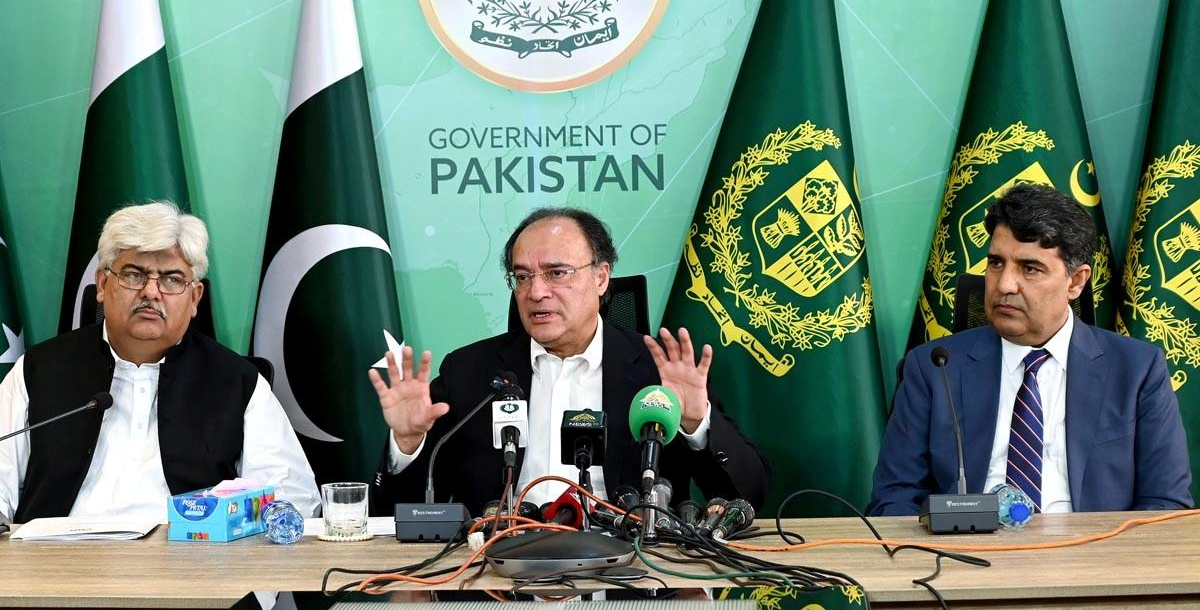
    The federal government has decided to abolish 150,000 vacant positions as part of a broader effort to reduce federal expenditure, Federal Minister for Finance and Revenue Senator Muhammad Aurangzeb announced on Tuesday. The government has adopted a phased approach to reduce its expenditures, he added.

    Addressing a press conference on Tuesday, the finance minister stated, “It has been decided to abolish 60% of vacant regular positions, or to declare them as ‘dying posts.’” This decision affects approximately 150,000 positions, which will have a significant impact on this fiscal year.

    Discussing the ongoing reforms aimed at economic revival, Aurangzeb explained that, with the consent of the cabinet and the prime minister, the government has eliminated these 150,000 posts. He also stated that services such as cleaning, plumbing, and gardening would now be outsourced, as per the government’s decision. Furthermore, he mentioned that the government is also considering reducing contingency posts.

    Aurangzeb further revealed that under the rightsizing initiative, the Ministry of Kashmir Affairs and Gilgit-Baltistan, and the Ministry of States and Frontier Regions (SAFRON) would be merged, while the Ministry of Capital Administration and Development Division would be abolished. Additionally, about 80 entities under these ministries have been reduced to 40, and a decision has been made to streamline 60 entities under the Ministry of Science and Technology, the Commerce Division, the Ministry of Housing and Works, and the Ministry of National Food Security and Research.

    “Of these, 25 entities will be wound up, 20 will be reduced, and nine will be merged,” he said.

    In the next wave of rightsizing, Aurangzeb noted that five ministries—Federal Education and Professional Training, Information and Broadcasting, Natural Heritage and Culture, the Finance Division, and the Power Division—have been notified. He added that the rightsizing process is expected to be completed by June 30, 2025. — ERMD