Alsons Group, a trailblazer in precision engineering and manufacturing in Pakistan announced last week that its flagship product, the AlnnoVent AVB-100 ICU Ventilator, has successfully received regulatory approval from the Drug Regulatory Authority of Pakistan (DRAP). This momentous development sets the stage for the ventilator’s market release in 2025, positioning Pakistan as an emerging contender in the global medical device industry, the company said in a press release to the media. The AlnnoVent AVB-100 is an advanced electro-mechanical ICU ventilator that has been meticulously designed, developed, and manufactured by the Alsons Group to meet stringent international standards of quality and performance. It features a versatile range of functions, offering five invasive and two non-invasive ventilation modes, making it adaptable for various critical care situations. This innovation was born out of the dire need for respiratory devices during the COVID-19 pandemic, with Alsons Group committed to strengthening the country’s healthcare infrastructure. “We take immense pride in the fact that the AlnnoVent AVB-100 is the first electromedical device in Pakistan to successfully navigate the rigorous approval process, including clearance from the National Bioethics Committee (NBC) and DRAP,” said Akbar Allana, Director of Alsons Group. The development of the ventilator included a thorough clinical trial conducted at Jinnah Medical Hospital and Allama Iqbal Medical College, Lahore, under the NBC’s Terms of Reference (ToR). A detailed baseline study, compiled with the support of the Data and Safety Monitoring Board (DSMB), will serve as a foundation for future research and studies in this area. Founded in 1953, Alsons Group has built a stellar reputation in precision engineering and technology innovation across industries such as automotive, aerospace, defense, lighting, and healthcare. Leveraging this expertise, the company ventured into medical technology, showcasing Pakistan’s potential for cutting-edge technological development. “We are proud to offer a locally produced solution to meet critical healthcare needs,” Akbar Allana added. “The AlnnoVent embodies our commitment to innovation and demonstrates Pakistan’s capacity to make significant contributions to global healthcare challenges.” With the approval and upcoming release of the AlnnoVent AVB-100, Alsons Group marks a historic achievement, underscoring Pakistan’s self-reliance and ingenuity in medical technology. This milestone signifies the nation’s growing role in the global healthcare sector. – PR/ERMD
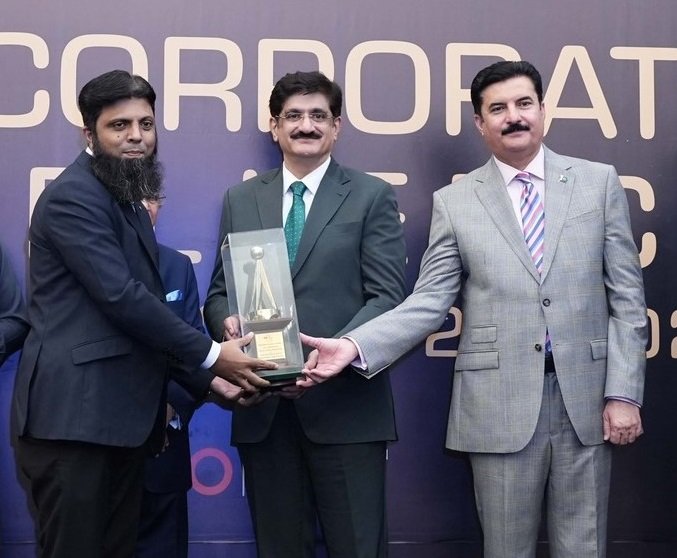
Pakistan Cables Limited has once again achieved a remarkable milestone by winning the 39th Corporate Excellence Award 2024 in the Cables and Electrical Goods category. This marks the fourth consecutive year that Pakistan Cables has been recognized for its exemplary performance. The award was presented during a prestigious ceremony organized by the Management Association of Pakistan (MAP) in Karachi. Waqas Mahmood, Chief Financial Officer of Pakistan Cables Limited, received the award on behalf of the company from Syed Murad Ali Shah, Chief Minister of Sindh, who graced the occasion as the Chief Guest. This recognition reaffirms Pakistan Cables’ dedication to setting new benchmarks in corporate governance and operational excellence. Mr. Fahd K. Chinoy, CEO of Pakistan Cables, also delivered the keynote address at the ceremony, highlighting Pakistan Cables as a case study on change management in the corporate sector. The Corporate Excellence Awards was instituted by MAP in 1982 to recognize and honour companies in Pakistan that demonstrate outstanding performance, progress, and enlightened management practices consistently. Founded in 1953, Pakistan Cables is the premiere and most reputable cable manufacturer in Pakistan. It is the first and oldest wires and cable manufacturer listed on the PSX since 1955. It is also a member company of the Amir S. Chinoy (ASC) group. The company has the largest geographical footprint in Pakistan with a presence in over 180 cities. It is ISO9001:2015, ISO 14001:2015 AND OHSAS 18001:2007 certified and various cable types tested by KEMA, Netherlands. Pakistan Cables is the only building material company in Pakistan that has its carbon emission reduction targets approved and validated by SBTi. — PR
Reko Diq Mining Company (RDMC), in line with its commitment to responsible and sustainable mining practices, has completed the Environmental and Social Impact Assessment (ESIA) for its project. The comprehensive assessment has been submitted to the relevant government authorities for their review and approval. The ESIA is a critical step in ensuring that RDMC’s operations meet the highest global environmental and social standards. Over the course of 2.5 years, a team of independent experts conducted thorough social and environmental studies, working closely with local communities, environmental organizations, and government stakeholders. These studies evaluated the potential environmental and social impacts of the project, including effects on air quality, water, biodiversity, and local populations’ well-being, as noted in a recent news release. The project design incorporates a mitigation hierarchy, with ongoing management plans to address any identified impacts. “We are fully committed to the sustainable development of our project, and the completion of this ESIA marks a major milestone in ensuring our operations are both environmentally responsible and beneficial to the communities we work with,” said Ashley Price, ESIA Manager for RDMC. “The insights from these studies will guide our efforts to manage risks, while maximizing the positive impacts of the project and minimizing potential negative effects.” This ESIA complies with the regulatory requirements of the Balochistan Environmental Protection Act (2012) and Sindh Environmental Protection Act (2014). It also aligns with the International Finance Corporation’s (IFC) Performance Standards on Environmental and Social Sustainability (2012), the World Bank Group’s Environmental, Health, and Safety (EHS) Guidelines, the Equator Principles, and the Global Industry Standard for Tailings Management (GISTM). Throughout the process, RDMC has engaged continuously with local communities and other key stakeholders to ensure their concerns are reflected in the impact assessment. The ESIA is currently under review by regulators in Balochistan and Sindh, as well as by an internationally recognized independent company. In line with Barrick’s policy, RDMC remains committed to responsible resource development and aims to create value for local communities through job creation, infrastructure development, and environmental stewardship. — ERMD/APP/PR
The transition to electric vehicles (EVs) represents a significant opportunity for Pakistan, combining both environmental and economic benefits. However, the country faces numerous challenges as it works toward this vision, according to a recent policy viewpoint from the Pakistan Institute of Development Economics (PIDE). The viewpoint, authored by senior economic researcher Dr. Usman Qadir, research fellow Mohammad Shaaf Najib, and assistant chief (policy) Saddam Hussain, outlines several barriers that must be addressed for the successful implementation of an EV-driven future. Key Challenges for EV Adoption 1. High Production Costs One of the primary obstacles for EV adoption in Pakistan is the high cost of production. The technology to assemble and manufacture EVs in Pakistan is still in its early stages, leading to expensive production processes. Additionally, the country’s reliance on imports and lack of associated industries have driven up production costs. High import tariffs further exacerbate the situation, making EVs significantly more expensive than their internal combustion engine (ICE) counterparts. 2. Limited Vehicle Ownership While 61% of Pakistani households own a personal vehicle, the majority of these are two-wheelers, such as motorcycles. Only 6% of households own passenger cars. This limited market for passenger vehicles, combined with the high initial cost of EVs, makes EVs financially inaccessible to middle- and low-income groups who rely heavily on motorcycles for transportation. 3. Range Anxiety and Charging Infrastructure Range anxiety—concern about running out of battery while driving—remains a significant barrier to EV adoption. This is compounded by the lack of widespread charging infrastructure. Recharging takes longer than refueling a conventional vehicle, and the fear of being stranded without a charging station is a major deterrent for potential EV buyers. 4. Low Production Volumes and Capacity Pakistan’s automobile industry currently operates on a small scale, primarily serving local demand. This limits the ability of manufacturers to reduce costs through economies of scale. The country’s auto parts manufacturers also lack the financial and technological capacity to scale up production and improve quality, further hindering EV production. 5. Global Isolation Unlike many countries that have integrated into the global value chain for automobile manufacturing, Pakistan’s auto industry has remained largely isolated. This has prevented local manufacturers from accessing advanced technologies and quality production techniques, which are crucial for producing competitive EVs. Policy Recommendations To overcome these challenges, PIDE recommends several policy objectives: 1. Increase Vehicle Ownership There is a need to expand vehicle ownership in Pakistan, especially EVs, by making them more accessible through incentives and subsidies. The aim is to make EVs widely available, especially in the two- and three-wheeler and passenger car segments. 2. Enhance Charging Infrastructure A nationwide network of EV charging stations must be established to alleviate concerns about range anxiety. Policies should encourage commercial, residential, and mixed-use properties to install charging stations, and existing petrol stations should be retrofitted with EV chargers. 3. Boost Local Manufacturing and Production Pakistan needs to significantly enhance its EV manufacturing capacity. The government should offer tax incentives to encourage the establishment and expansion of local manufacturing units. This would reduce dependence on imports and help achieve economies of scale, ultimately lowering production costs. 4. Incentivize EV Adoption To encourage EV adoption, PIDE suggests offering substantial tax concessions on EV imports and locally manufactured vehicles, especially for government purchases. Special incentives could also be offered for the use of EVs in commercial transport, including buses and trucks. 5. Strengthen Local Supply Chains A thriving local supply chain is crucial for the success of EV manufacturing in Pakistan. The government should incentivize the development of a competitive supply chain, ensuring that local auto parts manufacturers are integrated into the global value chain for parts and components. 6. Labor and Training Initiatives Developing a skilled workforce is essential for the growth of the EV industry. The government should invest in vocational training and higher education to produce engineers and technicians who are proficient in EV technology and manufacturing. 7. Green Financing The State Bank of Pakistan should establish green financing programs to support EV manufacturers and buyers. This would provide financial support for the growth of the EV sector and help make EVs more affordable for consumers. Long-Term Goals To align with international best practices, PIDE outlines specific targets for EV adoption and production: • By 2030, 10% of new 4-wheel passenger car sales should be EVs, and 25% of new 2- and 3-wheeler sales should be EVs. • By 2040, 50% of all new 4-wheel passenger car sales should be EVs, and 75% of 2- and 3-wheeler sales should be EVs. • By 2035, 50% of locally produced 4-wheel passenger cars and 2/3-wheelers should be EVs. • By 2030, 10% of all EVs produced in Pakistan should be exported, increasing to 50% by 2040. Conclusion The transition to electric vehicles in Pakistan presents a tremendous opportunity, but it is clear that achieving this vision requires overcoming substantial challenges. By adopting a multi-pronged approach focusing on production, import, adoption, and infrastructure development, Pakistan can pave the way for a cleaner, more sustainable future. The success of this transition will depend on government policies that support local manufacturing, incentivize EV adoption, and establish a robust infrastructure for the growing EV market. — ERMD
China is perhaps in a prime position when it comes to electric vehicle (EV) adoption, accounting for over 60% of worldwide sales in 2022. This dominant position makes it a critical player in addressing one of the most pressing sustainability challenges of the electric vehicle revolution: how to recycle batteries. As the world increasingly turns to EVs to combat climate change, the question of what happens to EV batteries once they reach the end of their life has never been more urgent. Writing in the International Journal of Electric and Hybrid Vehicles, Igor Laine of LUT University in Lappeenranta, Finland, explains how the big issue is the lifecycle of lithium-ion batteries, which are used to power most of today’s EVs. These batteries contain valuable metals, including cobalt, lithium, and nickel, which are finite resources and environmentally harmful if not disposed off correctly. As the demand for EVs grows, so too does the pressure on these raw materials, making effective recycling both a necessity and a challenge. According to Laine, China has become the world’s largest manufacturer and consumer of EVs and is responding to the growing challenge of waste batteries with a strong recycling strategy. The country has implemented a variety of regulations aimed at holding manufacturers accountable for the entire lifecycle of their products. In addition to legal measures, China has invested heavily in the development of new technologies designed to improve the efficiency of battery recycling. Techniques for diagnosing battery health, dismantling old batteries, and extracting precious metals for re-use have been developed in recent years. China’s EV future could well become sustainable in terms of batteries. However, Laine points out that China’s recycling infrastructure is not entirely mature. Recycling processes themselves could be improved in terms of efficiency. One of the major problems is that the precious metals that are at the heart of EV batteries are present with myriad other substances, all of which make extracting those metals difficult. Extraction of the metals is the fine detail problem of battery recycling. The bigger picture sees the vast EV market in China where concerns about the efficiency of battery recycling are overarched by the sheer scale of the problem, and the enormous numbers involved. There is something of a paradox at play with these two perspectives. On one hand, demand for EVs is growing, which means there is a constant flow of waste batteries to be harvested for the next generation of vehicles. But, the size of the market puts the potential for scalable sustainability out of reach, at least for the time being. Laine’s work suggests that the regulatory approach to EV battery recycling taken by China represents a drive in the right direction. However, to address the big problems might require an international stance, a global collective effort. International cooperation could help with research and development into recycling technology and allow standardized recycling practices to be established. The path to truly sustainable battery recycling needs innovation, regulation, and collaboration.