Pakistan has refused part financing from the Asian Development Bank (ADB) for the $8 billion Karachi-Peshawar Railway Line (ML-1) after China said it wanted to fund the project single-handedly. `China strongly argued that two sourced financing would create problems and the project would suffer, Minister for Planning and Development Ahsan Iqbal has revealed. The minister said he would not comment whether the Ministry of Railways has resisted the Chinese request for fears of monopoly, but said the entire financing would now come from China. The project was originally planned to be partly funded by the Manila-based ADB. He said ADB would be accommodated in some other projects, such as those under the Central Asian Regional Economic Cooperation programme. Under the original plan, ADB had to provide $3.5bn for the 1,700-kilometre-long line considered the backbone of the country`s logistics connecting two major ports with the rest of the country for transporting goods and passengers. The minister said Chinese government therefore wanted that the project financing should be kept single-sourced. Pakistan and China are expected to sign a formal agreement in this regard next month. Iqbal said the Planning Commission was making efforts to maximise allocation of funds for the next year`s development programme as it would be the final year of the current government. Therefore, the government would like to complete maximum number of projects during this period so as to support the growth momentum. He said it was also important to have larger development portfolio for the next year because it would trigger activity in the construction industry on which a number of other growth oriented industries were dependent because of its potential to create jobs.
Blog
-
Pakistan to set up Infrastructure Bank
Government will set up Pakistan Infrastructure Bank with a paid-up capital of one billion dollars to finance private investors in development projects, said Finance Minister Ishaq Dar. “Both the International Monetary Fund (IMF) and government will hold 20 percent stake each in the proposed Bank, while international organisations, such as International Finance Corporation, will have the remaining shares,” Dar told a press briefing with the Pakistani media towards the end of his current visit to Washington DC. He gave a detailed round up on the plenary sessions with the IMF and World Bank during the briefing. He was on a five-day visit to U.S. to attend the spring meetings of IMF and the World Bank. The government would soon be launching Pakistan Development Funds. The shares worth Rs100 billion of the Fund would be offered to Pakistani diaspora in order to effectively channelise their valuable remittances. Later on, the Fund’s shares would be enlisted on the Pakistan Stock Exchange. “After success of sukuk bonds, Pakistan Development Fund would be another attractive investment for overseas Pakistanis,” he added. The government is consulting with the World Bank to introduce solar energy, as a new electricity generation alternative, at a lowest cost in Pakistan. World Bank remained bullish on Pakistan’s growth prospects for the next three years, revising its earlier projection notches up on large cross-border infrastructure investment, reforms and restoration of investor confidence. The bank, in its flagship report, forecast the GDP growth in the South Asia’s second biggest economy at 5.2 percent for 2017. It added that the growth is expected to accelerate from 5.5 percent in 2018 to 5.8 percent in 2019, “reflecting improvements in agriculture, infrastructure, energy and external demand.” IMF, in its world economic outlook, forecast the country’s growth at 5 percent in 2017 and 5.2 percent in 2018, supported by ramped-up infrastructure investment. The Asian Development Bank is also bullish over the country’s economic prospects this fiscal year, upgrading its growth forecast to 5.2 percent on improved energy supply and security and rising investment. The minister said the global credit rating agencies have upgraded the rating of Pakistan from ‘negative’ to ‘stable’ and from stable to ‘positive’ over the years to an extent that the country is likely to be included in G-20 countries by 2030.
-
Chinese company to set up cross-border telecom infrastructure
China Telecommunications Corp will set up resources to complete cross-border telecom infrastructure initiatives including the China-Pakistan information corridor, China-Laos-Thailand and China-Bangladesh-Myanmar-India projects. “Cross-border telecommunication infrastructure is one of the first steps for international cooperation,” Deng Xiaofeng, CEO of its international unit China Telecom Global Ltd said. “Our experience in deploying one of the world’s largest information networks in China can help narrow the digital gap,” he added. The company will invest more than $1 billion over the next three to five years to expand its presence in the economies along the Belt and Road Initiative including Pakistan. He said it will also raise more money from state-owned financing institutions and private investors, in a move to build land cables, internet data centers and other infrastructure in Southeast Asia, Europe and other regions. “State-owned and private capital are now keen to be part of our efforts. We also need their expertise to help us evaluate whether the plans are plausible,” Deng added. Deng said the company did not exclude the possibility of investing in foreign telecom carriers to help other developing countries accelerate the development of 4G. But Deng did not disclose more details. As of 2016, China Telecom has more than 4,700 overseas employees, with branches and offices in 30 countries and regions, most of which are along the Belt and Road. It has already built 13 internet data centers in six of them. According to data from the International Telecommunication Union, the Asia-Pacific region scored 4.58 in informatisation level in 2016, lower than the global average of 4.94. Xiang Ligang, a telecom analyst and founder of the telecom industry website cctime.com, said China Telecom was one of the first Chinese telecom carriers to go global, with the push starting in the 1990s. “Its expansion plans will also help more Chinese telecom equipment makers venture into overseas markets,” Xiang said. China Telecom expects that China’s plan to help economies along the Belt and Road improve telecom services will create a market worth $10 billion to $20 billion for the telecom industry over the next five years.
-
Plan to revive sick textile unit gets nod
The National Assembly`s Standing Committee on Finance has supported the proposal by the textile sector to restructure bank loans of sick units to help their revival. Members of the textile sector informed the committee that the revival of sick units will earn $1 billion in foreign exchange and create five million jobs. Committee chairman Qaiser Ahmed Sheikh noted that exports have declined from $25bn to $20bn in the last four years and the decrease will continue if its basic causes are not addressed. The representatives of the textile sector identified a high cost of LNG, non-clearance of refunds and government borrowing by banks as major causes that led to the decline in exports. Committee members noted that the government borrows heavily from banks and leaves no space for the private sector to obtain loans. The meeting was also informed that exports from Bangladesh have increased from $24bn to $34bn.
-
Sialkot Businessmen demand Parallel Support Industry
Pakistan’s vibrant export hub, Sialkot, has asked the economic managers of the country to establish a parallel support industry to encourage businessmen and investors to play their part in a bid to complement the existing manufacturing setup of the country. “The support industry will help the export-oriented industries to cut their costs thereby reducing the import bill of the country,” said Sialkot Chamber of Commerce and Industries (SCCI) President Majid Raza Bhutta. He said it would make ‘made in Pakistan’ products more acceptable in cost-competitive global markets, hence increasing the export revenues of the country. Currently, the export sector of Pakistan relies heavily on import of raw materials especially from China for further value-addition and re-exports. This practice adds to the cost of doing business and is a major contributor towards increasing import bill. Bhutta said that Pakistan has seen many industrial surges where new industries were established yet no work has ever been done to invest in support industry. Despite all the recommendations of Sialkot’s business community, to protect and further enhance the diversification of product lines within the five key export industries the city is famous for, the stakeholders feel a sense of negligence from current as well as previous governments in acceptance of such demands. According to Bhutta, more than 99% of the city’s business is export-oriented and regardless of overall decline exports trend, Sialkot has managed to grip its exports share, which is around $2 billion. “We claim that in Pakistan there is no other city manufacturing export-oriented value-added products through Small and Medium Enterprises, we just need friendly policies not incentives from the government to further boost the export revenues,” he added.
-
Electric and hybrid cars in China by 2020: GM
General Motors Co. plans to launch 10 electric and gasoline-electric hybrid vehicles in China by 2020, an executive said, as automakers speed up the roll-out of alternative vehicles under pressure from Beijing to promote the industry. GM will start production of a pure-electric model in China within two years, Matt Tsien, president of GM China, told a news conference during the Shanghai auto show. He said GM expects annual sales of 150,000 electric and hybrid cars in China by 2020 and possibly in excess of 500,000 by 2025. Ford Motor Co., Volkswagen AG, Nissan Motor Co. and other automakers also have announced aggressive plans to make and sell electric vehicles in China, the biggest auto market by number of units sold. GM unveiled in April a hybrid version of the Chevrolet Volt to be manufactured in China and sold under its Buick brand. China’s communist government has the world’s most ambitious electric car goals, hoping both to clean up smog-choked cities and to take a lead in an emerging industry. Regulators are pressing foreign brands to help develop the industry. Regulators jolted the industry by proposing a requirement that electrics account for at least 8 percent of each brand’s production by next year, rising to 10 percent in 2019 and 12 percent in 2020. Automakers say they may be unable to meet those targets and regulators have suggested they might be reduced or postponed. Beijing also is due to enforce what auto executives say are the world’s most stringent emissions standards. They say that is likely to require all manufacturers to include electrics in their lineup to meet targets for average fleet emissions. “In the next several years, out to 2020, we expect to launch at least 10 new energy vehicles into the marketplace,” said Tsien, using the government’s term for electric and hybrid vehicles. “We have a pipeline that is going to materialize, that’s going to put us in a very good position from a fuel economy requirement perspective.” All the vehicles will be manufactured in China, he said. GM, which competes with VW for the status of China’s top-selling automaker, reported 2016 sales rose 7.1 percent to a record 3.9 million vehicles. Foreign automakers had been reluctant to sell electric cars in China because regulators required them to transfer valuable intellectual property to local partners or face import duties of 25 percent even if the vehicles were produced at a Chinese factory. Beijing has eased those requirements in an effort to attract foreign participants, though automakers say the final ground rules for electric vehicle production have yet to be announced. “We have concerns relative to amount of IP that has to be shared. We have a fairly clear understanding of what the rules of engagement are,” said Tsien. “For vehicles where General Motors owns the IP, we have had longstanding technology licensing agreements with our partner. Those work effectively.” The government is expanding China’s network of charging stations to reduce “range anxiety,” or buyers’ fear of running out of power. The Cabinet’s planning agency announced a goal in February of having 100,000 public charging stations and 800,000 private stations operating by the end of this year.
-
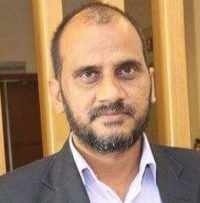
کچھ لفظوں کی کہانی————– حرام
محمد صلاح الدین
ملک صاحب میرے گھر تشریف لائے، رکھ رکھائو سے کامیابی اور امارت جھلک رہی تھی۔ ڈرائنگ روم میں بیٹھتے کے بعد گپ شپ شروع ہوئی
وہ مجھے اپنی کامیابی کی داستان سنانے لگے کہ کس طرح انہوں نے انتہائی غربت سے انتہائی امیری کا سفر طے کیا
کھانے کے وقت میں نے ان کے سامنے مٹن کڑھائی، چکن بریانی اور کھیر رکھی
انہوں نے کہا میں روٹی، چاول اور میتھا نہیں کھاسکتا، بس ایڈہ وغیرہ کھا کر گزارہ کر لیتا ہوں
مجھے بڑا دکھ ہوا کہ اتنی دولت ہونے کے باوجود ملک صاحب کچھ کھا نہیں سکتے
مجھے خاموش دیکھ کر ملک صاحب بولے “اگر ساری زندگی اللہ کی نعمتوں سے لطف اندوز ہونا چاہتے ہو تو حرام سے بچنا، آدمی
” ۔ جتنا حرام سے لذت لیتا جاتا ہے اللہ تعالی بھی اس پر اسی تناسب سے حلال لذتین بند کر
-
New coaches inducted with Pakistan Express
Pakistan Express has been inducted with new coaches each refurbished at the rate Rs.11 million. The train connects Punjab with Sindh (Rawalpindi to Karachi via Faisalabad). The carriages of Pakistan Express had been overhauled at the Railways Carriage Factory in Islamabad around five to seven years ago and had recently undergone maintenance at the Railways Carriage Shop, at Mughalpura in Lahore. The refurbishment of these carriages cost Rs11 million per coach. By comparison, a new carriage costs Rs80 million. The old coaches of the train have been replaced with reconditioned carriages. Moreover, the old bogies had been equipped with 110 volts power supply which will now be switched to 220 volts, provided through a dedicated power plant.