Blog

  • Bhasha Dam WAPDA seeks proposals

    Pakistan Water and Power Development Authority (WAPDA) has asked three pre-qualified consortia of consultants for proposals for main works of Diamer Bhasha Dam. It is another significant development for the dam. Three pre-qualified consortia for consultancy services for project’s main works are: AECOM of United States, Mott Mac Donald Ltd of England and Lahmeyer of Germany. Apart from generating 4,500 MW of cheap hydro power, the dam will store 8.1 million acre feet of water for agriculture and tackling floods.

    The dam is immensely important for country’s socio-economic development and is a priority project of federal government and WAPDA. Land acquisition, development of infrastructure in the project area and implementation of social action plan are the current activities at the site. Land is being acquired by governments of Gilgit Balitistan and Khyber while 15 contracts are being executed for constructing WAPDA offices, colonies, contractors’ camps, roads, and other infrastructure in the project area.

    Here the resettlement plan has been prepared as per international guidelines. This plan includes construction of model villages for the affected and other steps for socio economic uplift of local populace. Arrange-ments are also being made to preserve pre-historic rock carvings and local cultural heritage with the help of international experts. G/o Pakistan and WAPDA are working on many options regarding financial arrangements for construction of the multi billion dollar dam.

  • UIT show on Aug 21

    Usman Institute of Technology (UIT) is holding Final Year Projects’ Exhibition and Job Fair Spring 2013, on Wednesday August 21 at the Institute. UIT, a part of Hamdard University, is a leading institution with diverse academic and research programs. Its dynamic faculty is dedicated to excellence. Subjects taught at UIT are:

    Electrical Engineering, Electronics, Telecommunication, Computer Systems and also Computer Science at graduate and post graduate levels, says a press release. UIT is equipped with state of the art laboratories and computing facilities and offers the most conducive environment for quality education and research.

    Engineering programs at UIT are conducted in a professional manner and engineers produced here have the potential to meet the challenges faced by modern industries. However, engineers graduating from here need to be introduced to the industry and R&D organizations. This can be best achieved by developing an effective interaction between industry and graduating students. This is the aim of annual Final Year Projects’ Exhibition and Job Fair.

    It brings the industry and students closer. The exhibition will start at 5 PM on Wednesday August 21. UIT hopes to attract representatives of many industries spending a day with students for possible employment and seeing its R&D and academic environment. It is pertinent to mention that the exhibition and job fair provide a good platform to the industry to introduce their organizations to students.

  • Gobar gas to give 22MW

    Punjab and a renowned Canadian company High Mark Bio-Gas have signed a memorandum of understanding for setting up a 22 MW bio-gas power project. High Mark will set up the pilot project in six months. Chief Minister Shahbaz Sharif welcomed signing of this MoU. He said vast opportunities of generating energy from bio-mass and gobar gas exist in Punjab and we will fully benefit from these to minimis energy crisis.

    He said there was great potential of setting up bio-gas projects in Punjab as there was no shortage of fuel for gobar gas projects. High Mark Bio-Gas Chief Executive Evan Chrapko briefed about his company and assured it will make vigorous efforts to complete the project in six months.

  • LESCO discovers Power theft is hi-tech engg

    Lahore Electric Supply Company (LESCO) has detected several modern and sophisticated ways of stealing power during its current anti-theft campaign. Power thieves are ‘expert’ engineers and use advanced technology to steal power by installing various types of switches, remote controls and underground cabling systems etc. It involves more hi-tech engineering than regular electrical work for using power in factories and homes, said a LESCO official.

    LESCO has so far saved about 10 MW electricity due to its anti-theft campaign. Police and FIA help forced many power thieves to close their activities while general public is also avoiding such practices. LESCO anti-theft squads are now focusing on industrial and big commercial consumers. Power theft needs advance technology. In India they use remote control devices as small as compass boxes used by school students.

    When attached with meter, they produce high voltage and high frequency discharge on pressing a button. This creates a small spark in the meter and results in no data recording. When the user wants the meter to function normally, he reactivates it using the same method. LESCO has started analyzing recovered devices to counter their future use. Besides, FIA has also been asked to trace the persons who make and distribute these systems. LESCO is also going for Remote Metering System, to enable it to check minute changes in a consumer’s load behavior as well as electricity meter.

    Power theft is a silent crime and is a worldwide phenomenon that causes heavy revenue losses to power utilities. Criminal investigation and prosecution is needed to combat this social evil, he added. LESCO has also decided to install new meters in boxes and at higher than normal points on poles. Secondly, CEO LESCO has directed XENs and SDOs to personally read meters of industry, commercial and large domestic premises. He appealed to the public to help and cooperate in law enforcement and report power theft. He described this as a national responsibility and added that LESCO is already advertising telephone numbers for this purpose. LESCO is also doing a survey to get the latest and updated data of all its consumers especially industrial, commercial and large domestic units.

    It will help the company act effectively against power theft, The survey will update consumer data on sanctioned and present load and status of meter etc, says a press release received on e-mail. The law requires every consumer to notify power companies about load increase but the law is not followed. It is a big reason for inaccurate load management as actual load is different from what the consumers were originally sanctioned. The survey will give LESCO true picture of its consumers. In the meantime, LESCO is continuing its anti-power theft campaign. From June 28 till end July, the company had recovered around Rs 110 million from 284 power thieves.

    Data from anti-power theft campaign reveals that so far most power pilferage was detected in northern circle (Badami Bagh, Ravi Road etc). Here officials detected 135 cases, registered 10 FIRs and issued bills for 23,170 units to power thieves. In Central Circle (Iqbal Town etc) it detected 21 cases, registered 8 FIRs and billed for 27,281 units were billed to power thieves. Third was Eastern Circle (Shadman and etc) where 11 cases were detected, 5 FIRs were lodged and 2,240 units were billed. But Southern Circle (Defence) had the most interesting figures. It had the lowest numbers of theft incidents but had the most power – 141,378 stolen units. Here only 6 cases of theft were detected.

  • Fire safety at hi-rise building PFSC suggests measures

    Punjab Fire Safety Commission (PFSC) has suggested comprehensive measures for present and future 4 storey and higher buildings. Justice Syed Mansoor Ali Shah of Lahore High Court sees them as ‘most useful’ and says these must be adopted by development authorities. Justice Shah also directed (July 15) the Fire Commission to send these to Lahore Development Authority and City District Government to ensure their incorporation in future buildings to ensure residents’ safety and security on a long term basis. These recommendations were submitted in the court in response to a petition seeking measures against fire incidents.

    These require Fire Commission to inspect all hi-rise buildings but added that LDA and CDGL had not provided the Commission a list of such buildings for initiating such a survey. Fire Commission’s recommendations include installation of external steel staircases, fire doors, hydrant systems, fire extinguishers, fire alarms, clear access, no obstructions in the exit path, evacuation plan and emergency lighting besides quick response teams in all 4 storey (38 ft high) or taller buildings.

    The commission recommended that: 01. External steel staircases must be installed at all buildings taller than 38 feet for safe evacuation. 02. Buildings with 10,000 sq ft or more covered area must have a minimum of two external staircases, one on each side. 03. Emergency staircases must be separated from the main building preferably by two fire doors opening outwards. The fire doors shall be hinge type with a clear width of at least 3 feet and minimum of one hour fire resistant rating. 04. All hi-rise buildings must have an external or internal pressurised hydrant system running along the exit stairs.

    05. The hydrant system should have independent power supply for its pumps. 06. All multi storey buildings should have independent over head water tank or an external underground tank to support the hydrant system. 07. Underground tank should be accessible to rescue services and vehicles at all times. 08. All four storey and taller buildings should have fire extinguishers for immediate needs. 09. The buildings should have comprehensive intelligent fire detection and alarm systems with detectors at all locations within the buildings. 10. Emergency vehicles be provided free access to buildings. 11. Buildings must prominently display evacuation plans at entrances. 12. Exit signs must be legible, displayed prominently and printed on florescent material guiding towards emergency exits.

    13. Each such building should have a `Building Safety Manager` to ensure implementation of commission’s recommendations and ensure prompt evacuation. In the meantime Lahore Development Authority has begun to ask builders/ owners of 60 ft or higher commercial buildings constructed on 4 kanals (about 2,400 sq yards) or more to build helipads on rooftops for rescue work in case of emergencies like the May 9 fire in LDA Plaza. Present rules are silent about helipads and other safety measures. The new rule is being drafted as a result of Lahore High Court’s directive to LDA to amend rules to tackle LDA Plaza like incidents.

    Had there been a helipad on LDA Plaza’s roof, many more people would have been rescued, said an LDA officer. High Court’s directions have moved LDA, CDGL and Pakistan Engineering Council to begin drafting rules for hosting helipads on hi-rise buildings. A LDA meeting also suggested installing sprinklers, emergency lights and rescue equipment at every floor of tall buildings. Under the new rules all multi storey buildings, except residential ones, will be required to have sprinklers on all floors (except basements). Another rule will require owners of completed buildings to arrange fire drills jointly with Rescue 1122 and city district government at least once a year for training building owners/ occupants on fire fighting and rescue measures. After Lahore, the new rules will be extended to Multan, Faisalabad etc.

  • Kunda connections SEPCO acts

    Sukkur Electric Power Company (SEPCO) supported by FIA teams raided (August 2) and cut 500 kunda connections and 300 non-payers of bills in Dadu and surrounding areas.

    Over 50 FIRs against were also lodged for illegal connections. SEPCO removed 3 illegal transformers in Talti and Guduabad towns in Taluka Bhan Syedabad. According to a senior SEPCO officer outstanding amount against 300 non-payers of bills was about Rs 13 million.

    All suspects involved in theft of electricity escaped during the raids.

  • Industrial waste treatment plants Govt can’t help industry

    Industrial waste treatment plants Govt can’t help industry

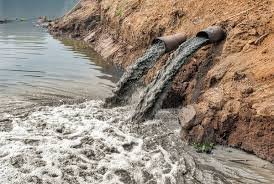
    Sindh government has refused to install combined effluent treatment plants (CETP) in Landhi and Korangi industrial areas and told industrialists to do it themselves. Sindh Environment Secretary Dr Zulfiqar Shallwani, said it was mandatory for industrialists to treat their effluents and bring it within limits of National Environment Quality Standards (NEQS) before letting it out of their premises. He said under environment laws CETPs are industrialists’ responsibility. The government can allocate nothing for such projects.

    And industrialists should fulfill their corporate responsibility and put up waste water treatment facility collectively for controlling industrial pollution. Sindh Environmental Protection Agency chief Naeem Mughal said industry and other stakeholders must fully abide by that law. The government can provide technical guidance and consultancy, if industries so wish, while industries not treating their effluents could face action for violating the law. Besides effluents, disposal of industrial solid waste is also required. Relevant civic agency could help here.

    SEPA monitoring teams would visit industries to collect waste water samples to see if effluents are being properly treated. KATI had requested the government for help because individual industrialists did not have enough funds or space for treatment plants as CETPs need huge sums. They said that since the government had installed a CETP at Kotri, it should also help other industrial areas.

    They said manufacturing costs were already moving up due to law and order situation, load shedding etc. And this makes sparing funds difficult.

  • Drinking water Pk develops unique filter

    Drinking water Pk develops unique filter

    Textile Institute of Pakistan and University of Bolton, UK have jointly developed an innovative filtration plant that could potentially be the answer to water related issues worldwide. The system uses Geosynthetic materials IXT (ion exchange textiles) to provide clean well water. The research can be fully marketed at international level with masses benefiting greatly. And since the materials are regenerative in nature, the solution would be cost effective. Some other Pak universities too are working in tackling problems associated with drinking water. Higher Education Commission (HEC), and higher education institutions are playing a pivotal role in resolving issues related to safe water.

    This research is done in collaboration with leading American and British universities. It may be noted here that majority of Pakistan’s population does not have access to clean drinking water, hence more than 40% of reported diseases are water borne. An estimated 250,000 child deaths in Pakistan every year are due to water borne disease. Research projects being done jointly with US universities are:

    Assessment and Development of Renewable Groundwa-ter Resources in Quetta Valley, by University of Balochistan, jointly with Western Michigan University and the University of Houston, USA Removal of Arsenic from Drinking Water Using Iron Ores as Low CostReactive Adsorbent Media between University of Engineering and Technology Pakistan and University of Arizona USA, Capacity Building for Research, Education and Training in Water Resources Management in Pakistan between UET Pakistan and University of South California USA, Small Scale Sewage Treatment and Wastewater Reuse System for Pakistan between Quaid-e- Azam University and George Washington University USA Water, sanitation, health and hygiene interventions in a northern Pakistani Village between Karakoram International University and National Institute of Health, USA.

    Similarly apart from the above mentioned project of the filtration plant, lead researchers from Pakistan and England have shared expertise between UET Lahore and Newcastle University through bilateral research exchanges and capacity building in developing Water Scarcity Management Strategies in Upper Indus Basin. According to an HEC press release, Chairman HEC Dr Javaid R Laghari said that HEC’s goal is to develop local expertise and indigenous technology through strong collaborations with research groups in leading foreign universities. These projects are based on exchange of knowledge and technology.

    Pakistani researc-hers got vital information at workshops, conferences, seminars and lectures. It helped them build capacity to resolve issues pertaining to unsafe and unclean drinking water in Pakistan. Dr. Laghari assured that HEC would continue to work closely with the government to share the expertise of higher education sector to resolve various problems facing masses of Pakistan.

  • Sukkur, Kotri, Guddu barrages are all sick Sindh needs new barrages

    Sukkur, Kotri, Guddu barrages are all sick Sindh needs new barrages

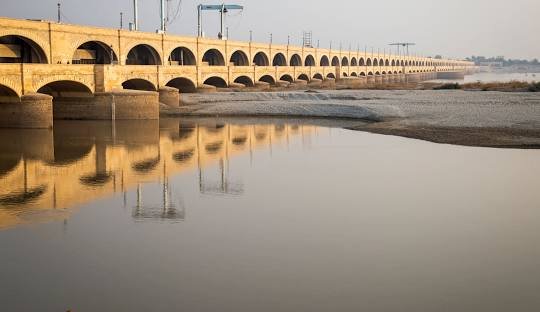
    Sindh is facing a huge problem, all its three barrages at Sukkur, Kotri and Guddu are sick and need to be rebuilt. Farmers and experts are worried about this but the government does not seem to be concerned – prima facie, not at all. Built in 1932, Sukkur barrage is over 80 years in age. It services 8 million acres through seven major canals. It is in bad shape now for the past many years. Condition of Kotri (built in early 1950s) and Guddu (built in mid 1960s) barrages is even worse.

    These barrages had given Sindh the best irrigation system, but due to unconcerned authorities, they have fallen prey to degradation. So much so that an IRSA (Indus River System Authority) team had noted that silt in the river had turned into a ‘delta’ just upstream of Sukkur barrage. Guddu and Kotri barrages too are utterly mismanaged. Silt deltas are a threat to the barrage structure. But no de-silting had been done at Sukkur though funds had been sanctioned for it. Such a delta takes years – not days – to come into being. Irrigation officials are required to keep dismantling all such formations to let the water flow smoothly across the barrage, said an over 70 years old resident of Sukkur. But our Irrigation Department has done nothing over the years, thus turning the ‘delta’ into a threat for the barrage structure, he added.

    It is about time that G/o Sindh and Islamabad begin seriously exploring possibilities of building new/ alternative barrages to save the province’s agriculture and national economy. Apart from ill attention of the Irrigation Department, another big villain here is direct outlets (DOs) given to big land lords. Irrigation Act has no room for DOs. These DOs are one of the main reasons for agriculture sector’s destruction says Sindh Abadgar Board (SAB). They oppose DOs. SAB president told the press that DOs have destroyed different canals and distributaries. An IRSA team had recently found 70 DOs in Kirthar Canal taking off from Guddu Barrage and mainly serving Balochistan.

    Of these illegal modules, 63 are in Sindh and 7 in Balochistan. As per SAB estimates, Rohri and Nara Canals, both taking off from Sukkur Barrage, have 150 DOs. Not only that, Sukkur Barrage’s command area had been shifted to Kotri Barrage but it got no additional water, he claimed. Figures about DOs in other canals taking off from Sukkur, Kotri and Guddu were not immediately available. According to SAB, distributaries and canals in the province are being encroached and facing destruction. SAB demanded equipping all water channels with tail gauges, standard equipment in the British era, to measure water reaching different points. Tail gauges are no longer in use.

    SAB also called for repairing regulators many of which had almost collapsed. It was pointed out that in case of floods, water discharged by Sukkur Barrage could not flow under Larkana – Khairpur and Dadu – Moro bridges.

  • DJ’s Geology Dept dies!

    DJ’s Geology Dept dies!

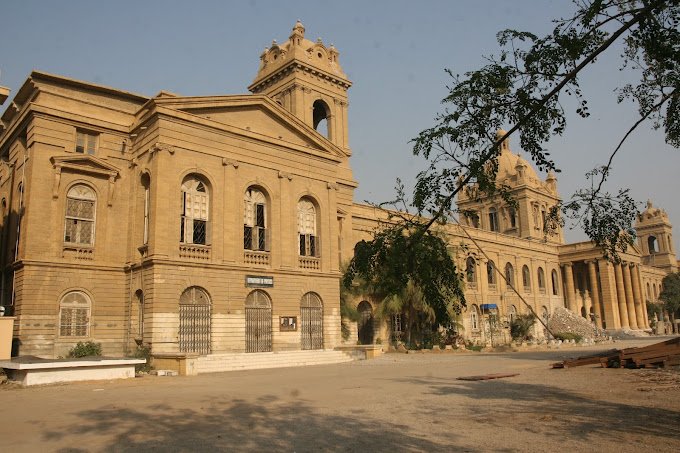
    Geology Depart-ment of DJ Science College, Karachi has almost died. It would not be producing any geologist in (near) future as the college will have no teacher after Prof Syed Maroof Hussian, head of Geology, retired on August 27, 2013. DJ College is Sindh’s only institute, which had (has) Geology Department. It was founded about 32 years ago by Prof. Sardar Naqvi. But Sindh government had not appointed even one professor in these 32 years in this department.

    Its closure means in (near) future, Pakistan will be unable to produce quality geologists and will have to depend on foreign experts to explore untapped natural resources. DJ Science College, situated in the heart of Karachi, is a prestigious and reputable institute rendering meritorious services in science education for last many decades. According to college professors its students used to assist the country in geological surveys to locate oil and gas fields.

    Retirement of Prof Maroof is forcing the college management to think of closing the department as no teachers are available to keep the department alive. This puts the future of over a hundred students under a question mark. Prof Maroof has been the only teacher for years teaching geology here. According to some senior teachers, the college principal had written many letters to Sindh Education Department to appoint geology professors but officials always turned deaf ears towards our proposals.

    Situation in government colleges is going from bad to worst as many colleges in the city lack even English teachers including DJ Science College, SM Arts & Commerce College, St Lawrence College and Women College. Teachers pointed out that number of teachers is inadequate for increasing number of students in government institutions. Sindh Professors and Lecturers Association (SPLA) has severely criticized Sindh government for not filling the vacant posts of professors and lecturers at government colleges in the past several years.

    Departments of geography and social sciences had been closed over the years in many government colleges of the city.