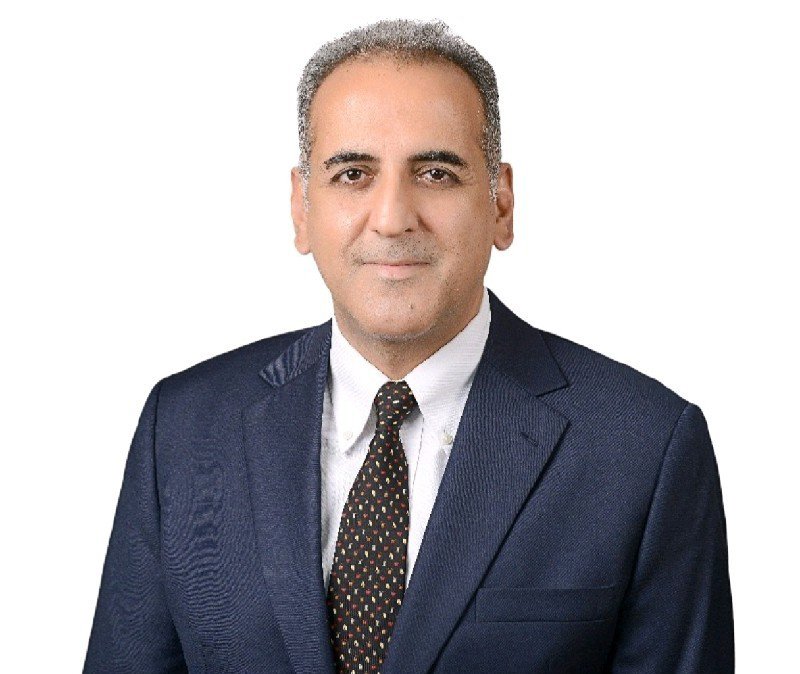
Pakistan Oxygen Limited has informed the Pakistan Stock Exchange (PSX) that its Board of Directors has re-appointed Mr. Matin Amjad as Chief Executive Officer (CEO) of the company.
According to the notification, the decision was taken during the Board meeting held on February 13, 2026. Mr. Amjad has been re-appointed for a period up to August 2, 2026, in accordance with Section 187(1) of the Companies Act, 2017. The re-appointment follows the recent election of directors of the company.
The company did not disclose further details regarding the terms of the re-appointment; however, the move signals continuity in leadership at one of Pakistan’s leading industrial and medical gases manufacturers.
Market observers believe the decision reflects the Board’s confidence in Mr. Amjad’s leadership and strategic direction, particularly at a time when industrial activity and healthcare demand remain key drivers for the gases sector.
About Pakistan Oxygen Limited Pakistan Oxygen Limited is a leading manufacturer and supplier of industrial, medical, and specialty gases in Pakistan. The company operates production facilities across the country and caters to a diverse range of sectors including healthcare, manufacturing, metallurgy, energy, and infrastructure.
Its product portfolio includes oxygen, nitrogen, argon, hydrogen, carbon dioxide, and various specialty gas mixtures used in industrial processes, hospitals, laboratories, and engineering applications.
With decades of operational experience, the company has established itself as a key player in supporting Pakistan’s industrial development and healthcare infrastructure, particularly during periods of heightened medical oxygen demand.
Pakistan Oxygen continues to focus on operational excellence, safety standards, and sustainable growth while maintaining compliance with regulatory requirements and corporate governance standards as a publicly listed company. – ER News Desk
Marked as one of the critical initiatives in the aftermath of the Gul Plaza fire incident in Karachi, the Association of Consulting Engineers Pakistan (ACEP) organized a comprehensive conference on Friday (13 February) to identify gaps in emergency preparedness and building safety regulations.
The conference exposed grey areas in fire prevention mechanisms and discussed weaknesses in enforcement of laws, lack of required infrastructure in buildings, and the urgent need to make structures safe for human habitation.
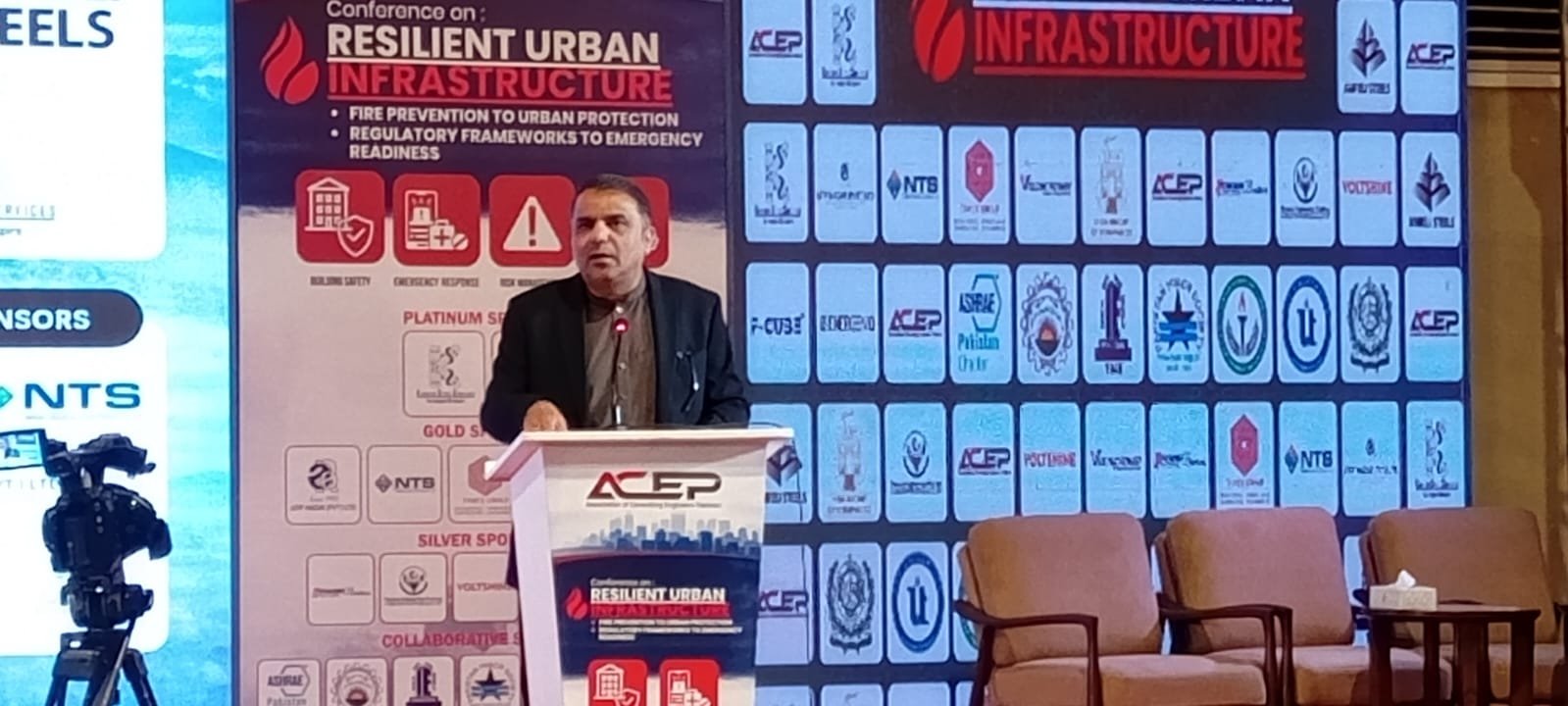
Engr. Waseem Asghar, President ACEP
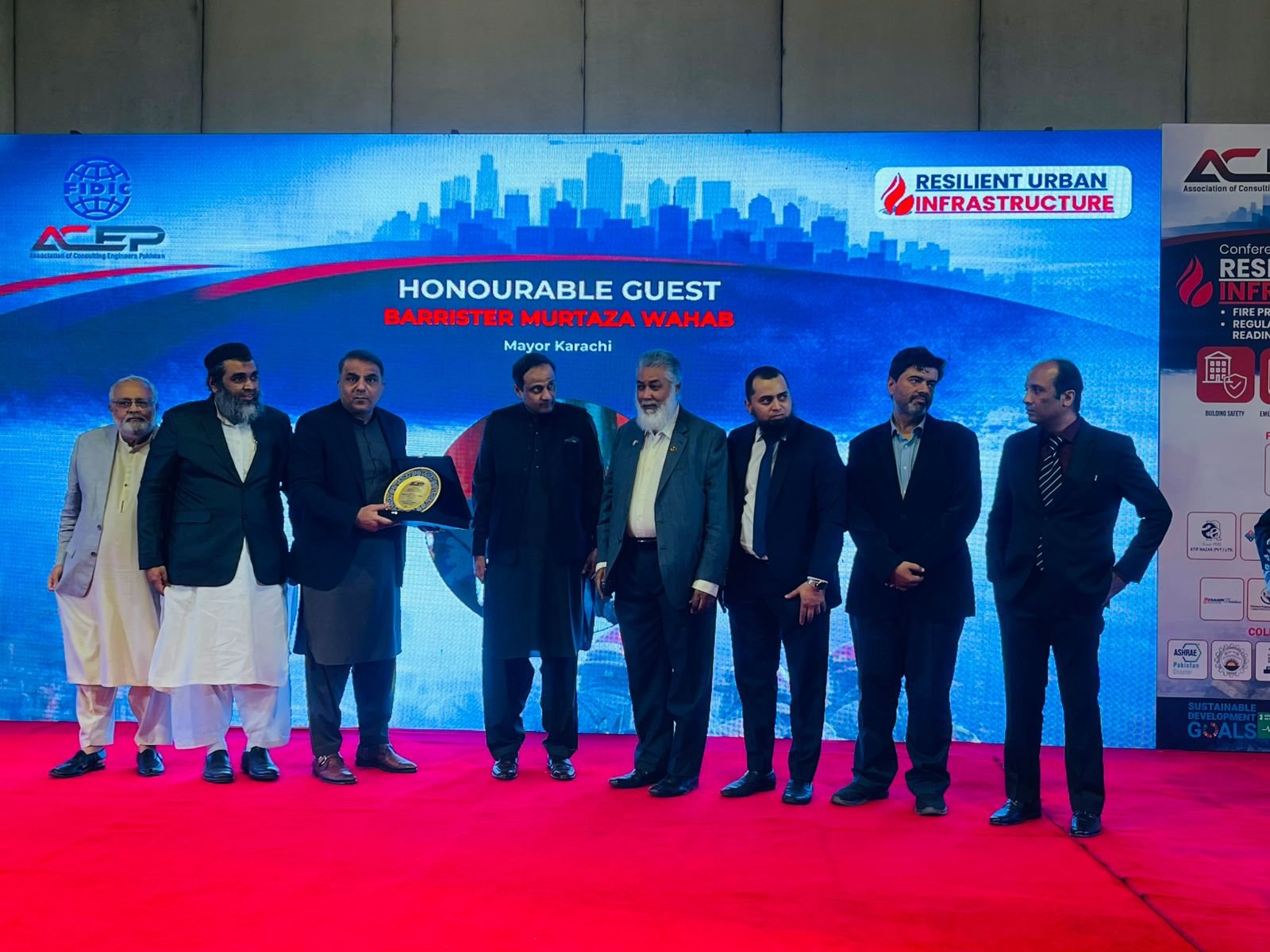
The event was attended by Sindh Minister for Information Sharjeel Inam Memon, a civil engineer by education from Mehran University of Engineering & Technology, Jamshoro, and Barr. Murtaza Wahab, Mayor of Karachi, who faced significant challenges in the wake of the Gul Plaza fire incident.
The moot was organized in collaboration with the Institution of Engineers Pakistan (IEP), FIDIC, and several other professional bodies. A large number of engineers from the public and private sectors, corporate professionals, academicians, and constructors participated to contribute recommendations aimed at improving Karachi’s building safety standards and engaging stakeholders as well as the general public in reform efforts. Pakistan’s first woman architect, Yasmeen Lari, also attended as a special guest.
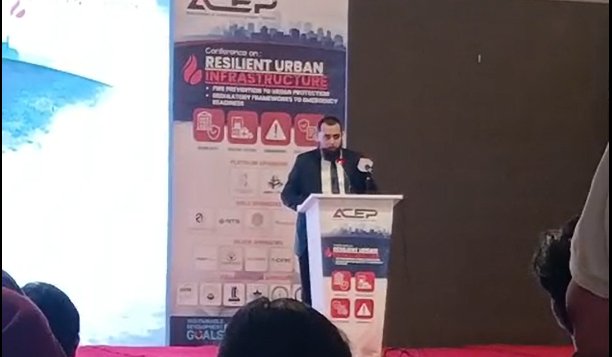
Engr. Wasif Nazar, Secretary ACEP
The organizers arranged three comprehensive panel discussions along with expert presentations involving professionals from industry, engineering institutions, and academia. The discussions culminated in a set of recommendations, the outlines of which were presented by Dr. Sarosh Hashmat Lodi, former Vice Chancellor of NED University, Karachi.
Dr. Lodi emphasized that empowering local governments is essential for effective implementation of safety measures. He called for mandatory third-party validation of building safety compliance and stressed replacing the prevailing “NOC culture” with a “culture of responsibility.”
He highlighted the importance of urban planning and establishing a well-networked firefighting system across Karachi. Among the key recommendations were dedicated fire-extinguishing vehicles for specific zones, emergency water reservoirs, strengthening fire stations and civil defence mechanisms, addressing risks in dense markets and the informal economy, eliminating illegal wiring, and making fire safety systems, drills, and training mandatory.
He also stressed regular audits of high-rise buildings to ensure residential safety, improved safety mechanisms in industrial and logistics zones, and the development of localized fire safety plans. He expressed confidence that if implementation begins immediately, significant improvements could be achieved within the next five years.
Speaking on the occasion, Waseem Asghar, President, ACEP said the recommendations would be forwarded to competent forums. He stressed that laws must be reviewed in light of technological advancements and market demands, noting that many existing regulations have become obsolete. He described the Gul Plaza tragedy as yet another lesson compelling the city to move forward with serious reforms, particularly in older buildings and aging infrastructure.
Addressing the gathering, Sharjeel Inam Memon termed the issue extremely important and said society has developed a tendency to avoid discussing core issues. “This is not a political issue; it is a matter of life and death for citizens,” he remarked.
He acknowledged that in incidents like the Gul Plaza fire, the government bears primary responsibility, though accountability often shifts among stakeholders. “The government carries the greatest responsibility,” he said.
Memon highlighted shortcomings in the entire construction process from soil testing and structural design to plumbing and electrification and stressed that all stakeholders share responsibility. He admitted that there were gaps in enforcement and regulatory compliance and said the government had identified shortcomings following the Gul Plaza incident.
He further stated that corrective measures must be undertaken collectively, although primary responsibility rests with the government. After the tragedy, the government engaged chambers of commerce and industry organizations, assigning them the task of conducting safety audits within their respective sectors to ensure compliance with safety requirements.
The conference concluded with a renewed commitment from stakeholders to strengthen enforcement, modernize regulations, and improve emergency preparedness to prevent similar tragedies in the future. – ER Report
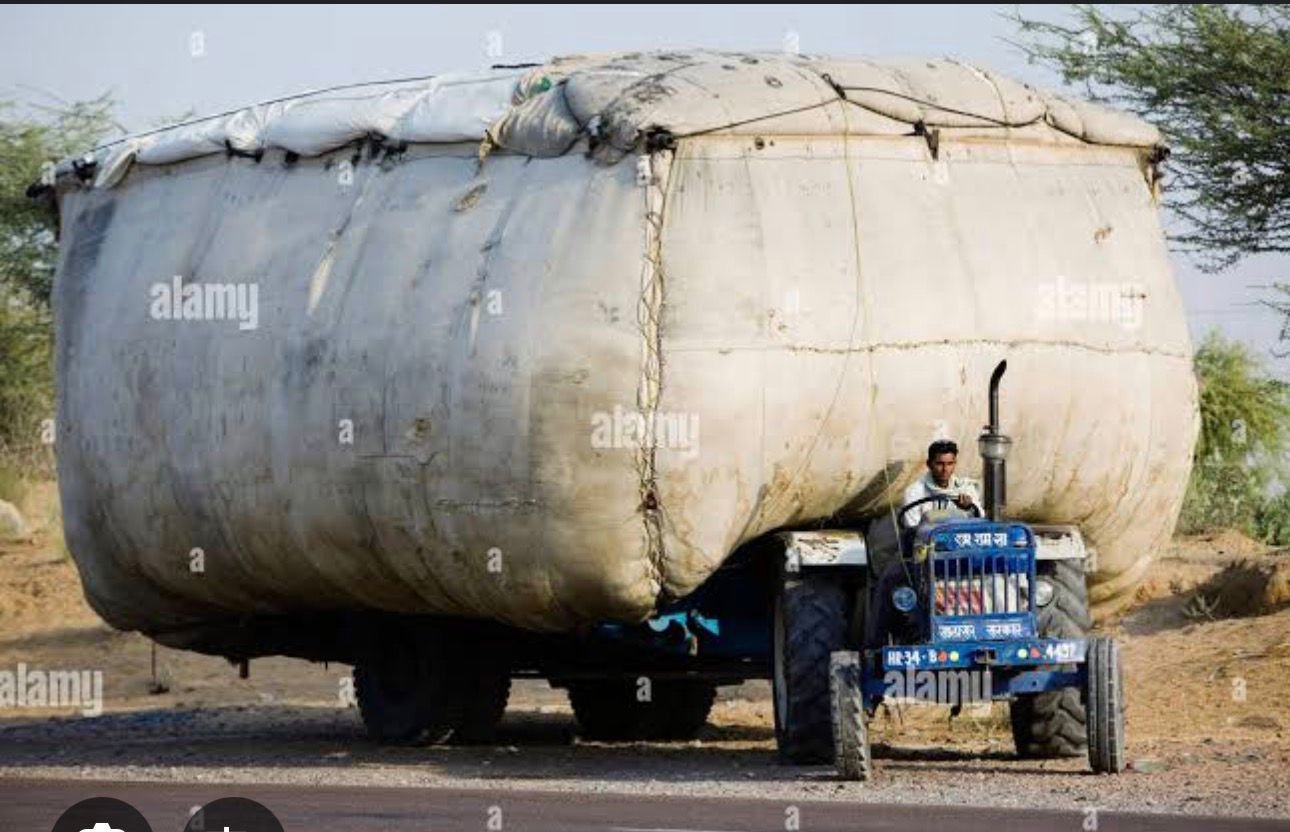
Across the fields of Sindh and Punjab, the harvest season is a time of economic activity—but on the roads, it has become a season of tragedy. Every year, scores of families lose fathers, sons, and daughters to accidents caused by overloaded tractor trolleys and trucks carrying sugarcane, cotton, and rice or wheat bhoosa. These are not ordinary collisions—they are preventable disasters, born from vehicles that extend far beyond their legal width, lack reflectors, and operate on rural and highway roads with little oversight.
The Invisible Killers: Extra-Width Vehicles Imagine a narrow two-lane country road. Now picture a tractor trolley loaded with sugarcane stretching over two lanes, its taillights completely hidden by the crop. At night, a motorcyclist approaches, unable to see the obstruction in time. Within seconds, a life is lost. This is the daily reality in Sindh’s sugarcane belt—Badin, Thatta, Tando Allahyar—and Punjab’s cotton heartlands—Multan, Rahim Yar Khan, and Faisalabad. Tractor trolleys and trucks carrying loose bhoosa and crop residues extend dangerously beyond the vehicle’s dimensions. Rear and side reflectors are rare. Drivers, pressed for time and profit, take risks that cost lives.
Families Torn Apart The human cost is devastating. Fathers crushed in collisions; children losing primary caregivers; mothers widowed in a single, preventable night. In many cases, accidents go unreported, and local hospitals simply tally bodies without highlighting the underlying cause: unsafe agricultural transport. Statistics reveal the scale of this crisis:
Pakistan sees over 41,000 road deaths annually, with rural accidents contributing a significant portion.
In Punjab alone, 4,791 people were killed in 2025, a 19% increase from the previous year.
Tractor-trolley crashes specifically account for about 10% of all road deaths in the province, according to emergency services reports.
Motorcycles, the primary mode of rural transport, are involved in 75% of these accidents, highlighting the vulnerability of ordinary families. These numbers are more than statistics—they are families shattered and futures lost.
Roads Not Built for This Burden It’s not just human life at risk. Roads in Pakistan’s countryside are designed for light to medium traffic, not for tractor trolleys carrying multiple tons of sugarcane or cotton. Excessive width and weight can cause rutting, shoulder collapse, and damage to culverts. When these overloaded vehicles enter highways, they disrupt traffic flow, force unsafe overtaking, and accelerate pavement deterioration. Public funds are wasted on constant repairs while fatalities continue unabated.
Why Enforcement Fails Why does this persist? The answer lies in weak governance, fragmented authority, and cultural acceptance. Traffic police, highways departments, agriculture departments, and local administrations share overlapping responsibilities, yet enforcement is seasonal and reactive. Farmers and transporters operate without proper awareness or incentives to comply, and laws regarding vehicle width, load limits, and mandatory reflectors are rarely enforced. Even when roads are wide enough, extra-width vehicles force other traffic into dangerous positions. On highways, this creates bottlenecks, head-on risks, and chaotic conditions, especially during harvest months.
Lessons from Abroad Countries like India, Australia, and EU members have tackled similar challenges effectively:
Tractor trolleys classified as restricted agricultural vehicles with daylight-only operation.
Mandatory rear and side reflectors, tail lights, and hazard boards.
Dedicated corridors and seasonal permits manage harvest traffic safely. Pakistan can adopt similar measures, tailored for Sindh and Punjab, to save lives without harming farmers’ livelihoods.
A Way Forward The solution is clear and urgent:
Strict enforcement of width, length, and axle-load limits for tractor trolleys and trucks.
Mandatory reflectors and hazard boards for all agricultural vehicles.
Dedicated harvest season corridors and route planning on highways and farm-to-market roads.
Public awareness campaigns in Sindhi, Punjabi, and Urdu about the human cost of unsafe loading.
Infrastructure upgrades where loads exceed original road design limits. Billions are wasted repairing damaged roads, and countless lives are lost—not because of nature, but because of human neglect. Farmers, transporters, and authorities must work together. Roads are not private property—they are public lifelines.
When Convenience Kills The sugarcane trolley may look harmless on a field, and a heap of cotton or bhoosa may seem like a minor inconvenience on a country lane. But when these vehicles hit public roads, they become invisible killers. Every year, families mourn loved ones; children grow up without fathers; and communities suffer under broken roads. It’s time to stop this silent epidemic. Enforce the laws. Install reflectors. Redesign transport logistics. Protect lives. Because no harvest, however valuable, is worth a family’s tragedy.
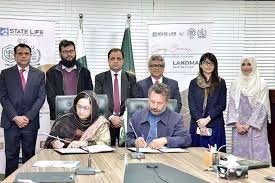
The Pakistan Standards & Quality Control Authority (PSQCA) and the Controller General of Accounts (CGA) have signed a Memorandum of Understanding (MoU) for the implementation of the Financial Accounting and Budgeting System (FABS). The move is being described as a major step toward institutional transparency, digital governance, and financial reform.
The signing ceremony was held at the Ministry of Science and Technology (MoST) in Islamabad and was chaired by the Federal Secretary, Mr. Shahid Iqbal Baloch. The MoU was signed by Ms. Sayeda Zia Batool, Director General PSQCA, on behalf of the authority, and Mr. Abdul Basit Jasra, Director General (Management Information Systems), on behalf of the Controller General of Accounts.
According to an official communication, the agreement reflects the Ministry’s strong commitment to modernizing governance systems and strengthening institutional accountability.
The integration of FABS within PSQCA will enable automation of payroll and pension systems, adoption of the National Chart of Accounts, standardized financial reporting, and real-time monitoring of expenditures. Through technical collaboration with CGA’s Directorate General (MIS), SAP experts will support the implementation, while structured capacity-building initiatives will equip PSQCA officials to independently manage and sustain the system.
The Federal Secretary stated that digitization is not merely a technological shift but a governance reform that enhances public trust and institutional credibility. He emphasized that such forward-looking collaborations demonstrate MoST’s resolve to align its organizations with the Government of Pakistan’s broader vision of “Digital Pakistan” and transparent service delivery.
The Director General PSQCA noted that the reform will eliminate manual processes, reduce discretion, enhance audit readiness, and ensure full compliance with national financial standards. The partnership marks a decisive step toward real-time accountability and improved financial integrity within PSQCA.
The Ministry of Science and Technology views this agreement as part of a broader reform agenda and aims to extend similar digital financial integrations across other attached organizations under MoST, ensuring a unified, transparent, and technology-driven administrative framework.
This MoU stands as another milestone for MoST, reinforcing its role not only as a promoter of scientific advancement but also as a model of modern governance and institutional excellence. – ER News Desk
The initiative is among the world’s largest post-disaster housing reconstruction programs, aimed at building more than 2.1 million climate-resilient homes for flood-affected families, says Murad Shah.
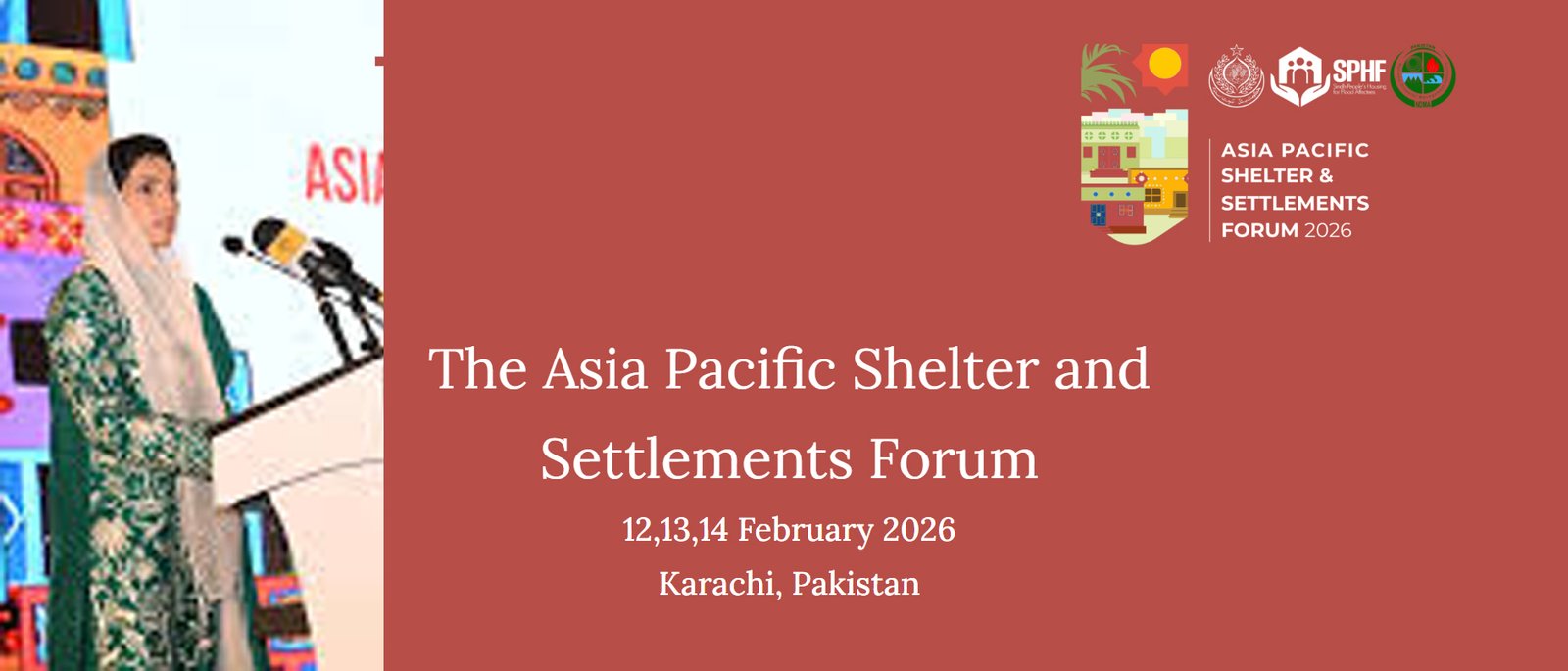
Sindh’s post-flood housing recovery program was showcased as a global model for climate-resilient and people-centred reconstruction as the provincial government hosted the three-day Asia-Pacific Shelter and Settlements Forum (APSSF) 2026, bringing together regional and international policymakers, humanitarian leaders, development partners, and experts.
The forum, held at a local hotel, was attended by Sindh cabinet members, Chief Secretary Sindh Syed Asif Hyder Shah, senior officials, diplomats, representatives of international financial institutions, donor agencies, academia, civil society, and the private sector, making it the region’s largest gathering focused on housing and human settlements.
In her presidential address, First Lady of Pakistan, Bibi Aseefa Bhutto Zardari, said safe shelter is not merely a structure but the foundation of dignity, security, and opportunity. Chief Minister Syed Murad Ali Shah said Sindh has demonstrated that large-scale recovery, social inclusion, and climate resilience can go hand in hand, citing the province’s housing initiative as a global benchmark.
“Resilience is built with people, not for people. When communities are trusted and empowered, recovery becomes faster, stronger, and more sustainable,” the Chief Minister said.
“Shelter is far more than a roof over one’s head. It is where families recover from loss, children feel secure enough to dream, and communities regain the strength to move forward,” the First Lady added, stressing that climate-resilient housing must be treated as a basic human right, especially in climate-vulnerable regions.
Highlighting the widening impact of climate change, rapid urbanization, and inequality across the Asia-Pacific region, Bibi Aseefa noted that insecure housing disproportionately affects women and children. She emphasized that placing women at the center of housing ownership creates long-term social and economic stability for entire communities.
World’s Largest Post-Disaster Housing Effort The Chief Minister detailed the Sindh People’s Housing for Flood Affectees (SPHF) program, launched after the devastating 2022 floods that submerged nearly 70 percent of the province and damaged over 2.1 million homes. He described it as one of the largest post-disaster housing reconstruction programs in the world, aimed at building over 2.1 million climate-resilient houses.
He underscored that homes and land titles are being issued in women’s names, promoting ownership, dignity, and financial inclusion. The program has drawn global recognition, including a recent visit by World Bank President Ajay Banga to SPHF sites in Larkana.
“Everywhere we went, affected families made only one demand: give us our homes back,” he recalled. Murad Ali Shah said the initiative was made possible through the vision of Chairman Bilawal Bhutto Zardari, who pushed for rebuilding homes despite severe financial constraints. Within a week of initial planning, the World Bank pledged support, followed by commitments from multiple partners at a global donors’ conference. He informed participants that over 700,000 houses have been completed, while construction continues at scale.
Administrative and Technical Engagement Welcoming delegates, Chief Secretary Syed Asif Hyder Shah said the forum aimed to develop a practical roadmap to address climate-driven housing challenges. Field visits have also been planned to provide firsthand insight into recovery efforts. SPHF CEO Khalid Shaikh shared that around 750,000 houses have been completed, over 1.5 million are under construction, and 1.5 million bank accounts have been opened for beneficiaries, most of them women.
International Endorsements World Bank Country Director Bolormaa Amgaabazar praised Sindh’s efforts, calling the forum a vital platform for global dialogue on shelter and resilience. She noted that millions opened bank accounts and secured land ownership for the first time under the program.
ADB Deputy Country Director Asad Aleem emphasized the need to integrate housing with water, sanitation, and hygiene (WASH) facilities and reaffirmed ADB’s continued support over the next three years.
IsDB Regional Director Saleh Jlassi joined via video link, while EU representative Jeroen Willems termed Sindh’s program well-planned and effective, announcing that the European Investment Bank would also support the initiative.
Representatives from IOM, Habitat for Humanity, and Catholic Relief Services (CRS) highlighted Sindh’s recovery model as a beacon of hope for disaster-affected regions worldwide.
A documentary featuring stories of flood survivors and the reconstruction journey was screened during the forum, underscoring the scale of devastation and the unprecedented recovery effort underway. The conference will continue with technical sessions and policy dialogues focused on translating commitments into actionable strategies to ensure safe, resilient, and dignified housing across the Asia-Pacific region. KARACHI: ER News Desk
The Federation of Pakistan Chambers of Commerce & Industry (FPCCI) has welcomed the banking sector’s voluntary decision to reduce the Export Refinance Facility (ERF) rate by 3 percent, bringing the end-user financing cost down to 4.50 percent. FPCCI President Atif Ikram Sheikh described the move as a timely relief for export-oriented industries and reiterated that export-led growth remains the only viable and sustainable path for Pakistan’s economy.
He said the reduction addresses FPCCI’s long-standing demand to rationalize the cost of capital and lower the cost of doing business, particularly for manufacturers and exporters struggling with high financing costs.
Atif Ikram Sheikh noted that the initiative currently falls within the existing ERF limit of Rs 1,052 billion, adding that the ceiling is designed to remain flexible and may be enhanced if the State Bank of Pakistan (SBP) or the Export-Import Bank of Pakistan (EXIM Bank) decide to increase the limit through June 2027.
He termed the 300 basis point reduction more than a routine adjustment, calling it a direct boost to the competitiveness of Pakistan’s manufacturing and export sectors. With the revised ERF rate of 4.50 percent, he said Pakistani exporters would be better positioned to compete with regional economies such as Bangladesh and Vietnam, where exporters have long benefited from low-cost financing.
The FPCCI president observed that the relief has come at a critical time when the private sector is actively supporting the government’s vision for economic recovery and export growth. He expressed optimism that the rate cut would encourage greater industrial borrowing.
Highlighting the 57 percent increase in the SME borrower base during the last fiscal year, he said the reduced ERF rate would help sustain momentum for small exporters who are most vulnerable to high borrowing costs.
Atif Ikram Sheikh further stated that FPCCI expects the reduction in financing cost to help push year-on-year export growth into positive territory, provided continued support is extended by the government and its institutions. He also appreciated the SBP’s role in facilitating exporters’ access to finance.
Reaffirming FPCCI’s commitment to working closely with the government, he said the reduced ERF rate would serve as a cornerstone for economic stability and export growth in 2026 and beyond. – ER News Desk
The Securities and Exchange Commission of Pakistan (SECP) registered 3,881 new companies in January 2026, raising the total number of registered companies in the country to 283,540.
According to the SECP, the newly incorporated firms brought in a cumulative paid-up capital of Rs 8.4 billion during the month. Notably, 99.9 percent of the registrations were completed online through the commission’s eZfile system, reflecting continued progress in digital facilitation.
A total of 82 companies attracted foreign investment from investors belonging to a diverse range of countries, including China, the United States, Afghanistan, Australia, Turkey, the United Kingdom, Palau, South Africa, Albania, Denmark, Germany, Malaysia, South Korea, Spain, and Ukraine.
In terms of company structure, private limited companies accounted for 59 percent of new registrations, while single-member companies made up 38 percent. The remaining 3 percent comprised public unlisted companies, not-for-profit organisations, and limited liability partnerships.
Province-wise, Punjab led with 1,998 new companies (52 percent), followed by the Islamabad Capital Territory with 747 (19 percent), Sindh with 601 (15 percent), Khyber Pakhtunkhwa with 343 (9 percent), Gilgit-Baltistan with 127 (3 percent), and Balochistan with 65 (2 percent).
Sector-wise, the Information Technology and e-commerce sectors topped the list with 729 new companies, followed by trading (613), services (494), and real estate development and construction (347).
Other prominent sectors included tourism and transport (234), food and beverages (183), education (145), mining and quarrying (100), marketing and advertising (95), communications (83), textiles (77), corporate agricultural farming (75), pharmaceuticals (65), healthcare (62), engineering (60), fuel and energy (55), and auto and allied industries (45).
An additional 419 companies were registered across other sectors such as chemicals, cosmetics and toiletries, cables and electrical goods, and paper and board. – ERMD
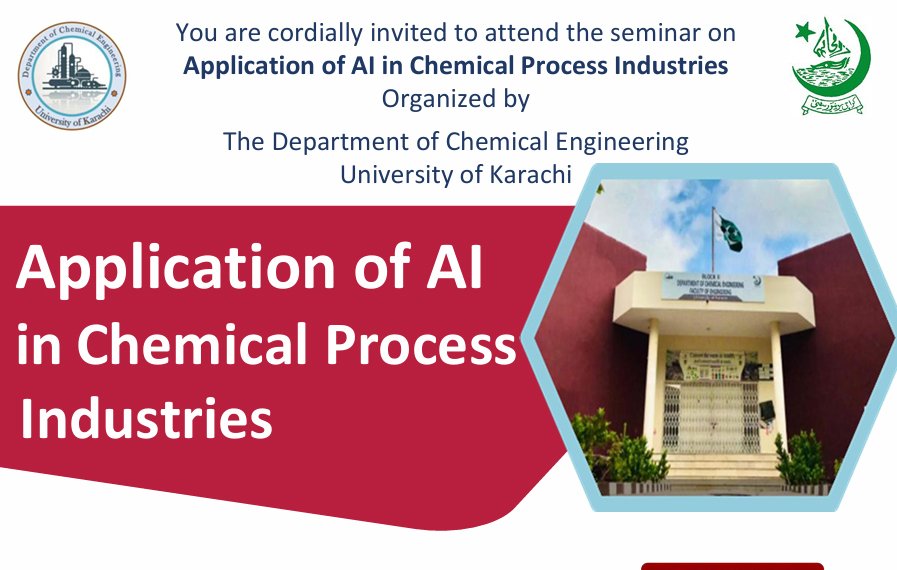
The Department of Chemical Engineering, University of Karachi (UoK), is organizing a conference titled “Application of AI in Chemical Process Industries” on Friday, 13 February 2026, aiming to explore how artificial intelligence is transforming process optimization, safety, efficiency, and innovation in chemical and allied industries.
Prof. Dr. Bilquees Gul, Dean, Faculty of Science & Engineering, UoK, will attend as Guest of Honour. Prof. Dr. Khalid Mahmood Iraqi, Vice Chancellor, University of Karachi, will grace the occasion as the Chief Guest, while Prof. Dr. Muhammad Raza Shah, Director, ICCBS, UoK, will also attend as Guest of Honour.
The conference will feature expert talks by Dr. Humera Tariq, Associate Professor, Department of Computer Science, UoK; Dr. Syed Ali Ammar Taqvi, Associate Professor & Chairperson, Department of Food Engineering, NED University; and Dr. Zafar Sajid, Founder & President of iCodeGuru and an engineering executive based in Silicon Valley, USA.
Proceedings will begin at 9:15 am with Tilawat-e-Quran, followed by the welcome address at 9:20 am. Technical talks will commence at 9:30 am. A certificate distribution ceremony for volunteers of 1st ICSGEEDI’26 is scheduled for 10:30 am.
Addresses by the Dean, ICCBS Director, and Vice Chancellor will follow, highlighting academia’s growing focus on integrating AI with engineering education and industrial applications. The event will conclude with a vote of thanks by Prof. Dr. Shagufta Ishtiaque, Chairperson, Department of Chemical Engineering, followed by shield distribution, closing session, and lunch at 12:15 pm.
The conference is expected to bring together students, researchers, academicians, and industry professionals to discuss practical pathways for adopting AI-driven solutions in Pakistan’s chemical process industries. – ER News Desk
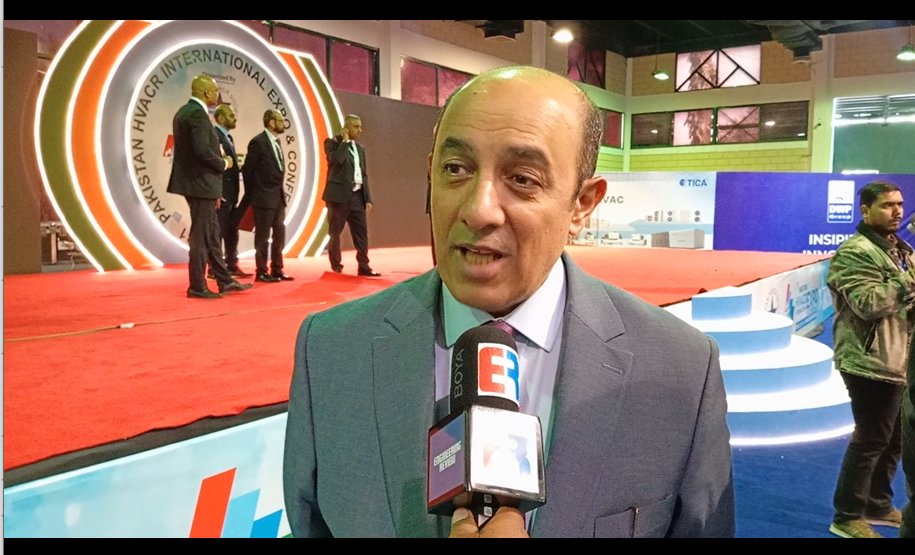
Hamad Ali Mansoor, Chief Executive Officer of the Engineering Development Board (EDB), has sought recommendations from the HVACR Society to help formulate a progressive policy framework for the HVACR sector.
Speaking to Engineering Review during the HVACR Conference and Exhibition 2026 held at the Expo Center Karachi, he said the sector has significant potential but needs better channelization and policy support. He added that he has invited the HVACR leadership to visit the EDB to present their recommendations.
He said, “Pakistan is a growing economy, and it is encouraging to learn at this HVACR Conference that this is the fifth-largest exhibition in the country. It is a matter of pride and optimism. We have tremendous potential that needs to be properly channelized.
“The Prime Minister of Pakistan, Shehbaz Sharif, and the Adviser to the Prime Minister, Haroon Akhtar, have given special instructions to facilitate industry in every possible way. I have invited the HVACR leadership to visit the Engineering Development Board in Islamabad and submit their recommendations so that we can develop a constructive and supportive policy for the sector.” – ER Report
I have invited the HVACR leadership to visit the Engineering Development Board in Islamabad and submit their recommendations so that we can develop a constructive and supportive policy for the sector. pic.twitter.com/8iz9JbKA9F
The extensive moot to focus on fire safety, compliance, and emergency readiness.
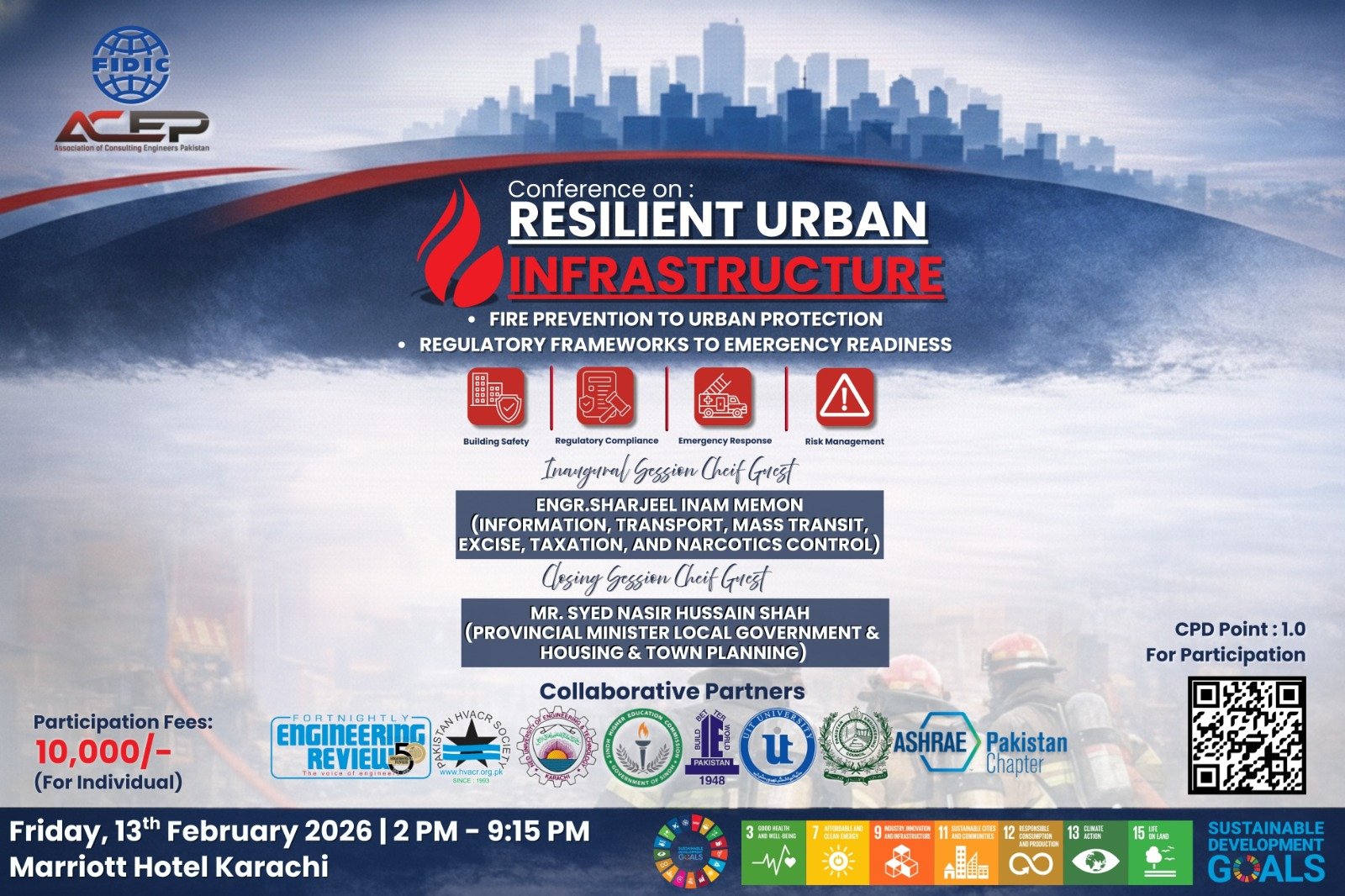
The Association of Consulting Engineers Pakistan (ACEP), in collaboration with FIDIC and several professional and academic partners, is organizing a high-level Conference on Resilient Urban Infrastructure on Friday, 13th February 2026, from 2:00 PM to 9:15 PM at the Marriott Hotel Karachi.
The conference will revolve around critical themes including building safety, regulatory compliance, emergency response, and risk management, with a special focus on fire prevention and urban protection and strengthening regulatory frameworks for emergency readiness.
This conference is being contemplated as one of the serious professional initiatives in the aftermath of the tragic Gul Plaza fire incident, where a large number of people lost their lives. The incident exposed a harsh reality of the city: thousands of buildings remain highly unsafe and ill-prepared to handle fire and other emergency situations.
The event aims to bring together policymakers, engineers, regulators, and industry stakeholders to deliberate on practical solutions to prevent such tragedies in the future.
Engr. Sharjeel Inam Memon, Minister for Information, Transport, Mass Transit, Excise, Taxation, and Narcotics Control, will grace the event as the Inaugural Session Chief Guest. Mr. Syed Nasir Hussain Shah, Provincial Minister for Local Government & Housing Town Planning, will attend as the Closing Session Chief Guest.
A wide range of collaborative partners, including professional engineering bodies, academic institutions, and industry forums, are supporting the conference. The event also carries CPD Point: 1.0 for participating professionals.
The organizers hope the conference will serve as a platform to initiate reforms, improve enforcement of building codes, and enhance coordination among departments responsible for urban safety and emergency management, aligning with the broader objectives of the UN Sustainable Development Goals (SDGs). – ER