Aimed at controlling trade deficit through self-reliance and creating local industrial initiatives, the Pakistan Engineering Council (PEC) has proposed a policy titled ‘Make in Pakistan’ that the authors believe would improve the country’s GDP growth, build the capacity of engineering professionals, and encourage investments.
The draft of the policy which is in circulation among engineering circles does not bear any names of the authors or the PEC committee that has undertaken this effort. Also, no major groups of the engineering fraternity knew about making such a policy. To the surprise of many, either no member of the management committee or scantly few had a hint.
The draft talks about the traditional woes of the country’s economy entangled in a vicious circle that takes off from the increased dependency on import-based consumption leading to an extensive burden on Foreign Exchange reserves to dependence on global lenders and the consequences for the country and its people.
The policy proposes to revisit the existing situation in the manufacturing sector of Pakistan by Promoting a culture of Localization as a workable instrument in the form of Import substitution. For that matter, we need to create a healthy “Industrial Culture for Localization of Equipment / Products.” To support this cause; Policy Framework for “MIP” is proposed as a viable, sustainable solution for economic reforms and a first step towards indigenization.
To get rid of the adverse impact on economic growth, the policy has proposed a under that maximizes localization of Production of Engineering Goods (EGs) through indigenous resources, and import substitution to cater to the domestic consumer & industry demands. taking solid steps through various measures to ensure “Technology Transfer and build Technology Acquisition Houses are ensured.
This plan also includes collaboration with advanced/ developed countries in a phased yet systematic manner. The policy also focuses on enhancing exports of Medium to Hi-tech products resulting in earning precious foreign exchange and job creation for youth, especially for Technicians, IT Professionals, Computer Scientists, Technologists, and Engineers.
The document identifies areas such as Automobiles and Components, Mining, Gemstones & Exploration, Agri-tech and Food Processing, Construction and Machinery, Energy Sector with a focus on Renewable Energy, Oil and Gas, IT and Software, Defense Manufacturing, Roads and Highways, Sports Industry, Leather Products, Medical and Healthcare Equipment, Biotechnology and Pharmaceutical, Electrical Equipment and Machinery, Media, Entertainment, Ports and Shipping Equipment, Textiles and Finished Derivative, Electronic Components, Systems and PCB Manufacturing, Chemicals, Railway Industry, Domestic Appliances, Telecommunication Equipment, Artificial Intelligence, Product and Process Designing, Cutlery & Sanitary, Waste Management & Recycling.
The policy says the PEC will act as a statutory body for structuring the MIP policy framework, implementation, and periodic review.
In addition, the PEC proposes legal reforms and incentives to promote the manufacturing sector, such as offering tax breaks/rebates, simplifying regulatory processes, and easing foreign investment restrictions through the Act of Parliament for continuity and sustainability of MIP Policy for the entire 15 years.
PEC has been proposed to lead all regulatory bodies dealing with product certification standards, quality assurance, and implementation of good engineering practices (PNAC, EDB, DRAP, PSQCA CBTL, etc.) needs to be established to certify National R&D, perform conformity assessment, and issue product, process and services certification including software under PEC in collaboration with all stakeholders.
The Industrial Development Bank of Pakistan (IDBL) which was established in 2018 should be made effectively functional with the allocation of funds for financing the engineering industry to process development and automation, establishment of local test facilities, supervisory control, technology transfer and transition. Funding may be provided after thorough scrutiny on an ROI basis.
The promotion/posting and financial benefits of the Trade attachés of Pakistan embassies should be linked with the export performance to the country of their posting.
The policy paper has also talked about Improving the Business Environment for which it has suggested bolstering the manufacturing sector.
It says the government needs to address some critical concerns such as 1) Improving the ease of doing business, 2) Simplifying regulatory and bureaucratic procedures, 3) Removing unnecessary barriers to facilitate manufacturing and trade through Investor facilitation cells, provision of supporting platform for new start-ups and Coopting of regulatory measures for encouraging indigenization of products and technology. This initiative will create a conducive environment for local investors to establish their businesses in the country and attract Foreign Direct Investments (FDIs) in the manufacturing sector.
On Industry-Academia Collaboration, it talks about involving all the stakeholders by collaboration of industry and academia and providing a platform as a pool of experts, retired professors, and professionals for bridging the industry–academia gap by: 1) Development of technology diffusion & transfer cells, 2) Involving experts from industry and academia, 3) Demand-driven projects/ research papers by students and faculty, 4) Establishment of a pool of experts to support the industry on the format of JICA, CBI, etc, 5) Capacity building of lead auditors and consultants for all relevant international certifications, 6) The engineering companies/ entities, including design, manufacturing, consultancy, and execution to be regulated by PEC, 7) regulating of engineers, professionals, and faculty members to carry out research projects relevant to the need of the industry to the extent of commercialization., 8) promoting and providing financial benefits of the faculty engaged with successful completion of industrial project be considered 04 times the 01 research paper. – Karachi: ER Report
Tag: CPEC
-
PEC’s Make in Pakistan Policy Proposes 15-year Localization Plan
-
AIIB approves US$250 m loan after WB’s US$350m to help Pakistan
The Asian Infrastructure Investment Bank’s (AIIB) Board of Directors have approved a loan of $250 million to help Pakistan strengthen its response to the social and economic fallout from the Covid-19 pandemic, said the financial institution in a press release at the end of year 2023.
The AIIB said that the loan is co-financed by the World Bank, adding that this development policy financing will help bolster the government’s Resilient Institutions for Sustainable Economy Program.
The RISE Program is a part of a set of measures Pakistan has undertaken towards recovery from the impact of the pandemic. The program aims to stimulate investment in human capital, expand social safety nets, improve the emergency health infrastructure and foster economic growth.
The investment bank stated that the latest loan brings AIIB total support to Pakistan’s Covid-19 response to $750 million.
The statement mentioned that the health crisis is expected to have far-ranging and long-term repercussions on growth, which may undermine the hard-fought progress the country has made in restoring macroeconomic stability.
The AIIB said that pandemic has taken a toll on employment in the formal and informal sectors, with the poor, women and other vulnerable groups disproportionately affected.
“The pandemic has rapidly evolved in Pakistan and now threatens to undo many of the hard-won gains made in reducing poverty over the past two decades,’ said AIIB Vice President, Investment Operations, Konstantin Limitovskiy.
“Our immediate support is critical and will contribute to the government’s efforts to mitigate pandemic-related shocks, so that the country may continue on its path to sustainable development,” he said.
The AIIB said it does not have a regular instrument for policy-based financing, the Bank is extending such financing on an exceptional basis under its Covid-19 Crisis Recovery Facility to support its members through projects co-financed with the World Bank or the Asian Development Bank.
It merits mentioning that The World Bank had announced in December 2023 that its board of directors had approved the long-awaited $350 million loan ‘2nd Resilient Institutions for Sustainable Economy (RISE-II) Operation’ to Pakistan to support key macroeconomic reforms in energy, taxation and business environment.
As per the announcement of the bank, the financing was aimed to strengthen fiscal management and promote competitiveness for sustained and inclusive economic growth
The operation contributes to better fiscal management by improving fiscal policy coordination, enhancing debt transparency and management, strengthening the taxation of property, and improving the financial viability of the power sector, the bank had said, adding that the financing seeks to foster growth and competitiveness by reducing the cost of tax compliance, improving financial sector transparency, encouraging the use of digital payments, and promoting exports by lowering import tariffs.
The bank believed that Pakistan needed urgent fiscal and structural reforms to restore macroeconomic balance and lay the foundations for sustainable growth.
“RISE-II completes the first phase of tax, energy and business climate reforms geared to raising additional revenues, improve the targeting of expenditures and stimulate competition and investment.”
World Bank’s team leader for the operation Derek H. C. Chen said that based on the foundations laid through RISE II and parallel support by other international financial institutions, Pakistan had the opportunity to tackle long-standing structural distortions in its economy after the upcoming general elections. “Failing to use this opportunity would risk plunging the country back into stop-and-go economic cycle,” he said.
Importantly, the combined $600m program would help Pakistan shore up foreign exchange reserves while taking measures to enhance the policy and institutional framework for improved fiscal management and regulatory conditions that support growth and competitiveness. -
Variants of Electrospray Ionization
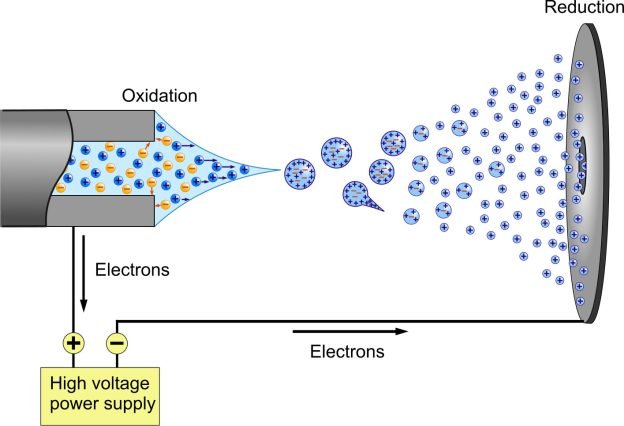
Electrospray ionization mass spectrometry or, less frequently, electrospray mass spectrometry are the two names for ESI-based mass spectrometry.
ESI is referred to as a “soft ionization” approach because there is hardly any fragmentation. Although the molecular ion (or more precisely, a pseudo molecular ion) is almost always detected, this can be helpful because very little structural information can be gleaned from the straightforward mass spectrum. Electrospray is used to disperse the liquid containing the target analytes into a fine aerosol. The usual solvents for electrospray ionization are made by combining water with volatile organic molecules since the ion production requires considerable solvent evaporation (e.g. methanol acetonitrile). Compounds that improve conductivity, such as acetic acid, are typically added to the solution to reduce the initial droplet size. Additionally, these species serve as a source of protons to speed up the ionization process. In addition to the high temperature of the ESI source, large-flow electrosprays can benefit from the nebulization of a heated inert gas like nitrogen or carbon dioxide.
The ions detected by mass spectrometry may be quasimolecular ions, which are denoted [M + H]+ when a hydrogen cation is added, [M + Na]+ when a sodium ion is added, or [M H] when a hydrogen nucleus is removed. Multiple-charged ions, such [M + nH]n+, are frequently seen. Numerous charge states can exist in massive macromolecules, creating a distinctive charge state envelope.
Because of the significantly smaller initial droplets created by the electrosprays when they are operated at low flow rates, ionization efficiency is increased. Significant sensitivity gains could be achieved with lower flow rates, as low as 200 nL/min, according to a 1993 study by Gale and Richard D. Smith. Two research teams came up with the term micro-electrospray (microspray) in 1994 to describe electrosprays that operate at low flow rates. Emmett and Caprioli showed that operating the electrospray at 300–800 nL/min resulted in increased performance for HPLC–MS analyses. Wilm and Mann showed that an electrospray at the tip of emitters made by drawing glass capillaries to a few micrometres may be sustained at a capillary flow of less than 25 nL/min.
In a two-step procedure called laser-based electrospray-based ambient ionization, material from a sample is desorbed or ablated using a pulsed laser, and then a plume of that material interacts with an electrospray to produce ions. The sample substance is deposited on a target close to the electrospray for ambient ionization. Material from the sample is ejected from the surface and into the electrospray, which creates highly charged ions, when the laser desorbs or ablates it. These include laser ablation electrospray ionization, matrix-assisted laser desorption electrospray ionization, and electrospray laser desorption ionization. The study of noncovalent gas phase interactions also makes use of electrospray ionization. It is believed that noncovalent compounds from the liquid phase can be transferred into the gas phase using the electrospray method without affecting the non-covalent interaction. When analyzing ligand substrate complexes by ESI-MS or nanoESI-MS, issues such non-specific interactions have been found. Investigating the relationships between enzymes and medications that function as their inhibitors is a fascinating example of this. ESI has been employed in competition experiments between STAT6 and inhibitors to screen for potential novel medication candidates. Smaller droplets are produced and only a few microliters of a sample are consumed during nano-electrospray ionization. The reduced electrospray droplet size made it possible to perform successful desolvation and ion production at low flow rates, which was a specific advantage of operating at low pressure. -
‘Global Leader Panel Discussion: Charting STEM Career’ at MUET Jamshoro 70 pc females in STEM not contributing due to different reasons Striking balance between professional work and the family; extremely difficult to give 100 percent either side.
A group of highly regarded women engineers working with leading engineering universities and organizations around the world came to a consensus during a panel discussion at Mehran University of Engineering & Technology, Jamshoro that it is almost impossible to strike a balance between professional work and the family and thus it turns extremely difficult to give 100 percent either side.
They talked about launching proper training for women so that they took active participation in working committees, created resilience and assertiveness, and have potential work-from-home opportunities to balance family needs and thus reduce stress.
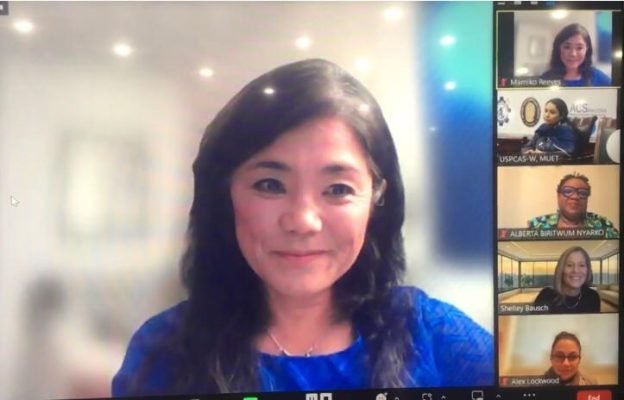
Titled as ‘Global Leader Panel Discussion: Charting STEM Career’ was part of the International Women Engineers Conference, organized by the Women Engineers Development Committee (WEDC) of the Pakistan Engineering Council (PEC) held at Mehran University of Engineering and Technology Jamshoro.
The panelists included Dr. Mamiko Reeves, International Programs Strategist, Northwood University, Midland, Michigan, United States, Dr. Alex Lockwood, Strategic Content Integrator for NASA’s Science Mission Directorate, Dr. Alberta Adjebeng Biritwum-Nyarko, Director, Policy Planning Monitoring & Evaluation, Division, Ghana Health Service Headquarters, Shelley J. Bausch, Senior Vice President, Global Industrial Coatings and Prof. Dr. Khadija Qureshi, Convener, Women Engineer Development Committee, PEC, Chairperson, Department of Chemical, Engineering, Mehran University of Engineering & Technology Jamshoro. Dr. Mamiko Reeves moderated the session.
They were of the view that engineering plays an important role in solving global challenges, and driving innovations for its continuous success a diversified pool is needed. Women Engineer Development Committee (WEDC) of the Pakistan Engineering Council contributes to a diverse and innovative engineering workforce.
The panel discussion started with the sharing of the journeys of the panelists and how they could manage to reach these leadership positions. They emphasized the challenges of balancing work and family, discussing their commitment to caring for both their families and professional roles. Early experiences in taking care of younger siblings were highlighted as formative. The panelists addressed the importance of promoting healthy relationships within working teams, effective interactions with women in various positions, and the development of a nurturing culture to support one another in organizations. While talking about balancing work and family, the panelists said that it is quite difficult rather impossible to give 100 percent to both.
Panelists were asked about the values they would like to impart through their work, and they underscored commitment, teamwork, creating a friendly workplace culture, integrity, adaptability, honesty, effective coordination, respect for coworkers, and encouragement of those striving for the organization’s success. They also emphasized the idea that a leader’s success lies in building other leaders.
As per the recent survey, 30 percent of women in STEM are employed whereas 20 percent are unemployed and 50 percent are not working or taking part in any activity due to various reasons. Collectively, 70% of females in STEM are not contributing due to different reasons. There is a high need for improvement and working for the empowerment of these ladies so effective output should be obtained for the women in STEM.
The panelists recommended mentoring as crucial for women’s career development and higher education, the importance of doing good and being good, self-assessment for daily progress, and the significance of both formal and informal mentoring. They stated that mentoring is very important and it gives important life lessons also.
Regarding opportunities to change things for women in work organizations, the panelists supported proper training for women, active participation in working committees, resilience and assertiveness, potential work-from-home opportunities to balance family needs and reduce stress, and the encouragement of the younger generation to gain skills, seek opportunities, and inspire leaders to recognize their potential.
It’s high time academicians, government and industry can work together to develop strategies to help demystify engineering making it more accessible to women and young people and empowering them to realize their potential in the field of engineering.n -
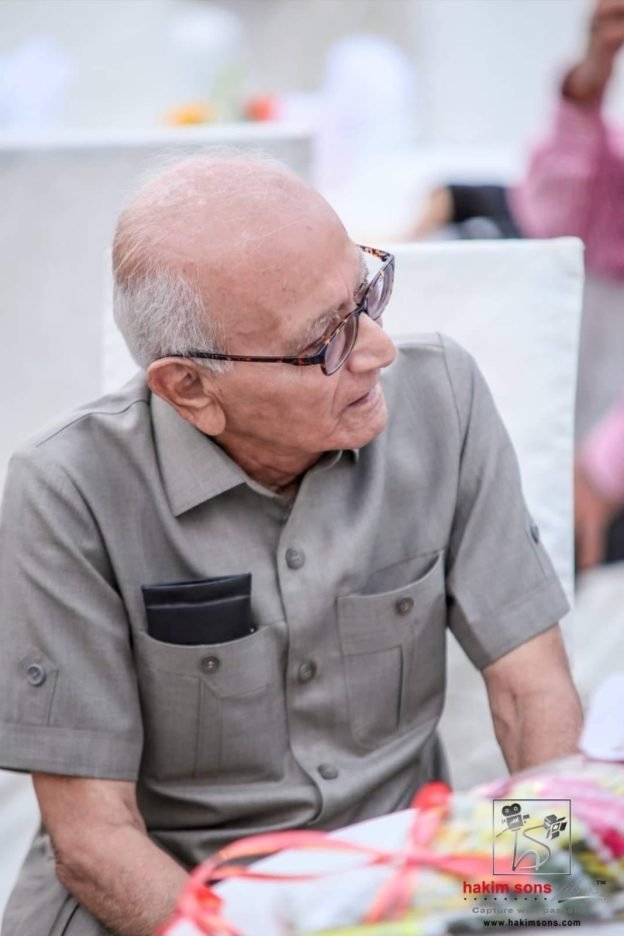
MEMORIAL TRIBUTE In Memoriam: Prof. Dr. Haroon Jangda March 20, 1942 – November 08, 2023
It is with heavy hearts that we bid farewell to a towering figure of knowledge, an inspiring educator, and a cherished member of our community, Prof.
Dr. Haroon Jangda, who peacefully departed on November 08, 2023.
Born on March 20, 1942, Dr. Haroon Jangda’s life was a testament to an insatiable thirst for wisdom. His academic journey culminated in a Ph.D. in Chemical Engineering from Sheffield University in the United Kingdom, a profound reflection of his unwavering passion and dedication to his field. Originating from Bantwa, a serene town in Kathiawar within the former district of Gujarat, India, his life bore the imprints of diverse experiences and deep roots.
In his formative years, Dr. Jangda’s life was shaped by humble beginnings. Growing up with a sister and a brother, education held a special place in their hearts. Dr. Jangda’s educational odyssey began at Madrassa-e-Islamia School in Karachi for matriculation, progressing to D.J. Government Science College for intermediate studies. The late 1950s witnessed his academic zenith with a BSc (Hons) from Karachi University. Awarded the Dawood Foundation Merit Scholarship for overseas studies, he embarked on a transformative academic journey in England, attaining both his Master’s and Ph.D. degrees in Chemical Engineering from Sheffield University
In 1964, a profound and enduring connection was established when Dr. Jangda lent his expertise to a project at Dawood Jute Mills in East Pakistan. This marked the inception of an extraordinary partnership with the Dawood family, who held him in high esteem. Later, in 1970, he became an indispensable figure at Dawood College, assuming the position of the head of the Chemical Engineering department in 1972. He held this role until 1998, when he stepped down due to health challenges. Despite this change, he remained dedicated to the institution, continuing his association as a professor until his final moments.
In the 1990s, he was given the opportunity to serve as the principal of the college, a gesture he graciously declined. His rationale was rooted in the belief that undertaking such a responsibility would potentially compromise his professional role as a Chemical Engineer, where he served in an advisory capacity for the industry.
Prof. Dr. Haroon Jangda’s life and accomplishments stand as a testament to an extraordinary journey. His impact transcended the academic realm, leaving an indelible mark on the communities he touched. His legacy embodies knowledge, commitment, and an enduring connection with the Dawood family—a legacy that will resonate through the ages.
The Department of Chemical Engineering at Dawood College boasts a rich history, being one of the pioneering institutions to introduce the Bachelor of Engineering program in Chemical Engineering in 1964. Dr. Haroon’s extensive industry network played a pivotal role in benefiting students over the years. His ability to coordinate expert assistance for final-year student projects, arrange industrial internships, guide graduates into industry roles, and help fresh graduates secure employment set him apart. His unparalleled connection with industry professionals earned him the reputation of a father figure in the Karachi chemical industry.
He assumed the role of mentor for nearly every faculty member within the University. His unwavering alignment with the University’s objectives made him a reliable source of support for the Chief Executive whenever required. His distinguished and amiable personality was widely acknowledged.
As an educator, Dr. Jangda’s influence knew no bounds. His teaching style seamlessly combined wisdom and warmth, leaving an enduring mark on his students. His dedication to excellence and his eagerness to provide guidance and mentorship endeared him to all as a beloved teacher and mentor.
Beyond his scholarly pursuits, Dr. Haroon Jangda was renowned for his kindness, benevolence, and genuine desire to assist others. His influence extended beyond the classroom, touching the lives of numerous individuals fortunate enough to know him.
Dr. Jangda is survived by his family, who will eternally cherish his memory as a beloved family member and a respected scholar.
Prof. Dr. Haroon Jangda’s legacy in the realm of Chemical Engineering, and his profound impact on the lives of those he taught and mentored for more than five decades at Dawood University, will continue to inspire and influence generations to come.
In his revered memory, we reflect on the words of the great educator, “Because chemical engineering is concerned with large-scale plants, it is important that chemical engineering candidates have an appreciation of the scale and complexity of modern plants before they graduate.”
As we bid adieu to an extraordinary educator, mentor, and scholar, we pay homage to Prof. Dr. Haroon Jangda’s legacy, extending our deepest condolences to his family and all who admired and respected him. His absence is deeply felt, but his memory will forever be cherished. -
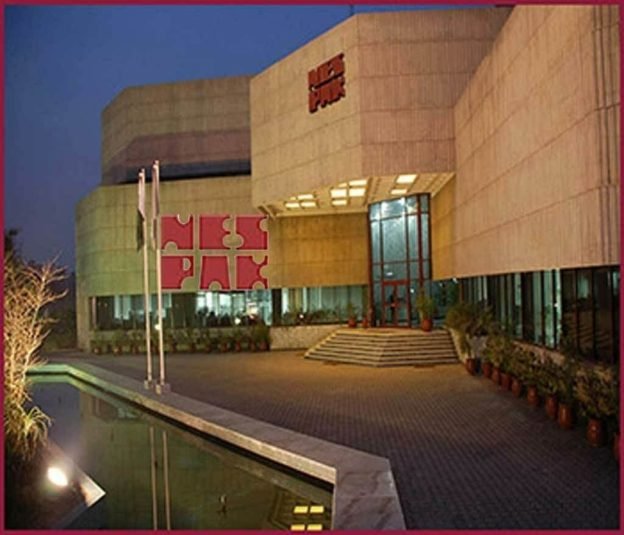
NESPAK to design first Smart Education City in Karachi
NESPAK has been awarded a prestigious consultancy services project for the feasibility study and design of Pakistan’s first Smart Education City in District Malir, Karachi by the Board of Investment, Government of Sindh, it was stated by Mr. Zargham Eshaq Khan, MD NESPAK.
This pioneering initiative is based on advanced Smart & Safe City concepts. The primary objective of the project is to establish governance processes that leverage technology and digital systems to manage city-wide resources in real-time through the Command & Control Centre. All systems will be interconnected using fast, reliable, and secure GPON.
The key systems integrated into this project encompass seamless Wi-Fi connectivity, intelligent access control for the Command & Control Centre building, video surveillance, under-vehicle surveillance, automated number plate and face recognition, smart parking, smart waste bins, traffic management, variable message signs, public address, solar power, EV charging stations, visitors management, GPON service, BMS/PSIM, air quality monitoring, temperature monitoring, humidity monitoring, access control for paid parking, baggage scanning, Command & Control Center operations, and SCADA systems related to stormwater, sewerage water, and water consumption.
This endeavor is a groundbreaking initiative in Pakistan, and the city will be named the Smart Education City. The project is being executed by the New Ventures Division of NESPAK -
The New Show in the Market International Expo PAK-INDUSTRIA will be held in May, 2024
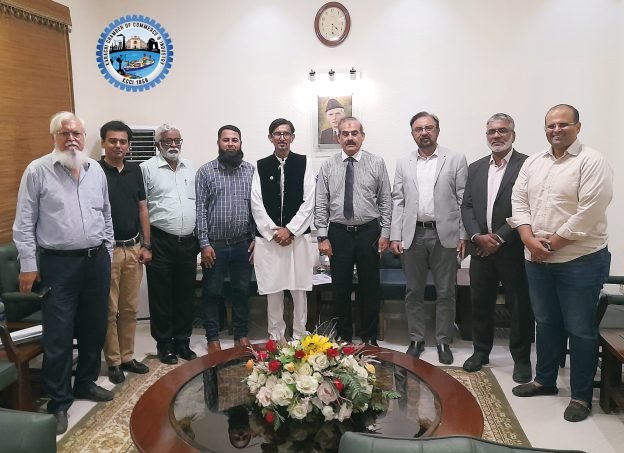
Directors of Pak Event and Exhibition Mr. Muhammad Hasan Masood and Mr. Umeer Qutbuddin met with President Karachi Chamber of Commerce and Industry (KCCI) Mr. Iftikhar Ahmed Sheikh, Senior Vice President Mr. Altaf A. Ghaffar, Vice President Mr. Tanveer Bari and other managing committee members. In this meeting, Mr. Hasan gave information about the international exhibition PAK-INDUSTRIA (Pakistan Industrial Trade Fair) which will be held on May 22, 23 and 24, 2024 at Karachi Expo Center. This exhibition is being organized to promote “Made in Pakistan” products.
Companies doing business in the Civil, Mechanical, Electrical and HVACR sector will participate in PAK-INDUSTRIA and give solutions to industry, consultants and contractors. The event organizers are welcoming manufacturers, importers, stockiests and suppliers to exhibit their products and services. PAK-INDUSTRIA exhibition will provide an excellent platform for all entrepreneurs who believe in “Made in Pakistan”.
Maintenance and technical teams of industries will be invited. This exhibition will be very helpful for those who want good suppliers, stockiest and vendors for good quality equipment and services. This exhibition will play a very important role in introducing domestic and foreign products.
The organizers inform the KCCI team that a large number of foreign delegates are also invited and hopefully they will attend the show. The exhibition will be covered in all mediums of media i.e. print, electronic and social media.
Iftikhar Ahmad Sheikh, President, KCCI and his team assure their cooperation and best wishes for the exhibition. -
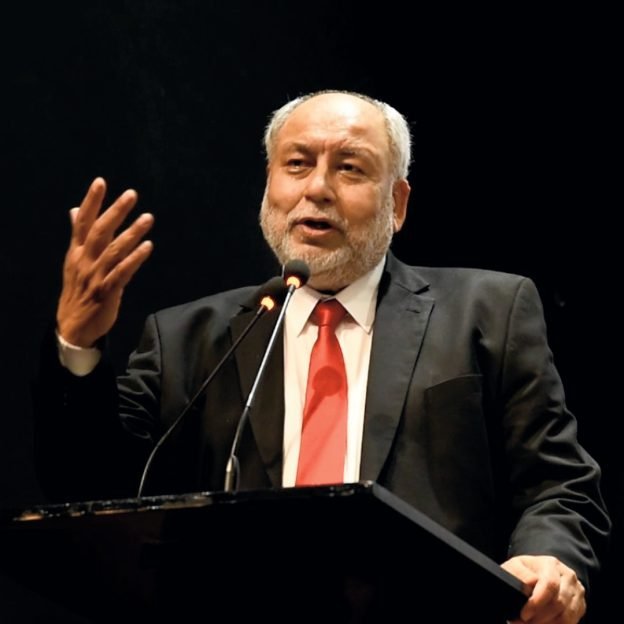
Outlines of Triangular Contest for PEC Chairman Appear on HorizonThree contestants of Engr. Haroon in National Engineers likely to step back
Backstage exchanges with several engineers stalwarts around the country suggest that the National Engineers—the alliance ruling Pakistan Engineering Council (PEC)—has lately been successful in creating a common ground for selecting a consensus candidate for the forthcoming PEC Elections 2024. And as it appears, Engr. Najeeb Haroon, the incumbent chairman of the council is most likely to be picked up as the top candidate of the alliance.
The constructors of the alliance included the National Engineers formed by Engr. Abdul Qadir Shah, leading National Engineers Welfare Association (NEWA) with his most critical support of Engr. Mukhtiar Shaikh—the man who he {Engr. Abdul Qadir Shah} has developed a love-hate relationship with—Engr. Najeeb Haroon, a breakaway patron-in-chief of the Professional Excellence Group (PEG), now led by Engr. Waseem Nazir, who had almost broken a deal with NEWA before aligning with Engr. Najeeb Haroon and Ashfaq Shah, the leader of the Contractors Association of Pakistan (CAP). In Punjab, the Pakistan Engineers Congress had also aligned it with the National Engineers that won the seat next to chairman after Engr. Imtiaz Shah-led group parted ways on the issue of the distribution of seats in the Governing Body of the council at the eleventh hour.
The alliance remains as same as it was in 2021 at the eve of elections but the power plays. Neither Engr. Najeeb Haroon, the then lone man nor NEWA are the same, both partners have their own strengths and weaknesses, and they have driven the council all along with having an edge of the former over the latter for his incontestable powers as the chairman. Also, both have gained as well as lost ground during the last two-plus years of the council’s rule. But have minimum options, Engr. Haroon has no other better allies than the Shah-Shaikh group and they {NEWA} have no leader of national stature. Both have a good sense to lose if they broke away—the situation which glued them with each other despite many issues developed between them. NEWA which ardently opposed the appointment of an advisor to the chairman in the council has now embraced it to maintain its share in the council no matter at the cost of overlapping of the ToRs of many committees it formed to spearhead important tasks of the council.
But the question is how Engr. Abdul Qadir Shah, who was set in mind to contest at all costs this time round, Engr. Arif Zahid Arif who merged his KP-based organization in NEWA so that his dream came true and Engr. Niaz Akhtar, who must be tired of being number two, will step down?
Engr. Shah’s resolve, as engineers’ circles claim has received an unwelcome response from his own house at Sukkur. His younger brother Syed Khursheed Shah whose supply line has been instrumental for him and his engineer-cum politician son are likely to take responsibility to convince him to step down. Almost everyone in NEWA has started believing the House of Shahs will do it successfully and also who played his part to get it done.
Additionally, almost everyone in NEWA believes Engr. Shah could never be a hot candidate in Punjab, housing the largest number of engineers in Pakistan in the backdrop of political support in the largest province of Pakistan where his brother’s party has miserably failed to revive its support base. In this scenario, the Pakistan Engineering Congress (PEC)’s support will not do any good to Engr. Shah. Instead, the congress would love to retake the post of Senior Vice Chairman of the council under Engr. Haroon.
Then what about resourceful Engr. Zahid Arif? Let’s think about some possible deal. Engr. Zahid Arif can be elected as chairman if the system adopts the turn system which the Act & Bylaws Committee of the council has proposed. Now, he can be lured if the alliance agrees to adopt and confirm the proposed turn system and decides to implement it from PEC Election 2027. Zahid Arif who is the central leader of NEWA has already said he would follow the collective decisions of his organization.
If Engr. Shah and Engr. Arif are addressed smoothly then why should Engr. Akhtar push himself to the loneliness in the province where two giants—Engr. Jawed Saleem Qureshi and Engr. Waseem Nazir, of them former claims to be the largest party of engineers and the latter bagged the highest number of votes–are housed. So it’s not better to wait till Engr. Haroon’s possible second tenure is finished, enjoy the clout in the council and get elected his men outside the ambit of the National Engineers Panel?
Resultantly, the engineers in Pakistan will see a triangular contest in PEC Election 2024 with one difference that Engr. Haroon and Engr. Nazir will find Engr. Jawed Saleem Qureshi instead of Engr. Jabbar Rana. -
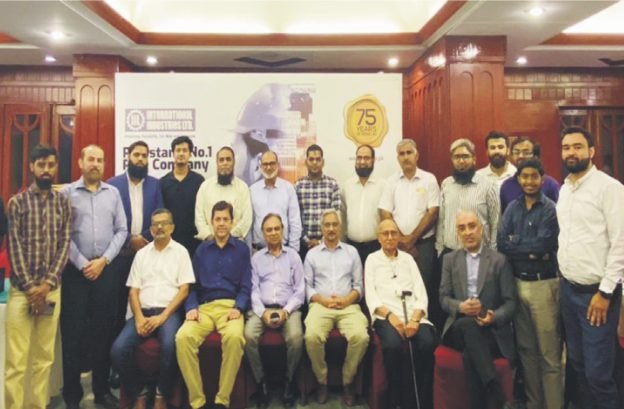
Product improvements, upcoming projects IIL invites key professionals, stake holders from construction sector
International Industries Limited, a leading player in the construction industry, hosted a highly successful event at a Local Hotel on October 12th, bringing together key professionals and stakeholders from the construction and building sector.
The event was aimed to foster collaboration and knowledge exchange within the construction segment. IIL’s institutional sales team extended invitations to over 30 industry professionals, including consultants and prominent builders.
The event featured distinguished speakers who shared valuable insights into the industry. Additionally, the QA Technical team provided in-depth knowledge during their respective presentations.
One of the highlights of the event was an engaging Q&A session, where participants had the opportunity to discuss product improvements, and upcoming projects, and engage in a general discourse about the construction industry. This interactive session provided a platform for fruitful insights and constructive discussions.
About IIL International Industries Limited (IIL) is a world-class manufacturer of steel & polymer pipes, tubes and fittings. IIL has a strong focus on innovation, quality, and sustainability. With exports to more than 60+ countries, IIL is proud to be the market leader in Pakistan and a notable player in the global market. -
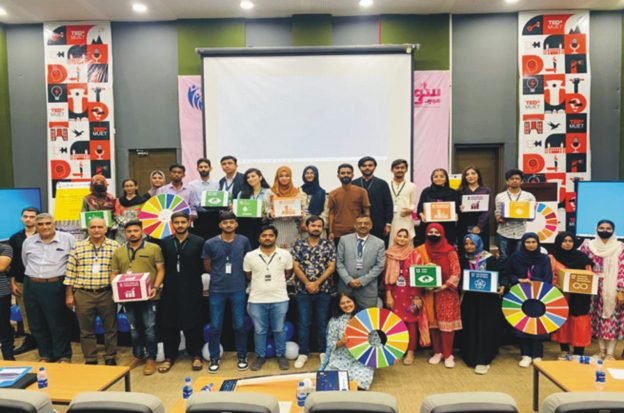
MUET, IEEE SIGHT, IEEE Asia Pacific Region 10 collaboration Building sustainable communities and empowering action against climate change
Introduction: MUET, in conjunction with IEEE SIGHT (Special Interest Group on Humanitarian Technology) Karachi Section and with the backing of IEEE Asia Pacific Region 10, orchestrated an event titled “Building Sustainable Communities and Empowering Action against Climate Change.”
This collaborative initiative involved EU Erasmus Plus ACTIVE program, QSIMPACT Pakistan, and IEEE MUET Chapter, coinciding with the celebration of EU Erasmus Day.
The event featured distinguished guests, including Vice Chancellor Prof. Dr. Tauha Hussain Ali as the Chief Guest for the “Building Sustainable Communities and Empowering Action against Climate Change” segment and Prof. Dr. Muhammad Aslam Uqaili, former VC MUET, as the Chief Guest for the Erasmus Day celebration event.
The Vice Chancellor Professor DR. Tauha Hussain, applauded the collective efforts and honored the participants with tokens of appreciation. A panel of esteemed speakers addressed pertinent topics during the gathering. Prof. Prakash Lohana shed light on “Empowering Women for Sustainable Climate Resilience,” while Ms. Bathe Eden emphasized the role of QS ImpACT Pakistan in empowering youth to contribute positively to their communities, aligned with the United Nations 17 Sustainable Development Goals. Furthermore, Prof. Dr. Bhawani Shankar Chowdhry delved into the “ICT-Based Application for Sustainable Environmental Protection,” and Prof. Dr. Tanveer Hussain focused on “Climate Crises in Pakistan.” The discussions also encompassed Prof. Dr. Sheeraz Ahmed Memon’s insights on “AI and ICT Game Changers for Environmental Challenges,” Engr Zakir Sheikh and Ms. Aisha’s discourse on sustainable Development goals and Engr. Najeeb’s presentation on “Climate Change and Sustainable Processes for Carbon Reduction” from an Italian university perspective. The overarching objectives of the event were to foster a unified approach towards environmental consciousness and its intersection with community welfare, aiming to: Enhance awareness regarding the impact of climate change on both the environment and communities. Provide comprehensive educational and training opportunities for volunteers, enabling them to actively participate in sustainable initiatives.
Prof. Dr. Tauha Hussain Ali acknowledged collective efforts of all participants in contributing to the discourse on building sustainable communities and combating climate change. His speech highlighted the significance of such initiatives in fostering a culture of environmental consciousness and sustainable development within the academic community and beyond. Furthermore, in recognition of the participants’ dedicated contributions and valuable insights shared during the event, the Vice Chancellor personally honored each participant with tokens of appreciation. These tokens symbolized the university’s gratitude for the commitment and active engagement demonstrated by the attendees in addressing pressing environmental challenges. The act of honoring the participants not only underscored the importance of their involvement but also served as an encouragement for continued dedication to sustainable initiatives and advocacy for climate resilience.
rof. Dr. Muhammad Aslam Uqaili (Former Vice Chancellor MUET): Professor Aslam Uqaili’s speech centered on carbon reduction strategies and climate change initiatives, drawing from an Italian university’s perspective. He emphasized the implementation of effective carbon emission reduction methods and sustainable practices within the university context. The significance of educational institutions in leading environmental stewardship through research, education, and practical application of sustainable technologies was a key highlight. Additionally, the Vice Chancellor expressed gratitude to the participants for their valuable contributions and dedication, presenting them with tokens of appreciation, symbolizing the university’s acknowledgment of their commitment to addressing pressing environmental challenges and promoting sustainability. This gesture served as both recognition for their involvement and encouragement for continued efforts in fostering climate resilience.
Every speaker collectively provided a comprehensive understanding of various perspectives and approaches to address climate change challenges, emphasizing the critical role of empowerment, technology, and collaborative efforts in building sustainable communities.
Prof. Prakash Lohana (Chair IEEE SIGHT Karachi) emphasized the need to empower women in the context of climate change resilience. His speech focused on the pivotal role women play in building sustainable communities and the importance of their active participation in climate adaptation and mitigation efforts. He highlighted successful case studies where women-led initiatives had a profound impact on local environmental sustainability.
Ms. Beth Eden (CEO QS ImpACT) highlighted the critical role of QS IMPACT, emphasizing how this platform serves as a catalyst for empowering youth to contribute positively to their communities. Her speech delved into the practical applications of the platform in fostering community engagement and aligning youth initiatives with the United Nations’ 17 Sustainable Development Goals. She provided insights into how young people can become agents of change and contribute to sustainable development on a global scale.
Prof. Dr. Bhawani Shankar Chowdhry (Chair IEEE Karachi section) focused on the integration of ICT-based applications for environmental protection. Prof. Chowdhry shed light on how technological advancements could be harnessed to address pressing environmental challenges. He discussed the implementation of innovative digital solutions, emphasizing the role of technology in monitoring, managing, and mitigating environmental degradation and promoting sustainability at various levels
Prof. Dr. Tanveer Hussain centered his discussion on the specific challenges and implications of climate change within the context of Pakistan. He highlighted the urgent need for tailored strategies and policies to address the unique environmental issues faced by the country. His speech covered the impact of climate change on Pakistan’s ecosystems, communities, and economy, offering insights into potential solutions and adaptive measures to ensure sustainable development despite these challenges.
Engr. Najeebullah Channa (PHD Scholar PoLiTO Italy) focused on climate change and sustainable processes for carbon reduction from an Italian university perspective. He discussed the innovative approaches and best practices implemented in the university setting to reduce carbon emissions and promote sustainable practices. His speech highlighted the importance of educational institutions in leading by example and fostering a culture of environmental responsibility through research, education, and practical applications of sustainable technologies.
Moreover, Prof. Dr. Sheeraz Ahmed Memon explored the transformative potential of AI and ICT in addressing pressing environmental challenges. And Engr.Aisha Research Assistant NCRA_CMS_LAB who was an Event Co-Organizer delivered a captivating talk QS ImpACT Achievement and Future Work Related to SDG’S achievements and future initiatives related to Sustainable Development Goals (SDGs).
Muhammad Aslam Uqaili and Muhammad Zakir Sheikh (President QS ImpACT Pakistan) revolved around the accomplishments of QS ImpACT in Pakistan and its future endeavors related to the Sustainable Development Goals. They discussed the specific initiatives undertaken by QS ImpACT Pakistan to promote sustainable development and community engagement. Additionally, they highlighted the collaborative efforts and partnerships aimed at fostering a culture of sustainability and responsible citizenship among diverse stakeholders, including the youth, local communities, and educational institutions.
Targeted audience reached: As the targeted audience was around 150, comprehensively the volunteers managed to gain an overwhelming response from the audience there were around 160 participants who attended the event.
Reviews of the participants: Following the conclusion of the event, an overwhelming wave of positive reviews emerged from the participants. Enthusiastic commendations underscored the event’s comprehensive and insightful discussions, which provided a holistic understanding of the interconnectedness between sustainable development and climate resilience. Participants lauded the diverse array of keynote speakers, highlighting their thought-provoking presentations that offered innovative solutions and practical approaches to address pressing environmental challenges. Moreover, the event was hailed for its engaging and interactive format, fostering meaningful networking opportunities and knowledge sharing among attendees from various sectors and backgrounds. The overall sentiment conveyed a collective appreciation for the event’s role in inspiring action and fostering a renewed commitment to driving positive change within communities, reinforcing the participants’ shared dedication to combating climate change and promoting sustainable practices.
Conclusion: The event has successfully underscored the urgent need for collective and decisive action to combat the multifaceted challenges posed by climate change. The discussions and initiatives undertaken during this event have illuminated the critical role of local communities in fostering sustainable practices and fostering resilience in the face of environmental upheavals. By emphasizing the significance of collaborative efforts among various stakeholders, including policymakers, businesses, NGOs, and grassroots organizations, the event has reinforced the idea that addressing climate change necessitates a holistic and inclusive approach. From promoting renewable energy adoption to advocating for sustainable urban planning, the event has effectively highlighted the interconnectedness between environmental preservation, social equity, and economic development.
Moreover, the event’s emphasis on education and awareness-raising campaigns has illuminated the path towards fostering a more environmentally conscious global citizenry. By empowering individuals with knowledge and tools to make informed decisions, the event has sowed the seeds for a sustainable mindset that can drive long-term behavioral change and inspire innovative solutions to climate-related challenges. As the event concludes, it is evident that building sustainable communities and combating climate change are not isolated endeavors but integral components of a shared global responsibility. The commitment and enthusiasm exhibited by participants reflect a collective determination to create a more resilient, equitable, and environmentally conscious world for present and future generations. While significant challenges lie ahead, the event has laid a solid foundation for continued collaboration and action, underscoring the imperative to sustain the momentum and translate discussions into tangible, measurable results.