A select gathering was organized by Engr. Shahnawaz Nahiyoon to honor Engr. Syed Abdul Qadir Shah, Chairman of the National Engineers Association (NEA).
The event brought together engineers from various fields, including CEOs, Chief Engineers, GMs, and directors from public and private organizations. The purpose of the gathering was to acknowledge the contributions of Engr. Syed Abdul Qadir Shah and discuss the work of the NEA.
The meeting included Engr. Syed Abdul Qadir Shah, Chairman, National Engineers Association, Engr. Shahnawaz Nahiyoon – the organizer of the event, Engr. Abdul Rehman Shaikh, General Secretary, NEA, Engr. Mohsin Ail Khan, Engr. A. Majid Malik, Engr. Abid Shah Bukhari, Engr. Cap. Waqar Hussain and others.
Syed Abdul Qadir Shah briefed the moot on activities of National Engineers Association (NEA). He highlighted the association’s goals, achievements, and ongoing initiatives aimed for promoting the engineering profession in the country.
One of the focal points of the gathering was to make a comparative analysis of the performance of the Pakistan Engineering Council (PEC) during different tenures.
Participants shared their perspectives and experiences related to the PEC’s functioning and appreciated the work carried out under the chairmanship of Engr. Syed Abdul Qadir Shah. His efforts were commended for the advancement of the engineering sector.
Some participants requested him to contest for the office of Chairman of the council in the upcoming election.
Also, They highlighted his track record, commitment, and vision for the engineering community, expressing their belief that his continued involvement would further strengthen the PEC’s role and effectiveness.
Tag: CPEC
-
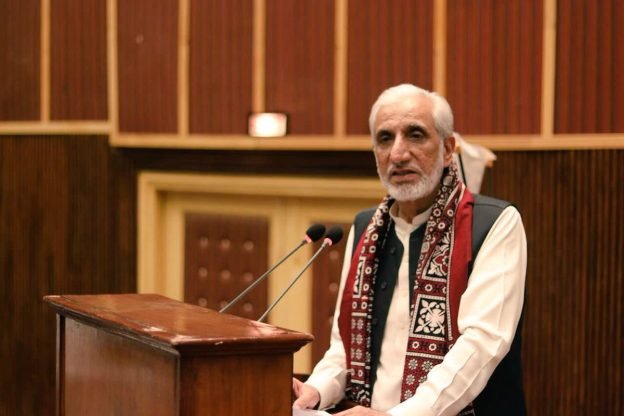
Senior engineers vet Engr. Syed Abdul Qadir Shah for PEC elections
-
The SBTi approves Pakistan Cables science-based emissions reduction target
Pakistan Cables, the pioneer wire and cable manufacturer in Pakistan, has become the country’s first building material company to have its science-based emission reduction targets validated and approved by SBTi. The Science Based Targets initiative (SBTi) drives ambitious climate action in the private sector by enabling organizations to set science-based emissions reduction targets.
“We plan to drive sustainability by investing in continuous process improvement and cleaner energy to reach our targets by 2030,” said Fahd K. Chinoy, CEO at Pakistan Cables. “By setting science-based targets, Pakistan Cables is accelerating its efforts to align with ongoing global efforts to reduce global warming”.
The Company’s science-based emission reduction targets are part of its long-term vision to develop its net zero strategy and is actively working to establish long-term science-based net zero targets that are aligned with SBTi’s net zero criterion.
Earlier in 2021, Pakistan Cables became one of the 26 Pakistani companies and the only building materials company that signed the pledge for Business Ambition 1.5oC ahead of COP26. To date, the Company has planted approximately 50,000 trees at the Pakistan Cables Urban Forest location in Nooriabad factory, which is the country’s first and largest Miyawaki based Urban Forest on an industrial estate.
Furthermore, Pakistan Cables has the 14001:2015 certification, which reinforces the Company’s commitment to ensure its products meet the highest environmental standards and mitigate environmental impacts.
Founded in 1953, Pakistan Cables is the premier and most reputable cable manufacturer in Pakistan. Being the only wire and cable manufacturer listed on the PSX since 1955, it is also a member company of the Amir S. Chinoy group. The Company has the largest geographical footprint in Pakistan with a presence in over 200 cities. It is ISO 9001:2015, ISO 45001:2018, ISO 14001: 2015 certified and various types of cables are tested by KEMA, Netherlands.
The Science Based Targets initiative (SBTi) drives ambitious climate action in the private sector by enabling organizations to set science-based emissions reduction targets. The SBTi is a partnership between CDP, the United Nations Global Compact, World Resources Institute (WRI) and the World-Wide Fund for Nature (WWF). -
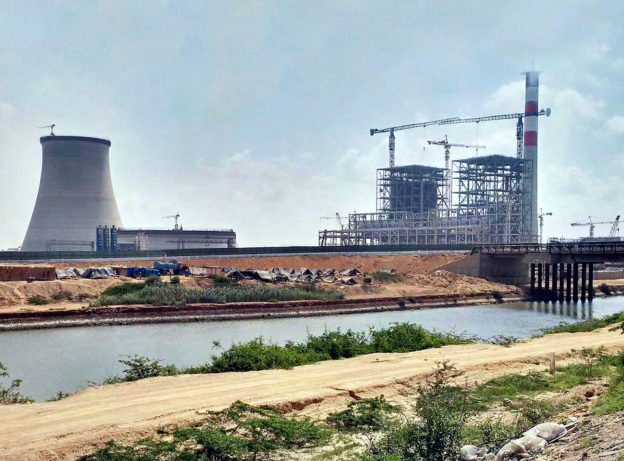
Port Qasim Project to Help in Ending Power Crisis
Port Qasim Power Project (PQPP) is one of the early harvest energy projects under CPEC has potential to generate 9 billion kilowatts/hour of electricity annually, effectively mitigating the load-shedding in Pakistan and producing tremendous economic and social benefits.
During the implementation of the project, Power China Resources Ltd. (PCR) has followed the principle of “joint construction through consultation for mutual benefits” by sharing advanced technologies and training local talents, said a statement of Chinese Embassy.
According to the operation plan for localization of Port Qasim Power Project, finally, Pakistan will take over the operation and management of the power plant. PCR takes the training of Pakistani workers as its own responsibility. It has provided opportunities for the workers to get familiar with the production and management and master the core technologies of the power plant as soon as possible, thus, laying a solid foundation for the Pakistani side to take over the production, operation, and management.
Pakistani workers accounting for 60% of the whole staff are the primary workforce at the plant. To meet the needs of the local operation, PCR employed 100 Pakistani college graduates in 2016 and sent them to China for thermal power technology training for free. Now, these workers have taken up key positions and become the main force for power plant operation and maintenance.
Port Qasim coal-fired power plant has provided 2.5 billion kilowatts/hour of energy till May 26 and effectively improved the load shedding in Pakistan. The nature of thermal power plant production requires 24-hour production without interruption.
The power grid has been overloaded in the sustained hot weather since April, which has caused the short supply of power. During Ramadan, Pakistani workers, as the major force for plant operation, worked under the heat together with their Chinese colleagues at the frontline.
Meanwhile, the Ramazan traditions are given special considerations. The Pakistani workers are separated into four groups and work in three shifts every eight hours. Chinese workers have volunteered to lengthen their work time, and working in three groups and in two shifts every twelve hours.
-

Balance of payments: China moves to rescue Pak
US$1.6 billion credit line to boost depleting forex reserves.
China has given Pakistan a credit line worth $1.6 billion to stave off a balance of payments crisis. It will boost Pakistan’s fast-depleting foreign currency reserves.
The credit facility that accompanies a currency swap agreement between State Bank of Pakistan (SBP) and China’s central bank has been hiked to 20b yuan ($3.13b) from 10b yuan, reports claim. The arrangement has been finalized.
People’s Bank of China, the country’s central bank, said it had extended a currency swap agreement with the State Bank of Pakistan. The swap is sized at 20 billion yuan (3.1 b US dollars) or 351 billion Pakistani rupees, according to a statement from the bank.
The two parties believe the extension will facilitate bilateral trade and investment to help economic development in the two countries.
Valid for three years, the agreement can be extended upon mutual consent. A currency swap deal allows two institutions to exchange payments in one currency for equivalent amounts in the other to facilitate bilateral trade settlements and provide liquidity support to financial markets.
After establishing its first branch in Karachi last November, Bank of China formally launched a clearing and settlement mechanism of Chinese yuan.
Having received clearance from SBP for denominating foreign-currency transactions, one of the main targets of the Long-Term Plan of CPEC for 2017-30 has been achieved.
Giving Yuan equal status to the US dollar will not only strengthen financial bonds between Pakistan and China but also cut costs and speed up efficiency for yuan transactions and enhance market liquidity. Pakistan central bank believes this arrangement will elevate the trade relationship between Pakistan and China.
Back in 2012, the first currency swap agreement was signed by the SBP with the People’s Bank of China, and this was followed up by allowing banks to give trade loans in Yuan and also accept deposits in the Chinese currency.
Devising a loan mechanism for banks to get yuan financing, the SBP initially allowed ICBC (Industrial and Commercial Bank of China) Pakistan to start offering services in 2015.
Though this was on a relatively small scale, the groundwork had begun to promote bilateral trade and investment in the respective local currencies.
Now People’s Bank of China is the second Chinese bank to enter the Pakistani market, but it is much more significant as it has fourth and fifth global ranking currently in terms of Tier 1 capital and total assets respectively.
-
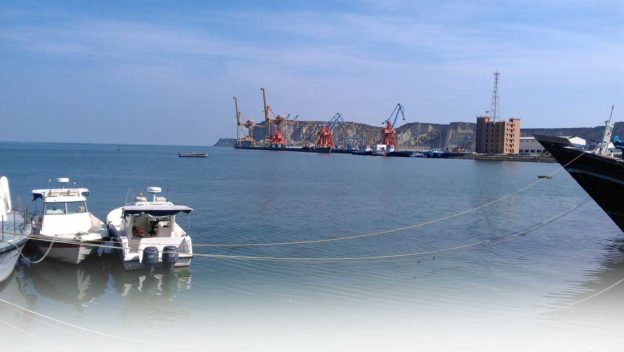
Pakistani ports and CPEC
There is a missing link between CPEC and KPT, says KPT chairman
Karachi Port Trust (KPT) Chairman Rear Admiral Jamil Akhtar has said the port has all the potential and infrastructure to supplement CPEC, regretting there is a missing link between CPEC and KPT.
Presently the cargo handling share of the port has declined up to 60 per cent but the overall volume has increased and annually the port handles around 2.1 million containers, he noted. Jamil who was speaking in CPEC Summit in Karachi said that after the establishment of Pakistan Deep Water Container Port, it could handle mother ships which presently go to Sallala and Jabal All from where feeder services come to Pakistan.
`Karachi port is ideal to serve western parts of China and Central Asian countries, he added. However, he regretted that there was a missing link between CPEC and KPT.
Under CPEC, KPT could equally play its due role particularly when Pakistan would become a logistical hub and supply chain for South, Central and Western Asia, Middle East and Western China, he summed up.
Chairman Port Qasim Asad Rafi Chandna said the port being 35km away from downtown is ideally located for quick movement of cargo from and outside the port. It has a strong industrial base and connectivity with major road links to upcountry. `PQA has already started contributing towards CPEC projects as it houses some of the power plants set-up under the mega project and also coal terminal for supply of imported coal to Sahiwal coal run power plant. The port has become energy hub for the country where two LNG terminals are already operating,` he said.
Speaking on the occasion, Chairman China Overseas Port Holding Compnay Gwadar Port Zhang Baozhong said the Gwadar Port has already put logistics in place because transport is available, warehouses and customs have also started functioning. Gwadar is a strategically located port with Suez Canal on one side and Malacca strait on the other, he noted.
The first Free Economic Zone at Gwadar had been developed where more than 40pc of investment is Pakistani. Banks, insurance companies, and leasing firms are working in the zone which enjoys tax exemption, he added.
Ghandhara Industries Ahmed Kuli Khan said the auto industry is ready to face the Belt and Road initiative (B&R), highlighting that the company could double its capacity in a short period. However, Mr Khan was not happy over the State Bank unwritten policy of not allowing banks to Enhance the auto industry.
Pakistan needs to modernize its trucking business and transport industry by introducing auto transmission and higher axle load with higher horse power. He further said CPEC is a big opportunity but only those vehicles be allowed to come from China which are not available in the local market.
-
Chinese should connect with local companies: FIATA chief
Badat demands a separate ministry for logistics and transport sector in Pakistan.
President, International Federation of Freight Forwarders Associations (FIATA) Babar Badat has demanded a separate ministry for the logistics and transport sector for ensuring quick solutions and rapid growth of the industry.
Badat who presided over the ‘Logistics’ session of CPEC Summit and Expo organized in Karachi said at present the logistics industry had to run from one ministry to another to get the issues resolved. If a separate ministry for logistics and transport is formed, the issues would be resolved and thus accelerate the growth.
He was of the view that a recent bill presented in the National Assembly on logistics does not meet the present day challenges. It should be reviewed in consultation with the stakeholders, he stressed.
Pakistan is among the few countries of the world where there is no separate ministry for logistics and transport, he noted. The sector is an important link in the entire supply chain in the region after the launch of the CPEC and a separate ministry will become a focal point for the industry, he added.
Badat said the Chinese companies should connect with local companies or enter into joint venture to handle transshipment or transit cargoes through Gwadar Port.
International Chamber of Commerce Chairman Tariq Rangoonwala also stressed on the need for joint ventures between local and Chinese companies to enhance Pakistan`s industrial base and productivity. He hoped Pakistan will become a hub for transshipment trade once CPEC is fully on ground. Being a signatory to the TIR Convention, the customs connection on the international transport of goods under the cover of TIR Convention is an important link, he noted.
-
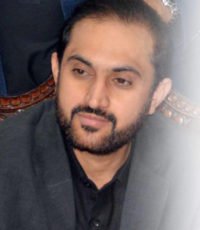
Balochistan ignored in CPEC: Quddus Bizenjo
Balochistan Chief Minister Mir Abdul Quddus Bizenjo has said that his province was being neglected by the federal government in the China-Pakistan Economic Corridor (CPEC) project.`More than Rs5,000 billion is being spent on the CPEC, but Balochistan is not receiving even one per cent of it,` he said while speaking at the Meet the Press program at the National Press Club in Islamabad.
He said a major portion of the CPEC fell in Balochistan, but the people of the province were ignored in development activities being made under the project.`We have to see what benefit the people of Balochistan will get from the CPEC,` he added.`I am collecting the record of the CPEC to ascertain what benefit will be given to our people in the grand project which is being executed in the name of Balochistan,` he maintained.
Bizenjo said he was not against development activities under the CPEC and those being carried out in Punjab under the project, but he only demanded due rights of the people of Balochistan.
-
33rd IEEEP International Symposium
33rd IEEEP International Symposium
33rd Multi Topic International Symposium 2018 of Institution of Electrical & Electronics Engineers (IEEEP), Karachi centre is being held at the hotel Pearl Continental Karachi from Wednesday (March 15, 2
 018).
018).This two-day event will come to an end on Thursday (March 15, 2018). Engr. Jawed Salim Qureshi, the Chairman, Pakistan Engineering Council (PEC) will inaugurate the symposium. Prominent development expert Dr. Kaiser Bengali is the keynote speaker of the event.
The symposium will have 5 technical sessions in which presentations will be made by professional engineers on current issues. Out of 15 papers/presentations, four are from Germany, Singapore, China and Bhutan. They focus on current topics relating to Pakistan. Orgnaizers are sure that the papers which are being presented are very interesting.
Some topics are given as below:
1) Global Warming: how energy audit and asset management can help mother earth? Engr. Azhar bin Othman, regional MD Enercon Asia pvt. Ltd. Singapore
2) Cyber Security – A must for anything smart Engr. Shahmeer Amir, CEO Veiliux
3) Cross border energy trading within SAARC – Creating a win-win situation Engr. Bhaskar Pradhan, PLET SEC, Bhutan
4) Energy self-sufficient smart cities for Pakistan Prof.Dr. Nasim A. Khan, Sr. Executive Director, Osmani & Co
5) How to be an entrepreneur in the field of new technologies in current scenario Engr. Tahir Mahmood Chaudhry, President, Pakistan Institute of Entrepreneurship.
The best papers from the students’ seminar, based on final year students’ projects, held on Febuary 02, 2018 at The 33rd Multi Topic International Symposium 2018 will also be presented in a special students technical session on the second day of the symposium.
A very interesting panel discussion with senior experts from utilities, private sector and academia will take place in the afternoon of day 2. The topic is: “CPEC – how is it affecting Pakistan’s economy already”.
The chief guest of the closing session will be Engr. Khalid Iqbal (Ex Director KESC), who will also be conferred upon the “Lifetime Achievement Award” by IEEEP Karachi centre.
-
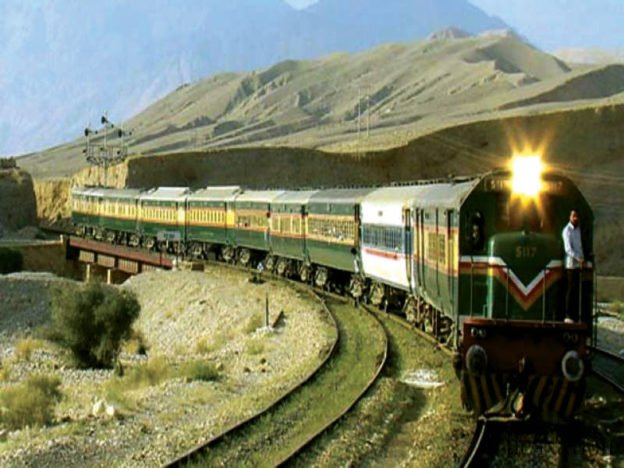
Are we raising false hopes for Mainline-I (ML-I) rail track?
At least movement in Islamabad as regarding finalize mode of financing says so
Federal government is considering to finalize mode of financing for $8.2 billion Mainline-I (ML-I) rail track under the China-Pakistan Economic Corridor (CPEC). As a result, the project stands far from its start.
Government needs an internal agreement on the exact financing modalities before making a request to China for processing a loan.The project has already faced a delay of at least two years and still there remains a disagreement between the Ministry of Railways and other ministries, officials say. Ministry of Finance and a financing group, set up to firm up funding modalities for the ML-I project, are in favor of acquiring the loan with sovereign guarantees, show documents.
In the case of sovereign guarantees, the $8.2-billion loan will not become part of Pakistan’s ballooning external debt of $85 billion. The responsibility of loan repayment will lie on the Ministry of Railways.
Under the May 2017 framework agreement, the project will be solely funded by China. However, Pakistan Railways wants the central government to acquire the loan, which will not only make it part of the external debt, but will also shift the loan-servicing responsibility on to the centre.
The ML-I project is aimed at upgrading the existing 1,872-kilometre mainline of Pakistan Railways from Karachi to Peshawar. The project was planned to be completed in two phases between 2016 and 2020. Now revised timelines suggest that the project cannot be completed before 2022 provided the government is able to start work this year.
For the past one and a half year, the government officials concerned have been giving false deadlines for signing the financing agreement with China. Last month, Planning and Development Minister Ahsan Iqbal announced that groundbreaking of the ML-I project was expected in March 2018 and it would be completed in four years in various phases .However, the Ministry of Railways has not yet submitted a new PC-I for first phase of the project to the planning ministry for approval. Iqbal had set the October 2017 deadline for the railways ministry for submission of the PC-I. Cost estimates have also remained inaccurate.
Government has decided to split the project into two parts due to its high cost and the work that requires refurbishment and expansion of the main rail line. Sources said a decision on the exact financing mode would be taken by the Cabinet Committee on CPEC; but the Ministry of Railways was trying to push its own proposal.
On December 15, 2017, the financing group had decided that a summary would be sent to the CPEC committee for a decision on whether the borrowing would be made by the central government or it would be backed by sovereign guarantees. However, the summary circulated by the Ministry of Railways for comments of the ministries pointed to only the central loan option.
The decision to obtain sovereign guarantees had actually been taken in November 2016 by the then minister of finance. Economic Affairs Division was of the view that in case the loan was acquired by the central government, the cost of borrowing for Pakistan Railways would jump to 9% whereas the government would pay around 2% in interest to China. Such loans are covered by the relenting policy, under which the federal government takes responsibility of repaying the money and bears the exchange rate risk in return for recovering a fixed interest from the borrower.
China has told Pakistan that it will consider only that loan request which covers the entire rail track from Karachi to Peshawar and not up to Lahore. Officials of the Ministry of Railways insist that any loan request to China should be in line with the spirit of the framework agreement, which was the central loan. They pointed out that the agreement clearly mentioned that the loan would be given on highly favourable terms.Project feasibility and the scope had been finalised and the railways ministry was trying to make the cost as realistic as possible, they said.
-
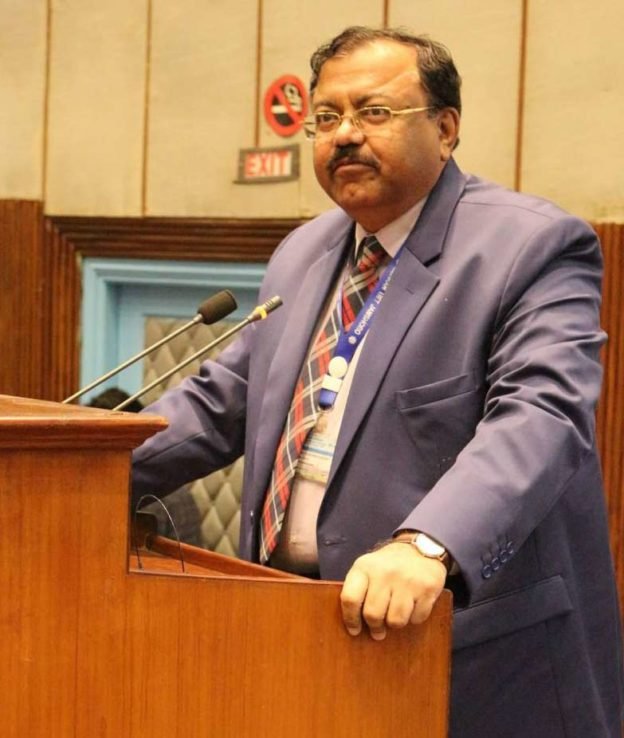
33rd IEEEP -All Pakistan Students’ Seminar
Committed to raise research quality, emerging areas of eng & tech: Aslam Uqaili
Higher Education Commission (HEC) is endeavoring for enhancing the potential of higher education institutions for supporting socio-economic transformation under CPEC with a focus on development of quality human resource, civilizational harmony and knowledge inputs, said Lt-Gen (retired) Muhammad Asghar, the Consultant for China-Pakistan Economic Corridor (CPEC) at HEC, Islamabad.
Gen. Asghar was guest of honor at the 33rd IEEEP (Institution of Electrical & Electronic Engineers Pakistan, Karachi centre) All Pakistan Students’ Seminar in collaboration with Faculty of Electrical, Electronic and Computer Engineering Mehran University of Engineering and Technology (MUET) Jamshoro.
“CUSP means a turning point that manifests transition from a historical period to the next,” he said while speaking at the seminar.
He detailed about planning parameters of Pakistan vision 2025 that there were seven pillars or priority areas including first connectivity: modernizing transport infrastructure and regional connectivity to support economy that is well-integrated with regional development like CPEC. He said that secondly, people: first concentrating on developing social and human capital and empowering women; thirdly; growth: sustained indigenous and inclusive growth while protecting natural resources and addressing impact of climate change; fourthly governance: democratic governance, institutional reforms and modernization of public sector. He said that the fifthly security: energy, water and food security, sixthly entrepreneurship: private sector and entrepreneurship growth and the seventh and final, knowledge economy: developing competitive knowledge economy through value addition. He also highlighted planning parameters of sustainable development goals (SDGs) encompassing no poverty; zero hunger; good health and well-being; quality education; gender equality; clean water and sanitation; affordable and clean energy; decent work and economic growth; industry, innovation and infrastructure and reduced inequalities. He continued SDGs by including sustainable cities and communities; responsible consumption and production; climate action; life below water; life on land; peace, justice and strong institutions and partnerships for the goals.
He said that CPEC long-term plan had another seven facets consisting of connectivity including infrastructure for integrated transport system and establishment of digital corridor; energy-related infrastructure; trade and industrial parts; agriculture and poverty alleviation; tourism and development of ocean economy; cooperation in areas concerning people’s livelihood and non-governmental exchanges and financial cooperation and border management.
He divided the CPEC long-term plan into timelines — short-term, mid-term and long-term from 2020 to 2030. Speaking as chief guest, IEEEP president and National Transmission Dispatch Company (NTDC) technical general manager Dr Rana Abdul Jabbar Khan said that this event gave opportunity to all young students and future engineers to present their project based research work which could lead towards conducting collaborative industrial research in order to meet indigenous technological needs of the country. He said that IEEEP recognized this significant contribution and hoped its continuity in future. He congratulated all those who were part of this institution, organizing committee, technical experts while providing technical support for arranging this mega event.
Thanking all guests and organizing committee, MUET vice chancellor Prof Dr Muhammad Aslam Uqaili said that the university transformed and evolved from undergraduate degree awarding institute to research one (university) in the past 10 years. “MUET is committed to raise research quality by employing PhD’s in conventional fields as well as in emerging areas of engineering and technology,” he said. He stated that students of the varsity regularly had been participating in IEEEP students’ seminar as it is an honour for MUET to hold this event.
“IoT (Inteesnd big data are distinct technologies that have processed separately with passage of time. Recently, it is observed that these technologies are getting interdependent to each other by means of processing information through connected mediums,” Sungkyunkwan University Seoul South Korea department of computer education PhD assistant professor Dr Nawab Muhammad Faseeh Qureshi said. He stated that recent research challenges in resolving convergence problems during large-scale data processing in a distributing big data environment. He illustrated cloud, big data and IoT with examples.
MUET Faculty of Electrical, Electronic and Computer Engineering Dean and distinguished national professor Dr Bhawani Shankar Chowdhry who was also Chief Organizer and technical coordinator of the seminar gave awards and certificates to guests and participations, while engineer Dr Farzana Rauf Abro who was the convener of the seminar paid a vote of thanks.
Prof Dr BS Chowdhry informed that it is first time that 20 groups of final-year students belonging to 13 national and international, public and private universities presented their research papers on various topics during two technical sessions and masters’ students were also invited to submit their posters for the competition.
Later on, MUET Pro vice chancellor Dr Tauha Hussain Ali inaugurated poster exhibition held at gallery of main auditorium varsity (MUET) where he encouraged around 45 participants who were final-year and Masters students of various national private and public varsities in the country. The IEEEP Chairman Engr Irfan Ahmed thanked Vice Chancellor MUET and Dean FEECE Prof BS Chowdhry for organizing the great event in befitting manner having participation of more than 600 students, faculty members, and professional from Industry. Engr Naveed Ansari, IEEEP Vice President South announced the result of Winners in the paper and posters competition.