Tag: CPEC

  • Human resource the biggest issue of Balochistan

    Human resource the biggest issue of Balochistan

    Pakistan lacks specialized skilled resource for CPEC: Gen. Muhammad Asghar

     A consultant of the Higher Education Commission (HEC) on China Pakistan Economic Corridor (CPEC) Lt. Gen. (R) Muhammad Asghar has said lack of human resource is the biggest issue of the country especially in Balochistan, where the successive provincial governments have failed to invest in education and skill development sectors over the many years. In such a situation, he believes Balochistan will be running out of its people when CPEC related activities will be generated in the province.

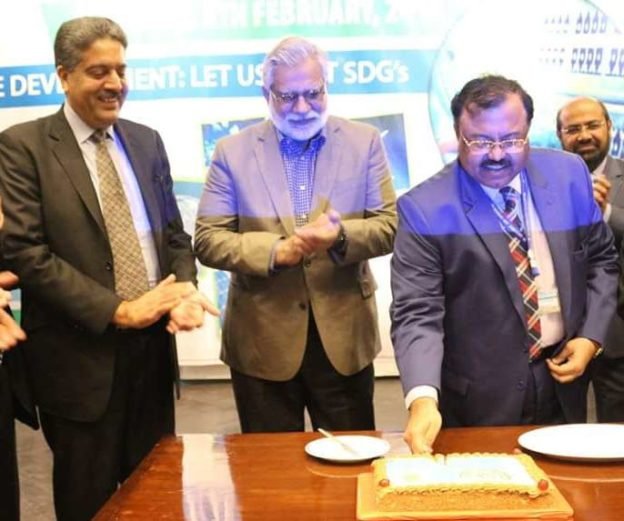
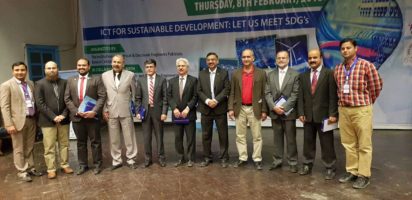
    Gen. Muhammad Asghar who was the guest of honor at the IEEEP All Pakistan Students Seminar in Mehran University of Engineering and Technology (MUET) Jamshoro said, while talking to Engineering Review that Balochistan required a shift in its attitude otherwise no change would take place in the province.

    He put forth an example from the US which according to him developed after inviting people from all over the world. Balochistan needs skilled people and unfortunately it does not have at home because of the lack of education. The manpower in Balochistan is not sufficient thus CPEC initiatives will require more people who should be invited from other provinces, he says. Besides Baloch, Balochistan houses Pakhtoon population also which will be employed will
    yed but still Balochi


    stan will be running out of men to respond to the demand of CPEC.

    “Punjab’s population is reluctant to go to Balochistan due to security issues”, he said. “Also there was already a lot of potential for them in Punjab”.The lack of skilled human resource in Pakistan has forced Chinese to bring their men for the works Pakistanis are not prepared for? It seems so if one listens to Gen. Asghar. “Chinese would come for the sectors we are not skilled for”, he said claiming “But still over 60 thousand Pakistanis are working on CPEC projects in the country.”
    Gen. Asghar who gave a detailed briefing on CPEC’s potential for future engineers to a houseful auditorium of the university was keen to respond to the concerns as regards Balochistan. “Balochistan is on the verge of a huge generation of activities under CPEC and now it’s up to the people of the province how they reap its benefits. Balochistan has a larger part of Pakistan’s coastline where 5 to 6 ports would be developed and all benefits are sure to go to Balochistan,” he says. “The subsequent revenue will go to Balochistan; not to Punjab. Now it is up to the people of Punjab especially youth how they get benefits.”Gen. Asghar said the HEC was making all out efforts to produce human resource—the job Pakistan should have begun with from 2007, a decade back from today. We are lagging behind and now trying to bridge the gap. Dwelling over the lacking, he revealed there were many fields in which Pakistan did not have expertise. For instance, we are going for US$8.2 billion railway project but we don’t have experts in railway engineering. While launching master course in UIT we came to know about just one PhD. in the field. Pakistan will have a series of ports right from Gwadar to Keti Bundar in Sindh but the education link is missing since we don’t have ports management and handling engineers. We now have Orange Line in Punjab but don’t have mass transit management experts.

    Gen. Muhammad Asghar was sure there was huge scope for engineers in CPEC. For such a purpose, Pakistan’s universities are being linked with Chinese universities. He announced MUET would soon be the part of consortiums of engineering universities. He told the audience that over 20 thousand Pakistanis are enrolled in Chinese universities in various education programs.
  • Door open to yuan-based trade with China: SBP

    Door open to yuan-based trade with China: SBP

    Dec 19, 2017, Minister for Planning and Development Ahsan Iqbal said that the government was considering a Chinese proposal to use renminbi (RMB or yuan) instead of the US dollar for payments in all bilateral trade between China and Pakistan.The decision was taken after rejecting a Chinese proposal to allow yuan as legal tender in Gwadar, Balochistan.

    `The SBP, in the capacity of the policy maker of financial and currency markets, has taken comprehensive policy related measures to ensure that imports, exports and financing transactions can be denominated in yuan,` said a statement issued by the SBP. It further said both public and private sector enterprises (ie both Pakistanis and Chinese) are free to choose yuan for bilateral trade and investment activities.

    The RMB is an approved currency for denominating foreign currency transactions in Pakistan. The SBP has already put in place the required regulatory framework which facilitates use of yuan in trade and investment transactions such as opening of letter of credits (LCs) and availing financing facilities in yuan.

    In terms of regulations in Pakistan, yuan is on a par with other international currencies such as dollar, euro and Japanese yen, etc. In FY17, Pakistan exported goods and services worth $1.62 billion while the imports from China were $10.57bn reflecting a great imbalance.

    The two countries have yet not chnalised a free trade agreement (FTA). The FTA may benefit exports from Pakistan as the country critically needs to improve its exports due to huge trade deficits. After signing a Currency Swap Agreement (CSA) with People`s Bank of China (PBoC) in 2012,

    SBP had taken a series of steps to promote use of yuan in Pakistan for bilateral trade and investment with China. The central bank has allowed banks to accept deposits and give trade loans in yuan. For onward lending the proceeds of CSA, the SBP has put in place the loan mechanism for banks to get the yuan financing from the SBP for onward lending to importers and exporters having underlying trade transactions denominated in the Chinese currency.

    In 2012, the SBP issued a circular that said the authorised dealers may open for-foreign currency accounts and extend trade loans under FE-25 Scheme in US dollar, pound sterling, euro, Japanese yen, Canadian dollar, UAE dirham, Saudi riyal, Chinese yuan, Swiss franc and Turkish lira. Industrial and Commercial Bank of China Ltd (ICBC) Pakistan has been allowed to establish a local yuan settlement and clearing setup in Pakistan enabling it to open yuan accounts of the Chinese banks operating in Pakistan and to facilitate settlement of yuan-based transactions such as remittance to/from China.

    With the opening of Bank of China in Pakistan, the access to onshore Chinese markets will strengthen further. Apart from the above, several banks in Pakistan maintain onshore yuan nostro accounts, said the SBP.  Considering the recent local and global economic developments, particularly with the growing size of trade and investment with China under CPEC, the Bank foresees that yuan denominated trade with China will increase significantly and will yield long term benefits for both the countries. When asked, the SBP spokesman said the statement on yuan was issued due to many queries from media about the use of the currency for bilateral trade. He said it seemed there was confusion about the use of yuan for bilateral trade which was clarified with this detailed statement.

  • Work on Bhasha Dam likely to begin in Aug 2018

    Work on Bhasha Dam likely to begin in Aug 2018

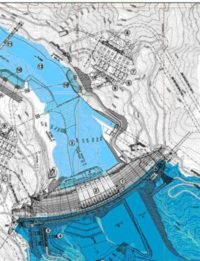
    Prime Minister Shahid Khagan Abbasi has approved a summary relating to PC-1, financial arrangements and the proposed plan for launching civil work on 4,500MW Diamer Basha dam project, claims Wapda chairman.

    After getting the final approval, Wapda has started the required paperwork before initiating the bidding process and launching civil work on the project in August this year.`We had recently sent a summary to the effect and the prime minister approved it.Since we will require next three to six months in completing the bidding process for hiring consultants and contractors, I am keen on launching civil work in August next year, ` Wapda Chairman Muzammil Hussain told media.

    The project continued to be delayed for the last many years due to funding and land acquisition issues. The groundbreaking [ceremony] of the project had been performed in 2006 by the then president Pervez Musharraf.

    `Funding and land acquisition delayed the project. We faced a delay of almost 11years because of Asian Development Bank (ADB) regarding the funding arrangement of $14 billion. And finally the ADB wrote a letter to us last year, stating that the project cannot be launched in the disputed territory, ` he said. Hussain said Wapda briefed the ADB team that $14bn was not a big issue since the authority would require funds (approximately) $7bn for the dam portion alone.

    We told them that we will be requiring just a billion dollar a yearfrom ADB, and rest of the money including $4bn for power house, can be arranged by us through other resources including commercial financing and equity. Since they were unable to understand our point of view we finally got rid of them after China assured us to fund the project under CPEC ‘he said.

    Later, China imposed harsh conditions and Wapda refused to accept them.`I refused to give ownership and operation & maintenance (O&M) of the project to the Chinese. So we have now decided to launch and completed major part of the project on our own, ` the chairman said.

    He said 85 per cent of land acquisition for Basha dam had been completed. `The remaining 15pc relates to the resettlement of the affectees. But the issue is that there is no land available further. So Wapda has decided to give them sufficient money instead of the land so that they could live wherever they want.

    Talking about Mohmand dam, he said the authority was all set to launch civil work on the $3bn project by June or July next year. `It is a very important dam in terms of availability of 1.2MAF water storage, 800MW hydel power generation, availability of water for Peshawar and irrigation of 30,000 acre agriculture land in the area.Moreover, the dam would mitigate the flood chances in Noshehra and Charsadda forever, ` he claimed.

    Furthermore, the project involved minimum land acquisition. `The bidding process for hiring consultants has been initiated, as about 15 companies have applied for this. I have planned to get 50 to 55pc of the total cost of the dam from the government. And the rest we will arrange through our resources and commercial financing, ` he said.

  • NHA’s CPEC projects exempted from import duties

    NHA’s CPEC projects exempted from import duties

    Economic Coordination Committee (ECC) of the Cabinet has approved a proposal for the grant of exemption from tax/duties for import of construction material for infrastructure projects of National Highway Authority under the CPEC project.

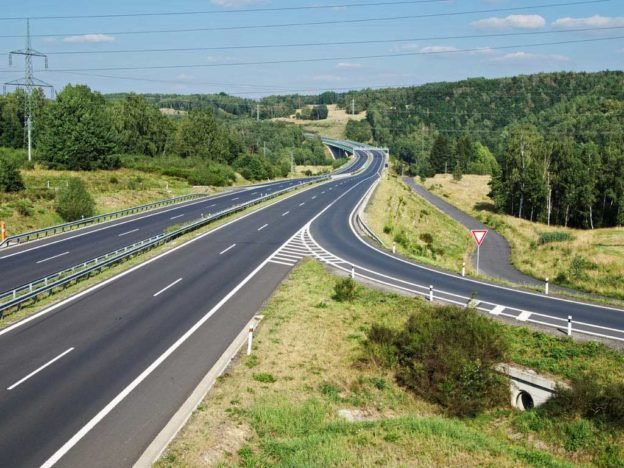
    This exemption would be applicable only to the construction of Sukkur-Multan section of Peshawar to Karachi Motorway project. Sukkur-Multan Motorway, the six-lane, 393km motorway is part of the eastern route of CPEC. It will be completed in 2019 at the cost of Rs294 billion.

    Prime Minister Shahid Khaqan Abbasi chaired the meeting of ECC at Prime Minister House. ECC also permitted WAPDA to raise financing from banks against the sovereign guarantee of the government of Pakistan (GoP) for the purpose of clearance of arrears of net hydel profits of the government of Khyber Pakhtunkhwa and government of Punjab. The WAPDA would raise a loan of Rs70 billion from commercial banks to pay net hydel profit (NHP) along with arrears to KPK and Punjab. Punjab and KP are said to be unhappy on undue delay in clearance of their dues. Since WAPDA is running out of money, it has to raise loans backed by a GoP guarantee from commercial banks. The Finance Division assured to provide the requisite guarantee.

    The ECC also approved a proposal for reduction of certain regulatory duties on certain items as proposed by the Federal Board of Revenue.  FBR had moved a summary before the ECC for rationalising 10 percent regulatory (RD) imposed on 1250 KV gas generators. Textile industry complained that they are being used by them to reduce the cost of production of the textile products.

    The government has also withdrawn RD on spare parts of the auto sector and tyres. The prices of vehicles tyres have surged from Rs.500 to Rs.5,000 after the imposition of RD. Representatives of Tyres Association stated that vehicles tyres do not fall under the category of luxury items and have become a necessity. ECC approved exemption from relending policy of Government of Pakistan for funds released to State Bank of Pakistan for implementation of Financial Inclusion and Infrastructure Project.

    The ECC also approved a proposal of Ministry of National Food Security and Research to allow the governments of Punjab and Sindh to export 1.5 and 0.5 million tons of wheat including wheat products. The export of wheat and wheat products would be completed before the 30th June 2018.

    Proposal for exemption from provision of section 113 of the Income Tax Ordinance 2001 for public sector universities was also approved by the ECC. The proposal of exemption from applicability of section 5A of the Income Tax Ordinance 2001 to companies with special agreement with the government of Pakistan was approved by ECC.  ECC also approved a proposal for the procurement of 0.3 MMT of sugar from the surplus stock of the sugar mills, through tendering process and to export the same through international tendering process. The step would enable the mills to procure sugarcane from the growers at the prescribed rate and to ensure timely payments to the farmers.

  • 17th ITCN Asia 2017 Security & Local Engineering

    The 17th ITCN Asia 2017, Pakistan’s biggest international exhibition and conference on Information Technology (IT) & Telecommunications which merged firefighting also attracted a huge number of exhibitors as well as visitors. The exhibition opened on September 21 was inaugurated by Syed Ismail Shah, Chairman PTA. The event emerged on over 150,000 sq feet of exhibition area where more than 600 international & domestic brands with 150+ foreign delegates and participants from more than 25 countries were present. Also, over 50 startup companies and experts along with a huge number of visitors graced the event. A number of professionals from various companies talked to Engineering Review on various aspects of the event and also issues concerning local engineering industry in Pakistan. Here are some of them:

    Sajid Mehmood – SECCO Pak (Pvt.) Ltd.

    On the last day, the participation is lower than our expectation. But still, it is good and there is a targeted participation. Therefore, we feel we have achieved our targets. Should this have been a joint IT-Fire Safety event? As regards strategies he said: we prefer individual categories for exhibition. This time all categories have been merged which has mixed the visitors. Clients and visitors have been divided and we can say they have been a bit confused one can say. They were finding it difficult to focus if it is IT or fire safety. There are concerns as regards CPEC. Local Pakistani markets and industry must grow. Let’s suppose we make doors of international quality. Yet we have faced difficulty some times that the client demands an imported product. Therefore, the government should protect products which are easily available in local market and meet international standards. What is the major hindrance that we face in competing imported products? Is it cost or technology? I think there is no issue with quality as we follow international standards. Yet our market is not that big and does not have much consumption. Therefore, the basic cost of our remains high due to low volume of production. That’s why you cannot compete. I have recently worked on a project requiring 5000 doors and it affected per unit cost by 30 percent. It was due to big volume. This way the industrial overhead would come down if the volume grows in other sectors also and they would be able to compete. If we get access to Chinese markets after CPEC then would it be possible that we can compete? I think it is a wishful thinking that we shall have access. The only step which may work is that the local industry should be given protection. In other case, our industry cannot survive in long term.

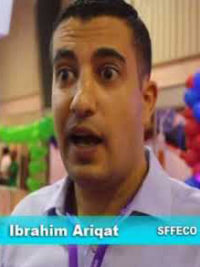
    Ibrahim Ariqat – SFFECO Global

    We are here for the very first time in this exhibition. The objective is to support our business. Happy to do business in Pakistan. Pakistan market is improving and there is a lot of potential here. The response in the exhibition is fair. We are here to support our distributors and boost confidence of our end users. We have also introduced our new products in the field of firefighting.We are a Middle Eastern company. We have launched a diesel engine here. We are producing it now. We are in Karachi for the first time as a company. Earlier, we have been focusing Islamabad. In Karachi we were here for a couple of tomes with our distributors.


    Syed Ahmed Ali – Secure Vision

    Basically it is an ICTN event but firefighting has also been merged with it. Since we don’t find any other event on fire fighting in Karachi, we participated in this exhibition. This time the participation is unprecedented and we find many companies which we did not expect to join. It was a good interaction. We met here with companies which we were doing business with for last many years but had not met them physically. This event offered us an opportunity to interact with them directly.In this background, merging IT with firefighting is a creative idea and we support it. Now, security field like CCTV is clubbed with IT. Cameras and networking are connected with IT and other products also.I think we have achieved our target and we have had a good audience during all three days here.CPECI always think positive. When I started my business some 14 years back I used to push the client to buy a security camera but today there is a market. It is natural when you have an expanded market there always emerges a competition which signifies quality of the product. I think this process always benefits the industry. Like the product we are selling is different from others. Why is that so? Because we distribute Flir’s product supported by R&D unlike Chinese who copy other companies. What we sell is a proactive system which gives alerts before any breach or incident. While, the other companies sell reactive system which gives you an access to video after happening. It means you spend millions on cameras just to get video so that you come to know how it all happened.Our system is called video analytics under which we give a certain command to camera which alerts you in case any abnormal activity is screened around. This is a new technology and making its market fast around the world. We are among few companies which are working on video analytics.

    Syed Abdul Samad Director, Delta Fire Safety & Security System

    Participation was good. This time round the arrangement here was different. I think it should have been separate like firefighting, safety and security. Firefighting should have been in the middle. Thus, this category is a bit disturbed. Hopefully it will be better in the future.CPECOf course we have some concerns. But there are some advantages as well. If Chinese companies are operating from here with their manpower, it makes their business expensive. Therefore, we can benefit subsequently. Like we are not only installing the system but also provide service to maintain it. Many Chinese companies are working with us. If Chinese provide equipment, we provide service.Technology transferTechnology is standardized. We cannot change it as there are global standards. Yes, if there is some change required in lines with such standards we do it to make the system run. Chinese also follow standards of world firefighting organization and thus the system goes on.

    Hamid Jalal – Combine Network

    We have been participating in this event since 2014. We are pioneer exhibitors of Security Asia. We did it in 2015 and 2016 also. So we have been part and parcel of this event. We were instrumental in inviting Chinese companies participating here. We have been doing business with Chinese companies since 2012.You people started with 2 halls and now it has developed into 6 halls. How about the business? It grew simultaneously?We don’t sell on the spot here. These exhibitions are aimed at spreading awareness as regards new products. The people are aware of security issues here in Pakistan therefore they visit to get to know about addressing them through security products. So they see which product can minimize their security threat. We are about to launch a new system which is called facial recognition system. The only solution in Pakistan. In this system, the facial data of wanted people would be stored and the camera will alert you once any criminal is detected. It can be installed at airports and other sensitive places. The camera will detect the people even if they change their getup.CPECI think the people who are working hard should not be concerned. Business is everywhere in the world. If we have ability to do business you should not be concerned about anything. If you cannot do it then you will get concerned about even tiny things. We should not have any issues with Chinese. Yes, there must be some terms and conditions set with Chinese. While doing business with Chinese, do you focus on technology transfer?Yes we do. Like I had demanded that we need a system which can detect wanted faces. Before that they provided cameras in which such feature was not included. They added alarm in the system on our requirement as we knew what we want in Pakistan’s specific security conditions.ParticipationIt was good. The concept of visitors is pretty clear now. I think it depends on exhibitor how smart system they are offering and defining it to clients. We believe in service along with doing business.

  • Improving Engineering Education

    By Khalid Pervez

    There could be no denying the fact that engineering graduates have a strategic and long-term impact on quality and productivity growth in industry and service sectors. To produce high quality industrial products and render international-level services that are price competitive both within and outside the country, we need a high number of well trained and well qualified engineering graduates. The pressing needs that are opening because CPEC and would have a long-term impact, further enhance concerns on quality engineering education.

    Some of the issues which surround our engineering education system are:

    Outdated curriculum which is not in line with industry requirements and absence of academic framework to constantly respond to the changing needs;

    Employers are not happy with engineering graduates and there’s no serious engagement between education providers and employers;

    Focus of most of the institutions is undergraduate teaching and the post-graduate programs and research is weak; 


    Lack of system capacity building effort and its enterprising and innovation character;

    Accreditation is more of a compliance rather than an improvement tool;

    95 to 100 percent revenue from government disbursement and/or student fees;

     No participation in regional development.

    It’s generally agreed that betterment of the overall engineering education system requires that all the stakeholders must effectively play their due role. The recognized stakeholders are: Students, Faculty/Educators, Alumnai, Administrators, Innovators, Entrepreneurs, Industry Professionals & Leaders. However, the key obstacle is the lack of ability to develop sustainable framework of long term development together with its implementation.

    Briefly speaking, the steps that can transform an engineering education system are:

    1.  Strengthen governance and leadership, which apart from other things also includes increasing the number of autonomous institutions and strengthened role of regulatory bodies to carefully grant accreditation and monitor performance of existing and new institutions. With respect to governance it’s important to make the governing body stronger. It indeed requires inclusion of qualified and competent outside professionals. This concept would meet with much resistance both from public and private sector institutions. But that’s where the independent regulatory body would have to use its muscles
    2. Improve the quality of teaching, learning and research such that there’s greater focus on outcome based education. This requires that the faculty is well qualified and competent, the atmosphere is conducive to effective teaching, learning and research and there’s continuous curriculum development to cater to the changing needs of industry and end-users.
    3. There’s a need of devising a well thought through criteria for rating all universities and institutions. This must be the task of independent regulatory body. The secured ratings should be applied both for encouragement and reprimands.
    4.  Develop stronger industry-institution collaborations. There have been many efforts in the past – some with good outcome – but these couldn’t be sustained due to lack of a clear end goal and implementation hiccups. This must be made mandatory, started and continued on permanent basis and should include internships, engagement of faculty on suitable assignments, etc.
    5. Encourage innovation and entrepreneurship. This could be implemented in several ways, depending on the strengths of a university or institution, its location, etc. At the beginning, it could just provide incentives to students and faculty for feasible ideas and later it could develop into facilities that are common to institutions and industry. Such facilities may consist of special laboratories and workshop for specific purposes where university-industry joint projects could be handled, in turn, creating stronger industry-academia linkage. Success of such linkages could greatly contribute in innovation, entrepreneurship, talent fostering and building up education system which is receptive to market needs.
    6.  Implement a national concerted initiative to improve engineering education. A national concerted initiative must be launched by the government with input, participation and commitment from all the stakeholders on improving the quality and relevance of engineering education. The national agenda must at least address the four key dimensions: strengthening governance and leadership; improving the quality of teaching and learning; fostering stronger industry/institute collaboration; and building innovation and entrepreneurship at the engineering institutions.

      The concerted effort should systematically monitor, refine, and evaluate the progress made at all the universities and institutions which must be tied up with institution ranking and accreditation.

      Notwithstanding a discussion on polytechnic institutes which run Associate Engineer [diploma] or BTech programs, it could be stated that they too are in dire need of holistic approach to enhance their effectiveness in imparting quality education.

      In conclusion, it could be emphasized that our engineering education system needs major uplift under a long-term plan consisting of concerted efforts of all stakeholders and due diligence of a national level autonomous regulatory body. Considering its magnitude and nature, such a plan might appear to be just a fallacy. But there can’t be shortcuts to such an important subject as the engineering education.

      [The author is Chief Executive of KPA Consulting, Karachi – khalid@kpa.com.pk]

  • Punjab prefers Hydel over Coal: Two coal-fired power plants marked infeasible in Punjab

    Two coal-fired power plants supposed to be installed in Punjab seem set to face a similar destiny as did a power complex in Gadani, Balochistan. Reports from Lahore and Islamabad suggest Rahim Yaar Khan coal-fired power plant and Muzaffargarh coal-fired power plant have been marked as infeasible. Thus, the government may drop them. Rahim Yar Khan and Muzaffargarh Power Plants which were supposed to generate 2,640MW of power were included in the China Pakistan Economic Corridor (CPEC) portfolio projects. The Punjab government is pursuing Islamabad that these projects may be incorporated in the CPEC umbrella projects. The officials in Lahore are of the view that since there is no coal in abundance in Punjab, these projects will be run on imported coal which turn them impracticable. Punjab Power Development Board (PPDB) is supervising agency for Muzaffargarh plant while Shanghai Electric Power Generation, China Machinery Engineering Corporation and Nishat Power Company were to build the plant in in Rahim Yaar Khan. Yet another report says Punjab had decided to go for hydro power projects instead of coal-fired power plants. Punjab has moved the JCC which met in China. It was agreed that hydro power projects, in the northern Indus region would be included in the CPEC umbrella projects.

  • CPEC should be open to Pakistani firms like to Chinese: Dr. Ishrat Hussain

    Calls for ensuring level playing field for Pakistani, foreign companies

    Renowned economist and former Governor State Bank of Pakistan has said CPEC should be open to Pakistani firms on the same terms as to the Chinese adding Commercial banks should finance Pakistani companies, either stand alone or in joint ventures with the Chinese companies in collaboration with the infrastructure development fund.
    Mr. Hussain believes: one of CPEC’s benefits would be the training and development of skilled manpower. Plans have to be made to assess long-term manpower requirements, both for construction as well as the operational phases of CPEC projects.
    “Various categories and levels of training programmes have to thus be designed and then assigned to credible, pre qualified providers. Particular attention should be given to train youth from backward areas, starting with Gwadar all the way to the Karakoram Highway.
    A number of private and non-profit organisations are actively engaged in quality vocational and technical training, mainly in Karachi and Punjab. These organisations should be invited to set up similar facilities in other parts of the country where CPEC projects are being executed, he writes in an article.
    In addition to this formal training, internships and attachments with Chinese companies working on the projects should be made an integral part of the curriculum. If there is one lasting legacy for which CPEC should be remembered, it is investment in producing skilled and trained technical manpower with different levels of expertise.
    Dr. Hussein enshrined six areas of policy where the government has to get serious. They include energy, industry, trade, foreign exchange regime, financial policy and skill development.
    He says The Special Economic Zones (SEZs), industrial parks, etc to be set up along CPEC should be open to Pakistani firms on the same terms as to the Chinese. Land should be allotted on long-term lease rather than outright purchase and the leases auctioned only to genuine, pre ualified bidders to eliminate land grabbers and speculators. In Balochistan, some portion should be reserved for local investors wherever feasible. The lease should incorporate a provision that the allotment would be cancelled if the project is not operational within three years. All infrastructure works — power, gas, water, roads, effluent plants, amenities — should be in place before the possession is passed on.
    Pre-feasibility studies should be carried out by SEZ authorities through expert consultancy firms or universities, to provide baseline data and information about the kind of projects that can be established in different zones.
    He says exports must grow at least 15 per cent annually to meet these new obligations, and remittances have to increase at their historical level. The exchange rate has to be managed deftly to stimulate new export products, new firms and penetration into new markets, while ensuring that prices of imports of capital goods, machinery and equipment are not hiked up, which would make new investments unattractive. Pakistani and other foreign companies winning competitive bidding should have a level playing field.
    Also, free trade Agreements have to be renegotiated to preserve the comparative advantage of Pakistani exports and tariff quotas introduced to safeguard against material injury to Pakistani manufacturers. Import tariff rates must be gradually reduced to enable Pakistani companies to participate in the global supply chain.
    In Balochistan, southern KP and Gilgit-Baltistan, urban and rural infrastructure projects that link the main highways and motorways under CPEC with the communities should be given priority by their respective set-ups in allocation of development budgets.
    In addition to this formal training, internships and attachments with Chinese companies working on the projects should be made an integral part of the curriculum. If there is one lasting legacy for which CPEC should be remembered, it is investment in producing skilled and trained technical manpower with different levels of expertise. – MD