Each and every sitting be it a formal or informal, engineers across Pakistan has one topic in common.
Who will be the next chairman of Pakistan Engineering Council? Why should not this query be at the epicentre of engineers communication when the PEC Elections 2024 is just at the corner and all engineers’ groups have kicked off internal discussions focusing the elections.
Initial information gathered by ER suggests incumbent chairman, Engr. Najeeb Haroon supported by National Engineers—an alliance of National Engineers Welfare Organization, a section of contractors and a section of PEG, the organization Engr. Haroon once led—has decided to contest for the second term. ‘He would love to be nominated and supported by his allies, engineers close to him say. But would he be able to retain that support is not clear. Because, a section of engineers from his allies and close to NEWA chief wishes Engr. Abdul Qadir Shah to be the next chairman. Wishes apart, the interesting part is that not everyone in Engr. Shah’s group wants him to contest the office of the chairman.
Shah’s own group has another name too—Engr. Zahid Arif—which is in circulation for the office of chairman. Engr. Arif, a senior engineer hailing from KP and the one who merged his organization with Shah’s is now a divulged-candidate for the top post.
But Engr. Arif is not the last name on the list. Yet another senior engineer from Punjab, and running the office in the province, Engr. Niaz Akhtar is said be set at mind to contest for the post of the chairman. In sum, there are four candidates for the post from the alliance ruling at the moment.
Apart from National Engineers and the allies, engineers from Engr. Jawed Salim Qureshi’s camp has only one name in the sight—Engr. Qureshi. He has been active in recent months as the polls are drawing closer and thus has reorganized his camp—the Engineers Pakistan. Though his candidate in PEC Election 2021 did not fare well but he is said to have retained the amount of support mostly surrounded to him. Some engineers still mark him as a potential candidate for the forthcoming elections.
Besides National Engineers and the Engineers Pakistan, Engr. Waseem Nazir’s PEG is the third significant camp in the engineering community in Pakistan. Engr. Nazir attracted majority votes in Pakistan’s largest province of Pakistan but failed to win the majority for the office of the chairman. Engr. Nazir’s companions say he has also kicked off his group’s preparations for the campaign. Although, he has not announced for his candidature as yet but he is conceived to be the candidate for the top slot.
Among all three, PEG and the Engineers Pakistan have a kind of central command in terms of taking swift decisions for their candidates whereas the National Engineers is likely to undergo tougher bargains for picking up a consensus candidate. ‘In the process the alliance may go for another alignment too’, some engineers say.
Engr. Haroon’s aides argue he has run the council with a level of success and has taken care of his allies and engineers as a whole and thus he deserves to be picked up for the second term. But how Engr. Shah who had decided to contest for the top post much earlier and communicated to Engr. Najeeb Haroon would be convinced to be step back is something to be seen in the coming months.
Yet another interesting development to be seen would be the move of Engr. Zahid Arif’s supporters of whom some are as close to Shah as they are to Engr. Arif.
Not only that, but Engr. Niaz Akhtar’s candidature, if he is adamant to go along is the decision that he has not announced formally would be affecting alignments especially in Punajb which is the real battle group in the next elections. Engr. Akhtar had advantage of his deep relations in academia in Puniab, quite connected with engineering academicians in all four provinces in Pakistan.
Tag: engineeringreview
-
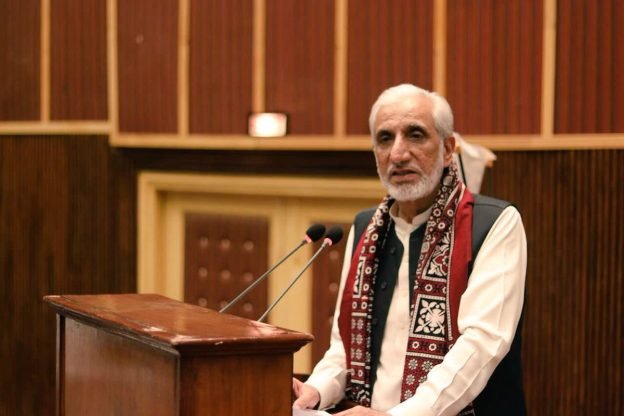
PEC Elections 2024 Emerging alignments, fault lines
-
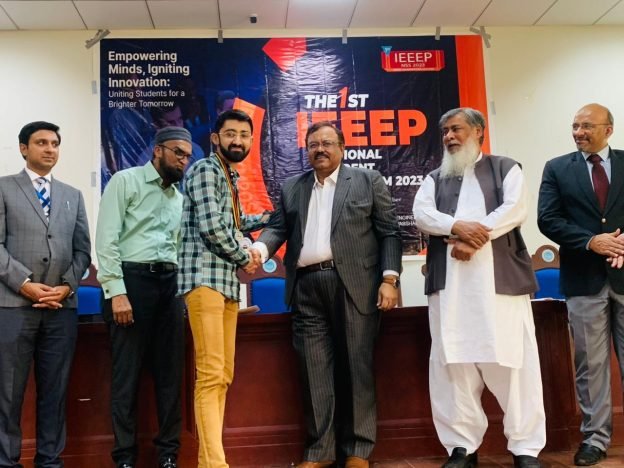
Over 65 students papers presented by various universities1st Two-day National Student Symposium at QUEST Nawabshah.
Under the aegis of the IEEEP Nawabshah Centre, “The First Two-Day National Student Symposium” was organized in Quaid e Awam University of Engineering Science and technology, Nawabshah on October 23 and 24, 2023.
The event was graced with the presence of Prof. Dr. Saleem Raza Samo, the Vice Chancellor of Quaid e Awam University of Engineering Science and Technology (QUEST), Nawabshah.
Following the recitation of the glorious Quran, the event was graced with some keynote talks by the guest speakers and other scholars from different institutions. Engr. Muhammad Hafiz Muhammad Bilal Basheer from IEEEP, Rizwan Aziz Siddiqui (Registrar QUEST), Prof. Abdul Sattar Saand (Chair IEEEP Nawabshah Centre), Engr. Shahid Qureshi (Honorary Secretary IEEEP Nawabshah Centre), Prof Dr. Abdul Fatah Chandio (Dean Faculty of Electrical Electronics and Computer Engineering), Dr. Munsif Ali Jaoti from Salim Habib University, and Professor Dr. Shakeel from Sir Syed University of Engineering Technology staged their informative keynote talks.
In the presentations session, several emerging scholars, students, and senior academics from different institutions across Sindh gave their presentations, which were moderated by the senior research scholars. Following the assessment of the presentations, the names of three first position holders were announced and thus the winners (Gold, Silver and Bronze) were awarded with cash prizes.
The guest of honor at the event, Prof. Dr. Saleem Raza Samo (Vice Chancellor, QUEST) in his address appreciated the strenuous efforts made by the event committee, particularly the organizer of the event, Prof. Dr. Abdul Sattar Saand, Chairman of the Department of Electrical Engineering, QUEST.
He appreciated the scholars who presented their research projects and encouraged them to be more active in research and development.
Also, the chief guest of the event, Professor Dr. Muhammad Aslam Uqaili (The Former Vice Chancellor Mehran University of Engineering Technology, and Chair IEEEP Jamshoor Centre) addressed the event emphasizing that the network was a must for research. “I believe in the collaborative research contributions of our emerging scholars,” he said.
At the end of this session, shields were awarded to guests, keynote speakers, moderators of the presentations, symposium organizer, coordinator, and those who made efforts to make the event successful.
Prof. Dr. Abdul Sattar Saand, the organizer of the symposium, thanked the audience, guests, moderators, presenters, keynote speakers and others for making the event even far more beautiful.
students’Prof. Dr. Abdul Sattar Saand, who also briefed the media, said the main purpose of the event was to encourage students, particularly those in the final year of their studies.They must know the world of scientific knowledge. He divulged that more than 65 students’ papers were presented by various universities.
For the last couple of years, we have been making every possible effort to bring this kind of informative and enjoyable event for our students, and luckily our students are now increasingly publishing their research projects in the renowned academic impact factor journals of the world.
He associated this publication achievement of the students with this event, and he labeled the event ‘a force to be reckoned with.’
Rameez Mahesar, the coordinator of the event, informed the moot about the presentations which would be published in the journal after a peer-review process.n -
Aiming to slow China’s advances, govern technology US moves to regulate artificialintelligence, signs order
President Biden signed a far-reaching executive order on artificial intelligence last week, requiring that companies report to the federal government about the risks that their systems could aid countries or terrorists to make weapons of mass destruction. The order also seeks to lessen the dangers of “deep fakes” that could swing elections or swindle consumers.
“Deep fakes use A.I.-generated audio and video to smear reputations, spread fake news and commit fraud,” Mr. Biden said at the signing of the order at the White House. He described his concern that fraudsters could take three seconds of a person’s voice and manipulate its content, turning an innocent comment into something more sinister that would quickly go viral.
“I’ve watched one of me,” Mr. Biden said, referring to an experiment his staff showed him to make the point that a well-constructed artificial intelligence system could convincingly create a presidential statement that never happened — and thus touch off a political or national security crisis. “I said, ‘When the hell did I say that?’”
The order is an effort by the president to demonstrate that the United States, considered the leading power in fast-moving artificial intelligence technology, will also take the lead in its regulation. Already, Europe is moving ahead with rules of its own, and Vice President Kamala Harris is traveling to Britain this week to represent the United States at an international conference organized by that country’s prime minister, Rishi Sunak.
“We have a moral, ethical and societal duty to make sure that A.I. is adopted and advanced in a way that protects the public from potential harm,” Ms. Harris said at the White House. She added, “We intend that the actions we are taking domestically will serve as a model for international action.”
But the order issued by Mr. Biden, the result of more than a year of work by several government departments, is limited in its scope. While Mr. Biden has broad powers to regulate how the federal government uses artificial intelligence, he is less able to reach into the private sector. Though he said that his order “represents bold action,” he acknowledged that “we still need Congress to act.”
Still, Mr. Biden made it clear that he intended the order to be the first step in a new era of regulation for the United States, as it seeks to put guardrails on a global technology that offers great promise — diagnosing diseases, predicting floods and other effects of climate change, improving safety in the air and at sea — but also carries significant dangers.
“One thing is clear: To realize the promise of A.I. and avoid the risks, we need to govern this technology,” Mr. Biden said. “There’s no other way around it, in my view.”
The order centers on safety and security mandates, but it also contains provisions to encourage the development of A.I. in the United States, including attracting foreign talent to American companies and laboratories. Mr. Biden acknowledged that another element of his strategy is to slow China’s advances. He specifically referred to new regulations — bolstered two weeks ago — to deny Beijing access to the most powerful computer chips needed to produce so-called large language models, the mass of information on which artificial intelligence systems are trained.
While businesses often chafe at new federal regulation, executives at companies like Microsoft, Google, OpenAI and Meta have all said that they fully expect the United States to regulate the technology — and some executives, surprisingly, have seemed a bit relieved. Companies say they are worried about corporate liability if the more powerful systems they use are abused. And they are hoping that putting a government imprimatur on some of their A.I.-based products may alleviate concerns among consumers.
The chief executives of Microsoft, Google, OpenAI and another A.I. start-up, Anthropic, met with Ms. Harris in May, and in July they and three other companies voluntarily committed to safety and security testing of their systems.
“We like the focus on innovation, the steps the U.S. government is taking to build an A.I. work force and the capability for smaller businesses to get the compute power they need to develop their own models,” Robert L. Strayer, an executive vice president at the Information Technology Industry Council, a trade group that represents large technology companies, said on Monday.
At the same time, several companies have warned against mandates for federal agencies to step up policing anticompetitive conduct and consumer harms. The U.S. Chamber of Commerce raised concerns on Monday about new directives on consumer protection, saying that the Federal Trade Commission and the Consumer Financial Protection Bureau “should not view this as a license to do as they please.”
The executive order’s security mandates on companies were created by invoking a Korean War-era law, the Defense Production Act, which the federal government uses in what Mr. Biden called “the most urgent moments.” The order requires that companies deploying the most advanced A.I. tools test their systems to ensure they cannot be used to produce biological or nuclear weapons. The companies must report their findings from those tests to the federal government — though the findings do not have to be made public.
The order also requires that cloud service providers report foreign customers to the federal government. It also recommends the watermarking of photos, videos and audio developed by A.I. tools. Watermarking helps track down the origin of content online and is used to fight deep fakes and manipulated images and text used to spread disinformation.
Mr. Biden, trying to make watermarking sound useful to Americans, said, “When your loved ones hear your voice on a phone, they’ll know it’s really you.”
Many of the directives in the order will be difficult to carry out, said Sarah Kreps, a professor at the Tech Policy Institute at Cornell University. It calls for the rapid hiring of A.I. experts in government, but federal agencies will be challenged to match salaries offered in the private sector. The order urges privacy legislation, though more than a dozen bills have stalled in the divided Congress, she said.
“It’s calling for a lot of action that’s not likely to receive a response,” Ms. Kreps said. -
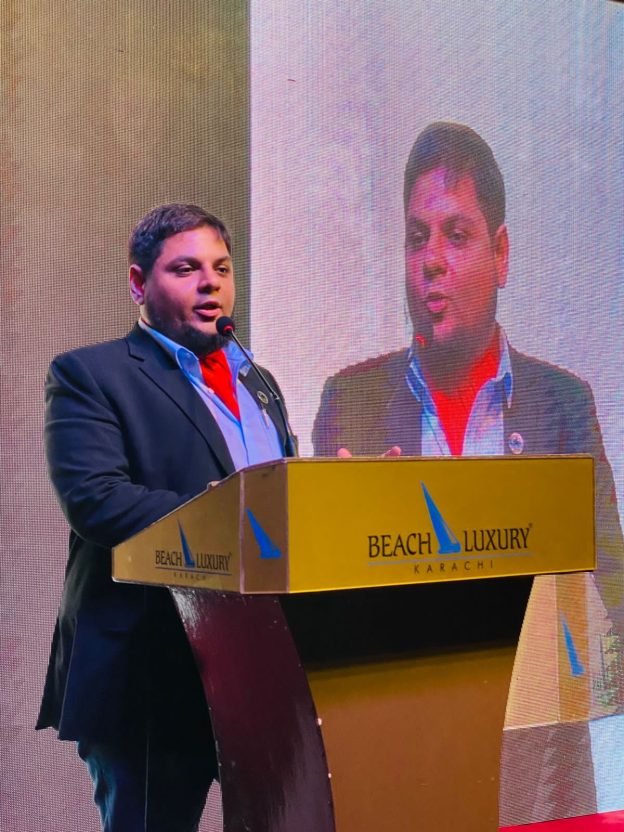
28th Pakistan HVACR Expo 2023 set to boost local industry
Preparations for the 28th Pakistan HVACR Expo 2023 being held in Karachi from June 8 are on the fast track and signals coming from organizers and exhibitors suggest the show is most likely to break the cycle of despair in the business community in the wake of the difficult economic situation in Pakistan.
Chairman of HVACR Society, Karachi Chapter Zeeshan Ahmed Siddiqi says there is a positive response from the people and that the exhibitors are excited as Karachi is hosting this moot after three years.
He believes the exhibition simultaneously is a challenge too in Pakistan’s current fragile economic situation. But still, the show has attracted exhibitors and all are coming to the exhibition where they will display their products and offer services.
HVACR Expo is embedded with a conference focusing on energy efficiency and skill development, the areas in the spotlight in Pakistan today. The conference theme is linked with energy, localization, and technology transfer—the demands that the organizers fully comprehend.
HVACR Expo organizers said they were pretty unsure of the outcomes when they started moving but now we do witness the synergy appearing on the horizon. Our people have always been hopeful. They say what is needed is the policies that should be corrected so that the local industry is encouraged.
Yet another HVACR player says we have been lacking in producing local producers; we have been dependent on imports. We have failed to recognize local producers who are now gradually being given awareness. This exhibition would play its part in such a direction.
This show, says yet another player will bolster industry-academia collaboration and this is one of the ways to increase productivity in Pakistan. Local producers will be encouraged if they see society moving in this direction. There are quite a number of companies which are producing various parts which were imported until a few years ago.
A local producer says he is very confident that he will have an opportunity to display Pakistan-made products in the exhibition. We are making products that match international standards and if they are recognized, Pakistan will be benefited the most.
Yet another local producer is also sure this exhibition will bolster the local industry in the country. The people will know about local products which can replace the imported ones. -

BRG, PSPP Organize 2nd Pakistan Water Summit
Business Relay Group and the Pakistan Society of Plumbing Professionals (PSPP) organized the 2nd Pakistan Water Summit in March at a local hotel in Karachi in celebration of the United Nations’ World Water Day.
The summit was organized with the theme “Accelerating Change” and aimed to promote sustainable water management practices in Pakistan.
The summit brought together a diverse range of stakeholders, including policymakers, industry experts, academics, and civil society representatives, to discuss water-related challenges and find solutions to accelerate change toward sustainable water management practices in Pakistan. The summit focused on key issues such as water scarcity, water pollution, and climate change, and highlighted the importance of adopting innovative technologies and best practices to ensure sustainable water management.
The event featured keynote speeches, panel discussions, and interactive workshops that provided participants with the opportunity to engage in meaningful dialogue and knowledge sharing. The summit showcased successful case studies and highlighted the importance of cross-sectorial collaboration in addressing water-related challenges.
Speaking about the event, Engr. Sajjad Ghani, President, Pakistan Society of Plumbing Professionals, said, “We are thrilled to have organized the Pakistan Water Summit in celebration of the UN World Water Day. We recognize the importance of promoting sustainable water management practices and believe that the summit has played a crucial role in accelerating change toward this goal. We hope that this event will inspire and motivate all stakeholders to continue working towards sustainable water management practices in Pakistan.”
Mr. Abbas Sajid, General Secretary of the Pakistan Society of Plumbing Professionals, told, “The Pakistan Water Summit has provided a unique platform for stakeholders to share their experiences, best practices, and innovative ideas towards ensuring sustainable water management in Pakistan.
Mr. Faraz Khan, CEO, Business Relay Group, added, “We are committed to continuing this dialogue and collaboration and look forward to building on the success of this event.”
The Pakistan Water Summit was a resounding success, with participants from a wide range of sectors coming together to discuss solutions and strategies to accelerate change toward sustainable water management practices in Pakistan. The summit demonstrated the importance of collaboration, innovation, and partnership in addressing the critical water-related challenges facing the country. -
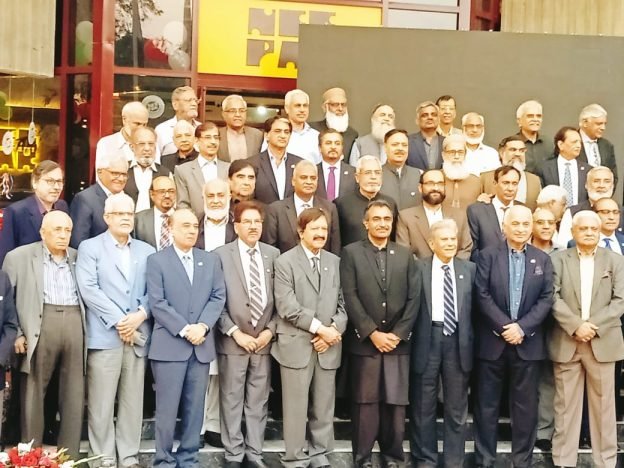
NESPAK Celebrates 50th anniversary on Pakistan Resolution Day
NESPAK celebrated its 50th anniversary ceremony on Pakistan Resolution Day, March 23, 2023, with great enthusiasm and pride. The event was held at NESPAK headquarters in Lahore.
NESPAK is one of the largest and most prestigious engineering consulting firms in Pakistan, providing top-quality engineering and consultancy services both locally and internationally. The company has been instrumental in the development of Pakistan’s infrastructure, contributing significantly to the nation’s progress and prosperity.
The ceremony was attended by a large number of distinguished guests comprising former Managing Directors of NESPAK, Vice Presidents, important Clients, engineers, and industry experts. The event began with the recitation of the Holy Quran, followed by the national anthem.
Addressing the audience, NESPAK Managing Director Dr. Tahir Masood highlighted the company’s achievements and contributions over the past 50 years. He emphasized the company’s commitment to providing quality services to its Clients and the nation, saying, “NESPAK is a national asset, and we take great pride in serving Pakistan and contributing to its development.”
The ceremony also included a documentary showcasing NESPAK’s journey over the past 50 years, highlighting the company’s significant projects and achievements, and a prize distribution among winners in different sports categories. In connection with the 50th anniversary celebrations, NESPAK also organized a family gala for children of Company employees on February 24, 2023, and Women’s Day on March 8, 2023.
The event concluded with a cake-cutting ceremony, symbolizing NESPAK’s 50 years of excellence in engineering and consultancy services. The company plans to continue its commitment to excellence in the years to come, serving Pakistan and contributing to its development and progress. -
High Integration Nature of Microcontroller
Automotive engine control systems, implantable medical devices, remote controls, office equipment, appliances, power tools, toys, and other embedded systems are just a few examples of the automatically controlled goods and gadgets that use microcontrollers. Microcontrollers make it affordable to digitally control even more devices and processes since they are smaller and less expensive than designs that require individual microprocessors, memories, and input/output devices. In order to control non-digital electronic equipment, mixed signal microcontrollers are frequently used. Microcontrollers are a popular and affordable method of data collection, sensing, and controlling the physical world as edge devices in the context of the internet of things. A system on a chip is similar to a microcontroller in modern parlance, but it is less complex. However, a system on a chip typically combines cutting-edge peripherals like a graphics processing unit (GPU) and a Wi-Fi interface controller as its internal microcontroller unit circuits. A system of the chip may connect external microcontroller chips as motherboard components.
At this time, the majority of microcontrollers had concurrent variations. One contained an EPROM program memory that could be wiped by ultraviolet radiation thanks to a transparent quartz glass in the package’s lid. For prototyping, these erasable chips were frequently employed. The other version was either a mask-programmed ROM or a PROM variant which was only programmable once. For the latter, the abbreviation OTP, which stands for “one-time programmable,” was occasionally used. The PROM was typically the same type as the EPROM in an OTP microcontroller, but the chip packaging lacked a quartz window, making it impossible to expose the EPROM to UV light, which prevented it from being erased.
Because RAM and non-volatile memory are integrated on the same chip as the CPU in microcontrollers, they may not incorporate an external address or data bus. The semiconductor can be housed in much smaller, less expensive packaging by using fewer pins. It is more expensive to integrate the memory and other peripherals onto a single chip and test them together, but doing so frequently lowers the net cost of the embedded system as a whole. Even though the price of a CPU with integrated peripherals may be slightly higher than the price of a CPU with external peripherals, having fewer chips usually enables a smaller, less expensive circuit board, reduces the labor needed to assemble and test the circuit board, and also tends to lower the defect rate for the finished assembly. Due to this integration, fewer chips, less wiring, and less circuit board space are required to create identical systems than if separate chips were used. Additionally, each pin on devices with a low pin count, in particular, may connect to a number of internal peripherals, with the pin function being determined by software. As opposed to if pins had specific functions, this enables a part to be used in a larger range of applications. Since their invention in the 1970s, microcontrollers have proven to be extremely popular in embedded systems.
Some microcontrollers employ the Harvard design, which separates the memory buses for instructions and data to enable parallel accesses. When a Harvard architecture is employed, the bit size of the processor’s instruction words may differ from the size of internal memory and registers; an example would be 12-bit instructions used with 8-bit data registers.
It can be challenging to choose which peripheral to integrate. The operating frequencies and system design flexibility of microcontroller vendors are frequently exchanged for customer-driven time-to-market demands and overall lower system costs. Manufacturers must strike a compromise between the need to reduce chip size and the addition of new functionality. -
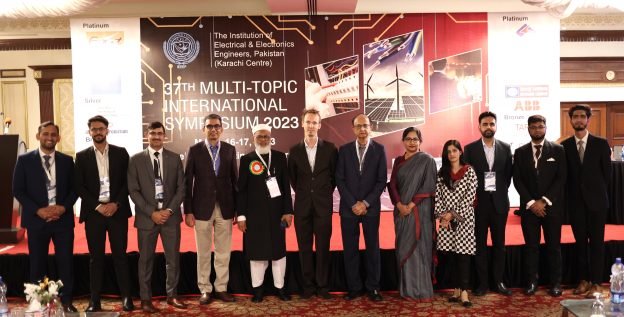
‘Jubilee Corporation is a wonderful partner for its understanding of technology.’
Cheaper cost is nothing but a loss of time and resources, believes Julien MermillonT hough Jubilee Corporation is undoubtedly a big name in the engineering world in Pakistan, the company’s understanding of modern technologies and engineering surely transmits signals to its international partners—Lovato Electric—makes it a distinct engineering concern in Pakistan. The level of satisfaction comes from Lovato through its representative for Asia Pacific region Julien Mermillon who talked to ER during Multitopic Sympoisum 2023 hosted by IEEEP in Karachi. Here is his interview for our readers.
How is Lovato’s relationship with Jubilee Corporation?
It’s a great pleasure to work with Jubilee Corporation. They are very competent people with high technical skills. At Lovato, we sell quite complex engineering solutions, mainly focusing on energy management, metering, control, and protection equipment. Today’s topic was dynamic power factor correction, which is part of power quality solutions. But mainly, we are focusing on metering equipment to understand power quality and the energy consumption. This is about how the energy is spent and if the energy supplied to a facility has proper power quality to avoid any issues. Jubilee Corporation is providing a complete mix of solutions by Lovato, including what we discussed in the Symposium. This solution provides great efficiency at a reasonable cost suitable for the facilities of Pakistan.
The people are conscious of the cost here despite the importance of technology. How is it possible to offer efficient systems at lower costs?
The matter of cost is always, like we say, a balance between CapEx and OpEx. You can invest in technology with cheap products and solutions, which may last only two years. It means you have lost your valuable time and money. A quality product can last for 15 years, which is generally what Lovato is offering. We use the best quality parts in our products. Let’s assume that the product is a box, and inside this box are electronics. Our electronics are made up of premium quality parts, which ensure long product life. It may be higher in cost initially, but over time, it is much cheaper than replacing a low-quality product three or four times in the same period. Lovato Electric is a main player in this category. We are a family-owned business, which means that the company is reinvesting its money to improve the product, not to please shareholders. We are making the best product at the best price, which means that we are expensive than low-quality products available in the market. Our customer is satisfied with the quality of our products.
Many people in the engineering sector believe the Chinese are a big challenge. Are they a challenge for your company too?
They are a challenge for the entire world, especially from the business point of view. Luckily, they target different market segments. Usually, they bring some very cheap solutions at the cost of low durability and reliability. Maybe you don’t see it here, but they also bring some very advanced solutions, which came to be at the same price as us. The main difference between Chinese and western or Japanese, or Korean companies is that we cannot afford to have low-cost and low-quality products due to the high cost of labor. If you install some low-cost equipment and you need to replace it after a few months, that will cost you a huge labor cost. This will also disturb the production process of the facility and reduce operational efficiency. So, in the end, it is a different market segment. Some people may want to try it, but others would not go for it.
You are also looking after the Asia Pacific region for Lovato. What is the landscape there in terms of metering and such solutions?
I would say, as compared to Lovato’s historical market, there are quite massive developments that involve huge numbers of meters to monitor energy consumption accurately. We have sold one of the biggest metering systems. It’s a competitive and challenging market, but I must say it is also a land of opportunity. Our partners, like Jubilee Corporation, are doing a great job representing Lovato products in their respective market.
While working with Jubilee Corporation, has Lovato had any thought to engage in any joint venture to manufacture products and provide systems in Pakistan?
Lovato is a family-owned business, and we don’t have many factories around the world. We have three manufacturing facilities in Italy. We are a medium size company, and we are focusing on staying efficient. We have no factory outside Europe. Time will tell us if we move on to the stage where we start manufacturing somewhere else outside Europe. I believe Pakistan could be a very high potential market for us. I am always pleased with the Jubilee Corporation team because they are probably the most technical people and well-accustomed to Lovato products. When we have some training sessions to check how much knowledge is assimilated by our partners, we are pleased to see that they are at the top of the list. By Manzoor Shaikh -
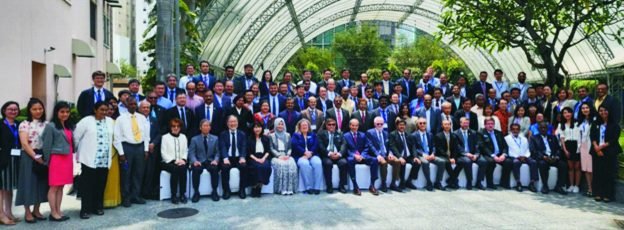
Dr. BS Chowdhry and Dr. Amjad Hussain Attended IEEE R10 Annual Meeting in Vietnam
The 2023 IEEE Region 10 Annual Meeting was recently held successfully in Ho Chi Minh City, Vietnam, after three years of virtual and hybrid meetings. Prior to the annual general meeting (AGM), a technical workshop sponsored by the Global Energy Interconnection Department and Cooperation Organization (GEIDCO) was held at the HCM City University of Technology on March 3. Over 100 leaders and delegates from IEEE Sections and Council in the region, as well as R10 ExCom members, attended the AGM. The IEEE dignitaries present were IEEE President, Professor Saifur Rahman, IEEE President Elect, Thomas Coughlin, IEEE-VP MGA, Jill Gostin, and IEEE Executive Director, Sophia Muirhead, who attended online, and Region 2 Director, Andrew Lowery. The meeting also received support and valuable advice from members of the R10 Nomination and Advisory Committee, including past IEEE President, Prof Toshio Fukuda, and past R10 Directors – Prof Akinori Nishihara, Prof Kukjin Chun, and Prof Janina Mazierska. Two special speakers from Region 8, Peter Nagy and Prof Mousmi Chaurasia, MGA Training Committee, were also invited.
During the meeting, there were speeches by IEEE senior leaders and speakers, reports and plans from various Chairs of R10 Committees, training and poster sessions, and presentations from flagship event organizers – TenSymp, R10 HTC, and TenCon in 2022, 2023, and 2024. The two-day event also included an award banquet with a cultural show, a half day of team bonding activities, and a dinner at an offsite restaurant. The feedback from delegates was positive, with lively discussions and active networking during the two days over breakfast, tea breaks, lunch, dinner, and even on the bus.
The success of the event was due to the contributions of all volunteers who are committed to the mission and vision of IEEE, and the assistance from the professional and efficient staff at the IEEE Asia-Pacific Office and IEEE Beijing office. The outcomes and success of the event were a result of the cooperation and dedication of everyone involved. It is also essential to recognize that human interactions cannot be replaced by online contacts. Finally, the organizers are confident that they will make Region 10, hundred percent, and express their gratitude to everyone who made the event possible. -

Pakistan Cables signs MoU with STEAM Pakistan
Pakistan Cables signed a Memorandum of Understanding (MoU) with the Pak Alliance for Math & Science Welfare Trust (PAMS) to partner with employee volunteering through STEAM Pakistan. STEAM Pakistan is a collaboration between the Malala Fund and the Ministry of Federal Education & Professional Training.
Pakistan Cables will partner with STEAM Pakistan by putting forward volunteers that will promote subjects of science, technology, engineering, arts, and mathematics (STEAM) among students of secondary classes of Government schools through experiential learning.
Pakistan Cables Ltd. is an active advocate of the UN’s sustainable development goals – SDG 4 (Quality Education) and SDG 5 (Female Empowerment). Previously rolled out ASCEND, its flagship initiative, to promote science and engineering-related fields by offering scholarships and internships among female students among leading public sector engineering universities of Pakistan. The collaboration for STEAM Pakistan is the second major initiative by the Company illustrating its commitment to youth empowerment.
Pakistan Cables Ltd. Founded in 1953, Pakistan Cables is the premiere and most reputable cable manufacturer in Pakistan. Being the only wire and cable manufacturer listed on the PSX since 1955, it is also a member company of the Amir S. Chinoy group. The company has the largest geographical footprint in Pakistan with a presence in over 180 cities. It is ISO9001:2015, ISO 14001:2015, and OHSAS 18001:2007 certified, and various cables type tested by KEMA, Netherlands.
STEAM Pakistan is a collaboration between the Malala Fund and the Ministry of Federal Education & Professional Training. The overall objective of STEAM Pakistan is to improve the learning outcomes of students enrolled in government schools across the country. The project also aims to develop cognitive and critical thinking abilities among students through targeted sessions and activities, with a particular focus on girls’ education. The Pak Alliance for Maths and Science (PAMS) is the lead implementing partner for STEAM Pakistan, with its head office in Islamabad, STEAM Policy Units in Karachi and Lahore, and a STEAM Policy Unit in Gilgit.
To date, STEAM Pakistan has enabled interactive Safeer sessions directly impacting over 7,500 school children in more than 170 government schools in Islamabad, Karachi, Lahore, and Gilgit. Impact activities include inspirational talks, hands-on learning, and career counseling by professionals on a variety of topics such as engineering, space exploration, marketing, mountaineering, climate change, and public policy to trigger their imagination.