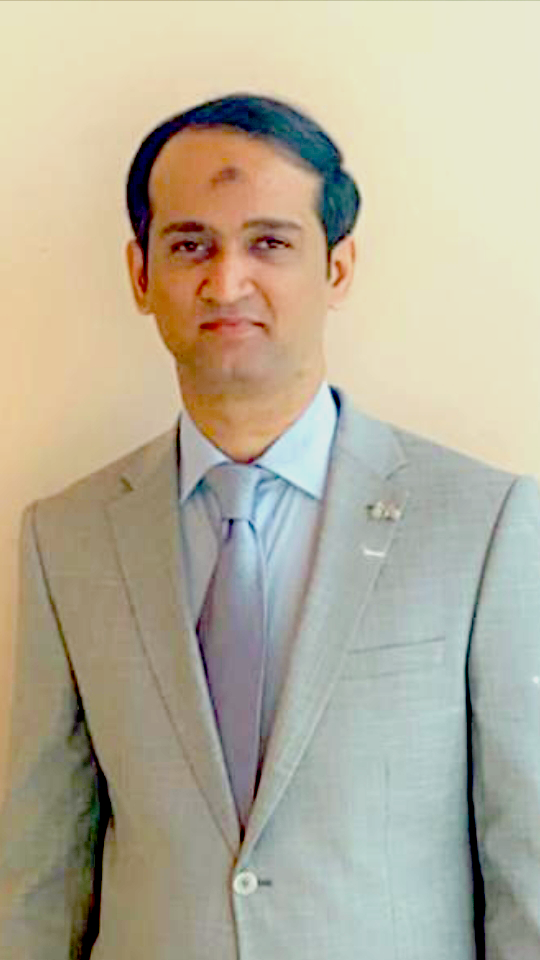
LAHORE: NESPAK, a leading engineering consultancy firm, has been awarded a prestigious project in Bahrain. The project involves conducting the annual performance test of the Al Dur-II Integrated Water and Power Plant, which has a capacity of 1500 MW. The announcement was made by Dr. Tahir Masood, Managing Director NESPAK, on Tuesday.
NESPAK’s scope of services includes the conduct of an annual performance test for the Al-Dur-II plant, which was commissioned in 2022. The duration of the project is two months, and the client for this project is NOMAC, a global operations and maintenance service provider for the energy sector.
Dr. Masood highlighted that this project is a testament to NESPAK’s expertise and capability in providing top-notch engineering consultancy services in the power sector. NESPAK is committed to delivering the services on time and with the highest quality standards. This project will pave the way for further opportunities for NESPAK in the global market, as the company remains dedicated to delivering excellence in all its endeavors.
NESPAK has an impressive track record of providing engineering consultancy services to major infrastructure projects in Pakistan and abroad. The firm’s experience and expertise in the power sector are widely recognized, and the Al-Dur-II project is a significant milestone for the company.
The award of the project to NESPAK reflects the company’s commitment to delivering high-quality engineering consultancy services to its clients. The Al-Dur-II project is set to further enhance NESPAK’s reputation and provide a strong foundation for future growth in the global market.
Tag: engineeringreview
-

NESPAK Wins Energy Sector Project in Bahrain
-

ASPIRE Pakistan invites engineering intelligentsia for brainstorming
Center for innovative projects, grants suggestedASPIRE Pakistan arranged an ORIC/BIC leadership moot to attend the brainstorming session on the topic of Industry Academia Gap and how overseas Pakistanis can help in bridging this gap.
ASPIRE Pakistan is a 501c3 compliant nonprofit organization (registered in the USA) of passionate overseas Pakistanis with a vision for a socially and economically prosperous Pakistan through innovation and entrepreneurship.
ASPIRE’s mission is to accelerate the growth of the knowledge economy in Pakistan by leading the innovation and entrepreneurial ecosystem, while connecting stakeholders and creating socioeconomic prosperity in an equitable and sustainable manner.
To achieve its mission, ASPIRE Pakistan engages all stakeholders, including academia, business/industry, government, overseas Pakistanis, on-ground experts, and relevant organizations, in an effective partnership, enhancing individual potential into collective opportunities.
In his welcome note, Hassan Syed, Founder and Chairperson of ASPIRE Pakistan appreciated Vice Chancellor NED University, Prof. Dr. Sarosh Hashmat Lodi, Prof. Dr. Muhammad Tufail Jokhio, and Dr. Riaz Uddin for hosting the event.
He wished special thanks to Prof. Dr. Bhawani Shankar Chowdhry for being the catalyst and a mentor to him.
The meeting was also attended by visiting Dr Azam Arastu, President Apex Consultants, and Vice President (Retired) – Boeing Space & Defense Systems Los Angeles, California (USA). The national idea bank Pakistan and Aspire Pakistan are the brain child of Dr Azam Arastu and Mr Hassan Syed.
Everyone participated well and contributed intellectually with an open mind. During the conversations, the following ideas were identified and discussed as potential valuable activities that could help:
• Problem Solving Competitions to engage industry in solving industry problems and promote innovative thinking among students.
• Faculty Training Program on Problem Statements and Market Definition to have better quality final year projects.
• Develop a framework of engagement and develop best practices
• Publish a list of innovative minds and annual awards to recognize innovators
• Develop and maintain a central place for all grant opportunities and list of highly innovative projects seeking funding
• Perform portfolio assessment for existing inventions and research to help in developing commercialization roadmaps
• Offer courses through industry experts as part of a visiting faculty program in which overseas Pakistanis can offer advanced knowledge of technology and leadership.
ASPIRE Pakistan is committed to developing vibrant innovation ecosystems throughout Pakistan and Academia is to play a leadership role in instilling a culture of innovation and entrepreneurship. Our team of dedicated volunteers from 20+ countries will work on these ideas further and convert them into sustainable programs that can be offered to the partnering universities. -

Gwadar turns less power-deficient city
Balochistan’s port city of Gwadar is now less power-deficient in practical terms after the 100MW Iran-Gwadar power transmission project.
Abdul Aziz Uqaili, the Chief Secretary of Balochistan and an engineer too said last month that Prime Minister Shehbaz Sharif would inaugurate the 100MW Iran-Gwadar power transmission project during his visit to Balochistan which was due by writing this report.
Uqaili who was there for a high-level meeting to review the ongoing uplift projects in Gwadar said under the power transmission project, Gwadar will get 100 megawatts of electricity from Iran.
National Dispatch Company (NDC), Quetta Electric Supply Company (QESC), Gwadar Port Authority (GPA), Gwadar Development Authority (GDA), China Overseas Port Holding Company, and the departments concede with the project have completed their preparations.
The project was complete and what was left was the unveiling of the project that the prime minister was to do. The electricity supply to Gwadar will be formally started.
During his visit, the PM will also open the project of the first cross-stuffing facility at Gwadar Port, dredging at Gwadar Port. Besides, distribution of boat engine checks to the deserving fishermen of Gwadar will also be done,” he said.
The chief secretary reportedly stressed that the incumbent government was committed to the development of the coastal belt of Balochistan and through various uplift projects launched in the province, trying to benefit the local people of Balochistan.
“The implementation of all these projects is part of the vision of the PM Pakistan for Balochistan,” he emphasized.
Moreover, he was briefed about the administrative structure of the Gwadar district, its historical importance, and ongoing development projects by the federal and provincial governments.
Gwadar power woes are likely to be addressed by the end of this year after the completion of the 300 megawatts (MW) coal-fired power plant.
The 300MW coal-fired Gwadar Power Plant would cater needs of some 150,000 local people by the end of 2023 under the 2050 Master Plan of Gwadar.
The power plant of an independent power producer was one of the key energy projects under the China-Pakistan Economic Corridor (CPEC), he added.
The project aimed at improving the reliability of the local power supply which would help gradually solve the problems in current economic development and urban construction in the Gwadar region, which is being restricted by the shortage of power.
All major projects under CPEC in Gwadar, including Gwadar Power Plant, the New Gwadar International Airport Project, the China Pak Friendship Hospital, China-Pak Technical and Vocational Institute in Gwadar, the Gwadar East-bay Expressway Project, Gwadar Free Zone, and Gwadar Port need energy.
Makran division of Balochistan depends on Iranian power for a long. Pakistan signed with Iran agreement in 2003 under which Iran had to daily supply 35 megawatts to Balochistan’s coastal belt.
In 2011, the agreement was extended, and Iran was asked to increase the capacity to 70 megawatts.
Five years later, when construction work in the deep-sea port of Gwadar gained momentum, 30 megawatts were added to the power supply and Iran has since been selling 100 megawatts to Pakistan to light up its coastal areas.
“Power shortfalls in Iran have led to load shedding in Gwadar, Turbat, and Makraan regions. These areas are not connected to the national grid and are dependant upon the Iranian power supply. -

Is Islamabad not reaping the benefits of AER in Sindh?
Islamabad’s competitive bidding process for renewable power projects—wind and solar—under category three has surprised Sindh’s Energy Department because only one project from a series of its ready projects has been picked up for the bidding. Since its 1875 MW wind and 1400 MW solar power generation projects are ready, Sindh feels the federal government is unable to tap the benefits for the country which it believes cannot afford expensive energy in the wake of the current national fiscal situation. In a letter to Khurram Dastagir, the Federal Minister for Energy, Imtiaz Shaikh, Sindh Minister for Energy writes that “the AEDB has picked and chosen 22 wind and 27 solar power projects from the list without mentioning any criteria. It is also surprising that only one solar project from 25 solar projects of the Government of Sindh has been chosen for competitive bidding.” The letter invites the attention of Mr. Dastagir on the AEDB’s recently issued letter No.B/3/1CBwind/17 dated 16th January in which AEDB has referred CCOE decision dated 4th April 2019 and CCl approved ARE Policy 2019 wherein category-Ill projects are allowed to go ahead, subject to be successful in the competitive bidding process to be undertaken by AEDB for each technology based on (i) the quantum ascertained by the IGCEP and (ii) confirmation of the interconnection ready zones (IRZs) by NTDCL. The IGCEP 2021 approved by NEPRA allocated a quantum of 1000 MW each for the induction of wind power capacity through competitive bidding by the year 2024. The category-Ill includes thirty-one (31) wind projects with a cumulative capacity of 2139 MW and sixty-nine (69) solar PV projects of 4193 MW. The AEDB has picked and chosen 22 wind and 27 solar power projects from the list without mentioning any criteria. It is also surprising that only one solar project from 25 solar projects of GOS has been chosen for competitive bidding.Furthermore; instead of taking a quantum of 1000 MW each for induction from which wind and solar as approved IGCEP 2021, only 322 MW capacity from wind and 392 MW capacity from solar has been proposed for procurement in upcoming competitive bidding without mentioning any clear criteria.It is an injustice that only a meager capacity is proposed to be procured from clean, cheap, and affordable energy resources which is one of the core initiatives of the current government to replace the expensive fuel plants.The letter writes that there is huge potential for Alternative and Renewable Energy Resources in Sindh Province. The Sindh government initiated 29 wind projects with a cumulative capacity of 1875 MW and 25 solar projects with a cumulative capacity of 1400 MW under category-Ill are waiting for competitive bidding for many years.Mentioning Variable RE locational study conducted by World Bank, the letter writes only minor upgradation or reinforcement and enhancement of transmission and distribution network in Sindh province will enable to evacuate 6,765 MW till 2025 and a further 10,035 MW till 2030 from wind and solar projects.Shaikh has written that it will be an injustice to Sindh province for ignoring its projects despite having huge potential and large numbers of valid LOIs holders in this competitive bidding. He has requested that a complete quantum of 1000 MW each for wind & solar projects as approved in IGCEP of 2021 may be considered for bidding and all wind and solar projects of GOS may be included for fair competition. I hope that our request will be considered and cheap and clean energy will be procured for the betterment of the country.
-

Program launched to train 3,000 undergraduates in Sindh
Hazza Institute of Technology (HIT) and Sindh’s Information Science & Technology Department (ISTD) have committed to training 3,000 undergraduates under the IT Industry-academia bridge program in Sindh.
ISTD and HIT signed an agreement to launch the IT Industry-academia bridge program this month. The signing ceremony was attended by Ms. Tanzila Ume Habiba, the Special Assistant to the Chief Minister of Sindh on ISTD, Secretary, Mr. Asif Ikram, and HIT Managing Director, Azhar Iqbal Sindhu.
HIT is a joint project of the Ministry of Federal Education & Professional Training, Government of Pakistan under a Public-Private-Partnership program that aims to provide Vocational, Technical & Professional Education and Training, Skills Development, Career Counseling, and Job Placement to the citizens of Pakistan to enable them to earn their respectful livelihoods and alleviate poverty in Pakistan.
The IT Industry-academia bridge program is a collaborative effort between the ISTD, Sindh, and HIT to bridge the gap between academia and industry in the field of IT in Sindh.
The program aims to provide practical industry exposure and hands-on training to 3000 students in their 6th, 7th, and 8th semesters from public and private sector universities, in order to equip them with real-world experience and prepare them for the challenges of the IT industry.
The ISTD, Sindh, and HIT will work together to ensure the success of the program and create a talent pool equipped with the necessary skills and knowledge to drive innovation and growth in the IT sector.
Highlighting the importance of the initiative in Sindh, Ms. Tanzila Ume Habiba appreciated the efforts of HIT and the ISTD, Sindh for collaborating to launch this program.
Mr. Asif Ikram highlighted the role of IT skillsets in the economic growth of the country. He said that focusing on Human Capital development by investing in youth will bring a drastic change in the job scenario of the country. And, IT is the only sector that could bring forex inflow to the country. A country with more than 60% demographic balance in the favour of youth may result in economic stability, if the youth is trained in the IT field. ‘Academia-Industry Bridge Program will fetch more job opportunities for the youth onshore as well as offshore.’ He expressed his commitment to continue with such kind of training programs in the future.
The agreement ceremony was a significant step towards achieving the goal of bridging the gap between academia and industry in the IT sector, he said.
It demonstrated the commitment of the ISTD, Sindh, and HIT to create a conducive environment for the growth of the IT industry in the region.
The purpose of this linkage is to identify important academia-industry bridge activities that can stimulate the likelihood of employability among students. We continue to invest with the goal of providing Vocational, Technical & Professional Training, Skills Development, Career Counseling, and Job Placement to the residents of Sindh to enable them to earn their respectful livelihoods and alleviate poverty in Sindh.
HIT Managing Director, Azhar Iqbal Sindhu, expressed his enthusiasm for the program stating it is a significant milestone in the company’s efforts to contribute to the development of the IT industry in Sindh.
Bridging the gap between the IT industry and academia is crucial for the development and growth of the industry, says a press release. The industry needs a workforce that is equipped with the latest skills and knowledge to meet the constantly evolving demands of the market.
The efforts of ISTD and HIT will create a talent pool, equipped with the necessary skills and knowledge to drive innovation and growth in the IT sector. -

SMIU organizes 1st Global Research Congress
GRC 23 calls for adopting inclusive, integrative, innovative practicesSindh Madressatul Islam University (SMIU) organized the 1st SMIU Global Research Congress (GRC 23) and five international conferences this month at its main campus.
In its concluding ceremony, some recommendations were presented by the Convener of Congress Dr. Zahid Ali Channar on behalf of the researchers, who participated in the congress.
The ceremony was attended by vice chancellors of different universities of the country including Dr. Mujeeb Sahrai, Vice Chancellor, SMIU, Dr. Athar Mahmood, Vice Chancellor, the Islamia University Bahawalpur, Dr. Sohrab Khan Bizanjo, Vice Chancellor, Balochistan University of Engineering, Technology, Dr. Mehmet Emin Aydin, Senior Lecturer at the University of the West of England, UK, Dr. Moosa Salim Moosa Alkharosi of Oman University, Dr. Mumtaz Ali Memon, Associate Professor NUST Business School, Islamabad, and other research scholars. Turkish Consul General in Karachi Mr. Cemal Sangu also attended the ceremony.
Congress recommended that it is crucial to integrate ethical leadership in educational and business practices. There is a dire need to adopt inclusive, integrative, and innovative practices.
It was recommended that higher education should focus on research practices and their integration across all disciplines. The mental well-being of learners and teachers should be taken on board by higher education institutions. For this funding should be allocated to train teachers and learners as well as to draft a roadmap for positive well-being.
It was also recommended that employee performance should be prioritized by the organization to achieve a conducive environment. Entrepreneurship culture should be promoted among higher education learners. Also adopting Green practices is significant for making the environment sustainable for this purpose renewable energy, water conservation, recycling sustainable agriculture and transportation and alternative energy consumption should be adopted.
Artificial intelligence, blockchain, and augmented reality have become increasingly popular technology in business, computer science, media, and education, it is highly recommended to invest in Artificial Intelligence research to encourage collaboration and embrace innovation.
It was recommended that in media, a diversity of resources should be used for a fact check. Social media should be used wisely. In this regard, digital media literacy should be made compulsory.
The congress was attended by Saeed Ghani, provincial minister, Dr. Mujeeb Sahrai, Vice Chancellor of SMIU, Dr. Amjad Siraj, Vice Chancellor of Jinnah Sindh Medical University, Karachi, Turkish Consul General in Karachi, Mr. Cemal Sangu, Sindh HEC Chairman Dr. Tariq Rafi, Dr. Mehmet Emin Aydin, Senior Lecturer at the University of the West of England, UK, Dr. Moosa Salim Moosa Alkharosi of Oman University and Javed Memon, Regional Director Sindh HEC.
The conference held several panel discussions on ‘Role of Media in Crisis & Disaster Management: Climate Change and Recent Floods in Pakistan’, ‘Reshaping Society and Innovation with the Help of Technology’, Role of Media in Crisis & Disaster Management: Climate Change and Recent Floods in Pakistan besides technical session on ‘Examining the impact of Intrinsic and Extrinsic Motivation on the public sector Organization Employees’ Job Performance’, An Approach for Predicting Road Accident Severity using ANN Deep Learning, and on sustainable education. -
Characterization and Applications of Biopolymers
Biopolymers are organic materials made by the cells of living things. Biopolymers, like other polymers, are made up of monomeric units that are linked together through covalent bonds to form larger molecules. Polynucleotides, polypeptides, and polysaccharides are the three primary groups of biopolymers, which are categorized based on the monomers employed and the structure of the biopolymer generated. Long polymers of nucleotides, such as RNA and DNA, are known as nucleotides. Proteins and shorter polymers of amino acids are examples of polypeptides; collagen, actin, and fibrin are a few well-known ones. Starch, cellulose, and alginate are a few examples of polysaccharides, which are long or branched chains of sugar carbs.
There are numerous biophysical methods for figuring out sequence data. By hydrolyzing the N-terminal residues of the chain one at a time, derivatizing them, and then identifying them, Edman degradation can be used to determine the protein sequence. Techniques for mass spectrometers can also be applied. Both capillary electrophoresis and gel electrophoresis are methods for determining the sequence of nucleic acid. Finally, optical tweezers or atomic force microscopy are frequently used to assess the mechanical properties of these biopolymers. When triggered by pH, temperature, ionic strength, or other binding partners, these materials’ conformational changes or self-assembly can be seen using dual-polarization interferometry.
Due to their different uses in biomedicine and industry, biopolymers have two main application categories. Biopolymers are widely utilized in tissue engineering, medical devices, and the pharmaceutical industry because one of the key goals of biomedical engineering is to replicate biological parts to maintain normal bodily functions. Due to their mechanical properties, many biopolymers can be applied to regenerative medicine, tissue engineering, drug delivery, and other medicinal applications. They offer qualities including non-toxicity, bio-activity catalysis, and wound healing. Many biopolymers are typically better at integrating into the body than synthetic polymers because they also have more complex structures that are similar to those of the human body. Synthetic polymers, on the other hand, can have a number of drawbacks like immunogenic rejection and toxicity after degradation.
In the food business, biopolymers are used for coating meals, edible encapsulation films, and packaging. The clear color and water resilience of polylactic acid (PLA) make it a particularly popular ingredient in the food sector. But because most polymers are hydrophilic, they begin to break down when they come into contact with moisture. Food-encapsulating edible films are another application for biopolymers. Antioxidants, enzymes, probiotics, minerals, and vitamins can all be contained in these films. These nutrients can be given to the body by the biopolymer film-coated food that is consumed. The three biopolymers polyhydroxyalkanoate (PHA), polylactic acid (PLA), and starch are most frequently utilized in packaging. Starch and PLA are frequently used for packaging since they are readily available on the market and biodegradable. Their thermal and barrier characteristics, however, are not optimal. Water can harm the contents of the package since hydrophilic polymers are not water resistant and allow water to pass through the packing. As a biopolymer with excellent barrier properties, polyglycolic acid (PGA) is now being employed to overcome the PLA and starch-related barrier challenges. Water filtration has been accomplished using chitosan. It is employed as a flocculant and degrades into the environment more quickly—within a few weeks or months—than over the course of many years. Chitosan uses chelation to clean water. This is how the metal in the water binds to binding sites along the polymer chain to generate chelates. It has been demonstrated that chitosan is a superb candidate for use in the treatment of storms and wastewater. -

Elsewedy Electric Pakistan Begins Export of Power Transformers
Elsewedy Electric Egypt is a global provider of energy, digital, and infrastructure solutions and operates in five key business sectors: Wire & Cable, Electrical Products, Engineering & Construction, Digital Solutions, and Infrastructure Investments. Elsewedy Electric acquired Ex-Siemens Transformer Facility in Karachi in 2021 with a vision to expand in Asian Market. Immediately after the acquisition, Elsewedy Electric Pakistan started revamping and upgradation of the existing facility to a world-class manufacturing facility and enhance its capacity for Power Transformers up to 220 kVA, 250 MVA.
Major revamping work has been completed and production of Power Transformers has commenced in the state-of-the-art facility of Elsewedy Electric Pakistan. Keeping in view the local requirements of the Power Sector, 31.5/40 MVA, 132 kV Power Transformer has already been produced and dispatched for Type Testing from Independent Lab.
In addition to serving the local industry, the Managing Director & CEO of Elsewedy Electric Pakistan Mr. Aly AbdelHafeez has a key focus on the export market, considering the ideal geographical location of Pakistan. In this connection, the 1st Export Order of 20 MVA Power Transformers has been executed recently for UAE Mega Substation Project. The 1st Batch of 2 Nos. is ready for shipment and will be followed by the delivery of more units in the coming months.
This is indeed a great milestone for Elsewedy Electric Pakistan and a valuable contribution to Pakistan in these times of deteriorating economic conditions and depleting forex reserves. It is worth mentioning that this export will not only bring foreign currency inflow to the national exchequer but will also promote the brand MADE IN PAKISTAN.
Elsewedy Electric Pakistan is aggressively working to increase exports of Power Transformers, especially in the GCC region, and exploring various potential opportunities in this market. -

Pakistan needs deeper industry-academia collaboration, says Sarmad Zia
‘IMS is striving to enhance the capabilities of our local vendors under the indigenous program so that the imported parts are replaced with locally made parts.’What is the importance of operations in engineering products? How do you run the show?
Operations is the backbone of any organization and their main role is to manage the daily activities of the organization seamlessly. Before Operations, I was leading the Project department and soon I realized, my strong interest in the technical side and my desire to handle the challenges related to design and operations. which led me to assume this office—Manager Operations. I realized that this was the domain where I found I can fit myself.
You are a foreign-educated Pakistani, would you like to tell us about your education and the experience that you brought here?
I did my engineering from the University of Manchester England and then my MBA from the same university. I worked in UK for 4 years and then moved to the Kingdom of Saudi Arabia and worked there for around 14 years. At a time (Approx 1.5 years back) many people were leaving Pakistan and we thought it was time to pay back to our country. Eventually, we returned to Pakistan. We resolved to impart the talent to those who could not travel abroad to acquire such knowledge and experience that we had.
You lived in England and Saudi Arabia where you had a professional atmosphere. What was the difference when you moved here and started working?
I think the buyer in KSA knows what he is buying and what is his motive. He knows he is buying a premium product and what benefits he is to reap. He is ready to pay for the quality as he is educated enough to know the meaning behind the price whereas his counterpart here in Pakistan has cost in mind. He eyes at a minimum cost no matter if the seller cannot offer you quality and after-sales service. In the case of IMS/Schneider, we sell premium products, and we know if the panel develops a fault it has to be hauled back and repaired. Also, we guarantee the parts availability for ten to twenty years. When the product is purchased from companies that you don’t know, one never knows if you will be able to have after-sales services.
What specific responsibilities do you fulfill as Manager of Operations at IMS Electric?
I look after the Production, Quality Assurance, Quality control, and Maintenance of the whole facility. Also, handle issues related to aftersales and warranty claims.
In the current national scenario, there are many issues including the supply chain. How has it affected your operations?
The top management has decided not to retrench the people. We are trying to make the best use of people’s capabilities so that we are able to work in those domains where we find obstacles. I have worth Rs.500 million orders on the shop floor, but unfortunately, parts are stuck at the port for a long period. Everyone is of course affected; our customers continuously contacting for the deliveries of their respective orders as they need to put their plant/machines into operation. We are trying our best to serve them as much as possible. But the industries which have their expansion plans have come to the halt.
While you share such a situation, we witness frequent exhibitions and the people exhibiting their products. Where is the balance?
It {the balance} does not exist at the moment. All exhibitors and assemblers have their parts stuck at the ports. We at IMS are striving to enhance/develop the capabilities of our local vendors under the indigenous program so that the imported parts are replaced with locally made parts. We are deeply involved in the development of local vendor processes. Besides sharing the cost, we are sending them our modules and manpower to develop and grow their expertise.
If the imports are allowed in Pakistan, what do you think, how much time would take to respond to the orders?
We are always told that you will get the supplies very soon but I don’t see this happening so soon. Sharing my backlog with you, it will take around four months to complete it.
Does academia meet your expectations in terms of providing you with the engineer that you require?
There is a gap for sure. Fresh engineers do not fully meet the requirements of the local industry. The industry is far more advanced and it then passes the graduates through its training programs like we at IMS do. IMS is not only providing the training platform to engineers but to diploma holders (DAE) as well. For engineering, we have a one-year training program. Currently Five engineers and approx. 20 technicians who are being trained in various skills.
Since you have studied abroad, how did you see this collaboration in the process there?
It was deep there, In UK OEMs and Universities have much closer relations. OEMs invest heavily in university infrastructures and laboratories; they offer funded scholarships for research programs. Unfortunately, we do not witness such a kind of collaboration in Pakistan. -

National Engineering Excellence Awards
Engr. Syed Ragib Hussain Shah (top) and
Engr. Malik Saleem Ullah Saeed (bottom) are receiving National Engineering Excellence Award on World Engineering Day from Engr. Ahsan Iqbal, Federal Minister of Planning & Development and Engr. Balig Ur Rahman,
Governor Punjab Engr. Farhat Adil, President IEP also present on the stage.