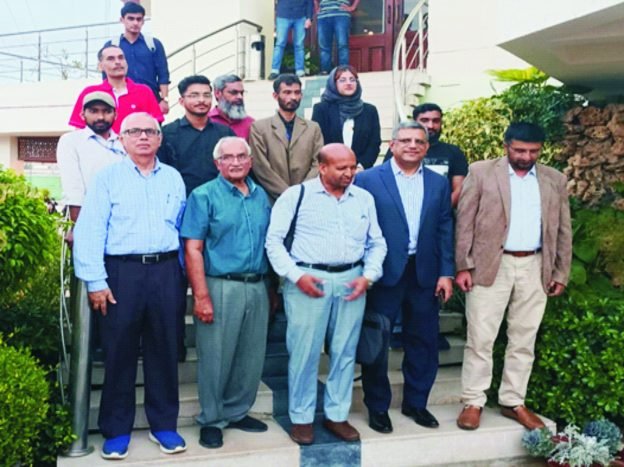
IEEE PES Chapter Karachi organized a technical Seminar, the third activity of the year 2023.
Following the recitation of the Holy Quran, the chairman, IEEE PES Ishtiaq ul Haq welcomed the participants and shared that IEEE PES is regularly conducting its activities intending to disseminate technical, relevant, and advanced knowledge on products and matters concerned with the engineering community.
Engr Asim Rasheed, the presenter of the moot carries more than 30 years of professional experience in various engineering and Management positions with world reputable Engineering companies in Pakistan and abroad. He is a well-established corporate trainer and management consultant.
The event was attended by more than 27 participants, mostly final-year students, young engineers, faculty members of universities, and senior engineers.
The topic was specially related to students and young engineers who took a keen interest in the topic. Senior engineers also shared their experiences and highlighted the skills to excel in today’s job market which is summarized below:
Analytical thinking, Creative thinking Curiosity & lifelong learning, Technological literacy, Quality control, leadership & social influence, etc
Engr. Asim Rashid mentioned in his presentation that we need to do a lot of work in the above areas in particular as Pakistan is ranked 146 of 158 countries, Pakistan’s score in the skill component of the United Nations Conference on Trade and Development ( UNCTAD’s ) Frontier Technology Readiness Index 2019 is 0.09 out of 1, significantly lower than Indonesia’s score of 0.28, India’s 0.31, etc.
We have to focus on the Technical skill as well as the Soft skills of our young engineers.
In the end, he summarized the key points as a way forward for those who like to build robust engineering careers:
Have strong ethics and integrity, 2. Learn to lead; learn to follow, 3. Respect seniors and juniors, 4. Be a lifelong learner, 5. Develop communication skills, 6. Demonstrate a ‘can-do’ attitude, 7. Have a growth mindset, 8. Take charge of your career, 9. Business is a team sport and 10. Listen to learn
Engr. Ishtiaque ul Haque Chairman PES thanked Engr. Asim Rashid for his time & effort and for encouraging students and young professionals to join IEEE & PES society to get the maximum benefit of the enormous knowledge available on the platform.
Tag: engineeringreview
-
Building a Robust Engineering Career
-
Sir Syed University Secured the First Position in the Hackathon 2023
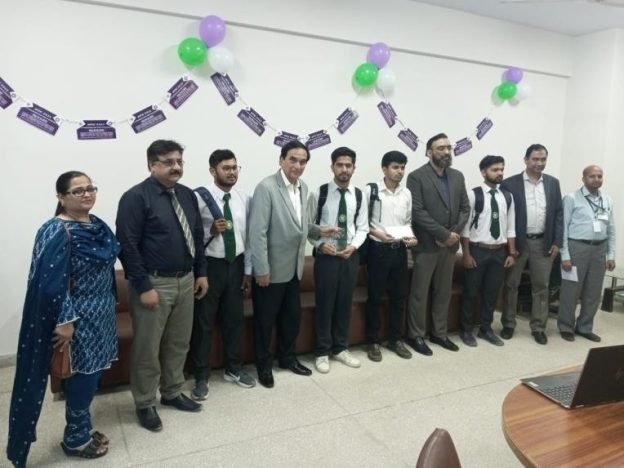
FAST National University, Karachi Campus, organized the Developers, Hackathon 2023 competitions. Students of Sir Syed University of Engineering & Technology, Computer Science Department participated in this competition and Dinesh Kumar, Kashan Khan Gauri, Nameer Nasir, and Muhammad Zahid secured first position. Later they were also awarded a shield and a 20,000 cash prize.
Appreciating the efforts of students and teachers, Registrar SSUET, Commodore (R) Engr. Syed Sarfraz Ali urged them to participate in such activities in the future, while Prof. Dr. Muhammad Asif (Faculty of Computing and Applied Science and Faculty of Business Management Sciences) said that success is the result of the dedication of teachers and the hard work of students. -
Forms and Benefits of Grid Storage of Energy
The amount of electricity produced fluctuates depending on the time of day, moon phase, season, and uncontrollable variables like the weather. Energy derived from solar, tidal, and wind source naturally varies on time scales ranging from minutes to weeks or longer. Therefore, renewable poses unique difficulties for electric utilities in the absence of storage. While connecting numerous independent wind sources helps lessen overall unpredictability, solar power is invariably unavailable at night and tidal power fluctuates with the moon, resulting in four times per day of slack tides. Coal, biomass, natural gas, and nuclear power generation that relies on energy stored in fuels must be ramped up and down in an electrical grid without energy storage to keep up with the rise and fall of electrical production from intermittent sources (see load following power plant). Nuclear and coal power facilities have a very long time to adjust to load, whereas hydroelectric and natural gas power plants may be quickly scaled up or down to follow the wind. Demand management, grid interconnections, or pricey pumped storage are therefore more frequently used by utilities with lower levels of natural gas or hydroelectric power.
The ability to store energy at peak output, release it during peak demand, and use it when production unexpectedly drops has made commercially feasible projects possible. This gives time for slower-responding resources to be brought online. Peaking power plants and demand response, which shifts load to other times, are two alternatives to grid storage. The unpredictability of wind energy has had regional effects that have increased the requirement for interactive demand response, where the utility interacts with the demand. Historically, only large industrial customers were involved, but this practice may now be used for entire grids.
For grid-scale applications, a variety of energy storage technologies (such as pumped-storage hydroelectricity, electric batteries, flow batteries, flywheel energy storage, and supercapacitors) are suitable, although they have different properties. For instance, because of their large capacities and power capabilities, pumped-hydro stations are suitable for applications involving bulk load management. However, there aren’t many ideal places, and when dealing with concerns with localized power quality, their value wanes. Flywheels and capacitors, on the other hand, are the best at preserving power quality but do not have enough storage space to be used in bigger applications. The applicability of the storage is naturally constrained by these restrictions. In the early days of direct current electric power, battery storage was utilized. Isolated lighting plants powered by internal combustion engines or wind turbines provided lights and power to tiny motors in areas where AC grid electricity was not easily accessible. When the wind was quiet or when the engine wasn’t running, the load could be powered by the battery system. Lamps were lit, and an engine was started to replenish a bank of lead-acid batteries that were housed in glass jars. For more recent lithium-ion devices, battery storage technology is typically between 80% and more than 90% efficient.
Power distribution networks have been stabilized using battery systems coupled with massive solid-state converters. A few grid batteries are situated near renewable energy sources, either to smooth the erratic power from wind or solar production or to shift the power output to other times of the day when the renewable source cannot directly supply power.
Technologies used in the automotive industry rely on solid electrodes, which have a high energy density but expensive manufacturing processes. Since they don’t require any processing, liquid electrodes are a less expensive and dense option. -

Zargham Eshaq Khan Assumes Charge of Acting MD NESPAK
Muhammad Zargham Eshaq Khan, Vice President of National Engineering Services Pakistan Pvt. Limited (NESPAK), has assumed the charge of Acting Managing Director of NESPAK, effective May 31, 2023. This appointment follows the approval of the Board of Directors of NESPAK. Zargham Eshaq Khan will be responsible for overseeing the company’s affairs.
Zargham Eshaq Khan is a highly regarded professional engineer with an impressive academic and professional background. He holds a B.Sc. in Electrical Engineering and an MSc in Optics and Illumination Engineering from UET Lahore. Since joining NESPAK in 1993, he has served in various key positions, including his most recent role as VP/Head of the New Ventures Division.
With over 30 years of experience in the field of engineering, Zargham Eshaq Khan has developed expertise in policy and finance management in Pakistan’s power sector. He has been involved in significant projects such as the development of the China-Pakistan Economic Corridor (CPEC) framework agreement and the settlement of international arbitration disputes related to the power sector in Pakistan. He has also played a crucial role in the implementation of power sector reform programs under the Asian Development Bank (ADB) and the World Bank. Furthermore, he has represented Pakistan in energy dialogues with the United States, as well as in SAARC, Pakistan-Russia, and Pakistan-Turkey energy forums.
Zargham Eshaq Khan has served on the Board of Directors of various power sector entities, including power distribution companies (LESCO, GEPCO, PESCO, and MEPCO), power generation companies (GENCO III), Pakistan Electric Power Company (PEPCO), Power Holding Private Ltd (PHPL), and Central Power Purchasing Agency (CPPA-G). During his tenure as MD of PEPCO, he was instrumental in managing the power sector and implementing a devolution plan for power sector reform. As the CEO of PHPL, he successfully completed Pakistan’s largest debt swap Sukuks, totaling Rs 400 billion, and managed power-holding debt and loans amounting to Rs 600 billion with various financial institutions and banks. Mr. Zargham is also credited with introducing Islamic financing in the power sector.
For approximately 10 years, Zargham Eshaq Khan served as Joint Secretary in the Ministry of Energy Power Division, where he held additional roles as Managing Director and Chief Executive Officer of power sector entities.
Throughout his illustrious career, Zargham Eshaq Khan has maintained an impeccable reputation for his integrity and efficiency. He is known for his adherence to rules and regulations. As the head of NESPAK, a premier consultancy organization in Pakistan, he is poised to contribute significantly to its growth and the engineering fraternity through his exceptional management skills and extensive experience. -
IEP-SAC Eastern Province holds Technical Seminar on ‘Net Zero Energy Transition.’
The global energy landscape is experiencing a vibrant and intriguing transition, commonly termed as ‘Net Zero Energy Transition’ or ‘Sustainable Energy Transition’. The 21st-century energy transition – mainly driven by the fight against climate change – is much more dynamic and impactful in comparison with the preceding energy transitions in recorded history. In the wake of the Paris Agreement and the United Nation’s call for a sustainable energy transition by 2050, nations across the world are actively pursuing Net Zero targets. KSA as part of Vision 2030, has also been announced to become net zero by 2060.
Considering the importance of the recent global energy transition, The Institution of Engineers, Pakistan – Saudi Arabian Center, Eastern Province Sub Center organized the 36th Annual Technical seminar in Al Khobar with the title of ‘Net Zero Energy Transition: Dynamics & Prospects’, on Wednesday, May 24, 2023. The talk was presented by Dr. Muhammad Asif, a Professor at the King Fahd University of Petroleum and Minerals.
Proceedings of the evening started by the Master of the ceremony, Engr. Ahmed Raza an executive council member, followed by the recitation of verses from the Holy Quran by Dr. Arshad Jamal.
General Secretary, Engr. Mohammad Abrar Shami outlined the objectives and activities of IEP-SAC-EP for 2022-23.
Executive Council member, Dr. Farooq Saeed gave the introduction of the keynote speaker, Dr. Muhammad Asif. He has over 20 years of research, teaching, and consultancy experience across Europe and the Middle East. Dr. Asif is a Charted Engineer, Certified Energy Manager, Member of the Energy Institute, and author of over 125 research publications including 7 books.
In his presentation, the keynote speaker examined the broader dynamics of Net Zero Energy Transition, considering its major drivers, challenges, and prospects. He also reflected upon the relevant global technological and policy trends, which classify the energy transition into four main technological dimensions (4Ds): Decarbonization, Decreasing use of energy, Decentralization, and Digitalization.
The Guest of Honor, Engr. Sameer Basonbul, Plant Leader of GE Manufacturing & Technology Center, Dammam (GEMTEC), thanked the council for inviting him to the event and applauded the technical presentation by Dr. Muhammad Asif.
Engr. Abdul Qadir Akbani, Finance Secretary IEP-SAC-EP introduced the Chief Guest and briefly talked about the Sponsor of the evening, Al Qahtani Pipe Coating Industries,
The Chief Guest Engr. Abdul Hadi Tariq Al-Qahtani, Chief Operating Officer of Al Qahtani Pipe Coating Industries, commended the performance of IEP-SAC-EP, and expressed his good wishes for success in the future. He appreciated the presentation and admired the high caliber, hard work, dedication, and professional skills of Pakistani Engineers. He also acknowledged the efforts and contribution of the Pakistani Engineers’ fraternity to the development of the Kingdom.
Engr. Abdul Qadir Akbani, expressed his deep gratitude to the Chief Guest for sponsoring the evening by Al Qahtani Pipe Coating Industries. He also thanked all Council members, fellow engineers, and media personnel on behalf of Chairman Engr. Rizwan Ahmed and Founder of IEP-SAC-EP, Engr Ismet Amin Khawaja, for playing an important role in making the event successful.
Shields of Appreciation were distributed to the keynote speaker, Dr. Asif, Chief Guest Engr. Abdul Hadi Tariq Al-Qahtani, Guest of Honor Engr. Sameer Basonbul, Executive Council Member Engr. Asad Hassan, Media Representatives Mr. Malik Nadeem Awan & Mr. Taher Karamat in appreciation of their outstanding contribution. The evening concluded with a Lucky Draw for respected guests, followed by a scrumptious dinner. -
HVACR Lahore chief interviewed HVACR increasing in Pakistan
 Volume of heating, ventilation, air conditioning and refrigeration (HVACR) sector business has, over time, increased tremendously in the world and Pakistan. One can assess the growth by counting the firms and people directly involved in manufacturing and importing HVACR equipment, said Engr. Safdar Ali Mughal, Chairman Lahore Chapter of Pakistan HVACR Society talking with Engineering Review.
In Pakistan local manufacturing, marketing, installations and after sale services in the sector are also increasing, he added. Pakistan HVACR Society has three full fledged chapters of ASHRAE (American Society of Heating, Refrigeration & Air Conditioning Engineers). Over 1,500 members of Pakistan HVACR Society are also ASHRAE members. Pakistan HVACR Society is organizing 21st HVACR Exhibition and Conference at Expo Center Lahore from April 03 to 05, 2014. The exhibition is of great importance for all members of HVACR sector in Pakistan.
It lets manufacturers and businessmen in the sector mingle with experts and seniors to learn from their experiences and know the latest developments and technologies being introduced around the globe by various companies. Pakistani and foreign companies would exhibit their products here, while vendors and service providers will exhibit their skills for installation and after sales support to consultants and other visitors of the exhibition, an annual event being hosted by the Society for 21 years. Our Society is the most suitable linkage and trusted source of development in industry, added Safdar.
HVACR industry in Pakistan is serving millions of its customers through air conditioned banks, hospitals, industrial units, commercial buildings and plazas, multi functional stores, shopping malls, residences, hostels, food preservation facilities, transport etc. Volume of industry’s production is increasing as our population increases. Growth of HVACR sector is quite fast, he said. He said energy efficiency, indoor air quality, building integration and automation, green buildings, sustainability, information technology, business management, mold and moisture control and other such topics are the burning issues being faced by HVACR sector, he said.
He said inventions and improvements in HVACR components go hand in hand with industrial revolution, methods of modernization, higher efficiency system controls. Here importance of HVACR cannot be ignored. Take the example of safe and comfortable air travel. It is all because of AC system. HVAC system made it possible for air passengers to travel comfortably and return safely to ground. Providing health caring medicines and environment is also the fruit of HVACR whose support assures access to safe eatables and drinking contents with nutrition values fully preserved for end users.
HVAC system provides ventilation, reduces air infiltration and maintains pressure between spaces, said Engr. Safdar. Abreast with digital revolution, need of air conditioning and refrigeration in Pakistan is also increasing fast. Be they hospitals, data centers, educational institutions, public and private sector organizations, transport, sports or food processing air conditioning is at the forefront. Pharmacy, garments, textile, hospitals, clinics, IT system providers, automobile, rubber, original equipment manufacturers and all other industrial segments are all directly and indirectly associated with HVACR industry. Answering an ER question, he said that HVACR is being taught at the engineering universities because of our efforts. Students also take keen interest in the subject.
However, country’s energy crisis is an important problem badly affecting industries. This also hurts exports. The exhibition consists of about 200 stalls showing new and old products needed by the HVACR users, manufacturers and traders. It will be supported by a powerful promotional campaign to attract buyers from all over Pakistan and also ensure high quality of business that participants are looking for. More than 100,000 special invitation cards and e-mails are being sent to Pakistani and foreign corporate personalities. Besides, over 100,000 special invitation cards and e-mails will also be sent to foreign and Pakistani companies, local and international trade bodies, trade missions of embassies and others, he said.
Billboards in strategic locations around Lahore and advertisements on electronic and print media, partnerships with satellite TV channels and FM radios will also support the exhibition. Extensive e-mails, promotional flyers and promos on YouTube, Face Book, Twitters, targeted SMS to potential visitors will also support our efforts to attract visitors to the exhibition, said Engr. Safdar. Advertisements on Cable TVs aiming to make the event a starting point of future business deals will be employed to market the 21st Expo and Conference at illuminated and air conditioned exhibition hall. The exhibitors will be given purpose built stalls with name panel, electrical point for each stall.
They will get two counters, one table, two chairs and extra accessories on extra costs. Sitting, meeting, lunch areas in exhibition hall, daily cleaning, general security for stalls will also be made available to exhibitors from April 2 to April 6 that is one day before the exhibition and one day after closing of exhibition, said Engr. Safdar. (M Soomro)
-
Achievements of HVACR Society
Please give a brief profile and local and international projects that you have accomplished in Pakistan? I graduated in 1965 from Dhaka University of Engineering & Technology and joined Dhaka Intercontinental as Chief Engineer in 1968. I remained associated with Intercontinental Hotels for 13 years. In 1971 I was promoted as Regional Chief Engineer for Central Asia based in Karachi. I held this position till 1981. In 1981 I set up my consultancy service named S. Mehboob & Co specializing in engineering services for all types of buildings.
I am blessed with the support of my sons two of whom are engineers specializing in HVAC Mechanical and Electrical Engineering. Our company stresses on building services design with a strong emphasis on sustainability of design and green buildings. Our philosophy for design is to look at the building as a whole and provide an integrated design and look at interrelated systems separately. This lets us design highly efficient buildings with superior energy performance as per latest international standards.
We were the first Pakistani company to work as consulting engineers in UAE. There it is relatively easy to find projects, if one has a sound local partner. So far we have completed over 100 projects in UAE alone. We are listed as branch of a foreign company requiring a high level of skill and expertise. We have completed high rise buildings 60+ stories at Dubai Marina. Al Murooj Complex on Sheikh Zayed Road was one of the first to use direct cooling and water cooled chillers. In recent years we have completed many hypermarkets. The most recent is in Georgia and many other projects are underway in Armenia. In Pakistan we are working on Islamabad International Airport and previously we worked on the Allama Iqbal International Airport, Lahore besides some very tall buildings in Pakistan. Would you like to share how you thought of forming the HVACR society in Pakistan?
The vision behind forming HVACR Society in Pakistan was to bridge the communication gap between consultants, equipment suppliers, manufacturers and contractors by bringing them on the platform of Pakistan HVACR Society. The Society provides opportunities to all members to network amongst themselves and meet and interact on one platform. This plays a pivotal role in fostering professional growth through mentoring, making available publications published by ASHRAE and seminars and educational programs that we conduct. The Society also seeks to engage students and bring them to the HVACR profession. We also needed the Society to suggest policies to regulatory bodies as there is no formal framework for the purpose in our government. Main interest of our manufacturing needs strong advocacy for growth, energy conservation, building codes, regulations and import tariff structures. What has HVACR Society done so far to assist its members and stakeholders? HVACR Society is an Associate Society of American Society of Heating, Refrigerating and Air Conditioning Engineers (ASHRAE) – the world leader in HVACR technology. ASHRAE has over 100 committees doing research, writing standards and guidelines besides a panel of distinguished lecturers – world class experts in their fields to visit and speak in Pakistan. ASHRAE Standards are the basis of building codes in USA and many countries. Our members have access to this vast pool of knowledge.
After we became part of ASHRAE, they have been sending speakers at their cost to Pakistan. They speak in all our three chapters that is Karachi, Lahore and Islamabad. Similarly companies coming up with new technologies and products and wanting to showcase them are able to meet and make presentations besides exhibiting their goods at annual expos. We have also setup libraries in all our three offices so our members can read books, know about the latest innovations to cope up with latest trends all over the world and seek assistance. Our annual Expo is Pakistan’s premier trade fair. We had about 200 exhibitors and 7-10 thousand visitors from trade bodies, industries etc in our last exhibition. How do you compare growth of HVACR industry in Pakistan with India, Bangladesh, Dubai and Malaysia? There is no comparison with India as it is a very massive market in terms of local manufacturing. And we, due to government policies, lack a strong manufacturing base. Our government emphasis is on imports while in India they focus on ‘Made in India’. They have protected their manufacturers for several decades.
Quality of human resources is the area where we are equal and share the same expertise. Frequent visits by trade delegations of India and Pakistan show that the human competence level of both countries is the same as in our industry. China is also doing the same. Dubai is a free market and a different economic model. We are far ahead of Bangladesh. Malaysia again focuses on local manufacturing and is much ahead of us. How supportive are Pakistan’s regulations for HVACR industry? Regulatory environment in the country neither encourages nor discourages investment in this sector. There is virtually no support from the government. How does HVACR contribute towards socio economic development? As far as socio-economic environment is concerned, our industry has a large business generating activity in maintenance and operations side.
There is also considerable consumer interest in sales and service of ACs, refrigeration and other cooling equipments. Refrigeration is an important part of our life as it is linked with our food and the rooms we sleep in, our office etc. Much of our transport vehicles are air conditioned and our engineers ensure the environment is eco friendly. When did your society organize the first exhibition? What was the idea and objective behind it? In 1993 we held our first exhibition and to date, it is going very well. The biggest beneficiary of our hard work was local industry. It gave them a chance to grow and showcase their products in Pakistan and abroad. The credit for success of all exhibitions goes to local manufacturers and distributors. Some locally manufactured equipment is also exported. Please tell us about developments in green energy efficient systems in Pakistan’s HVACR? Buildings are number one consumers of energy all over the world and account for 30-35% of energy use. Buildings are designed to comply with energy codes. In most developed countries codes govern design features. In Pakistan compliance is weak. This greatly effects the country’s energy demand. There is now a growing demand for energy efficient green buildings resulting in professional bodies taking up the need for legislation in this regard. What is the future of HVAC in Pakistan?
The future for our industry is bright because it is based on human needs. We need better management nationally e.g. split or other ACs are marketed without an energy label in Pakistan. So we continue to use inefficient equipment. In future renewable energy is going to have bigger share in our industry and solar assisted split units with high efficiency equipment are going to become more and more important. And I also see more regulations coming. Your message on 21st HVACR event? Please support our industry, it makes your life better, use of energy efficient equipment helps Pakistan.
-
RE increasing worldwide
Pakistan has scored an impressive 50% increase in research publications in the last two years, going up from 3,939 to 6,200 in higher education sector. This has been the second highest increase worldwide. Scimago, world’s leading research database, believes by continuing this research trend, then by 2018, Pakistan will move ahead 26 notches in world ranking, from 43 to 27 in 5 years by 2018. This will be the first time ever that Pakistan would cross Hong Kong, Singapore and Thailand in Asia.
Today Pakistan publishes more research papers per capita than India. PhD faculty at our universities has also increased by almost 50% – from 4,203 to 6,067 in last 2 years. This success is because Higher Education Commission sponsored PhD scholars have started returning and joining universities. 10 to 15 scholars complete their PhDs weekly and HEC places them at universities under its Interim Placement of Fresh PhDs Program. Another HEC incentive is a Rs. 0.5 million research grant to every returning scholar.
Fresh PhDs are being inducted by HEC in various universities across the country. Number of PhD students at universities increased by over 40% last year from 6,937 to 9,858. Over 28,100 students are registered for MPhil/ MS, up from 16,960, an increase of 65% in two years. Increase in PhDs awarded is again very similar, from 628 to 927 in last 3 years, and is expected to surge in future too as more PhD faculty and students join the universities. Commenting on the developments, Dr Javaid R Laghari Chairman HEC said that universities are the single most important producers of knowledge and research leading to innovation and entrepreneurship.
By introducing innovation, creativity and interdisciplinary research as a vital component of teaching and with knowledge exchange programs, universities contribute more directly to economy and society than many other institutions, he added. He said HEC is encouraging research and ensuring proper utilization of manpower training for the country’s socio economic development. Here HEC has picked and prioritised energy, water resources, environment, food security etc.
Dr Laghari believes that with increased budget allocations for higher education and encouragement by new democratic government, Pakistan will win more laurels in high education at international level.
-
Two More Cos Join
Punjab government has also signed an agreement with TBEA of China for a 1,000 MW solar plant in Cholistan. The provincial government has offered around 5,000 acres for such projects to various companies. Norinco International Corporation Ltd is another prominent Chinese company planning to set up a solar power project in Cholistan.
It recently signed a memorandum of understanding with G/o Punjab. Under the agreement, Norinco International will set up a 300 MW solar power project in Cholistan in 12 months. Punjab government will assist Norinco International in acquiring the site. Speaking at MoU signing, CM Shahbaz commended Chinese government and investors for their cooperation in energy sector. Nothing is more important than solving energy crisis. We will be rid of load shedding by quick completion of power projects, he added.
Vice President Norinco International, Zhang Shiping said that Chinese people are deeply impressed with Shahbaz Sharif’s speed for implementing development projects and he is very much liked in China. He hoped that power projects will be completed at the speed at which metro bus project was executed. Solution of energy problem is top priority of his government as we need it for putting the economy back on the track. He said that concerned departments must work efficiently and no negligence should be shown in this regard.
CM said that shortage of electricity will be overcome at any cost as it has made life miserable and all out measures are needed to resolve this issue. And if concerned departments did not do enough, the nation will never forgive them. He also stressed on removing flaws in the power supply system and said that efforts should be made on war footing for upgrading the system. It needs urgent and coordination between concerned departments.
-
Fighting power crisis Mardan tech can help
Pakistan produces 6,900 MW of hydro power. Huge potential lies unused all over. Mega dams like Bhasha and Dasu etc require billions of dollars and also years to complete. So what good can we get from our streams and rivers. But thanks to a small, modest workshop in Mardan, Pakistan can also generate many thousands more MW hydro power from small hydro plants installed all over the country, particularly in Khyber, Azad Kashmir and Gilgit.
The workshop in Mardan has made over 1,500 micro hydro power plants (MHHPs) to date. It consists of only basic workshop machines like lathe, drill and welding transformer. There are thousands of such workshops in Pakistan which can make turbines ranging from 10 to 300 KW. We can tackle the 4,500 MW power deficit quickly, if we make 15,000 more MHHPs with 300 KW turbines. Heavy Mechanical Complex Taxilla, Karachi Shipyard & Engineering Works, precision engineering in PIA and Mughalpura workshop of Pakistan Railways can also make typical mechanical components like shafts, rotors, casings, couplings and gears of much better quality than given by MHHPs.
Generators can be made in Gujrat by fan manufacturers and engineers can develop proper assembly lines with quality control measures to continuously produce MHHPs. This will also create thousands of jobs for unemployed youth, technicians and welders. Kalam, Swat is blessed with abundant waterfalls and fast flowing streams capable of producing power. We can use MHHP electricity to meet Kalam’s power needs and disconnect the city from WAPDA power. Power thus saved can be diverted to power starved industrial hubs in Faisalabad, Sialkot, Gujrat, Gujranwala, Lahore and Karachi.
Similar plants can be installed in other Swat cities like Bahrain, Madian Miandam, Mingora and Saidu Sharif etc. And same can be done in Azad Kashmir, Gilgit and Balitistan. And lower plains – Punjab and Sindh – too can benefit from Mardan technology. Power plants with 300 KW turbines (or with more/ less capacity) can also be installed along canals to service nearby towns/ villages sparing their power for bigger cities. Mardan technology can rid Pakistan of power shortage easily and quickly. It may be noted here that all ingredients needed to produce 4,500 MW are available locally; we just need to make a start.